
Mauritius
Haqqi Tours arranges day tours, private airport transfers, attraction tickets and multi-day packages across Mauritius, confirmed on WhatsApp before you pay.
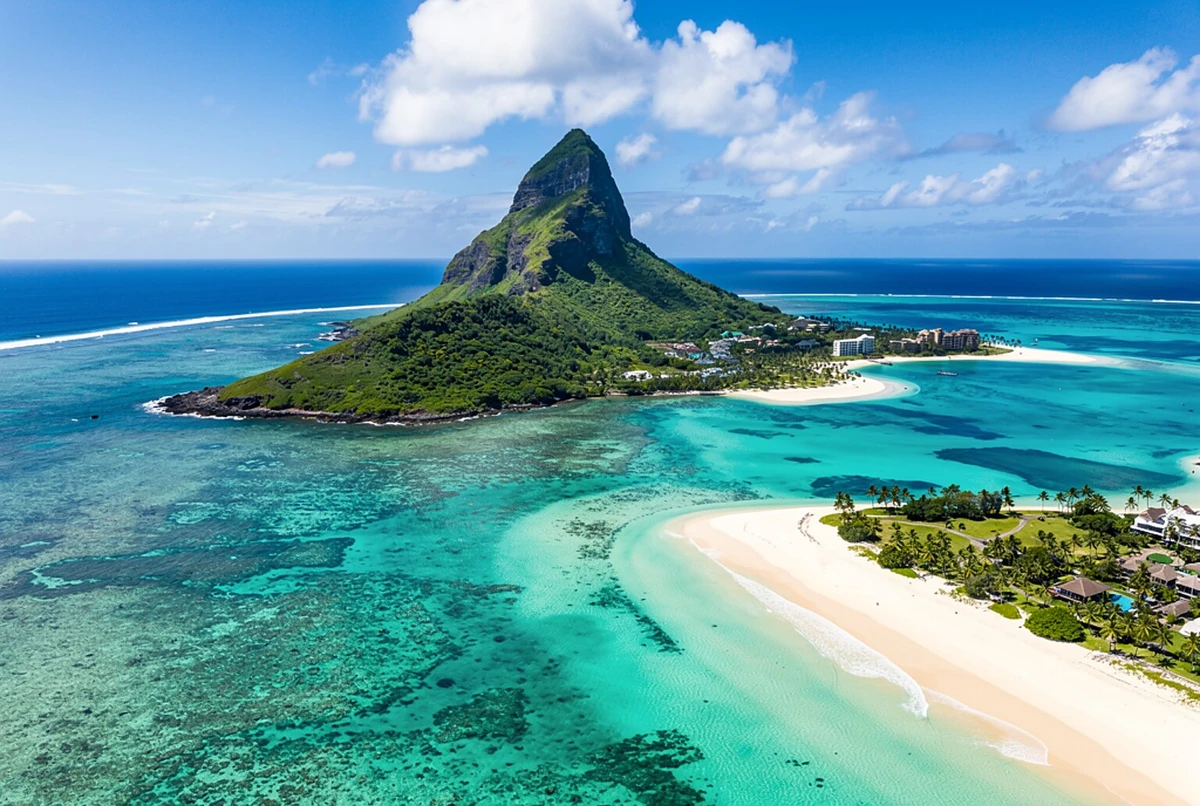
In Mauritius the morning begins on the water. A fisherman poles his wooden pirogue across a lagoon so clear it looks like glass, the reef breaking white on the horizon while the first sun lights the green spine of the mountains behind him. In Port Louis the market is already loud with vendors stacking lychees, chillies and bundles of fresh herbs, a temple bell rings near a mosque and a church, and the smell of warm dholl puri drifts from a street stall wrapped in paper.
Destinations
Choose a city to see everything we arrange there.

Services by city in Mauritius
Attraction Tickets
Airport Transfers
The essence of Mauritius
Then comes the moment every traveller remembers: a catamaran slides into the turquoise shallows of Ile aux Cerfs, or the hills of Chamarel reveal their bands of red, violet and ochre earth in the afternoon light. Mauritius is irreplaceable because Africa, India, France and China meet on one volcanic island ringed by coral, where you can hike a rainforest gorge in the morning and swim in a calm lagoon by lunch. We arrange it all with catamaran and dolphin trips, island sightseeing tours, guided hikes and private transfers from the airport.
Why visit Mauritius?
Crossroads of Oceans and Cultures
Mauritius was uninhabited until Dutch, French and British settlers arrived, bringing enslaved Africans and later indentured labourers from India, followed by Chinese traders. Their descendants have built a remarkably harmonious society. In Port Louis, Aapravasi Ghat, a UNESCO site, marks where indentured workers first landed, while Le Morne Brabant, also UNESCO-listed, honours those who escaped slavery. Temples, mosques, pagodas and churches stand side by side, and Kreol, French and English mingle in every conversation.
Lagoons, Gorges and Coloured Earth
Almost the entire island is encircled by a coral reef, which keeps its lagoons calm, warm and shallow. Inland, the Black River Gorges National Park protects much of the remaining native forest, where rare birds such as the pink pigeon and the Mauritius kestrel survive. Chamarel’s Seven Coloured Earth shimmers in small dunes of different hues, a tall waterfall plunges nearby, and Grand Bassin, a sacred crater lake, sits among the highlands. Offshore, islets such as Ile aux Cerfs and Ile aux Benitiers are fringed with white sand.
Dholl Puri, Curries and Street Food
Mauritian food tells the island’s story on a plate. Dholl puri, soft flatbread filled with ground split peas and served with bean curry and chutney, is the beloved street snack. Rougaille, a tomato, garlic and thyme sauce, accompanies fish and meat, octopus curry is a coastal favourite, and Chinese-Mauritian kitchens serve fried noodles and boulettes, delicate dumplings in broth. Vendors sell gâteaux piments, crisp chilli fritters, and cool glasses of alouda, a sweet milk drink with basil seeds, while local tea is scented with vanilla.
Experiences You Can Only Have in Mauritius
Sail by catamaran to Ile aux Cerfs, snorkel the lagoon and lunch on grilled fish on deck. Head out at sunrise off the west coast to watch spinner and bottlenose dolphins at sea. Stand on the viewpoint at Chamarel as the coloured earth changes with the light, then walk around Grand Bassin among pilgrims and their offerings. Hike Le Morne Brabant for vast views over the lagoon, and wander the Pamplemousses garden among giant water lilies and centuries-old trees.
Who is Mauritius for?
Ideal for
- Honeymooners and couples seeking lagoon romance
- Families who want calm, shallow beaches
- Snorkellers and lovers of boat trips
- Hikers drawn to gorges and volcanic peaks
- Culture seekers curious about a mixed heritage
- Travellers pairing beach days with sightseeing
Pace & travel style
- Pick one coast as a base and explore by day trip
- Mornings are calmest for boat and dolphin trips
- Split the stay between beach rest and island tours
- Short drives mean no corner of the island feels far
When to visit Mauritius
Peak season · September–December
The southern spring and early summer bring Mauritius at its most dependable. Days are sunny and warm, rain is light, the sea is clear for snorkelling and catamaran trips, and the trade winds ease. The festive weeks around Christmas and New Year are the busiest of the year, with resorts full and rates higher, so reserve boat trips, island tours and airport transfers well in advance.
Shoulder season · April–August
As summer fades, the heat and humidity soften, and the southern winter from June brings cooler, drier days with fresh south-east trade winds. The west and north coasts, around Flic en Flac and Grand Baie, stay sheltered and sunny, while the east can be breezy. This is excellent hiking weather in the Black River Gorges and on Le Morne, the island is green, and crowds are lighter outside school holidays.
Low season · January–March
The height of summer is hot, humid and the wettest part of the year, with short tropical downpours and the possibility of cyclones, which are tracked closely and announced well ahead. Between showers the sea is at its warmest and the island at its most lush, waterfalls are full and resorts offer better value. Keep your plans flexible and leave a spare day for boat trips that may be rescheduled for weather.
The regions of Mauritius and how to combine its cities
Mauritius is a volcanic island ringed by reef, and each coast has its own mood. The north, around Grand Baie, is lively and sheltered, with marinas, shops, restaurants and boat departures to the northern islets of Coin de Mire, Ile Plate and Ilot Gabriel. Port Louis, the capital, sits on the north-west coast with its market, waterfront and Aapravasi Ghat, while the Pamplemousses garden lies just inland. The central plateau around Curepipe is cooler, greener and rainier.
The west coast, from Flic en Flac to Tamarin, is sunny and dry, famous for its sunsets and for dolphin trips at sea. Further south, the dramatic Le Morne peninsula overlooks Ile aux Benitiers, while the highlands of Chamarel, Black River Gorges and Grand Bassin rise inland. The east coast around Trou d’Eau Douce is the gateway to Ile aux Cerfs, and the south-east around Mahebourg and Blue Bay holds the airport and a protected marine park.
Our city directory below covers Port Louis, Grand Baie, Flic en Flac, Trou d’Eau Douce, Mahebourg and Le Morne, the natural bases for exploring every side of the island. From them we run catamaran and speedboat trips, dolphin outings, south-west and north sightseeing tours and guided hikes, while our private drivers handle airport transfers and longer journeys. Pairing a lively northern or western base with a quieter stay in the east or south builds the ideal Mauritius itinerary.
Before you go: practical tips for Mauritius
Entry & visas
Many nationalities are granted a visitor’s permit on arrival at Sir Seewoosagur Ramgoolam International Airport, while others must obtain a visa before travelling. Entry usually depends on a passport valid for your stay, a return or onward ticket, confirmed accommodation and sufficient funds, and an online arrival form may be required before departure. Rules depend on your passport and change from time to time, so check the official Mauritius Passport and Immigration Office or the nearest embassy before booking.
Money, cards & tipping
The Mauritian rupee is the currency. Cards are widely accepted in hotels, malls, supermarkets and larger restaurants, but carry cash for markets, roadside snack stalls, small shops, public buses and tips; ATMs are common in towns and at the airport. Hotels and many restaurants include service and tax in the bill, and guides, drivers and boat crews appreciate a tip for good service. Prices at markets and craft stalls can be gently negotiated, always with a smile.
Etiquette & dress code
Mauritians are warm, relaxed and proud of their many faiths. Beachwear belongs on the beach and by the pool; cover up in towns, markets and restaurants. Remove your shoes before entering Hindu temples and mosques, dress modestly with shoulders and knees covered, and women may be asked to cover their hair in a mosque. At Grand Bassin, respect pilgrims and offerings and keep your voice low. Topless sunbathing is not accepted on public beaches, and always ask before photographing people.
Getting around
Mauritius is small enough to cross by road in around two hours, though traffic is heavy around Port Louis at rush hour. Driving is on the left. Public buses reach most villages and a light rail line links Port Louis with Curepipe, but connections to beaches and sights are slow. Boats leave from Grand Baie, Trou d’Eau Douce and the west coast for the islets. Our private chauffeured transfers and sightseeing tours are the easiest way to explore, starting with a smooth airport pickup.
Must-do things in Mauritius
- Sail by catamaran to the white sands of Ile aux Cerfs
- Watch dolphins at sea off the west coast at sunrise
- See the bands of colour at Chamarel’s Seven Coloured Earth
- Walk the trails and viewpoints of Black River Gorges
- Visit the sacred crater lake of Grand Bassin
- Hike Le Morne Brabant for sweeping lagoon views
- Snorkel the reefs of the northern islets by speedboat
- Browse the Port Louis market and Caudan waterfront
- Admire the giant water lilies of Pamplemousses garden
- Taste dholl puri and octopus curry from local stalls
Do’s and don’ts in Mauritius
Do
- Cover up away from the beach, especially in towns
- Book boat trips for the morning, when the sea is calmest
- Wear reef-safe sunscreen and a hat on the water
- Carry small cash for markets, stalls and tips
- Remove your shoes before entering temples and mosques
Don’t
- Don’t stand on, touch or break coral in the lagoon
- Don’t collect shells or coral from the beaches
- Don’t swim beyond the reef or ignore red flags
- Don’t photograph people or ceremonies without asking
- Don’t sunbathe topless on public beaches
Mauritius at a glance
Plan Mauritius with Haqqi Tours
Every option is confirmed by our team on WhatsApp before you pay, and delivered by our own people or by trusted local partners we work with in every city. Because we send travellers from all over the world, our partners give us special rates and priority, so you always receive the best. Prices are per person unless marked per vehicle.
About Haqqi Tours: About us Contact us Legal NoticePrivacy PolicyCookies & Marketing PreferencesTerms & ConditionsBooking, Payment & Refunds
Where we operate in Mauritius
Good to know
Frequently Asked Questions
Straight answers to what travellers ask most about Mauritius.
Is it safe to visit Mauritius?
Yes. Mauritius is known as one of the most stable and peaceful countries in Africa, with a friendly population and well-run tourism. Take ordinary care with valuables in busy areas, respect flags and currents at the beach, and check your own government’s official travel advice before departure. Use licensed transport such as our private transfers, and keep our WhatsApp line handy throughout your stay.
How many days do I need for a first trip to Mauritius?
Seven to ten days is ideal for a first trip. Spend a day or two on catamaran and dolphin trips, a full day on a south-west tour to Chamarel, Black River Gorges and Grand Bassin, a day in Port Louis and Pamplemousses, and the rest relaxing by the lagoon. With two weeks, split your stay between two coasts and add a guided hike.
What is the best way to travel between the main areas of Mauritius?
A private car with driver is the most comfortable way to travel around Mauritius, as buses are slow and boat departures and viewpoints are spread around the coast. Our drivers link the airport, Port Louis, Grand Baie, Flic en Flac, Le Morne and the east coast with ease, and we can combine transfers with sightseeing stops so the journey becomes part of the holiday.
Can a trip to Mauritius be tailored for luxury or private travel?
Absolutely. Mauritius is renowned for elegant beach resorts with spas, private villas and attentive service. We can tailor private catamaran charters, chauffeured transfers in premium vehicles, private sightseeing tours with your own guide and a relaxed family pace, then confirm every detail with you on WhatsApp before anything is paid.
Is Mauritius tourist friendly?
Very. Mauritians are famously welcoming, English and French are widely spoken, and the island is easy to get around. Halal food is easy to find thanks to the island’s Muslim community, alongside vegetarian, Creole, Indian and Chinese kitchens. Every traveller will feel instantly welcome, and our team is always available to help.
Is it safe to travel to Mauritius now?
Mauritius continues to welcome visitors, and its main areas, including Port Louis, Grand Baie, Flic en Flac and the east coast, operate normally. In the summer months, cyclone warnings can briefly pause boat trips, so check your own government’s official travel advice and local weather updates before departure. Keep our WhatsApp line handy; our team can adjust transfers and tours if your plans change.
What is the best time to visit Mauritius?
September to December is the best time to visit Mauritius, with sunny, warm days and clear water ideal for catamaran and snorkelling trips. April to August is cooler and drier, perfect for hiking and the sheltered west and north coasts, while January to March is hot, humid and wetter, with lush scenery and better value.
What is Mauritius famous for?
Mauritius is famous for its turquoise lagoons, white beaches and coral reef, and as the island where the dodo once lived. It is also known for Chamarel’s Seven Coloured Earth, Le Morne Brabant, sega music and dance, a warm multicultural society, dholl puri and the illusion of an underwater waterfall seen from the air off its south-west coast.
Which cities in Mauritius does Haqqi Tours cover?
Flic en Flac, Le Morne, Mahebourg, Trou d'Eau Douce, Grand Baie and Port Louis. Each city has its own page with everything available there, and a trip across several cities is planned in one WhatsApp conversation.
What can I book in Mauritius?
Day tours, attraction tickets and private airport transfers - all run or confirmed by Haqqi Tours, each with a fixed price agreed on WhatsApp before you pay.
How do I book a tour or transfer in Mauritius?
Fill in the form on the page you are interested in, or message us on WhatsApp with the date, the number of travellers and your hotel. A member of our team confirms the price and the details in writing within minutes.
Are the prices fixed?
Yes. Every price is agreed in writing on WhatsApp before you travel and does not change on the day - not for traffic, not for a late flight, not for the hour.
Do you arrange transfers between cities in Mauritius?
Yes. Intercity transfers by private car or van are booked the same way as airport transfers; tell the desk the two hotels and the date and it quotes a fixed price for the whole vehicle.
Can you plan a full itinerary across Mauritius?
Yes - tell the desk your dates, the cities you want and who is travelling, and it proposes a day-by-day plan with the tours, transfers and tickets priced in writing. You adjust it in the same chat before confirming.
Are your tours private or in a group?
Both exist, and the page of each tour says which. Private tours have a car and guide for your party alone; small-group tours share a guide with a few other travellers. The desk can convert most group tours into a private day on request.
Do the drivers and guides speak Arabic?
It depends on the country, the city and the day, so we do not promise a particular language for the driver or guide. Tell us your preference and we do our best; the WhatsApp desk itself always works in Arabic and English.