
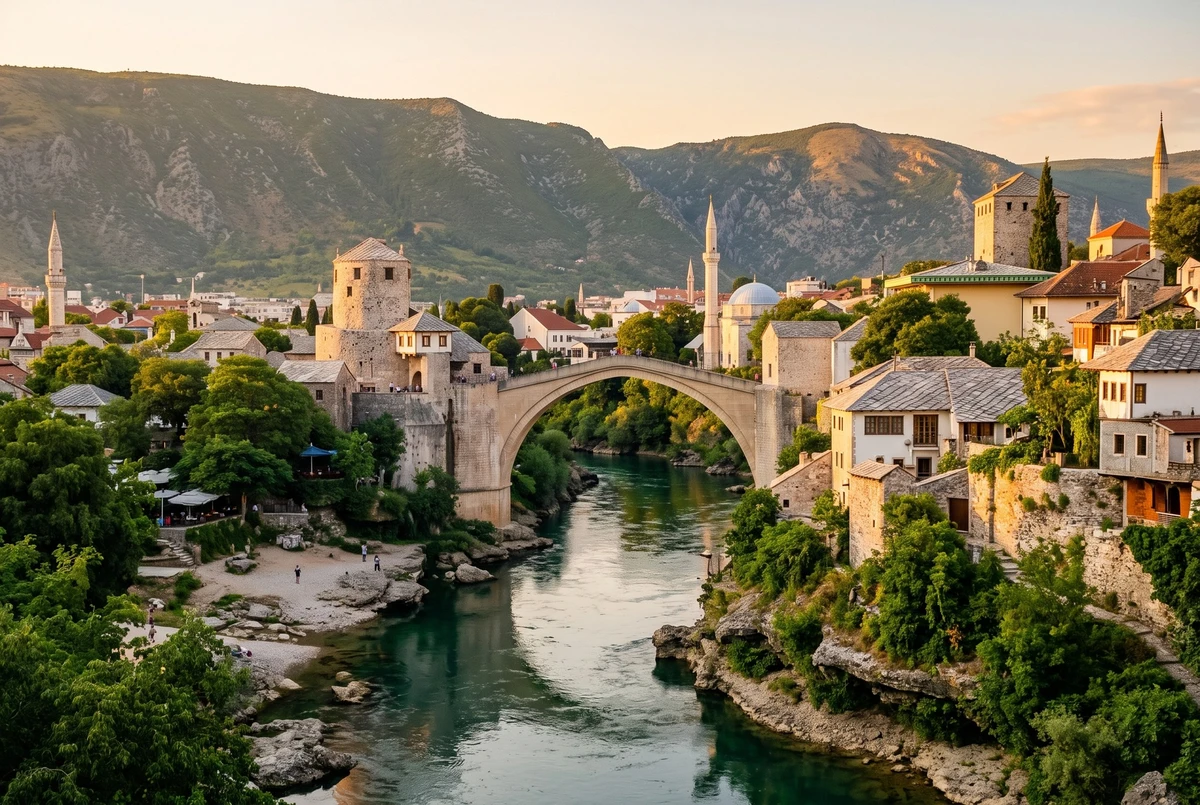
Bosnia
Getting between Sarajevo's old bazaar, the Mostar bridge and Bosnia's countryside is simplest with a local driver Haqqi Tours books in advance.
Dawn in Sarajevo begins with the call to prayer drifting from the Gazi Husrev-beg Mosque, answered moments later by cathedral bells across the river. Coppersmiths on Kazandžiluk lane unshutter their workshops, the tapping of trays and coffee pots ringing like a second clock, while the first ćevapi of the day hiss over charcoal and small cups of Bosnian coffee arrive with a cube of rahat lokum. Green hills fold around the valley, dotted with white tombstones and red-roofed houses climbing towards the old fortress walls.
Destinations
Choose a city to see everything we arrange there.
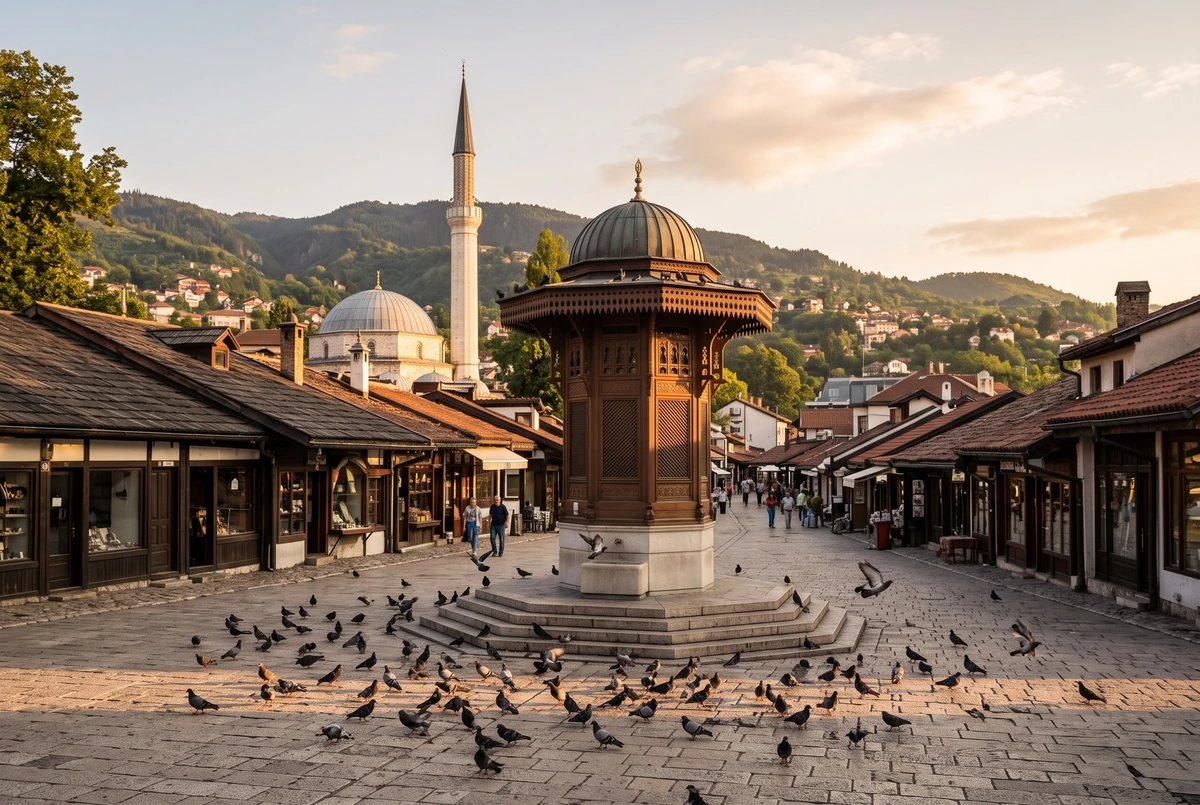
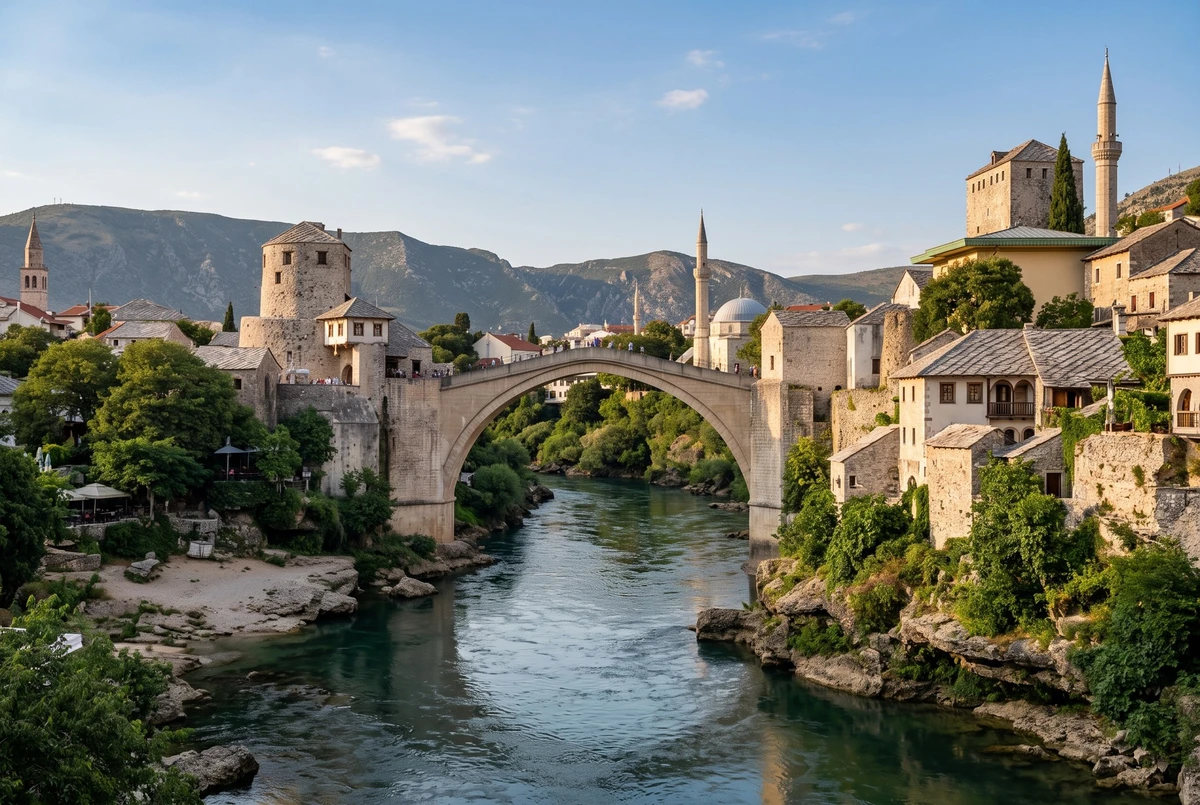
Services by city in Bosnia
Multi-Day Tours
The essence of Bosnia
Bosnia is where Ottoman, Austro-Hungarian and Slavic Europe meet in the space of a single walk. Mosques, Orthodox churches, Catholic cathedrals and a historic synagogue stand within a few streets of each other, and the countryside beyond is wild: emerald rivers, waterfalls tumbling through medieval towns, and mountain plateaux where shepherds still make cheese in summer huts. For travellers from every corner of the world it feels familiar and new at once, with halal food everywhere, deep hospitality and a European landscape that stays green all summer.
Why visit Bosnia?
Where Empires Left Their Signature
For four centuries the Ottomans shaped Bosnia's towns, leaving the Baščaršija bazaar, the Gazi Husrev-beg Mosque and the arched Old Bridge of Mostar, rebuilt stone by stone after its destruction in 1993 and now a UNESCO World Heritage Site. Austro-Hungarian rule added the pastel façades of Ferhadija street and the striped City Hall. Older still are the medieval stećci tombstones scattered across the hills and Jajce, the fortress town of Bosnia's last kings.
Rivers the Colour of Jade
Bosnia is a country of water and mountains. The Neretva runs an impossible green beneath Mostar, the Una and Vrbas carve canyons in the northwest, and at Jajce the Pliva river drops straight into the town as a waterfall. Around Sarajevo, the Olympic peaks of Bjelašnica, Igman and Jahorina offer flowering meadows in summer and snow in winter, while Vrelo Bosne, the source of the Bosna, is a shaded park of springs, wooden footbridges and swans.
Coffee, Copper and Slow Hospitality
Bosnian life moves at the pace of a coffee cup. It arrives in a small copper džezva with sugar cubes and rahat lokum, and nobody rushes you. Food is generous and overwhelmingly halal: ćevapi in soft somun bread, flaky burek and spinach pita rolled by hand, velvety begova čorba soup, and tufahija, a poached apple filled with walnuts. Craft survives in the copper lanes of Baščaršija, in hand-woven carpets and in sevdalinka, Bosnia's melancholic love songs.
Moments Found Only in Bosnia
Watch divers leap from Mostar's Old Bridge into the cold Neretva, a tradition kept for centuries. Walk through the Tunnel of Hope, the wartime passage under Sarajevo airport that kept the besieged city alive. Ride the cable car up Mount Trebević for views across the whole valley, wander Počitelj, an Ottoman village stacked above the river, and sit beside the Dervish house at Blagaj, built against a cliff where the Buna surges out of a cave.
Who is Bosnia for?
Ideal for
- Muslim and halal-conscious travellers seeking Europe without compromise
- Families wanting green nature, rivers and mild summers
- History lovers drawn to Ottoman and Austro-Hungarian heritage
- Couples looking for quiet mountain resorts and riverside towns
- Photographers chasing bridges, waterfalls and old bazaars
- Winter travellers wanting good-value Olympic ski slopes
Pace & travel style
- Unhurried: long coffees, short drives and plenty of fresh air
- Base yourself in Sarajevo and branch out on day trips
- Road-trip friendly, with dramatic scenery between towns
- Easily combined with neighbouring Balkan countries
When to visit Bosnia
Peak season · June–August
Summer is when Bosnia fills with families and road-trippers from Europe and far beyond. Days are warm and long, while evenings in the mountains around Sarajevo stay pleasantly cool. Mostar can get very hot at midday, so we plan visits there early. Rivers are at their most vivid green, café terraces stay lively until late, and hotels and private cars book up quickly, so reserving several weeks ahead is wise.
Shoulder season · April–May, September–October
Spring and autumn are the smart choice. Meadows bloom in May, waterfalls run full after the snowmelt, and in October the hills around Sarajevo turn copper and gold. Temperatures are ideal for walking Baščaršija and the old towns of Mostar and Jajce, crowds thin out, and our team finds wider hotel availability. Bring a light jacket for the evenings.
Low season · November–March
Winter is cold and often snowy, with short days and occasional fog in the Sarajevo valley, and some rural guesthouses close. Yet this is the season for skiing on Jahorina and Bjelašnica, steaming bowls of soup, and mosques and museums without queues. It suits skiers, value-minded travellers and anyone who dreams of a snow-dusted Ottoman bazaar. Pack warm layers and good boots.
The regions of Bosnia and how to combine its cities
Bosnia and Herzegovina divides into two historic lands. Bosnia, the larger northern and central part, is mountainous and forested, cut by the Bosna, Vrbas and Una rivers, with Sarajevo in its high valley and royal towns such as Jajce and Travnik on old trade routes. Herzegovina in the south is drier and sunnier, a Mediterranean landscape of limestone, fig trees and pomegranates that tilts towards the Adriatic, centred on Mostar and the Neretva valley.
Culturally the country is shared by Bosniak, Serb and Croat communities, each with its own traditions, festivals and places of worship. Travelling through, you see minarets give way to church spires and back again within a single afternoon, and kitchens shift from hearty mountain stews to sun-ripened Herzegovinian produce.
Our directory below begins with Sarajevo, the capital and the natural base for any Bosnian journey. From there we arrange private airport transfers, guided day tours to Mostar, Konjic, Blagaj and Počitelj, and multi-day packages that add the waterfalls of Jajce and the mountains of Bjelašnica. We also issue flight and train tickets, so Sarajevo pairs easily with Istanbul, the Adriatic coast or a wider Balkan circuit to build the ideal itinerary.
Before you go: practical tips for Bosnia
Entry & visas
Visa rules for Bosnia and Herzegovina depend on your passport. A number of nationalities can enter visa-free for short stays, and some travellers holding a valid multiple-entry Schengen, UK or US visa may also qualify for entry without a separate visa. Others need a visa arranged in advance through an embassy. Always check the official Ministry of Foreign Affairs portal or the nearest embassy before booking.
Money, cards & tipping
The local currency is the convertible mark, and cash is still king in bazaars, bakeries and small cafés, so carry some in small notes. Cards are accepted in most hotels, malls and larger restaurants in Sarajevo and Mostar, and ATMs are easy to find. Tipping is appreciated rather than expected: rounding up or leaving around ten percent for good service is generous. Gentle bargaining is fine for crafts in Baščaršija.
Etiquette & dress code
Bosnians are warm, modest and proud of their shared history. Dress conservatively when visiting mosques: women cover hair, shoulders and knees, and everyone removes shoes. Churches expect covered shoulders too. Ask before photographing people, especially elderly residents and worshippers. Accept offered coffee whenever you can, as refusing hospitality can feel cold. Approach the wartime past with sensitivity and let locals lead conversations about it.
Getting around
Distances are short but roads wind through mountains, so a drive that looks quick on the map can take three hours. A scenic railway links Sarajevo with Konjic and Mostar, and we issue those train tickets. Buses connect most towns, though schedules can be sparse, and domestic flights are not practical. For real comfort, our private chauffeured transfers and cars with drivers let you stop at viewpoints, villages and riverside restaurants.
Must-do things in Bosnia
- Sip Bosnian coffee from a copper džezva in the lanes of Baščaršija.
- Watch divers leap from Mostar's Old Bridge into the emerald Neretva river.
- Visit the Gazi Husrev-beg Mosque, the finest Ottoman mosque in the Balkans.
- Walk through the Tunnel of Hope to understand Sarajevo's resilience during the siege.
- Ride the cable car up Mount Trebević for sweeping views over Sarajevo.
- Sit beside the Dervish house at Blagaj where the Buna river leaves its cave.
- Climb the stone lanes of Počitelj, an Ottoman village above the Neretva.
- See the Pliva waterfall plunge into the heart of royal Jajce.
- Eat ćevapi in fresh somun bread and flaky burek straight from the oven.
- Breathe mountain air at Vrelo Bosne, the leafy springs of the Bosna river.
Do’s and don’ts in Bosnia
Do
- Carry cash in small notes for bazaars, bakeries and village cafés.
- Dress modestly at mosques and churches, and remove shoes where asked.
- Accept coffee and conversation; hospitality is central to Bosnian life.
- Visit Mostar early in the day during the summer heat.
- Keep our WhatsApp line handy for drivers, timings and quick changes.
Don’t
- Don't stray from marked paths in remote mountain areas; stick to known trails.
- Don't treat wartime sites as photo props; behave with quiet respect.
- Don't assume everyone shares one identity; Bosnia is proudly diverse.
- Don't rush meals or coffee; lingering is part of the culture.
- Don't underestimate mountain drive times when planning day trips.
Bosnia at a glance
Plan Bosnia with Haqqi Tours
Every option is confirmed by our team on WhatsApp before you pay, and delivered by our own people or by trusted local partners we work with in every city. Because we send travellers from all over the world, our partners give us special rates and priority, so you always receive the best. Prices are per person unless marked per vehicle.
About Haqqi Tours: About us Contact us Legal NoticePrivacy PolicyCookies & Marketing PreferencesTerms & ConditionsBooking, Payment & Refunds
Good to know
Frequently Asked Questions
Straight answers to what travellers ask most about Bosnia.
Is it safe to visit Bosnia?
Yes. Bosnia is generally a safe and welcoming destination, with low rates of serious crime against visitors and a calm, family-friendly atmosphere in Sarajevo and Mostar. Use normal city precautions against pickpockets in busy areas and stay on marked paths in remote countryside. Check your government's official travel advice before departure and keep our WhatsApp line handy.
How many days do I need for a first trip to Bosnia?
Five to seven days suits a first trip to Bosnia. Spend three or four nights in Sarajevo for the old town, museums and mountains, add a full day for Mostar, Blagaj and Počitelj, and another for Jajce or Konjic. With ten days you can slow down, add a mountain resort or combine Bosnia with neighbouring countries.
What is the best way to travel between Bosnia's major cities?
Bosnia's towns are linked by winding mountain roads and a scenic railway between Sarajevo and Mostar. Buses run but can be slow and infrequent. The most comfortable option is a private car with driver arranged by our team, which lets you stop at viewpoints and villages along the way. We also issue train and flight tickets for onward connections.
Can a trip to Bosnia be tailored for luxury or private travel?
Absolutely. We tailor Bosnia trips around private airport transfers, chauffeured cars, private guides on our day tours and handpicked hotels with valley or river views. Families can travel at their own rhythm, with halal dining, prayer stops and flexible timings built in. Tell our team your priorities on WhatsApp and we shape a multi-day package around them.
Is Bosnia tourist friendly?
Very. Bosnians are famously hospitable, and visitors from every background feel genuinely welcome, with halal food widely available, mosques in every town and plenty of signs in English. Younger people usually speak good English. Bosnia feels like good value by European standards, and our team is on WhatsApp to smooth every step of your trip.
Is it safe to travel to Bosnia now?
Bosnia is generally calm and stable for travellers, and Sarajevo and Mostar welcome visitors throughout the year. Conditions anywhere can change, so check the official travel advice of your own government shortly before departure. While you travel, our team and drivers stay reachable on WhatsApp, and we adjust plans if anything affects your route.
What is the best time to visit Bosnia?
The best time to visit Bosnia is from May to June and from September to October, when days are warm, rivers run green and crowds are lighter. July and August are the busiest months and can be very hot in Mostar. Winter, from December to March, is the season for skiing on Jahorina and Bjelašnica.
What is Bosnia famous for?
Bosnia is famous for Mostar's Old Bridge, Sarajevo's Ottoman bazaar of Baščaršija and its rare blend of Eastern and Western cultures. It is also known for emerald rivers, waterfalls such as the one at Jajce, Olympic mountains, the ritual of Bosnian coffee, ćevapi, and the resilience and warmth of its people.
What kind of day trips from Sarajevo does this page list?
The page includes trips such as the Mostar Day Trip from Sarajevo, the Jajce Waterfalls & Travnik Tour and a cave visit near Bijambare, so families can pick between old towns, waterfalls or countryside without leaving the Sarajevo base.
Is a private car with a driver available for a Sarajevo family?
Yes, a Car with Driver in Sarajevo is listed for families who prefer setting their own schedule, and the vetted partner driver on this route knows which mountain stops suit visitors traveling with children.
How long can a Bosnia tour package with Haqqi Tours run?
Package lengths on this page range from the Bosnia 7 Days Tour Package to the Bosnia 11 Days Tour Package, both built around a Sarajevo base, and the WhatsApp desk can outline what each one covers before the family decides.
Which cities in Bosnia does Haqqi Tours cover?
Sarajevo and Mostar. Each city has its own page with everything available there, and a trip across several cities is planned in one WhatsApp conversation.
What can I book in Bosnia?
Day tours, private airport transfers, multi-day packages, flight tickets and train tickets - all run or confirmed by Haqqi Tours, each with a fixed price agreed on WhatsApp before you pay.
How do I book a tour or transfer in Bosnia?
Fill in the form on the page you are interested in, or message us on WhatsApp with the date, the number of travellers and your hotel. A member of our team confirms the price and the details in writing within minutes.
Are the prices fixed?
Yes. Every price is agreed in writing on WhatsApp before you travel and does not change on the day - not for traffic, not for a late flight, not for the hour.
Do you arrange transfers between cities in Bosnia?
Yes. Intercity transfers by private car or van are booked the same way as airport transfers; tell the desk the two hotels and the date and it quotes a fixed price for the whole vehicle.