
Cambodia
Haqqi Tours arranges day tours, private airport transfers, attraction tickets and multi-day packages across Cambodia, confirmed on WhatsApp before you pay.
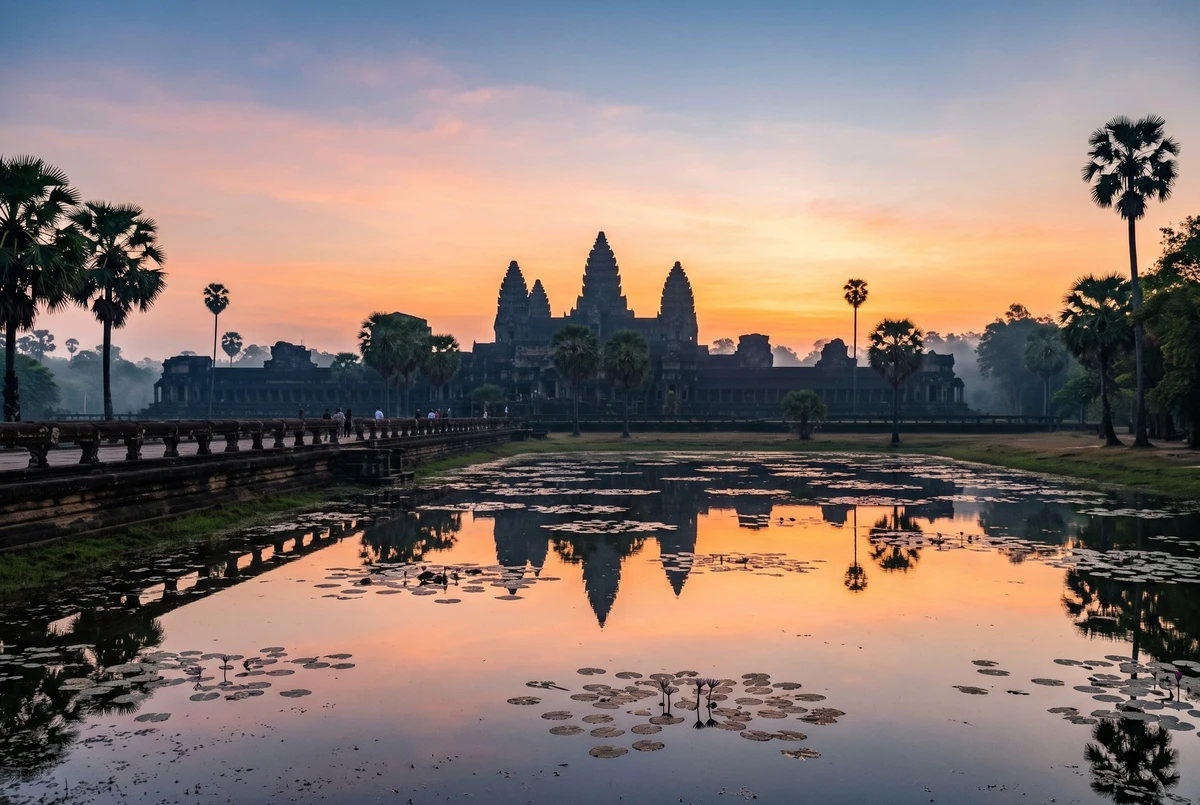
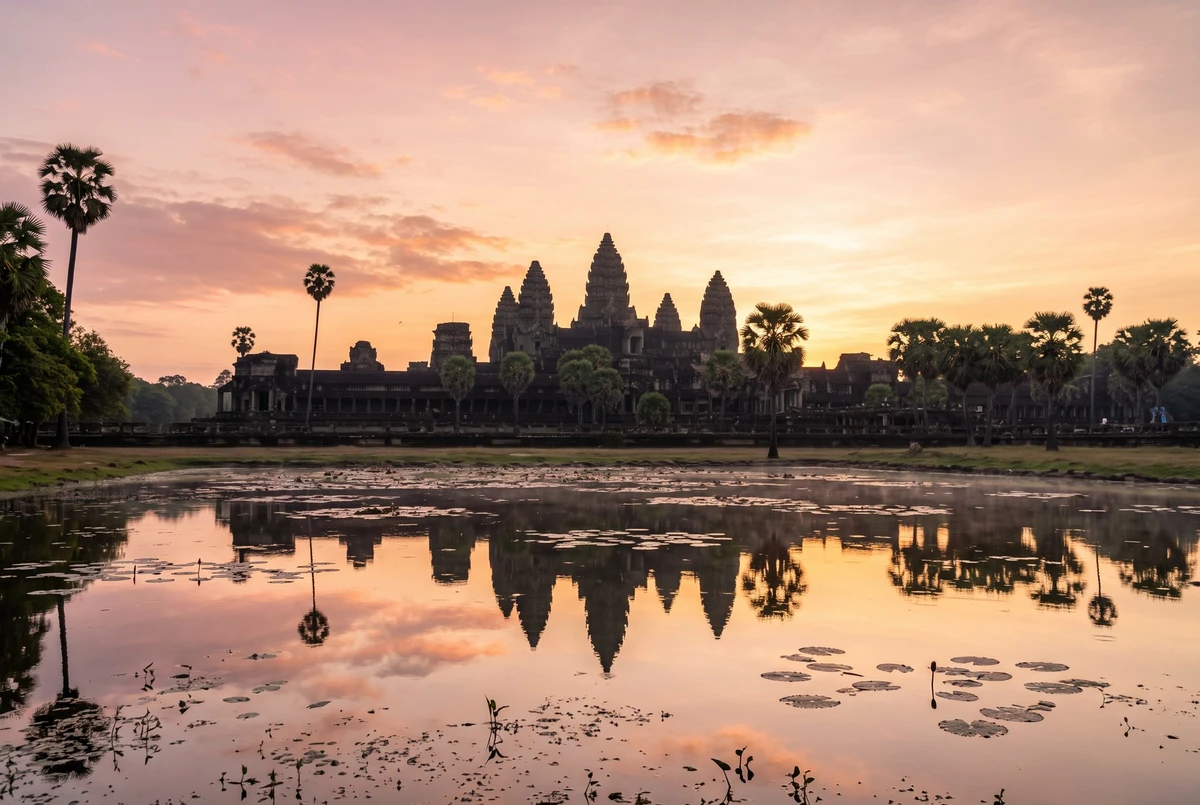
At five in the morning the moat of Angkor Wat is still black and silent. Then the sky behind the five lotus towers turns violet, then apricot, and the whole silhouette appears in the water like a reflection of heaven built in sandstone. Monks in saffron robes cross the causeway, frogs fall quiet, and the smell of incense and damp jungle drifts out of the galleries. A few hours later you are lunching on fragrant fish amok in a wooden house beside a rice field.
Destinations
Choose a city to see everything we arrange there.

Services by city in Cambodia
Attraction Tickets
Airport Transfers
Flight Tickets
Ferry Tickets
The essence of Cambodia
Cambodia is irreplaceable because nowhere else holds the legacy of the Khmer Empire on this scale: hundreds of temples scattered through forest, carved with dancing apsaras and epic battles. Yet the country is just as memorable for its people, gentle and quick to smile after a hard twentieth century, and for its rhythm of rivers, rice and pagodas. Is Cambodia worth visiting? For lovers of history and culture, it belongs on every list. Haqqi Tours arranges flights, temple tickets, private transfers and guided day tours around Siem Reap so your journey flows from the first sunrise.
Why visit Cambodia?
The Glory of the Khmer Empire
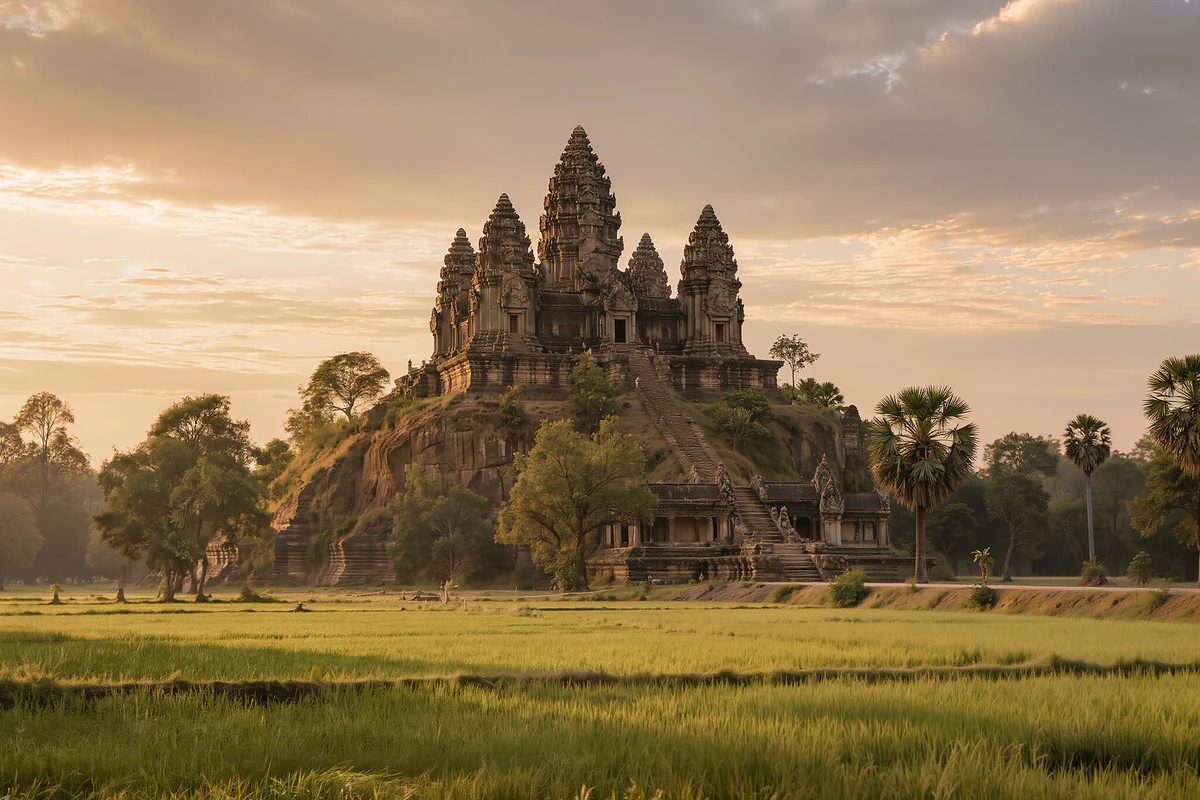
Between the ninth and fifteenth centuries, the Khmer kings ruled much of mainland Southeast Asia from Angkor, building the largest religious monument on Earth and a city served by vast reservoirs and canals. Angkor Wat, Bayon with its serene stone faces and the root-strangled Ta Prohm are only the beginning. Further afield, Preah Vihear crowns a cliff on the northern border, and Sambor Prei Kuk preserves temples older than Angkor itself.
Rivers, Rice and a Living Lake
Cambodia is a land shaped by water. The Mekong flows the length of the country, and the great Tonlé Sap lake swells to several times its size each monsoon as the river reverses its flow, feeding floating villages and flooded forests. Emerald rice paddies stretch to the horizon, dotted with sugar palms. In the southwest, the Cardamom Mountains hold some of the region's largest rainforests, while the south coast offers quiet islands and pepper-growing hills.
Amok, Apsara and the Pagoda Year
Khmer cuisine is subtle and fragrant: fish amok steamed in banana leaves with coconut and kroeung spice paste, beef lok lak, rice noodles called num banh chok for breakfast, and Kampot pepper crab by the sea. Daily life circles the pagoda, where monks collect alms at dawn. Classical apsara dance, inscribed by UNESCO, still echoes the temple carvings, and Khmer New Year in April and the Water Festival in autumn fill the country with celebration.
Moments Only Cambodia Can Give
Watch sunrise over Angkor Wat, then walk among silk-cotton tree roots devouring the walls of Ta Prohm. Glide by boat through the stilted houses of a Tonlé Sap floating village. Explore remote Beng Mealea, a jungle temple left almost as explorers found it. Taste fresh green peppercorns on a Kampot farm, spot rare Irrawaddy river dolphins in the wild near Kratie, and cycle quiet village lanes where children wave from every doorway.
Who is Cambodia for?
Ideal for
- History lovers and temple enthusiasts
- Photographers chasing sunrise and ancient stone
- Couples seeking culture and calm luxury
- Families with curious children ready for adventure
- Food lovers keen on authentic Khmer flavours
- Travellers combining Southeast Asia multi-country trips
Pace & travel style
- Early starts and long midday breaks
- Temples by morning, pool or spa by afternoon
- One or two bases, explored in depth
- Private guided days with air-conditioned transport
When to visit Cambodia
Peak season · November–February
The cool, dry season brings blue skies, lower humidity and comfortable temperatures for temple exploring, making it Cambodia's most popular period. Sunrise at Angkor Wat draws crowds, hotels fill quickly around Christmas and the New Year, and rates rise accordingly. Booking temple passes, private transfers and guided day tours early lets you enjoy the best light without stress.
Shoulder season · March–April and October
March and April are hot and dry, but early starts reward you with quieter temples and Khmer New Year festivities in mid-April. October marks the end of the rains, when the countryside is lush, moats are full and Tonlé Sap boats reach the floating villages easily. Smart travellers enjoy better hotel choice and peaceful mornings among the ruins.
Low season · May–September
This is the green season, with short, heavy afternoon downpours and humid days. Mornings are often clear, the jungle around the temples is at its most vivid, and reflections in the moats are spectacular. Crowds thin dramatically and hotels offer softer rates. It suits flexible travellers, photographers and anyone who prefers Angkor's galleries almost to themselves.
The regions of Cambodia and how to combine its cities
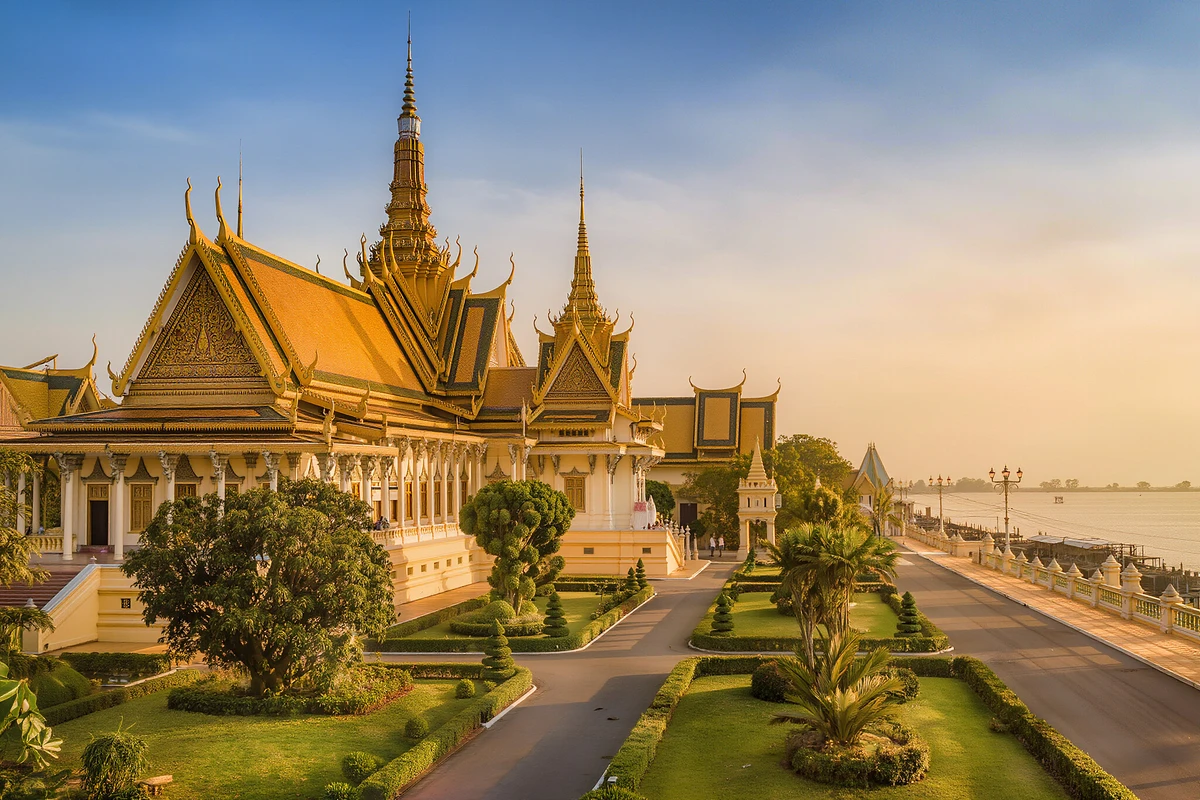
Cambodia divides into a handful of clear regions. The northwest, around Siem Reap and Battambang, is the land of Angkor, with hundreds of temples, the Tonlé Sap lake and a relaxed provincial charm. The heartland follows the Mekong and holds Phnom Penh, the capital, with its Royal Palace, Silver Pagoda and riverfront, alongside the sobering memorials of the country's recent past.
The south coast brings sleepy Kampot and Kep, pepper farms, crab markets and the islands of Koh Rong, while the remote northeast, Mondulkiri and Ratanakiri, offers rolling hills, waterfalls and minority villages. Distances are modest on the map, but roads are slow, so most visitors focus on one or two regions per trip.
Our city directory below centres on Siem Reap, the essential base for any Cambodia journey. From here we arrange guided day tours of Angkor's great temples, issue temple and attraction tickets, run private airport transfers and book boat tickets across the Tonlé Sap. Pair Siem Reap with a flight onward to Phnom Penh or a neighbouring country, and we will connect each leg into one seamless Southeast Asian itinerary.
Before you go: practical tips for Cambodia
Entry & visas
Most nationalities need a visa for Cambodia, but the process is simple: an official eVisa can be obtained online before travel, and visa on arrival is available for many passports at major airports and land borders. Several Southeast Asian nationalities enter visa-free. Requirements depend on your passport, so always check the official Cambodian government portal or your nearest embassy before booking your trip.
Money, cards & tipping
Cambodia uses two currencies side by side: US dollars for most prices in hotels and restaurants, and the Cambodian riel for small change. Cards work in larger hotels and restaurants, but carry cash in small notes for markets, tuk-tuks and temple stalls, and make sure dollar bills are clean and untorn. Tipping guides and drivers is appreciated. Friendly bargaining is normal in markets, never aggressive.
Etiquette & dress code
Temples remain sacred: cover shoulders and knees, remove shoes and hats before entering shrines, and never touch a monk, especially if you are a woman. Do not point your feet toward Buddha images or people. Ask before photographing locals and avoid climbing on fragile carvings. Greet with the sampeah, palms pressed together at chest height, and keep your voice soft in religious spaces.
Getting around
Domestic flights link Siem Reap and Phnom Penh quickly, and we issue those tickets along with international connections. Roads are improving but journeys are slow, so a private car with driver is the most comfortable way to cover distances. In the wetter months, boats cross the Tonlé Sap toward Phnom Penh and Battambang, and we book those tickets. Around the temples, our private chauffeured transfers keep you cool between sites.
Must-do things in Cambodia
- Watch the sun rise behind the towers of Angkor Wat, reflected in its lotus ponds.
- Study the serene stone faces of Bayon temple in the heart of Angkor Thom.
- Walk among giant tree roots swallowing the walls of jungle-wrapped Ta Prohm.
- Take a boat through the stilted houses of a Tonlé Sap floating village.
- Admire the intricate pink sandstone carvings of the exquisite Banteay Srei temple.
- Visit Phnom Penh's Royal Palace and the shimmering floor of the Silver Pagoda.
- Taste fish amok, lok lak and fragrant noodle soups at a local market.
- Explore Beng Mealea, a collapsed jungle temple still half hidden by forest.
- Watch a classical apsara dance performance that echoes the ancient temple carvings.
- Tour a Kampot pepper farm and taste fresh green peppercorns from the vine.
Do’s and don’ts in Cambodia
Do
- Do start temple visits at dawn to beat the heat and the crowds.
- Do dress modestly at temples, covering shoulders and knees.
- Do carry clean, untorn dollar notes and small riel for change.
- Do greet people with a gentle sampeah and a smile.
- Do hire a licensed guide to understand Angkor's history and carvings.
Don’t
- Don't touch anyone's head or point your feet at Buddha images.
- Don't climb on fragile carvings or restricted temple areas.
- Don't give money or sweets to children selling souvenirs.
- Don't raise your voice or show anger in public; it causes loss of face.
- Don't visit orphanages as a tourist activity; support vetted community projects instead.
Cambodia at a glance
Plan Cambodia with Haqqi Tours
Every option is confirmed by our team on WhatsApp before you pay, and delivered by our own people or by trusted local partners we work with in every city. Because we send travellers from all over the world, our partners give us special rates and priority, so you always receive the best. Prices are per person unless marked per vehicle.
About Haqqi Tours: About us Contact us Legal NoticePrivacy PolicyCookies & Marketing PreferencesTerms & ConditionsBooking, Payment & Refunds
Where we operate in Cambodia
Good to know
Frequently Asked Questions
Straight answers to what travellers ask most about Cambodia.
Is it safe to visit Cambodia?
Cambodia is generally a calm and welcoming destination, and Siem Reap in particular is relaxed and well used to international visitors. Take normal precautions: watch bags in busy areas, use registered transport at night and drink bottled water. Check your own government's official travel advice before departure and keep our WhatsApp line handy throughout your trip.
How many days do I need for a first trip to Cambodia?
Seven to ten days is ideal for a first trip to Cambodia. Allow three or four days in Siem Reap for the temples of Angkor and the Tonlé Sap, two or three in Phnom Penh, and a few on the south coast in Kampot or Kep if time allows. With five days, focus on Siem Reap and Phnom Penh.
What is the best way to travel between Cambodia's major cities?
The quickest way between Siem Reap and Phnom Penh is a short domestic flight, which we issue. For comfort on the road, a private car with driver arranged by our team avoids crowded buses. During the wetter months, scenic boats cross the Tonlé Sap, and we can book those tickets for a memorable alternative.
Can a trip to Cambodia be tailored for luxury or private travel?
Absolutely. Cambodia has superb boutique and luxury resorts, especially in Siem Reap. We tailor private guided temple days timed to avoid crowds, chauffeured transfers, private boat trips on the Tonlé Sap and flights onward. Every detail is confirmed by our team on WhatsApp before anything is paid.
Is Cambodia tourist friendly?
Very. Cambodians are known for their warmth and patience, and tourism is a major part of daily life in Siem Reap, with good hotels, restaurants and English-speaking guides. Outside the main centres English is less common, but our guides and drivers bridge every gap and make sure each day runs smoothly.
Is it safe to travel to Cambodia now?
Travel to Cambodia's main destinations, including Siem Reap, Angkor and Phnom Penh, generally continues normally, with steady international visitors. Avoid remote border areas and stick to marked paths in rural zones. Before departure, check your own government's latest official travel advice and keep our WhatsApp line handy so our team can assist at any time.
What is the best time to visit Cambodia?
The best time to visit Cambodia is November to February, the cool, dry season with clear skies and comfortable temperatures for temple exploring. March to May is very hot, while May to October brings green-season rains, usually in short afternoon bursts. For quieter temples and lush scenery, October and early November are excellent.
What is Cambodia famous for?
Cambodia is famous for Angkor Wat, the largest religious monument in the world, and the wider temples of the Khmer Empire. It is also known for the Tonlé Sap lake and its floating villages, fragrant dishes like fish amok, Kampot pepper, classical apsara dance, gentle hospitality and the resilience of its people.
Which cities in Cambodia does Haqqi Tours cover?
Siem Reap, Phnom Penh, Battambang and Kampot. Each city has its own page with everything available there, and a trip across several cities is planned in one WhatsApp conversation.
What can I book in Cambodia?
Day tours, attraction tickets, private airport transfers, flight tickets and ferry tickets - all run or confirmed by Haqqi Tours, each with a fixed price agreed on WhatsApp before you pay.
How do I book a tour or transfer in Cambodia?
Fill in the form on the page you are interested in, or message us on WhatsApp with the date, the number of travellers and your hotel. A member of our team confirms the price and the details in writing within minutes.
Are the prices fixed?
Yes. Every price is agreed in writing on WhatsApp before you travel and does not change on the day - not for traffic, not for a late flight, not for the hour.
Do you arrange transfers between cities in Cambodia?
Yes. Intercity transfers by private car or van are booked the same way as airport transfers; tell the desk the two hotels and the date and it quotes a fixed price for the whole vehicle.
Can you plan a full itinerary across Cambodia?
Yes - tell the desk your dates, the cities you want and who is travelling, and it proposes a day-by-day plan with the tours, transfers and tickets priced in writing. You adjust it in the same chat before confirming.
Are your tours private or in a group?
Both exist, and the page of each tour says which. Private tours have a car and guide for your party alone; small-group tours share a guide with a few other travellers. The desk can convert most group tours into a private day on request.
Do the drivers and guides speak Arabic?
It depends on the country, the city and the day, so we do not promise a particular language for the driver or guide. Tell us your preference and we do our best; the WhatsApp desk itself always works in Arabic and English.