
Gambia
Haqqi Tours arranges day tours, private airport transfers, attraction tickets and multi-day packages across Gambia, confirmed on WhatsApp before you pay.
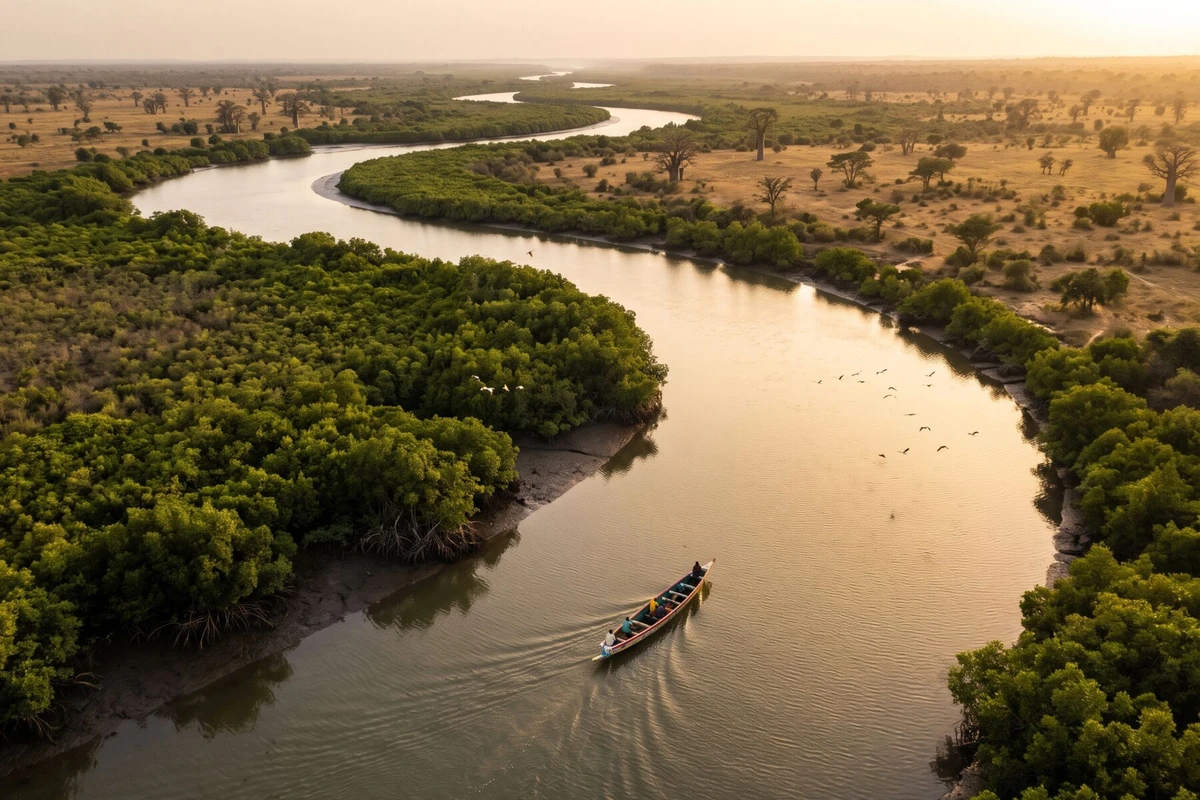
In the Gambia the day begins with the call to prayer drifting over palm trees and the sound of fishing boats being dragged up the sand. Painted wooden pirogues return to the beach at Tanji, women in bright wax-print dresses sort the catch, and inland the River Gambia slides past walls of green mangrove where kingfishers, herons and pelicans wait at the water's edge. The country is small, warm and unhurried, and visitors quickly learn why it calls itself the Smiling Coast of Africa.
Destinations
Choose a city to see everything we arrange there.
Services by city in Gambia
Tours
The essence of Gambia
The Gambia follows its great river for hundreds of kilometres into the heart of West Africa, a narrow ribbon of land surrounded by Senegal except on its Atlantic shore. Around the capital Banjul you find markets, museums, a sacred crocodile pool and forests full of monkeys, and upriver lie quiet villages, birdlife and sites that tell the story of the transatlantic slave trade. We arrange city tours, relaxed river days and private airport transfers, all delivered with calm, attentive service.
Why visit Gambia?
Kingdoms of the River and a Painful Past
For centuries the River Gambia was a highway of trade for Mandinka, Wolof, Fula, Jola and Serahule communities, part of the wider Mali Empire and later small river kingdoms. From the fifteenth century European traders arrived, and Kunta Kinteh Island and the villages of Juffureh and Albreda, now listed by UNESCO, became places where enslaved Africans were held before the Atlantic crossing. The Gambia was a British colony until independence in 1965 and became a republic in 1970.
River, Mangroves and Atlantic Beaches
The River Gambia is the country's backbone, broad and salty near the coast where mangrove creeks such as those of the Tanbi Wetlands surround Banjul, and fresh further inland among forest and rice fields. The Atlantic shore is lined with wide sandy beaches from Bakau and Kololi south to Sanyang and Kartong. Small reserves such as Abuko, Bijilo and Tanji protect forests, lagoons and an exceptional variety of birds, while chimpanzees live on protected islands far upriver.
Domoda, Benachin and Fresh Fish
Gambian cooking is generous and full of flavour. Domoda is a rich groundnut stew with meat or fish, benachin is a one-pot rice cooked with tomatoes, vegetables and fish or chicken, and yassa brings onions and lemon to grilled chicken or fish. Along the coast, fresh barracuda, ladyfish and prawns come straight from the boats, and stalls sell sweet wonjo hibiscus juice and creamy baobab juice. The Gambia is a Muslim-majority country, so halal food is the norm.
Experiences You Can Only Have Here
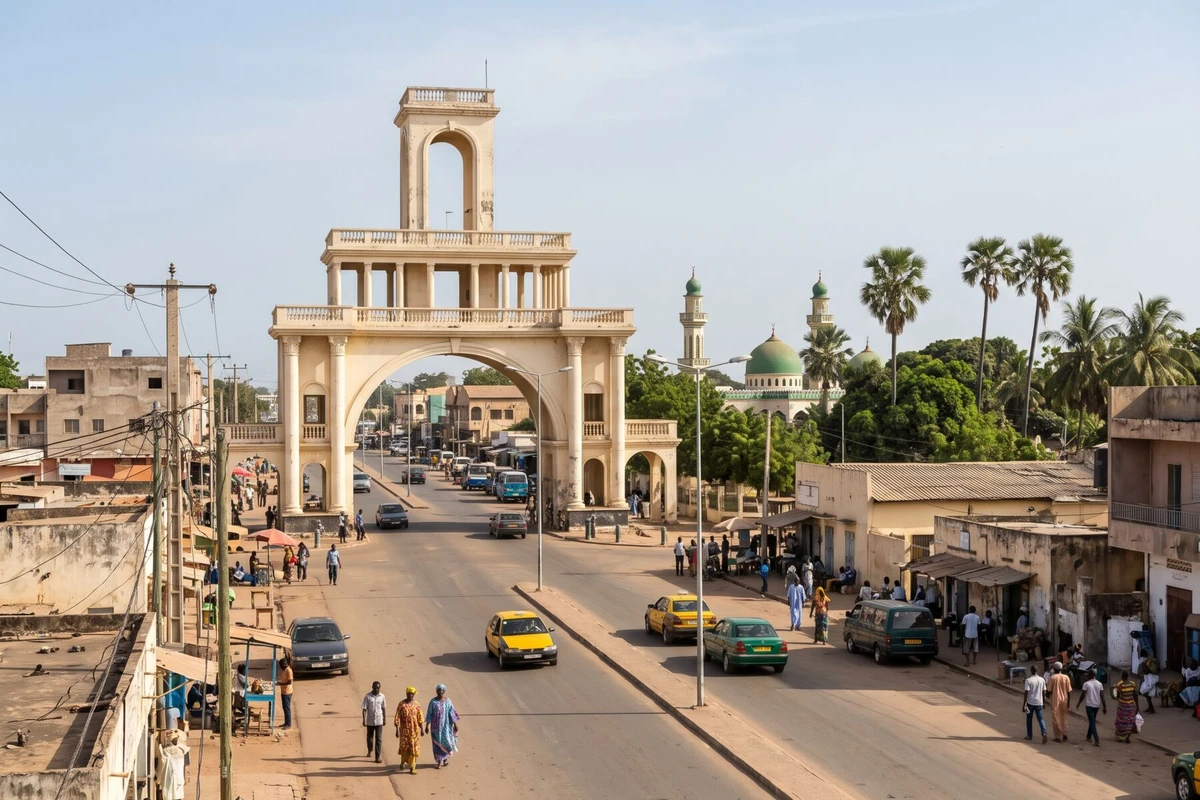
Stand beside the sacred crocodiles of Kachikally pool in Bakau, walk the forest trails of Bijilo where small monkeys come close to the path, and climb Arch 22 for a view over the rooftops of Banjul and the river mouth. Spend a slow day on the water among mangrove creeks watching for kingfishers and ospreys, visit the colourful fish market at Tanji as the boats come in, and travel upriver to Kunta Kinteh Island to reflect on its history.
Who is Gambia for?
Ideal for
- Birdwatchers and nature lovers
- Travellers seeking winter sunshine
- History lovers and heritage travellers
- Couples seeking a relaxed beach escape
- Families wanting gentle wildlife encounters
- First-time visitors to West Africa
Pace & travel style
- Base yourself on the coast near Banjul
- Mix one active day with one beach day
- Five to seven nights suit a first visit
- Plan river trips for the cooler morning hours
When to visit Gambia
Peak season · November–February
The dry season brings the Gambia its most comfortable weather, with sunny days, low humidity and cooler evenings, and migrant birds from Europe join the resident species, making it the best time for birdwatching and river trips. The harmattan wind from the Sahara can bring a dusty haze in some weeks. Christmas and New Year are the busiest period on the coast, so reserve tours and transfers well ahead.
Shoulder season · March–May, October
From March to May the weather stays dry but grows hotter, especially inland, while the coast is cooled by sea breezes and the beaches are quieter. October marks the end of the rains, with green landscapes, full rivers and fewer visitors, though some showers and humidity remain. Both periods offer easy availability and good value for relaxed travel.
Low season · June–September
The rainy season brings heavy downpours, usually in the afternoon or at night, high humidity and lush green countryside. Many birds are breeding and the rice fields are full of water, but some unpaved roads become difficult and a few small lodges close. Mosquitoes are more active, so take advice on malaria prevention. Travel is still possible with flexible plans and good insect repellent.
The regions of Gambia and how to combine its cities
The Gambia is the smallest country on mainland Africa, a strip of land on both banks of the River Gambia that reaches far inland and is surrounded by Senegal except for its short Atlantic coast. The capital Banjul sits on an island at the river mouth, while most visitors stay in the coastal towns just to the west and south, such as Bakau, Fajara, Kotu, Kololi and Brufut, close to the beaches and to the busy town of Serrekunda.
South of the resorts, the coast becomes wilder, with the fishing villages of Tanji and Gunjur and the quiet beaches of Sanyang and Kartong near the Senegal border. Upriver, the landscape turns to forest, savanna and rice fields, with Kunta Kinteh Island and Juffureh on the north bank, Kiang West National Park, the stone circles at Wassu and the river island town of Janjanbureh, reached on long road journeys or slow boat trips.
Our city directory below is anchored in Banjul, the gateway to the country. From Banjul and the nearby coast we arrange city tours with Arch 22, the museum, the crocodile pool and the monkey forest, and relaxed boat days on the River Gambia, while our private drivers handle transfers from Banjul International Airport (BJL). The Gambia pairs naturally with Senegal, from Dakar to the Saloum Delta.
Before you go: practical tips for Gambia
Entry & visas
Citizens of ECOWAS countries and a number of other nations, including many Commonwealth and some European countries, can visit the Gambia without a visa for short stays, while others need a visa or entry clearance arranged in advance. Rules and lists of eligible nationalities change, so check the current rules before you travel. A passport valid for at least six months is expected, and a yellow fever vaccination certificate may be requested.
Money, cards & tipping
The currency is the Gambian dalasi. Cash is king, and money can be exchanged at banks and licensed exchange offices in the coastal towns. Cards work in larger hotels and some restaurants, and cash machines are found in Banjul, Serrekunda and the resort areas, but they can be unreliable upriver. Tipping guides, drivers and boat crews is appreciated for good service.
Etiquette & dress code
Gambians are warm, welcoming and value greetings, so take a moment to say salaam aleikum or good morning before asking a question. Most people are Muslim, so dress modestly away from the beach, especially in markets, villages and mosques, and be respectful during Ramadan. Use your right hand to give and receive, ask before photographing people, and answer persistent beach sellers with a polite but firm no thank you.
Getting around
Banjul International Airport (BJL) lies near Yundum, about thirty to forty minutes from the coastal resorts and around forty-five minutes from Banjul. Yellow and green taxis and shared minibuses run along the coast, and a ferry crosses the river mouth from Banjul to Barra on the north bank. Roads upriver are improving but journeys are long, so for airport arrivals, city tours and trips to the river our private transfers are the most comfortable choice.
Must-do things in Gambia
- Climb Arch 22 for views over Banjul
- Visit the National Museum of the Gambia
- Wander through the stalls of Albert Market
- Meet the sacred crocodiles of Kachikally in Bakau
- Walk among monkeys in Bijilo Forest Park
- Spend a slow day on a River Gambia boat trip
- Watch the fishing boats come in at Tanji
- Look for birds at Abuko Nature Reserve
- Taste domoda, benachin and fresh grilled fish
- Travel upriver to Kunta Kinteh Island
Do’s and don’ts in Gambia
Do
- Greet people before starting a conversation
- Dress modestly in Banjul, markets and villages
- Carry dalasi in small notes for markets and taxis
- Use insect repellent, especially at dusk
- Bring binoculars for the river and the reserves
Don’t
- Don't photograph people without asking first
- Don't swim far out where the currents are strong
- Don't feed the monkeys in the forest parks
- Don't walk the beaches alone late at night
- Don't drink tap water unless it is filtered
Gambia at a glance
Plan Gambia with Haqqi Tours
Every option is confirmed by our team on WhatsApp before you pay, and delivered by our own people or by trusted local partners we work with in every city. Because we send travellers from all over the world, our partners give us special rates and priority, so you always receive the best. Prices are per person unless marked per vehicle.
About Haqqi Tours: About us Contact us Legal NoticePrivacy PolicyCookies & Marketing PreferencesTerms & ConditionsBooking, Payment & Refunds
Where we operate in Gambia
Good to know
Frequently Asked Questions
Straight answers to what travellers ask most about Gambia.
Is it safe to visit the Gambia?
The Gambia is known for its friendly people and is generally a relaxed destination for visitors, especially in the coastal resort areas. As anywhere, take sensible precautions: keep valuables out of sight, use licensed guides and taxis and avoid quiet beaches after dark. Check your own government's official travel advice before departure, and keep our WhatsApp line handy for help with tours and transfers.
How many days do I need in the Gambia?
Five to seven days work well for a first visit: a day for Banjul, the museum and Arch 22, a day for the crocodile pool, the monkey forest and the fishing village of Tanji, a day on the river, and time to rest on the beach. With ten days you can travel upriver to Kunta Kinteh Island, Janjanbureh and the stone circles of Wassu.
What is Kunta Kinteh Island?
Kunta Kinteh Island, formerly known as James Island, is a small island in the River Gambia with the ruins of a fort used during the transatlantic slave trade. Together with Juffureh, Albreda and other sites on the river, it is listed by UNESCO. Visits are reached by boat and offer a quiet, moving moment to learn about this history with a local guide.
Can a trip to the Gambia be tailored for luxury or private travel?
Yes. The coast offers comfortable beachfront hotels, quiet eco-lodges among the mangroves and boutique stays by the sea. We tailor private city tours, relaxed river days at your own pace, family-friendly wildlife outings and chauffeured airport transfers, then confirm every detail with you on WhatsApp before anything is paid.
What is the best time to visit the Gambia?
November to February is the best time to visit the Gambia, with dry sunny days, comfortable temperatures and the finest birdwatching. March to May is hotter but still dry, while June to September brings heavy rain, humidity and lush green landscapes.
What is the Gambia famous for?
The Gambia is famous for its warm hospitality and the nickname the Smiling Coast, for the River Gambia and its mangroves, for birdwatching, for wide Atlantic beaches and for Kunta Kinteh Island and its history. It is also known for the sacred crocodiles of Kachikally, its lively fish markets, and dishes such as domoda and benachin.
Is halal food available in the Gambia?
Yes. The Gambia is a Muslim-majority country, so halal food is the norm in local restaurants, markets and street stalls, and mosques are found in every town and village. Some hotels catering to international visitors also serve pork and other dishes, so ask when ordering if you wish; our team can advise.
How do I get from Banjul airport to my hotel?
Banjul International Airport (BJL) lies near Yundum, about thirty to forty minutes by road from the coastal resorts of Kololi, Kotu and Bakau and around forty-five minutes from Banjul itself. We arrange a private transfer with a driver waiting at arrivals to take you directly to your hotel.
Which cities in Gambia does Haqqi Tours cover?
Banjul. Each city has its own page with everything available there, and a trip across several cities is planned in one WhatsApp conversation.
What can I book in Gambia?
Day tours - all run or confirmed by Haqqi Tours, each with a fixed price agreed on WhatsApp before you pay.
How do I book a tour or transfer in Gambia?
Fill in the form on the page you are interested in, or message us on WhatsApp with the date, the number of travellers and your hotel. A member of our team confirms the price and the details in writing within minutes.
Are the prices fixed?
Yes. Every price is agreed in writing on WhatsApp before you travel and does not change on the day - not for traffic, not for a late flight, not for the hour.
Do you arrange transfers between cities in Gambia?
Yes. Intercity transfers by private car or van are booked the same way as airport transfers; tell the desk the two hotels and the date and it quotes a fixed price for the whole vehicle.
Can you plan a full itinerary across Gambia?
Yes - tell the desk your dates, the cities you want and who is travelling, and it proposes a day-by-day plan with the tours, transfers and tickets priced in writing. You adjust it in the same chat before confirming.
Are your tours private or in a group?
Both exist, and the page of each tour says which. Private tours have a car and guide for your party alone; small-group tours share a guide with a few other travellers. The desk can convert most group tours into a private day on request.
Do the drivers and guides speak Arabic?
It depends on the country, the city and the day, so we do not promise a particular language for the driver or guide. Tell us your preference and we do our best; the WhatsApp desk itself always works in Arabic and English.