
Bhutan
Haqqi Tours arranges day tours, private airport transfers, attraction tickets and multi-day packages across Bhutan, confirmed on WhatsApp before you pay.
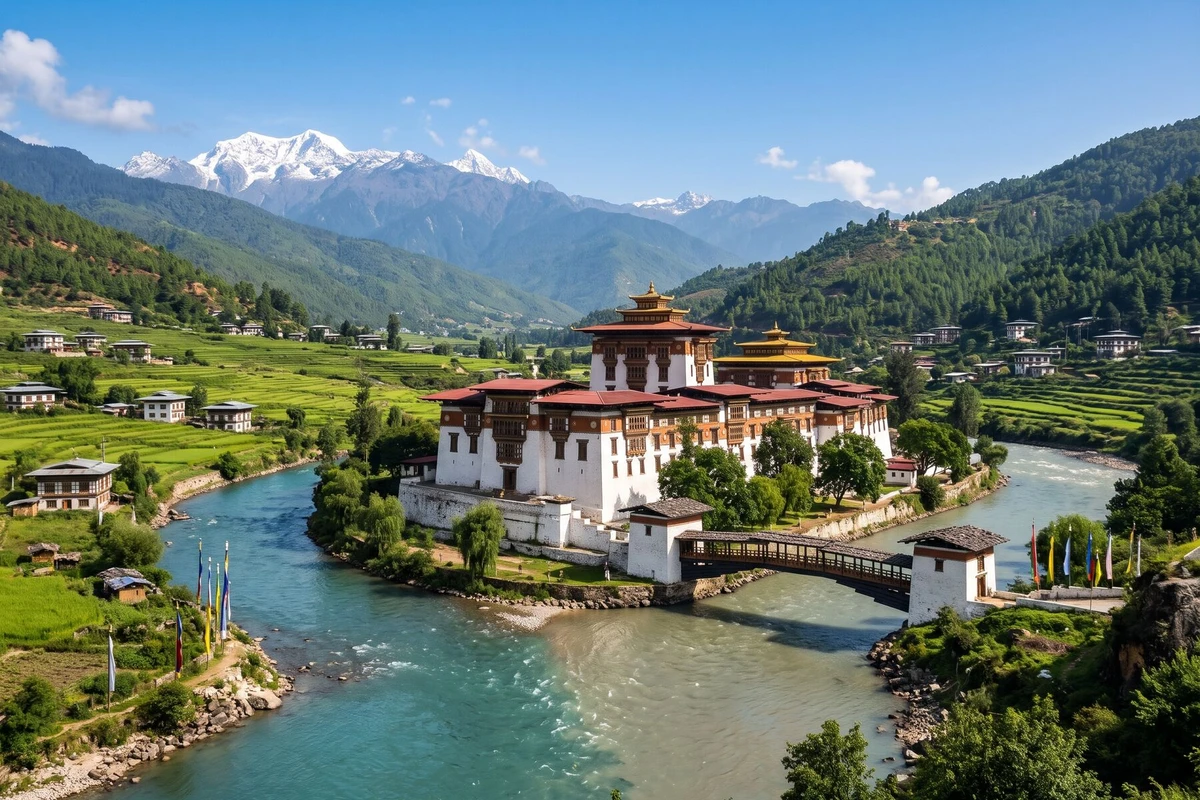
In the Paro valley the morning starts with the sound of prayer wheels and the smell of juniper smoke. Prayer flags ripple on the ridges, farmhouses painted with flowers and clouds sit among rice terraces, and high above the pine forest a white monastery clings to a sheer cliff face, as if it had grown out of the rock itself. This is Paro Taktsang, the Tiger's Nest, and the walk up to it is the moment most travellers remember for the rest of their lives.
Destinations
Choose a city to see everything we arrange there.
Services by city in Bhutan
Tours
The essence of Bhutan
Bhutan is a small Himalayan kingdom that has chosen to open its doors slowly. Great fortress monasteries called dzongs still serve as both temple and town hall, monks in maroon robes cross wooden cantilever bridges, and the national idea of Gross National Happiness shapes how the country protects its forests and its culture. We arrange private journeys through Paro, Thimphu and Punakha with a licensed guide and driver, the Tiger's Nest hike, a traditional hot stone bath and private airport transfers, all delivered with calm, attentive service.
Why visit Bhutan?
A Buddhist Kingdom of Dzongs and Monasteries
Buddhism reached the Himalayan valleys of Bhutan more than a thousand years ago, and temples such as Kyichu Lhakhang in Paro are believed to date from the seventh century. In the seventeenth century the country was unified under a single religious and civil government, and the great dzongs of Paro, Punakha and Thimphu were built as fortresses, monasteries and seats of administration. Bhutan became a hereditary monarchy in 1907 and a constitutional democracy in 2008, while keeping its language, dress and traditions alive.
Himalayan Valleys, Forests and High Passes
Bhutan rises from warm subtropical foothills on the Indian border to snow peaks above seven thousand metres along the frontier with Tibet. Forests still cover most of the land, and the constitution requires that a large share of the country stays forested. Rivers such as the Pa Chhu, the Mo Chhu and the Pho Chhu carve deep valleys, mountain passes such as Dochula and Chele La open views of the high Himalaya, and the Phobjikha valley welcomes rare black-necked cranes every winter.
Chillies, Cheese and Red Rice
Bhutanese cooking is simple, warming and proudly spicy. The national dish, ema datshi, is green or dried chillies cooked in a soft farmhouse cheese, served with nutty red rice grown in the Paro valley. Kewa datshi swaps in potatoes, shamu datshi uses mushrooms, and momos filled with cheese or vegetables are found everywhere, along with buckwheat pancakes in the central valleys and butter tea. Halal food is limited, but vegetarian dishes are easy and many kitchens cook to order; our team can advise.
Experiences You Can Only Have Here
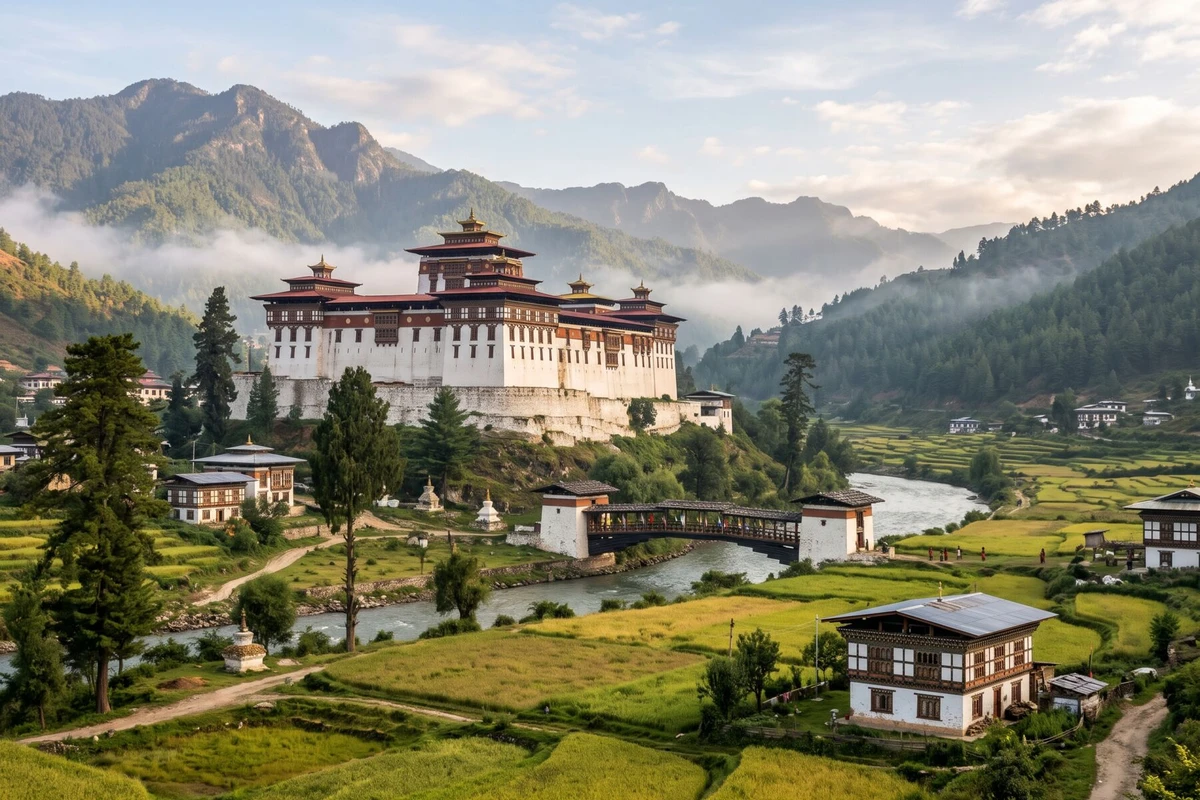
Hike through blue pine forest to the Tiger's Nest and look across the gorge at a monastery hanging from the cliff, then soak tired legs in a wooden tub heated with red-hot river stones and wild herbs. Walk across the covered bridge into Rinpung Dzong in Paro, watch monks debating in Punakha Dzong where two rivers meet, stand among the memorial chortens on the Dochula pass with the Himalaya on the horizon, and try your hand at archery, the national sport, on a village field.
Who is Bhutan for?
Ideal for
- Walkers and gentle hikers
- Travellers seeking calm and culture
- Photographers of mountains and monasteries
- Couples on a once-in-a-lifetime journey
- Families with active older children
- Nature lovers and birdwatchers
Pace & travel style
- Spend your first day in Paro adjusting to the altitude
- Hike the Tiger's Nest at the end, not the start
- Allow four to seven days for the western valleys
- Start early to enjoy dzongs before the midday light
When to visit Bhutan
Peak season · March–May, September–November
Spring and autumn are Bhutan's finest seasons. In spring rhododendrons and magnolias flower on the hillsides and the Paro festival fills the dzong courtyard with masked dances, while autumn brings crisp air, clear Himalayan views from the passes and the colourful Thimphu festival. Days are mild and nights are cool. These months are the busiest, so reserve your visa, guide, flights and private tour well ahead.
Shoulder season · December–February
Winter is cold at night but often sunny and dry, with some of the clearest mountain views of the year and very few visitors. Snow can dust the passes and occasionally close the road over Dochula for a few hours, while the Punakha valley stays mild. Black-necked cranes arrive in the Phobjikha valley in this season. Pack warm layers, and expect some rural guesthouses to be quieter.
Low season · June–August
The summer monsoon brings warm days, frequent rain and cloud that can hide the peaks, but the valleys turn a brilliant green, rice terraces are planted and wildflowers cover the high meadows. Trails can be muddy and landslides sometimes delay mountain roads, so flexible plans help. There are fewer travellers, and the Tiger's Nest hike is still possible with good shoes and a rain jacket.
The regions of Bhutan and how to combine its cities
Bhutan lies in the eastern Himalaya between India to the south, east and west and the Tibetan plateau to the north. The west holds the country's best-known valleys: Paro, with the only international airport, Thimphu, the capital, and the warmer Punakha valley beyond the Dochula pass. The quiet Haa valley lies over the Chele La pass from Paro, and the town of Phuentsholing sits on the Indian border in the south.
Central Bhutan is the spiritual heartland, with the valleys of Bumthang, the great dzong of Trongsa and the glacial Phobjikha valley where cranes spend the winter. The east is remote and rural, with Trashigang and Mongar linked by long mountain roads, while the far north rises to the high peaks along the Tibetan frontier, reached only on long treks. Travel between regions is slow but beautiful, on winding roads through forests and over passes.
Our city directory below is anchored in Paro, the natural gateway to the kingdom. From Paro we arrange the Tiger's Nest hike with a hot stone bath and private multi-day tours through Thimphu and Punakha, with a licensed guide and driver, while our team handles private transfers from Paro airport (PBH). Bhutan pairs naturally with a journey to Nepal or northern India.
Before you go: practical tips for Bhutan
Entry & visas
Apart from citizens of India, who can obtain an entry permit with a valid passport or voter card, all visitors need a Bhutan visa approved in advance through the official online system, usually arranged together with your tour and guide. A daily Sustainable Development Fee applies to most visitors, and rules on guides, fees and itineraries have changed in recent years, so check the current rules before you travel. Your passport should be valid for at least six months.
Money, cards & tipping
The currency is the Bhutanese ngultrum, pegged to the Indian rupee, and Indian rupees are widely accepted, though some larger notes may be refused. Cards work in many hotels and larger shops in Paro and Thimphu, but small cafés, farmhouses and village stalls prefer cash, and cash machines can be unreliable outside the main towns. Tipping guides and drivers at the end of a tour is customary for good service.
Etiquette & dress code
Bhutanese people are gentle, courteous and deeply devout. Dress modestly with long sleeves and covered legs when visiting dzongs and temples, remove hats and sometimes shoes, and walk clockwise around chortens, prayer wheels and temples. Photography is not allowed inside most temple halls, so ask your guide. Do not point at religious objects with one finger, never climb on chortens, and speak quietly in sacred places.
Getting around
Most visitors fly into Paro International Airport (PBH), one of the most dramatic approaches in the world, between steep mountain ridges. Within Bhutan, travel is by road on narrow, winding mountain highways, and most itineraries are made with a private vehicle, a driver and a licensed guide. Paro to Thimphu takes about an hour, and Thimphu to Punakha around two and a half to three hours over the Dochula pass. Our private transfers meet every arrival at Paro.
Must-do things in Bhutan
- Hike to the Tiger's Nest monastery above the Paro valley
- Soak in a traditional hot stone bath after the hike
- Cross the covered bridge into Rinpung Dzong in Paro
- Visit the ancient temple of Kyichu Lhakhang
- See the giant seated Buddha statue above Thimphu
- Stand among the memorial chortens on the Dochula pass
- Explore Punakha Dzong where two rivers meet
- Walk across the long suspension bridge near Punakha
- Taste ema datshi with Paro red rice
- Drive up to Chele La for views of the high Himalaya
Do’s and don’ts in Bhutan
Do
- Dress modestly with long sleeves for dzongs and temples
- Walk clockwise around chortens and prayer wheels
- Carry ngultrum or Indian rupees in small notes
- Bring good walking shoes and warm layers
- Drink plenty of water to help with the altitude
Don’t
- Don't photograph inside temples without asking your guide
- Don't point at religious objects or climb on chortens
- Don't rush the Tiger's Nest hike on your first day
- Don't expect to travel without a licensed guide on most itineraries
- Don't drink tap water unless it is boiled or filtered
Bhutan at a glance
Plan Bhutan with Haqqi Tours
Every option is confirmed by our team on WhatsApp before you pay, and delivered by our own people or by trusted local partners we work with in every city. Because we send travellers from all over the world, our partners give us special rates and priority, so you always receive the best. Prices are per person unless marked per vehicle.
About Haqqi Tours: About us Contact us Legal NoticePrivacy PolicyCookies & Marketing PreferencesTerms & ConditionsBooking, Payment & Refunds
Where we operate in Bhutan
Good to know
Frequently Asked Questions
Straight answers to what travellers ask most about Bhutan.
Is it safe to visit Bhutan?
Bhutan is widely considered one of the safest and calmest countries in Asia, with very low crime and a gentle pace of life. The main things to plan for are altitude, mountain roads and changing weather, especially in the monsoon. Check your own government's official travel advice before departure, follow your guide's advice on the trails, and keep our WhatsApp line handy throughout your journey.
How many days do I need in Bhutan?
Four to five days cover the classic western valleys: Paro and the Tiger's Nest, the capital Thimphu, and the Punakha valley over the Dochula pass. With a week or more you can add the Haa valley, the crane valley of Phobjikha in winter or the spiritual heartland of Bumthang in central Bhutan.
How hard is the Tiger's Nest hike?
The trail climbs from the valley floor at around two thousand six hundred metres to a viewpoint opposite the monastery and then down and up a stone stairway to the entrance, at a little over three thousand metres. Most reasonably fit walkers take two to three hours up and a little less down, with a café stop halfway. Ponies can carry you part of the way up, and starting early is best.
Can a trip to Bhutan be tailored for luxury or private travel?
Yes. Bhutan offers elegant lodges with mountain views, boutique hotels in traditional style and warm farmhouse stays. We tailor private tours with your own guide and driver, relaxed timings for families, a hot stone bath in a farmhouse and chauffeured airport transfers, then confirm every detail with you on WhatsApp before anything is paid.
What is the best time to visit Bhutan?
March to May and September to November are the best times to visit Bhutan, with mild days, clear views and the big festivals in Paro and Thimphu. December to February is cold but sunny and quiet, while June to August brings monsoon rain, green valleys and fewer travellers.
What is Bhutan famous for?
Bhutan is famous for the Tiger's Nest monastery on its cliff, for great dzongs such as Punakha and Paro, for masked dance festivals, for its idea of Gross National Happiness and for keeping most of its land under forest. It is also known for its national dress, archery, spicy chilli and cheese dishes and its careful approach to tourism.
Is halal food available in Bhutan?
Halal food is limited in Bhutan, and dedicated halal restaurants are very rare. Most meat is imported, so ask before ordering, but vegetarian cooking is everywhere: chillies and cheese, potatoes, mushrooms, lentils, red rice, vegetable momos and buckwheat pancakes. Hotels and guides are used to special requests, and our team can advise.
How do I get from Paro airport to my hotel?
Paro International Airport (PBH) lies at the edge of Paro town, about ten minutes from the town centre and about an hour by road from Thimphu. Your guide and driver usually meet you at arrivals, and we arrange a private transfer directly to your hotel in Paro or Thimphu.
Which cities in Bhutan does Haqqi Tours cover?
Paro. Each city has its own page with everything available there, and a trip across several cities is planned in one WhatsApp conversation.
What can I book in Bhutan?
Day tours - all run or confirmed by Haqqi Tours, each with a fixed price agreed on WhatsApp before you pay.
How do I book a tour or transfer in Bhutan?
Fill in the form on the page you are interested in, or message us on WhatsApp with the date, the number of travellers and your hotel. A member of our team confirms the price and the details in writing within minutes.
Are the prices fixed?
Yes. Every price is agreed in writing on WhatsApp before you travel and does not change on the day - not for traffic, not for a late flight, not for the hour.
Do you arrange transfers between cities in Bhutan?
Yes. Intercity transfers by private car or van are booked the same way as airport transfers; tell the desk the two hotels and the date and it quotes a fixed price for the whole vehicle.
Can you plan a full itinerary across Bhutan?
Yes - tell the desk your dates, the cities you want and who is travelling, and it proposes a day-by-day plan with the tours, transfers and tickets priced in writing. You adjust it in the same chat before confirming.
Are your tours private or in a group?
Both exist, and the page of each tour says which. Private tours have a car and guide for your party alone; small-group tours share a guide with a few other travellers. The desk can convert most group tours into a private day on request.
Do the drivers and guides speak Arabic?
It depends on the country, the city and the day, so we do not promise a particular language for the driver or guide. Tell us your preference and we do our best; the WhatsApp desk itself always works in Arabic and English.