
Azerbaijan
Haqqi Tours arranges day tours, private airport transfers, attraction tickets and multi-day packages across Azerbaijan, confirmed on WhatsApp before you pay.
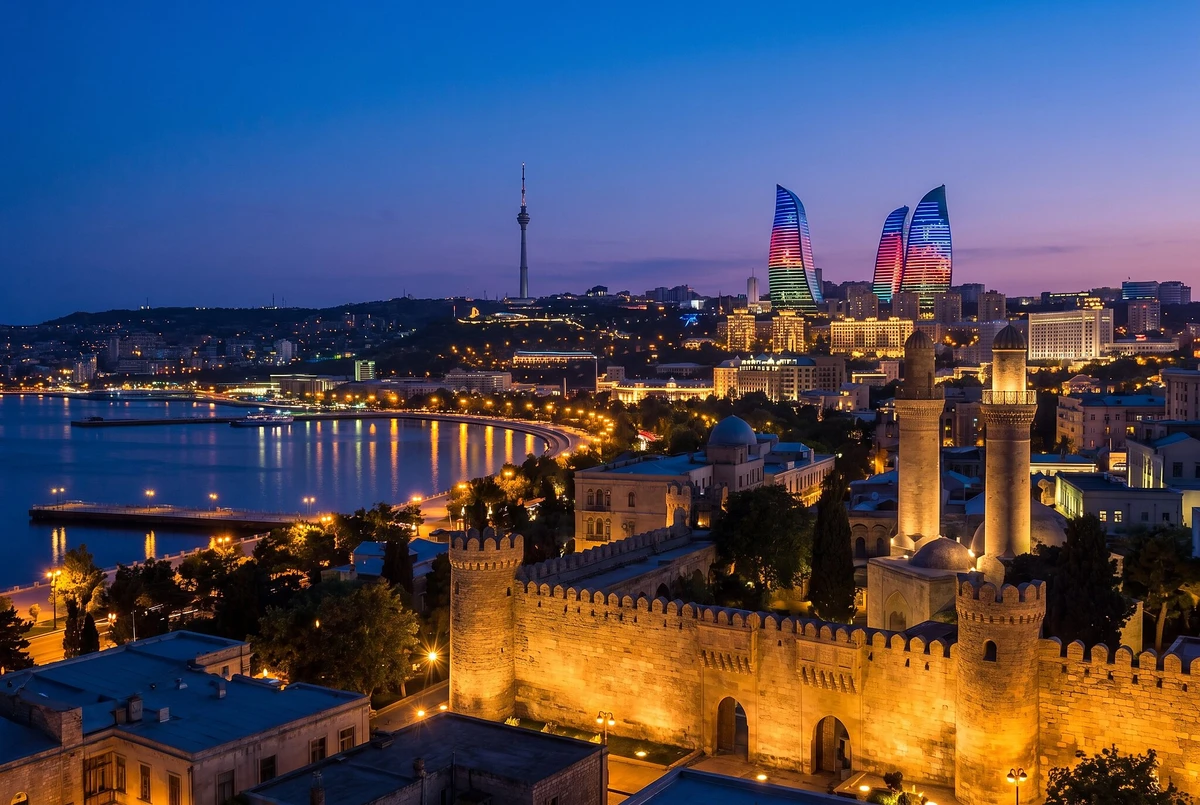
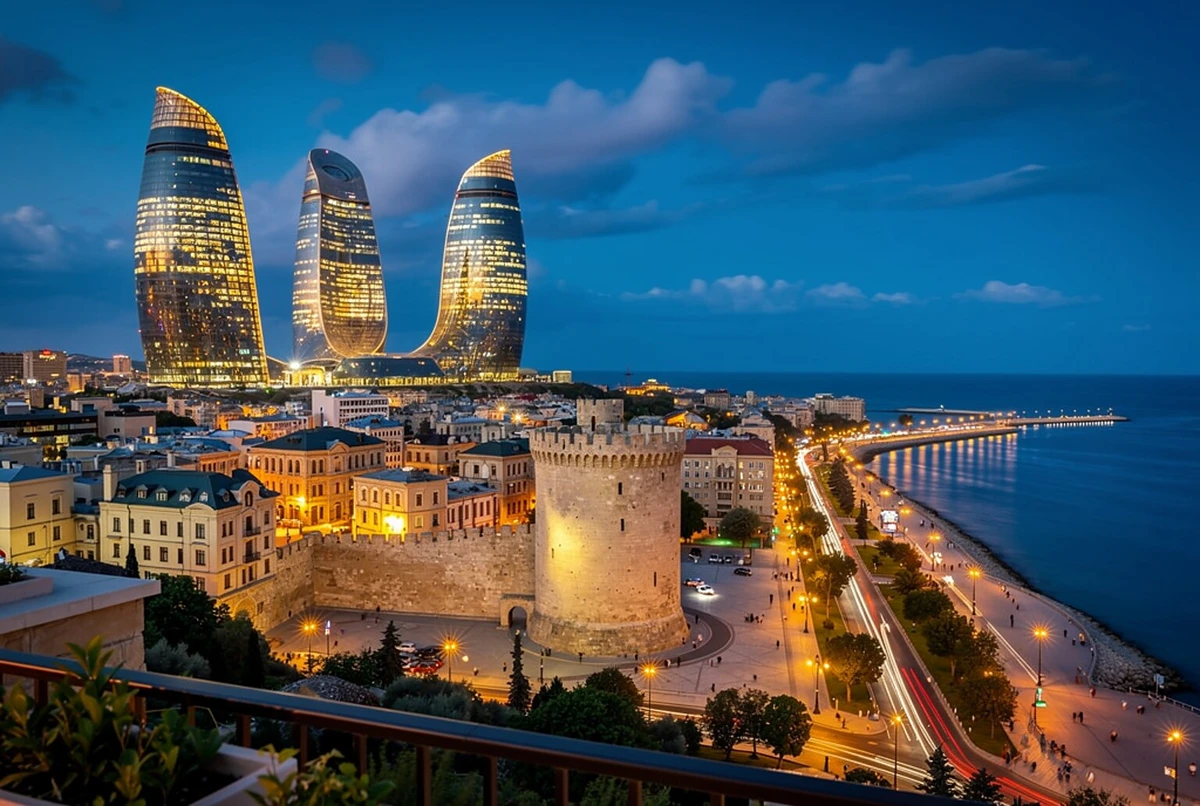
Evening in Baku arrives on the wind. It sweeps in from the Caspian, ruffling the plane trees along the seafront boulevard, while the three Flame Towers above the city flicker into life in waves of orange and blue. Inside the walls of the Old City, lanes that once served Silk Road merchants glow under lantern light; carpet sellers roll up their wares, and the scent of saffron plov drifts from a courtyard where tea is served in slim, pear-shaped glasses with cherry jam on the side.
Destinations
Choose a city to see everything we arrange there.
Services by city in Azerbaijan
Tours
Airport Transfers
Flight Tickets
Train Tickets
Ferry Tickets
The essence of Azerbaijan
Azerbaijan calls itself the Land of Fire, and the name is literal. Natural gas burns endlessly from a hillside at Yanar Dağ, mud volcanoes gurgle on the plains of Gobustan, and an old fire temple at Surakhani recalls centuries of flame worship. Within a few hours of the capital you reach Caucasus villages where coppersmiths still hammer by hand, silk-road caravanserais where you can sleep, and forests that glow gold in autumn. It is a country of strong hospitality and striking modernity, and Haqqi Tours opens it up from the moment you land in Baku.
Why visit Azerbaijan?
Rock Art, Fire Temples and Silk Road Palaces
Azerbaijan’s story reaches deep into prehistory: thousands of petroglyphs at Gobustan show hunters, boats and dancers carved into the rock. Fire worship left the Ateshgah of Surakhani, while Baku’s walled Old City, with the Maiden Tower and the Palace of the Shirvanshahs, is listed by UNESCO. In the northwest, Sheki’s Khan’s Palace dazzles with stained-glass shebeke windows, and the round church at Kish recalls the ancient kingdom of Caucasian Albania.
From the Caspian Shore to the High Caucasus
Few countries pack so many climates into so little space. The dry Absheron peninsula wraps around Baku on the Caspian Sea, while the Greater Caucasus rises steeply to the north, crowned by Shahdag and the remote stone village of Khinalug. Azerbaijan holds a large share of the world’s mud volcanoes, and in the humid south around Lankaran, ancient Hyrcanian forests and tea plantations descend towards the Caspian coast.
Plov, Mugham and the Ritual of Tea
Azerbaijani cuisine is generous and fragrant. Saffron plov arrives crowned with dried fruit and chestnuts, dolma comes wrapped in vine leaves, and thin qutab flatbreads are folded around herbs or pumpkin. In Sheki, piti lamb stew is slow-cooked in clay pots and followed by layered Sheki halva. Tea is poured endlessly, mugham music and carpet weaving are UNESCO-recognised, and spring’s Novruz festival brings bonfires, sprouted wheat and painted eggs.
Experiences Found Only in Azerbaijan
Stand beside the eternal flames of Yanar Dağ after dark as the hillside burns against the night. Step between bubbling mud volcanoes near Gobustan, then sleep in a restored eighteenth-century caravanserai in Sheki. Drive the mountain road to Khinalug, one of the highest inhabited villages in the Caucasus, wander the copper street of Lahij, and watch the Flame Towers blaze over the Caspian from the heights of Highland Park.
Who is Azerbaijan for?
Ideal for
- Curious travellers seeking somewhere genuinely different
- History lovers drawn to Silk Road heritage
- Couples looking for a stylish city break by the sea
- Families combining city sights and mountain resorts
- Food lovers interested in Caucasian cuisine
- Photographers chasing fire, mud volcanoes and mountains
Pace & travel style
- Baku base with day tours into the Absheron peninsula
- A loop through the Caucasus foothills to Sheki
- Private car and driver on mountain roads
- Slow evenings of tea and city lights in Baku
When to visit Azerbaijan
Peak season · June–August
Summer in Azerbaijan is hot and dry in Baku and the lowlands, and the Caspian beaches on the Absheron peninsula fill with families. The mountain resorts of Gabala, Quba and Shahdag offer cool air, meadows and hiking, making a city-and-mountains combination ideal. This is a busy season for hotels, especially around holidays, so day tours and accommodation should be arranged early.
Shoulder season · March–May & September–October
Spring and autumn are the most comfortable times to visit Azerbaijan. Novruz in March fills Baku with bonfires, music and sweets, and orchards bloom across the regions. In autumn, forests around Sheki and Gabala turn gold, pomegranate harvests bring festivals, and the city is pleasant for long walks. Temperatures are mild, hotels are calmer and the light is beautiful for photography.
Low season · November–February
Winter brings cold, gusty winds to Baku and snow to the mountains, where Shahdag and Tufandag become lively ski resorts. The capital stays atmospheric, with museums, the Carpet Museum, cosy tea houses and festive lights along the boulevard. Some high mountain roads, including the route to Khinalug, can be difficult, but hotel rates are gentler and Baku’s sights feel uncrowded.
The regions of Azerbaijan and how to combine its cities
Azerbaijan divides naturally into several distinct areas. The Absheron peninsula, pushing into the Caspian Sea, holds Baku and its surroundings: fire sites at Yanar Dağ and Surakhani, the beaches and the rock art of Gobustan to the south. North of the capital, the road climbs to Quba with its apple orchards and to the high Caucasus around Shahdag and Khinalug.
Northwest, the green foothills of the Greater Caucasus hold Gabala’s resorts, the copper village of Lahij and Sheki, once a Silk Road stop famed for silk and halva. The west centres on Ganja, the second city, near the mountain lake of Göygöl, while the subtropical south around Lankaran and Astara is a world of tea gardens and forest. The separate region of Nakhchivan, reached by air, has its own mountains and mausoleums.
Our city directory below begins with Baku, Azerbaijan’s capital and the gateway for international flights. From Baku we arrange private airport transfers, guided day tours to Gobustan, the Absheron fire sites and beyond, flight tickets, train tickets towards the regions and ferry tickets across the Caspian, working with our trusted local partners. Pair several days in Baku with a journey to Sheki or Quba for the ideal Azerbaijani itinerary.
Before you go: practical tips for Azerbaijan
Entry & visas
Many nationalities can obtain an Azerbaijani e-visa online through the official ASAN Visa portal before travel, and some passports enjoy visa-free entry for short stays. Rules depend on your passport and can change, so check the official government portal or your nearest Azerbaijani embassy before booking. Apply in good time, and keep a printed copy of your approval with your travel documents.
Money, cards & tipping
The Azerbaijani manat is the local currency. Cards are widely accepted in Baku’s hotels, malls and restaurants, but carry cash for the regions, markets, taxis and village guesthouses; ATMs are easy to find in towns. Tipping of around ten percent is appreciated where service is not included. Bargaining is expected in carpet shops and bazaars, always with patience and a smile.
Etiquette & dress code
Azerbaijan is a secular country with a largely Muslim population. Dress modestly in mosques and rural areas, covering shoulders and knees; women should carry a scarf for mosque visits, and shoes come off at the door. Accept tea when offered, as hospitality matters greatly. Avoid photographing military or government sites, and steer clear of sensitive political topics in conversation.
Getting around
Domestic flights link Baku with Nakhchivan and Gabala, and trains connect the capital with Ganja and other regional centres. Roads to Quba, Sheki and Gabala are good but cross mountain passes, so a private car with driver is the easiest way to explore. Caspian ferries leave from the Port of Baku at Alat, and our private chauffeured transfers meet you at Heydar Aliyev International Airport.
Must-do things in Azerbaijan
- Wander Baku’s walled Old City and climb the Maiden Tower for harbour views
- Explore the Palace of the Shirvanshahs and its royal bathhouse
- Watch the flames of Yanar Dağ burn against the night sky
- See prehistoric rock carvings at Gobustan and nearby bubbling mud volcanoes
- Visit the Ateshgah fire temple at Surakhani on the Absheron peninsula
- Admire the flowing curves of the Heydar Aliyev Centre in Baku
- Stroll the Caspian seafront boulevard as the Flame Towers light up
- Stay overnight in a historic caravanserai in Sheki and tour the Khan’s Palace
- Drive to Khinalug, one of the highest villages in the Caucasus
- Taste saffron plov, qutab and tea with jam in a traditional tea house
Do’s and don’ts in Azerbaijan
Do
- Accept a glass of tea; it opens every conversation
- Carry a scarf for mosque visits and rural areas
- Pack layers, as Baku’s wind can turn a mild day cool
- Carry cash when travelling outside Baku
- Ask permission before photographing people, especially women and elders
Don’t
- Don’t photograph military, police or government buildings
- Don’t raise sensitive political topics with people you have just met
- Don’t rush Baku; the Old City rewards slow exploration
- Don’t attempt high mountain roads in winter without checking conditions
- Don’t refuse hospitality abruptly; decline politely if you must
Azerbaijan at a glance
Plan Azerbaijan with Haqqi Tours
Every option is confirmed by our team on WhatsApp before you pay, and delivered by our own people or by trusted local partners we work with in every city. Because we send travellers from all over the world, our partners give us special rates and priority, so you always receive the best. Prices are per person unless marked per vehicle.
About Haqqi Tours: About us Contact us Legal NoticePrivacy PolicyCookies & Marketing PreferencesTerms & ConditionsBooking, Payment & Refunds
Where we operate in Azerbaijan
Good to know
Frequently Asked Questions
Straight answers to what travellers ask most about Azerbaijan.
Is it safe to visit Azerbaijan?
Azerbaijan is generally a safe and hospitable destination, and Baku is clean, well policed and comfortable to explore on foot, even in the evening. Take normal care with belongings in crowded places, use licensed taxis or ride-hailing apps, and follow local guidance in remote mountain areas. Our team stays reachable on WhatsApp throughout your trip.
How many days do I need for a first trip to Azerbaijan?
Five to seven days is ideal for a first trip to Azerbaijan: three days in Baku with day tours to Gobustan and the Absheron fire sites, then two or three days in Sheki, Gabala or Quba. With ten days you can add Khinalug, Lahij or the green south around Lankaran.
What is the best way to travel between Azerbaijan's major cities?
A private car with driver is the most comfortable way to travel between Baku, Sheki, Gabala and Quba, since roads are good but cross mountain passes and public options are limited. Trains link Baku with Ganja, and flights reach Nakhchivan and Gabala. We arrange transfers, drivers, flights and train tickets for your route.
Can a trip to Azerbaijan be tailored for luxury or private travel?
Yes. We can tailor a private Azerbaijan journey with five-star seafront hotels in Baku, a dedicated driver-guide, mountain resort stays in Gabala or Shahdag and private visits to the fire sites. Because we send many travellers to Azerbaijan, our trusted local partners give us priority and special rates, so our travellers always receive the best.
Is Azerbaijan tourist friendly?
Yes. Azerbaijanis are famously hospitable, and visitors are often offered tea or invited to share a meal. Baku has excellent hotels, modern transport and English signage in central areas, and many young people speak English. In the regions, Russian or Azerbaijani is more common, so a guide or our arranged driver makes travel easier.
Is it safe to travel to Azerbaijan now?
Travel to Baku and Azerbaijan’s main regions generally runs normally, but conditions anywhere can change, so check your own government’s official travel advice shortly before departure, including any areas it advises against. Keep our WhatsApp line handy; our team follows your arrangements closely and can adjust day tours, transfers or tickets if needed.
What is the best time to visit Azerbaijan?
April to June and September to October are the best times to visit Azerbaijan, with mild weather for Baku’s Old City and pleasant conditions in the mountains. March brings the Novruz festival, summer suits mountain resorts while Baku is hot, and winter offers skiing at Shahdag and quieter, festive city breaks.
What is Azerbaijan famous for?
Azerbaijan is famous as the Land of Fire, for Yanar Dağ’s burning hillside, the Flame Towers and the Old City of Baku. It is also known for Gobustan’s rock art and mud volcanoes, the Silk Road town of Sheki, handwoven carpets, mugham music, saffron plov and warm tea-house hospitality.
Which cities in Azerbaijan does Haqqi Tours cover?
Baku. Each city has its own page with everything available there, and a trip across several cities is planned in one WhatsApp conversation.
What can I book in Azerbaijan?
Day tours, private airport transfers, flight tickets, train tickets and ferry tickets - all run or confirmed by Haqqi Tours, each with a fixed price agreed on WhatsApp before you pay.
How do I book a tour or transfer in Azerbaijan?
Fill in the form on the page you are interested in, or message us on WhatsApp with the date, the number of travellers and your hotel. A member of our team confirms the price and the details in writing within minutes.
Are the prices fixed?
Yes. Every price is agreed in writing on WhatsApp before you travel and does not change on the day - not for traffic, not for a late flight, not for the hour.
Do you arrange transfers between cities in Azerbaijan?
Yes. Intercity transfers by private car or van are booked the same way as airport transfers; tell the desk the two hotels and the date and it quotes a fixed price for the whole vehicle.
Can you plan a full itinerary across Azerbaijan?
Yes - tell the desk your dates, the cities you want and who is travelling, and it proposes a day-by-day plan with the tours, transfers and tickets priced in writing. You adjust it in the same chat before confirming.
Are your tours private or in a group?
Both exist, and the page of each tour says which. Private tours have a car and guide for your party alone; small-group tours share a guide with a few other travellers. The desk can convert most group tours into a private day on request.
Do the drivers and guides speak Arabic?
It depends on the country, the city and the day, so we do not promise a particular language for the driver or guide. Tell us your preference and we do our best; the WhatsApp desk itself always works in Arabic and English.