
Ivory Coast
Haqqi Tours arranges day tours, private airport transfers, attraction tickets and multi-day packages across Ivory Coast, confirmed on WhatsApp before you pay.
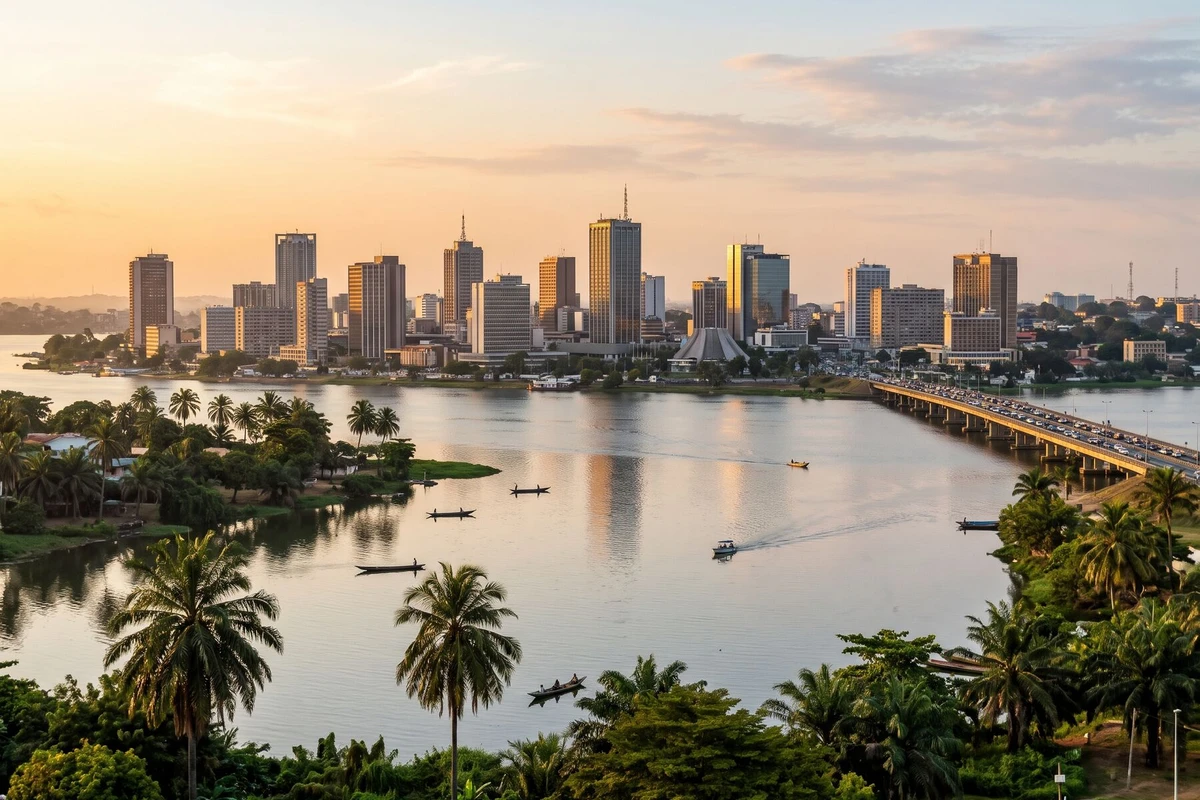
In Abidjan the morning light spreads across the Ebrié Lagoon and lights up the glass towers of the Plateau, the business district that has earned the city its reputation as the pearl of the lagoons. Water buses cross between the districts, traders at Treichville market stack yams, plantains and bright wax-print cloth, and the smell of grilled fish and attiéké drifts from street-side kitchens. It is a big, confident and fast-moving city, the economic heart of French-speaking West Africa.
Destinations
Choose a city to see everything we arrange there.
Services by city in Ivory Coast
Tours
The essence of Ivory Coast
Beyond Abidjan, Ivory Coast opens into a land of contrasts: the faded colonial streets of Grand-Bassam, its first capital and a UNESCO World Heritage site, palm-fringed Atlantic beaches at Assinie, the vast basilica of Yamoussoukro, rainforest in the Taï National Park and the mountains and waterfalls around Man. We arrange private city tours of Abidjan, day trips to Grand-Bassam and private airport transfers, all delivered with calm, attentive service.
Why visit Ivory Coast?
Kingdoms, Trade and a Young Nation
Long before European ships reached its shore, the land that is now Ivory Coast was settled by many peoples, from the Akan kingdoms of the east and centre to the trading city of Kong in the north and the Senufo, Dan, Baoulé and Bété communities. French traders established posts on the coast in the nineteenth century, and Grand-Bassam became the first colonial capital in 1893. Ivory Coast gained independence in 1960, and today Yamoussoukro is the political capital while Abidjan remains the economic capital.
Lagoons, Rainforest and the Atlantic
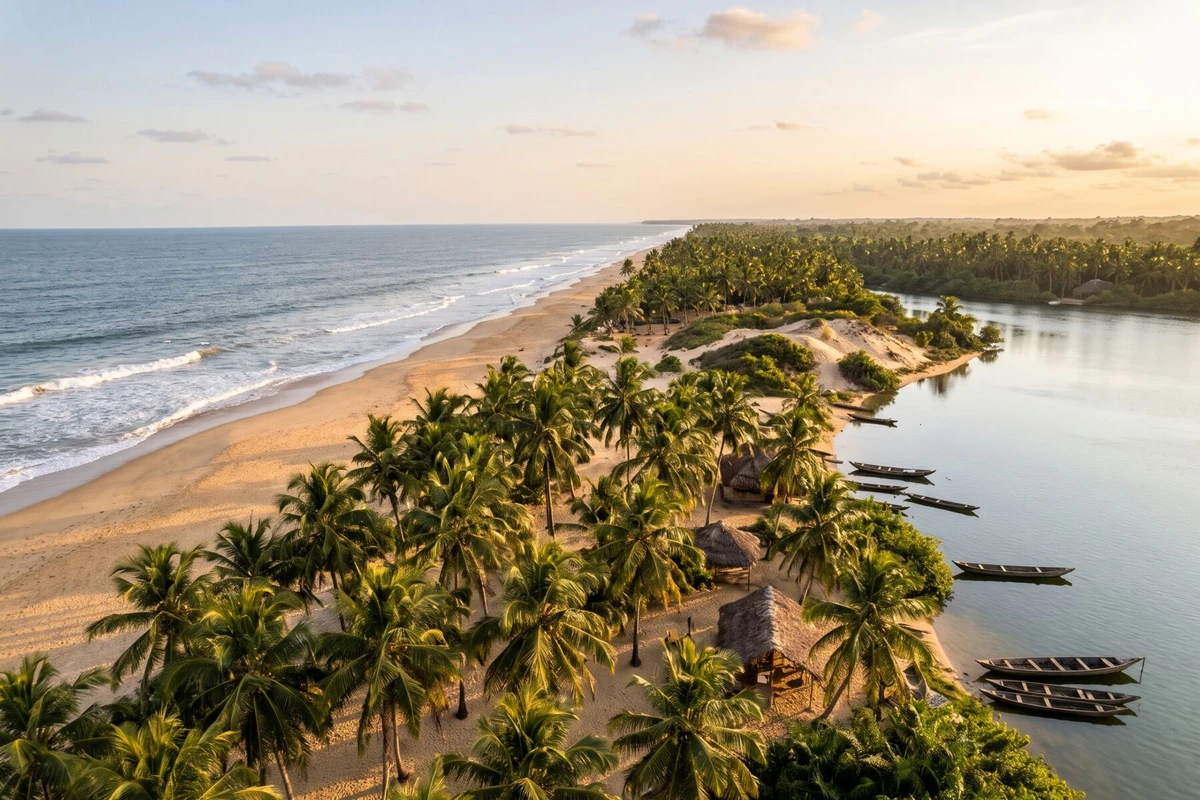
The south of the country is a world of lagoons separated from the Atlantic by long sandbars and lined with palm trees and mangroves, from the Ebrié Lagoon at Abidjan to the waters around Assinie. Inland, the Banco National Park preserves a patch of primary rainforest inside the city itself, while the Taï National Park in the south-west, listed by UNESCO, shelters chimpanzees and pygmy hippos. Further north, savanna takes over, and the Comoé National Park is one of the largest protected areas in West Africa.
Attiéké, Alloco and Kedjenou
Ivorian cooking is generous and full of flavour. The national favourite is attiéké, a light, slightly tangy couscous made from cassava, served with grilled fish, onions and chilli. Alloco, fried ripe plantain, is sold on every corner, kedjenou is a slow-cooked chicken stew sealed in a clay pot, and foutou with sauce graine combines pounded plantain or yam with a rich palm-nut sauce. Ivory Coast has a large Muslim community, so halal meat is found in many neighbourhoods, though not every restaurant is halal; our team can advise.
Experiences You Can Only Have Here
Stand beneath the soaring modern Cathedral of Saint Paul in the Plateau, cross the lagoon by water bus and walk through the colour and noise of Treichville market. Wander the old colonial quarter of Grand-Bassam with its arcaded houses and its museum of traditional costume, then feel the Atlantic breeze on its long beach. Further afield, visit the great basilica of Yamoussoukro or the rainforests and mountain villages of the west, where masked dances are still part of village life.
Who is Ivory Coast for?
Ideal for
- Culture lovers and urban explorers
- Business travellers with a day to spare
- History lovers drawn to colonial heritage
- Food lovers keen on West African cooking
- Families visiting relatives or friends
- Travellers new to West Africa
Pace & travel style
- Base yourself in Abidjan and explore by day
- Start city tours early to beat the traffic
- Three to five nights suit a first visit
- Keep a full day for Grand-Bassam and the coast
When to visit Ivory Coast
Peak season · December–March
The main dry season is the most comfortable time to visit Ivory Coast, with sunshine, lower rainfall and warm evenings by the lagoon, ideal for city tours of Abidjan and beach days in Grand-Bassam and Assinie. The harmattan wind from the Sahara can bring a hazy sky in some weeks, especially in the north. Christmas and New Year are busy, so reserve tours and transfers well ahead.
Shoulder season · August–November
After the long rains, August and September often bring a short, cooler dry spell on the coast, followed by a second, shorter rainy season in October and November. The landscapes are green, the waterfalls of the west are full and visitors are fewer. Showers can be heavy but usually pass quickly, so plan outdoor visits for the morning and keep some flexibility.
Low season · April–July
The long rainy season brings heavy tropical downpours to the south, with June usually the wettest month in Abidjan, high humidity and occasional flooding in low-lying streets. Traffic can slow down sharply after storms. The city remains lively and indoor visits are easy, but beach days and long road trips are less reliable, so flexible plans and good rain gear help.
The regions of Ivory Coast and how to combine its cities
Ivory Coast lies on the Atlantic coast of West Africa, bordered by Liberia and Guinea to the west, Mali and Burkina Faso to the north and Ghana to the east. Its south is a belt of lagoons and coastal towns, with Abidjan as the great metropolis on the Ebrié Lagoon, Grand-Bassam and the beach resort of Assinie to the east, and the fishing towns of Sassandra and San-Pédro further west.
The centre of the country holds Yamoussoukro, the political capital with its giant basilica, and the busy city of Bouaké. The west is mountainous and green, with the town of Man, waterfalls, forest villages and the rainforest of the Taï National Park, while the north around Korhogo is savanna country, known for Senufo culture, woven cloth and Sudanese-style mud mosques listed by UNESCO. The north-east holds the vast Comoé National Park.
Our city directory below is anchored in Abidjan, the natural gateway to Ivory Coast. From Abidjan we arrange private city tours of the Plateau, Cocody, Treichville and the lagoon, and private day trips to the UNESCO town of Grand-Bassam, while our drivers handle transfers from Abidjan airport (ABJ). Ivory Coast pairs naturally with a journey to neighbouring Ghana.
Before you go: practical tips for Ivory Coast
Entry & visas
Citizens of ECOWAS countries can visit Ivory Coast without a visa. Most other visitors need a visa, usually applied for online in advance and completed with a stamp on arrival at Abidjan airport, and some nationalities must apply at an embassy. A yellow fever vaccination certificate is required for entry. Rules change, so check the current rules before you travel, and make sure your passport is valid for at least six months.
Money, cards & tipping
The currency is the West African CFA franc, shared with several neighbouring countries and pegged to the euro. Cards work in larger hotels, shopping centres and some restaurants in Abidjan, and cash machines are common in the city, but markets, street food stalls, taxis and smaller towns run on cash. Tipping is not obligatory but is appreciated for guides, drivers and good service in restaurants.
Etiquette & dress code
Ivorians are warm, sociable and value polite greetings, so begin with bonjour and a handshake before any request. French is the language of daily life, and a few words go a long way. Dress is smart casual in Abidjan; cover shoulders and knees in mosques, churches and villages. Use your right hand to give and receive, ask before photographing people, and never photograph military sites, police or government buildings.
Getting around
Abidjan airport (ABJ) lies in Port-Bouët in the south of the city, about twenty to thirty minutes from the Plateau and Cocody without traffic, though rush hours can make the journey much longer. In the city, orange metered taxis and shared taxis are everywhere, and water buses cross the lagoon between districts. A motorway links Abidjan with Yamoussoukro in about three hours and Grand-Bassam is under an hour away, so for city tours and day trips our private transfers with a driver are the most comfortable choice.
Must-do things in Ivory Coast
- Tour the Plateau and its lagoon skyline
- Visit the Cathedral of Saint Paul in Abidjan
- Cross the Ebrié Lagoon by water bus
- Explore the markets of Treichville and Adjamé
- Walk the rainforest trails of Banco National Park
- Wander the colonial quarter of Grand-Bassam
- See the National Costume Museum in Grand-Bassam
- Relax on the palm-lined beaches of Assinie
- Taste attiéké with grilled fish and alloco
- Visit the basilica of Yamoussoukro
Do’s and don’ts in Ivory Coast
Do
- Greet people with bonjour before asking anything
- Carry CFA francs in small notes for markets and taxis
- Travel with your yellow fever certificate
- Use insect repellent and take malaria advice
- Leave extra time for Abidjan traffic
Don’t
- Don't photograph soldiers, police or official buildings
- Don't swim in rough Atlantic surf without local advice
- Don't walk alone in quiet streets late at night
- Don't show valuables in crowded markets
- Don't drink tap water unless it is filtered
Ivory Coast at a glance
Plan Ivory Coast with Haqqi Tours
Every option is confirmed by our team on WhatsApp before you pay, and delivered by our own people or by trusted local partners we work with in every city. Because we send travellers from all over the world, our partners give us special rates and priority, so you always receive the best. Prices are per person unless marked per vehicle.
About Haqqi Tours: About us Contact us Legal NoticePrivacy PolicyCookies & Marketing PreferencesTerms & ConditionsBooking, Payment & Refunds
Where we operate in Ivory Coast
Good to know
Frequently Asked Questions
Straight answers to what travellers ask most about Ivory Coast.
Is it safe to visit Ivory Coast?
Abidjan and the southern coast welcome many business and leisure visitors, and the country has been stable in recent years. As in any big city, take sensible precautions: keep valuables out of sight, use trusted drivers and avoid walking alone at night. Some northern border areas carry separate travel warnings, so check your own government's official travel advice before departure, and keep our WhatsApp line handy for help.
How many days do I need in Ivory Coast?
Three to five days work well for a first visit focused on the coast: one or two days in Abidjan for the Plateau, Cocody, the markets and Banco forest, a day trip to Grand-Bassam, and a day at the beaches of Assinie. With a week or more you can add Yamoussoukro and its basilica or the mountains around Man.
What is Grand-Bassam?
Grand-Bassam is a historic town about forty minutes to an hour east of Abidjan, the first capital of French colonial Ivory Coast from 1893. Its old quarter of arcaded houses, administrative buildings and a lighthouse between the lagoon and the sea is listed by UNESCO, and it is also known for its long beach, craft shops and the National Costume Museum.
Can a trip to Ivory Coast be tailored for luxury or private travel?
Yes. Abidjan offers elegant international hotels, lagoon-view stays and boutique guesthouses, and Assinie has quiet beachfront resorts. We tailor private city tours with a French or English speaking guide, day trips at your own pace, family-friendly outings and chauffeured airport transfers, then confirm every detail with you on WhatsApp before anything is paid.
What is the best time to visit Ivory Coast?
December to March is the best time to visit Ivory Coast, with the main dry season, sunny days and calm evenings on the coast. August and September often bring a short cooler dry spell, while April to July is the long rainy season, with June usually the wettest month in Abidjan.
What is Ivory Coast famous for?
Ivory Coast is famous for Abidjan and its lagoon skyline, for being one of the world's leading cocoa producers, for the colonial town of Grand-Bassam, the basilica of Yamoussoukro, the rainforest of the Taï National Park and its masks and dance traditions. It is also known for its lively music, its football and dishes such as attiéké and alloco.
Is halal food available in Ivory Coast?
Ivory Coast has a large Muslim community, especially in the north, and halal meat, grilled chicken and mutton are easy to find in many neighbourhoods of Abidjan, such as Adjamé and Treichville, and in markets. Not every restaurant is halal, and pork appears on some menus, so ask when ordering; grilled fish, attiéké and vegetarian dishes are always available, and our team can advise.
How do I get from Abidjan airport to my hotel?
Abidjan airport (ABJ) lies in Port-Bouët, about twenty to thirty minutes by road from the Plateau and Cocody without traffic, though rush hours can make the journey much longer. Grand-Bassam is about thirty to forty minutes east. We arrange a private transfer with a driver waiting at arrivals to take you directly to your hotel.
Which cities in Ivory Coast does Haqqi Tours cover?
Abidjan. Each city has its own page with everything available there, and a trip across several cities is planned in one WhatsApp conversation.
What can I book in Ivory Coast?
Day tours - all run or confirmed by Haqqi Tours, each with a fixed price agreed on WhatsApp before you pay.
How do I book a tour or transfer in Ivory Coast?
Fill in the form on the page you are interested in, or message us on WhatsApp with the date, the number of travellers and your hotel. A member of our team confirms the price and the details in writing within minutes.
Are the prices fixed?
Yes. Every price is agreed in writing on WhatsApp before you travel and does not change on the day - not for traffic, not for a late flight, not for the hour.
Do you arrange transfers between cities in Ivory Coast?
Yes. Intercity transfers by private car or van are booked the same way as airport transfers; tell the desk the two hotels and the date and it quotes a fixed price for the whole vehicle.
Can you plan a full itinerary across Ivory Coast?
Yes - tell the desk your dates, the cities you want and who is travelling, and it proposes a day-by-day plan with the tours, transfers and tickets priced in writing. You adjust it in the same chat before confirming.
Are your tours private or in a group?
Both exist, and the page of each tour says which. Private tours have a car and guide for your party alone; small-group tours share a guide with a few other travellers. The desk can convert most group tours into a private day on request.
Do the drivers and guides speak Arabic?
It depends on the country, the city and the day, so we do not promise a particular language for the driver or guide. Tell us your preference and we do our best; the WhatsApp desk itself always works in Arabic and English.