
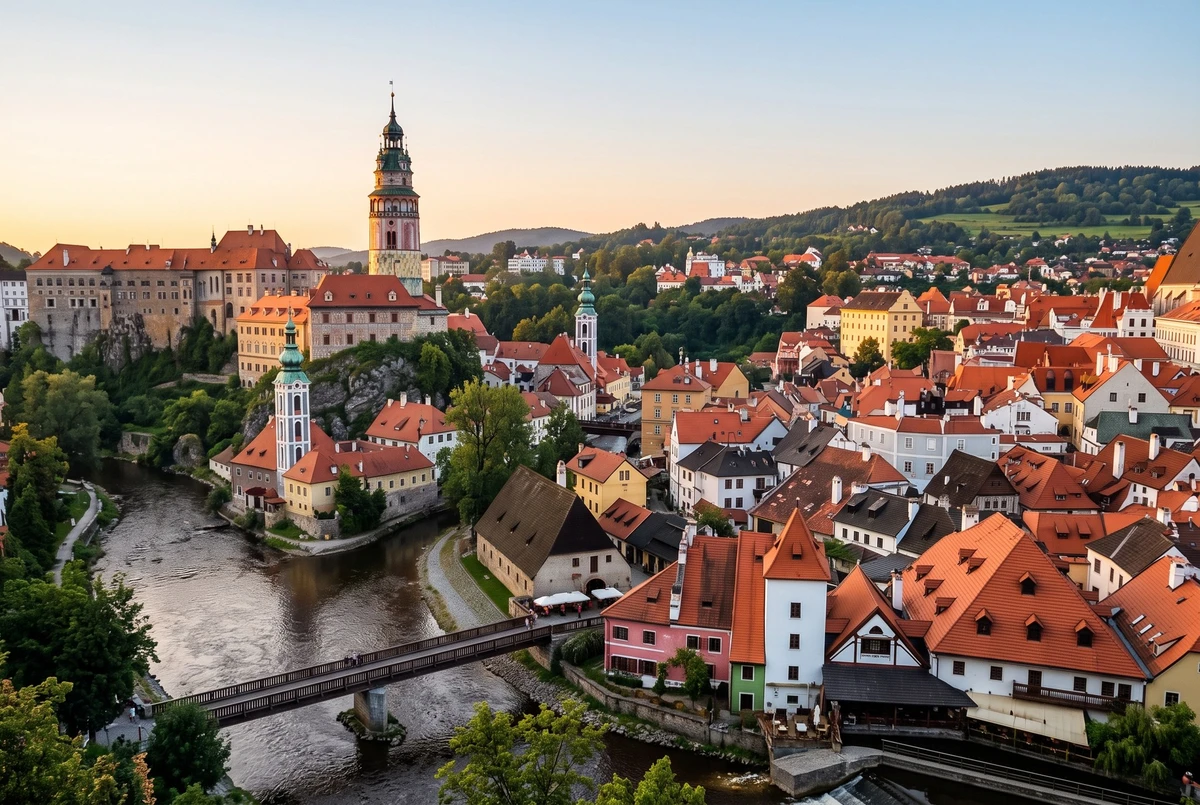
Czechia
Haqqi Tours plans Czechia trips beyond Prague's old squares, arranging day tours and private transfers that Gulf families confirm over WhatsApp.
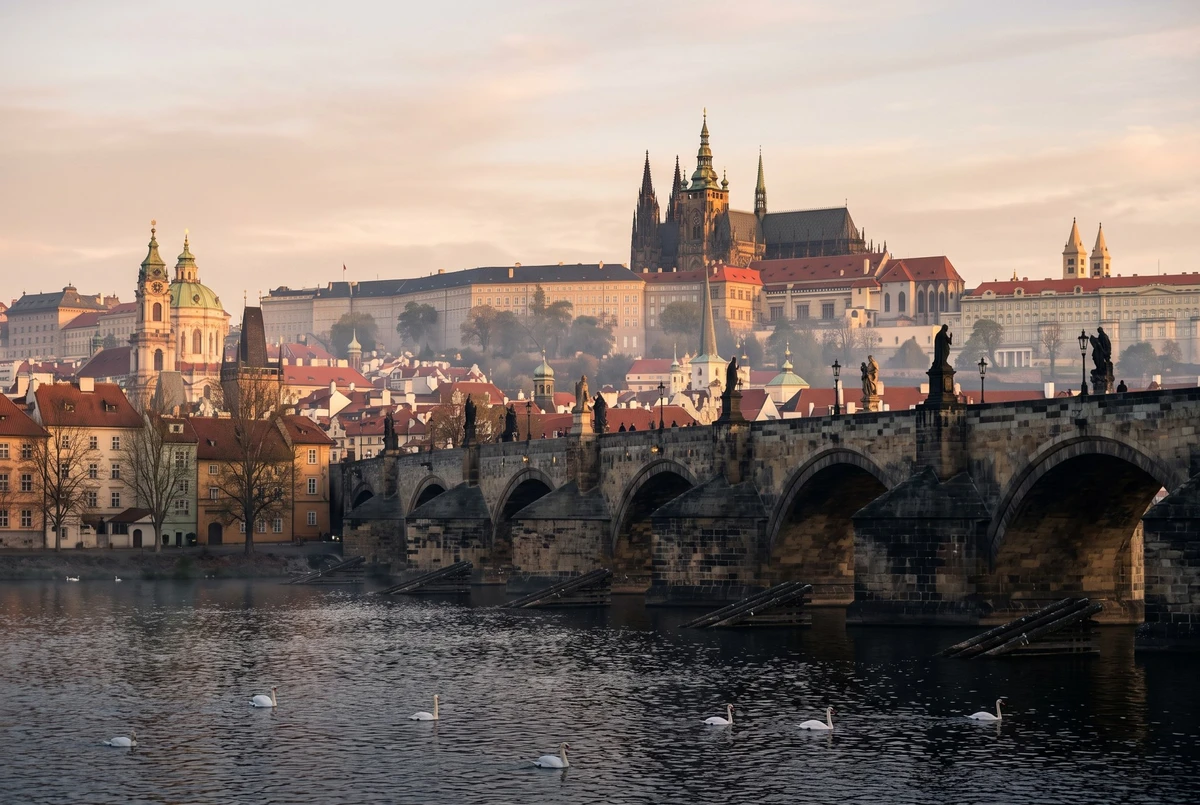
Morning mist lifts off the Vltava and the spires of Prague appear one by one, a skyline of Gothic needles, Baroque domes and red-tiled roofs climbing towards the castle. On Charles Bridge the statues are still dark with dew, a violinist is tuning up, and the scent of cinnamon from a trdelník stand drifts across the cobbles while the Astronomical Clock prepares its hourly parade of apostles above Old Town Square.
Destinations
Choose a city to see everything we arrange there.
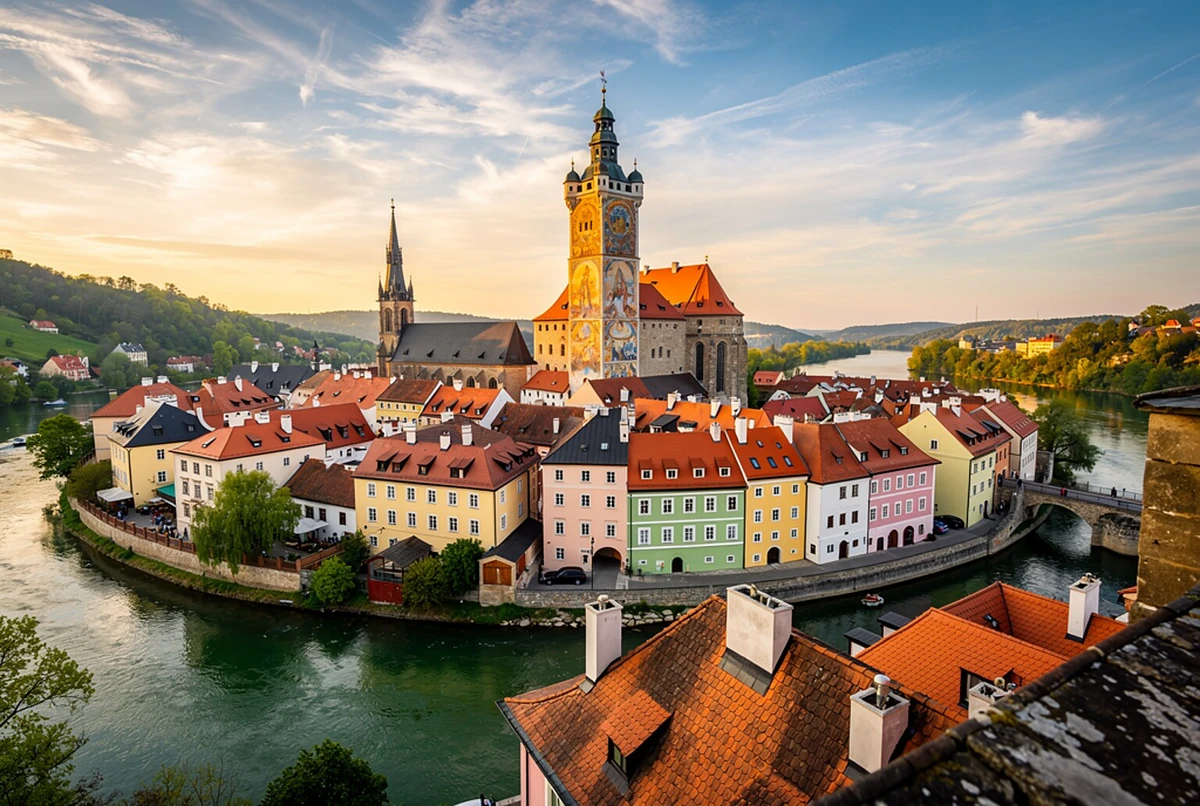
Services by city in Czechia
Tours
Attraction Tickets
Airport Transfers
Flight Tickets
Train Tickets
The essence of Czechia
Czechia is the heart of Europe in the most literal sense: a compact land of Bohemian forests, castle-crowned hills, spa towns of colonnades and healing springs, and Moravian villages where embroidered folk costume still appears at festivals. It came through wars and empires with its architecture remarkably intact, so a single journey crosses a thousand years of styles within a few hours' drive. Our team arranges guided day tours, attraction tickets, train journeys and private drivers so Czechia unfolds without effort.
Why visit Czechia?
A Thousand Years Preserved in Stone
Prague Castle, one of the largest ancient castle complexes in the world, has watched over Bohemia since the ninth century, with St Vitus Cathedral rising at its heart. Below it, the Old Town, Lesser Town and Jewish Quarter keep their Gothic, Renaissance and Baroque fabric. Beyond the capital, the silver-mining cathedral of Kutná Hora, the Sedlec Ossuary and the arcaded squares of Telč and Český Krumlov extend a remarkably intact heritage.
Forests, Sandstone Towers and River Valleys
Czechia is landlocked yet richly watered, its rivers carving gentle valleys through rolling farmland. Bohemian Switzerland National Park guards the great sandstone arch of Pravčická brána and narrow gorges explored by small wooden boat; the Šumava forests stretch along the southern border; the Krkonoše mountains offer summer hiking and winter snow. Further east, Moravia softens into orchards, sunflower fields and dramatic karst caves around the Macocha Abyss.
Coffeehouses, Dumplings and Folk Song
Czech culture lives in its grand coffeehouses, where newspapers hang on wooden rods and slices of layered honey cake arrive with strong coffee. At the table, expect svíčková beef in creamy root-vegetable sauce, fluffy bread dumplings, roast duck with red cabbage, and koláče pastries filled with poppy seed or plum. Marionette theatre, the music of Dvořák and Smetana, painted Easter eggs and glowing Christmas markets keep these traditions vividly alive.
Experiences Found Only in Czechia
Crossing Charles Bridge at sunrise before the city wakes. Watching the Astronomical Clock, still ticking after six centuries, strike the hour in Old Town Square. Sipping warm mineral water from a porcelain spa cup beneath the colonnades of Karlovy Vary. Standing beneath the chandeliers of bone in the Sedlec Ossuary near Kutná Hora. Our guided day tours and the attraction tickets we issue let you enjoy each moment with less waiting and more meaning.
Who is Czechia for?
Ideal for
- Architecture and history enthusiasts
- Couples on a romantic European city break
- Classical music and opera lovers
- Families dreaming of fairy-tale castles
- Winter travellers chasing Christmas markets and snow
- Wellness seekers drawn to historic spa towns
Pace & travel style
- Walkable, unhurried city days in Prague
- Easy day trips by private car or train
- Restorative stays in colonnaded spa towns
- Longer Central Europe loops with neighbouring capitals
When to visit Czechia
Peak season · June–August
Summer brings long warm days, open-air concerts and riverside terraces along the Vltava. Prague is at its busiest, with Charles Bridge and the castle crowded from mid-morning and hotel rates at their highest. Countryside castles open fully and river cruises run daily. Start sightseeing early, book attraction tickets in advance and let a private driver handle day trips during the warmest hours.
Shoulder season · April–May and September–October
Spring fills Petřín Hill with blossom and the parks with tulips, while autumn turns the castle gardens and Bohemian forests gold and copper. Temperatures are ideal for long walks, crowds thin noticeably and hotels become easier to secure. These months are perfect for combining Prague with Český Krumlov, Kutná Hora or Karlovy Vary, and for photographing the city in soft, clear light.
Low season · November–March
Winter is cold, often grey and sometimes snowy, yet it turns Prague into a storybook. From late November, Christmas markets fill Old Town and Wenceslas squares with wooden stalls, roasted chestnuts and carols. January and February are the quietest months, with calm museums and gentler rates. Pack warm layers, and expect some castles outside the capital to close until spring.
The regions of Czechia and how to combine its cities
Czechia divides into two historic lands. Bohemia, the larger western half, centres on Prague and the Vltava basin and is ringed by forested mountains along the German and Austrian borders. It holds the spa triangle of Karlovy Vary, Mariánské Lázně and Františkovy Lázně in the west, the medieval jewel of Český Krumlov in the south, and the sandstone landscapes of Bohemian Switzerland in the north.
Moravia, to the east, is gentler and more rural, with Brno as its relaxed university city, the palace and landscaped gardens of Lednice, the caves of the Moravian Karst and villages where embroidered costumes and folk music still mark every celebration. A small slice of Silesia in the north-east completes the map.
Our city directory below centres on Prague, the natural base for any Czech journey. From the capital, our guided day tours reach Kutná Hora, Český Krumlov and Karlovy Vary, while the train tickets, flight tickets and private drivers we arrange connect you onwards across Central Europe. Four or five nights in Prague with two day trips make an ideal week; pairing Prague with Vienna and Budapest builds a rewarding ten- to fourteen-day loop.
Before you go: practical tips for Czechia
Entry & visas
Czechia is a member of the Schengen area, so a valid Schengen visa allows entry, and many nationalities may visit visa-free for short stays. Rules depend entirely on your passport, so check the official Czech government portal or the nearest Czech embassy or consulate before booking. Our team can supply hotel and transfer confirmations to support your application where needed.
Money, cards & tipping
Czechia uses its own currency, the Czech koruna, rather than the euro, although some tourist businesses quote both. Cards and contactless payment are accepted almost everywhere, but keep a little cash for markets and small cafés. Avoid street money-changers and use bank machines instead. Rounding up or tipping around ten percent is customary in restaurants, and bargaining is not part of Czech shopping culture.
Etiquette & dress code
Czechs are polite but reserved, so a greeting of “dobrý den” when entering a shop or café goes a long way. Dress modestly in churches and keep voices low in St Vitus Cathedral and the historic synagogues. Photography is often allowed in historic interiors, sometimes with a separate permit, but never during services. If invited into a Czech home, remove your shoes; guests are usually offered slippers.
Getting around
Czechia's compact size makes travel easy. A dense rail network links Prague with Brno, Olomouc and neighbouring capitals such as Vienna, Berlin and Budapest, and comfortable intercity coaches fill the gaps. Domestic flights are rarely needed. For castles and countryside towns, a private chauffeured car is the most efficient choice, and our team arranges both train tickets and experienced drivers.
Must-do things in Czechia
- Cross Charles Bridge at sunrise when its Baroque statues stand almost alone.
- Watch the Astronomical Clock strike the hour in Prague's Old Town Square.
- Explore Prague Castle, St Vitus Cathedral and the tiny houses of Golden Lane.
- Take a day trip to fairy-tale Český Krumlov and its castle above the river.
- Visit Kutná Hora's Cathedral of St Barbara and the extraordinary Sedlec Ossuary.
- Stroll the colonnades of Karlovy Vary and taste the warm mineral spring waters.
- Climb Petřín Hill for a sweeping view across Prague's sea of red rooftops.
- Hike to Pravčická brána, a vast natural sandstone arch in Bohemian Switzerland.
- Attend a classical concert of Dvořák or Mozart inside a Baroque church.
- Try svíčková, fruit dumplings and layered honey cake in a traditional Czech café.
Do’s and don’ts in Czechia
Do
- Greet staff with “dobrý den” when entering shops and cafés.
- Validate public transport tickets before riding Prague's trams and metro.
- Book Prague Castle and concert tickets ahead in summer and December.
- Wear comfortable shoes for steep cobbled lanes and castle hills.
- Pay in Czech koruna to avoid unfavourable conversion rates.
Don’t
- Don't change money with street dealers offering tempting rates.
- Don't walk in tram lanes or ignore pedestrian crossing signals.
- Don't visit Charles Bridge only at midday when crowds peak.
- Don't speak loudly in churches, synagogues or on public transport.
- Don't assume every shop accepts euros; carry koruna or a card.
Czechia at a glance
Plan Czechia with Haqqi Tours
Every option is confirmed by our team on WhatsApp before you pay, and delivered by our own people or by trusted local partners we work with in every city. Because we send travellers from all over the world, our partners give us special rates and priority, so you always receive the best. Prices are per person unless marked per vehicle.
About Haqqi Tours: About us Contact us Legal NoticePrivacy PolicyCookies & Marketing PreferencesTerms & ConditionsBooking, Payment & Refunds
Where we operate in Czechia
Good to know
Frequently Asked Questions
Straight answers to what travellers ask most about Czechia.
Is it safe to visit Czechia?
Yes. Czechia consistently ranks among the safer countries in Europe, and Prague is comfortable to explore on foot by day and in the evening. The main concern is petty theft in crowded tourist areas and on trams, so keep valuables close. Check your own government's official travel advice before departure and keep our WhatsApp line handy.
How many days do I need for a first trip to Czechia?
Five to seven days is ideal for a first trip: four nights in Prague to see the castle, Old Town, Lesser Town and Jewish Quarter, plus day trips to Kutná Hora and Český Krumlov or Karlovy Vary. With ten days you can add Brno and Moravia, or continue by train to Vienna.
What is the best way to travel between Czechia's major cities?
Trains are the best option, with frequent, comfortable services between Prague, Brno and Olomouc and onwards to neighbouring capitals. Intercity coaches are a good alternative. For castles and small towns, a private car with driver saves time and stress. Our team issues train tickets and arranges chauffeured transfers to fit your plans.
Can a trip to Czechia be tailored for luxury or private travel?
Certainly. We can design a private Czech itinerary with chauffeured transfers from Prague airport, private guides for Prague Castle and the Jewish Quarter, attraction tickets arranged in advance, elegant spa-hotel stays in Karlovy Vary and private day trips to Český Krumlov. Our team confirms every element with you on WhatsApp before anything is paid.
Is Czechia tourist friendly?
Very. Prague is one of Europe's most visited cities, and English is widely spoken in hotels, restaurants and attractions. Public transport is efficient and clearly signed, the historic centre is compact and walkable, and service standards are high. Outside the capital English is less common, which is exactly where our guided day tours and drivers help most.
Is it safe to travel to Czechia now?
Czechia is a stable, well-organised European destination with reliable infrastructure and emergency services. Conditions anywhere can change, so check your own government's official travel advice before departure and follow local guidance during your stay. Our team remains reachable on WhatsApp throughout your journey and can adjust transfers or tours if your plans need to change.
What is the best time to visit Czechia?
May, June, September and early October offer mild weather, blossom or autumn colour, and fewer crowds than midsummer. July and August are warm and lively but busy. December is magical for Christmas markets despite the cold, while January to March is the quietest period, ideal for travellers who prefer calm museums and gentler rates.
What is Czechia famous for?
Czechia is famous for Prague's skyline of a hundred spires, Charles Bridge and the Astronomical Clock, for fairy-tale castles like Český Krumlov, and for elegant spa towns such as Karlovy Vary. It is also celebrated for Bohemian crystal, marionette theatre, composers like Dvořák and Smetana, and hearty dishes served with dumplings.
What does the Prague page on Haqqi Tours currently list?
The page lists a single airport transfer between Prague airport and the city center, arranged the same way as every other Haqqi Tours transfer, with a vetted partner driver meeting the flight and a written price agreed beforehand.
How close together are the main sights in central Prague?
The castle grounds, the old bridge and the market squares below sit within walking distance of each other, so a family based in the center can move between them without needing a car once the airport transfer is done.
Can a family continue from Prague to Poland by train?
The desk can advise on a further train connection toward Poland once the Prague transfer is booked, since Czechia and Poland are handled by the same Arabic-speaking WhatsApp team across both country pages.
Which cities in Czechia does Haqqi Tours cover?
Prague and Český Krumlov. Each city has its own page with everything available there, and a trip across several cities is planned in one WhatsApp conversation.
What can I book in Czechia?
Day tours, attraction tickets, private airport transfers, flight tickets and train tickets - all run or confirmed by Haqqi Tours, each with a fixed price agreed on WhatsApp before you pay.
How do I book a tour or transfer in Czechia?
Fill in the form on the page you are interested in, or message us on WhatsApp with the date, the number of travellers and your hotel. A member of our team confirms the price and the details in writing within minutes.
Are the prices fixed?
Yes. Every price is agreed in writing on WhatsApp before you travel and does not change on the day - not for traffic, not for a late flight, not for the hour.
Do you arrange transfers between cities in Czechia?
Yes. Intercity transfers by private car or van are booked the same way as airport transfers; tell the desk the two hotels and the date and it quotes a fixed price for the whole vehicle.