
Germany
Bavarian castles, Rhine valley towns and big-city museums span a Germany trip our desk pieces together for Gulf families over WhatsApp.
Dusk falls early in December, and Dresden’s Striezelmarkt glows beneath the rebuilt dome of the Frauenkirche. The air smells of roasted almonds, gingerbread and buttery Stollen, a carved wooden pyramid turns slowly above the stalls, and a brass ensemble plays carols from a balcony. Six months later the same country hums with a different music: paddle steamers on the Elbe, bicycles along the Rhine and alpine meadows ringing with cowbells beneath the Zugspitze.
Destinations
Choose a city to see everything we arrange there.






Services by city in Germany
The essence of Germany
Germany is a nation of layered stories. Roman gates stand in Trier and Cologne, Gothic spires pierce the sky, fairy-tale castles crown Bavarian crags, and Berlin still traces the line of a wall that once split the world in two. Few countries combine such depth of history with such precise, effortless travel. Our team arranges guided day tours, private airport transfers, train, flight and ferry tickets and attraction tickets across Berlin, Munich, Hamburg, Frankfurt, Dresden and Cologne, so your Germany journey runs with the quiet efficiency the country is famous for.
Why visit Germany?
Two Thousand Years in Stone
Romans founded Cologne and Trier, whose Porta Nigra still stands. Charlemagne ruled from Aachen, Gutenberg printed his Bible in Mainz, and Luther translated scripture inside Wartburg Castle. Prussian kings built Sanssouci in Potsdam, Saxon electors filled Dresden with baroque splendour, and the Bauhaus reshaped modern design in Weimar and Dessau. Berlin’s Wall, torn down in 1989, gives the story its most moving modern chapter of reunification and renewal.
Alps, Forests and Two Seas
Germany rises from the tidal flats of the Wadden Sea and the chalk cliffs of Rügen in the north to the Bavarian Alps and Zugspitze in the south. Between them flow the Rhine, carving a castle-lined gorge, and the Elbe, cutting through the sandstone towers of Saxon Switzerland. The Black Forest, Lake Constance, Lake Königssee and the beech woods of Jasmund offer landscapes of deep green calm.
Bakeries, Markets and Music
German daily life moves to the rhythm of the bakery: crusty rye loaves, soft pretzels and the cherished afternoon ritual of coffee and cake. Spring brings white asparagus season, autumn brings plum cakes, and winter brings Nuremberg gingerbread, Dresden Stollen and glowing Advent markets. Berlin gave the world the döner kebab, while the land of Bach, Beethoven and Brahms keeps concert halls, organ recitals and choirs full all year.
Only in Germany
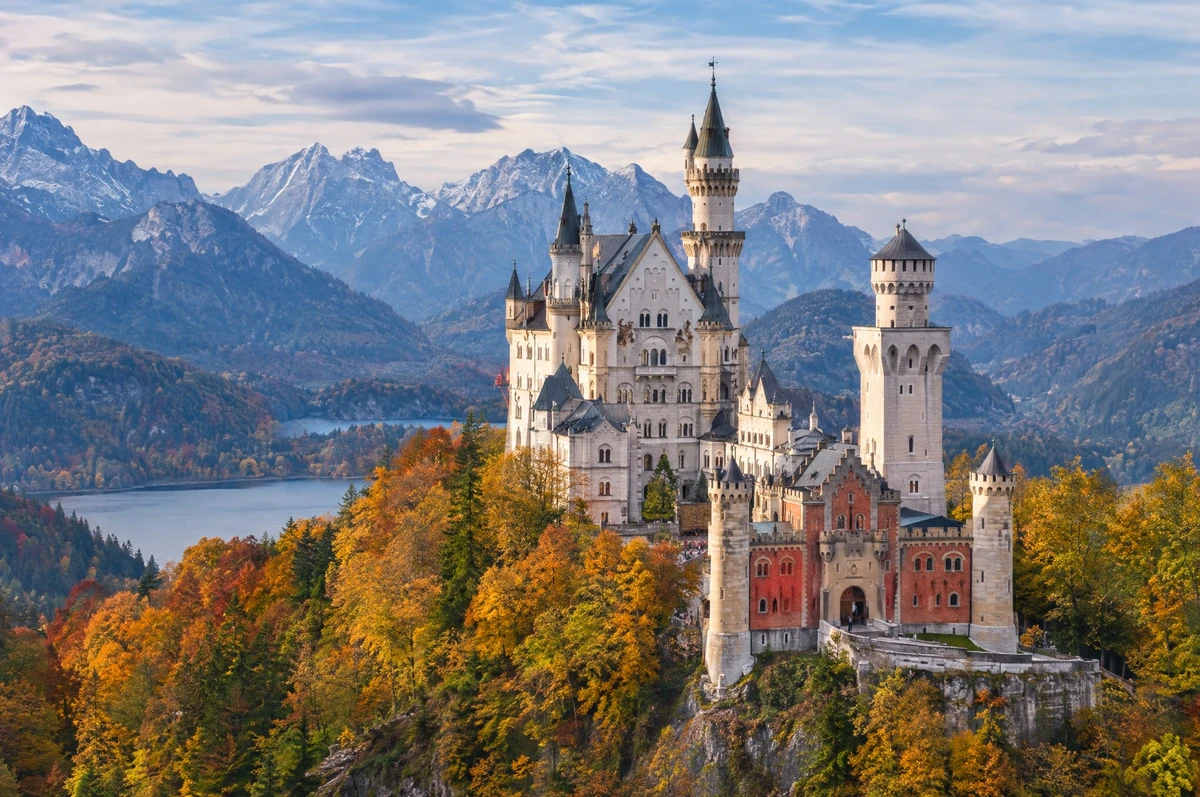
Walk the turrets of Neuschwanstein against an alpine backdrop, cruise past hilltop castles on the Middle Rhine, and cross the Bastei Bridge suspended between sandstone pinnacles. Climb the twin spires of Cologne Cathedral, explore Hamburg’s red-brick Speicherstadt warehouse district, and follow the East Side Gallery, the longest surviving stretch of the Berlin Wall, painted by artists from around the world. In Advent, Christmas markets turn old towns into lantern-lit stories.
Who is Germany for?
Ideal for
- History lovers tracing Roman, medieval and Cold War layers
- Families who enjoy castles, museums and rail journeys
- Couples seeking romantic old towns and Christmas markets
- Culture travellers drawn to classical music and art
- Nature lovers heading for the Alps and Black Forest
- Shoppers and design enthusiasts in Berlin, Munich and Frankfurt
Pace & travel style
- A rail loop linking several great cities
- A Bavarian journey of castles, lakes and mountains
- A winter escape built around Advent markets
- A relaxed river itinerary on the Rhine or Elbe
When to visit Germany
Peak season · June–August
Summer is warm and bright, with long evenings for riverside promenades, open-air concerts and lakeside days in Bavaria. Alpine trails open fully, Rhine and Elbe cruises run at their busiest, and city parks fill with picnics. It is also the busiest travel season, with school holidays bringing crowds to Neuschwanstein and popular old towns, so pre-booked tickets and transfers are especially valuable.
Shoulder season · April–May and September–October
Spring blossom in the Rhine Valley and Bonn’s cherry-tree streets, and the golden forests of autumn, make these the most rewarding months. Temperatures are comfortable for walking, castles and museums are calmer, and countryside routes such as the Romantic Road feel unhurried. Rates are generally gentler than summer, and the light is beautiful for photography across the country.
Low season · November–March
Days are short and grey, often cold and sometimes snowy, yet late November through December is magical, when Advent markets glow in Dresden, Nuremberg, Cologne and Munich. January to March is the quietest period, ideal for museums, concerts and alpine snow. Travellers who don’t mind the chill find shorter queues, cosy cafés and calmer cities.
The regions of Germany and how to combine its cities
Germany reads like a map of distinct regions. The north is flat and maritime, shaped by Hamburg’s great harbour, the Hanseatic towns of Lübeck and Bremen, and the islands of the North and Baltic seas. The east centres on Berlin and Potsdam, then Saxony with baroque Dresden, Leipzig’s musical heritage and the sandstone wilderness of Saxon Switzerland.
The west is Rhineland country: Cologne, Bonn, Düsseldorf and the castle-studded Middle Rhine, with Roman Trier along the Moselle. In the centre, Frankfurt is the financial heart and main air gateway, close to Heidelberg and the Black Forest further south. Bavaria fills the south with Munich, Nuremberg, the Romantic Road, Neuschwanstein and the alpine lakes, while Lake Constance links Germany with Austria and Switzerland.
Our city directory below covers Berlin, Frankfurt, Munich, Hamburg, Dresden and Cologne, each with guided day tours, attraction tickets and private airport transfers, plus train, flight and ferry tickets to link them. Pair Berlin with Dresden for history and art, Cologne with Frankfurt for the Rhine Valley, and Munich for Bavarian castles and the Alps, with Hamburg adding a maritime north. A seven-day loop covers two or three cities comfortably; fourteen days unlocks the whole country by fast train.
Before you go: practical tips for Germany
Entry & visas
Germany is a member of the European Union and the Schengen area. Travellers who need a Schengen visa apply through the German embassy, consulate or authorised visa centre, usually when Germany is the main destination of the trip. Many nationalities enter visa-free for short stays. Requirements depend on your passport, so always check the official government portal or embassy before booking.
Money, cards & tipping
Germany uses the euro. Cards and contactless payment are now widely accepted, yet Germans still love cash, and some bakeries, market stalls and small cafés prefer it, so keep some on hand. In restaurants, round up or add around five to ten percent, telling the server the total as you pay rather than leaving coins on the table. Bargaining is not customary except at flea markets.
Etiquette & dress code
Punctuality matters: arrive on time for tours, trains and reservations. Sundays are quiet days, with most shops closed and noise kept low. In churches and cathedrals, dress modestly and avoid visiting during services. At memorials such as Berlin’s Memorial to the Murdered Jews of Europe, behave with quiet respect. Never walk in cycle lanes, wait for the green pedestrian light, and ask before photographing people.
Getting around
Germany has one of Europe’s finest rail networks, with high-speed intercity trains linking Berlin, Hamburg, Cologne, Frankfurt, Munich and Dresden in a few hours. Domestic flights suit longer routes such as Hamburg to Munich, while ferries serve the North Sea islands, Lake Constance and river routes on the Rhine and Elbe. Our private chauffeured transfers connect every major airport with your hotel.
Must-do things in Germany
- Walk through the Brandenburg Gate and along the East Side Gallery in Berlin
- Explore the five world-class museums of Berlin’s Museum Island
- Climb the spire of Cologne Cathedral for views over the Rhine
- Cruise the castle-lined Middle Rhine gorge between Bingen and Koblenz
- Visit Neuschwanstein Castle on a day tour from Munich
- Admire Dresden’s Frauenkirche and the baroque Zwinger palace
- Cross the Bastei Bridge in Saxon Switzerland’s sandstone landscape
- Take a harbour ferry past Hamburg’s Elbphilharmonie and Speicherstadt
- Wander Heidelberg’s old town and castle above the Neckar River
- Browse a traditional Advent market for gingerbread and handmade crafts
Do’s and don’ts in Germany
Do
- Arrive punctually for trains, tours and reservations
- Carry some cash for bakeries and market stalls
- Book train tickets early for the best seats
- Respect quiet hours on Sundays and evenings
- Recycle bottles and sort waste as locals do
Don’t
- Don’t walk or stand in marked cycle lanes
- Don’t cross on a red pedestrian light, even on empty streets
- Don’t expect most shops to open on Sundays
- Don’t treat memorial sites as casual photo backdrops
- Don’t try to cover the whole country in one week
Germany at a glance
Plan Germany with Haqqi Tours
Every option is confirmed by our team on WhatsApp before you pay, and delivered by our own people or by trusted local partners we work with in every city. Because we send travellers from all over the world, our partners give us special rates and priority, so you always receive the best. Prices are per person unless marked per vehicle.
About Haqqi Tours: About us Contact us Legal NoticePrivacy PolicyCookies & Marketing PreferencesTerms & ConditionsBooking, Payment & Refunds
Good to know
Frequently Asked Questions
Straight answers to what travellers ask most about Germany.
Is it safe to visit Germany?
Germany is a safe, well-organised country with reliable public services and efficient emergency response. Use normal city awareness in busy stations and crowded markets, where pickpockets may operate. Before departure, check the official travel advice of your own government, and keep our WhatsApp line handy so our team can help with any change during your trip.
How many days do I need for a first trip to Germany?
Seven to ten days makes an excellent first trip. Spend three days in Berlin, add Dresden or Hamburg, and finish in Munich with a day tour to Neuschwanstein. With fourteen days, include Cologne, the Rhine Valley and Frankfurt. Fast trains make these combinations easy, and our team can tailor the route around your interests.
What is the best way to travel between Germany's major cities?
High-speed trains are the best way to travel between Germany’s major cities, delivering you from centre to centre comfortably and quickly. For the longest routes, a domestic flight can save time. We issue train and flight tickets, and our private chauffeured transfers handle airport and station connections so luggage is never a burden.
Can a trip to Germany be tailored for luxury or private travel?
Yes. We arrange private airport transfers in premium vehicles, guided day tours with a private guide and driver, first-class train tickets, and attraction tickets with timed entry for castles and museums. Germany’s grand hotels, private river cruises and fine dining make it ideal for a refined journey, confirmed in detail with our team on WhatsApp.
Is Germany tourist friendly?
Germany is very tourist friendly. Public transport is punctual, signage is clear, English is widely spoken in cities and the tourism infrastructure is excellent. Germans may appear reserved at first, yet they are helpful and direct. Knowing a few local customs, such as quiet Sundays and cycle-lane rules, makes every visit smoother.
Is it safe to travel to Germany now?
Germany remains a stable, well-run destination welcoming millions of international visitors. As always, check the official travel advice of your own government before departure and follow guidance from local authorities at large events or busy markets. Keep our WhatsApp line handy so our team can adjust tickets, transfers or day tours quickly if needed.
What is the best time to visit Germany?
May, June and September are the most pleasant months, with mild weather, long days and fewer crowds than midsummer. July and August suit the Alps, lakes and river cruises. Late November and December are wonderful for Advent markets, while January to March is quiet and ideal for museums, concerts and alpine snow.
What is Germany famous for?
Germany is famous for fairy-tale castles such as Neuschwanstein, Gothic cathedrals like Cologne’s, the history of the Berlin Wall, classical composers, precision engineering and its Advent Christmas markets. It is also known for the Rhine Valley, the Black Forest, the Bavarian Alps, excellent bakeries and one of Europe’s best rail networks.
Which German cities does Haqqi Tours cover for transfers and trains
The desk arranges transfers and train tickets in Munich, Frankfurt, Berlin, and Hamburg, so a family can move between these cities or onward to nearby countries through one booking channel.
How do the Munich Airport transfers to Zell am See or Garmisch work
A private vehicle picks up at Munich Airport and drives onward to the chosen mountain town, with the route and a fixed written price confirmed on WhatsApp before the trip begins.
Can train tickets between German cities be booked alongside a transfer
Yes, a family can combine an airport transfer in one city with train tickets such as Berlin to Warsaw or Munich to Salzburg, all confirmed together through the same WhatsApp desk.
Which cities in Germany does Haqqi Tours cover?
Munich, Berlin, Frankfurt, Dresden, Cologne, Stuttgart, Nuremberg, Leipzig and Hamburg. Each city has its own page with everything available there, and a trip across several cities is planned in one WhatsApp conversation.
What can I book in Germany?
Day tours, attraction tickets, private airport transfers, flight tickets, train tickets and ferry tickets - all run or confirmed by Haqqi Tours, each with a fixed price agreed on WhatsApp before you pay.
How do I book a tour or transfer in Germany?
Fill in the form on the page you are interested in, or message us on WhatsApp with the date, the number of travellers and your hotel. A member of our team confirms the price and the details in writing within minutes.
Are the prices fixed?
Yes. Every price is agreed in writing on WhatsApp before you travel and does not change on the day - not for traffic, not for a late flight, not for the hour.
Do you arrange transfers between cities in Germany?
Yes. Intercity transfers by private car or van are booked the same way as airport transfers; tell the desk the two hotels and the date and it quotes a fixed price for the whole vehicle.