
Dortmund
Plan Dortmund with Haqqi Tours: day tours, private airport transfers, attraction tickets and packages, run by our own team and confirmed on WhatsApp in Arabic or English.
On a match day in Dortmund, the whole city seems to turn yellow and black. Scarves hang from balconies, trams fill with singing fans, and long before kick-off a river of people flows through Westfalenpark towards the stadium. Inside, the great south stand, the Yellow Wall, rises like a cliff of colour, and when the team walks out the roar can be felt in your chest. Even on quiet days, the stadium tour lets you feel that energy.
Nothing matches those filters yet. Widen your search or message us on WhatsApp.
Dortmund at first sight
Dortmund is the largest city of the Ruhr, once a powerhouse of coal and steel that fuelled Germany's industrial rise. Today its old mines and steelworks have become museums, parks and a lake, and the city is best known around the world for Borussia Dortmund and its passionate fans. Beneath the modern skyline, medieval churches recall a Hanseatic trading town that stood here for more than a thousand years.
Why include Dortmund in your itinerary?
- A pilgrimage for football fans. Dortmund is the city of Borussia Dortmund, with Germany's largest football stadium, the legendary Yellow Wall and the German Football Museum, making it one of the great football cities of Europe.
- Industrial heritage reborn. Former collieries, steelworks and industrial towers now host museums, art centres and green spaces, telling the story of the Ruhr in some of the most striking settings in Germany.
- Gateway to the Ruhr and the Rhine. Essen's UNESCO-listed Zollverein colliery, Düsseldorf and Cologne are all within an hour or so, making Dortmund an easy base for exploring western Germany.
Signature experiences in Dortmund
Westfalenstadion and the Yellow Wall
Borussia Dortmund's stadium is the largest football ground in Germany and famous for its atmosphere. On a stadium tour you walk through the dressing rooms and players' tunnel, sit pitchside on the team benches and stand on the steep south terrace known as the Yellow Wall, the biggest standing terrace in European football. Match tickets are scarce, but our team can advise on tours and timings.
German Football Museum
Right opposite the main station, the German Football Museum tells the story of the national game through trophies, historic shirts, film and interactive exhibits. Relive World Cup triumphs, see famous trophies and medals up close, test your skills on the small indoor pitch and explore the history of the women's game. It is a highlight for families and fans of every age, and easy to combine with the city centre.
Phoenix Lake and Hörde
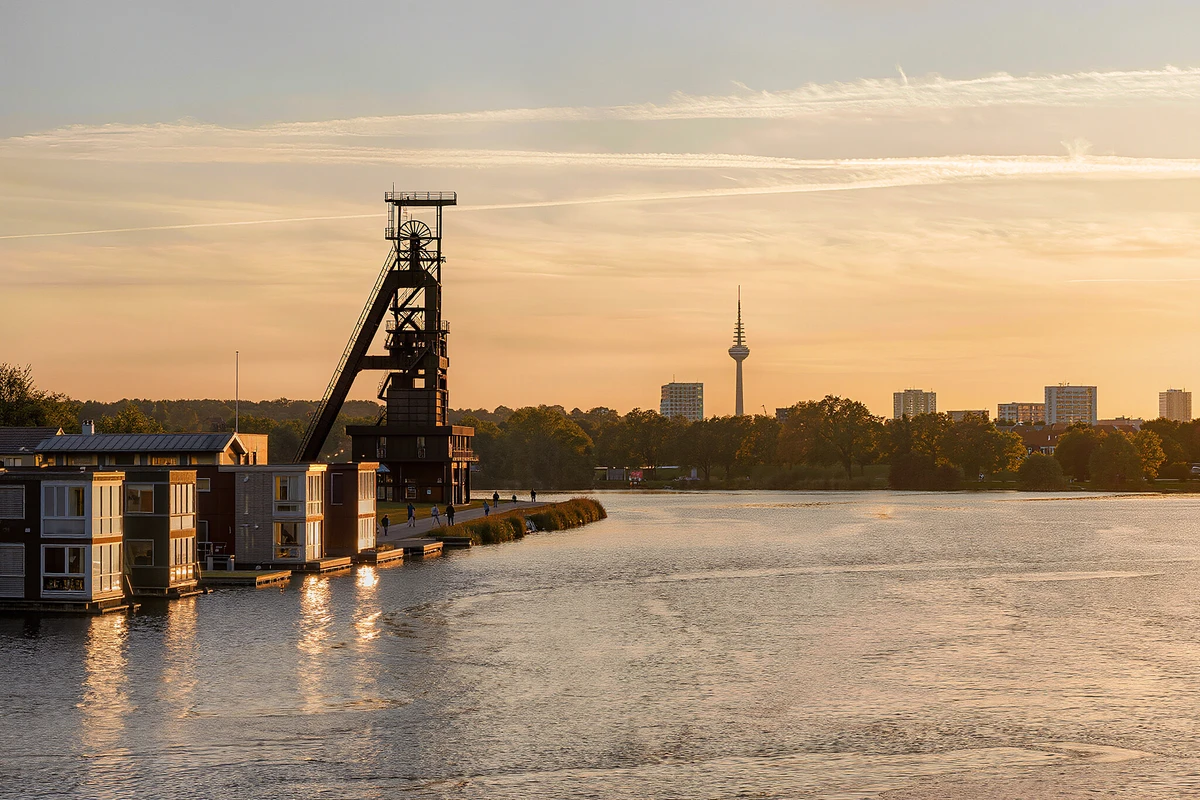
Where a huge steelworks once stood, Dortmund created the Phoenix-See, a large artificial lake surrounded by walking and cycling paths, modern houses and waterside cafés. A walk around the lake takes about an hour, past a medieval castle in Hörde and pieces of old industrial machinery kept as monuments. It shows beautifully how the city has reinvented itself.
Zollern Colliery and Industrial Heritage
The Zollern Colliery in the west of the city is one of the most beautiful mines ever built, with brick buildings in palace style and a machine hall whose art nouveau doorway is a work of art in itself. Nearby, the Hansa coking plant and the DASA working world exhibition continue the story of labour and industry. Our private tours combine them with stops across the Ruhr.
Westfalenpark and the Florian Tower
Westfalenpark is one of the largest inner-city parks in Europe, with rose gardens, lakes, playgrounds and wide lawns perfect for families. At its centre the Florian Tower, Dortmund's TV tower, has a viewing platform with panoramic views over the city, the stadium and the Ruhr. In December, the city's Christmas market around the Hansaplatz is crowned by one of the tallest Christmas trees in the world.
Neighbourhoods and quarters to know in Dortmund
City Centre and Westenhellweg
Inside the old ring of boulevards, Dortmund's centre holds the main shopping streets of Westenhellweg and Ostenhellweg, the medieval churches of St Reinoldi and St Mary, the Alter Markt square and the main station with the Football Museum. It is the most convenient base, with direct trains to the airport and the Ruhr cities, and trams to the stadium.
Kreuzviertel
South-west of the centre, the Kreuzviertel is a leafy neighbourhood of elegant early twentieth-century buildings, independent cafés, bakeries and small shops. It is a favourite with locals, within walking distance of the stadium and Westfalenpark, and offers apartments and small hotels with a relaxed, residential atmosphere.
Phoenix-See and Hörde
Around the lake in the south-east, Hörde offers modern waterside apartments and a calm, open atmosphere, with promenades, playgrounds and cafés along the shore. It suits families and travellers who prefer fresh air and morning walks, and the light-rail line connects it quickly with the city centre.
Stadium and Westfalenhallen
The area around the stadium and the Westfalenhallen exhibition centre is lined with large hotels serving football fans and trade-fair visitors. It is practical for match days and events, with Westfalenpark next door and the Rombergpark botanical garden a short ride south. Expect heavy traffic and busy trams before and after games.
How long to stay in Dortmund and how to pair it
Recommended stay
We recommend two nights in Dortmund. One day for the stadium tour, the German Football Museum and the city centre, and one for the Phoenix Lake, Westfalenpark and the Zollern Colliery. Add a third night to visit Essen's Zollverein, Düsseldorf or Cologne, or to time your visit with a match at the stadium.
How to pair it
Dortmund pairs naturally with the cities of the Ruhr and the Rhine. Essen and its UNESCO-listed Zollverein colliery lie about thirty minutes away, Düsseldorf about fifty minutes and Cologne, with its great cathedral, about an hour and a quarter. A seven-day trip can combine Dortmund, Düsseldorf and Cologne, with private transfers between every stop arranged by our team.
Best time to visit Dortmund and the rhythm of the day
Best months
The best time to visit Dortmund is May to September, when parks, lakes and outdoor stadium tours are at their most pleasant. The football season runs from August to May, so fans planning around a match should check the fixtures early. Spring and autumn are mild but changeable. In December, the large Christmas market and its giant tree bring a festive glow to the centre.
The daily rhythm
Dortmund is a working city with an early start. Museums and the stadium tour are best in the morning, while afternoons suit the Phoenix Lake, Westfalenpark or shopping on the Westenhellweg. On match days, everything revolves around the game, with crowds building hours before kick-off. Evenings are relaxed, with dinners in the Kreuzviertel and quiet Sundays when most shops close.
On-the-ground logistics in Dortmund
Arrival
Dortmund Airport (DTM) lies about twenty minutes east of the centre and serves many European routes. Düsseldorf Airport (DUS), with more long-haul connections, is about fifty minutes away by road and has direct trains to Dortmund. Our private airport transfers meet you at arrivals at either airport and drive you straight to your hotel, avoiding train changes with luggage.
Getting around
Dortmund has an efficient network of light-rail lines, trams and buses, with special shuttle services to the stadium on match days. Regional trains connect the main station quickly with Essen, Bochum, Düsseldorf and Cologne. The city centre is compact and walkable. For industrial sites and day trips across the Ruhr, a private car with driver arranged by our team is the most comfortable choice.
Local etiquette tip
People in Dortmund are direct, friendly and proud of their city and their club. Football is a passion, so friendly conversation about BVB is always welcome, but respect rival fans and stadium rules. Germans value punctuality, queues and quiet in residential areas. Keep out of cycle lanes, wait for the green light at crossings and remember that most shops close on Sundays. Rounding up the bill is customary.
Must-do things in Dortmund
- Take the stadium tour and stand on the Yellow Wall
- Explore the German Football Museum by the main station
- Watch a Borussia Dortmund match if you can get tickets
- Walk around the Phoenix Lake on the old steelworks site
- Admire the art nouveau machine hall of the Zollern Colliery
- Ride up the Florian Tower for views over the Ruhr
- Relax in the rose gardens of Westfalenpark
- Visit the medieval churches of St Reinoldi and St Mary
- Take a day trip to the Zollverein colliery in Essen
- See the giant tree at the Dortmund Christmas market
Do’s and don’ts in Dortmund
Do
- Do check the football fixtures before you book
- Do book stadium tours in advance
- Do use public transport on match days
- Do carry a light rain jacket in every season
- Do plan around Sunday shop closures
Don’t
- Don't wear rival team colours on match days
- Don't walk or stand in cycle lanes
- Don't drive to the stadium on match days
- Don't cross on red, even when the road is empty
- Don't expect match tickets to be easy to find
Dortmund at a glance
Plan Dortmund with Haqqi Tours
Every option is confirmed by our team on WhatsApp before you pay, and delivered by our own people or by trusted local partners we work with in every city. Because we send travellers from all over the world, our partners give us special rates and priority, so you always receive the best. Prices are per person unless marked per vehicle.
About Haqqi Tours: About us Contact us Legal NoticePrivacy PolicyCookies & Marketing PreferencesTerms & ConditionsBooking, Payment & Refunds
More services in Dortmund
Good to know
Frequently Asked Questions
Straight answers to what travellers ask most about Dortmund.
Where should I stay in Dortmund?
Most visitors stay in the city centre near the main station, for easy trains to the airport and the Ruhr and quick trams to the stadium. The Kreuzviertel offers a leafy, local feel within walking distance of the stadium, Phoenix-See suits families who want open space, and hotels near the Westfalenhallen are practical for matches. Our team suggests the best area and arranges your private airport transfer.
Can I visit the Dortmund stadium without a match ticket?
Yes. Stadium tours run on most non-match days and take you through the dressing rooms, the players' tunnel, pitchside and onto the Yellow Wall. They are popular and should be booked in advance, especially at weekends and in school holidays. Combine the tour with the German Football Museum for a full football day.
What is the dress code and etiquette in Dortmund?
Dress is casual and practical, with layers and a rain jacket for changeable weather. Wearing club colours is part of the fun on match days, but avoid rival shirts in fan areas. Germans value punctuality, order and politeness, so respect queues, cycle lanes and traffic lights, and greet staff when entering shops.
Is Dortmund suitable for families and Muslim travellers?
Yes. Dortmund is friendly and easy to explore, with the Football Museum, Westfalenpark, the zoo and the Phoenix Lake all great for children. The city has large Turkish and Arab communities, so halal restaurants, grills, bakeries and butchers are easy to find, especially north of the main station, and many mosques serve the community.
Is it safe to travel to Dortmund now?
Dortmund and Germany are generally considered safe for travellers. As in any large city, watch your belongings around the main station and in crowds, and take care in busy areas late at night. On match days, follow stewards' instructions and use public transport. Check your own government's official travel advice before departure, and keep our WhatsApp line handy throughout your stay.
What are the must-do things in Dortmund?
The must-do things in Dortmund include the stadium tour and the Yellow Wall, the German Football Museum, a match if you can get tickets, the Phoenix Lake, the Zollern Colliery, the Florian Tower and Westfalenpark, plus a day trip to Essen's Zollverein. Our private tours and transfers combine these in the best order and timing.
How many days do you need in Dortmund?
Two days is ideal for Dortmund: one for the stadium, the Football Museum and the city centre, and one for the Phoenix Lake, Westfalenpark and the Zollern Colliery. One day covers the football highlights, while three days allow a match or a day trip to Essen, Düsseldorf or Cologne.
What can I book in Dortmund with Haqqi Tours?
Attraction tickets and private airport transfers. Each has its own page, and the WhatsApp desk combines any of them into one plan with one written price.
How do I get from the airport to my hotel in Dortmund?
Düsseldorf Airport (DUS) is the largest airport in North Rhine-Westphalia, about 8 km north of central Düsseldorf; Dortmund is about 70 km to the north-east, around 50 minutes by car on the Ruhr motorways. The smaller Dortmund Airport (DTM), about 20 minutes from the city, mainly serves European routes. Our private transfer meets you at arrivals with a name board, tracks your flight and takes you door to door at a fixed price for the whole vehicle; the transfer pages list every route.
Is there public transport from the airport to Dortmund?
Dortmund's central station is a major rail hub with fast trains to Cologne, Düsseldorf, Berlin and Hamburg, and the U-Bahn and trams cover the city. From Düsseldorf Airport the train usually means a change, so a private car is the easier choice with luggage or on match days. With luggage, a family or a late flight, the private car is the simpler choice.
Which tours are available in Dortmund?
Tours in Dortmund are arranged on request by the desk - tell us what you want to see and how many days you have.
Are the tours private or in a group?
Both exist, and each tour page says which. A private tour has a vehicle and guide for your party alone; the desk can make most group tours private on request.
How do I book?
Fill in the form on any page or message us on WhatsApp with the date, the number of travellers and the hotel. A member of our team confirms the price and the details in writing within minutes.
Are the prices fixed?
Yes - every price is agreed in writing on WhatsApp before you travel and does not change on the day.
Do the drivers and guides speak Arabic or English?
It depends on the city and the day, so we do not promise a particular language; tell us your preference and we do our best. The WhatsApp desk always works in Arabic and English.
Can I change or cancel a booking in Dortmund?
Yes, in the same WhatsApp conversation. The terms depend on the product and on how close to the date the change comes; the desk states them before you pay.