

Morocco
Haqqi Tours arranges day tours, private airport transfers, attraction tickets and multi-day packages across Morocco, confirmed on WhatsApp before you pay.
Before the sun clears the Atlas, the call to prayer rolls across Marrakech's terracotta rooftops and the first smells of the day arrive: orange blossom, cedar smoke, bread baking in a neighbourhood oven. Down in the medina a donkey cart squeezes past a boy carrying trays of warm msemen, a coppersmith begins to tap, and mint tea is poured from a height into small glasses that have been refilled for centuries. Morocco does not ease you in. It wraps around you at once, in colour, in sound, in the generosity of a stranger who insists you sit and drink before you buy anything.
Destinations
Choose a city to see everything we arrange there.
Agadir Tours · Airport Transfers · Flight Tickets 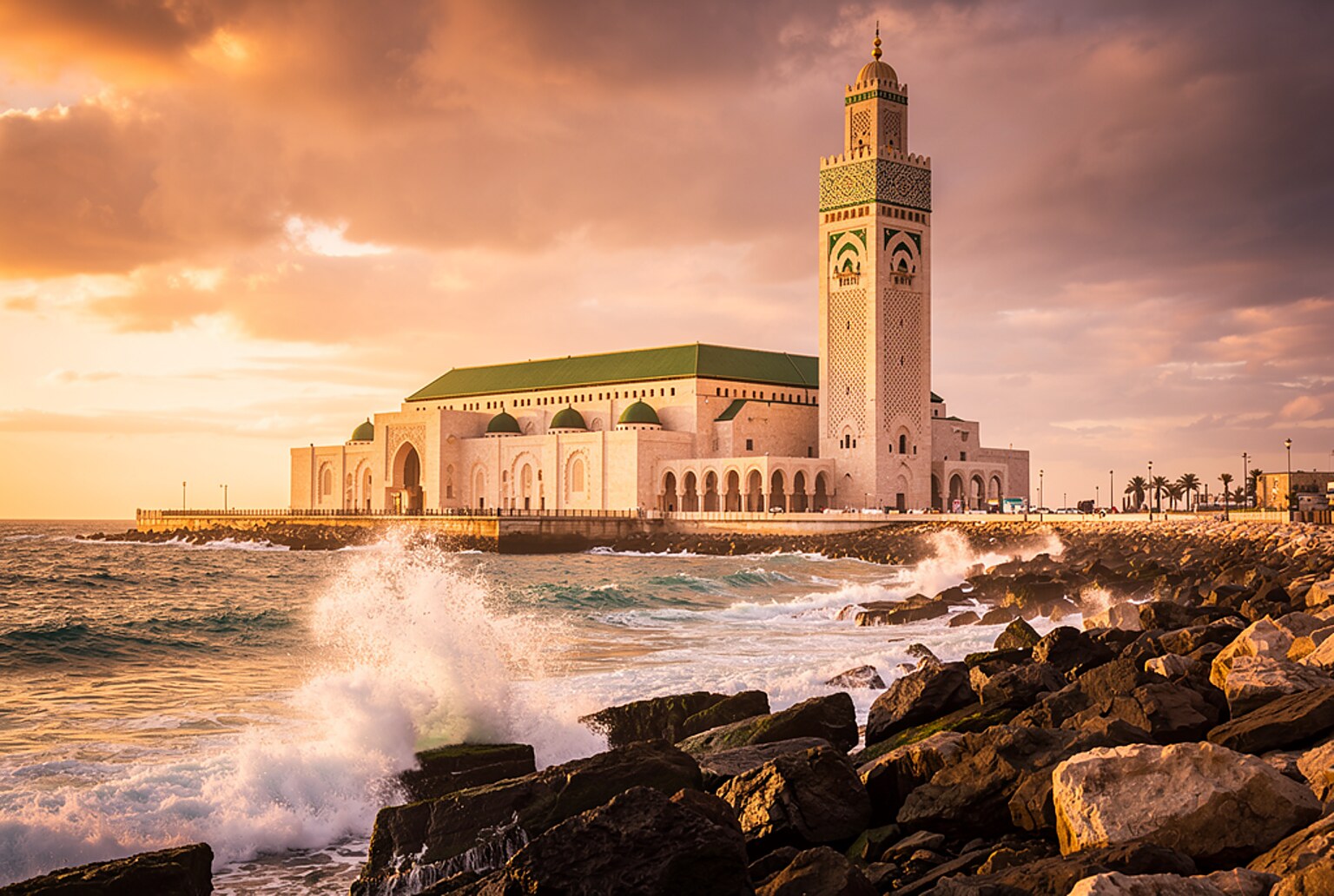 Chefchaouen Airport Transfers · Flight Tickets Essaouira Tours · Airport Transfers · Flight Tickets Fes Tours · Airport Transfers · Flight Tickets Marrakech Tours · Attraction Tickets · Airport Transfers Meknes Airport Transfers · Train Tickets Merzouga Airport Transfers · Flight Tickets Ouarzazate Airport Transfers · Flight Tickets Rabat Airport Transfers · Flight Tickets · Train Tickets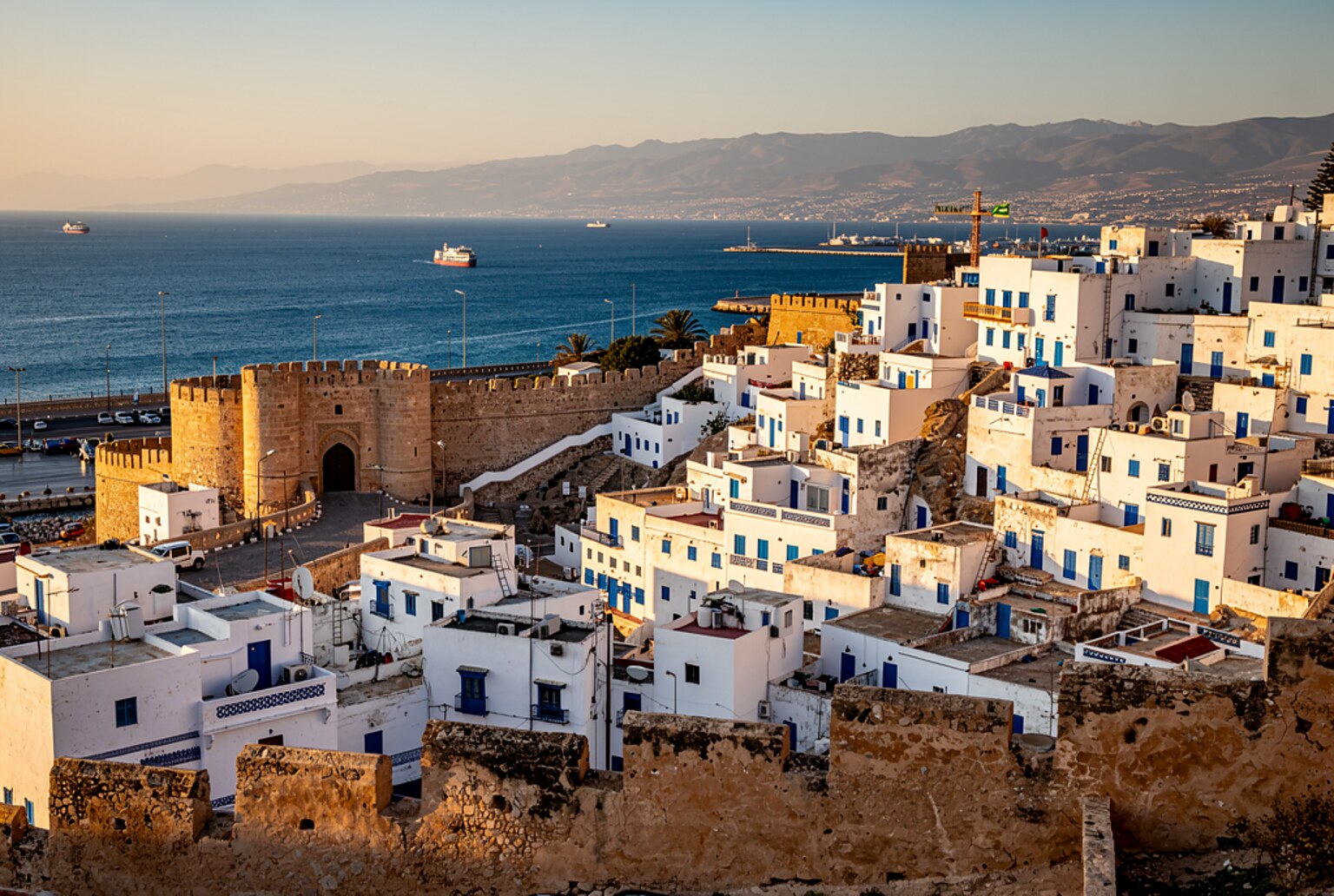
The essence of Morocco
This is a kingdom with one foot in the Atlantic and the other in the Sahara, where imperial cities, snow-capped peaks, blue mountain towns and ochre kasbahs sit within a day's journey of one another. Nowhere else compresses so much variety into so few roads, and few places make it so easy to feel welcomed. With Haqqi Tours and our trusted local partners arranging the logistics, you arrive free to simply look.
Why visit Morocco?
Four Imperial Capitals, One Living Story
Morocco's past is told through its dynasties. Fes, founded in the ninth century, holds the largest living medina and one of the world's oldest universities. Marrakech rose in rose-red walls under the Almoravids, Meknes in monumental gates under Moulay Ismail, and Rabat on a hilltop kasbah above the river mouth. Roman Volubilis and Portuguese ramparts add older and later chapters, and our guided day tours supply the context behind each gate.
From Atlantic Surf to Saharan Dunes
Few countries stack so many landscapes. The Atlantic coast runs from Essaouira's wind-swept ramparts to the broad beaches of Agadir, while the High Atlas rises behind Marrakech, snow-capped into spring. Beyond the passes, the Draa and Dades valleys unfold as ribbons of palms between red kasbahs, ending at the dunes of Erg Chebbi near Merzouga, glowing copper at dawn. The cedar forests of the Rif add yet another climate.
Tables, Souks and Craft
Moroccan life is organised around hospitality. Tagines simmer slowly in clay, couscous is shared on Fridays, and pastilla balances meat with almonds, sugar and cinnamon, all followed by sweet mint tea. Souks still sort themselves by craft: leather in Fes, zellige tilework, brass lanterns, Atlas rugs, argan oil pressed in the southwest. Gnaoua music and the steam of the hammam are traditions that are practised daily, not staged for visitors.
Experiences Found Only Here
Sleep in a riad whose courtyard fountain silences the medina outside. Watch the sun rise from a dune crest at Erg Chebbi, then breakfast at a desert camp. Cross the High Atlas by the Tizi n'Tichka pass to the kasbah of Aït Benhaddou. Follow a blue-washed lane in Chefchaouen, or look down on Fes's tanneries from a leather-shop terrace. Our team and local partners shape each of these into one seamless journey.
Who is Morocco for?
Ideal for
- First-time visitors who want imperial cities and the desert in one trip
- Couples seeking boutique riads and slow, atmospheric evenings
- Families who enjoy varied days, from souks to beaches to mountain villages
- Photographers chasing blue lanes, tiled courtyards and dune light
- Food lovers drawn to tagines, pastries and mint tea
- Small groups and friends wanting a private car with driver across the country
Pace & travel style
- Slow and atmospheric: three or four nights per imperial city
- Classic loop: Marrakech, Fes and the desert in about ten days
- Short and focused: Marrakech with day tours to the Atlas and the coast
- Beach and culture: Agadir or Essaouira paired with Marrakech
- Fully private: chauffeured transfers and tailored guiding throughout
When to visit Morocco
Peak season · March–May
Spring is Morocco at its most generous: warm days, green hills, almond and orange blossom, and comfortable evenings for the medinas. Imperial cities and the Atlas are at their best, but riads and desert camps fill early and rates rise, so booking well ahead through our team secures the properties and transfers you prefer.
Shoulder season · October–November
Autumn brings softer light, cooler mornings and fewer crowds after the summer heat. The Atlantic is still warm enough for the coast, the Dades and Draa valleys look golden, and desert nights are clear. Smart travellers choose these weeks for the balance of comfortable temperatures, good availability and calmer souks.
Low season · June–August
Inland cities, especially Marrakech and the desert, are very hot by day, so sightseeing shifts to early mornings and evenings. The Atlantic coast around Essaouira and Agadir stays breezy and is popular with local holidaymakers. The advantage is quieter hotels and flexible availability; Ramadan, which moves each year, also changes opening hours and rhythms.
The regions of Morocco and how to combine its cities
Morocco divides naturally into belts running north to south. The Mediterranean and Rif north, around Tangier, faces Spain across the Strait of Gibraltar, with cedar-covered mountains and the blue-washed town of Chefchaouen. Below it lies the Atlantic plain, where Rabat, the political capital, and Casablanca, the economic engine, share a modern coastline of wide boulevards, art deco façades and the vast Hassan II Mosque.
Inland, the imperial heartland begins with Meknes and Fes, cool green cities of walls, madrasas and olive groves, then turns south through the Middle Atlas towards the High Atlas. Marrakech sits at the foot of those peaks; beyond them the road drops to Ouarzazate, the Draa and Dades valleys and the dunes at Merzouga. Along the Atlantic south, Essaouira and Agadir offer sea air and long beaches as a counterweight to inland heat.
Our city directory below covers Marrakech, Casablanca, Fes, Tangier, Agadir, Rabat, Essaouira, Chefchaouen, Ouarzazate, Merzouga and Meknes. Pairing them is how a great itinerary is built: Marrakech with Essaouira for a first taste, Fes with Chefchaouen and Meknes for the north, Marrakech with Ouarzazate and Merzouga for the desert, each stage linked by private transfers that our team and local partners arrange.
Before you go: practical tips for Morocco
Entry & visas
Entry rules for Morocco depend on your passport. Many nationalities can enter visa-free for short stays, others need an eVisa or a visa obtained in advance, and some arrive with a visa already held for another destination. Requirements change, so check the official government portal or the Moroccan embassy before booking. Your passport should have enough validity for the whole trip.
Money, cards & tipping
Morocco is a cash-friendly country. Cards work in hotels, larger restaurants and shops in main cities, but souks, taxis, small cafés and rural areas expect dirhams, so keep small notes handy. ATMs are widespread in cities. Tipping is appreciated, around ten percent in restaurants and small change for porters and drivers. Bargaining is part of souk shopping and best done with a smile.
Etiquette & dress code
Dress modestly in medinas and villages, with shoulders and knees covered, which is respectful and practical. Most mosques are closed to non-Muslims, with Casablanca's Hassan II Mosque the notable exception on guided visits. Ask permission before photographing people, especially women and craftsmen, and avoid public displays of affection. Accept mint tea when offered; it is a gesture of welcome.
Getting around
Fast trains connect Tangier, Rabat, Casablanca, Marrakech and Fes, and domestic flights shorten the longest legs. For the Atlas, the desert valleys and small towns, a private car with driver is the practical choice, and our private chauffeured transfers connect airports, stations and hotels. Licensed taxis and ride-hailing apps work in larger cities, but always agree the fare or use the meter.
Must-do things in Morocco
- Lose yourself in the Fes medina, the largest living medieval city in the world
- Watch sunset over Jemaa el-Fna as the evening food stalls light up
- Cross the High Atlas by the Tizi n'Tichka pass to Aït Benhaddou
- Sunrise over the Erg Chebbi dunes near Merzouga
- Photograph the blue-washed lanes of Chefchaouen at quiet morning light
- Visit the Hassan II Mosque in Casablanca, rising over the Atlantic
- Spend an evening on the ramparts of Essaouira as the Atlantic swells
- Share a slow tagine and sweet mint tea in a family-run riad
- Explore the Roman ruins of Volubilis and the gates of Meknes
- Relax in a traditional hammam after a day of sightseeing
Do’s and don’ts in Morocco
Do
- Carry small notes and coins for tips, taxis and souk purchases
- Dress modestly in medinas, villages and when visiting religious sites
- Agree prices before using a guide, taxi or photographer
- Accept mint tea when offered and take time to talk
- Book riads, desert camps and long transfers early in peak months
Don’t
- Do not photograph people without asking their permission first
- Do not accept unofficial guides who approach you in the street
- Do not drink tap water; choose sealed bottled water
- Do not rush the desert; give it at least two nights
- Do not show affection publicly or dress too lightly in rural areas
Morocco at a glance
Plan Morocco with Haqqi Tours
Every option is confirmed by our team on WhatsApp before you pay, and delivered by our own people or by trusted local partners we work with in every city. Because we send travellers from all over the world, our partners give us special rates and priority, so you always receive the best. Prices are per person unless marked per vehicle.
Where we operate in Morocco
Good to know
Frequently Asked Questions
Straight answers to what travellers ask most about Morocco.
Is it safe to visit Morocco?
Morocco is welcoming to visitors, and tourist areas are well served by tourist police and clear signage. Use common sense in crowded souks, agree prices before accepting any guide, and keep valuables close. Our team arranges licensed drivers and trusted local guides so you can move with confidence, and our WhatsApp line is there if plans change.
How many days do I need for a first trip to Morocco?
A first trip works best with seven to ten days. That allows Marrakech, a crossing of the High Atlas to the desert near Merzouga, and the imperial city of Fes without constant rushing. With only four or five days, base yourself in Marrakech and add Essaouira or Ouarzazate as day tours. We can tailor the route to your pace.
What is the best way to travel between Morocco's major cities?
Morocco's trains link Tangier, Rabat, Casablanca, Marrakech and Fes comfortably, and domestic flights save time on the longest distances. For the mountains and desert, where there is no rail, a private car with driver arranged by our team is the most practical option, letting you stop at viewpoints and villages along the road.
Can a trip to Morocco be tailored for luxury or private travel?
Yes. Our team and carefully chosen local partners can build private itineraries with boutique riads, comfortable desert camps, chauffeured transfers between cities and guided day tours for your group alone. Tell us your interests, pace and travel dates on WhatsApp, and we will shape a journey that fits.
Is Morocco tourist friendly?
Yes. Tourism is a pillar of the economy, and visitors from every continent are warmly received. Major cities have good hotels, signage in Arabic, French and often English, and many guides speak several languages. A few Arabic or French greetings are always appreciated, and our team handles the logistics quietly in the background.
Is it safe to travel to Morocco now?
Conditions can change, so we never describe the current situation as fixed. Before you travel, check the official travel advice published by your own government and register with your embassy if it offers that. Once you book, our team stays in touch on WhatsApp and can adjust transfers or tours if needed.
What is the best time to visit Morocco?
Spring from March to May and autumn from October to November are the most comfortable seasons across the country, with mild days in the cities and clear light in the mountains. Summer suits the Atlantic coast, while winter is pleasant in Marrakech and the desert by day, though nights in the Atlas and Sahara are cold.
What is Morocco famous for?
Morocco is famous for its imperial cities, vibrant souks, tagine and mint tea, riads with tiled courtyards, the Atlas Mountains and the Sahara dunes. Craftsmanship is central, from zellige tilework to leather, argan oil and rugs, and the hospitality of its people is often what travellers remember most.
Which cities in Morocco does Haqqi Tours cover?
Agadir, Casablanca, Chefchaouen, Essaouira, Fes, Marrakech, Meknes, Merzouga, Ouarzazate, Rabat and Tangier. Each city has its own page with everything available there, and a trip across several cities is planned in one WhatsApp conversation.
What can I book in Morocco?
Day tours, attraction tickets, private airport transfers, flight tickets, train tickets and ferry tickets - all run or confirmed by Haqqi Tours, each with a fixed price agreed on WhatsApp before you pay.
How do I book a tour or transfer in Morocco?
Fill in the form on the page you are interested in, or message us on WhatsApp with the date, the number of travellers and your hotel. A member of our team confirms the price and the details in writing within minutes.
Are the prices fixed?
Yes. Every price is agreed in writing on WhatsApp before you travel and does not change on the day - not for traffic, not for a late flight, not for the hour.
Do you arrange transfers between cities in Morocco?
Yes. Intercity transfers by private car or van are booked the same way as airport transfers; tell the desk the two hotels and the date and it quotes a fixed price for the whole vehicle.
Can you plan a full itinerary across Morocco?
Yes - tell the desk your dates, the cities you want and who is travelling, and it proposes a day-by-day plan with the tours, transfers and tickets priced in writing. You adjust it in the same chat before confirming.
Are your tours private or in a group?
Both exist, and the page of each tour says which. Private tours have a car and guide for your party alone; small-group tours share a guide with a few other travellers. The desk can convert most group tours into a private day on request.
Do the drivers and guides speak Arabic?
It depends on the country, the city and the day, so we do not promise a particular language for the driver or guide. Tell us your preference and we do our best; the WhatsApp desk itself always works in Arabic and English.