
Dominica
Haqqi Tours arranges day tours, private airport transfers, attraction tickets and multi-day packages across Dominica, confirmed on WhatsApp before you pay.
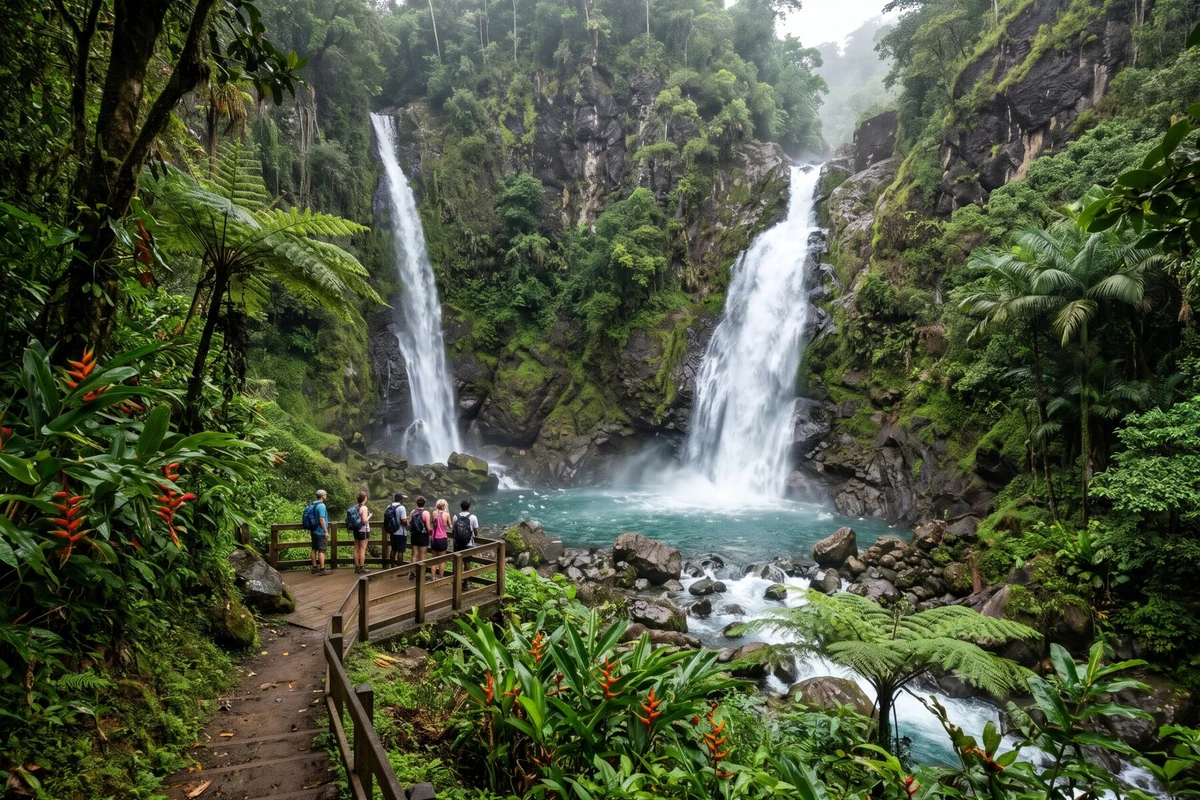
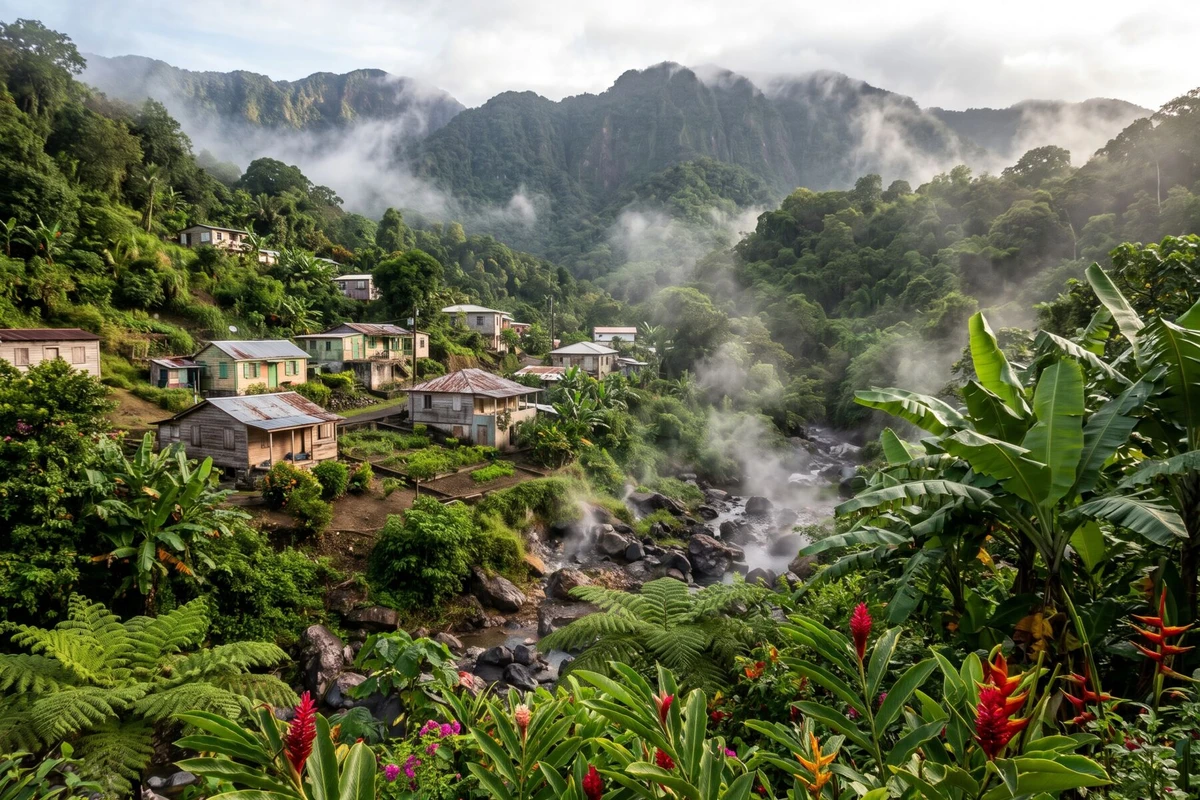
In the Roseau Valley the morning smells of wet leaves and warm earth. Mist hangs over forested ridges, the twin ribbons of Trafalgar Falls pour down a cliff of dark volcanic rock, and in the village of Wotten Waven steam drifts from hot mineral pools beside the river. A little higher, at Laudat, cool water flows out of Titou Gorge, a slit in the mountain so narrow that you swim between its walls towards a hidden waterfall, with only a strip of sky far above.
Destinations
Choose a city to see everything we arrange there.
Services by city in Dominica
Tours
The essence of Dominica
Dominica, the Nature Isle of the Caribbean, is not the Dominican Republic but a small, green, volcanic island between Guadeloupe and Martinique, wrapped in rainforest and laced with rivers. Along the coast south of Roseau, bubbles of volcanic gas rise from the seabed through a shallow reef, and sperm whales live in the deep water offshore. Dominica is unique because it keeps its wild interior almost untouched. We arrange the journey with waterfall, gorge and hot spring tours and private airport transfers, delivered with calm, attentive service.
Why visit Dominica?
Kalinago Land and Creole Heart
The Kalinago, the Indigenous people of the eastern Caribbean, called the island Wai'tu kubuli, meaning tall is her body, and their descendants still live in the Kalinago Territory on the Atlantic coast. European sailors sighted the island on a Sunday in 1493 and named it after the Latin word for that day. France and Britain fought over it for decades, and although British rule began in the eighteenth century, the French-based Kwéyòl language, Creole food and Catholic churches remain. Dominica became independent on 3 November 1978.
Rainforest, Rivers and Living Volcanoes
Dominica is one of the youngest islands of the Lesser Antilles, a steep volcanic ridge covered in rainforest and crossed by a great many rivers. At its heart, Morne Trois Pitons National Park is listed by UNESCO for its fumaroles, hot springs, freshwater lakes and the Boiling Lake, a flooded vent of bubbling grey water. Morne Diablotin, the highest peak, shelters the rare Sisserou parrot that flies on the national flag, and the Waitukubuli National Trail crosses the whole island from south to north.
Callaloo, Bakes and Fresh River Fish
Dominican cooking is Creole, simple and full of flavour from island gardens. Callaloo soup is made from the leaves of the dasheen plant, breakfast brings warm fried bakes and accra, crisp fritters of salted fish, and lunch is often stewed chicken or fresh fish with provisions, the root vegetables and green bananas grown on the hillsides. Fresh juices of passion fruit, guava and soursop, cocoa tea and coconut water are everywhere. Halal food is limited, so seafood and vegetarian choices are the easiest; our team can advise.
Experiences You Can Only Have Here
Swim through the narrow walls of Titou Gorge to a waterfall inside the mountain, stand in the spray beneath the twin cascades of Trafalgar Falls and soak afterwards in the warm sulphur pools of Wotten Waven. On the south-west coast, snorkel through a curtain of warm bubbles rising from the volcanic seabed, and from the Scotts Head peninsula see the Atlantic meet the Caribbean. Further afield, hike to the Boiling Lake, row up the Indian River near Portsmouth or watch sperm whales from a boat offshore.
Who is Dominica for?
Ideal for
- Nature lovers and hikers
- Adventure seekers who love to swim in rivers
- Snorkellers looking for something different
- Couples seeking a quiet, unspoilt island
- Active families with older children
- Birdwatchers and whale watchers
Pace & travel style
- Base yourself in or near Roseau for the valley sites
- Start waterfall and gorge outings early in the day
- Five to seven nights let you see the island without rushing
- Keep one flexible day for rain in the mountains
When to visit Dominica
Peak season · January–April
These are the driest months in Dominica, with sunny mornings, lower humidity and the best conditions for hiking, waterfall tours and swimming in Titou Gorge, when rivers run clear and gentle. Sperm whales are often seen offshore in these months, and Carnival, known as Mas Domnik, fills Roseau with costumes and music in the days before Lent. Cruise ships call frequently, so reserve tours and transfers ahead and visit the most popular sites early.
Shoulder season · May, December
May is warm and still fairly dry before the summer rains arrive, while December brings fresher weather as the wet season eases and the island prepares for Christmas. Both months offer green landscapes, quieter trails and easier availability, with waterfalls looking especially full after the rains. Showers are still likely in the interior, so pack a light rain jacket, start hikes early and keep plans flexible around the weather.
Low season · June–November
The rainy season brings heavy tropical downpours, lush green forests and powerful waterfalls, with fewer visitors on the island. This is also the Atlantic hurricane season, with the highest risk from August to October, and high rivers can close Titou Gorge and some canyons for safety. Late October and early November bring Creole Day and Independence celebrations, when people wear national dress and Creole food fills the streets. Flexible dates and travel insurance are wise.
The regions of Dominica and how to combine its cities
Dominica lies in the Lesser Antilles between the French islands of Guadeloupe to the north and Martinique to the south. It is small, steep and almost entirely green, with a mountainous spine that runs from Morne Diablotin in the north to the peaks of Morne Trois Pitons in the south. Roseau, the capital, sits on the sheltered Caribbean coast in the south-west, while the wilder Atlantic coast faces east into the trade winds.
Around Roseau, the Roseau Valley holds Trafalgar Falls, the hot springs of Wotten Waven, Titou Gorge and the trails to Freshwater Lake and the Boiling Lake, while the south-west coast leads to the bubbling reef, Soufrière and Scotts Head. The north centres on Portsmouth, the Indian River and Cabrits National Park, and the east holds the Kalinago Territory and the Emerald Pool. Beaches are mostly dark volcanic sand, so Dominica is a place for rivers, rainforest and the sea beneath the surface rather than long resort beaches.
Our city directory below is anchored in Roseau, the natural base for the valley's waterfalls, gorge and hot springs and for the reefs of the south-west coast. From Roseau we arrange guided waterfall and canyon outings, hot spring visits and snorkelling, while our private drivers handle transfers from Dominica's main airport (DOM) on the north-east coast and from the ferry terminal in Roseau. Dominica pairs naturally with Saint Lucia, Guadeloupe or Martinique on a wider island journey.
Before you go: practical tips for Dominica
Entry & visas
Citizens of many countries, including the United States, Canada, the United Kingdom, European Union nations and many Commonwealth and Caribbean states, can visit Dominica without a visa for short stays, with the permitted length set on arrival. Other nationalities need to apply for a visa in advance. A passport valid for at least six months beyond your stay, a return or onward ticket and details of where you are staying are expected, so check the current rules before you travel.
Money, cards & tipping
Dominica uses the Eastern Caribbean dollar, shared with its neighbours in the eastern Caribbean. US dollars are widely accepted in Roseau, though change usually comes in local currency. Cards work in most hotels and larger shops, but village stalls, minibuses, small cafés and some site entrances prefer cash, and a national parks site pass is needed for many nature sites. Cash machines are found in Roseau and Portsmouth, and tipping guides and drivers for good service is appreciated.
Etiquette & dress code
Dominicans are warm, proud of their island and its nature, and greetings matter: say good morning or good afternoon before any question. English is the official language, and Kwéyòl is spoken widely in daily life. Dress modestly in Roseau and the villages, and keep swimwear for rivers, pools and the sea. Ask before photographing people, especially in the Kalinago Territory, follow your guide's lead at waterfalls and on trails, and never leave rubbish in the forest.
Getting around
Dominica's roads are narrow, steep and winding, and traffic drives on the left. Minibuses run from Roseau to most villages during the day, but they are basic and infrequent in remote areas. The drive from Dominica's main airport (DOM) to Roseau crosses the mountains in about an hour and a quarter to an hour and a half, and fast ferries link Roseau with Guadeloupe and Martinique. For airport arrivals and day trips into the interior, our private transfers with local drivers are the most comfortable choice.
Must-do things in Dominica
- Swim through Titou Gorge to its hidden waterfall
- Stand in the spray of the twin Trafalgar Falls
- Soak in the warm sulphur pools of Wotten Waven
- Snorkel through rising volcanic bubbles south of Roseau
- Walk out to Scotts Head where two seas meet
- Hike to the Boiling Lake with a licensed guide
- Swim in the Emerald Pool beneath its waterfall
- Row up the Indian River near Portsmouth
- Visit the Kalinago Territory on the Atlantic coast
- Watch sperm whales from a boat off the west coast
Do’s and don’ts in Dominica
Do
- Wear water shoes with good grip for rivers and rocks
- Carry a light rain jacket even in the dry season
- Buy a national parks site pass for nature sites
- Start waterfall hikes early, before showers and crowds
- Carry Eastern Caribbean dollars in small notes
Don’t
- Don't confuse Dominica with the Dominican Republic when booking flights
- Don't swim in rivers after heavy rain
- Don't enter the gorge or canyons without a guide
- Don't try to see the whole island in one day
- Don't leave the trail on volcanic ground near hot vents
Dominica at a glance
Plan Dominica with Haqqi Tours
Every option is confirmed by our team on WhatsApp before you pay, and delivered by our own people or by trusted local partners we work with in every city. Because we send travellers from all over the world, our partners give us special rates and priority, so you always receive the best. Prices are per person unless marked per vehicle.
About Haqqi Tours: About us Contact us Legal NoticePrivacy PolicyCookies & Marketing PreferencesTerms & ConditionsBooking, Payment & Refunds
Where we operate in Dominica
Good to know
Frequently Asked Questions
Straight answers to what travellers ask most about Dominica.
Is Dominica the same as the Dominican Republic?
No. Dominica is a small, English-speaking island nation in the eastern Caribbean, between Guadeloupe and Martinique, known as the Nature Isle for its rainforest, rivers and waterfalls. The Dominican Republic is a much larger Spanish-speaking country sharing the island of Hispaniola with Haiti, far to the north-west. Double-check flight codes when booking: Dominica's main airport is DOM.
Is it safe to visit Dominica?
Dominica is a calm, friendly island that welcomes many visitors, and Roseau and the valley villages are relaxed bases. Take sensible precautions with valuables, and the main care needed is with nature itself: rivers can rise quickly after rain, trails are steep and slippery, and some sites should only be visited with licensed guides. Check your own government's official travel advice before departure, and keep our WhatsApp line handy.
How many days do I need in Dominica?
Five to seven days work well for a first visit: two days in the Roseau Valley for Titou Gorge, Trafalgar Falls and the hot springs, one for the bubbling reef and Scotts Head, one for the Emerald Pool and the Kalinago Territory, and one for Portsmouth and the Indian River. With more time, add the full-day hike to the Boiling Lake or a whale-watching trip.
Can a trip to Dominica be tailored for luxury or private travel?
Absolutely. Dominica offers eco-lodges in the rainforest, boutique hotels above the sea and peaceful cottages beside hot springs. We can tailor private guides for the waterfalls and gorges, private snorkelling, chauffeured airport transfers across the mountains and a relaxed family pace, then confirm every detail with you on WhatsApp before anything is paid.
What is the best time to visit Dominica?
January to April is the best time to visit Dominica, with the driest weather, clear rivers for swimming and the best conditions for hikes and waterfalls, plus frequent whale sightings. May and December are pleasant and quieter, while June to November brings heavy rain, the most dramatic waterfalls and the main hurricane risk from August to October.
What is Dominica famous for?
Dominica is famous as the Nature Isle of the Caribbean, for its rainforest, rivers and waterfalls, for Morne Trois Pitons National Park and the Boiling Lake, and for Titou Gorge, Trafalgar Falls and the Emerald Pool. It is also known for its hot springs, the bubbling volcanic reef near Roseau, resident sperm whales, the Kalinago people and its lively Creole culture.
Is halal food available in Dominica?
Halal options are limited in Dominica, and dedicated halal restaurants are rare. Fresh fish, seafood, vegetarian dishes, callaloo soup, rice and peas, provisions and an abundance of tropical fruit and fresh juices are easy to find, and many small kitchens cook to order. Pork appears in some local dishes, so ask when ordering; our team can advise.
How do I get to Roseau from the airport?
Dominica's main airport (DOM) lies on the north-east coast, and the road to Roseau crosses the mountainous interior through rainforest, taking about an hour and a quarter to an hour and a half. Some flights arrive direct from the United States, many journeys connect through nearby islands such as Antigua, Barbados or Puerto Rico, and fast ferries also arrive in Roseau from Guadeloupe and Martinique. We arrange a private transfer with a driver waiting at arrivals.
Which cities in Dominica does Haqqi Tours cover?
Roseau. Each city has its own page with everything available there, and a trip across several cities is planned in one WhatsApp conversation.
What can I book in Dominica?
Day tours - all run or confirmed by Haqqi Tours, each with a fixed price agreed on WhatsApp before you pay.
How do I book a tour or transfer in Dominica?
Fill in the form on the page you are interested in, or message us on WhatsApp with the date, the number of travellers and your hotel. A member of our team confirms the price and the details in writing within minutes.
Are the prices fixed?
Yes. Every price is agreed in writing on WhatsApp before you travel and does not change on the day - not for traffic, not for a late flight, not for the hour.
Do you arrange transfers between cities in Dominica?
Yes. Intercity transfers by private car or van are booked the same way as airport transfers; tell the desk the two hotels and the date and it quotes a fixed price for the whole vehicle.
Can you plan a full itinerary across Dominica?
Yes - tell the desk your dates, the cities you want and who is travelling, and it proposes a day-by-day plan with the tours, transfers and tickets priced in writing. You adjust it in the same chat before confirming.
Are your tours private or in a group?
Both exist, and the page of each tour says which. Private tours have a car and guide for your party alone; small-group tours share a guide with a few other travellers. The desk can convert most group tours into a private day on request.
Do the drivers and guides speak Arabic?
It depends on the country, the city and the day, so we do not promise a particular language for the driver or guide. Tell us your preference and we do our best; the WhatsApp desk itself always works in Arabic and English.