
Madagascar
Haqqi Tours arranges day tours, private airport transfers, attraction tickets and multi-day packages across Madagascar, confirmed on WhatsApp before you pay.
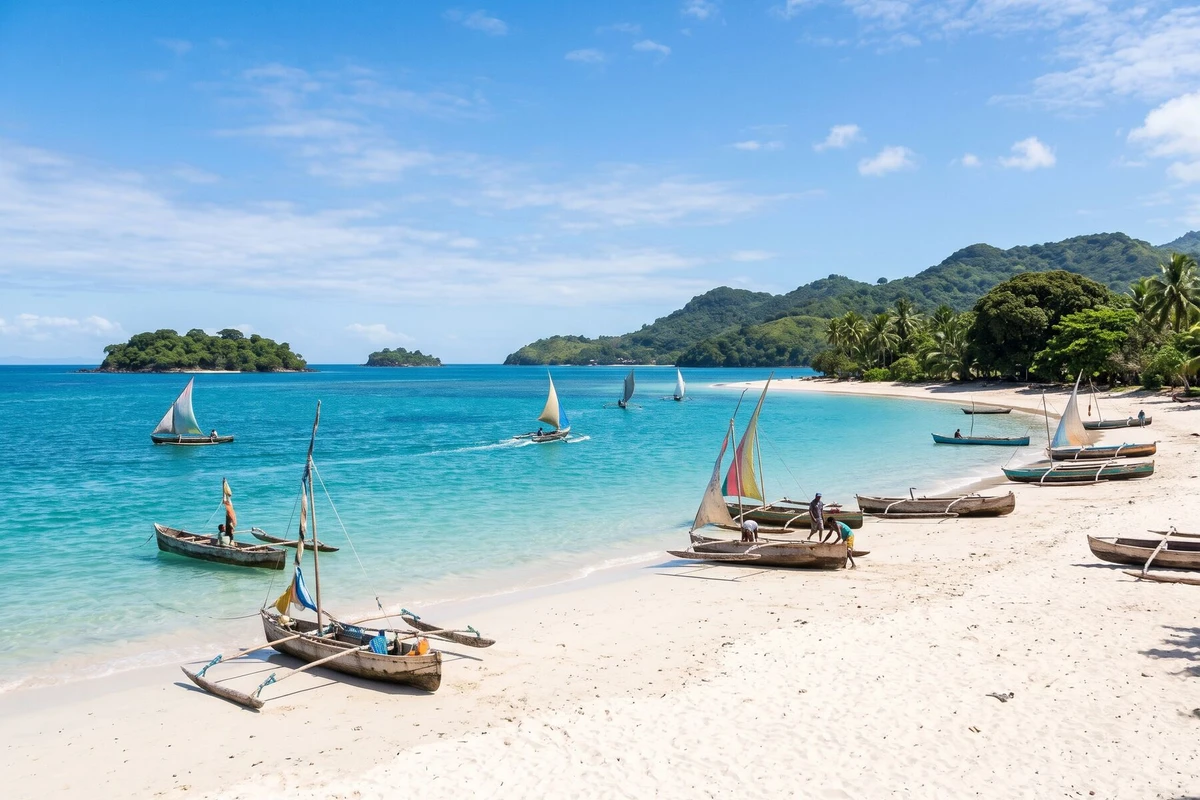
Off the north-west coast of Madagascar, the morning sea around Nosy Be is glassy and warm. Wooden outrigger canoes glide out from fishing villages, the scent of ylang-ylang flowers drifts from the plantations behind the beach, and on the horizon small islands rise from turquoise water fringed with coral. A short boat ride away, green turtles graze on seagrass beneath the surface, and on the beaches of Nosy Iranja a ribbon of white sand appears at low tide to join two tiny islands.
Destinations
Choose a city to see everything we arrange there.
Services by city in Madagascar
Tours
The essence of Madagascar
Inland, the forest holds the creatures that made Madagascar famous. In Lokobe National Park, black lemurs watch from the branches, panther chameleons change colour on the vines and some of the smallest chameleons on earth hide among the leaf litter. Madagascar is unique because it has been an island for so long that most of its plants and animals live nowhere else on the planet. We arrange the journey with island day trips, snorkelling outings, forest walks and private airport transfers, delivered with calm, attentive service.
Why visit Madagascar?
Island Peoples and a Kingdom in the Highlands
Madagascar was settled more than a thousand years ago by seafarers from Southeast Asia who crossed the Indian Ocean in outrigger canoes and mixed with peoples from East Africa, which is why the Malagasy language is related to the tongues of Borneo. Traders from Arabia and the Comoros later settled the north-west coast. In the nineteenth century the Merina kingdom ruled from the hills of Antananarivo, before France made the island a colony in 1896. Madagascar regained its independence in 1960.
An Island Like No Other
Madagascar is the fourth-largest island in the world, separated from Africa for so long that it became a natural laboratory. Lemurs, chameleons, tenrecs and baobabs evolved here in astonishing variety, from the rainforests of the east to the spiny forest of the south and the limestone needles of the Tsingy in the west. Around Nosy Be, coral reefs, seagrass meadows and sheltered islands attract sea turtles, dolphins, humpback whales in winter and whale sharks in late spring.
Rice, Zebu and Fresh Seafood
Malagasy meals are built around vary, rice eaten at almost every meal, served with laoka, the dish that goes with it. Romazava is a gentle broth of beef and leafy greens, akoho sy voanio is chicken simmered in coconut milk, and grilled zebu skewers are sold at roadside stalls. On Nosy Be, the catch of the day means fish, prawns, octopus and lobster with vanilla or coconut sauces. Halal food is limited, though the north has Muslim communities; seafood and vegetarian dishes are easy, and our team can advise.
Experiences You Can Only Have Here
Walk across the sandbank that links the two islets of Nosy Iranja at low tide, snorkel beside green turtles grazing in the clear water off Nosy Sakatia, and glide by wooden canoe to the edge of the Lokobe forest to meet black lemurs and tiny chameleons with a local guide. Then climb Mont Passot to watch the sun set over crater lakes and a scatter of islands, a quiet view over the Mozambique Channel that feels like the edge of the world.
Who is Madagascar for?
Ideal for
- Wildlife lovers and nature photographers
- Snorkellers and beach lovers
- Couples seeking remote island escapes
- Active families with older children
- Travellers who enjoy slow, simple island life
- Adventurers curious about unusual places
Pace & travel style
- Allow at least four nights on Nosy Be
- Head out on boat trips early for calm seas
- Alternate island days with quiet beach days
- Leave a buffer for domestic flight changes
When to visit Madagascar
Peak season · May–October
The dry season brings Nosy Be its sunniest weather, lower humidity, calm seas and clear water for snorkelling trips to the outer islands. Days are warm and evenings pleasantly fresh, and July and August are the busiest months, when holiday travellers fill the beach villages. Humpback whales pass offshore from about July to September, and lemurs are easy to see in the dry forest, so reserve boat trips, forest tours and transfers well ahead.
Shoulder season · April, November
April marks the end of the rains, with green landscapes, fewer visitors and seas settling into calmer patterns, while November is hot and still mostly dry before the wet season begins. Both months bring easier availability and good snorkelling, and late in the year whale sharks are often seen in the waters around Nosy Be. Short showers are possible, so keep plans flexible around the weather.
Low season · December–March
The rainy season brings heat, high humidity and heavy tropical downpours, often in the afternoon, with lush forests and very few travellers. This is also the cyclone season across Madagascar, with the highest risk from January to March, when strong storms can disrupt flights and boat trips. Some lodges close for part of the season. Travel insurance, flexible dates and close attention to forecasts are wise.
The regions of Madagascar and how to combine its cities
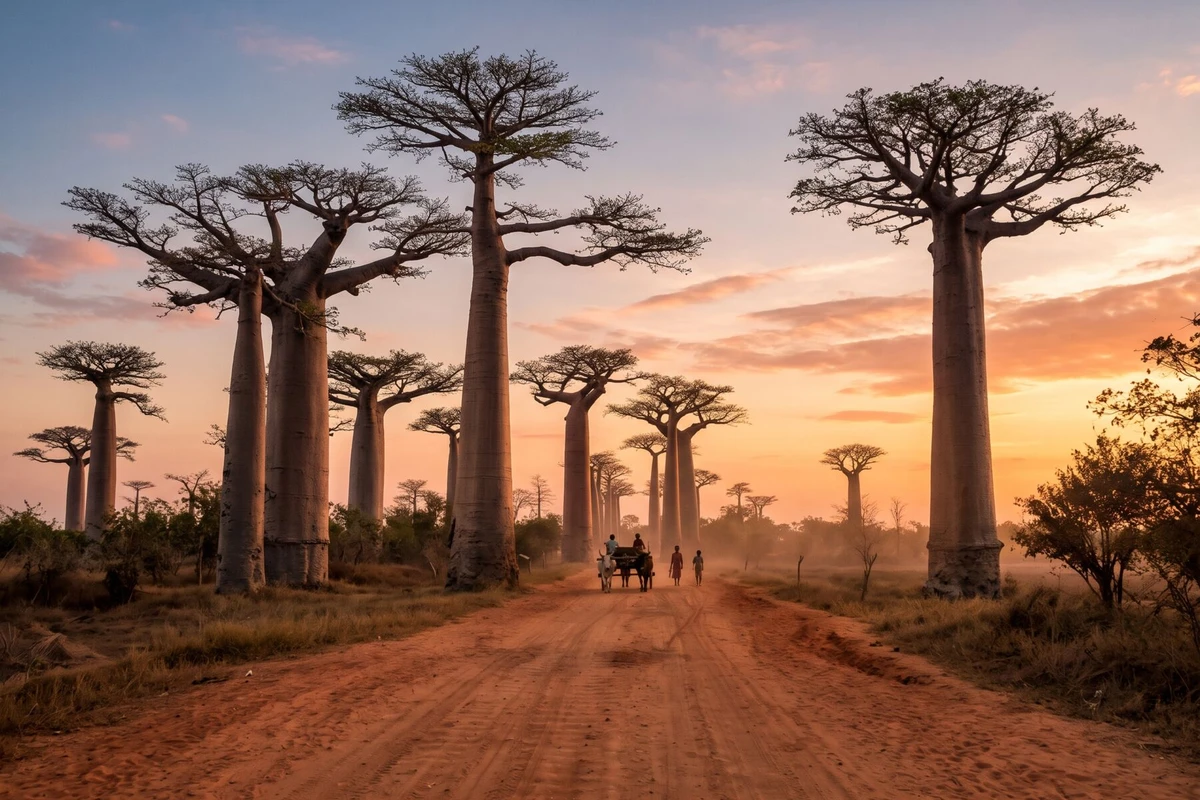
Madagascar lies in the Indian Ocean off the south-east coast of Africa, across the Mozambique Channel from Mozambique. The capital, Antananarivo, sits in the central highlands among rice terraces and hills, while the east coast is cloaked in rainforest around Andasibe, the west holds the Avenue of the Baobabs near Morondava and the Tsingy de Bemaraha, and the south leads through the sandstone of Isalo to dry spiny forest.
The far north is a world of its own. Antsiranana, also called Diego Suarez, faces one of the finest natural harbours on the coast, and the Ankarana reserve protects limestone pinnacles and caves. South of it, the fertile Sambirano valley around Ambanja grows cocoa, vanilla and spices, and from the small port of Ankify boats cross to Nosy Be and its neighbouring islands of Nosy Komba, Nosy Tanikely, Nosy Sakatia and Nosy Iranja.
Our city directory below is anchored in Nosy Be, the island base for the north-west. From Nosy Be we arrange boat days to Nosy Iranja, snorkelling trips to Nosy Sakatia and guided walks in Lokobe National Park, while our private drivers handle transfers from Nosy Be airport (NOS), which has flights from Antananarivo (TNR) and some international routes. Nosy Be pairs naturally with the rainforests of the east or the baobabs of the west.
Before you go: practical tips for Madagascar
Entry & visas
Most visitors to Madagascar need a visa, which many nationalities can obtain online in advance or on arrival at the main airports for short tourist stays. A passport valid for at least six months with free pages, proof of onward travel and details of your accommodation are usually expected. Requirements and procedures can change, so check the current rules with official Malagasy sources before you travel.
Money, cards & tipping
The currency is the Malagasy ariary. Cards are accepted in larger hotels and some restaurants on Nosy Be, but cash is needed for markets, small eateries, tuk-tuks and tips, and cash machines are found mainly in Hell-Ville and the larger towns. Euros are easy to exchange at banks and bureaux. Tipping guides, boat crews and drivers is customary for good service and is warmly appreciated.
Etiquette & dress code
Malagasy people are gentle, courteous and soft-spoken, and a smiling salama or bonjour opens every conversation. Many communities observe fady, local taboos that may forbid certain foods, actions or places, so follow your guide's advice. Dress modestly in villages and towns, keeping swimwear for the beach. Ask before photographing people, never touch or feed lemurs, and keep a respectful distance from turtles and other wildlife on the reef.
Getting around
Madagascar is large and its roads are slow, so domestic flights are the easiest way to link Antananarivo with Nosy Be and other regions, though schedules can change at short notice. Boats connect Nosy Be with Ankify on the mainland and with the surrounding islands. On Nosy Be, tuk-tuks and taxis serve the main roads. For airport arrivals and the drive to your beach hotel, our private transfers are the most comfortable choice.
Must-do things in Madagascar
- Walk the sandbank between the islets of Nosy Iranja
- Snorkel with green turtles off Nosy Sakatia
- Meet black lemurs in Lokobe National Park
- Spot panther chameleons on a forest walk
- Watch the sunset from Mont Passot
- Explore the market and old streets of Hell-Ville
- Snorkel the marine reserve of Nosy Tanikely
- Visit the craft village on Nosy Komba
- Smell the ylang-ylang plantations in bloom
- Taste romazava, zebu skewers and fresh seafood
Do’s and don’ts in Madagascar
Do
- Use reef-safe sunscreen and never touch coral
- Carry ariary in small notes for markets
- Bring insect repellent and ask about malaria
- Follow your guide's advice on local fady
- Keep a buffer day for domestic flights
Don’t
- Don't touch or feed lemurs
- Don't buy shells, coral or turtle products
- Don't walk through villages in swimwear
- Don't drink tap water unless it is filtered
- Don't plan tight connections on domestic flights
Madagascar at a glance
Plan Madagascar with Haqqi Tours
Every option is confirmed by our team on WhatsApp before you pay, and delivered by our own people or by trusted local partners we work with in every city. Because we send travellers from all over the world, our partners give us special rates and priority, so you always receive the best. Prices are per person unless marked per vehicle.
About Haqqi Tours: About us Contact us Legal NoticePrivacy PolicyCookies & Marketing PreferencesTerms & ConditionsBooking, Payment & Refunds
Where we operate in Madagascar
Good to know
Frequently Asked Questions
Straight answers to what travellers ask most about Madagascar.
Is it safe to visit Madagascar?
Nosy Be is a relaxed island with a long tradition of welcoming visitors, and most trips there pass without problems. As anywhere, take sensible precautions: avoid walking alone at night on empty roads, keep valuables out of sight and use licensed guides, boat operators and drivers. Check your own government's official travel advice before departure, and keep our WhatsApp line handy for help with tours and transfers.
How many days do I need in Madagascar?
For Nosy Be alone, four to six nights work well: one day for Nosy Iranja, one for snorkelling off Nosy Sakatia or Nosy Tanikely, one for Lokobe National Park and time for beaches and sunsets. A wider first visit to Madagascar needs at least ten to fourteen days, adding the rainforest of Andasibe, the baobabs of Morondava or the north around Ankarana.
What is Lokobe National Park?
Lokobe National Park protects the last large stretch of the original rainforest of Nosy Be, on the island's south-east peninsula. Visits usually begin with a ride in a wooden outrigger canoe from the village of Ambatozavavy, followed by a guided forest walk to see black lemurs, panther chameleons, tiny leaf chameleons, boas and frogs. The walk is gentle but warm and humid.
Can a trip to Madagascar be tailored for luxury or private travel?
Absolutely. Nosy Be and its neighbouring islands offer boutique beach lodges and secluded island retreats. We can tailor private boat days to the islands, private guides for Lokobe, chauffeured airport transfers and a relaxed family pace, then confirm every detail with you on WhatsApp before anything is paid.
What is the best time to visit Madagascar?
The dry season from May to October is the best time to visit Nosy Be and most of Madagascar, with sunny days, calm seas and good wildlife viewing, plus humpback whales from about July to September. April and November are quieter and still pleasant, while December to March brings heavy rain, heat and the cyclone season.
What is Madagascar famous for?
Madagascar is famous for wildlife found nowhere else, above all its lemurs and chameleons, and for baobab trees, especially the Avenue of the Baobabs near Morondava. It is also known for vanilla and ylang-ylang, the limestone pinnacles of the Tsingy, rainforests full of orchids, and island escapes such as Nosy Be with coral reefs, turtles and white-sand islets.
Is halal food available in Madagascar?
Halal options are limited in Madagascar, though the north, including Nosy Be, has long-established Muslim communities, mosques in Hell-Ville and some butchers and small eateries serving halal meat. Many hotel restaurants focus on seafood, so fresh fish, prawns, rice, vegetables and tropical fruit are easy to find. Pork appears in some local dishes, so ask when ordering; our team can advise.
How do I get to Nosy Be from the airport?
Nosy Be airport (NOS) lies in the centre of the island, about twenty to thirty minutes by road from Ambatoloaka and around forty-five minutes from Andilana, and has flights from Antananarivo (TNR) of about one and a half to two hours, plus some international routes. We arrange a private transfer with a driver waiting at arrivals to take you directly to your hotel.
Which cities in Madagascar does Haqqi Tours cover?
Nosy Be. Each city has its own page with everything available there, and a trip across several cities is planned in one WhatsApp conversation.
What can I book in Madagascar?
Day tours - all run or confirmed by Haqqi Tours, each with a fixed price agreed on WhatsApp before you pay.
How do I book a tour or transfer in Madagascar?
Fill in the form on the page you are interested in, or message us on WhatsApp with the date, the number of travellers and your hotel. A member of our team confirms the price and the details in writing within minutes.
Are the prices fixed?
Yes. Every price is agreed in writing on WhatsApp before you travel and does not change on the day - not for traffic, not for a late flight, not for the hour.
Do you arrange transfers between cities in Madagascar?
Yes. Intercity transfers by private car or van are booked the same way as airport transfers; tell the desk the two hotels and the date and it quotes a fixed price for the whole vehicle.
Can you plan a full itinerary across Madagascar?
Yes - tell the desk your dates, the cities you want and who is travelling, and it proposes a day-by-day plan with the tours, transfers and tickets priced in writing. You adjust it in the same chat before confirming.
Are your tours private or in a group?
Both exist, and the page of each tour says which. Private tours have a car and guide for your party alone; small-group tours share a guide with a few other travellers. The desk can convert most group tours into a private day on request.
Do the drivers and guides speak Arabic?
It depends on the country, the city and the day, so we do not promise a particular language for the driver or guide. Tell us your preference and we do our best; the WhatsApp desk itself always works in Arabic and English.