
Ghana
Haqqi Tours arranges day tours, private airport transfers, attraction tickets and multi-day packages across Ghana, confirmed on WhatsApp before you pay.
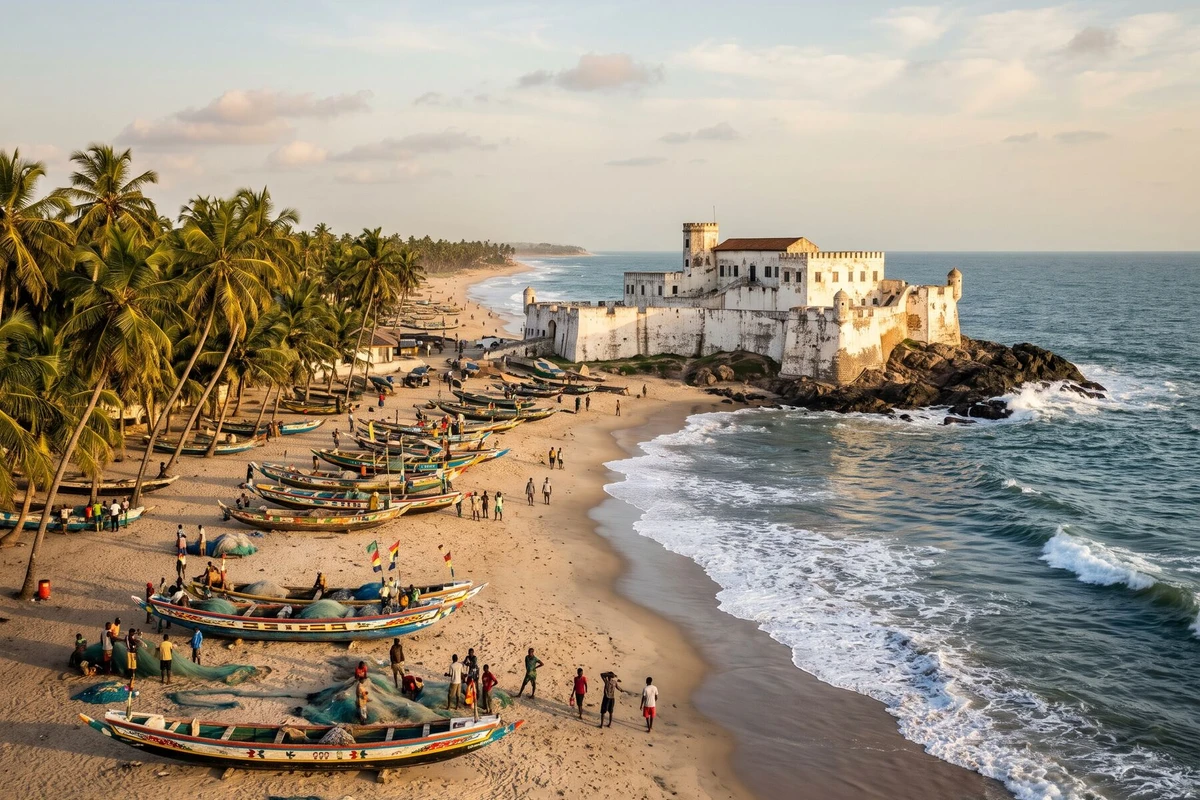
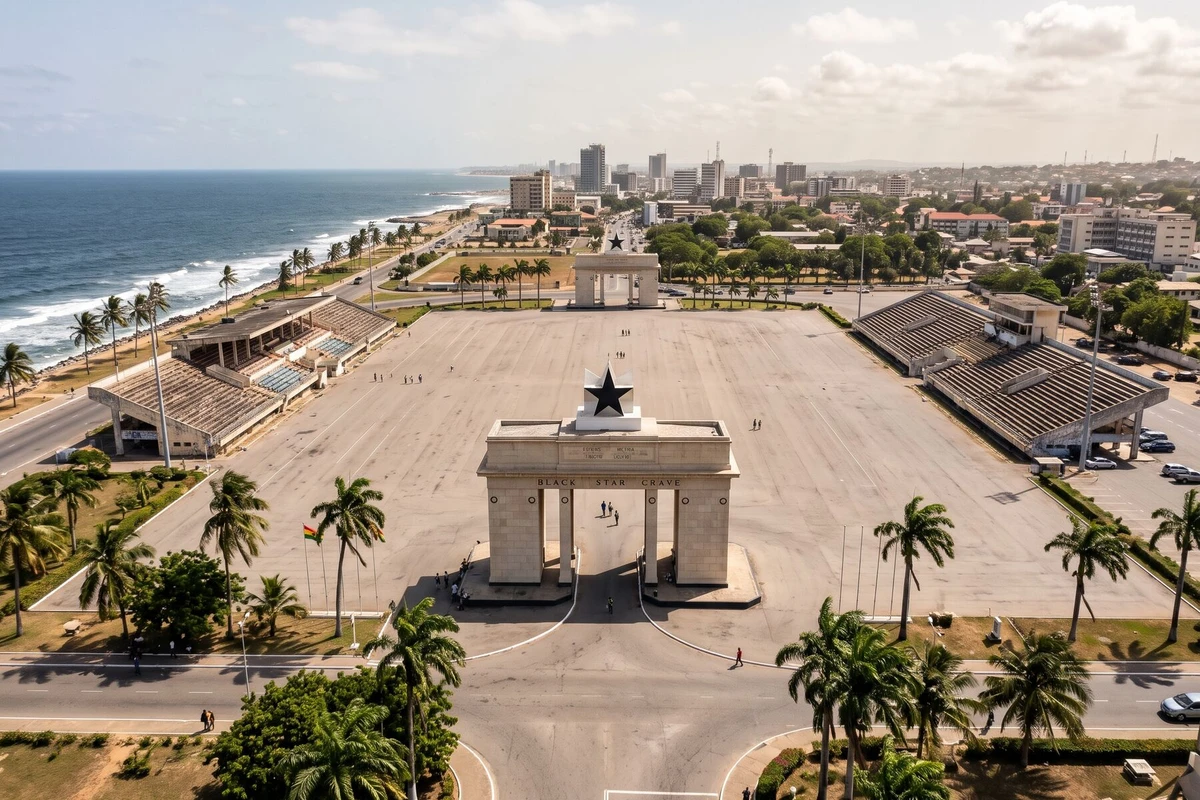
In Accra the morning starts loud and warm. Long wooden fishing canoes painted in bright colours and proverbs return to the beach below the old lighthouse of Jamestown, women carry baskets of fish and bread through the lanes, and the traffic of the capital hums past Independence Arch and the wide parade ground of Black Star Square. Akwaaba, welcome, is the word you hear first, and it is meant: Ghanaians are famous across West Africa for their easy smiles and generous hospitality.
Destinations
Choose a city to see everything we arrange there.
Services by city in Ghana
Tours
The essence of Ghana
An hour north, the air cools on the forested Akuapem Ridge. Royal palms line the paths of the Aburi Botanical Gardens, cocoa pods ripen in shady groves where cocoa was first grown in Ghana, and further on the twin cascades of Boti Falls tumble into a forest pool. Ghana is unique because the story of West Africa, from gold kingdoms to the coastal forts and the struggle for independence, is told here with warmth, music and colour. We arrange the journey with guided city tours, day trips into the hills and private airport transfers, delivered with calm, attentive service.
Why visit Ghana?
Gold Coast Kingdoms and Independence
For centuries powerful states such as the Asante kingdom, centred on Kumasi, grew rich on gold and trade, and Europeans who arrived on the coast from the late fifteenth century called the land the Gold Coast. They built a chain of forts and castles along the shore, and places such as Cape Coast and Elmina, where enslaved Africans were held before the Atlantic crossing, are now UNESCO-listed memorials visited with quiet respect. In 1957 Ghana became one of the first African countries south of the Sahara to win independence.
Palm Coast, Forest Hills and Great Lake
Ghana's Atlantic shore is lined with palm-fringed beaches, lagoons and fishing towns, while inland the land rises through tropical forest to the cool Akuapem and Kwahu ridges. Kakum National Park protects rainforest crossed by a canopy walkway high in the trees, the waterfalls of the Eastern and Volta regions are greenest in the rains, and Lake Volta, formed by the dam at Akosombo, ranks among the largest reservoirs on earth. In the far north, Mole National Park protects savanna elephants and antelope.
Jollof, Waakye and Grilled Tilapia
Ghanaian food is bold, spicy and shared. Jollof rice cooked in a rich tomato and pepper sauce is a national passion, waakye of rice and beans is the classic breakfast, and banku or kenkey come with grilled tilapia, fried fish and fiery pepper sauce. Fufu is eaten with light soup or groundnut soup, kelewele of spiced fried plantain is the favourite street snack, and red red pairs bean stew with sweet plantain. Halal food exists in Muslim neighbourhoods and some restaurants but is not universal; our team can advise.
Experiences You Can Only Have Here
Walk through Jamestown with a local guide as fishermen mend nets beneath the lighthouse, stand in Black Star Square where the nation celebrated its freedom, and browse the endless stalls of Makola Market for cloth, beads and spices. Then head into the hills to stroll the shaded avenues of the Aburi Botanical Gardens, crack open a ripe cocoa pod on the farm where Ghana's cocoa story began, and cool off in the spray of a forest waterfall, a world away from the bustle of the capital.
Who is Ghana for?
Ideal for
- Culture and history lovers
- Travellers tracing African heritage
- First-time visitors to West Africa
- Food lovers keen on bold flavours
- Nature lovers seeking forest and waterfalls
- Families with curious older children
Pace & travel style
- Base yourself in Accra for three or four nights
- Start day trips early to beat the traffic
- Add Cape Coast for two nights if you can
- Leave time to rest between busy city days
When to visit Ghana
Peak season · November–March
The main dry season brings sunny days, lower humidity and good roads for trips into the hills and along the coast. From December to February the dry harmattan wind blows dust from the Sahara, softening the light and cooling the evenings. December is festive, with many visitors returning to Ghana for family and cultural events, and Independence Day on 6 March is marked with parades, so reserve tours and transfers ahead. Waterfalls flow more gently at the end of the dry season.
Shoulder season · July–October
After the heaviest rains, July and August bring cooler, cloudier days and a relatively dry spell along the coast around Accra, with green hills and full waterfalls. In August the Ga people of Accra celebrate Homowo, a harvest festival of processions and traditional food, and Jamestown hosts a lively street art festival. September and October bring the shorter second rains in the south, usually as passing showers, with fewer visitors and easy availability.
Low season · April–June
The main rainy season in the south brings heavy tropical downpours, often in the afternoon or overnight, high humidity and lush forest scenery. Rain usually falls in bursts rather than all day, so city tours and garden visits continue, but some rural roads become muddy and slower. Waterfalls are at their most powerful, and the countryside is at its greenest. Flexible plans, light rain gear and travel insurance are wise.
The regions of Ghana and how to combine its cities
Ghana lies on the Atlantic coast of West Africa, bordered by Côte d'Ivoire to the west, Burkina Faso to the north and Togo to the east. Accra, the capital and largest city, spreads along the shore in the south-east, from the historic districts of Jamestown and Ussher Town to Osu, Labadi and the leafy residential areas near the airport, with the Akuapem Ridge and its hill towns rising just to the north.
West of Accra, the Central Region holds the castles of Cape Coast and Elmina and the rainforest of Kakum National Park, and the coast continues to the beaches of the Western Region. In the heart of the country, Kumasi is the historic seat of the Asante, with its great markets and craft villages, while the Volta Region to the east has mountains, waterfalls and Lake Volta. The dry north around Tamale leads to savanna and Mole National Park.
Our city directory below is anchored in Accra, the natural gateway and base for a first visit. From the capital we arrange guided city tours of its history and culture and day trips to the waterfalls, the Aburi Botanical Gardens and a cocoa farm in the hills, while our private drivers handle transfers from Accra International Airport (ACC). Ghana pairs well with a longer journey along the coast to Cape Coast and Elmina.
Before you go: practical tips for Ghana
Entry & visas
Most visitors to Ghana need a visa arranged in advance through an embassy or the official application channels, while citizens of West African neighbours and a small number of other countries can enter without one for short stays. A passport valid for at least six months is expected, and a valid yellow fever vaccination certificate is required on arrival. Rules can change, so check the current requirements with official Ghanaian sources before you travel.
Money, cards & tipping
The currency is the Ghana cedi, divided into pesewas. Cards are accepted in larger hotels, malls and some restaurants in Accra, but cash is king in markets, small shops, local eateries and taxis, and mobile money is widely used by locals. Cash machines are common in the city but rarer in rural areas, so carry small notes for day trips. Tipping guides, drivers and good restaurant service is customary and appreciated.
Etiquette & dress code
Ghanaians are warm, polite and value greetings, so always say good morning or good afternoon before asking a question. Use your right hand to give, receive and eat, as the left is considered impolite. Dress is relaxed but modest away from the beach, and respect is shown to elders and chiefs. Ask before photographing people, markets or fishing communities, and expect friendly conversation rather than hurried exchanges. Sunday mornings are for church and family.
Getting around
Domestic flights link Accra with Kumasi, Tamale and Takoradi in under an hour. Long-distance buses connect the main cities, while crowded minibuses called trotros, shared taxis and ride-hailing apps serve the capital. Accra's traffic is heavy at rush hour and roads beyond the city can be slow, so plan early starts for day trips. For airport arrivals and journeys into the hills, our private transfers with a driver are the most comfortable choice.
Must-do things in Ghana
- Walk through Jamestown and climb near its old lighthouse
- Stand in Black Star Square beneath Independence Arch
- Browse cloth, beads and spices in Makola Market
- Visit the seventeenth-century Osu Castle on the shore
- Stroll the shaded avenues of the Aburi Botanical Gardens
- Taste fresh cocoa on a farm in the Akuapem hills
- Feel the spray of Boti Falls in the forest
- Learn the meaning of kente cloth and Adinkra symbols
- Taste jollof rice, waakye and kelewele
- Visit the castles of Cape Coast and Elmina with respect
Do’s and don’ts in Ghana
Do
- Greet people before asking for anything
- Use your right hand to give and receive
- Carry Ghana cedis in small notes
- Ask your doctor about malaria prevention
- Bring your yellow fever certificate
Don’t
- Don't photograph people without asking first
- Don't underestimate Accra's rush-hour traffic
- Don't drink tap water unless it is filtered
- Don't swim where locals warn of strong currents
- Don't rush greetings or conversations
Ghana at a glance
Plan Ghana with Haqqi Tours
Every option is confirmed by our team on WhatsApp before you pay, and delivered by our own people or by trusted local partners we work with in every city. Because we send travellers from all over the world, our partners give us special rates and priority, so you always receive the best. Prices are per person unless marked per vehicle.
About Haqqi Tours: About us Contact us Legal NoticePrivacy PolicyCookies & Marketing PreferencesTerms & ConditionsBooking, Payment & Refunds
Where we operate in Ghana
Good to know
Frequently Asked Questions
Straight answers to what travellers ask most about Ghana.
Is it safe to visit Ghana?
Ghana is often described as one of the most stable and welcoming countries in West Africa, and Accra is a lively, friendly capital. As anywhere, take sensible precautions: watch your belongings in crowded markets, avoid walking alone on empty streets at night and use licensed guides and drivers. Check your own government's official travel advice before departure, and keep our WhatsApp line handy for help with tours and transfers.
How many days do I need in Ghana?
Five to seven days work well for a first visit: three or four nights in Accra for the city tour, a day in the Akuapem hills for the gardens, the cocoa farm and a waterfall, then two nights in Cape Coast for the castles and Kakum's canopy walkway. With ten days or more you can add Kumasi and the Asante heartland or the mountains and lake of the Volta Region.
What are the Aburi Botanical Gardens?
The Aburi Botanical Gardens lie on the Akuapem Ridge about an hour north of Accra, where the cooler hill air once drew colonial officials to a sanatorium. Opened as gardens in 1890, they hold avenues of royal palms, giant tropical trees, medicinal plants and wide lawns with views towards the plains. They are often combined with a cocoa farm and a waterfall in one day.
Can a trip to Ghana be tailored for luxury or private travel?
Absolutely. Accra offers stylish city hotels, quiet residential neighbourhoods and beach resorts along the coast. We can tailor private guided tours, a comfortable chauffeured car for day trips to the hills and the castles, a relaxed family pace and private airport transfers, then confirm every detail with you on WhatsApp before anything is paid.
What is the best time to visit Ghana?
The dry season from November to March is the best time to visit Ghana, with sunny days, easier roads and lower humidity, though the harmattan brings hazy skies from December to February. July and August are cooler with a drier spell on the coast, while April to June brings the heaviest rains but the greenest forests and fullest waterfalls.
What is Ghana famous for?
Ghana is famous for its warm welcome, its cocoa, which makes it one of the world's leading producers, and its gold, which once gave the Gold Coast its name. It is also known for kente cloth and Adinkra symbols, the Asante kingdom, the coastal castles of Cape Coast and Elmina, highlife music, jollof rice and for being among the first African nations to gain independence.
Is halal food available in Ghana?
Ghana has a sizeable Muslim community, especially in the north and in neighbourhoods of Accra such as Nima and Madina, where halal meat and small halal eateries can be found. Elsewhere, halal options are limited and not guaranteed, so ask when ordering. Grilled fish, seafood, rice and bean dishes, plantain and fresh fruit are easy to find, and our team can advise.
How do I get to Accra from the airport?
Accra International Airport (ACC) lies inside the city, about fifteen to forty minutes by road from Osu, Cantonments and Labadi depending on traffic, which can be heavy at rush hour. Taxis and ride-hailing cars are available, but we arrange a private transfer with a driver waiting at arrivals to take you directly to your hotel.
Which cities in Ghana does Haqqi Tours cover?
Accra. Each city has its own page with everything available there, and a trip across several cities is planned in one WhatsApp conversation.
What can I book in Ghana?
Day tours - all run or confirmed by Haqqi Tours, each with a fixed price agreed on WhatsApp before you pay.
How do I book a tour or transfer in Ghana?
Fill in the form on the page you are interested in, or message us on WhatsApp with the date, the number of travellers and your hotel. A member of our team confirms the price and the details in writing within minutes.
Are the prices fixed?
Yes. Every price is agreed in writing on WhatsApp before you travel and does not change on the day - not for traffic, not for a late flight, not for the hour.
Do you arrange transfers between cities in Ghana?
Yes. Intercity transfers by private car or van are booked the same way as airport transfers; tell the desk the two hotels and the date and it quotes a fixed price for the whole vehicle.
Can you plan a full itinerary across Ghana?
Yes - tell the desk your dates, the cities you want and who is travelling, and it proposes a day-by-day plan with the tours, transfers and tickets priced in writing. You adjust it in the same chat before confirming.
Are your tours private or in a group?
Both exist, and the page of each tour says which. Private tours have a car and guide for your party alone; small-group tours share a guide with a few other travellers. The desk can convert most group tours into a private day on request.
Do the drivers and guides speak Arabic?
It depends on the country, the city and the day, so we do not promise a particular language for the driver or guide. Tell us your preference and we do our best; the WhatsApp desk itself always works in Arabic and English.