
Costa Rica
Haqqi Tours arranges day tours, private airport transfers, attraction tickets and multi-day packages across Costa Rica, confirmed on WhatsApp before you pay.
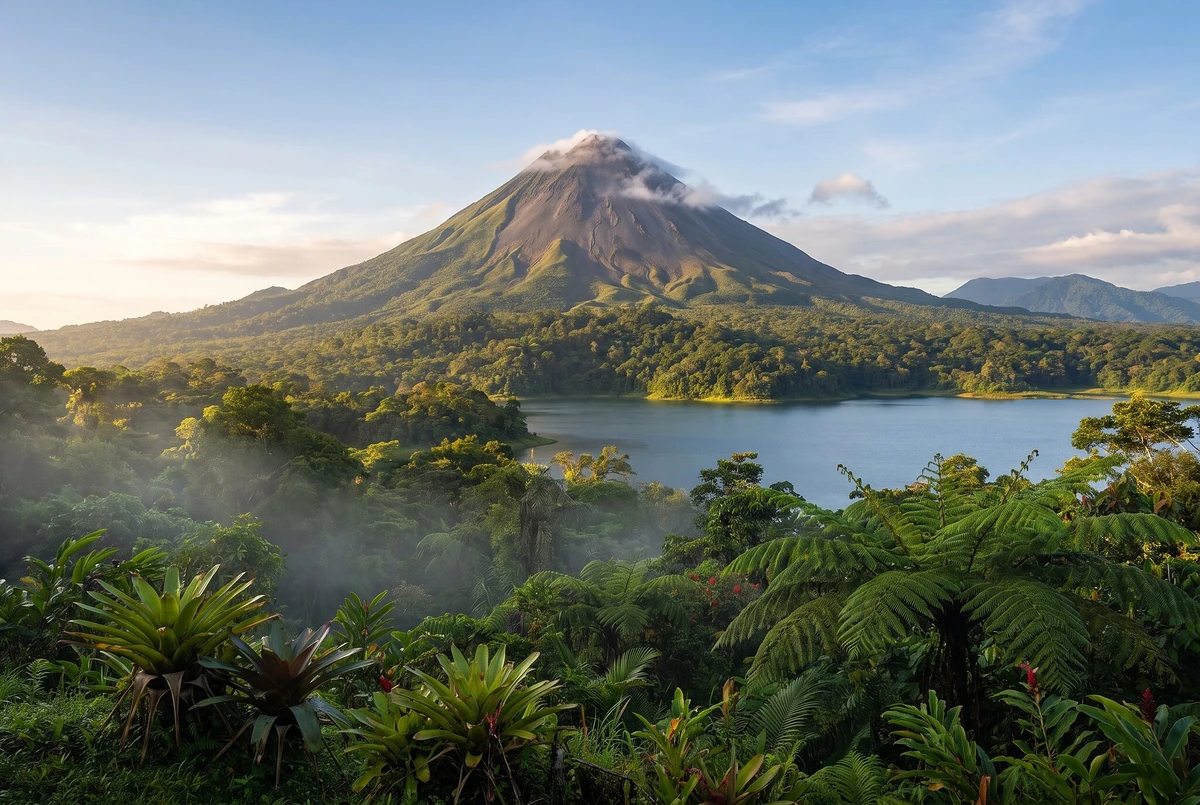
Dawn in Costa Rica arrives as sound before light: howler monkeys roaring across the canopy, the drip of last night’s rain sliding off heliconia leaves, a toucan clattering somewhere above the mist. Then the cloud lifts and Arenal’s near-perfect cone appears, faintly steaming over a lake the colour of jade. By mid-morning you are crossing a hanging bridge through the forest canopy; by evening you are soaking in volcano-warmed rivers while the jungle hums around you.
Destinations
Choose a city to see everything we arrange there.


Services by city in Costa Rica
Tours
Attraction Tickets
Airport Transfers
Flight Tickets
Ferry Tickets
The essence of Costa Rica
Few countries pack so much living world into so small a frame. Costa Rica holds roughly five percent of the planet’s biodiversity on a slender strip of land between two oceans, and it chose decades ago to protect it: around a quarter of the territory lies inside national parks and reserves. That is what makes Costa Rica irreplaceable. Here nature is not a backdrop but the main event, and “pura vida” is less a slogan than a daily habit of slowing down to notice it.
Why visit Costa Rica?
Pre-Columbian Stones and a Nation Without an Army
Long before Spanish ships arrived, Chibchan and Chorotega peoples carved jade, worked gold and shaped the mysterious stone spheres of the Diquís Delta, now a UNESCO World Heritage Site. Colonial Cartago keeps the ruins of its earthquake-shattered church and the Basilica of Our Lady of the Angels, focus of a great annual pilgrimage. In 1948 Costa Rica abolished its army and invested in schools instead, a quiet decision that still shapes the country’s calm, confident character.
Volcanoes, Cloud Forest and Two Coastlines
A spine of volcanoes runs the length of Costa Rica, from Rincón de la Vieja in the dry north to Irazú and Poás above the Central Valley. On their flanks, Monteverde’s cloud forest drips with orchids and moss, while the lowlands below hide rivers, waterfalls and hot springs. The Pacific coast brings surf breaks and the golden bays of the Nicoya Peninsula; the Caribbean side is wilder and greener, laced with the jungle canals of Tortuguero.
Gallo Pinto, Mountain Coffee and the Painted Oxcart
Costa Rican food is honest and filling: gallo pinto of rice and black beans at breakfast, a casado plate at lunch with sweet plantains, salad and grilled fish, and fresh fruit everywhere, from mango and pineapple to guanábana. Coffee is a point of national pride, grown on volcanic slopes and brewed slowly through a cloth chorreador. The brightly painted oxcart, recognised by UNESCO, embodies the craftsmanship of Sarchí, while the Caribbean coast adds coconut rice and Afro-Caribbean rhythm.
Where the Wild Comes to You
Costa Rica lets you watch sea turtles nest on Tortuguero’s dark sand, cross suspension bridges at eye level with toucans and spot sloths dozing in trees beside the road. You can paddle a jungle river at dawn, feel the spray of La Fortuna Waterfall and drift in thermal rivers warmed by Arenal. Few places let you move from volcano to cloud forest to two different oceans within a single week, all of it protected and thriving.
Who is Costa Rica for?
Ideal for
- Nature lovers and wildlife photographers
- Families with curious children
- Adventure seekers chasing zip lines and river rapids
- Couples seeking rainforest lodges and hot springs
- Birdwatchers hunting for quetzals and toucans
- Slow travellers who value sustainability
Pace & travel style
- Two or three bases rather than a new hotel every night
- Early starts reward you with the most wildlife
- Afternoons slow down when tropical showers roll in
- Distances are short, but mountain drives take longer than maps suggest
When to visit Costa Rica
Peak season · December–April
Costa Rica’s dry season brings blue skies to the Pacific coast and the Central Valley, warm days and cooler nights in the highlands. Arenal reveals its summit more often, beaches are at their best and rainforest trails are firm underfoot. It is also the busiest period, with the Christmas, New Year and Easter weeks in particular demand, so lodges, domestic flights and popular day tours should be secured well ahead.
Shoulder season · May–June and November
These transition months show Costa Rica at its greenest. Mornings are usually bright, showers arrive in the afternoon and pass quickly, and the forests are lush and loud with birdsong. Rates soften, the parks feel calmer and you can often reserve the lodge you really want. Smart travellers plan active outings early in the day and keep afternoons for hot springs, coffee farms and long, unhurried lunches.
Low season · July–October
The heart of the green season brings heavier rain, especially on the Pacific side in September and October, and some rural roads become slow. Yet this is when turtles nest at Tortuguero, humpback whales pass the southern Pacific coast and the Caribbean often enjoys its driest spell. It suits flexible travellers, families on a July school holiday and anyone who prefers quiet trails, lush scenery and generous value.
The regions of Costa Rica and how to combine its cities
Costa Rica divides naturally into a highland heart and two contrasting coasts. The Central Valley, with San José, Heredia and Cartago, sits on a cool plateau ringed by volcanoes and coffee farms; it is where almost every journey begins, through Juan Santamaría International Airport. To the north, the Arenal region and the plains of San Carlos are all lakes, rainforest and thermal rivers, while Monteverde’s cloud forest clings to the continental divide.
The northwest province of Guanacaste is dry, sunny cattle-ranching country, fringed by long Pacific beaches and served by Liberia’s airport. Further south, the central Pacific around Manuel Antonio mixes national park and surf towns, and the remote Osa Peninsula guards Corcovado, one of the most biologically intense places on earth. On the opposite shore, the Caribbean coast moves to a different rhythm, with Afro-Caribbean culture, Tortuguero’s canals and the coral reefs of Cahuita.
Our city directory below begins with La Fortuna, the gateway to Arenal Volcano and the adventurous centre of most Costa Rica itineraries. From there our team arranges guided day tours to hanging bridges, waterfalls and hot springs, issues attraction tickets and links you by private airport transfer to San José or Liberia. Pair La Fortuna with Monteverde and a Pacific beach, add a flight or ferry ticket we issue to the Nicoya Peninsula when the route calls for it, and you have the ideal loop.
Before you go: practical tips for Costa Rica
Entry & visas
Many nationalities, including citizens of the European Union, the United States, Canada and much of Latin America, can enter Costa Rica without a visa for a tourist stay, while others need one issued in advance. The rules depend on your passport, so check the official Costa Rican immigration portal or the nearest embassy before booking. Carry proof of onward travel and a passport valid for your whole stay.
Money, cards & tipping
The Costa Rican colón is the local currency, and US dollars are widely accepted in tourist areas. Cards work in hotels, restaurants and larger shops, but carry some cash for rural sodas, roadside fruit stands and small park fees. A service charge is usually included on restaurant bills; guides and drivers appreciate a separate tip. Bargaining is not customary in shops, though gentle negotiation at craft markets is fine.
Etiquette & dress code
Costa Ricans, who call themselves Ticos, are polite and unhurried; a warm greeting and a cheerful “pura vida” go a long way. Dress modestly when entering churches such as the Basilica in Cartago, and cover swimwear away from the beach. Ask before photographing people, especially in Indigenous communities. In the parks, never feed wildlife, keep to marked trails and speak quietly so that others can enjoy the sightings too.
Getting around
Distances in Costa Rica look small on a map, but mountain roads, rain and river crossings make journeys slower than expected. Short domestic flights link San José with Tortuguero, the Osa Peninsula and the beaches, and car ferries cross the Gulf of Nicoya. Public buses are inexpensive but slow. The most comfortable option is a private chauffeured transfer arranged by our team, timed to your flights and lodges.
Must-do things in Costa Rica
- Watch Arenal Volcano emerge from the clouds at sunrise over Lake Arenal.
- Cross the hanging bridges through the rainforest canopy near La Fortuna.
- Swim beneath the roaring seventy-metre cascade of La Fortuna Waterfall.
- Soak in volcano-warmed thermal rivers as night falls over the jungle.
- Search for the resplendent quetzal in Monteverde’s misty cloud forest.
- Watch sea turtles nest on Tortuguero’s beaches with a licensed local guide.
- Spot sloths, capuchins and scarlet macaws in Manuel Antonio National Park.
- Visit a highland coffee farm and sip a fresh cup brewed through a chorreador.
- Stand on the rim of Poás or Irazú volcano and gaze into the crater.
- Stroll the colourful Caribbean villages of Puerto Viejo and Cahuita.
Do’s and don’ts in Costa Rica
Do
- Pack light rain gear and quick-dry clothing whatever the season.
- Start wildlife outings early, when animals are most active.
- Use certified naturalist guides; they spot what you would miss.
- Carry insect repellent and high-protection, reef-friendly sunscreen.
- Allow extra time between destinations for winding mountain roads.
Don’t
- Don’t feed monkeys, coatis or any wild animal, however tame they seem.
- Don’t swim at unpatrolled Pacific beaches with strong rip currents.
- Don’t leave valuables visible in parked cars at trailheads.
- Don’t try to see the whole country in a single week.
- Don’t remove shells, plants or stones from protected areas.
Costa Rica at a glance
Plan Costa Rica with Haqqi Tours
Every option is confirmed by our team on WhatsApp before you pay, and delivered by our own people or by trusted local partners we work with in every city. Because we send travellers from all over the world, our partners give us special rates and priority, so you always receive the best. Prices are per person unless marked per vehicle.
About Haqqi Tours: About us Contact us Legal NoticePrivacy PolicyCookies & Marketing PreferencesTerms & ConditionsBooking, Payment & Refunds
Where we operate in Costa Rica
Good to know
Frequently Asked Questions
Straight answers to what travellers ask most about Costa Rica.
Is it safe to visit Costa Rica?
Costa Rica is one of the most visited and stable countries in Central America, with a long tradition of welcoming travellers. Use normal city sense in San José, watch your belongings on beaches and respect ocean currents. Before you leave, check your own government’s official travel advice, and keep our WhatsApp line handy throughout your trip.
How many days do I need for a first trip to Costa Rica?
Ten to twelve days is ideal for a first visit to Costa Rica: three nights around La Fortuna and Arenal, two in Monteverde, then four or five on a Pacific or Caribbean beach. With only a week, choose two regions and let our private transfers handle the drives between them.
What is the best way to travel between Costa Rica's major cities?
For comfort and flexibility, a private transfer arranged by our team is the easiest way to move between San José, La Fortuna, Monteverde and the coasts. Short domestic flights save hours on longer hops to Tortuguero or the Osa Peninsula, and we can issue those tickets along with ferry crossings to the Nicoya Peninsula.
Can a trip to Costa Rica be tailored for luxury or private travel?
Absolutely. Costa Rica has superb rainforest lodges, spa resorts with thermal pools and secluded Pacific villas. We arrange private airport transfers, private day tours with naturalist guides and seamless connections, working with trusted local partners who give our travellers priority. Tell our team your travel style and we will shape the itinerary around it.
Is Costa Rica tourist friendly?
Very. Costa Rica has welcomed nature travellers for decades, so trails are well marked, lodges are used to international guests and English is widely spoken in tourist areas. Locals are courteous and proud of their parks. Our team and local partners are on hand to smooth every connection, from arrival to departure.
Is it safe to travel to Costa Rica now?
Travel to Costa Rica generally runs smoothly, but conditions anywhere can change, from weather to road works. Check your own government’s official travel advice shortly before departure, follow local guidance around volcanoes and beaches, and keep our WhatsApp line handy so our team can adjust transfers or tours if needed.
What is the best time to visit Costa Rica?
December to April is the dry season and the classic time to visit Costa Rica, with sunny Pacific beaches and clearer volcano views. May, June and November bring green landscapes and fewer crowds, while September and October are wettest on the Pacific but often the finest months on the Caribbean coast.
What is Costa Rica famous for?
Costa Rica is famous for extraordinary biodiversity, protected rainforests, Arenal Volcano, cloud forests full of orchids and quetzals, sloths and toucans, excellent coffee and the easy-going pura vida philosophy. It is also known for abolishing its army and for pioneering sustainable tourism, with a large share of its land under protection.
Which cities in Costa Rica does Haqqi Tours cover?
La Fortuna and San José. Each city has its own page with everything available there, and a trip across several cities is planned in one WhatsApp conversation.
What can I book in Costa Rica?
Day tours, attraction tickets, private airport transfers, flight tickets and ferry tickets - all run or confirmed by Haqqi Tours, each with a fixed price agreed on WhatsApp before you pay.
How do I book a tour or transfer in Costa Rica?
Fill in the form on the page you are interested in, or message us on WhatsApp with the date, the number of travellers and your hotel. A member of our team confirms the price and the details in writing within minutes.
Are the prices fixed?
Yes. Every price is agreed in writing on WhatsApp before you travel and does not change on the day - not for traffic, not for a late flight, not for the hour.
Do you arrange transfers between cities in Costa Rica?
Yes. Intercity transfers by private car or van are booked the same way as airport transfers; tell the desk the two hotels and the date and it quotes a fixed price for the whole vehicle.
Can you plan a full itinerary across Costa Rica?
Yes - tell the desk your dates, the cities you want and who is travelling, and it proposes a day-by-day plan with the tours, transfers and tickets priced in writing. You adjust it in the same chat before confirming.
Are your tours private or in a group?
Both exist, and the page of each tour says which. Private tours have a car and guide for your party alone; small-group tours share a guide with a few other travellers. The desk can convert most group tours into a private day on request.
Do the drivers and guides speak Arabic?
It depends on the country, the city and the day, so we do not promise a particular language for the driver or guide. Tell us your preference and we do our best; the WhatsApp desk itself always works in Arabic and English.