
Faroe Islands
Haqqi Tours arranges day tours, private airport transfers, attraction tickets and multi-day packages across Faroe Islands, confirmed on WhatsApp before you pay.
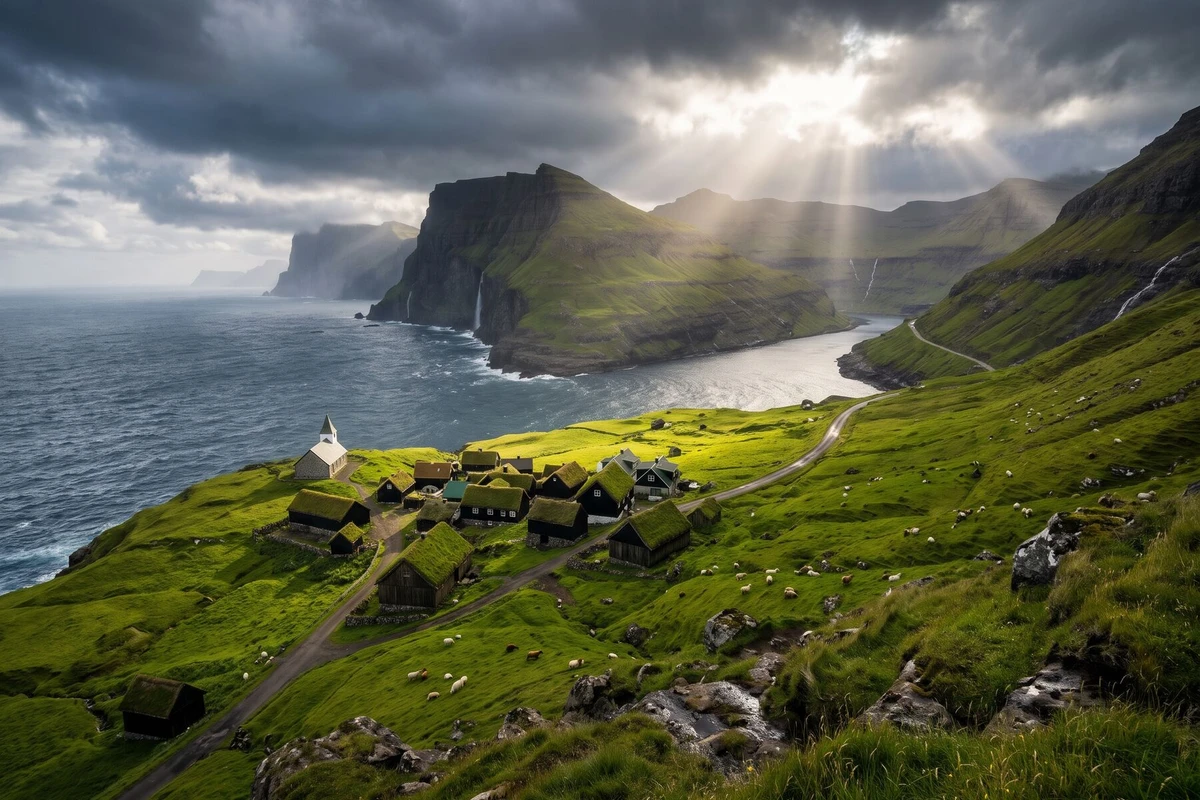
In the Faroe Islands the weather writes the day. A curtain of fog lifts from a green fjord, a waterfall pours straight off a cliff into the Atlantic, and a village of turf-roofed houses appears below, its tiny church painted white against the grass. Sheep graze on slopes so steep they seem to hang in the air, puffins and fulmars wheel along the cliffs, and the light changes every few minutes from silver to gold as clouds race across the sky.
Destinations
Choose a city to see everything we arrange there.
Services by city in Faroe Islands
Tours
The essence of Faroe Islands
The islands lie alone in the North Atlantic between Iceland, Norway and Scotland, a self-governing part of the Kingdom of Denmark with its own language, flag and parliament. Roads, bridges and long sub-sea tunnels link the main islands, so dramatic cliffs, lakes and villages are rarely far from Torshavn, one of the smallest capitals in Europe. We arrange the journey with small-group highlights tours, guided hikes and private airport transfers, delivered with calm, attentive service.
Why visit Faroe Islands?
Norse Settlers and an Ancient Parliament
Norse settlers arrived in the ninth century, farming sheep on the green slopes and meeting in assembly on the rocky point of Tinganes in Torshavn, one of the oldest parliamentary meeting places in the world. Christianity came around the year 1000, and the medieval bishop's seat at Kirkjubøur still holds the walls of an unfinished cathedral. The islands passed to the Danish crown and have governed most of their own affairs since 1948, keeping the Faroese language and ballad traditions alive.
Cliffs, Fjords and Seabirds
Volcanic basalt layers form a chain of steep islands cut by narrow fjords and sounds, with sea stacks, arches and cliffs that rise sheer from the ocean. There are no native trees, so the landscape is open grass, moss and rock, criss-crossed by streams and waterfalls. In summer the cliffs fill with puffins, guillemots, gannets and fulmars, while seals and whales move through the surrounding waters and warm North Atlantic currents keep winters milder than the latitude suggests.
Wind-Dried Lamb and North Atlantic Fish
Faroese food comes from the sea and the hills. Fresh cod, haddock, salmon and langoustines are served simply, and in slatted wooden sheds called hjallur, lamb and fish are dried by the salty wind into skerpikjøt and ræst, the islands' traditional flavours. Lamb soups, potatoes, rhubarb and local berries complete the table, and new Nordic kitchens in Torshavn give old ingredients a modern twist. Halal food is limited, so seafood and vegetarian choices are easiest; our team can advise.
Experiences You Can Only Have Here
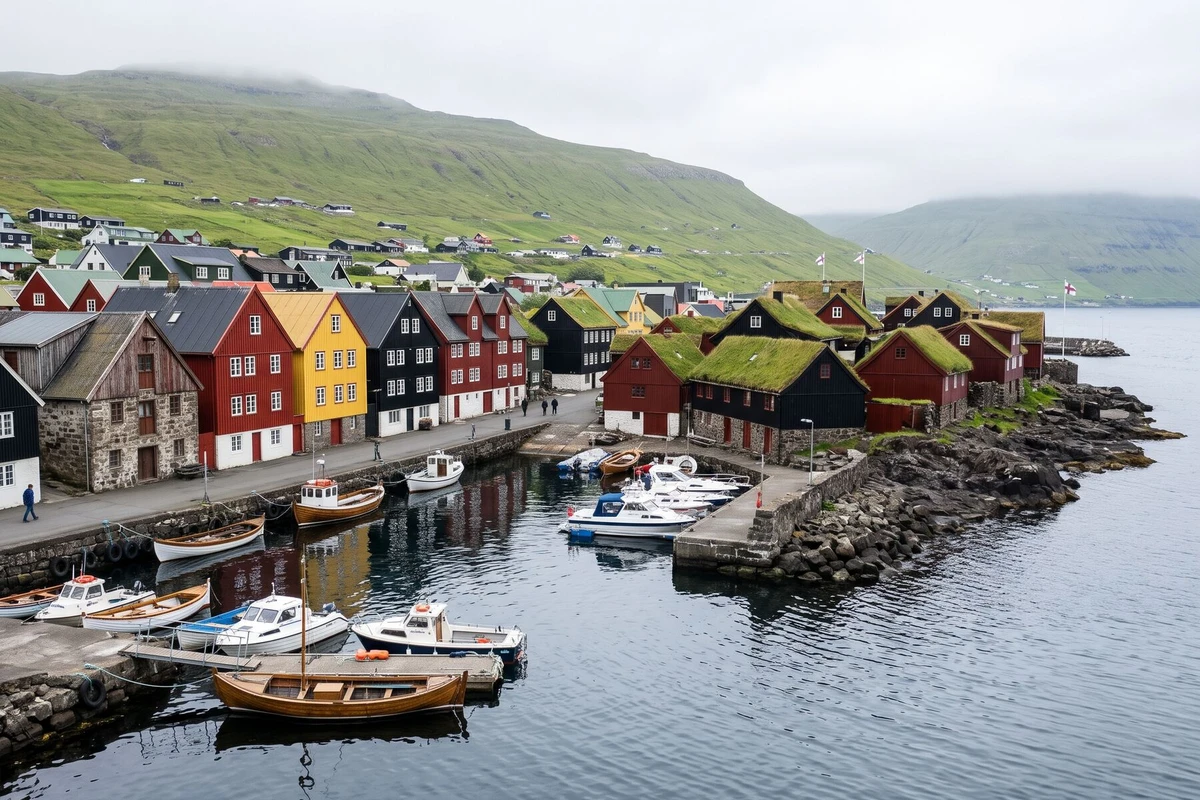
Walk to the cliff above Lake Sørvágsvatn on Vágar, where the lake seems to float high above the ocean, and watch the Múlafossur waterfall drop into the sea at Gásadalur. Wander through the turf-roofed old quarter of Tinganes, see the medieval ruins at Kirkjubøur, follow the lagoon at Saksun and the gorge harbour of Gjógv, drive through a tunnel with a roundabout under the sea and, in summer, watch puffins on the slopes of Mykines.
Who is Faroe Islands for?
Ideal for
- Hikers and walkers
- Nature and landscape photographers
- Birdwatchers in summer
- Couples seeking quiet, dramatic scenery
- Active families with older children
- Travellers who love remote places
Pace & travel style
- Base yourself in Torshavn and explore by day
- Allow four to five days to see the main islands
- Keep one flexible day for fog and wind
- Start hikes early to enjoy calmer weather
When to visit Faroe Islands
Peak season · June–August
Summer brings the mildest weather, long days with light late into the evening and the best hiking conditions on Vágar, Streymoy and Eysturoy. Puffins nest on Mykines and other cliffs, boat trips to the bird cliffs run regularly and the national festival of Ólavsøka fills Torshavn with rowing races and chain dancing on 28 and 29 July. Rooms, small-group tours and car hire are limited, so reserve tours and transfers well ahead.
Shoulder season · May, September
May and September offer quieter trails, fresh green slopes or autumn colours and still-reasonable daylight, with puffins arriving in May and lingering into August. Weather is changeable, with sunshine, showers and wind often on the same day, so layers and waterproofs are essential. Some boat trips and ferries keep shorter schedules, but most highlights are open and roads are calm and easy to drive.
Low season · October–April
The dark months bring short days, strong winds, storms and occasional snow on the high ground, yet also dramatic seas, empty villages and a chance of the northern lights on clear nights. Some hikes, boat trips and the Mykines ferry are limited or closed, and trails can be slippery. Torshavn stays lively with cafés, museums and concerts, and flexible plans and good outdoor clothing make a winter visit rewarding.
The regions of Faroe Islands and how to combine its cities
The Faroe Islands lie in the North Atlantic, roughly halfway between Iceland and Norway and north-west of Scotland. Torshavn, the capital, sits on the east coast of Streymoy, the largest island, which also holds Kirkjubøur, the bird cliffs of Vestmanna, the village of Saksun and Tjørnuvík with its view of the sea stacks Risin and Kellingin. The airport is on Vágar to the west, linked to Streymoy by a sub-sea tunnel.
Vágar holds Lake Sørvágsvatn, the Trælanípa cliff, the village of Gásadalur and the harbour of Sørvágur for boats to the puffin island of Mykines. To the north-east, Eysturoy is joined to Streymoy by a bridge and a sub-sea tunnel, with Gjógv, Eiði and Slættaratindur, the highest peak. Further north lie Klaksvík and the island of Kalsoy with its lighthouse, while Sandoy and Suðuroy in the south are reached by tunnel and ferry.
Our city directory below is anchored in Torshavn, the natural base for exploring the islands. From the capital we arrange small-group highlights tours across Streymoy and Eysturoy and guided hikes to the floating lake on Vágar, and our private drivers handle transfers from Vágar Airport (FAE) and the ferry harbour in Torshavn. The Faroe Islands pair naturally with Iceland or Denmark on a wider Nordic journey.
Before you go: practical tips for Faroe Islands
Entry & visas
The Faroe Islands are part of the Kingdom of Denmark but outside the European Union and the Schengen area. Citizens of Nordic countries can usually travel without a passport, and many other nationalities, including EU, UK and US citizens, can visit visa-free for short stays with a valid passport. Travellers who need a visa must apply for a Danish visa marked as valid for the Faroe Islands, as a standard Schengen visa does not automatically cover them, so check the current rules before you travel.
Money, cards & tipping
The currency is the Faroese króna, on par with the Danish krone, and Danish notes and coins are accepted everywhere. Faroese notes are not easy to exchange outside the islands. Cards, including contactless payments, are accepted almost everywhere, even in small shops, cafés and petrol stations, and cash is rarely needed. Hiking fees on some private trails are usually paid online in advance. Tipping is not expected, though rounding up for good service is appreciated.
Etiquette & dress code
Faroese people are friendly, modest and quietly proud of their islands, language and traditions. Much of the land is privately owned grazing, so stay on marked paths, pay hiking fees where required, close gates behind you and never chase or disturb sheep and nesting birds. Ask before photographing people and private houses, respect Sunday calm in villages, and remember that cliff edges are often unfenced and can give way in wet weather.
Getting around
Roads across the main islands are excellent, linked by bridges and long sub-sea tunnels, including one with a roundabout beneath the sea, though sheep often wander onto them. Intercity buses and ferries connect the islands, but timetables can be thin, especially at weekends and in winter, and helicopters serve some remote islands. Within Torshavn the red city buses are free. For highlights tours, hikes and arrivals at Vágar Airport (FAE), our private transfers and guided tours are the most comfortable choice.
Must-do things in Faroe Islands
- Hike to the floating lake above Trælanípa on Vágar
- Watch the Múlafossur waterfall pour into the sea at Gásadalur
- Wander the turf-roofed lanes of Tinganes in Torshavn
- See the medieval cathedral ruins at Kirkjubøur
- Visit the lagoon and turf church at Saksun
- Walk down to the gorge harbour of Gjógv
- Look out to the sea stacks Risin and Kellingin
- Drive through the roundabout under the sea
- Watch puffins on Mykines in summer
- Taste fresh North Atlantic fish in Torshavn
Do’s and don’ts in Faroe Islands
Do
- Do pack waterproofs and warm layers in every season
- Do check the weather and fog before each hike
- Do pay trail fees in advance where they apply
- Do stay on marked paths across private land
- Do drive slowly and watch for sheep on the roads
Don’t
- Don't go near unfenced cliff edges in wind or rain
- Don't fly drones near villages or bird cliffs without checking the rules
- Don't disturb sheep or nesting seabirds
- Don't hike alone in fog without a guide
- Don't plan too much in one day; the weather decides
Faroe Islands at a glance
Plan Faroe Islands with Haqqi Tours
Every option is confirmed by our team on WhatsApp before you pay, and delivered by our own people or by trusted local partners we work with in every city. Because we send travellers from all over the world, our partners give us special rates and priority, so you always receive the best. Prices are per person unless marked per vehicle.
About Haqqi Tours: About us Contact us Legal NoticePrivacy PolicyCookies & Marketing PreferencesTerms & ConditionsBooking, Payment & Refunds
Where we operate in Faroe Islands
Good to know
Frequently Asked Questions
Straight answers to what travellers ask most about Faroe Islands.
Is it safe to visit the Faroe Islands?
The Faroe Islands are among the safest places in Europe, with very little crime and friendly communities. The main risks come from nature: sudden fog, strong winds, slippery grass and unfenced cliffs. Hike with a guide if you are unsure, follow local advice and check the forecast daily. Check your own government's official travel advice before departure, and keep our WhatsApp line handy throughout your stay.
How many days do I need in the Faroe Islands?
Four to five days work well for a first visit: one for Torshavn and Kirkjubøur, one for the floating lake hike and Gásadalur on Vágar, one for a highlights tour of Saksun, Tjørnuvík, Gjógv and Eiði, and one flexible day for weather or a boat trip. With a week you can add Mykines, Kalsoy or the southern islands.
What is the floating lake on Vágar?
Lake Sørvágsvatn, also called Leitisvatn, is the largest lake in the Faroe Islands. From the cliff of Trælanípa at its southern end, a trick of perspective makes the lake appear to hover high above the ocean, although it lies only a few dozen metres above sea level. The hike from Miðvágur takes around three hours return over open ground, and a trail fee set by the landowners applies.
Can a trip to the Faroe Islands be tailored for luxury or private travel?
Absolutely. Torshavn and the islands offer comfortable hotels, design-led guesthouses and cottages with sea views. We can tailor small-group or private tours, private guides for hikes, chauffeured airport transfers and a relaxed family pace, then confirm every detail with you on WhatsApp before anything is paid.
What is the best time to visit the Faroe Islands?
June to August is the best time to visit, with the mildest weather, long daylight, open trails and puffins on the cliffs. May and September are quieter and still rewarding, while October to April brings short days, storms and fewer tours, but also dramatic seas and a chance of the northern lights.
What are the Faroe Islands famous for?
The Faroe Islands are famous for dramatic sea cliffs, waterfalls that fall into the ocean, turf-roofed villages and the floating lake illusion on Vágar. They are also known for puffins and seabirds, sheep on every hillside, sub-sea tunnels, the old parliament site of Tinganes, the Faroese language and their traditional chain dance and ballads.
Is halal food available in the Faroe Islands?
Halal food is very limited in the Faroe Islands, and dedicated halal restaurants are rare. Fresh fish and seafood are excellent and easy to find, and vegetarian dishes, bakeries and supermarkets in Torshavn offer good options for self-catering. Lamb is traditional but usually not halal, so ask when ordering; our team can advise.
How do I get to Torshavn from the airport?
Vágar Airport (FAE) lies on the island of Vágar, about forty-five minutes by road from Torshavn through a sub-sea tunnel and along the coast of Streymoy. Public buses meet many flights, and rental cars are available. We arrange a private transfer with a driver waiting at arrivals to take you directly to your hotel in Torshavn.
Which cities in Faroe Islands does Haqqi Tours cover?
Torshavn. Each city has its own page with everything available there, and a trip across several cities is planned in one WhatsApp conversation.
What can I book in Faroe Islands?
Day tours - all run or confirmed by Haqqi Tours, each with a fixed price agreed on WhatsApp before you pay.
How do I book a tour or transfer in Faroe Islands?
Fill in the form on the page you are interested in, or message us on WhatsApp with the date, the number of travellers and your hotel. A member of our team confirms the price and the details in writing within minutes.
Are the prices fixed?
Yes. Every price is agreed in writing on WhatsApp before you travel and does not change on the day - not for traffic, not for a late flight, not for the hour.
Do you arrange transfers between cities in Faroe Islands?
Yes. Intercity transfers by private car or van are booked the same way as airport transfers; tell the desk the two hotels and the date and it quotes a fixed price for the whole vehicle.
Can you plan a full itinerary across Faroe Islands?
Yes - tell the desk your dates, the cities you want and who is travelling, and it proposes a day-by-day plan with the tours, transfers and tickets priced in writing. You adjust it in the same chat before confirming.
Are your tours private or in a group?
Both exist, and the page of each tour says which. Private tours have a car and guide for your party alone; small-group tours share a guide with a few other travellers. The desk can convert most group tours into a private day on request.
Do the drivers and guides speak Arabic?
It depends on the country, the city and the day, so we do not promise a particular language for the driver or guide. Tell us your preference and we do our best; the WhatsApp desk itself always works in Arabic and English.