
Sri Lanka
Haqqi Tours arranges day tours, private airport transfers, attraction tickets and multi-day packages across Sri Lanka, confirmed on WhatsApp before you pay.
Dawn in Sri Lanka smells of wet earth and woodsmoke. Mist peels away from the tea terraces above Nuwara Eliya, pluckers move between the bushes with baskets on their backs, and far below a blue train sways around a hairpin bend, its open doors framing waterfalls and cloud forest. By noon the coast has taken over: fishermen drag outrigger canoes onto golden sand near Galle, and the scent of cinnamon bark drifts from a roadside stall.
Destinations
Choose a city to see everything we arrange there.

Services by city in Sri Lanka
Tours
Airport Transfers
Flight Tickets
Train Tickets
The essence of Sri Lanka
Few islands fit so much into so little space. In a single week you can climb a fifth-century rock fortress, hear drums at the temple that guards a relic of the Buddha, watch wild elephants gather beside an ancient reservoir at dusk and eat crab curry with your fingers beside the Indian Ocean. Sri Lanka is famous for tea, spice and surf, yet what stays with travellers is its warmth: the vendor who insists you taste his king coconut, the monk who explains a mural without being asked. Haqqi Tours turns that warmth into a seamless journey from the moment you land in Colombo.
Why visit Sri Lanka?
Two Thousand Years of Kingdoms and Relics
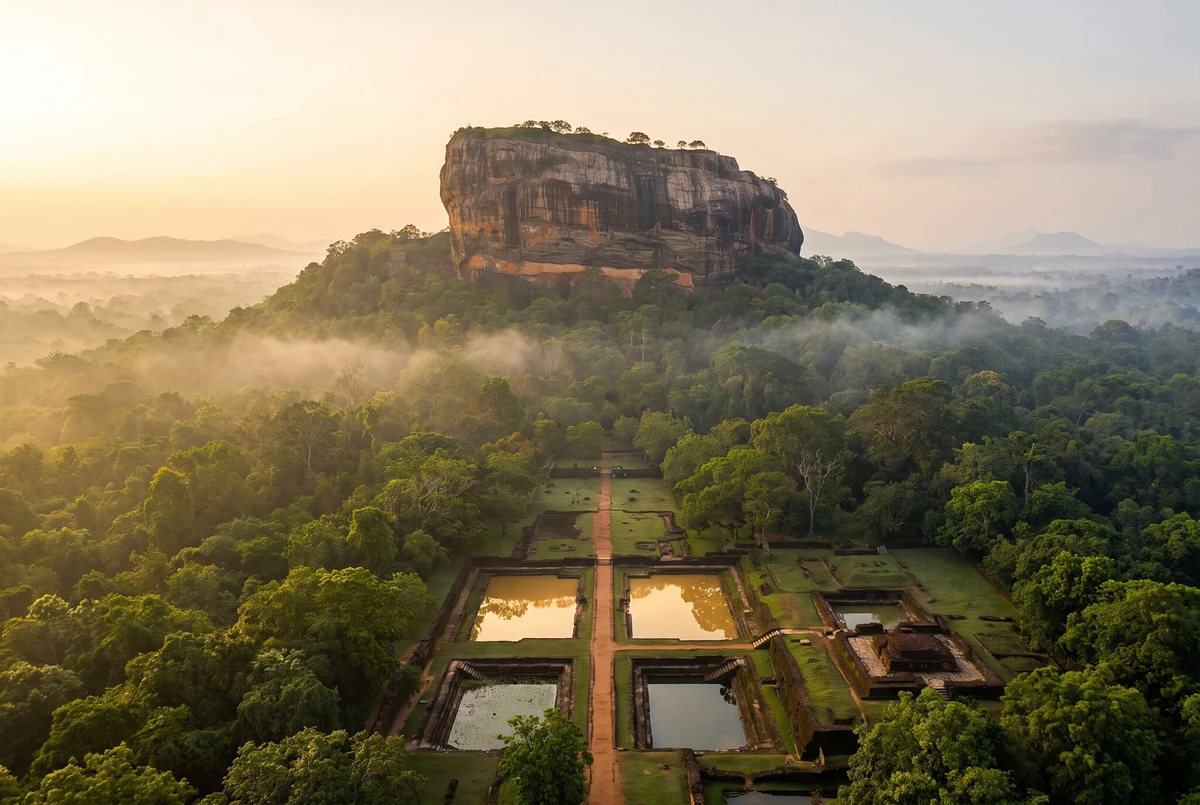
Sri Lanka’s Cultural Triangle holds some of Asia’s most complete ancient cities. Anuradhapura’s colossal white stupas rose more than two thousand years ago, while the granite Buddhas of Gal Vihara in Polonnaruwa remain startlingly serene. Sigiriya, the lion-rock citadel of King Kashyapa, still shows its frescoed maidens and polished mirror wall. In Kandy, the Temple of the Sacred Tooth Relic anchors the island’s Buddhist heart, and Galle’s Dutch fort records a later colonial chapter in coral stone.
Tea Hills, Rainforest and Two Coastlines
Within a few hours’ drive Sri Lanka climbs from palm-fringed beaches to misty highlands above two thousand metres. Tea estates carpet the slopes around Nuwara Eliya, Hatton and Ella, while Horton Plains ends abruptly at the cliff of World’s End. Sinharaja, a UNESCO-listed rainforest, shelters endemic birds; Yala and Wilpattu are leopard country. Because two monsoons alternate, the southwest and east coasts take turns at being calm, sunny and perfect for swimming.
Rice, Curry and the Rhythm of Ritual
A Sri Lankan rice and curry arrives as a dozen small bowls: dhal tempered with mustard seed, jackfruit curry, fiery pol sambol of grated coconut and chilli. Breakfast means crisp-edged hoppers with an egg in the centre; evenings echo with the clatter of kottu roti on hot griddles. Every full moon brings a Poya holiday of white-clad pilgrims and oil lamps, and each summer Kandy’s Esala Perahera fills the streets with drummers, dancers and torchlight.
Moments Found Only Here
Join pilgrims climbing Sri Pada, Adam’s Peak, through the night to watch its triangular shadow fall across the hills at sunrise. Ride the hill-country train from Kandy towards Ella with your feet almost brushing tea bushes. Watch stilt fishermen balance above the surf at Koggala, then see hundreds of wild elephants converge on the grasslands of Minneriya in the dry season. Off Mirissa, blue whales surface in open water during the calmer months.
Who is Sri Lanka for?
Ideal for
- Couples combining beaches and highlands in one trip
- Families seeking gentle, wild-animal safaris
- Culture lovers drawn to ancient cities and temples
- Rail enthusiasts and photographers
- Wellness travellers curious about ayurveda
- Surfers following the seasonal swells
Pace & travel style
- Relaxed loops with three or four bases
- Private car and driver between regions
- Early starts for safaris and climbs, slow afternoons
- A beach finale after the cool hill country
When to visit Sri Lanka
Peak season · December–March
The northeast monsoon leaves the west coast, the south coast and the hill country dry, sunny and pleasantly warm, with cool nights around Nuwara Eliya. The Cultural Triangle is ideal for climbing Sigiriya before the heat builds. This is the busiest season in Sri Lanka, especially over Christmas and New Year, so the best villas, tea-estate bungalows and train seats should be secured early.
Shoulder season · April & July–September
April brings Sinhala and Tamil New Year celebrations and quieter hotels before the rains. From July to September the east coast around Trincomalee, Pasikudah and Arugam Bay enjoys calm seas, the Cultural Triangle stays dry, Minneriya’s elephant gathering peaks and Kandy hosts the Esala Perahera. Smart travellers route around the monsoon and enjoy better availability and atmosphere.
Low season · May–June & October–November
The southwest monsoon sweeps the west and south coasts in May and June, and inter-monsoon showers fall across much of the island in October and November. Rain usually comes in heavy afternoon bursts rather than all day. Landscapes turn emerald, waterfalls roar, hotels are quieter and rates are gentler, which suits flexible travellers, photographers and anyone happy to trade some sunshine for space.
The regions of Sri Lanka and how to combine its cities
Sri Lanka divides into distinct worlds within a compact island. The dry north-central plains form the Cultural Triangle, where Anuradhapura, Polonnaruwa, Sigiriya and the cave temples of Dambulla sit among ancient reservoirs and scrub jungle. South of it rise the central highlands: Kandy at the gateway, then tea country around Nuwara Eliya, Hatton and Ella, laced with waterfalls and hiking trails.
The southwest coast runs from Colombo past Bentota and Galle to the surf bays of Weligama and Mirissa, with Yala and Udawalawe national parks inland. The east coast, from Trincomalee to Arugam Bay, enjoys its best weather when the west is rainy. In the far north, Jaffna’s Tamil culture brings colourful Hindu temples, palmyra palms and a distinct cuisine, rewarding travellers with more time.
Our city directory below begins with Colombo, Sri Lanka’s commercial capital and the gateway for almost every international arrival. From Colombo we arrange private airport transfers, guided day tours, flight tickets and train tickets, working with our trusted local partners across the island. Pair a few days in Colombo with a day tour south to Galle, then take the train into the hill country and finish on the beach, and you have the ideal first Sri Lankan itinerary.
Before you go: practical tips for Sri Lanka
Entry & visas
Most visitors to Sri Lanka need an Electronic Travel Authorisation applied for online before departure, while some nationalities may be exempt or able to arrange entry on arrival. Rules depend on your passport and are revised from time to time, so check the official Sri Lankan immigration portal or your nearest embassy before booking. Make sure your passport is valid for at least six months beyond your arrival date.
Money, cards & tipping
The Sri Lankan rupee is the local currency. Cards are accepted in hotels, malls and larger restaurants, but carry cash for tuk-tuks, temple donations, markets and small eateries; ATMs are common in towns. Tip around ten percent where no service charge is added, and drivers and guides appreciate a gesture at the end. Gentle bargaining is normal in markets, never in fixed-price shops.
Etiquette & dress code
Remove shoes and hats before entering temples, and cover shoulders and knees; light or white clothing is respectful. Never pose for a photograph with your back to a Buddha statue, and avoid clothing or tattoos showing Buddhist imagery, which can cause serious offence. Use your right hand to give and receive, do not point your feet at monks or shrines, and ask before photographing people.
Getting around
Distances in Sri Lanka look short, but winding roads make journeys slower than expected. The expressways link Colombo with Galle, Kandy and the airport quickly, and the hill-country railway is a highlight in its own right. Domestic flights are limited, so most travellers rely on a private car with driver; our private chauffeured transfers meet you at Bandaranaike International Airport and connect every region.
Must-do things in Sri Lanka
- Climb Sigiriya’s lion rock at sunrise for sweeping views over jungle and reservoirs
- Ride the hill-country train from Kandy towards Ella through tea estates
- Attend the evening puja at Kandy’s Temple of the Sacred Tooth Relic
- Walk Galle Fort’s ramparts at sunset as the lighthouse catches the light
- Spot leopards, sloth bears and elephants on a jeep safari in Yala
- Watch wild elephants gather on the grasslands of Minneriya in the dry season
- Tour a working tea factory and taste fresh Ceylon tea in Nuwara Eliya
- Explore the painted cave temples of Dambulla and their reclining Buddhas
- Cycle among the ancient stupas and ruined palaces of Polonnaruwa
- Eat crab curry and hoppers at a seaside table in Colombo
Do’s and don’ts in Sri Lanka
Do
- Plan your route around the monsoons so you always follow the sun
- Dress modestly and carry socks for hot temple floors
- Start sightseeing early to avoid the midday heat
- Try a full rice and curry spread at least once
- Keep small notes for tuk-tuks, tips and temple donations
Don’t
- Don’t turn your back to a Buddha statue for a photograph
- Don’t swim where locals warn of strong currents
- Don’t try to cover the whole island in one week
- Don’t feed or approach wild elephants on the roadside
- Don’t wear Buddhist imagery on clothing or visible tattoos
Sri Lanka at a glance
Plan Sri Lanka with Haqqi Tours
Every option is confirmed by our team on WhatsApp before you pay, and delivered by our own people or by trusted local partners we work with in every city. Because we send travellers from all over the world, our partners give us special rates and priority, so you always receive the best. Prices are per person unless marked per vehicle.
About Haqqi Tours: About us Contact us Legal NoticePrivacy PolicyCookies & Marketing PreferencesTerms & ConditionsBooking, Payment & Refunds
Where we operate in Sri Lanka
Good to know
Frequently Asked Questions
Straight answers to what travellers ask most about Sri Lanka.
Is it safe to visit Sri Lanka?
Sri Lanka is generally a welcoming and safe destination, and large numbers of travellers explore it every year without trouble. Take normal care with valuables in busy Colombo markets, buses and trains, swim only where lifeguards or locals say it is calm, and follow park rules on safaris. Our team stays reachable on WhatsApp throughout your trip.
How many days do I need for a first trip to Sri Lanka?
Ten to fourteen days is ideal for a first trip to Sri Lanka: a couple of days around Colombo, three or four in the Cultural Triangle, three in Kandy and the tea country, then some slow days on the south coast. With only a week, focus on two regions rather than racing across the island.
What is the best way to travel between Sri Lanka's major cities?
A private car with driver is the most comfortable way to move around Sri Lanka, because roads are scenic but slow and public timetables can be unpredictable. The train is unforgettable through the hill country, and expressways link Colombo with Galle and Kandy quickly. We arrange transfers, train tickets and flights to match your route.
Can a trip to Sri Lanka be tailored for luxury or private travel?
Yes. We can tailor a fully private Sri Lanka journey with a dedicated driver-guide, colonial tea-estate bungalows, south-coast villas and private safari jeeps arranged with our trusted local partners. Because we send many travellers to the island, those partners give us priority and special rates, so our travellers always receive the best available.
Is Sri Lanka tourist friendly?
Very. Sri Lanka has a long tradition of hospitality, English is widely spoken in hotels, shops and among drivers, and tourist services are well developed along the classic circuit. Locals are curious and kind, and a few words of Sinhala or Tamil, such as “ayubowan” or “vanakkam”, earn instant smiles wherever you go.
Is it safe to travel to Sri Lanka now?
Travel to Sri Lanka generally runs normally, but conditions anywhere can change, so check your own government’s official travel advice shortly before departure. Weather is the factor most likely to affect plans, especially during the monsoon months. Keep our WhatsApp line handy; our team watches your arrangements and can adjust routes, transfers or train tickets if needed.
What is the best time to visit Sri Lanka?
December to March is the classic best time to visit Sri Lanka’s west coast, south coast and hill country, with dry, sunny days and cool highland nights. From May to September the east coast shines instead. Because one side of the island is almost always dry, Sri Lanka works year-round with the right routing.
What is Sri Lanka famous for?
Sri Lanka is famous for Ceylon tea, the lion-rock fortress of Sigiriya, the Temple of the Sacred Tooth Relic in Kandy, leopards and wild elephants, golden beaches and one of the world’s most scenic train journeys. It is also renowned for cinnamon, sapphires, ayurveda and fiery, coconut-rich curries.
Which cities in Sri Lanka does Haqqi Tours cover?
Colombo. Each city has its own page with everything available there, and a trip across several cities is planned in one WhatsApp conversation.
What can I book in Sri Lanka?
Day tours, private airport transfers, flight tickets and train tickets - all run or confirmed by Haqqi Tours, each with a fixed price agreed on WhatsApp before you pay.
How do I book a tour or transfer in Sri Lanka?
Fill in the form on the page you are interested in, or message us on WhatsApp with the date, the number of travellers and your hotel. A member of our team confirms the price and the details in writing within minutes.
Are the prices fixed?
Yes. Every price is agreed in writing on WhatsApp before you travel and does not change on the day - not for traffic, not for a late flight, not for the hour.
Do you arrange transfers between cities in Sri Lanka?
Yes. Intercity transfers by private car or van are booked the same way as airport transfers; tell the desk the two hotels and the date and it quotes a fixed price for the whole vehicle.
Can you plan a full itinerary across Sri Lanka?
Yes - tell the desk your dates, the cities you want and who is travelling, and it proposes a day-by-day plan with the tours, transfers and tickets priced in writing. You adjust it in the same chat before confirming.
Are your tours private or in a group?
Both exist, and the page of each tour says which. Private tours have a car and guide for your party alone; small-group tours share a guide with a few other travellers. The desk can convert most group tours into a private day on request.
Do the drivers and guides speak Arabic?
It depends on the country, the city and the day, so we do not promise a particular language for the driver or guide. Tell us your preference and we do our best; the WhatsApp desk itself always works in Arabic and English.