
Guadeloupe
Haqqi Tours arranges day tours, private airport transfers, attraction tickets and multi-day packages across Guadeloupe, confirmed on WhatsApp before you pay.
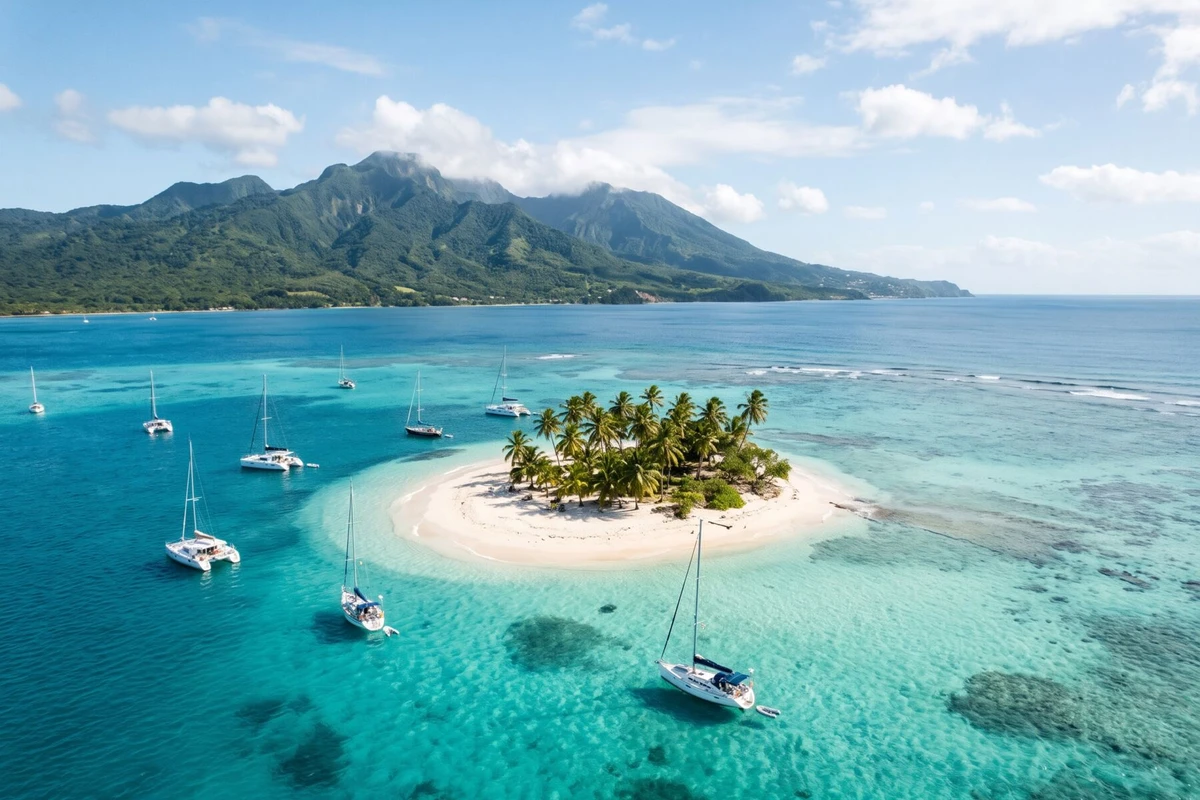
In the great lagoon of the Grand Cul-de-Sac Marin, between the two wings of Guadeloupe, the water fades from deep blue to the palest turquoise. A boat slips past dark green mangroves and drops anchor beside Îlet Caret, a tiny ribbon of white sand crowned with a few palm trees, while just beyond, the long coral barrier breaks the Atlantic swell. Snorkellers drift over brain corals and sea fans, and shoals of blue tang and parrotfish flicker through the clear shallows.
Destinations
Choose a city to see everything we arrange there.
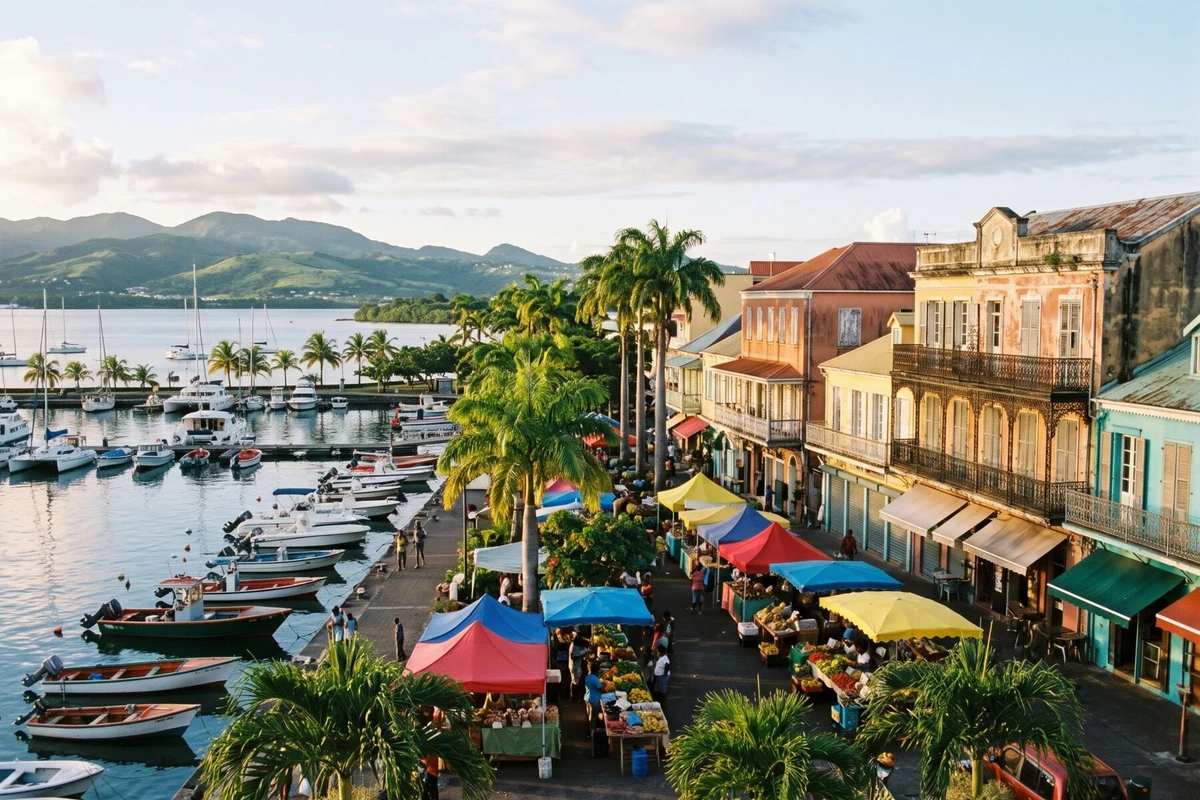
Services by city in Guadeloupe
Tours
The essence of Guadeloupe
On the other side of the island, the forested slopes of Basse-Terre rise steeply to the volcano of La Soufrière, rivers tumble over waterfalls into cool pools, and at Bouillante kayaks glide out to the Pigeon Islets, a protected marine reserve where turtles graze on sea grass. Guadeloupe is unique because French island life, Creole culture and a volcanic rainforest share one butterfly-shaped archipelago in the Caribbean. We arrange the journey with lagoon day cruises, kayak outings, rainforest trips and private airport transfers, delivered with calm, attentive service.
Why visit Guadeloupe?
Creole Culture in the French Caribbean
The Kalinago and earlier Arawak peoples lived on these islands, which they called Karukera, the island of beautiful waters, before French settlement began in 1635. Sugar plantations brought enslaved Africans to Guadeloupe, and slavery was finally abolished in 1848, a history remembered with dignity at the Mémorial ACTe in Pointe-a-Pitre. In 1946 Guadeloupe became a French overseas department, and today its Creole language, music, cuisine and festivals give it a strong identity of its own.
Volcano, Rainforest and Lagoons
Seen from above, Guadeloupe looks like a butterfly. Its eastern wing, Grande-Terre, is low and limestone, ringed with white beaches, while the western wing, Basse-Terre, is mountainous and green, covered by the rainforest of Guadeloupe National Park around the active volcano La Soufrière. Between them lies the lagoon of the Grand Cul-de-Sac Marin, with mangroves, islets and a long coral reef, and the archipelago is listed by UNESCO as a biosphere reserve.
Accras, Colombo and Fresh Coconut Sorbet
Guadeloupean cooking blends African, French, Indian and Caribbean flavours. Accras, light fritters of salt cod or vegetables, open every meal, colombo is a fragrant curry of chicken or goat, and fish is served in a spicy court-bouillon or poached in a blaff broth with lime and herbs. Bokit, a fried bread sandwich, is the island's street food, and hand-churned coconut sorbet cools the beaches. Halal food is very limited; seafood and vegetarian dishes are easy, and our team can advise.
Experiences You Can Only Have Here
Snorkel over the coral reef of the Grand Cul-de-Sac Marin and rest on the white sand of Îlet Caret, then paddle a kayak from Malendure beach to the Pigeon Islets to swim among turtles and tropical fish in the marine reserve. On Basse-Terre, walk to the Carbet Falls and cross the forest on the Route de la Traversée, and on Grande-Terre watch the Atlantic crash against the cliffs of the Pointe des Châteaux at sunrise.
Who is Guadeloupe for?
Ideal for
- Snorkellers and sea lovers
- Families seeking safe, easy beaches
- Hikers drawn to volcanoes and waterfalls
- Couples looking for island escapes
- Travellers who enjoy French and Creole culture
- Nature lovers and kayakers
Pace & travel style
- Split your stay between Grande-Terre and Basse-Terre
- Go on the water in the morning when the sea is calmest
- Four nights near Pointe-a-Pitre, three on Basse-Terre
- Keep one flexible day for weather and sea conditions
When to visit Guadeloupe
Peak season · December–April
The dry season, known locally as carême, brings Guadeloupe its sunniest weather, steady trade winds and calm, clear water in the lagoon, ideal for day cruises to Îlet Caret and kayaking to the Pigeon Islets. Temperatures stay warm but comfortable. Carnival fills the streets of Pointe-a-Pitre and Basse-Terre with costumed parades and drumming from January until Ash Wednesday, and the busiest weeks around Christmas and February need early booking of tours and transfers.
Shoulder season · May, November
May is still mostly dry, with fewer visitors and warm seas, while November marks the end of the rainy season and the return of fresher trade winds. Both months bring quieter beaches, easier availability and lush green scenery on Basse-Terre, where the waterfalls are full. Showers are possible, and seas can be choppier on some days, so keep plans flexible around the weather.
Low season · June–October
The wet season, called hivernage, brings hotter, more humid days and tropical downpours that often pass quickly, with fewer travellers and a deep green rainforest. In August Pointe-a-Pitre celebrates the Fête des Cuisinières, when the island's women cooks parade in Creole dress with their dishes. This is also hurricane season, with the highest risk from August to October, so travel insurance, flexible dates and close attention to forecasts are wise.
The regions of Guadeloupe and how to combine its cities
Guadeloupe is a French overseas region in the Lesser Antilles of the eastern Caribbean, between Antigua to the north and Dominica to the south. Its two main islands, Grande-Terre and Basse-Terre, are separated by a narrow channel, the Rivière Salée, and Pointe-a-Pitre sits at their meeting point on Grande-Terre as the main city and gateway, while the town of Basse-Terre in the south-west is the administrative capital.
Grande-Terre holds the beach towns of Le Gosier, Sainte-Anne and Saint-François and the wild headland of the Pointe des Châteaux. Basse-Terre is the land of the national park, with La Soufrière, the Carbet Falls, the Route de la Traversée, Deshaies and Grande Anse in the north, and Bouillante and Malendure beach on the west coast. Offshore lie the islands of Les Saintes, Marie-Galante and La Désirade, all reached by ferry.
Our city directory below is anchored in Pointe-a-Pitre, the natural base for a first visit. From the city and its coast we arrange small-group day cruises to Îlet Caret and the coral reef, and from Bouillante sea kayaking to the Pigeon Islets marine reserve, while our private drivers handle transfers from Pointe-a-Pitre airport (PTP) and the ferry terminal. Guadeloupe also pairs naturally with Martinique or Dominica by ferry.
Before you go: practical tips for Guadeloupe
Entry & visas
Guadeloupe is part of France and of the European Union, but it is outside the Schengen area and has its own visa rules. Citizens of European Union countries can enter with an identity card or passport, and many other nationalities, including those of the United Kingdom, the United States and Canada, can visit without a visa for short stays. Others need a visa valid specifically for the French overseas territories, so check the current rules before you travel.
Money, cards & tipping
The currency is the euro. Cards are widely accepted in hotels, supermarkets, restaurants and most shops, while markets, roadside stalls, beach snack huts and some small boats prefer cash. Cash machines are easy to find in Pointe-a-Pitre, Le Gosier and the main towns, but rarer in rural parts of Basse-Terre. Tipping is not obligatory because service is usually included, but leaving a little extra for good service is appreciated.
Etiquette & dress code
Guadeloupeans are warm, proud of their Creole heritage and value courtesy, so greet people with bonjour before any question, and with bonsoir from late afternoon. Swimwear belongs on the beach; cover up in towns, shops and churches. Ask before photographing people, especially at markets, and respect the national park rules: stay on marked trails, never touch or stand on coral, and do not feed fish or turtles in the marine reserves.
Getting around
Most visitors explore Guadeloupe by car, as buses are limited and run mainly on weekdays during the day. Traffic drives on the right, and roads around Pointe-a-Pitre can be congested at rush hour. Ferries link the main island with Les Saintes, Marie-Galante and La Désirade, as well as Martinique and Dominica. For airport arrivals, lagoon departures, the drive to Bouillante and rainforest trips, our private transfers with a driver are the most comfortable choice.
Must-do things in Guadeloupe
- Snorkel the coral reef of the Grand Cul-de-Sac Marin
- Rest on the white sand of Îlet Caret
- Kayak to the Pigeon Islets marine reserve at Bouillante
- Swim with turtles off Malendure beach
- Walk to the Carbet Falls in the national park
- Cross the rainforest on the Route de la Traversée
- Watch the sunrise at the Pointe des Châteaux
- Visit the Mémorial ACTe in Pointe-a-Pitre
- Taste accras, colombo and hand-churned coconut sorbet
- Take the ferry to the islands of Les Saintes
Do’s and don’ts in Guadeloupe
Do
- Use reef-safe sunscreen and never touch coral
- Greet people with bonjour before asking anything
- Carry some euros in cash for markets and stalls
- Bring water shoes for rocky beaches and rivers
- Keep one flexible day for weather on the water
Don’t
- Don't feed fish or turtles in the marine reserves
- Don't walk through town centres in swimwear
- Don't swim in rivers after heavy rain
- Don't try to cover both islands in one day
- Don't leave valuables in parked cars at beaches
Guadeloupe at a glance
Plan Guadeloupe with Haqqi Tours
Every option is confirmed by our team on WhatsApp before you pay, and delivered by our own people or by trusted local partners we work with in every city. Because we send travellers from all over the world, our partners give us special rates and priority, so you always receive the best. Prices are per person unless marked per vehicle.
About Haqqi Tours: About us Contact us Legal NoticePrivacy PolicyCookies & Marketing PreferencesTerms & ConditionsBooking, Payment & Refunds
Where we operate in Guadeloupe
Good to know
Frequently Asked Questions
Straight answers to what travellers ask most about Guadeloupe.
Is it safe to visit Guadeloupe?
Guadeloupe welcomes many visitors every year, and its beach towns and natural sites are generally relaxed. As anywhere, take sensible precautions: avoid quiet streets of Pointe-a-Pitre after dark, keep valuables out of sight and never leave belongings in parked cars. Follow guides' instructions on the water and check the weather before hiking. Check your own government's official travel advice before departure, and keep our WhatsApp line handy for help with tours and transfers.
How many days do I need in Guadeloupe?
Six to eight days work well for a first visit: three or four nights around Pointe-a-Pitre and Le Gosier for the lagoon, the reef and the beaches of Grande-Terre, and three nights on Basse-Terre for the Pigeon Islets, the waterfalls and the rainforest. With ten days or more you can add Les Saintes or Marie-Galante by ferry.
What is Îlet Caret?
Îlet Caret is a tiny sandy islet with a few palm trees in the lagoon of the Grand Cul-de-Sac Marin, north of Pointe-a-Pitre, within the protected area of Guadeloupe National Park. Day cruises combine time on the islet with snorkelling on the nearby coral reef and a passage through the mangroves. It is best visited on calm days, and reef-safe sunscreen and water shoes are useful.
Can a trip to Guadeloupe be tailored for luxury or private travel?
Absolutely. Guadeloupe offers elegant beachfront resorts, boutique hotels and private villas on both islands. We can tailor private boat outings, private guides for the rainforest and waterfalls, chauffeured airport transfers and a relaxed family pace, then confirm every detail with you on WhatsApp before anything is paid.
What is the best time to visit Guadeloupe?
December to April is the best time to visit Guadeloupe, with dry, sunny weather, steady breezes and calm, clear water for snorkelling and kayaking. May and November are pleasant and quieter, while June to October is hotter and wetter, with the main hurricane risk from August to October.
What is Guadeloupe famous for?
Guadeloupe is famous for its butterfly shape, its white beaches on Grande-Terre and the volcanic rainforest of Basse-Terre around La Soufrière. It is also known for the Carbet Falls, the Pigeon Islets marine reserve, the lagoon of the Grand Cul-de-Sac Marin, Creole cuisine and music, its colourful carnival and the island beauty of Les Saintes.
Is halal food available in Guadeloupe?
Halal options are very limited in Guadeloupe, with only a few shops and eateries offering halal meat, mainly around Pointe-a-Pitre. Fresh fish, seafood, vegetable gratins, rice dishes, tropical fruit and coconut sorbet are easy to find. Pork appears in some Creole dishes, including the local boudin sausage, so ask when ordering; our team can advise.
How do I get to Pointe-a-Pitre from the airport?
Pointe-a-Pitre airport (PTP) lies just north of the city, about ten to fifteen minutes by road from the centre and around twenty minutes from Le Gosier, depending on traffic. Bouillante on the west coast is about one hour away across the rainforest road. We arrange a private transfer with a driver waiting at arrivals to take you directly to your hotel.
Which cities in Guadeloupe does Haqqi Tours cover?
Pointe-a-Pitre. Each city has its own page with everything available there, and a trip across several cities is planned in one WhatsApp conversation.
What can I book in Guadeloupe?
Day tours - all run or confirmed by Haqqi Tours, each with a fixed price agreed on WhatsApp before you pay.
How do I book a tour or transfer in Guadeloupe?
Fill in the form on the page you are interested in, or message us on WhatsApp with the date, the number of travellers and your hotel. A member of our team confirms the price and the details in writing within minutes.
Are the prices fixed?
Yes. Every price is agreed in writing on WhatsApp before you travel and does not change on the day - not for traffic, not for a late flight, not for the hour.
Do you arrange transfers between cities in Guadeloupe?
Yes. Intercity transfers by private car or van are booked the same way as airport transfers; tell the desk the two hotels and the date and it quotes a fixed price for the whole vehicle.
Can you plan a full itinerary across Guadeloupe?
Yes - tell the desk your dates, the cities you want and who is travelling, and it proposes a day-by-day plan with the tours, transfers and tickets priced in writing. You adjust it in the same chat before confirming.
Are your tours private or in a group?
Both exist, and the page of each tour says which. Private tours have a car and guide for your party alone; small-group tours share a guide with a few other travellers. The desk can convert most group tours into a private day on request.
Do the drivers and guides speak Arabic?
It depends on the country, the city and the day, so we do not promise a particular language for the driver or guide. Tell us your preference and we do our best; the WhatsApp desk itself always works in Arabic and English.