
Ireland
Haqqi Tours arranges day tours, private airport transfers, attraction tickets and multi-day packages across Ireland, confirmed on WhatsApp before you pay.
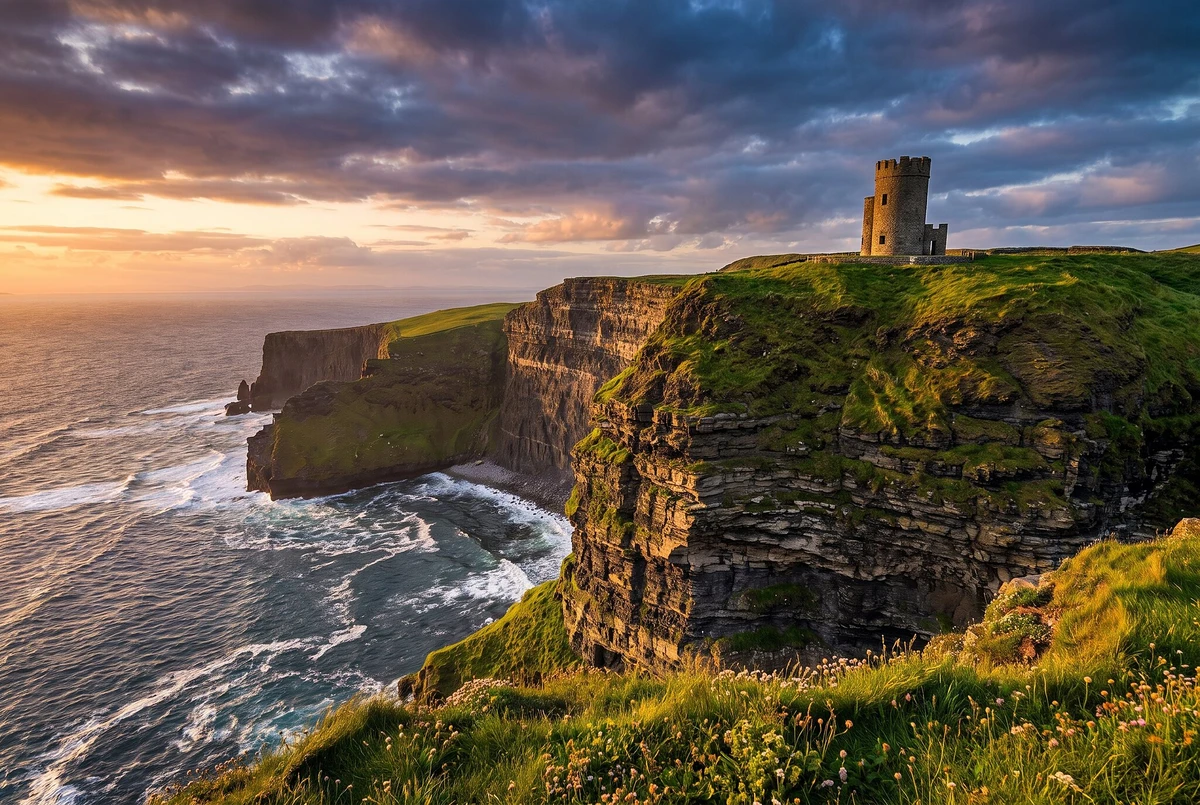
On the west coast of Ireland, the Atlantic wind arrives first. It sweeps over stone walls and impossibly green fields, carries the scent of peat smoke from a cottage chimney, and breaks against cliffs that drop sheer into a sea of pewter and silver. Then the cloud parts, a rainbow arcs over the bay, and the whole landscape lights up as if someone flicked a switch. Back in Dublin, the same light falls on Georgian doorways painted red, blue and yellow, and on the ancient library where monks' illuminated gospels still glow.
Destinations
Choose a city to see everything we arrange there.


Services by city in Ireland
The essence of Ireland
Ireland is an island of stories, older and deeper than its size suggests. Here are passage tombs older than the pyramids, monastic islands at the edge of the known world, castles, coastal roads and a literary tradition that gave the world some of its greatest writers. Above all there is the warmth of the people: the conversation, the music, the instinctive welcome. Ireland is easy, friendly and endlessly beautiful, and it rewards every traveller who slows down enough to listen.
Why visit Ireland?
Passage Tombs, Monks and Castles
Ireland's heritage reaches back five thousand years to Newgrange in the Boyne Valley, a passage tomb older than Stonehenge whose inner chamber fills with sunlight at the winter solstice. Early Christian monks built round towers at Glendalough and beehive cells on the wild rock of Skellig Michael, and the Book of Kells, their masterpiece, rests in Trinity College Dublin. The Rock of Cashel, Norman keeps and grand Georgian houses complete a remarkable story in stone.
The Wild Atlantic Way and the Emerald Isle
Ireland's western coast is one of the most dramatic in Europe. The Wild Atlantic Way traces cliffs, coves and peninsulas from Donegal to Cork, passing the towering Cliffs of Moher, the lunar limestone of the Burren and the mountains and lakes of Connemara. In the south-west, the Ring of Kerry and the Dingle Peninsula weave between ocean and mountain, while Killarney National Park shelters ancient oak woods, waterfalls and wild red deer.
Music, Storytelling and Hearty Kitchens
Irish culture lives in conversation, music and sport. Traditional sessions bring fiddles, tin whistles and bodhrán drums together in an easy circle, and the Irish language is still spoken in Gaeltacht regions of the west. Hurling, the world's fastest field game, fills stadiums with passion. The table is generous: warm soda bread, lamb stew, seafood chowder, smoked salmon, Galway oysters and scones with jam and thick cream, best enjoyed with a pot of strong tea.
Experiences Unique to Ireland
Stand at the edge of the Cliffs of Moher as Atlantic puffins and seabirds wheel below. Take a ferry to the Aran Islands, where stone walls web the land and the old language is spoken daily. Watch a hurling match roar into life at Croke Park in Dublin, kiss the legendary Blarney Stone for the gift of eloquence, and drive the coast of Dingle, where ancient beehive huts overlook the open ocean.
Who is Ireland for?
Ideal for
- First-time visitors to Europe seeking an easy, English-speaking destination
- Nature lovers and coastal road-trippers
- History and literature enthusiasts
- Families travelling with children
- Golf and outdoor travellers
- Couples seeking scenic, romantic countryside
Pace & travel style
- A few days in Dublin, then slow journeys west
- Scenic day trips from a single city base
- Road-trip style touring with a private driver
- Relaxed countryside stays in castles and manor houses
When to visit Ireland
Peak season · June–August
Summer brings Ireland's longest days, with light lingering until almost eleven at night, mild temperatures and the greenest landscapes. Festivals fill towns, the Wild Atlantic Way is at its most inviting and ferries to the islands run full schedules. It is the busiest season, so popular sights such as the Cliffs of Moher and the Book of Kells get crowded, and hotels book up well in advance.
Shoulder season · April–May and September–October
Spring brings lambs in the fields, gorse blazing yellow on the hills and gardens in full flower, while autumn colours the woodlands of Killarney and Wicklow in copper and gold. The weather is changeable but often bright, roads and sights are quieter, and hotels are easier to secure. For many travellers these months are the best balance of scenery, comfort and value.
Low season · November–March
Winter in Ireland is mild but damp and windy, with short days and early sunsets. It suits travellers who love cosy fires, museums, castles and moody coastal skies. Dublin sparkles with Christmas lights and markets in December, and the Saint Patrick's Day festival brightens March. Some rural attractions and island ferries reduce their schedules, but crowds disappear and welcomes are warmer than ever.
The regions of Ireland and how to combine its cities
Ireland's east is anchored by Dublin and the heritage-rich lands of Ireland's Ancient East: the Boyne Valley with Newgrange and the Hill of Tara, the Wicklow Mountains and monastic Glendalough, and the medieval city of Kilkenny. The south is softer and greener, with the food-loving city of Cork, the Rock of Cashel and the coastal towns of Kinsale and Cobh.
The west is where Ireland becomes wild and poetic. Kerry offers the Ring of Kerry, the Dingle Peninsula and Killarney National Park; County Clare holds the Cliffs of Moher and the Burren; and Galway, the bohemian city of the west, opens onto Connemara and the Aran Islands. Farther north, Donegal is remote, rugged and beautiful. The north-east of the island is Northern Ireland, part of the United Kingdom.
Dublin is the gateway for almost every visit, and it is where our team focuses its services: private airport transfers, guided day tours, attraction tickets, and the train, flight and ferry tickets that reach Galway, Cork, Killarney and the islands. Base yourself in Dublin for several days, join our day tours to the Cliffs of Moher, Glendalough and the Boyne Valley, then continue west by train for a complete Irish journey.
Before you go: practical tips for Ireland
Entry & visas
Ireland is not part of the Schengen area and issues its own visas, so a Schengen visa alone does not allow entry. Many nationalities can visit visa-free for short stays, while others must apply online in advance and submit documents to an Irish embassy or visa office. Ireland and the United Kingdom share a Common Travel Area with special arrangements. Rules depend on your passport, so check the official Irish immigration portal or embassy before booking.
Money, cards & tipping
Ireland uses the euro. Cards and contactless payments are accepted almost everywhere, including taxis, cafés and small shops, though a little cash is handy in rural areas. In restaurants, tipping around ten percent is customary when service is not already included; rounding up taxi fares is appreciated. Prices are fixed in shops and markets, so bargaining is not expected. Ireland is generally considered an expensive destination, particularly Dublin.
Etiquette & dress code
The Irish are famously friendly, informal and chatty, and small talk with strangers is part of daily life. Be polite and patient in queues, and take friendly teasing in good humour. Churches and monastic sites are sacred places: dress modestly, speak quietly and ask before photographing services. Avoid discussing sensitive political or religious history casually, and never refer to Ireland as part of Britain.
Getting around
Intercity trains run from Dublin to Cork, Galway, Limerick and Killarney, with comfortable, scenic journeys of two to three hours. Buses reach smaller towns, and ferries serve the Aran Islands and routes to Britain and France. Domestic flights are limited, and driving is on the left along narrow rural roads. Our team arranges private chauffeured transfers and issues the train, flight and ferry tickets you need.
Must-do things in Ireland
- See the Book of Kells, Ireland's greatest medieval treasure, in Trinity College's Old Library.
- Walk the clifftop paths of the Cliffs of Moher above the crashing Atlantic.
- Enter the five-thousand-year-old passage tomb of Newgrange in the Boyne Valley.
- Explore the monastic round tower and lakes of Glendalough in the Wicklow Mountains.
- Drive the Ring of Kerry or the Slea Head loop on the Dingle Peninsula.
- Take a ferry to the Aran Islands and cycle between ancient stone forts.
- Visit Kilmainham Gaol to understand the story of modern Irish independence.
- Climb the Rock of Cashel, a medieval royal and church fortress in Tipperary.
- Listen to a traditional Irish music session with fiddles, whistles and bodhrán drums.
- Watch hurling, the world's fastest field sport, at Croke Park in Dublin.
Do’s and don’ts in Ireland
Do
- Pack a waterproof jacket and layers, whatever the forecast says.
- Book the Book of Kells and Newgrange visits well ahead.
- Chat with locals; friendliness is part of the experience.
- Allow extra time on narrow, winding rural roads.
- Try soda bread, chowder and scones with a pot of tea.
Don’t
- Don't call Ireland part of Britain or the United Kingdom.
- Don't try to see the whole island in a few days.
- Don't stand too close to unfenced cliff edges in wind.
- Don't raise sensitive political history in casual conversation.
- Don't forget that cars drive on the left.
Ireland at a glance
Plan Ireland with Haqqi Tours
Every option is confirmed by our team on WhatsApp before you pay, and delivered by our own people or by trusted local partners we work with in every city. Because we send travellers from all over the world, our partners give us special rates and priority, so you always receive the best. Prices are per person unless marked per vehicle.
About Haqqi Tours: About us Contact us Legal NoticePrivacy PolicyCookies & Marketing PreferencesTerms & ConditionsBooking, Payment & Refunds
Good to know
Frequently Asked Questions
Straight answers to what travellers ask most about Ireland.
Is it safe to visit Ireland?
Yes. Ireland is one of the safest and friendliest countries in Europe, with low violent crime and a warm attitude to visitors. In Dublin, take normal care with bags on busy streets and late at night, and on the coast respect cliff edges and changing weather. Our team remains reachable on WhatsApp throughout your trip.
How many days do I need for a first trip to Ireland?
Seven to ten days is ideal for a first trip to Ireland. Spend three or four days in Dublin with day tours to Glendalough, Newgrange and the Cliffs of Moher, then head west to Galway and Connemara or south to Killarney and the Ring of Kerry for the full Irish landscape.
What is the best way to travel between Ireland's major cities?
Intercity trains from Dublin to Cork, Galway, Limerick and Killarney are comfortable and scenic, while buses fill the gaps to smaller towns. Many rural highlights are easiest with a private driver, since roads are narrow and winding. We issue train and ferry tickets and arrange private chauffeured transfers throughout the journey.
Can a trip to Ireland be tailored for luxury or private travel?
Absolutely. Ireland is wonderful for private travel: stay in restored castles and country estates, explore with a dedicated chauffeur and private guide, and enjoy exclusive access at heritage sites. Our team designs the route around your pace, family needs and dining preferences, and confirms every detail with you on WhatsApp before anything is paid.
Is Ireland tourist friendly?
Ireland is one of the most tourist-friendly countries anywhere. English is the everyday language, people are famously welcoming and helpful, and signage is clear. Dublin has a growing choice of halal restaurants and several mosques, and families are warmly received at castles, museums and parks. Rural hospitality is especially generous and personal.
Is it safe to travel to Ireland now?
Ireland remains a stable, welcoming destination with a strong safety record for visitors. As with any trip, check your own government's official travel advice before departure, follow local guidance and keep our WhatsApp line handy. If weather or anything else affects your plans, our team can quickly adjust transfers and day tours.
What is the best time to visit Ireland?
May to September is the best time to visit Ireland, with long days, mild temperatures and lush landscapes. June to August is liveliest but busiest. May and September often bring bright weather and quieter roads. Whatever the month, expect showers and sunshine on the same day, and pack accordingly.
What is Ireland famous for?
Ireland is famous for its emerald landscapes, the Cliffs of Moher, the Ring of Kerry and the Wild Atlantic Way, as well as Newgrange, the Book of Kells and its medieval castles. It is also known for traditional music, great writers, Saint Patrick's Day, hurling and the legendary warmth of its people.
Which cities in Ireland does Haqqi Tours cover?
Dublin and Galway. Each city has its own page with everything available there, and a trip across several cities is planned in one WhatsApp conversation.
What can I book in Ireland?
Day tours, attraction tickets, private airport transfers, flight tickets, train tickets and ferry tickets - all run or confirmed by Haqqi Tours, each with a fixed price agreed on WhatsApp before you pay.
How do I book a tour or transfer in Ireland?
Fill in the form on the page you are interested in, or message us on WhatsApp with the date, the number of travellers and your hotel. A member of our team confirms the price and the details in writing within minutes.
Are the prices fixed?
Yes. Every price is agreed in writing on WhatsApp before you travel and does not change on the day - not for traffic, not for a late flight, not for the hour.
Do you arrange transfers between cities in Ireland?
Yes. Intercity transfers by private car or van are booked the same way as airport transfers; tell the desk the two hotels and the date and it quotes a fixed price for the whole vehicle.
Can you plan a full itinerary across Ireland?
Yes - tell the desk your dates, the cities you want and who is travelling, and it proposes a day-by-day plan with the tours, transfers and tickets priced in writing. You adjust it in the same chat before confirming.
Are your tours private or in a group?
Both exist, and the page of each tour says which. Private tours have a car and guide for your party alone; small-group tours share a guide with a few other travellers. The desk can convert most group tours into a private day on request.
Do the drivers and guides speak Arabic?
It depends on the country, the city and the day, so we do not promise a particular language for the driver or guide. Tell us your preference and we do our best; the WhatsApp desk itself always works in Arabic and English.