
Bulgaria
Haqqi Tours arranges day tours, private airport transfers, attraction tickets and multi-day packages across Bulgaria, confirmed on WhatsApp before you pay.
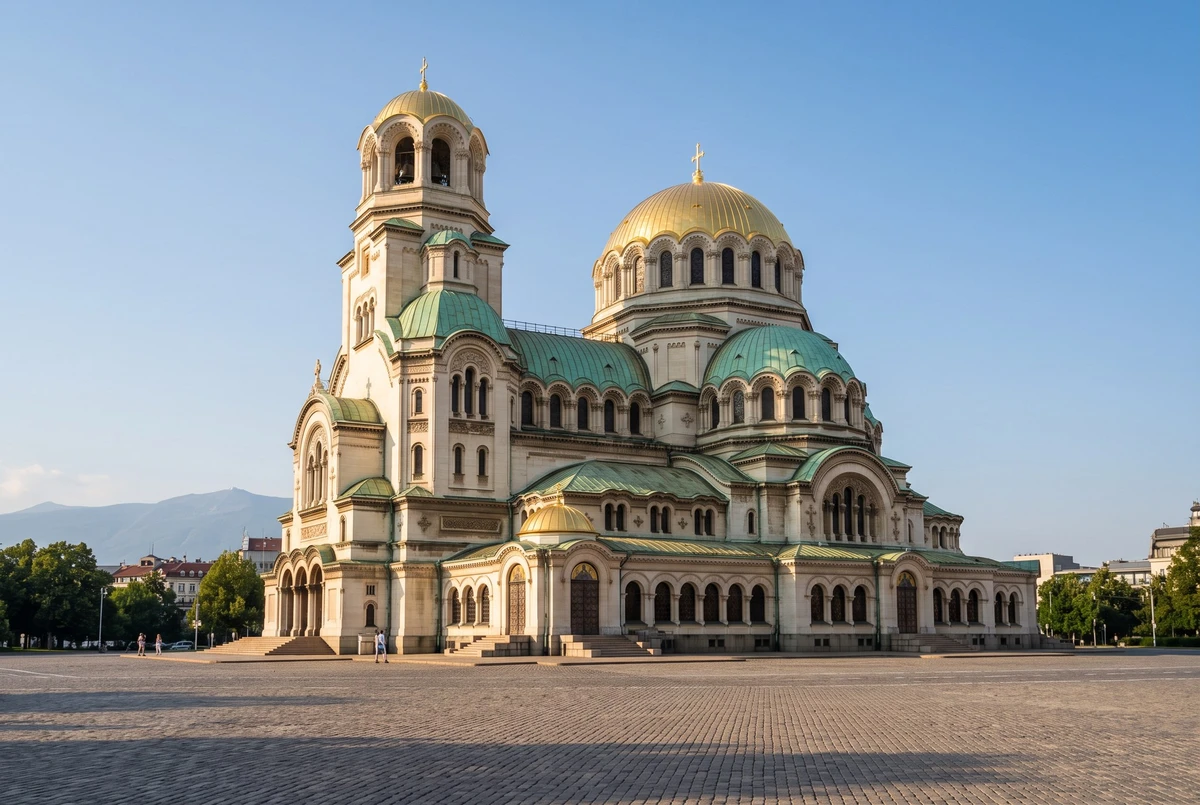
Morning in Sofia begins with the gold domes of Alexander Nevsky Cathedral flashing above the rooftops, while a short walk away the dome of the Banya Bashi Mosque rises beside mineral springs where locals fill bottles with warm water straight from the earth. Beneath the pavements lie the Roman streets of ancient Serdica, and behind it all Vitosha mountain stands so close that its forests seem to begin at the end of the boulevard.
Destinations
Choose a city to see everything we arrange there.

Services by city in Bulgaria
Tours
Airport Transfers
Flight Tickets
Train Tickets
The essence of Bulgaria
Bulgaria is one of Europe’s oldest nations and one of its least hurried. It is a country of Thracian gold and painted monasteries, of rose fields that perfume whole valleys in late spring, of glacial mountain lakes and a sunny Black Sea coast. Warm-hearted, good value and refreshingly uncrowded, Bulgaria rewards travellers who want depth without the queues: frescoed churches older than the Renaissance, villages where yogurt is still made by hand, and a capital that wears two thousand years of history lightly.
Why visit Bulgaria?
Thracian Gold and Medieval Tsars
Bulgaria’s past runs deep. The Thracians left gold treasures and painted tombs such as the one at Kazanlak, a UNESCO World Heritage site, while Romans built the theatre that still crowns Plovdiv, one of Europe’s oldest continuously inhabited cities. The medieval Bulgarian tsars raised the fortress of Tsarevets in Veliko Tarnovo, and the Cyrillic alphabet spread from Bulgarian scholars across the Slavic world. Five centuries of Ottoman rule added mosques, bathhouses and bazaars.
Mountains, Lakes and the Black Sea
Bulgaria packs remarkable variety into a compact country. The Rila Mountains hold Musala, the highest peak in the Balkans, and the glacial Seven Rila Lakes, while Pirin’s marble ridges rise above Bansko and the forested Rhodopes shelter deep gorges and caves. The Balkan range splits the country in two, with the Rose Valley at its southern foot. To the east, the Black Sea coast unrolls golden beaches and rocky headlands.
Roses, Yogurt and Living Folklore
Bulgarian traditions are vividly alive. In late May and early June the Rose Valley harvests blossoms for its world-famous rose oil, celebrated at the Kazanlak Rose Festival. Tables carry shopska salad, cold tarator soup, flaky banitsa pastry, grilled kebapche and thick Bulgarian yogurt, whose signature bacterium bears the country’s name. On the first of March everyone exchanges red-and-white martenitsa threads, and village polyphonic singing is recognised by UNESCO.
Only in Bulgaria
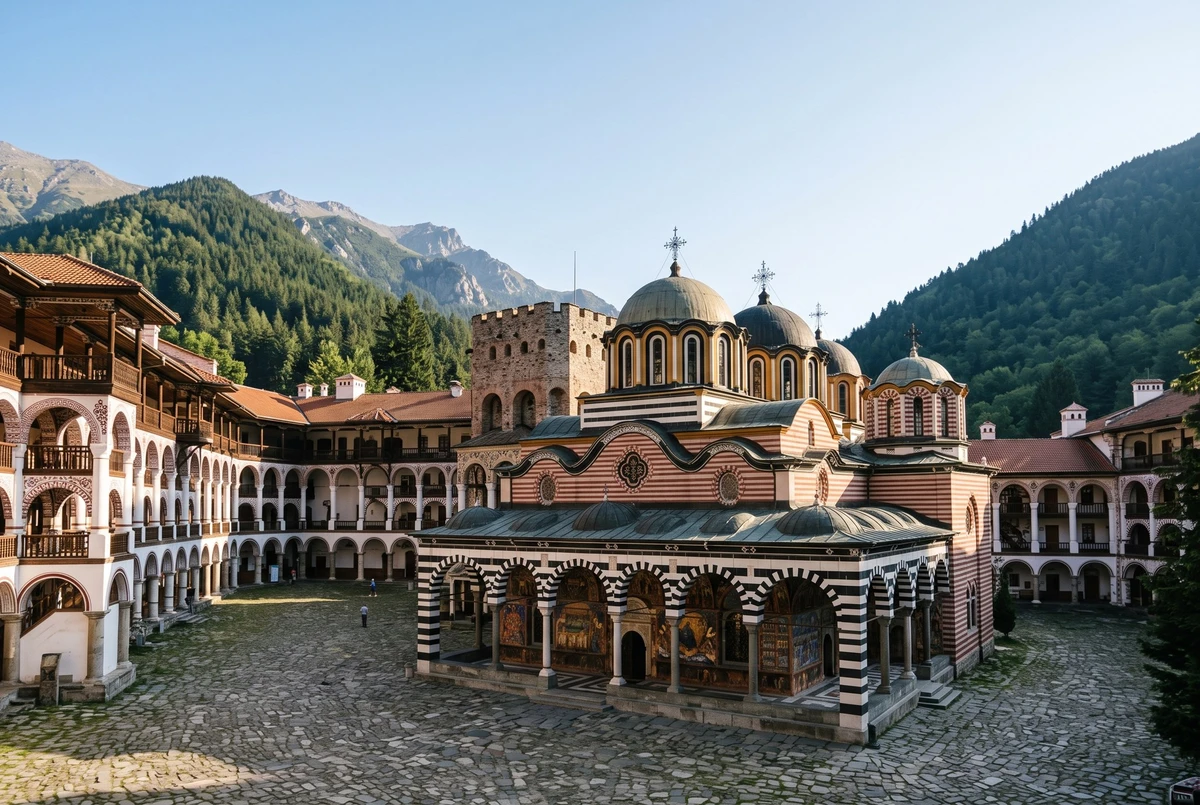
Only in Bulgaria do people nod to say no and shake their heads to say yes. Here you can wander the frescoed courtyard of Rila Monastery beneath snow-dusted peaks, hike between the Seven Rila Lakes, sit in a Roman theatre still used for summer performances in Plovdiv, and watch nestinari fire dancers step barefoot across glowing embers in the villages of Strandzha. It is a country where ancient ritual and everyday life still meet.
Who is Bulgaria for?
Ideal for
- History lovers and culture seekers
- Hikers and mountain enthusiasts
- Value-conscious travellers wanting European quality
- Families combining city sights with fresh mountain air
- Photographers drawn to monasteries and old towns
- Winter-sports fans heading to Bansko and Borovets
Pace & travel style
- A compact country: base yourself in Sofia and explore by day tour
- Unhurried, café-paced city days mixed with mountain excursions
- Four to seven days covers the highlights comfortably
- Easy to combine with neighbouring Balkan destinations
When to visit Bulgaria
Peak season · June–August
Summer brings hot, sunny days to Sofia and Plovdiv and fills the Black Sea resorts of Varna, Burgas and Nessebar with holidaymakers. The mountains are at their best for hiking, with the Seven Rila Lakes fully accessible and green meadows around Rila Monastery. Coastal hotels are in highest demand, so book early, while Sofia itself stays relaxed, with outdoor cafés and open-air summer concerts.
Shoulder season · April–May and September–October
Spring and autumn are Bulgaria’s finest seasons for touring. Late May brings the rose harvest to the Rose Valley, wildflowers to the mountains and comfortable temperatures for walking Sofia and Plovdiv. In September and October, forests around Rila and the Rhodopes turn gold and amber, harvest markets overflow with roasted peppers, and monasteries feel peaceful. Crowds are thin and accommodation is easy to secure.
Low season · November–March
Winter is cold, often snowy and short on daylight, and some high mountain trails close. Yet Bansko, Borovets and Pamporovo become lively ski resorts, Sofia’s cathedrals glow beneath fresh snow, and Vitosha offers a quick escape for winter walks. Rila Monastery wrapped in snow is breathtaking. Visitor numbers are at their lowest, which suits travellers who love quiet museums, crisp mountain air and cosy cafés.
The regions of Bulgaria and how to combine its cities
Bulgaria’s landscape is shaped by its mountains. The Balkan range, Stara Planina, runs east to west across the centre, separating the fertile Danubian Plain in the north, with its rock-cut churches and riverside towns, from the Upper Thracian Plain in the south, where Plovdiv spreads across its hills and the Rose Valley flowers between two ranges.
The south-west is high mountain country: Rila with its great monastery and glacial lakes, Pirin above Bansko, and the Rhodopes with gorges, caves and villages where churches and mosques stand side by side. In the centre, Veliko Tarnovo crowns its river cliffs, while the east opens onto the Black Sea, from Varna and its long beaches to Burgas, Nessebar and Sozopol.
Our city directory below centres on Sofia, the capital and the natural base for exploring Bulgaria. From Sofia, our guided day tours reach Rila Monastery, the old town and Roman theatre of Plovdiv, and the Seven Rila Lakes, so you can see the country’s highlights without changing hotels. A four- to six-day stay makes an ideal itinerary, and we issue train and flight tickets for those continuing to the Black Sea coast, with private airport transfers on arrival.
Before you go: practical tips for Bulgaria
Entry & visas
Bulgaria is a full member of the Schengen area, so standard Schengen rules apply. Citizens of the European Union, the United Kingdom, the United States and many other countries can visit visa-free for short stays, while others need a Schengen visa applied for in advance through a Bulgarian embassy or consulate. Requirements depend on your passport and can change, so check the official government portal or embassy before booking.
Money, cards & tipping
Bulgaria now uses the euro, which replaced the Bulgarian lev at the start of 2026. Cards and contactless payments are widely accepted in Sofia, though cash is useful in villages, mountain huts and small family restaurants. Tipping around ten percent in restaurants is customary and appreciated. Bargaining is not usual in shops but can work gently at open-air markets. Bulgaria offers excellent value compared with much of Europe.
Etiquette & dress code
Remember that a nod can mean no and a head shake yes, so confirm answers verbally. In Orthodox churches and monasteries such as Rila, dress modestly with covered shoulders and knees, keep voices low, and check before photographing interiors, where frescoes are often protected. Remove your shoes when visiting a mosque. Bulgarians value hospitality: accept offered food graciously, and greet people with a handshake and eye contact.
Getting around
Bulgaria is compact enough to explore by road from Sofia. Trains are scenic and economical, linking Sofia with Plovdiv, Burgas and Varna, though often slower than intercity buses. Domestic flights connect Sofia with the Black Sea cities of Varna and Burgas. We issue flight and train tickets, arrange private chauffeured airport transfers, and our guided day tours from Sofia take care of the driving on mountain roads.
Must-do things in Bulgaria
- Explore the frescoed courtyard and church of Rila Monastery on a day tour from Sofia.
- Stand beneath the golden domes of Sofia’s Alexander Nevsky Cathedral.
- Hike the glacial Seven Rila Lakes trail on a clear summer morning.
- Walk Plovdiv’s Old Town and sit in its remarkably preserved Roman theatre.
- See the medieval frescoes of Boyana Church at the foot of Vitosha mountain.
- Fill a bottle with warm mineral water from the springs beside Banya Bashi Mosque.
- Climb Tsarevets Fortress above the river gorges of Veliko Tarnovo.
- Visit the Rose Valley in late May or early June during the rose harvest.
- Wander the ancient stone lanes of Nessebar on the Black Sea coast.
- Taste fresh banitsa pastry and thick Bulgarian yogurt at a Sofia bakery.
Do’s and don’ts in Bulgaria
Do
- Confirm yes and no verbally; head gestures work the opposite way here.
- Dress modestly when visiting churches, monasteries and mosques.
- Carry some cash for villages, markets and mountain cafés.
- Learn a few Cyrillic letters to read street signs and station names.
- Try local dairy, from yogurt to white sirene cheese, at every opportunity.
Don’t
- Don’t photograph monastery interiors or frescoes where signs ask you not to.
- Don’t expect fast trains; allow extra time or choose a private transfer.
- Don’t attempt high mountain trails in winter without a guide.
- Don’t refuse hospitality abruptly; a warm, polite thank you goes a long way.
- Don’t hike on Vitosha or Rila without checking the weather; conditions change quickly.
Bulgaria at a glance
Plan Bulgaria with Haqqi Tours
Every option is confirmed by our team on WhatsApp before you pay, and delivered by our own people or by trusted local partners we work with in every city. Because we send travellers from all over the world, our partners give us special rates and priority, so you always receive the best. Prices are per person unless marked per vehicle.
About Haqqi Tours: About us Contact us Legal NoticePrivacy PolicyCookies & Marketing PreferencesTerms & ConditionsBooking, Payment & Refunds
Where we operate in Bulgaria
Good to know
Frequently Asked Questions
Straight answers to what travellers ask most about Bulgaria.
Is it safe to visit Bulgaria?
Yes. Bulgaria is generally a safe and welcoming country with low rates of violent crime. As in any capital, watch for pickpockets in busy parts of Sofia and on public transport, and use licensed taxis or our private transfers. Mountain weather changes quickly, so join a guided day tour for hiking, and keep our WhatsApp line handy.
How many days do I need for a first trip to Bulgaria?
Plan four to six days for a first trip to Bulgaria. Spend two days exploring Sofia itself, then use the capital as a base for day tours to Rila Monastery, Plovdiv and the Seven Rila Lakes. With a week or more, add Veliko Tarnovo or a few relaxing days on the Black Sea coast.
What is the best way to travel between Bulgaria's major cities?
Trains and intercity buses link Sofia with Plovdiv, Veliko Tarnovo, Varna and Burgas, and flights connect Sofia with the Black Sea coast. For comfort and flexibility, a private car with driver is ideal on mountain roads. We issue train and flight tickets, arrange private airport transfers, and run guided day tours from Sofia.
Can a trip to Bulgaria be tailored for luxury or private travel?
Yes. We can tailor Bulgaria around private airport transfers, private guided day tours from Sofia to Rila Monastery and Plovdiv, and stays in elegant boutique hotels in the capital. Tell our team your pace, interests and family needs, and we design the itinerary, then confirm every detail with you on WhatsApp before anything is paid.
Is Bulgaria tourist friendly?
Yes. Bulgaria welcomes visitors warmly, and Sofia is compact, walkable and well connected. English is widely spoken by younger people and in hotels, though signs use the Cyrillic alphabet, so a guide helps outside the capital. Sofia has a historic working mosque and halal food is available, and Bulgarians are proud to share their history and cuisine.
Is it safe to travel to Bulgaria now?
Bulgaria is a stable European Union member and a calm destination for travel. Seasonal conditions such as winter snow on mountain roads or summer heat can affect plans, so check the official travel advice of your own government before departure and follow local guidance. Keep our WhatsApp line handy; our team can adjust your plans whenever needed.
What is the best time to visit Bulgaria?
The best time to visit Bulgaria is May to June and September to October, when Sofia and Plovdiv are pleasant for walking, the mountains are green or golden, and the Rose Valley blooms in late May and early June. July and August suit the Black Sea coast, while winter brings skiing in Bansko.
What is Bulgaria famous for?
Bulgaria is famous for Rila Monastery, the rose oil of the Rose Valley, Bulgarian yogurt and Thracian gold treasures. It is also known for Plovdiv’s Roman theatre, Sofia’s Alexander Nevsky Cathedral, the Seven Rila Lakes, Black Sea beaches, mountain ski resorts and the curious custom of nodding to mean no.
Which cities in Bulgaria does Haqqi Tours cover?
Sofia and Sunny Beach. Each city has its own page with everything available there, and a trip across several cities is planned in one WhatsApp conversation.
What can I book in Bulgaria?
Day tours, private airport transfers, flight tickets and train tickets - all run or confirmed by Haqqi Tours, each with a fixed price agreed on WhatsApp before you pay.
How do I book a tour or transfer in Bulgaria?
Fill in the form on the page you are interested in, or message us on WhatsApp with the date, the number of travellers and your hotel. A member of our team confirms the price and the details in writing within minutes.
Are the prices fixed?
Yes. Every price is agreed in writing on WhatsApp before you travel and does not change on the day - not for traffic, not for a late flight, not for the hour.
Do you arrange transfers between cities in Bulgaria?
Yes. Intercity transfers by private car or van are booked the same way as airport transfers; tell the desk the two hotels and the date and it quotes a fixed price for the whole vehicle.
Can you plan a full itinerary across Bulgaria?
Yes - tell the desk your dates, the cities you want and who is travelling, and it proposes a day-by-day plan with the tours, transfers and tickets priced in writing. You adjust it in the same chat before confirming.
Are your tours private or in a group?
Both exist, and the page of each tour says which. Private tours have a car and guide for your party alone; small-group tours share a guide with a few other travellers. The desk can convert most group tours into a private day on request.
Do the drivers and guides speak Arabic?
It depends on the country, the city and the day, so we do not promise a particular language for the driver or guide. Tell us your preference and we do our best; the WhatsApp desk itself always works in Arabic and English.