
Reunion
Haqqi Tours arranges day tours, private airport transfers, attraction tickets and multi-day packages across Reunion, confirmed on WhatsApp before you pay.
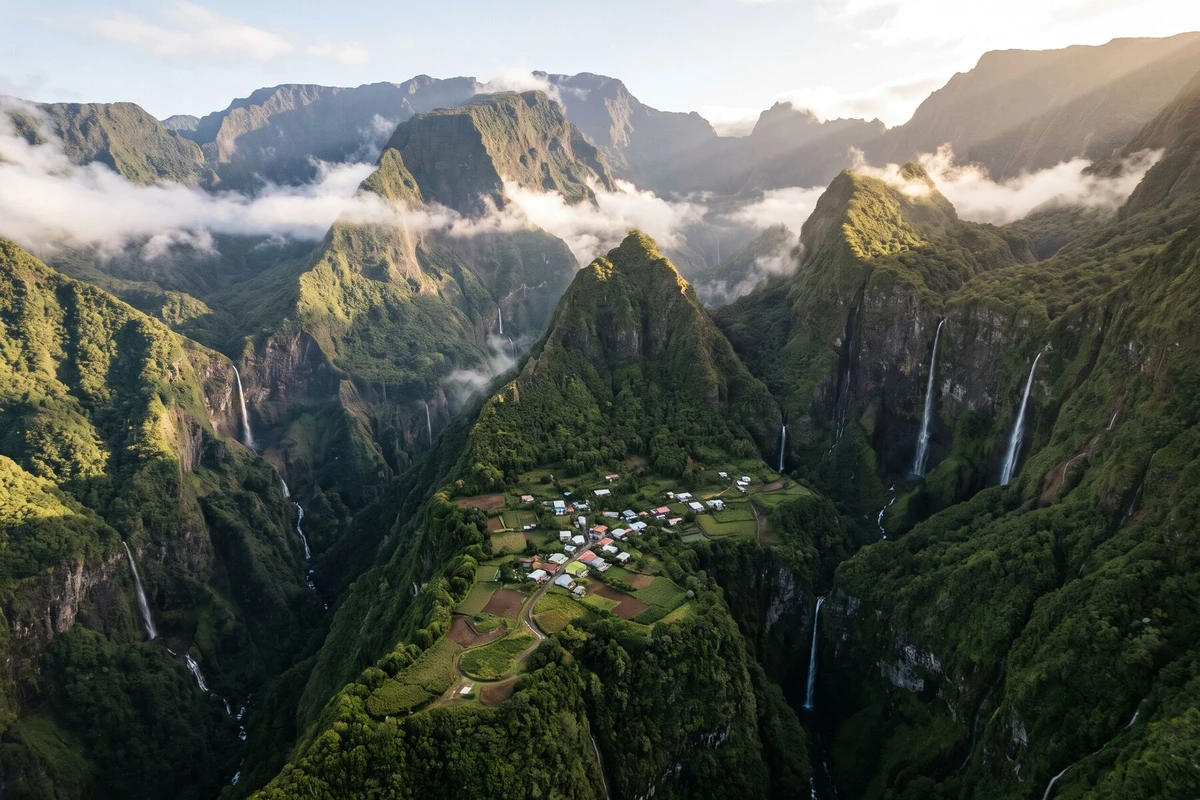
Just after sunrise, a small helicopter lifts off from the west coast of Réunion and within minutes the island opens up beneath you: the green walls of the cirque of Mafate, villages with no roads perched on ridges, the silver thread of the Trou de Fer waterfall plunging into a narrow canyon, and in the south the red slopes of Piton de la Fournaise, one of the most active volcanoes on earth, still steaming above a lunar plain of black lava.
Destinations
Choose a city to see everything we arrange there.
Services by city in Reunion
Tours
The essence of Reunion
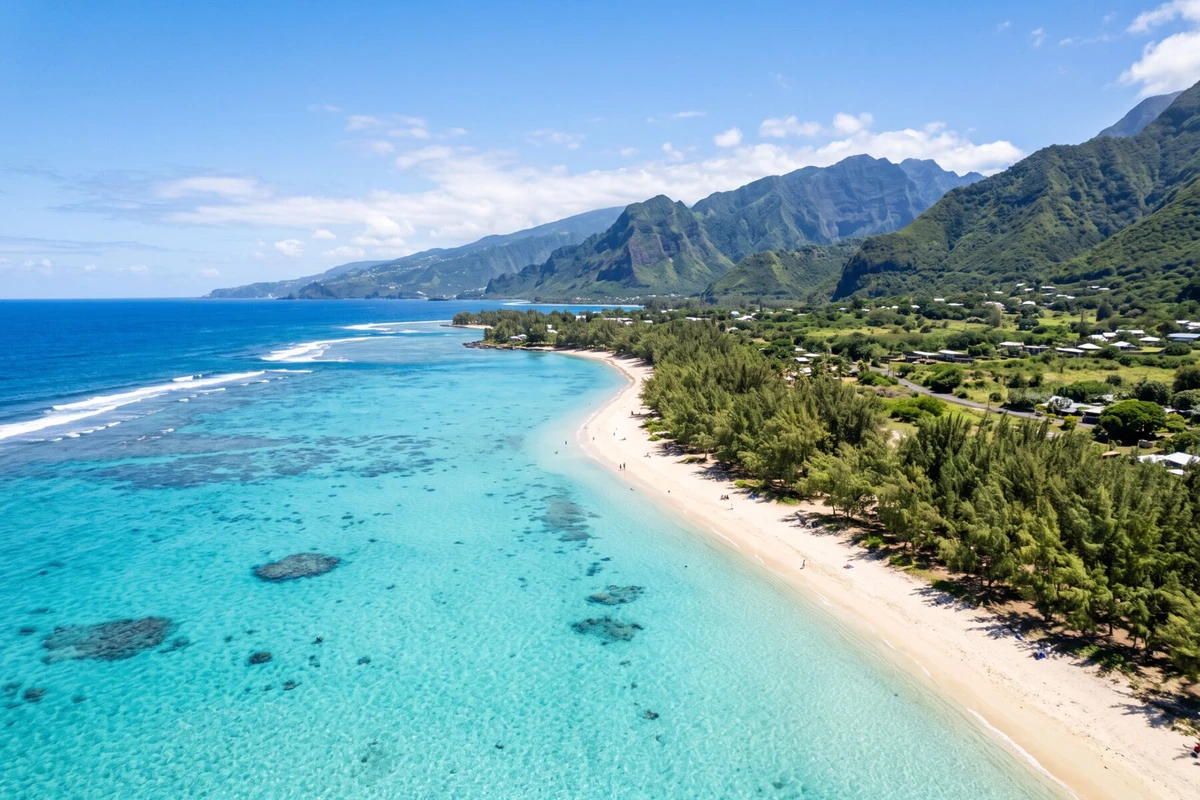
Down on the coast, life moves to a gentler rhythm. In the turquoise lagoon of Saint-Gilles, a coral reef shelters shallow water where bright fish drift beneath a clear kayak, while out at sea spinner dolphins ride the bow of the boats and, in the cooler months, humpback whales arrive to give birth. Réunion is unique because an active volcano, deep green cirques and a coral lagoon share one small French island in the Indian Ocean. We arrange boat trips, helicopter flights, lagoon tours and private airport transfers, with calm, attentive service.
Why visit Reunion?
A Creole Island at the Crossroads of the Ocean
Réunion was uninhabited until French settlers arrived in the seventeenth century, followed by enslaved people from Madagascar and East Africa who worked the coffee and sugar-cane plantations. Slavery was abolished on 20 December 1848, still a public holiday, and workers then came from southern India, later joined by Chinese and Gujarati Muslim traders. Their descendants created a Creole culture of their own, and in 1946 the island became an overseas department of France.
Volcanoes, Cirques and a Coral Lagoon
Réunion is a young volcanic island rising steeply from the ocean, about sixty kilometres across. Its heart, the Pitons, cirques and ramparts, is listed by UNESCO: the extinct Piton des Neiges, the island's highest summit, the three great cirques of Cilaos, Salazie and Mafate, and the active Piton de la Fournaise in the south-east. On the west coast, a fringing coral reef forms the shallow lagoons of Saint-Gilles, L'Hermitage and Saint-Leu, protected as a marine nature reserve.
Carri, Rougail and Cilaos Lentils
Creole cooking is the island's pride. Carri, a gently spiced stew of chicken, fish or octopus, is served with rice, beans or the small lentils of Cilaos, and rougail is a fiery side of tomato, onion, chilli and ginger. Samoussas, bonbons piment chilli fritters and achards pickles fill market stalls, and vanilla, lychees and Victoria pineapples are famous. Thanks to the local Muslim community, halal butchers and eateries exist in Saint-Denis and Saint-Pierre, but elsewhere options are limited; our team can advise.
Experiences You Can Only Have Here
Fly by helicopter over the cirques and into the canyon of Trou de Fer, paddle a transparent kayak above the coral of the Saint-Gilles lagoon and watch dolphins and, from June to October, humpback whales on a boat trip along the west coast. Walk across the Plaine des Sables to the rim of Piton de la Fournaise, watch sunrise from the Maïdo viewpoint above Mafate, and wander the Creole houses and waterfalls of Hell-Bourg in the green cirque of Salazie.
Who is Reunion for?
Ideal for
- Hikers and lovers of volcanic landscapes
- Snorkellers and families who enjoy calm lagoons
- Couples seeking a tropical island with depth
- Wildlife lovers hoping to see whales
- Photographers drawn to dramatic scenery
- Adventurous travellers and active families
Pace & travel style
- Stay on the west coast and add a night in a cirque
- Fly or hike in the morning before clouds build
- Six to eight nights let you see coast and mountains
- Keep one flexible day for weather and the volcano
When to visit Reunion
Peak season · May–October
The austral winter is the best time for Réunion, with dry, sunny days, cooler mountain air and clear mornings that are ideal for hiking, helicopter flights and the volcano. Humpback whales visit the west coast from about June to October, with the best sightings in July, August and September, and dolphins are seen year-round. Nights in the cirques and at the volcano can be cold, so pack warm layers. French school holidays in July and August are busy, so reserve ahead.
Shoulder season · April, November
April and November sit between the seasons, with warm weather, fewer visitors and generally good conditions on the lagoon and in the mountains. The sea is warm for snorkelling and kayaking, and the cirques are green after the summer rains. In November the first lychees appear in the markets and the jacaranda trees bloom purple in the towns. Showers are possible, especially on the east coast, so keep plans a little flexible.
Low season · December–March
The austral summer is hot and humid, with heavy tropical rain, especially on the windward east coast and in the mountains, and the main cyclone risk falls between January and March. The lagoon is at its warmest, the island is lush and lychee season continues into January, while Christmas and the local summer holidays bring busy beaches. Hiking trails and roads can close after storms, so travel insurance, flexible dates and close attention to forecasts are wise.
The regions of Reunion and how to combine its cities
Réunion lies in the Indian Ocean, east of Madagascar and south-west of Mauritius, as part of the Mascarene Islands. Saint-Denis, the capital, sits on the north coast with the main airport just to the east. The dry, sunny west coast, from Saint-Paul to Saint-Gilles-les-Bains, L'Hermitage and Saint-Leu, holds the lagoons and beaches, while Saint-Pierre in the south is a lively seaside town with a busy market.
Inland, roads climb steeply into the three cirques: Cilaos in the south with its mountain village and hot springs, Salazie in the north-east with its waterfalls and the Creole village of Hell-Bourg, and Mafate, with no roads at all, reached only on foot. The south-east belongs to Piton de la Fournaise, reached across the Plaine des Cafres and the Plaine des Sables, while the green, rainy east coast is known for vanilla, waterfalls and lava flows that reach the sea.
Our city directory below is anchored in Reunion Island as a whole, with the west coast around Saint-Gilles as the natural base. From there we arrange dolphin and whale-watching boat trips, helicopter flights over the cirques and the volcano, transparent kayak tours in the lagoon, and private transfers from Réunion airport (RUN). Réunion also pairs naturally with a few days in Mauritius, a short flight away.
Before you go: practical tips for Reunion
Entry & visas
Réunion is a French overseas region and part of the European Union, so French entry rules apply, but it is outside the Schengen area. Citizens of the European Union need only an identity card or passport, and many other nationalities, including those of the United Kingdom, the United States and Canada, can usually visit visa-free for short stays. Others need a visa specifically valid for Réunion, as a standard Schengen visa may not be enough, so check the current rules before you travel.
Money, cards & tipping
The currency is the euro, as in mainland France. Cards are widely accepted in hotels, supermarkets, restaurants and for tours, and cash machines are easy to find in towns, though small market stalls, roadside fruit stands and mountain guesthouses often prefer cash. Costs are similar to mainland France. Tipping is not expected, as service is included, but leaving a little extra for excellent service, guides and boat crews is appreciated.
Etiquette & dress code
Réunionnais are relaxed, friendly and proud of the island's harmony between faiths, where mosques, Tamil temples, Chinese pagodas and churches stand side by side. A simple bonjour is essential when entering shops. Dress modestly away from the beach and when visiting places of worship, removing shoes in temples and mosques. Swim only in the lagoons and supervised areas because of the shark risk elsewhere, never touch coral and keep a respectful distance from whales and dolphins.
Getting around
A car is the easiest way to explore Réunion, with a fast expressway along the west coast and spectacular but winding mountain roads into the cirques and up to the volcano. Island buses link the coastal towns and some mountain villages, but services are slower and less frequent. Driving is on the right, and traffic around Saint-Denis and Saint-Paul can be heavy at rush hour, so for airport arrivals and day trips our private transfers with an experienced driver are the most comfortable choice.
Must-do things in Reunion
- Fly by helicopter over the cirques and Trou de Fer
- Watch dolphins and humpback whales off the west coast
- Paddle a transparent kayak in the Saint-Gilles lagoon
- Snorkel among coral fish in the lagoon of L'Hermitage
- Walk to the rim of Piton de la Fournaise
- Cross the lunar Plaine des Sables
- Watch sunrise over Mafate from the Maïdo viewpoint
- Wander the Creole houses of Hell-Bourg in Salazie
- Taste carri, rougail and samoussas at a market
- Visit the mosque, temples and Creole villas of Saint-Denis
Do’s and don’ts in Reunion
Do
- Swim only in the lagoon and supervised areas
- Book helicopter flights for early morning
- Bring warm layers for the volcano and cirques
- Use reef-safe sunscreen and never touch coral
- Keep one flexible day for mountain weather
Don’t
- Don't swim or surf outside the protected zones
- Don't approach whales or dolphins too closely
- Don't hike to the volcano when access is closed
- Don't underestimate driving times on mountain roads
- Don't walk on the coral in the lagoon
Reunion at a glance
Plan Reunion with Haqqi Tours
Every option is confirmed by our team on WhatsApp before you pay, and delivered by our own people or by trusted local partners we work with in every city. Because we send travellers from all over the world, our partners give us special rates and priority, so you always receive the best. Prices are per person unless marked per vehicle.
About Haqqi Tours: About us Contact us Legal NoticePrivacy PolicyCookies & Marketing PreferencesTerms & ConditionsBooking, Payment & Refunds
Where we operate in Reunion
Good to know
Frequently Asked Questions
Straight answers to what travellers ask most about Reunion.
Is it safe to visit Réunion?
Réunion is generally safe and welcoming, with the standards of mainland France. The main risks are natural: swim only in the lagoons and supervised areas because of sharks, follow official closures at the volcano, check the weather before hiking and take care on mountain roads. Check your own government's official travel advice before departure, and keep our WhatsApp line handy for help with tours and transfers.
How many days do I need in Réunion?
Six to eight days work well for a first visit: four or five nights on the west coast for the lagoon, a boat trip, a helicopter flight and the Maïdo viewpoint, plus a day for Piton de la Fournaise and a night in Cilaos or Hell-Bourg. With ten days or more you can add the green east coast, Saint-Pierre and a few days of hiking in the cirques.
Can you see whales and dolphins in Réunion?
Yes. Spinner and bottlenose dolphins live off the west coast all year, and humpback whales arrive from about June to October to give birth and raise their calves in warm water, with the best chances in July, August and September. Boat trips leave from Saint-Gilles harbour, and a strict approach code keeps boats at a respectful distance from the animals.
Can a trip to Réunion be tailored for luxury or private travel?
Absolutely. Réunion offers elegant beachfront hotels on the west coast, boutique Creole villas and charming mountain lodges in the cirques. We can tailor private boat trips, exclusive helicopter flights, a private driver and guide for the volcano and the cirques, and chauffeured airport transfers, then confirm every detail with you on WhatsApp before anything is paid.
What is the best time to visit Réunion?
May to October is the best time to visit Réunion, with dry, sunny weather, cooler mountain air for hiking and helicopter flights, and humpback whales off the coast from about June. April and November are pleasant and quieter, while December to March is hot and rainy, with the main cyclone risk from January to March.
What is Réunion famous for?
Réunion is famous for Piton de la Fournaise, one of the world's most active volcanoes, and for its UNESCO-listed Pitons, cirques and ramparts, including Cilaos, Salazie and roadless Mafate. It is also known for its lagoons and whales, its Creole cooking and vanilla, its many waterfalls, and for its peaceful mix of African, Malagasy, Indian, Chinese and European cultures.
Is halal food available in Réunion?
Réunion has a long-established Muslim community, so halal butchers, bakeries and some eateries can be found, especially in Saint-Denis and Saint-Pierre, where there are also mosques. On the west coast and in the mountains options are more limited, though fish carri, vegetarian dishes, samoussas and fresh fruit are easy to find. Ask about ingredients when ordering, and our team can advise.
How do I get to Saint-Gilles from the airport?
Réunion airport (RUN) lies just east of Saint-Denis on the north coast. From there it is about fifty kilometres to Saint-Gilles-les-Bains along the coastal road and expressway, around forty-five minutes to an hour depending on traffic. We arrange a private transfer with a driver waiting at arrivals to take you directly to your hotel on the west coast.
Which cities in Reunion does Haqqi Tours cover?
Reunion Island. Each city has its own page with everything available there, and a trip across several cities is planned in one WhatsApp conversation.
What can I book in Reunion?
Day tours - all run or confirmed by Haqqi Tours, each with a fixed price agreed on WhatsApp before you pay.
How do I book a tour or transfer in Reunion?
Fill in the form on the page you are interested in, or message us on WhatsApp with the date, the number of travellers and your hotel. A member of our team confirms the price and the details in writing within minutes.
Are the prices fixed?
Yes. Every price is agreed in writing on WhatsApp before you travel and does not change on the day - not for traffic, not for a late flight, not for the hour.
Do you arrange transfers between cities in Reunion?
Yes. Intercity transfers by private car or van are booked the same way as airport transfers; tell the desk the two hotels and the date and it quotes a fixed price for the whole vehicle.
Can you plan a full itinerary across Reunion?
Yes - tell the desk your dates, the cities you want and who is travelling, and it proposes a day-by-day plan with the tours, transfers and tickets priced in writing. You adjust it in the same chat before confirming.
Are your tours private or in a group?
Both exist, and the page of each tour says which. Private tours have a car and guide for your party alone; small-group tours share a guide with a few other travellers. The desk can convert most group tours into a private day on request.
Do the drivers and guides speak Arabic?
It depends on the country, the city and the day, so we do not promise a particular language for the driver or guide. Tell us your preference and we do our best; the WhatsApp desk itself always works in Arabic and English.