
Bonaire
Haqqi Tours arranges day tours, private airport transfers, attraction tickets and multi-day packages across Bonaire, confirmed on WhatsApp before you pay.
On Bonaire the reef begins almost at your feet. Step off the rocky shore north of Kralendijk, swim a few strokes over the pale sand, and the sea floor suddenly drops away into a wall of coral where parrotfish crunch on the reef, sea turtles graze and clouds of blue chromis hang in water so clear it feels like flying. All around the island, simple yellow-painted stones beside the coast road mark the entry points, and the whole coastline, down to deep water, is a protected marine park.
Destinations
Choose a city to see everything we arrange there.
Services by city in Bonaire
Tours
The essence of Bonaire
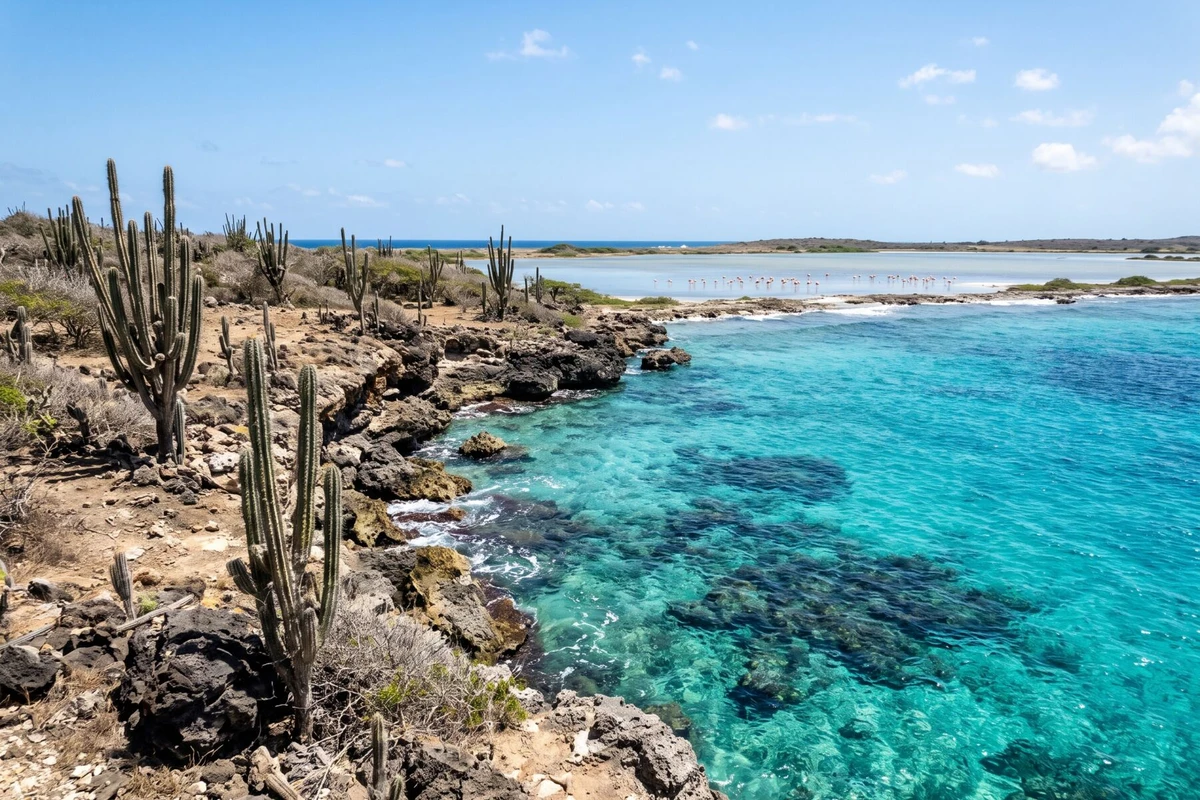
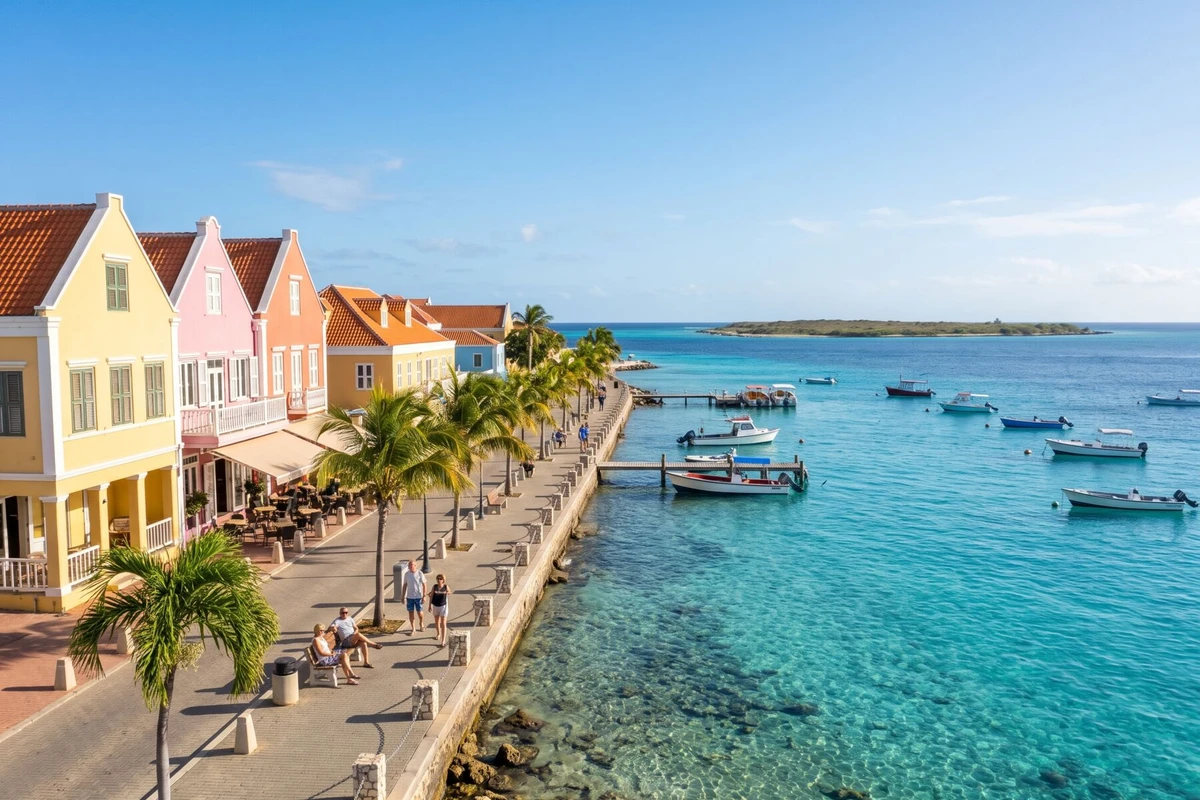
Inland, the island is dry, quiet and full of character: cactus forests and wild donkeys, pink salt pans where flamingos feed in the shallows, colourful Dutch Caribbean houses and the old village of Rincon in the hills. Bonaire is unique because almost its entire coastline is a living reef protected for decades, easy to reach from the shore on a calm, uncrowded island. We arrange snorkelling trips in the marine park, mangrove kayak tours at Lac Bay and private airport transfers, with calm, attentive service.
Why visit Bonaire?
Salt, Settlers and a Dutch Caribbean Island
Caquetío people, related to the Arawak of the mainland, lived on Bonaire long before the Spanish arrived in 1499. The Dutch took the island in the seventeenth century and used it for salt, cattle and dyewood, worked by enslaved Africans until slavery ended in 1863; the small stone huts beside the salt pans recall that history. Bonaire was part of the Netherlands Antilles until 2010, when it became a special municipality of the Netherlands.
Coral Coast, Cactus Hills and Flamingo Pans
Bonaire is a small, arid island, about forty kilometres long, lying off the coast of Venezuela with the uninhabited islet of Klein Bonaire facing Kralendijk. Bonaire National Marine Park, created in 1979, protects the reefs around both islands. The north is hilly and wild, with Washington Slagbaai National Park, cactus forests, iguanas and parrots, while the flat south holds the salt pans, a protected flamingo breeding area and the mangroves and seagrass of Lac Bay.
Goat Stew, Fresh Fish and Keshi Yena
Bonaire's cooking mixes Caribbean, Dutch, South American and African flavours. Stoba di kabritu, a slow-cooked goat stew, is served with funchi, a firm cornmeal side, and keshi yena is a round of cheese stuffed with spiced meat and baked. Pastechi pastries are a favourite breakfast, wahoo and mahi-mahi come fresh from the boats, and lionfish, an invasive species, is eaten to help protect the reef. Halal food is very limited; seafood and vegetarian dishes are easy, and our team can advise.
Experiences You Can Only Have Here
Drift with the gentle current along the coral walls of the marine park, snorkel over the reefs of Klein Bonaire and spot sea turtles grazing on seagrass. Paddle a kayak through the quiet channels of Lac Bay's mangroves and slip into the water among the roots, where young fish shelter in the shade. Watch flamingos feeding in the pink salt pans, see the salt pyramids shine in the sun and drive the wild roads of Washington Slagbaai National Park.
Who is Bonaire for?
Ideal for
- Snorkellers and shore divers
- Nature lovers and birdwatchers
- Couples seeking a quiet island escape
- Families with confident young swimmers
- Kayakers and windsurfers
- Travellers who prefer calm to crowds
Pace & travel style
- Base yourself in Kralendijk or along the west coast
- Snorkel in the morning when the sea is calmest
- Five to seven nights let you enjoy the island slowly
- Keep one day to drive the north and the south
When to visit Bonaire
Peak season · December–April
The winter months bring Bonaire its busiest season, as visitors from North America and Europe escape colder weather. Days are sunny and warm, the trade winds keep temperatures comfortable and the sea is clear for snorkelling and diving. Short showers are possible in December, but rain is rare by spring. Christmas, New Year and Easter are the busiest periods, and cruise ships call more often, so reserve snorkelling trips, kayak tours and transfers well ahead.
Shoulder season · May–August
Early summer is warm, dry and quieter, with strong, steady trade winds that make Lac Bay one of the Caribbean's favourite windsurfing spots. The west coast remains sheltered and calm for snorkelling in the marine park, and sea turtles begin nesting on the beaches of Klein Bonaire. Accommodation and tours are easier to find than in winter. Strong sun calls for reef-safe sunscreen, a hat and plenty of water, especially on drives into the arid north.
Low season · September–November
Autumn is the hottest and calmest time on Bonaire, with lighter winds, flat seas and often the best underwater visibility of the year, a favourite season for experienced snorkellers and divers. Short tropical showers become more frequent from October and turn the hills briefly green. Bonaire lies south of the main hurricane belt and is rarely affected by storms, though distant systems can bring rough water. Bonaire Day on 6 September brings music and traditional dance to the island.
The regions of Bonaire and how to combine its cities
Bonaire lies in the southern Caribbean, about eighty kilometres north of Venezuela, between Aruba and Curaçao to the west and the open sea to the east. Kralendijk, the small capital, sits on the sheltered west coast facing Klein Bonaire, with the airport just to the south. The calm leeward coast north and south of town is lined with snorkelling and dive sites, while the windward east coast is wild, rocky and wave-washed.
The north of the island is hilly and green after rain, with the village of Rincon, the flamingo lake of Gotomeer and Washington Slagbaai National Park, where rough roads lead to hidden coves, salt lakes and viewpoints. The south is flat and low, with the salt pans and their pink waters, the salt pyramids, the old slave huts and the lighthouse at Willemstoren. On the south-east coast, the shallow lagoon of Lac Bay is fringed with mangroves and the beach at Sorobon.
Our city directory below is anchored in Kralendijk, the island's capital and natural base. From town we arrange drift snorkelling trips in the marine park and mangrove kayak and snorkel tours at Lac Bay, and our private drivers handle transfers from Bonaire airport (BON) and the cruise pier. Bonaire also pairs naturally with its neighbour Curaçao, a short flight away, for a wider journey through the Dutch Caribbean.
Before you go: practical tips for Bonaire
Entry & visas
Bonaire is part of the Caribbean Netherlands, which has its own entry rules separate from the Schengen area. Citizens of the European Union, the United States, Canada, the United Kingdom and many other countries can usually visit without a visa for short stays, and some other nationalities holding certain valid visas may also be exempt. All visitors must complete an online arrival card before travel and show a return ticket and accommodation details, so check the current rules before you travel.
Money, cards & tipping
The currency is the US dollar, used across the Caribbean Netherlands. Cards are widely accepted in hotels, supermarkets, restaurants and tour offices, and cash machines are found in Kralendijk, though small roadside stalls and some local eateries prefer cash. Every visitor must pay a mandatory nature fee that supports the marine park and national park, usually arranged online or through your hotel or tour operator. Tipping guides, boat crews and drivers for good service is customary.
Etiquette & dress code
Bonaireans are friendly, relaxed and proud of their island and its nature. A greeting of bon dia in Papiamentu is warmly received, and Dutch, English and Spanish are widely spoken. Swimwear belongs on the beach and boats; cover up in town, shops and churches. Never touch or stand on coral, do not feed fish or take shells, coral or stones, and use reef-safe sunscreen. Drive slowly, as donkeys and goats often wander onto the roads.
Getting around
There is no regular public bus network for visitors on Bonaire, so most people rent a car or pick-up truck, which is ideal for reaching shore snorkelling sites along the coast road. Driving is on the right, roads in the north are narrow and some in the national park are rough tracks. Taxis wait at the airport and the cruise pier, and Kralendijk's waterfront is easy to walk. For airport arrivals and trips to Lac Bay, our private transfers are the most comfortable choice.
Must-do things in Bonaire
- Drift snorkel along the coral walls of the marine park
- Snorkel the reefs around Klein Bonaire
- Kayak through the mangroves of Lac Bay
- Snorkel among the mangrove roots with young fish
- Watch flamingos in the pink salt pans of the south
- See the salt pyramids and the historic slave huts
- Drive the wild roads of Washington Slagbaai National Park
- Visit Rincon, the island's oldest village
- Stroll the waterfront of Kralendijk at sunset
- Taste goat stew, keshi yena and fresh wahoo
Do’s and don’ts in Bonaire
Do
- Pay the mandatory nature fee before snorkelling
- Use reef-safe sunscreen and never touch coral
- Complete the online arrival card before travel
- Carry plenty of water for drives inland
- Drive slowly and watch for donkeys and goats
Don’t
- Don't take coral, shells or stones from the beaches
- Don't feed fish or turtles
- Don't leave valuables in your car at snorkel sites
- Don't disturb the flamingos in the protected salt pans
- Don't underestimate the strong sun
Bonaire at a glance
Plan Bonaire with Haqqi Tours
Every option is confirmed by our team on WhatsApp before you pay, and delivered by our own people or by trusted local partners we work with in every city. Because we send travellers from all over the world, our partners give us special rates and priority, so you always receive the best. Prices are per person unless marked per vehicle.
About Haqqi Tours: About us Contact us Legal NoticePrivacy PolicyCookies & Marketing PreferencesTerms & ConditionsBooking, Payment & Refunds
Where we operate in Bonaire
Good to know
Frequently Asked Questions
Straight answers to what travellers ask most about Bonaire.
Is it safe to visit Bonaire?
Bonaire is generally very safe, calm and welcoming, with a small, friendly population and a relaxed pace of life. The main precautions are simple: do not leave valuables in parked cars at snorkel sites, protect yourself from the strong sun and follow your guide's advice in the water. Check your own government's official travel advice before departure, and keep our WhatsApp line handy for help with tours and transfers.
How many days do I need in Bonaire?
Five to seven days work well for a first visit: several mornings of snorkelling in the marine park and around Klein Bonaire, a mangrove kayak and snorkel tour at Lac Bay, a day exploring the salt pans and flamingos in the south, and a day in Washington Slagbaai National Park and Rincon in the north. With more time, simply slow down and explore more reef.
What makes snorkelling in Bonaire special?
Bonaire National Marine Park has protected the reefs around the island and Klein Bonaire since 1979, so coral, fish and turtles thrive close to shore. The sheltered west coast is usually calm, with excellent visibility, and many reefs start just a few metres from the beach. Guided drift trips let you float with the current along the reef while a boat follows and picks you up.
Can a trip to Bonaire be tailored for luxury or private travel?
Yes. Bonaire offers stylish waterfront resorts, private villas with pools and sea views, and boutique hotels in Kralendijk. We can tailor private snorkelling trips, a private guide for Lac Bay and the national park, a relaxed family pace and chauffeured airport transfers, then confirm every detail with you on WhatsApp before anything is paid.
What is the best time to visit Bonaire?
Bonaire is warm, sunny and dry all year, so any season works. December to April is the busiest period, with pleasant temperatures and calm seas. May to August is quieter, with strong trade winds ideal for windsurfing, while September to November is the hottest and calmest time, often with the best underwater visibility and occasional short showers.
What is Bonaire famous for?
Bonaire is famous for its protected marine park and easy shore snorkelling and diving, for the uninhabited islet of Klein Bonaire, for the pink salt pans and flamingo sanctuary of the south, and for the mangroves and windsurfing of Lac Bay. It is also known for Washington Slagbaai National Park, its wild donkeys, its colourful capital and its calm, uncrowded pace.
Is halal food available in Bonaire?
Halal food is very limited on Bonaire, and there are no dedicated halal restaurants. Fresh fish and seafood, vegetarian dishes, salads, rice and tropical fruit are easy to find, and many restaurants and self-catering apartments make it simple to choose your own ingredients. Pork appears in some dishes, so ask when ordering, and our team can advise.
How do I get to Kralendijk from the airport?
Bonaire airport (BON) lies just south of Kralendijk, only about five to ten minutes by road from the town centre and most west-coast hotels. Taxis wait outside arrivals, and many visitors collect a rental car, but the most relaxed option after a long flight is a private transfer. We arrange a driver who meets you at arrivals and takes you directly to your hotel.
Which cities in Bonaire does Haqqi Tours cover?
Kralendijk. Each city has its own page with everything available there, and a trip across several cities is planned in one WhatsApp conversation.
What can I book in Bonaire?
Day tours - all run or confirmed by Haqqi Tours, each with a fixed price agreed on WhatsApp before you pay.
How do I book a tour or transfer in Bonaire?
Fill in the form on the page you are interested in, or message us on WhatsApp with the date, the number of travellers and your hotel. A member of our team confirms the price and the details in writing within minutes.
Are the prices fixed?
Yes. Every price is agreed in writing on WhatsApp before you travel and does not change on the day - not for traffic, not for a late flight, not for the hour.
Do you arrange transfers between cities in Bonaire?
Yes. Intercity transfers by private car or van are booked the same way as airport transfers; tell the desk the two hotels and the date and it quotes a fixed price for the whole vehicle.
Can you plan a full itinerary across Bonaire?
Yes - tell the desk your dates, the cities you want and who is travelling, and it proposes a day-by-day plan with the tours, transfers and tickets priced in writing. You adjust it in the same chat before confirming.
Are your tours private or in a group?
Both exist, and the page of each tour says which. Private tours have a car and guide for your party alone; small-group tours share a guide with a few other travellers. The desk can convert most group tours into a private day on request.
Do the drivers and guides speak Arabic?
It depends on the country, the city and the day, so we do not promise a particular language for the driver or guide. Tell us your preference and we do our best; the WhatsApp desk itself always works in Arabic and English.