
Thailand
Islands, temples and city tours across Thailand, packaged by Haqqi Tours with partner drivers and a rate confirmed before you travel.
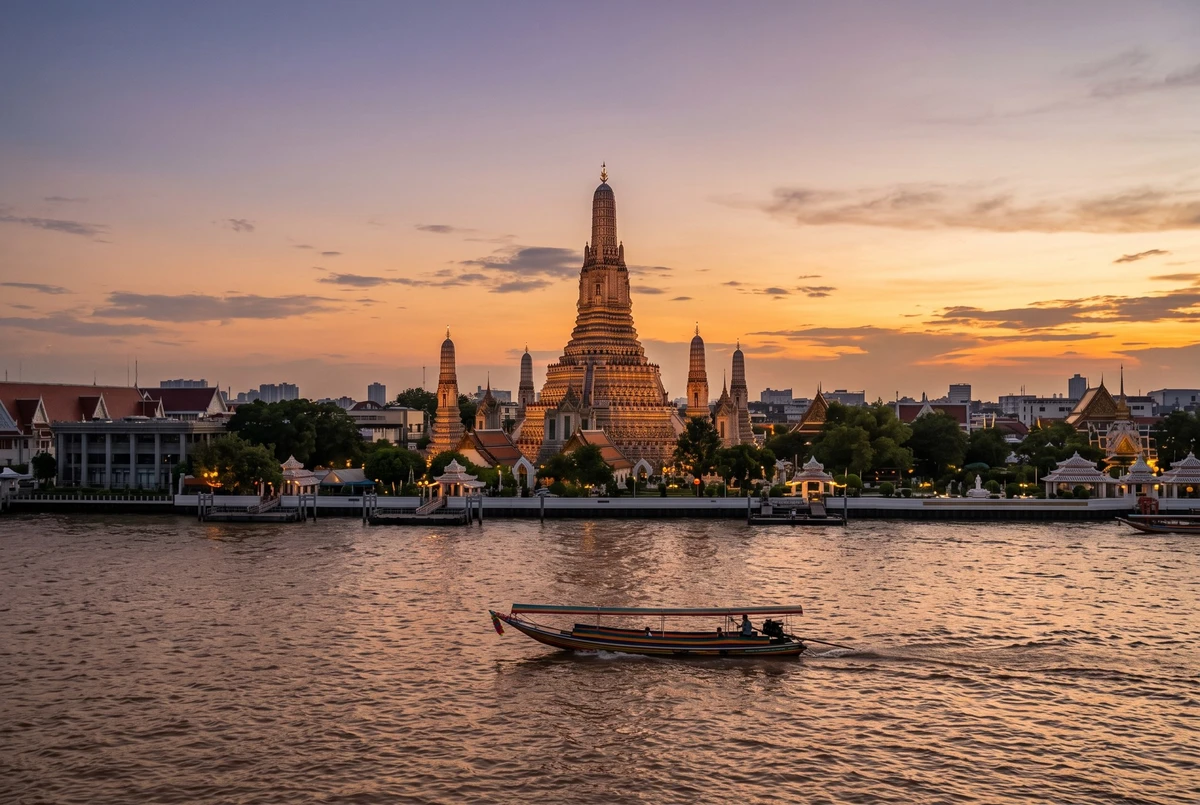
Dawn in Thailand arrives quietly. Monks in saffron robes walk barefoot past shuttered shophouses, collecting alms in silence; a street cook fans charcoal beneath skewers of grilled chicken; the scent of lemongrass, jasmine rice and marigold garlands drifts over the pavement. On the Chao Phraya River the first longtail boats cut through the haze, and the porcelain spires of Wat Arun catch the light like a jewel box opening. By mid-morning the country is in full voice: tuk-tuks, temple bells, the hiss of woks.
Destinations
Choose a city to see everything we arrange there.
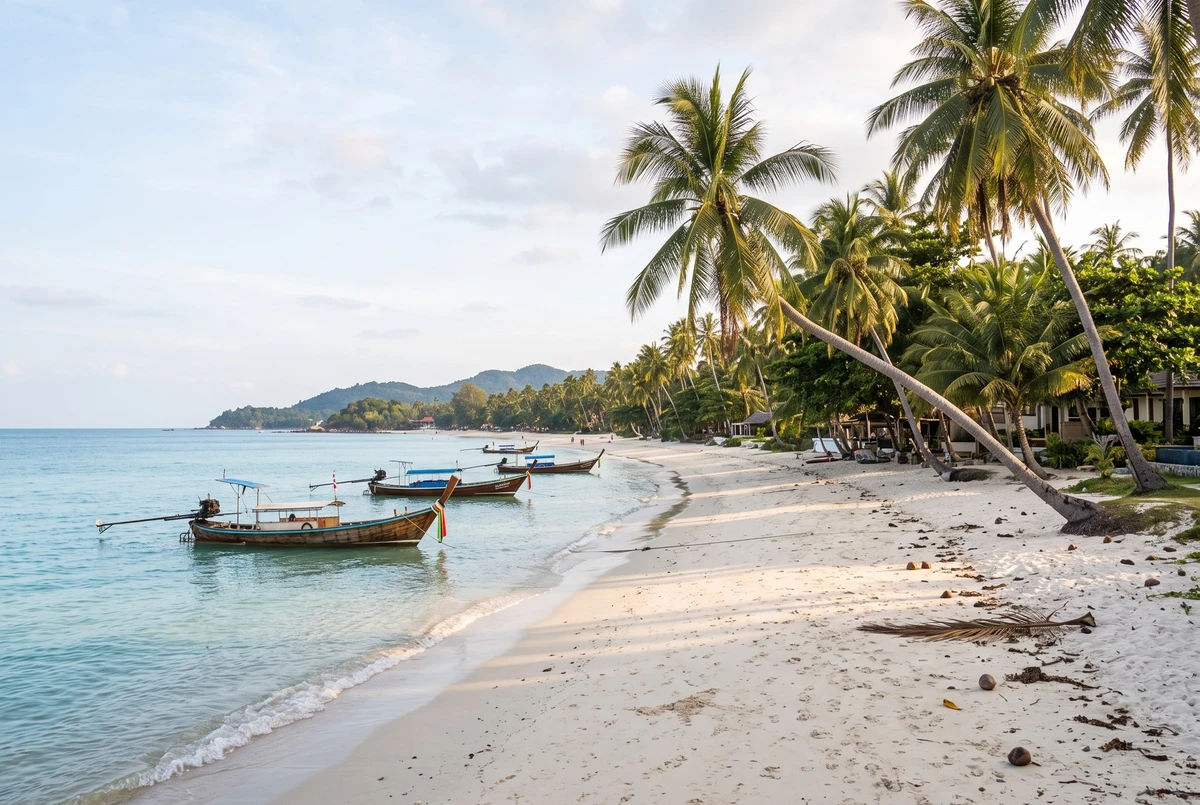
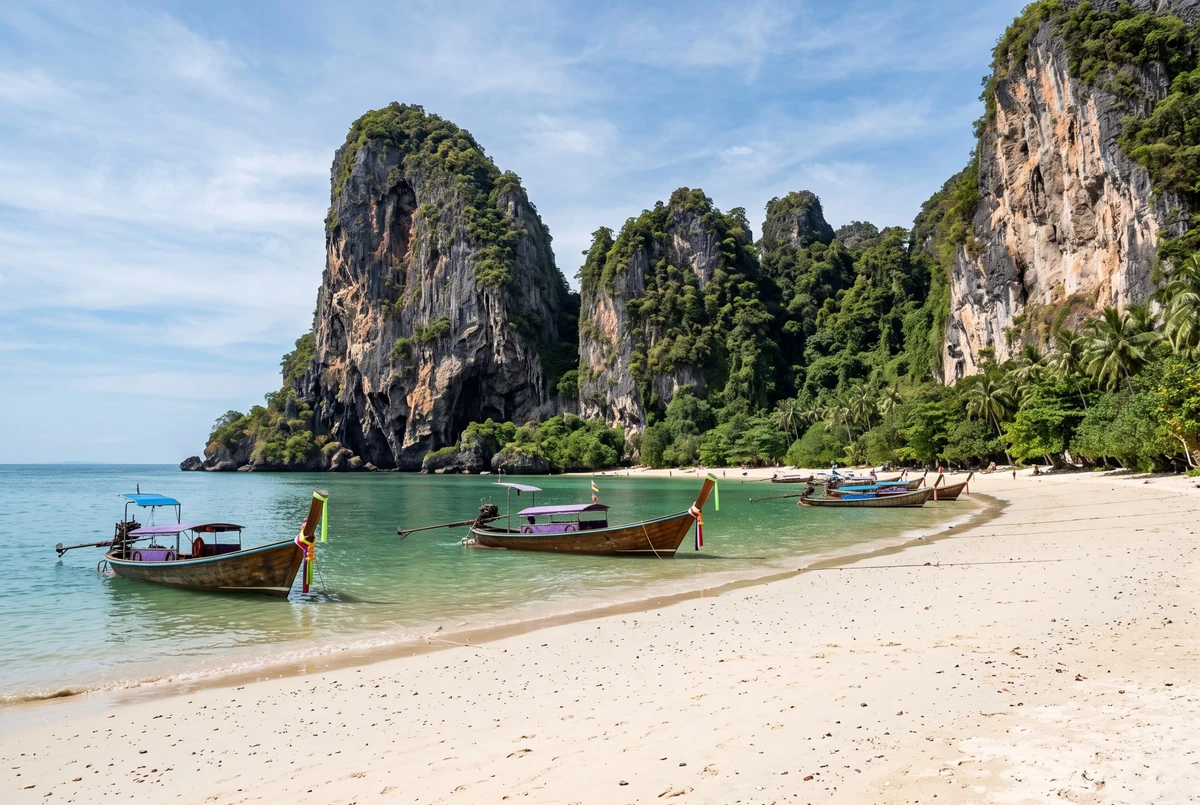
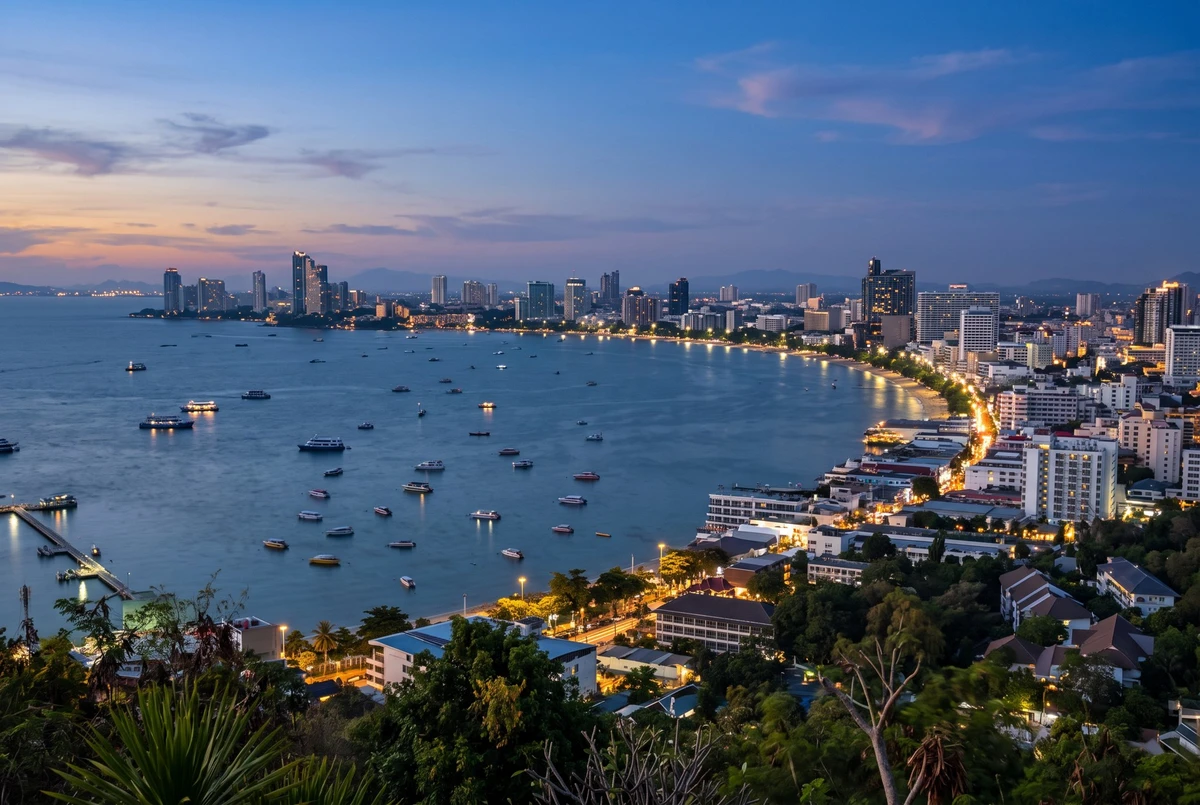
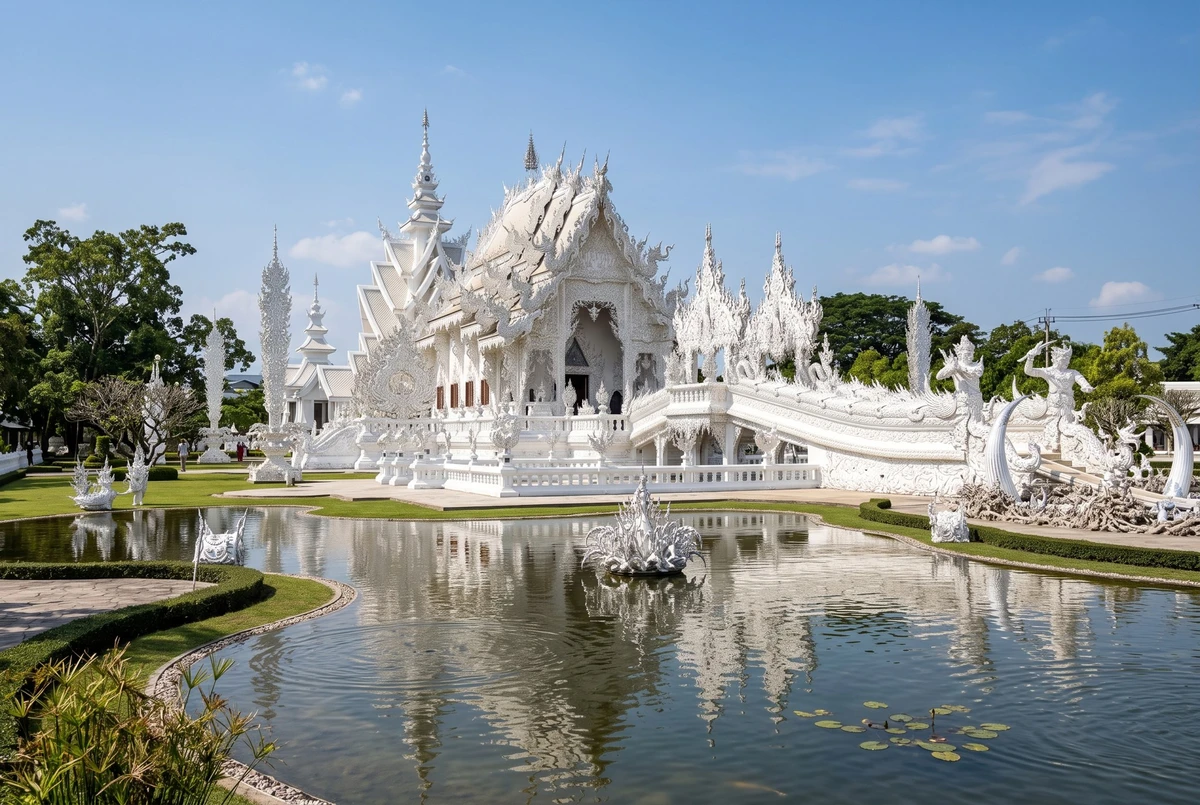
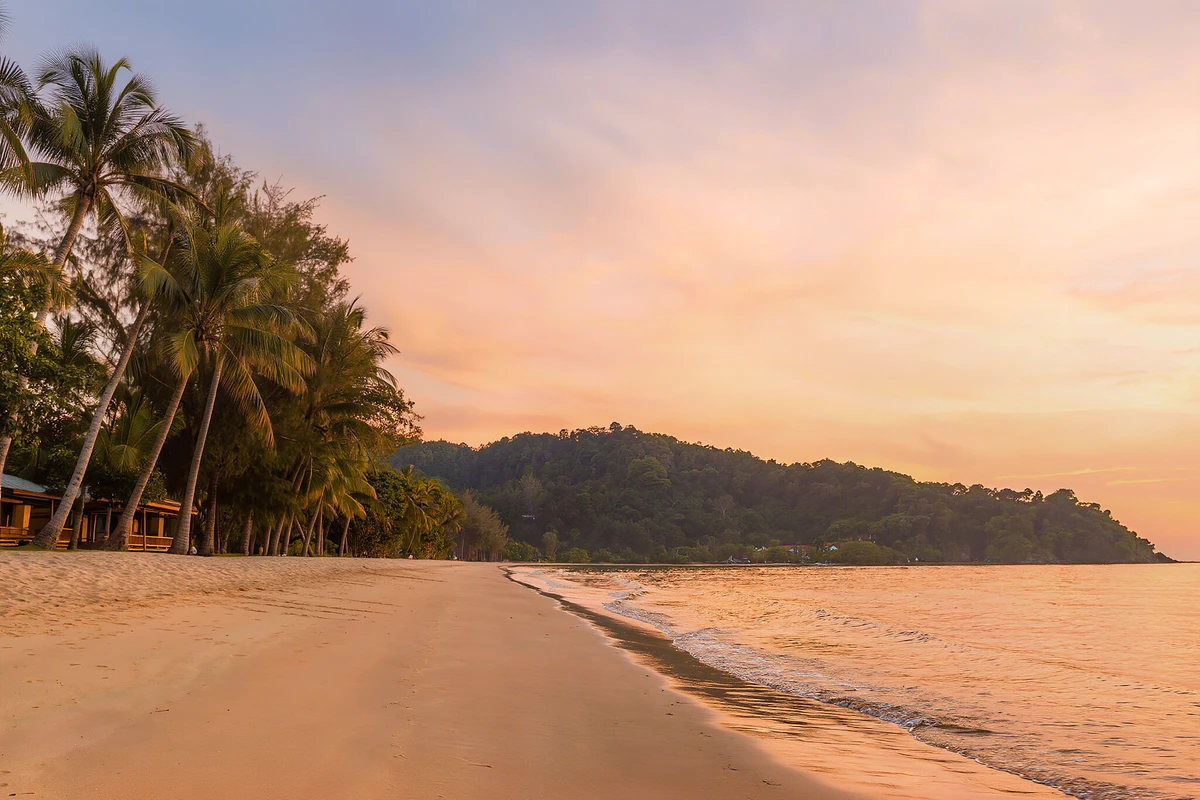
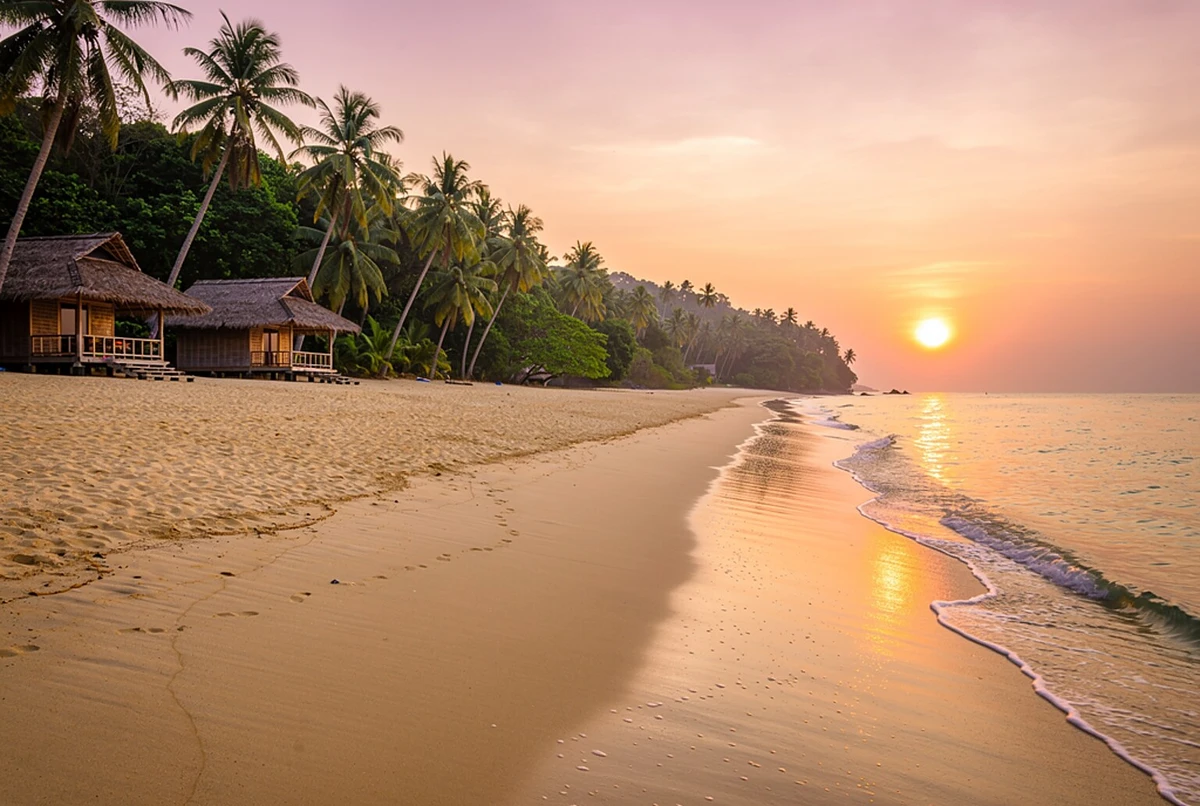
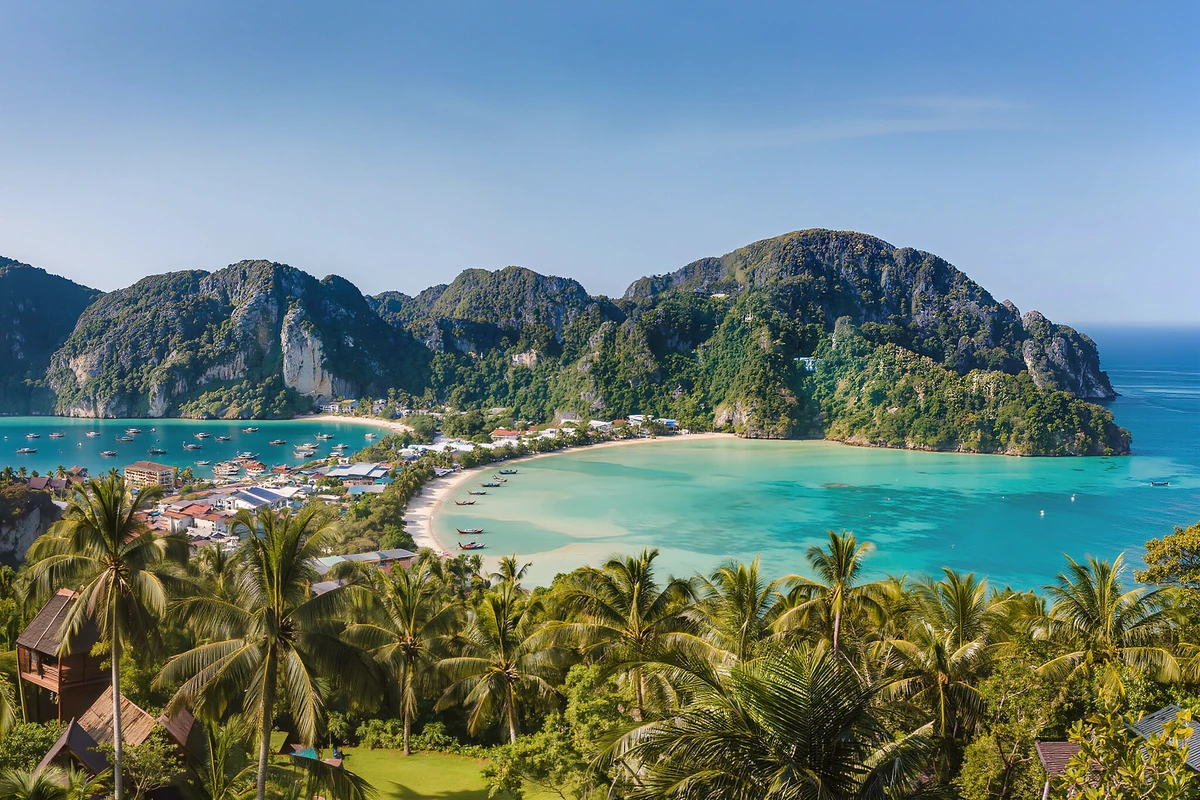
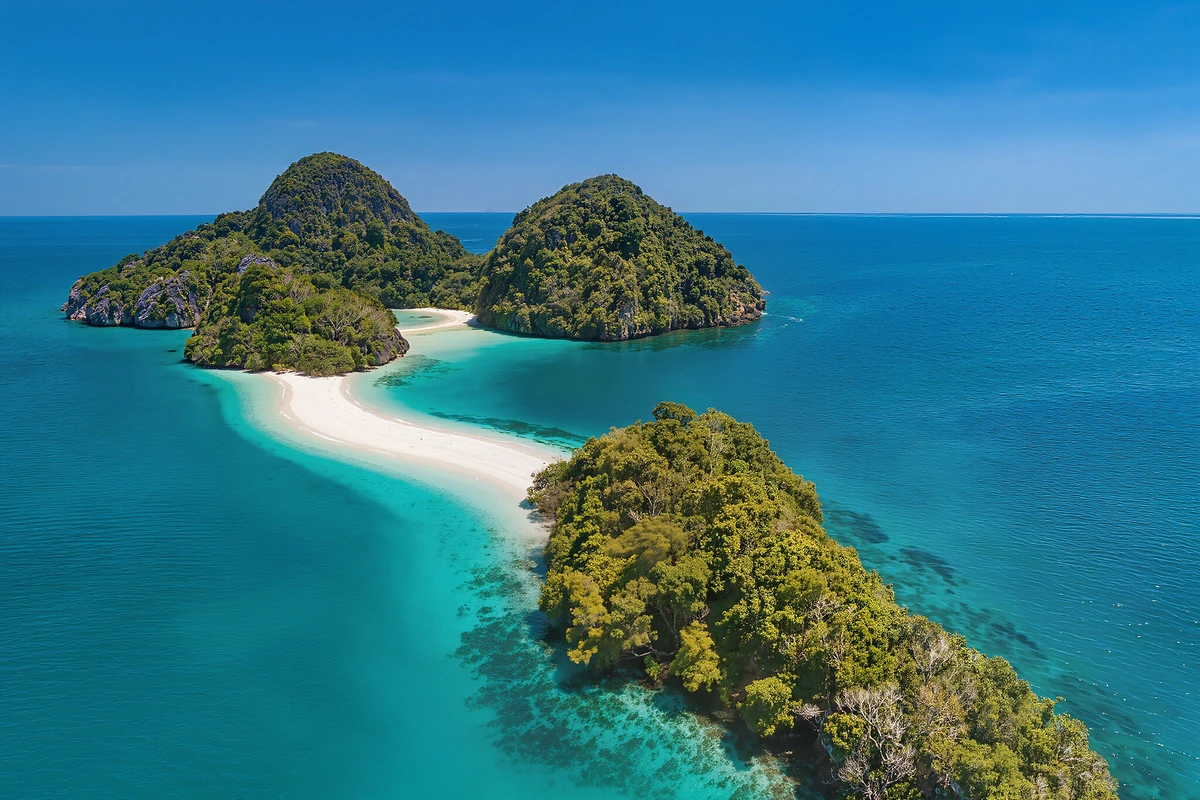
 Koh Chang Tours Koh Lipe Tours
Services by city in Thailand
Tours
Attraction Tickets
Airport Transfers
Flight Tickets
Train Tickets
The essence of Thailand
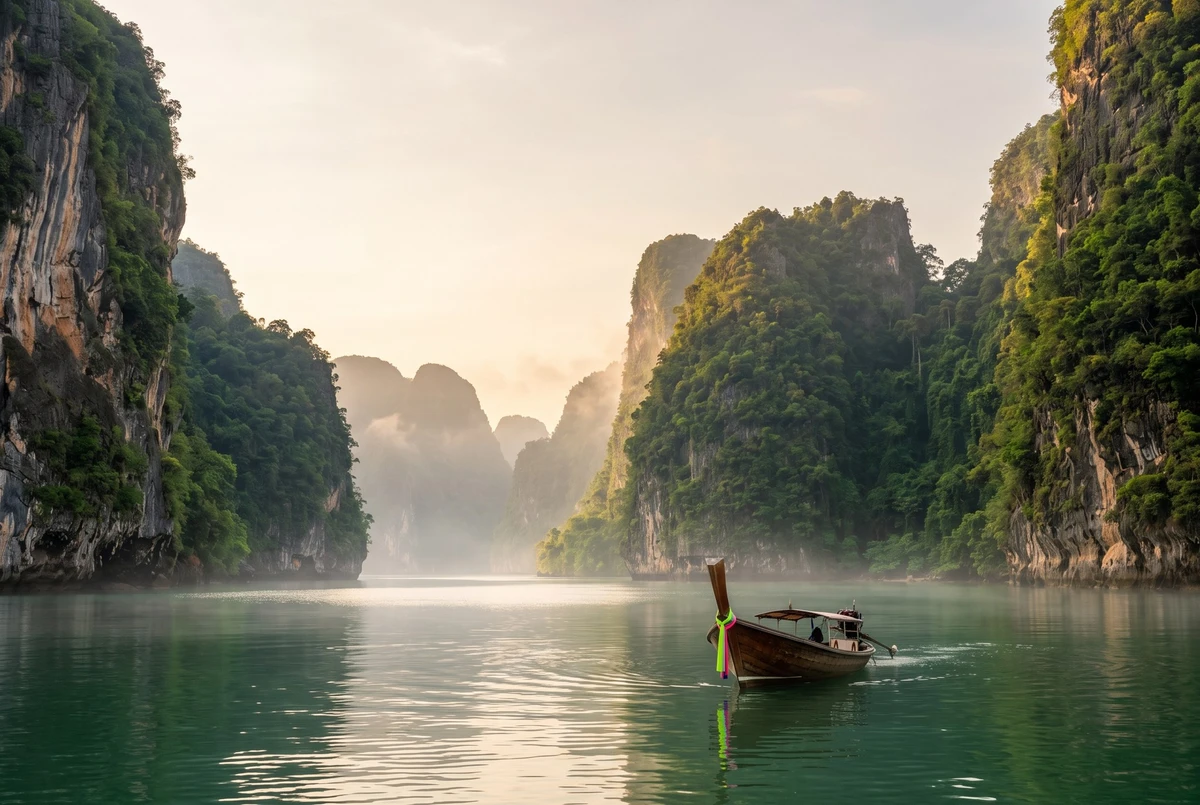
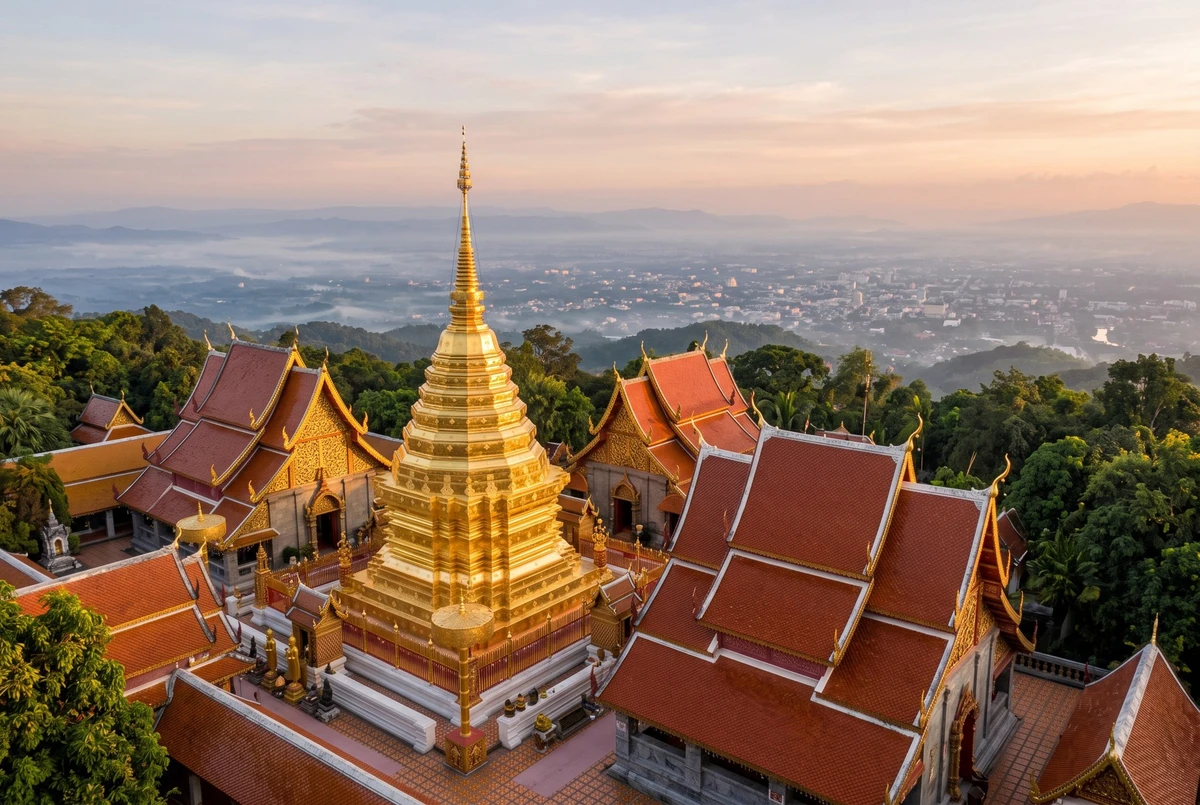
Few countries hold so much within one journey. In the north, misty teak forests and hill-country temples rise above Chiang Mai; in the south, limestone towers erupt from emerald water off Krabi and Phuket, while coconut-palm islands such as Koh Samui float in the Gulf of Thailand. What makes Thailand irreplaceable is a hospitality that is a culture rather than a service: the wai greeting, the unhurried smile, the instinct to make a guest feel at ease. We arrange the journey around that warmth, with guided day tours, private airport transfers and flight, train and ferry tickets, so your days belong to Thailand rather than to logistics.
Why visit Thailand?
Kingdoms of Gold and Brick
Thailand was never colonised by a European power, and its history reads as a line of proud kingdoms. Sukhothai, founded in the thirteenth century, gave the country its script and its serene walking Buddhas. Ayutthaya then ruled a great trading empire for four centuries; its brick prangs still stand along the river north of Bangkok. The Chakri dynasty built the Grand Palace and Wat Pho, where a gilded reclining Buddha stretches the length of the hall.
From Misty Peaks to Andaman Limestone
Thailand unfolds like a long ribbon. The north is mountain country, where Doi Inthanon, the kingdom’s highest summit, wears cloud forest and waterfalls, and rice terraces step down into quiet valleys. The central plains are watered by the Chao Phraya, the river that feeds Bangkok. Southward the peninsula narrows between two seas: the Andaman, with the sheer karst towers of Phang Nga Bay, and the calmer Gulf of Thailand, scattered with coconut islands and coral reefs.
Street Kitchens, Floating Markets and Festivals
Thai cooking balances sweet, sour, salty and fiery in a single bite: tom yum soup bright with galangal, green curry, massaman curry shaped by the kingdom’s Muslim traders, and mango with sticky rice to close. Chiang Mai has its own northern table, led by the curried noodle soup khao soi. Halal kitchens are easy to find, especially in Bangkok and the south. The calendar sparkles with Songkran, the April water festival, and Loy Krathong, when candlelit floats drift on every river.
Experiences Found Only in Thailand
Some moments belong to Thailand alone. Lie still for a traditional Thai massage at the school within Wat Pho, where the art has been taught for generations. Glide by longtail boat between the cliffs of Phang Nga Bay as the tide reveals hidden lagoons. Watch thousands of paper lanterns rise over Chiang Mai during Yi Peng. Drift through a floating market at dawn by longtail boat, then feel the roar of a Muay Thai bout in a Bangkok stadium.
Who is Thailand for?
Ideal for
- Families wanting beaches with easy logistics
- Honeymooners chasing island sunsets
- Food lovers and street-food explorers
- First-time travellers to Southeast Asia
- Culture seekers drawn to temples and royal history
- Groups wanting a private, flexible itinerary
Pace & travel style
- Bangkok energy, then slow island days in the south
- Short domestic flights link the north and the beaches
- A blend of guided days and free beach time works best
- Early starts beat both the heat and the crowds
- Two regions per week keeps the trip relaxed
When to visit Thailand
Peak season · November–February
The cool, dry season is Thailand at its most comfortable: clear skies over the Andaman beaches, fresh mornings in Chiang Mai and gentle evenings in Bangkok. Yi Peng and Loy Krathong light up November, and the festive weeks bring a lively, cosmopolitan buzz. Popular hotels, island ferries and flights fill early, and rates are at their highest, so booking your transfers and day tours well ahead is wise.
Shoulder season · March–May
Heat builds across the kingdom, but the sea is glassy and warm, especially around Koh Samui and the Gulf islands, and the crowds of winter thin out. April brings Songkran, the joyful water festival that turns streets into a celebration of the Thai New Year. Smart travellers plan sightseeing for early morning and late afternoon, with long, lazy middays by the pool or the shore.
Low season · June–October
The green season brings short, dramatic downpours, usually in the afternoon, followed by washed-clean skies. Rice fields glow emerald, waterfalls run full, and hotels offer their best value of the year. The Andaman coast can be rough and some islands slow down, yet Koh Samui stays relatively dry through much of this period. It suits flexible travellers, families on summer holidays and anyone who prefers calm temples to crowded ones.
The regions of Thailand and how to combine its cities
Thailand divides naturally into four worlds. The mountainous north, centred on Chiang Mai, was once the independent Lanna kingdom and still keeps its own dialect, cuisine and teak temples; beyond it, the vast northeastern plateau of Isan is rural, devout and famous for fiery salads and grilled chicken. The central plains are the historic heart, home to Ayutthaya, Sukhothai and the capital, Bangkok, a restless metropolis of canals, palaces and gleaming malls.
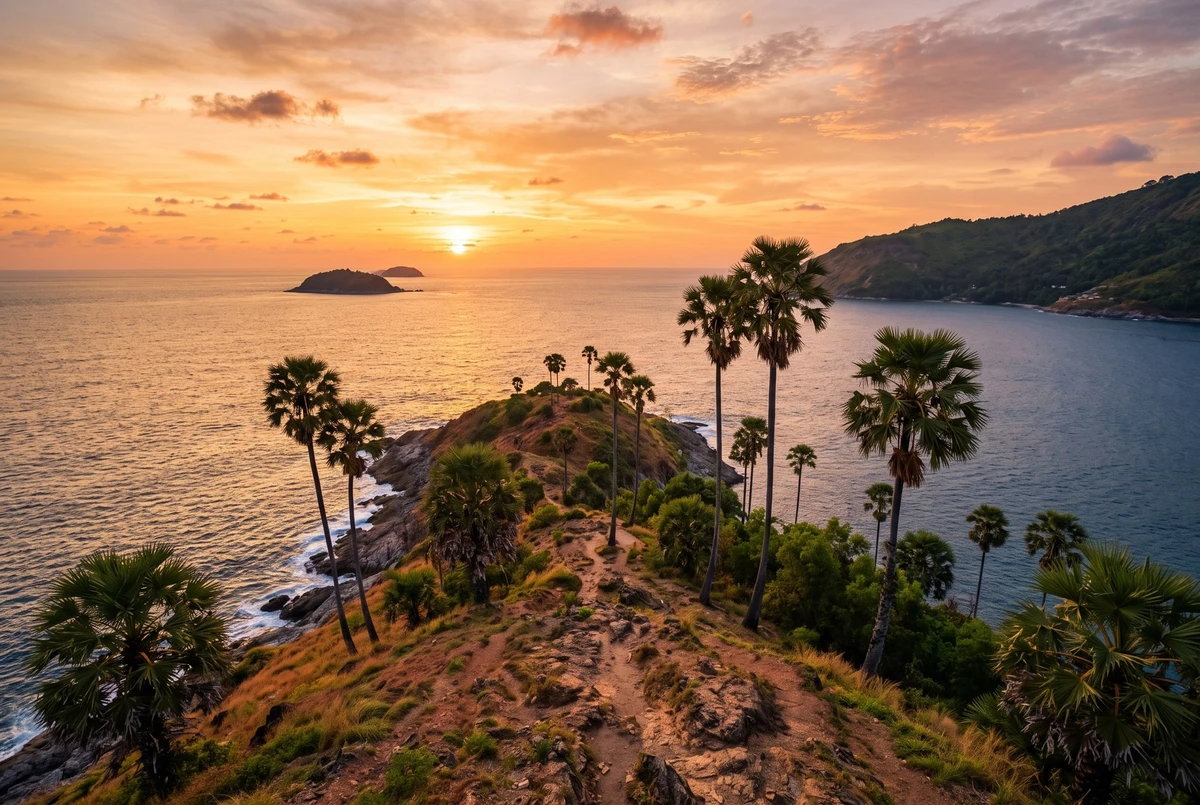
East of Bangkok, the coastline curves towards Pattaya and the islands of the eastern seaboard, an easy road trip from the capital. The long southern peninsula then splits into two personalities. On the Andaman side, Phuket and Krabi face a sea of limestone islands and sunsets, with Malay and Muslim influences growing stronger as you travel south. On the Gulf side, Koh Samui and its sister islands enjoy a different weather pattern, which makes year-round beach holidays possible.
Our city directory below brings these regions together. Bangkok is the natural gateway, perfect for temples, markets and river life before a short hop north to Chiang Mai for mountains and culture. From there, fly south to the Andaman pairing of Phuket and Krabi for islands and beaches, or choose Koh Samui for the Gulf’s calmer seasons. Pattaya rounds off a journey with a seaside stay close to the capital. Pairing two or three of these cities creates the ideal Thailand itinerary, and we connect every leg with transfers and tickets.
Before you go: practical tips for Thailand
Entry & visas
Thailand offers visa-exempt entry to travellers from many countries, including much of the Middle East, Europe and North America, while other nationalities can apply for an eVisa or, in some cases, a visa on arrival. Rules have changed several times in recent years and depend entirely on your passport, so check the official Thai eVisa portal or your nearest Thai embassy before booking, and complete the online arrival card before you fly.
Money, cards & tipping
The Thai baht is the currency, and cash still rules at street stalls, markets, tuk-tuks and small family restaurants. Cards are widely accepted in hotels, malls and larger restaurants, and ATMs are everywhere. Tipping is appreciated rather than expected: round up a taxi fare, leave around ten percent where no service charge is added, and tip guides and drivers for good service. Bargain politely at markets, never in malls or fixed-price shops.
Etiquette & dress code
The monarchy is deeply revered, and any disrespect towards the royal family is both offensive and illegal. At temples, cover shoulders and knees, remove your shoes, and never point your feet towards a Buddha image. The head is considered sacred, so avoid touching anyone’s head, even a child’s. Women should not touch monks or hand items to them directly. Always ask before photographing people, especially in hill-tribe villages.
Getting around
Domestic flights link Bangkok with Chiang Mai, Phuket, Krabi and Koh Samui in about an hour, making it easy to combine north and south. Overnight sleeper trains run to Chiang Mai, ferries and speedboats connect the islands, and Pattaya is a simple road journey from the capital. Our team issues flight, train and ferry tickets, and our private chauffeured transfers meet you at airports, piers and hotels for a seamless journey.
Must-do things in Thailand
- Walk through the Grand Palace and see the Emerald Buddha in Bangkok
- Ride a longtail boat along the canals of Thonburi at golden hour
- Explore the brick temple ruins of Ayutthaya on a guided day tour
- Taste khao soi and northern specialities in Chiang Mai’s old city
- Watch lanterns rise over Chiang Mai during the Yi Peng festival
- Island-hop through the limestone cliffs of Phang Nga Bay from Phuket
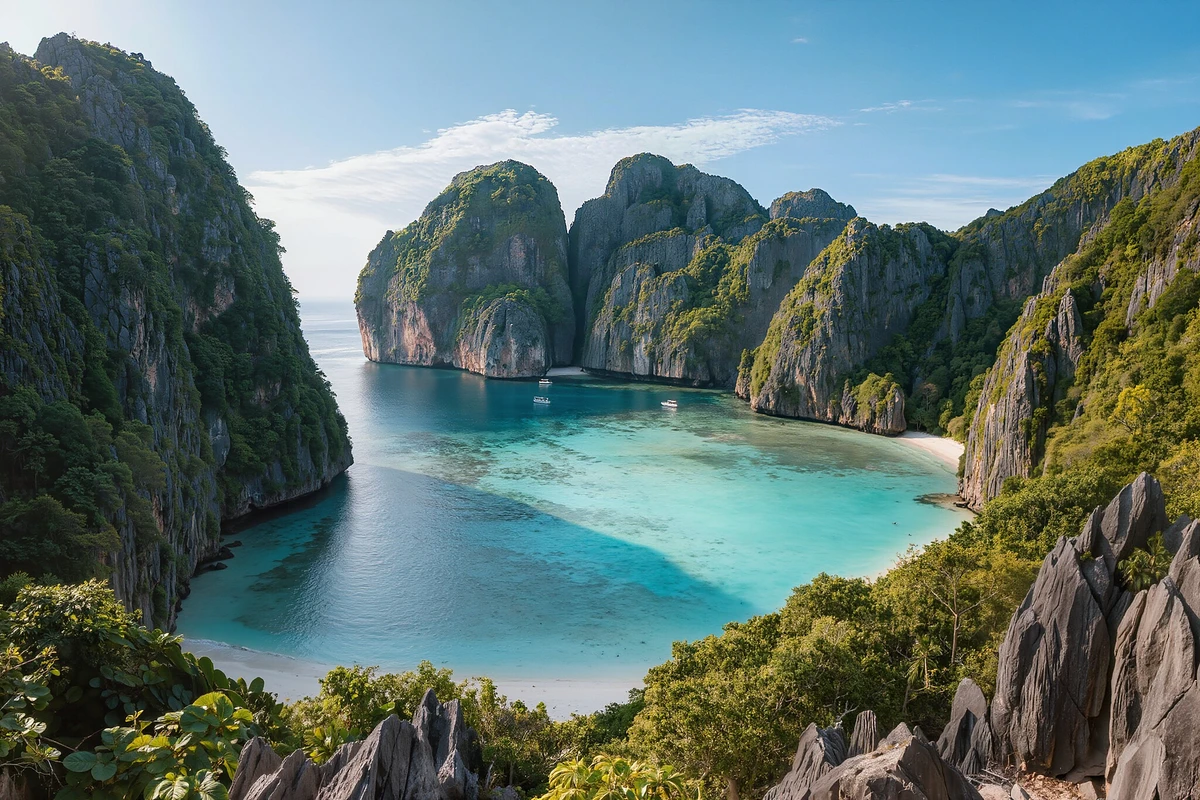
- Swim in the turquoise lagoons around Krabi’s Phi Phi and Hong islands
- Spend a slow beach day on Koh Samui’s palm-fringed southern coast
- Visit an ethical elephant sanctuary where the animals roam freely
- Browse Bangkok’s Chatuchak Weekend Market for crafts, spices and fruit
Do’s and don’ts in Thailand
Do
- Greet people with a gentle wai, palms together and a slight bow
- Dress modestly at temples, covering shoulders and knees
- Carry small notes for markets, tuk-tuks and street food
- Drink plenty of water and plan sightseeing for cooler hours
- Book island ferries and transfers early in the high season
Don’t
- Never criticise or joke about the Thai royal family
- Don’t touch anyone’s head or point your feet at people or shrines
- Don’t raise your voice or lose your temper in public
- Don’t accept unsolicited offers of gem shops or private tours on the street
- Don’t ride with unlicensed boats or vehicles without safety equipment
Thailand at a glance
Plan Thailand with Haqqi Tours
Every option is confirmed by our team on WhatsApp before you pay, and delivered by our own people or by trusted local partners we work with in every city. Because we send travellers from all over the world, our partners give us special rates and priority, so you always receive the best. Prices are per person unless marked per vehicle.
About Haqqi Tours: About us Contact us Legal NoticePrivacy PolicyCookies & Marketing PreferencesTerms & ConditionsBooking, Payment & Refunds
Where we operate in Thailand
Good to know
Frequently Asked Questions
Straight answers to what travellers ask most about Thailand.
Is it safe to visit Thailand?
Yes. Thailand welcomes tens of millions of visitors and is generally safe and welcoming. The main concerns are petty scams, road traffic and strong sea currents during the monsoon. Check your own government’s official travel advice before departure, use licensed transport such as our private transfers, and keep our WhatsApp line handy throughout your trip.
How many days do I need for a first trip to Thailand?
Ten to fourteen days is ideal for a first visit. Spend three or four days in Bangkok, three in Chiang Mai, and five or more on the beaches of Phuket, Krabi or Koh Samui. With only a week, pair Bangkok with one beach destination and let us handle every flight and transfer.
What is the best way to travel between Thailand's major cities?
Short domestic flights are the fastest way to link Bangkok, Chiang Mai, Phuket, Krabi and Koh Samui. Sleeper trains add romance on the northern route, and ferries connect the islands. We issue flight, train and ferry tickets and arrange private transfers at each end, so every connection is coordinated by one team.
Can a trip to Thailand be tailored for luxury or private travel?
Absolutely. Thailand excels at refined travel, from riverside suites in Bangkok to private pool villas in Phuket and Koh Samui. We can tailor private guided day tours, chauffeured transfers in premium vehicles, island excursions and family-friendly pacing, then confirm every detail with you on WhatsApp before anything is paid.
Is Thailand tourist friendly?
Very. Thailand has decades of experience welcoming visitors, with English widely spoken in hotels and tourist areas, halal food easy to find in Bangkok and the south, and excellent infrastructure. Thai people are famously gracious. A smile and a little patience go a long way, and our team is on hand whenever you need support.
Is it safe to travel to Thailand now?
Thailand remains one of Asia’s most visited countries, and tourist areas operate normally. Conditions can change, so always check your own government’s official travel advice before departure and follow local guidance on weather and sea conditions. Keep our WhatsApp line handy; our team can adjust transfers and day tours if plans need to change.
What is the best time to visit Thailand?
November to February is the best time for most of Thailand, with dry, comfortable weather on the Andaman coast, in Bangkok and in the north. March to May is hot but excellent for the Gulf islands. June to October is the green season, quieter and lush, with Koh Samui often the driest choice.
What is Thailand famous for?
Thailand is famous for its gilded Buddhist temples, the Grand Palace in Bangkok, world-class street food, Thai massage and the warmth of its people. It is equally loved for its limestone islands and turquoise bays around Phuket and Krabi, the mountain culture of Chiang Mai, and festivals such as Songkran and Loy Krathong.
How do families usually split time between Bangkok and Phuket
Many spend the early part of the trip in Bangkok for markets and sightseeing, then take the Bangkok to Phuket flight for a slower coastal stretch before flying home from either city.
Does the Phuket transfer include the onward trip to Krabi
It does, since the single Phuket listing on this page is built to carry a family straight past the airport and on to Krabi without swapping vehicles partway, with the whole run priced and confirmed in writing before the desk books the car.
Which cities in Thailand does Haqqi Tours cover?
Bangkok, Phuket, Chiang Mai, Koh Samui, Krabi, Pattaya, Chiang Rai, Khao Lak, Koh Lanta, Phi Phi Islands, Koh Phangan, Koh Tao, Koh Chang and Koh Lipe. Each city has its own page with everything available there, and a trip across several cities is planned in one WhatsApp conversation.
What can I book in Thailand?
Day tours, attraction tickets, private airport transfers, flight tickets, train tickets and ferry tickets - all run or confirmed by Haqqi Tours, each with a fixed price agreed on WhatsApp before you pay.
How do I book a tour or transfer in Thailand?
Fill in the form on the page you are interested in, or message us on WhatsApp with the date, the number of travellers and your hotel. A member of our team confirms the price and the details in writing within minutes.
Are the prices fixed?
Yes. Every price is agreed in writing on WhatsApp before you travel and does not change on the day - not for traffic, not for a late flight, not for the hour.
Do you arrange transfers between cities in Thailand?
Yes. Intercity transfers by private car or van are booked the same way as airport transfers; tell the desk the two hotels and the date and it quotes a fixed price for the whole vehicle.
Can you plan a full itinerary across Thailand?
Yes - tell the desk your dates, the cities you want and who is travelling, and it proposes a day-by-day plan with the tours, transfers and tickets priced in writing. You adjust it in the same chat before confirming.