
Tanzania
Haqqi Tours arranges day tours, private airport transfers, attraction tickets and multi-day packages across Tanzania, confirmed on WhatsApp before you pay.
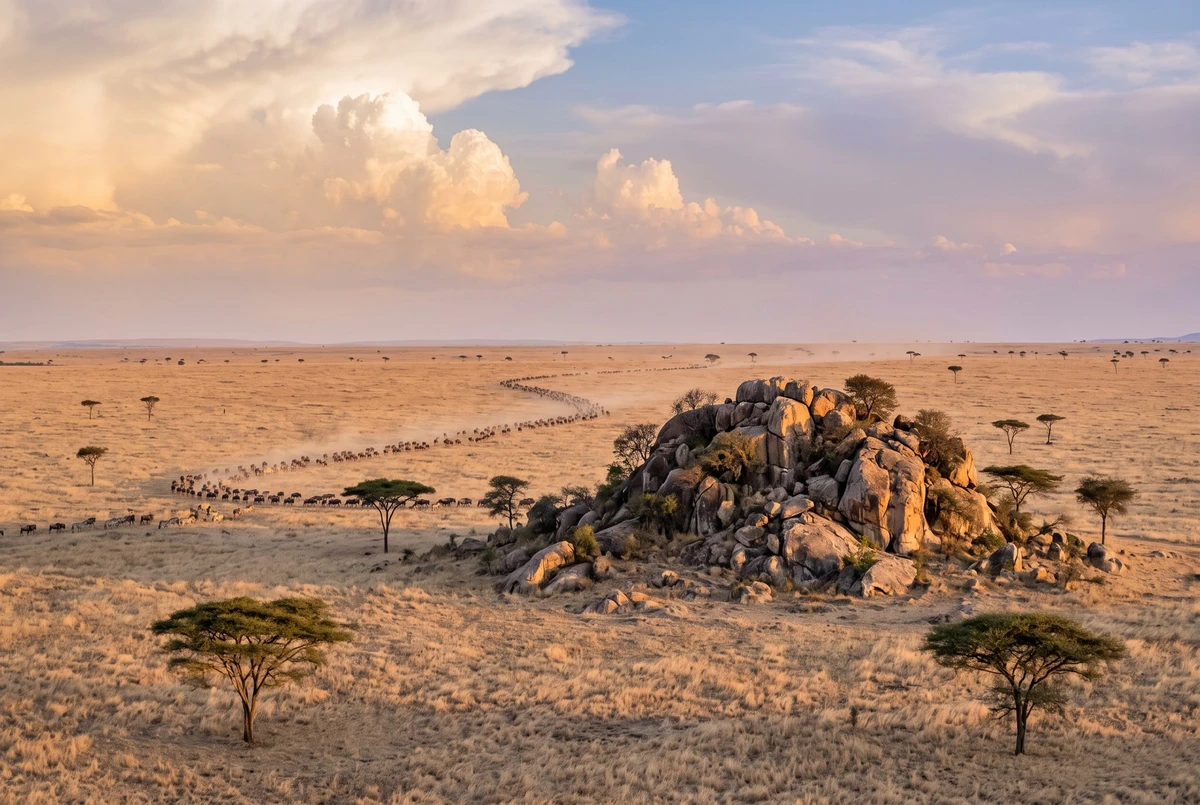
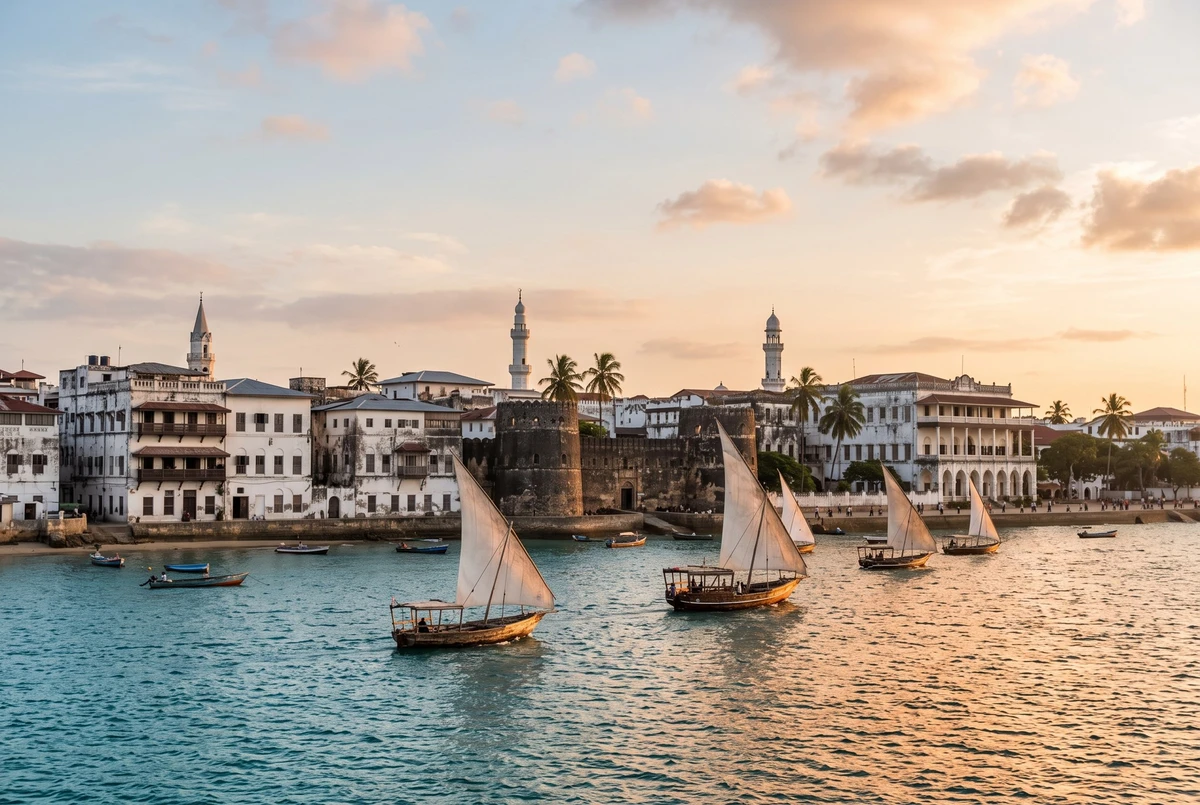
In Tanzania the day begins before the sun. A safari vehicle rolls out of camp while the Serengeti is still grey, and within minutes the grass turns gold, a line of wildebeest stretches to the horizon and a lioness lifts her head from the long grass to watch you pass. Far to the east in Stone Town, the first dhows slip out past the old harbour, cloves and cardamom scent the narrow lanes, and the call to prayer drifts over carved wooden doors that have stood for generations.
Destinations
Choose a city to see everything we arrange there.
Services by city in Tanzania
Flight Tickets
Ferry Tickets
The essence of Tanzania
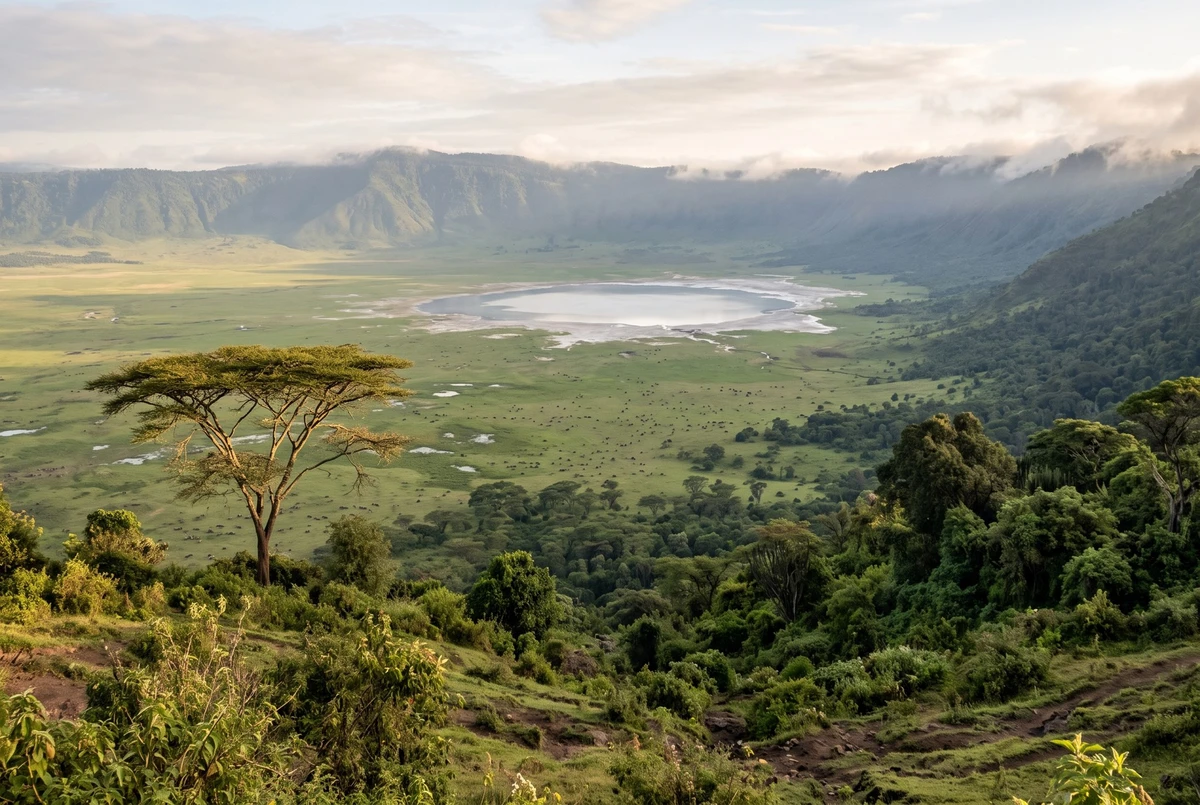
Then comes the moment every traveller remembers: the rim of the Ngorongoro Crater at dawn, cloud spilling over the edge into a green bowl where elephants, rhinos and flamingos share a single view. Tanzania is irreplaceable because the world’s greatest wildlife spectacle, Africa’s highest mountain and the spice island of Zanzibar sit in one country, linked by short flights and a fast ferry. We arrange guided safaris from Arusha, island excursions from Zanzibar, private airport transfers and flight and ferry tickets, and we confirm every detail with you on WhatsApp.
Why visit Tanzania?
The Serengeti and the Great Migration
The northern safari circuit is the reason most travellers come. On the endless plains of the Serengeti, vast herds of wildebeest and zebra move with the rains through the year, crossing crocodile-filled rivers in the dry months and calving on the southern grasslands early in the year, followed closely by lions, cheetahs and hyenas. The Ngorongoro Crater holds a remarkable concentration of wildlife, including black rhinos, inside the walls of a collapsed volcano. Tarangire is famous for its baobabs and elephant families, and Lake Manyara for flamingos and the lions that sometimes rest in its trees. Sightings are never guaranteed, which is exactly what makes each one unforgettable.
Kilimanjaro and the Green Foothills
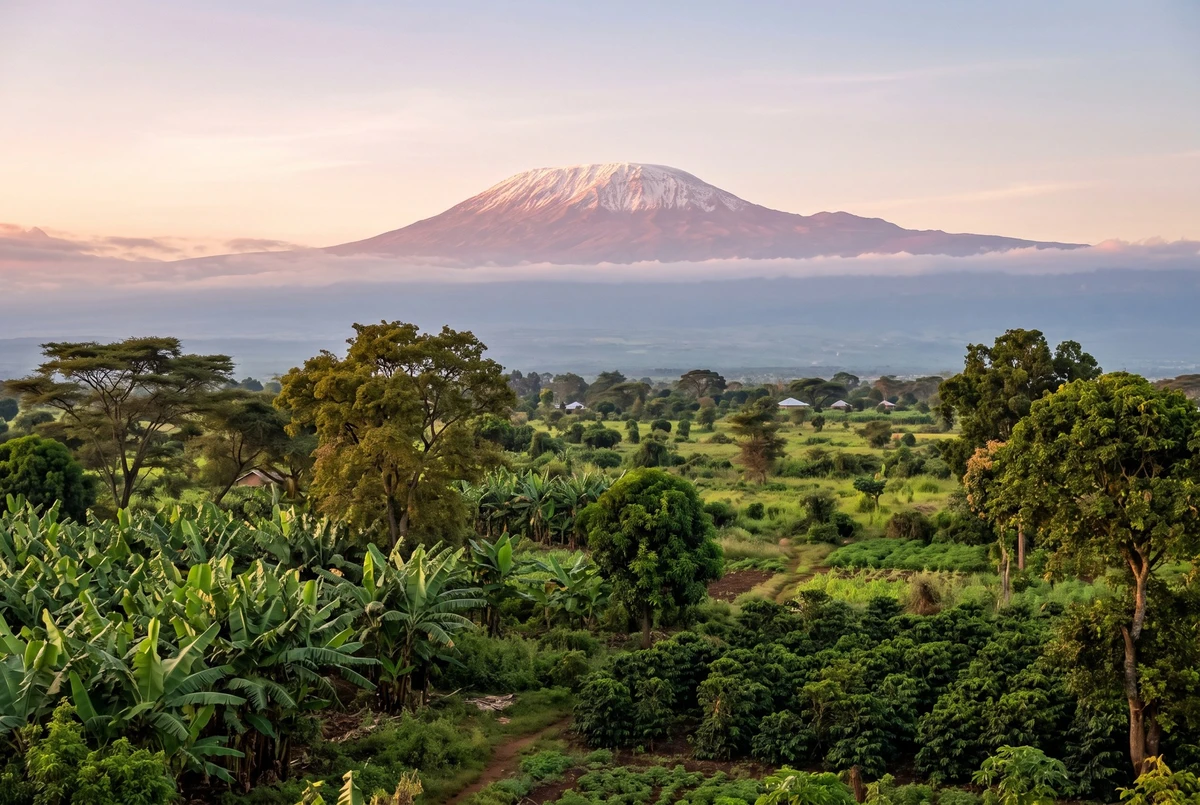
Kilimanjaro rises alone from the plains, its snow-capped summit floating above the clouds only a few degrees south of the equator. Most visitors admire it from Moshi and the Chagga villages on its slopes, where coffee is grown in small family gardens and roasted over wood fires. From here we arrange day hikes on the lower Marangu route, the walk to Materuni waterfall through banana groves, a swim in the clear turquoise pools of the Kikuletwa hot springs, and a day at Lake Chala, a crater lake on the Kenyan border. Arusha National Park, with Mount Meru and its forests of colobus monkeys, lies on the road to the airport.
Spices, Swahili and the Zanzibar Coast
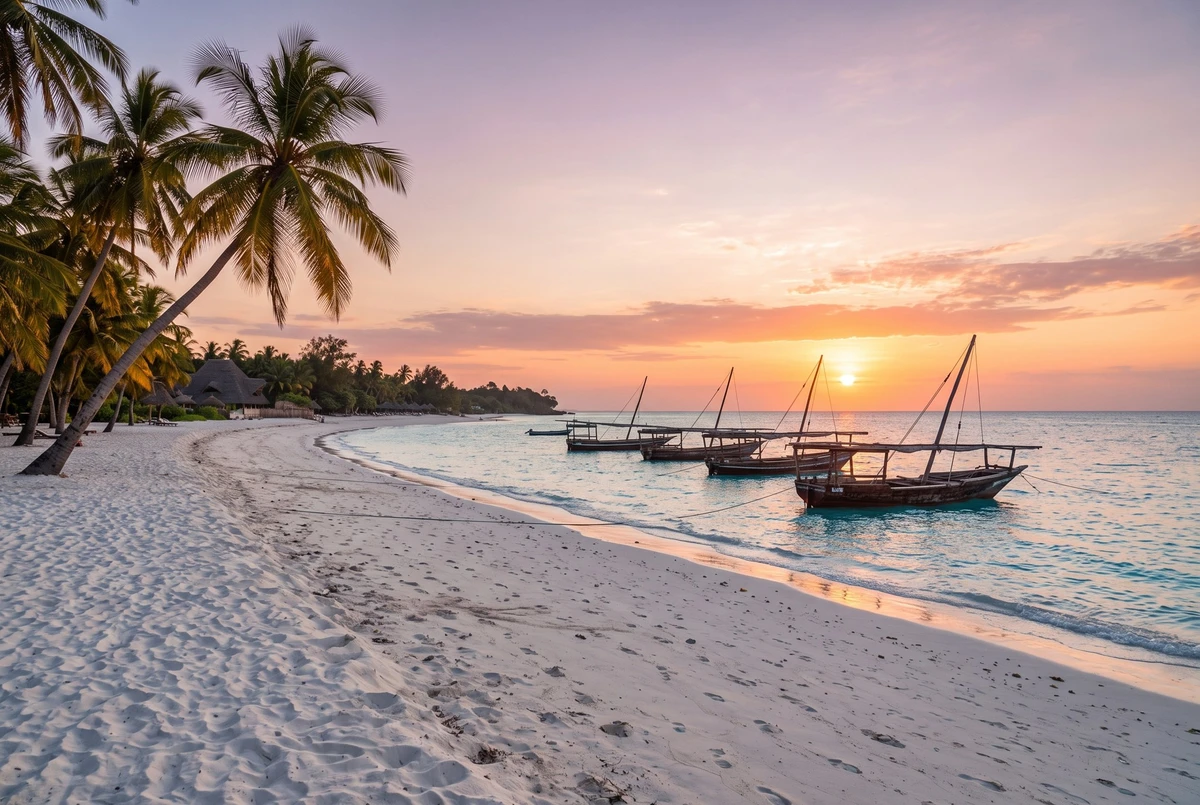
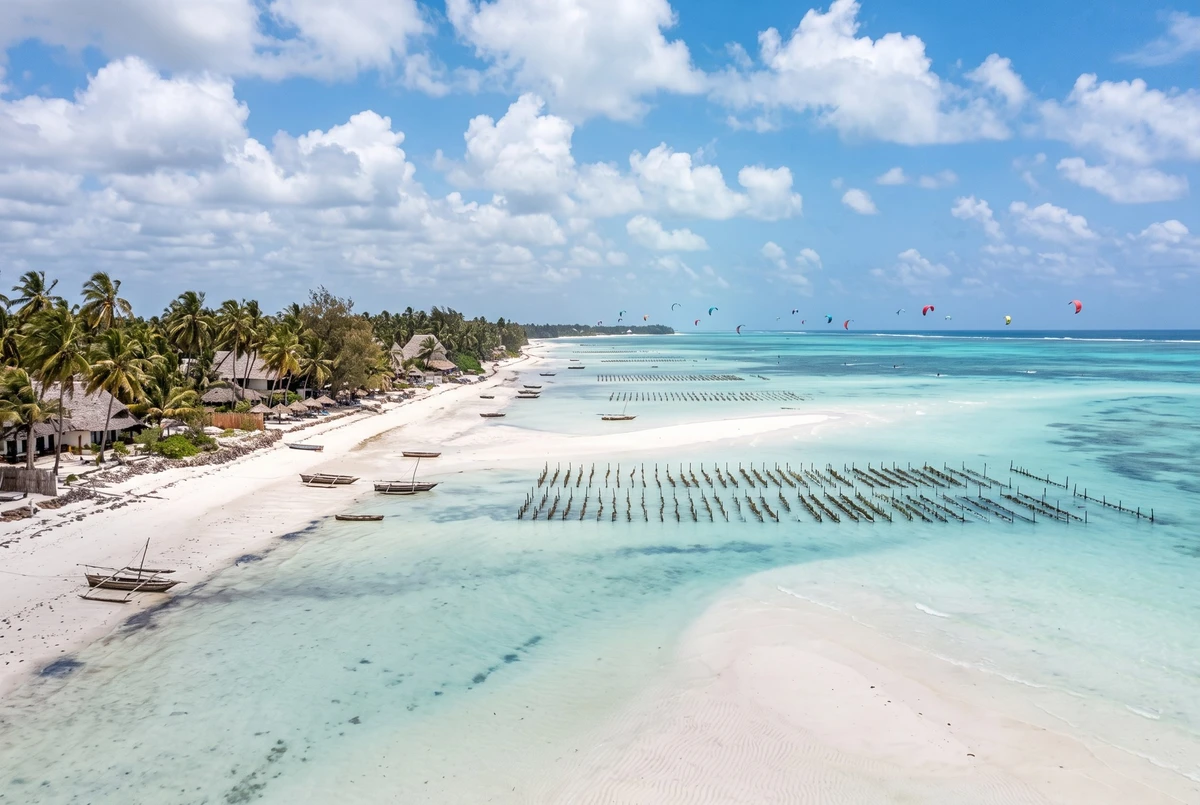
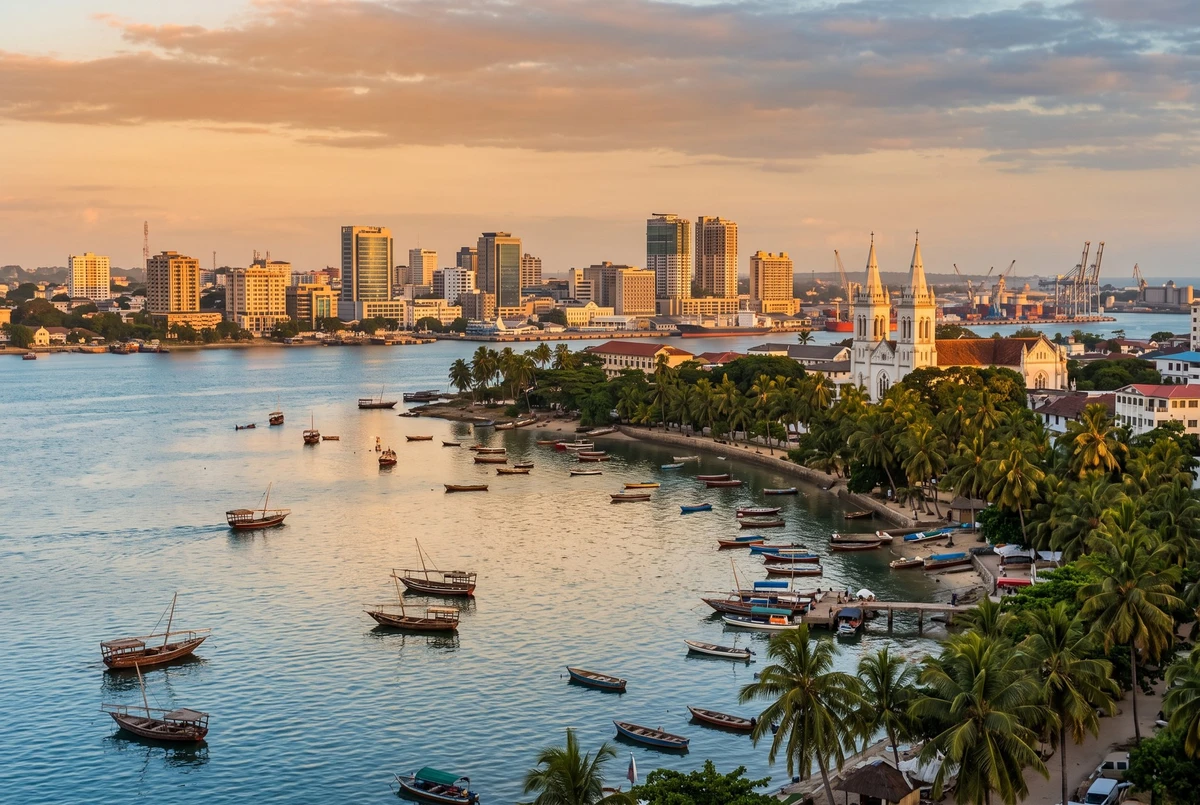
Zanzibar is where Africa, Arabia, Persia and India met for centuries, and the mix is everywhere. Stone Town, a UNESCO World Heritage Site, is a maze of coral-stone houses, carved doors, old mosques, a Persian bathhouse and an evening seafront market where grilled seafood, Zanzibar pizza and sugar-cane juice are sold under lanterns. Spice farms grow cloves, nutmeg, cinnamon and vanilla, and the Swahili kitchen turns them into pilau, biryani, octopus curry and urojo soup. Halal food is the norm across the island. Beyond the town, the beaches of Nungwi, Kendwa, Paje and Jambiani open onto one of the clearest lagoons in the Indian Ocean.
Experiences You Can Only Have in Tanzania
Descend the steep crater wall of Ngorongoro as the morning mist lifts. Float over the Serengeti at sunrise in a hot-air balloon and watch the migration from above. Sail a wooden dhow across the Menai Bay sandbanks from Fumba, snorkel the reefs off Mnemba Island, and walk among red colobus monkeys in Jozani forest. Share coffee with a Chagga family in the shadow of Kilimanjaro, picnic on the Nakupenda sandbank in the middle of the sea, and watch the sun set behind the dhows at Nungwi while the muezzin calls from the village mosque.
Who is Tanzania for?
Ideal for
- Wildlife lovers chasing the Great Migration
- Honeymooners combining safari with a Zanzibar beach
- Families who want animals, beaches and gentle culture
- Hikers drawn to Kilimanjaro’s foothills and waterfalls
- Photographers seeking savannah light and Swahili doors
- Travellers who want halal food and a Muslim-friendly island
Pace & travel style
- Arusha for safari, Zanzibar for the sea: two bases cover the country
- Safari days start at dawn and rest in the heat of noon
- Short flights link Kilimanjaro, Dar es Salaam and Zanzibar in about an hour
- Give the island at least four nights to recover from the road
When to visit Tanzania
Peak season · June–October
The long dry season is the classic time for Tanzania. Grass is short, animals gather at rivers and waterholes, and the wildebeest herds move through the western and northern Serengeti, crossing the rivers between July and September. Skies are clear over Kilimanjaro and Zanzibar enjoys dry, breezy days and calm seas for snorkelling and dhow trips. These are the busiest months, so safari camps, island hotels, domestic flights and transfers should be reserved well in advance.
Shoulder season · December–February
After the short rains, a warm and mostly dry spell brings green plains and dramatic skies. The migration gathers on the southern Serengeti grasslands, where calving season fills the plains with newborn wildebeest and the predators that follow them. Zanzibar is hot and sunny with the warmest sea of the year, and visibility for divers is excellent. The year-end holiday weeks are busy, but January and February offer wonderful wildlife with fewer vehicles.
Low season · March–May, November
The long rains fall from March to May, heaviest in April, with afternoon downpours, muddy tracks and some island hotels closing for maintenance. Zanzibar is humid and the sea can be choppy. In return the landscape is lush, birdlife is spectacular, lodges and hotels offer better value, and the parks are wonderfully quiet. The short rains of November are lighter and brief. Pack a light rain jacket, keep plans flexible and ask us which parks are driest in a given week.
The regions of Tanzania and how to combine its cities
Tanzania is huge, and its highlights cluster in three distinct areas. The northern safari circuit begins in Arusha, the safari capital, and runs west through Tarangire, Lake Manyara, the Ngorongoro Crater and the Serengeti. To the east, Moshi sits at the foot of Kilimanjaro among coffee villages, waterfalls and hot springs, with Kilimanjaro International Airport roughly midway between the two towns. This is the Tanzania of acacia plains, Maasai cattle herders and volcanic highlands.
On the Indian Ocean coast, Dar es Salaam is the commercial capital and main port, with Bagamoyo’s old Swahili and caravan-trade town a short drive north and the Mikumi and Selous wilderness reachable on safaris from the city. A fast ferry or a short flight away lies Zanzibar: Stone Town on the west coast, the sunset beaches of Nungwi and Kendwa at the northern tip, and the tidal lagoons and kitesurfing shores of Paje, Jambiani and Michamvi in the south-east, with Jozani forest and the spice farms in between.
Our city directory below covers Arusha, Moshi, Dar es Salaam, Zanzibar, Nungwi and Paje, the natural bases for exploring the country. From Arusha and Moshi we run day trips and multi-day safaris into the northern parks and hikes on Kilimanjaro’s foothills; from Zanzibar we arrange spice tours, dhow trips, snorkelling, dolphin outings and island excursions, while our private drivers handle airport and ferry transfers. Pairing three or four safari nights with a week on the island builds the ideal Tanzania itinerary.
Before you go: practical tips for Tanzania
Entry & visas
Many nationalities can obtain a visa on arrival at Kilimanjaro, Dar es Salaam and Zanzibar airports, and the official Tanzanian eVisa system allows you to apply online before departure, which saves time in the queue. Zanzibar is part of Tanzania, so the same visa covers both. A passport valid for at least six months, a return ticket and proof of a yellow fever vaccination if you arrive from a country where it is present are commonly required. Rules depend on your passport, so check the official immigration portal or the nearest embassy before booking.
Money, cards & tipping
The Tanzanian shilling is the currency, and US dollars are widely accepted for safaris, park fees, hotels and tours, though notes should be recent and in good condition. Cards work in larger hotels and shops in Arusha, Dar es Salaam and Stone Town, but carry cash for markets, village stops, small cafés and tips; ATMs are found in towns and at the airports. Tipping safari guides, drivers and camp staff for good service is customary, and bargaining is normal in markets and craft shops, always with good humour.
Etiquette & dress code
Tanzanians are warm, polite and value greetings; a simple “jambo” or “habari” opens every conversation. Zanzibar is largely Muslim and conservative: dress modestly in Stone Town and the villages, covering shoulders and knees, and keep swimwear for the beach and the hotel. During Ramadan, avoid eating or drinking in public during fasting hours on the island. Ask before photographing people, especially the Maasai, and never pressure a guide to approach wildlife too closely; keeping distance protects the animals and the sighting.
Getting around
Distances are long, so most itineraries combine domestic flights with private road transfers. Flights link Dar es Salaam and Zanzibar in about 20 minutes, Kilimanjaro and Zanzibar in about an hour and a quarter, and Dar es Salaam and Kilimanjaro in about an hour and twenty minutes, with light aircraft also flying from Arusha airstrip and the Serengeti. A fast ferry crosses from Dar es Salaam to Stone Town in about two hours, several times a day. Safari parks are explored in four-wheel-drive vehicles with a driver-guide, and we arrange private airport and ferry transfers at every stop.
Must-do things in Tanzania
- Watch the wildebeest herds move across the Serengeti plains
- Descend into the Ngorongoro Crater at dawn
- Watch elephant families beneath the baobabs of Tarangire
- Walk to Materuni waterfall and roast coffee with a Chagga family
- Swim in the turquoise pools of the Kikuletwa hot springs
- Get lost in the carved-door lanes of Stone Town
- Smell cloves and vanilla on a Zanzibar spice farm
- Sail a dhow at sunset off Nungwi or Kendwa
- Snorkel the reefs around Mnemba Island
- Picnic on the Nakupenda sandbank and visit the tortoises of Changuu Island
Do’s and don’ts in Tanzania
Do
- Dress modestly in Stone Town and Zanzibar’s villages
- Book safari camps and domestic flights months ahead for the dry season
- Carry recent US dollar notes and small shilling change
- Take malaria precautions and bring sun protection and a hat
- Greet people with “jambo” and accept hospitality warmly
Don’t
- Don’t ask your guide to leave the track or crowd the animals
- Don’t wear swimwear away from the beach and the hotel
- Don’t photograph people, especially the Maasai, without asking
- Don’t buy shells, coral or wildlife products as souvenirs
- Don’t eat or drink publicly in Zanzibar during Ramadan fasting hours
Tanzania at a glance
Plan Tanzania with Haqqi Tours
Every option is confirmed by our team on WhatsApp before you pay, and delivered by our own people or by trusted local partners we work with in every city. Because we send travellers from all over the world, our partners give us special rates and priority, so you always receive the best. Prices are per person unless marked per vehicle.
About Haqqi Tours: About us Contact us Legal NoticePrivacy PolicyCookies & Marketing PreferencesTerms & ConditionsBooking, Payment & Refunds
Good to know
Frequently Asked Questions
Straight answers to what travellers ask most about Tanzania.
Is it safe to visit Tanzania?
Yes. Tanzania is one of Africa’s most established safari destinations, and its parks, lodges and the island of Zanzibar are well organised for visitors. Take ordinary care with valuables in Dar es Salaam and Stone Town, follow your guide’s instructions around wildlife, and check your own government’s official travel advice before departure. Use licensed transport such as our private transfers, and keep our WhatsApp line handy throughout your stay.
How many days do I need for a first trip to Tanzania?
Ten days is ideal for a first trip. Spend four or five days on safari from Arusha through Tarangire, Ngorongoro and the Serengeti, add a day around Moshi for Materuni waterfall and the hot springs, then fly to Zanzibar for four or five nights of Stone Town, spice farms and the beach. With a week only, choose a three-day safari and four nights on the island.
What is the best way to travel between Tanzania’s main areas?
Domestic flights are the best way to cover the long distances: Kilimanjaro to Zanzibar takes about an hour and a quarter, and Dar es Salaam to Zanzibar about 20 minutes, or around two hours by fast ferry. Within the safari circuit you travel in a four-wheel-drive with your driver-guide. We issue flight and ferry tickets and arrange private transfers between airports, hotels and the ferry terminal.
Can a trip to Tanzania be tailored for luxury or private travel?
Absolutely. Tanzania offers elegant tented camps in the Serengeti, lodges on the crater rim and private beach villas on Zanzibar. We can tailor a private safari vehicle with your own guide, light-aircraft flights between parks, chauffeured transfers in premium vehicles and a relaxed family pace, then confirm every detail with you on WhatsApp before anything is paid.
Is Tanzania tourist friendly?
Very. Tanzanians are famously welcoming, English is widely spoken alongside Swahili, and safari guides are among the best trained in Africa. Zanzibar has a large Muslim community, so halal food, mosques and modest dress are the norm, and every traveller, whatever their background, will feel at ease. Our team is always available to help.
Is it safe to travel to Tanzania now?
Tanzania continues to welcome visitors, and its main areas, including Arusha, the northern parks, Moshi, Dar es Salaam and Zanzibar, operate normally. Heavy rain can occasionally close tracks or delay ferries, so check your own government’s official travel advice and the local forecast before departure. Keep our WhatsApp line handy; our team can adjust transfers and tours if your plans change.
What is the best time to visit Tanzania?
June to October is the best time to visit Tanzania, with dry weather, excellent game viewing and river crossings in the Serengeti, plus calm seas in Zanzibar. January and February bring the calving season on the southern plains and the warmest sea, while March to May is the rainy season, lush and quiet with better value.
What is Tanzania famous for?
Tanzania is famous for the Serengeti and the Great Migration, the Ngorongoro Crater, Kilimanjaro, Africa’s highest mountain, and the spice island of Zanzibar with its Stone Town. It is also known for the Maasai, Tarangire’s elephants and baobabs, Swahili culture and cuisine, and the white beaches of Nungwi and Paje.
Which cities in Tanzania does Haqqi Tours cover?
Zanzibar, Nungwi, Arusha, Paje, Dar es Salaam and Moshi. Each city has its own page with everything available there, and a trip across several cities is planned in one WhatsApp conversation.
What can I book in Tanzania?
Day tours, private airport transfers, flight tickets and ferry tickets - all run or confirmed by Haqqi Tours, each with a fixed price agreed on WhatsApp before you pay.
How do I book a tour or transfer in Tanzania?
Fill in the form on the page you are interested in, or message us on WhatsApp with the date, the number of travellers and your hotel. A member of our team confirms the price and the details in writing within minutes.
Are the prices fixed?
Yes. Every price is agreed in writing on WhatsApp before you travel and does not change on the day - not for traffic, not for a late flight, not for the hour.
Do you arrange transfers between cities in Tanzania?
Yes. Intercity transfers by private car or van are booked the same way as airport transfers; tell the desk the two hotels and the date and it quotes a fixed price for the whole vehicle.
Can you plan a full itinerary across Tanzania?
Yes - tell the desk your dates, the cities you want and who is travelling, and it proposes a day-by-day plan with the tours, transfers and tickets priced in writing. You adjust it in the same chat before confirming.
Are your tours private or in a group?
Both exist, and the page of each tour says which. Private tours have a car and guide for your party alone; small-group tours share a guide with a few other travellers. The desk can convert most group tours into a private day on request.
Do the drivers and guides speak Arabic?
It depends on the country, the city and the day, so we do not promise a particular language for the driver or guide. Tell us your preference and we do our best; the WhatsApp desk itself always works in Arabic and English.