
Zanzibar
Plan Zanzibar with Haqqi Tours: day tours, private airport transfers, attraction tickets and packages, run by our own team and confirmed on WhatsApp in Arabic or English.
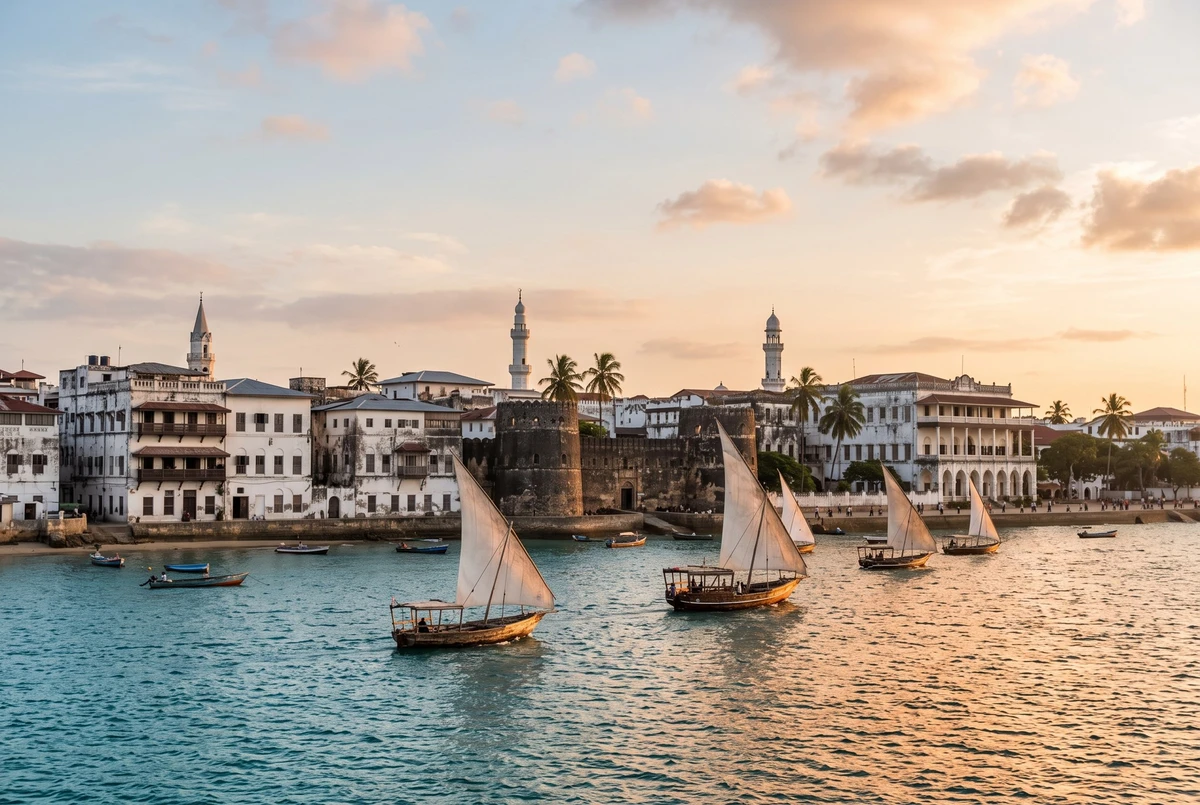
Step off the ferry or out of the airport road and Stone Town closes around you: coral-stone houses leaning over lanes barely wide enough for a handcart, carved wooden doors studded with brass, the smell of cloves and frying mandazi, and the call to prayer rolling from a dozen minarets across the rooftops. On the seafront, dhows with patched lattice sails glide past the old sultans' palaces, and by evening Forodhani Gardens fills with smoke and lamplight as grills of fresh seafood and sugar-cane presses set up for the night.
Nothing matches those filters yet. Widen your search or message us on WhatsApp.
Zanzibar Day Tours
View all Zanzibar Airport Transfers
View all




Zanzibar Flight Tickets
View all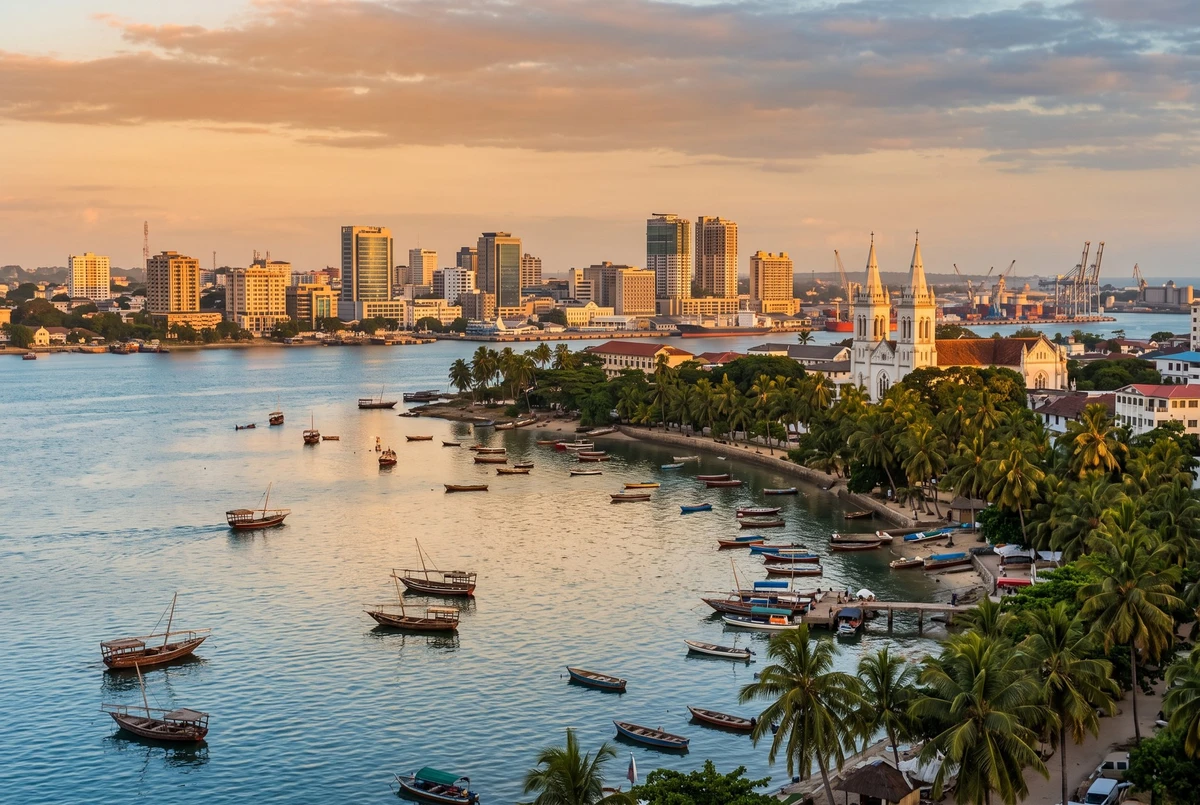

Zanzibar Ferry Tickets
View allZanzibar at first sight
Zanzibar is the island where Africa, Arabia, Persia and India met for a thousand years of trade in spices, ivory and sorrow. Its Stone Town is a UNESCO World Heritage Site, a living Swahili city of mosques, bazaars and courtyard houses. Beyond the town, the island unfolds into spice farms, mangrove creeks, a monkey forest and a ring of white beaches washed by the Indian Ocean.
Why include Zanzibar in your itinerary?
- A living Swahili heritage city. Stone Town is not a museum but a working town, where the Old Fort, the seafront palaces, the Anglican cathedral on the site of the old slave market and the Darajani bazaar sit among homes, mosques and Hindu temples that have shared the same lanes for generations.
- Spices, forests and sandbanks in one small island. Within an hour of town you can crush fresh cinnamon bark in a spice farm, meet giant tortoises on Prison Island, swim off the Nakupenda sandbank and watch red colobus monkeys in Jozani forest, all before a dhow sail at sunset.
- Warm, easy and welcoming. Zanzibar is relaxed, English is widely spoken alongside Swahili, halal food is everywhere, and the island's mix of Muslim culture, Indian Ocean beaches and short distances makes it one of the easiest places in East Africa to explore with family.
Signature experiences in Zanzibar
Stone Town, the Old Fort and the Bazaars
Begin at the Old Fort on the seafront, then lose yourself in the lanes behind it: the Old Dispensary with its carved balconies, the Hamamni Persian baths, the Palace Museum of the sultans and the Anglican cathedral built where the slave market once stood. Darajani market is the island's larder of fish, fruit and spices. Our guided day tours bring a local guide who reads the carved doors and the history in every street.
A Spice Farm Morning
Cloves made Zanzibar's fortune, and the farms inland of town still grow cloves, nutmeg, cardamom, vanilla, black pepper, turmeric and cinnamon in a shaded tangle that looks like wild forest until your guide starts pulling leaves and bark for you to smell. Climb a coconut palm with a farmer, try fruit you have never seen, and finish with a lunch of pilau cooked over charcoal. We include spice farms in many of our Stone Town day tours.
Prison Island and the Nakupenda Sandbank
A short boat ride from the Stone Town seafront, Changuu or Prison Island was built as a jail and used as a quarantine station, and today is best known for its colony of giant Aldabra tortoises and a quiet snorkelling reef. Continue to the Nakupenda sandbank, a crescent of pure white sand that appears at low tide, where our crew grills fresh fish and fruit while you swim in water the colour of turquoise glass.
Jozani Forest and the Kizimkazi Dolphins
Jozani Chwaka Bay National Park protects the island's last mahogany forest and its rarest inhabitant, the Zanzibar red colobus monkey, which lives nowhere else on earth and is surprisingly relaxed around quiet visitors. A boardwalk crosses the mangroves. From the fishing village of Kizimkazi in the south, boats go out early to look for bottlenose and humpback dolphins; sightings are frequent but never guaranteed, and our crews keep a respectful distance.
Dhow Sails and Safari Blue from Fumba
The classic full day at sea leaves Fumba village on the south-west coast on a traditional dhow for the Menai Bay conservation area: snorkelling over coral gardens, a swim in a mangrove lagoon, a seafood feast on a sandbank and often dolphins along the way. Closer to town, an evening dhow sail off Stone Town catches the sun going down behind the sails while the city lights come on. We book both as private or small-group trips.
Neighbourhoods and quarters to know in Zanzibar
Shangani and the Seafront
The western tip of Stone Town, where the old consulates and merchant houses face the sea, holds most of the town's boutique hotels in restored mansions with rooftop terraces. It is a few minutes on foot to Forodhani Gardens, the Old Fort and the ferry port, and the sunsets from the seafront are the best in town. Ideal for first-time visitors and couples.
The Inner Lanes around Darajani
Deeper in the old town, around the market, the mosques and the Hindu temple, the lanes are narrower, busier and more local, with small guesthouses in family houses. Staying here means waking to the sounds of the bazaar and buying breakfast from a street cart. It suits travellers who want atmosphere over comfort; cars cannot enter, so pack light.
Bububu and the Coast North of Town
Fifteen to twenty minutes north, the coast at Bububu and Mangapwani has quiet beaches, the ruins of the Mtoni and Maruhubi palaces and resort hotels set in gardens. It is a good compromise for families who want a pool and sea air while keeping Stone Town, the airport and the spice farms within easy reach.
Fumba and the South-West
The Fumba peninsula south of the airport looks over Menai Bay, where the dhow trips depart. The area is calm and residential, with a handful of resort hotels on a sheltered coast and spectacular sunsets over the bay. It is the quietest base near town, about twenty-five minutes from Stone Town and ten from the airport.
How long to stay in Zanzibar and how to pair it
Recommended stay
We recommend two or three nights in Stone Town before moving to a beach. One day for the old town and the Forodhani evening market, one for a spice farm with Prison Island and the Nakupenda sandbank, and a third for Jozani forest and the Kizimkazi dolphins or Safari Blue from Fumba. Most travellers then continue to Nungwi or Paje for four or five beach nights.
How to pair it
Stone Town pairs naturally with the beaches: Nungwi and Kendwa in the north, about an hour and a quarter by road, for swimming at every tide and Mnemba snorkelling, or Paje and Jambiani on the south-east coast, about an hour away, for kitesurfing and a slower village rhythm. From the island, a fast ferry of about two hours or a twenty-minute flight reaches Dar es Salaam, and a flight of about an hour and a quarter reaches Kilimanjaro for safaris from Arusha and the Kilimanjaro foothills at Moshi. A ten-day journey can combine a northern safari with a week in Zanzibar, and Kenya's Nairobi and Mombasa connect by air for a longer East African loop.
Best time to visit Zanzibar and the rhythm of the day
Best months
The best time to visit Zanzibar is from June to October, in the cool dry season, with sunny days, low humidity and a steady breeze, and again from mid-December to February, which is hotter but dry with calm seas. The long rains fall from March to May, when many hotels close, and short rains come in November. The sea is warm all year, and whale sharks are sometimes seen off the south coast between October and February.
The daily rhythm
Stone Town wakes early with the dawn prayer and the fish auction at the port. Mornings are for the lanes and museums while it is cool, or for a boat trip that leaves by nine. The afternoon heat empties the streets until around four, when shops reopen and families stroll the seafront. Sunset is the island's ceremony, watched from a rooftop or a dhow, and evenings end at the Forodhani Gardens food market or a quiet courtyard restaurant.
On-the-ground logistics in Zanzibar
Arrival
Abeid Amani Karume International Airport (ZNZ) lies just south of Stone Town, about fifteen minutes from the seafront hotels, about an hour to Paje and about an hour and a quarter to Nungwi. Fast ferries from Dar es Salaam arrive at the Malindi port in the heart of Stone Town after about two hours at sea, and flights from Dar take twenty minutes. We arrange private airport and port transfers, ferry tickets and domestic flights, and our driver meets you at arrivals or the ferry gate.
Getting around
Stone Town itself is only explored on foot, as its lanes are too narrow for cars, and the whole old town can be crossed in fifteen minutes. Taxis wait at the seafront and the port for trips outside town, and dala-dala minibuses run the main roads for the adventurous. For spice farms, Jozani, Kizimkazi and the beaches, a private car with driver arranged by our team is the most comfortable way to see the island.
Local etiquette tip
Zanzibar is a conservative Muslim island, and modest dress away from the beach is expected: shoulders and knees covered in town and villages, and swimwear only on the sand. Ask before photographing people, and remove shoes when entering a home or mosque. During Ramadan it is courteous not to eat, drink or smoke in public by day; many local cafés close until sunset and the town comes alive after the evening meal. Drinks of all kinds belong to hotel and restaurant terraces, not the street. A greeting of jambo or salaam opens every conversation.
Must-do things in Zanzibar
- Wander the carved-door lanes of Stone Town with a local guide
- Watch the sunset from the Old Fort seafront and Forodhani Gardens
- Eat grilled seafood and Zanzibar pizza at the Forodhani night market
- Crush fresh cloves and cinnamon on a spice farm
- Meet the giant tortoises of Prison Island
- Swim off the Nakupenda sandbank at low tide
- See the red colobus monkeys of Jozani forest
- Sail a traditional dhow into the sunset off Stone Town
- Spend a day on the Safari Blue dhow trip from Fumba
- Look for dolphins at dawn off Kizimkazi
Do’s and don’ts in Zanzibar
Do
- Do dress modestly in Stone Town and the villages
- Do carry small change for the market and boat crews
- Do start boat trips early for calm seas and soft light
- Do protect yourself from the sun and drink plenty of water
- Do learn a few words of Swahili; they are warmly received
Don’t
- Don't wear swimwear or go shirtless away from the beach
- Don't photograph people or mosques without asking first
- Don't touch coral or stand on the reef when snorkelling
- Don't eat or drink in the street by day during Ramadan
- Don't try to combine the whole island in a single day
Zanzibar at a glance
Plan Zanzibar with Haqqi Tours
Every option is confirmed by our team on WhatsApp before you pay, and delivered by our own people or by trusted local partners we work with in every city. Because we send travellers from all over the world, our partners give us special rates and priority, so you always receive the best. Prices are per person unless marked per vehicle.
About Haqqi Tours: About us Contact us Legal NoticePrivacy PolicyCookies & Marketing PreferencesTerms & ConditionsBooking, Payment & Refunds
More services in Zanzibar
Where we operate in Tanzania
Good to know
Frequently Asked Questions
Straight answers to what travellers ask most about Zanzibar.
Where should first-time visitors stay in Zanzibar?
First-time visitors usually spend two or three nights in Stone Town, ideally in Shangani near the seafront, then move to a beach: Nungwi or Kendwa in the north for swimming at any tide, or Paje and Jambiani in the south-east for a village atmosphere and kitesurfing. Our team can suggest hotels in each area and arrange your private transfers between them.
Can Stone Town be done as a day trip?
Yes, from any beach on the island Stone Town is a comfortable day trip, often combined with a spice farm or Prison Island. It is also possible as a long day from Dar es Salaam by ferry or flight. But the old town is at its best in the early morning and at sunset, so one or two nights make a real difference. We arrange transfers, tickets and guided day tours either way.
What is the dress code in Zanzibar?
Away from the beach, cover shoulders and knees; light cotton and linen are comfortable in the heat. Swimwear is for the sand and the pool only. Women may want a scarf for mosques or village visits. During Ramadan, be discreet about eating and drinking in public during daylight. Our guides explain local customs as you go, and nobody expects visitors to be perfect.
Is Zanzibar family friendly?
Very. Distances are short, the sea is warm and shallow in many places, the spice farms, tortoises, sandbanks and monkeys delight children, and halal food is easy to find everywhere. Hotels and crews are used to families from all over the world. We can plan a gentle itinerary with a pool, early boat trips and afternoons of rest.
Is Zanzibar safe?
Zanzibar is generally considered safe and welcoming for visitors. Use the usual care with valuables in the lanes of Stone Town at night, use licensed taxis and the boat crews we arrange, and follow your guide's advice in the water. Check your own government's travel advice before departure, and keep our WhatsApp line handy throughout your stay.
What are the must-do things in Zanzibar?
The must-do things are Stone Town with its carved doors and Forodhani market, a spice farm, Prison Island and the Nakupenda sandbank, Jozani forest for the red colobus, a dhow sail at sunset, the Safari Blue trip from Fumba and the dolphins of Kizimkazi, followed by beach days in Nungwi or Paje. Our guided day tours combine these in the best order.
How many days do you need in Zanzibar?
A week is ideal: two or three nights in Stone Town for the old town, spice farms, islands and forest, then four or five on a beach. Five days still covers Stone Town and one beach, while ten days allow both coasts, Mnemba snorkelling and a day at sea on a dhow, or a safari before the island.
What can I book in Zanzibar with Haqqi Tours?
Day tours, private airport transfers, flight tickets and ferry tickets, including Quad Bike Village Adventure, Zanzibar, Spice Farm Tour with Swahili Lunch, Zanzibar and Jozani Forest, Spice Farm and Stone Town Full-Day Tour. Each has its own page, and the WhatsApp desk combines any of them into one plan with one written price.
How do I get from the airport to my hotel in Zanzibar?
Zanzibar Airport, Abeid Amani Karume International (ZNZ), is on the west coast of Unguja island about 7 km south of Stone Town, 15 to 20 minutes by car; Nungwi and Kendwa at the northern tip are about 60 km and 1 hour 15 minutes, Kiwengwa and Matemwe on the north-east coast about 45 to 55 km, and Paje, Jambiani and Michamvi on the south-east coast about 50 to 60 km, roughly 1 hour to 1 hour 20 minutes. Our private transfer meets you at arrivals with a name board, tracks your flight and takes you door to door at a fixed price for the whole vehicle; the transfer pages list every route.
Is there public transport from the airport to Zanzibar?
There is no railway on Zanzibar; dala-dala minibuses connect the villages cheaply but slowly, taxis wait at the airport and the port, and the fast ferry to Dar es Salaam leaves from the Stone Town port several times a day. A private car is the simplest way to reach the beaches an hour away with luggage, to meet an early ferry or to combine a spice-farm stop with the drive to your hotel. With luggage, a family or a late flight, the private car is the simpler choice.
Which tours are available in Zanzibar?
Among them: Quad Bike Village Adventure, Zanzibar, Spice Farm Tour with Swahili Lunch, Zanzibar, Jozani Forest, Spice Farm and Stone Town Full-Day Tour, Private Jozani Forest, Spice Farm and Stone Town Tour and Spice Farm and Stone Town Tour, Zanzibar. Each page says whether the day is private or small-group, what it includes and how long it lasts.
Are the tours private or in a group?
Both exist, and each tour page says which. A private tour has a vehicle and guide for your party alone; the desk can make most group tours private on request.
How do I book?
Fill in the form on any page or message us on WhatsApp with the date, the number of travellers and the hotel. A member of our team confirms the price and the details in writing within minutes.
Are the prices fixed?
Yes - every price is agreed in writing on WhatsApp before you travel and does not change on the day.
Do the drivers and guides speak Arabic or English?
It depends on the city and the day, so we do not promise a particular language; tell us your preference and we do our best. The WhatsApp desk always works in Arabic and English.
Can I change or cancel a booking in Zanzibar?
Yes, in the same WhatsApp conversation. The terms depend on the product and on how close to the date the change comes; the desk states them before you pay.