
Slovenia
Haqqi Tours arranges day tours, private airport transfers, attraction tickets and multi-day packages across Slovenia, confirmed on WhatsApp before you pay.
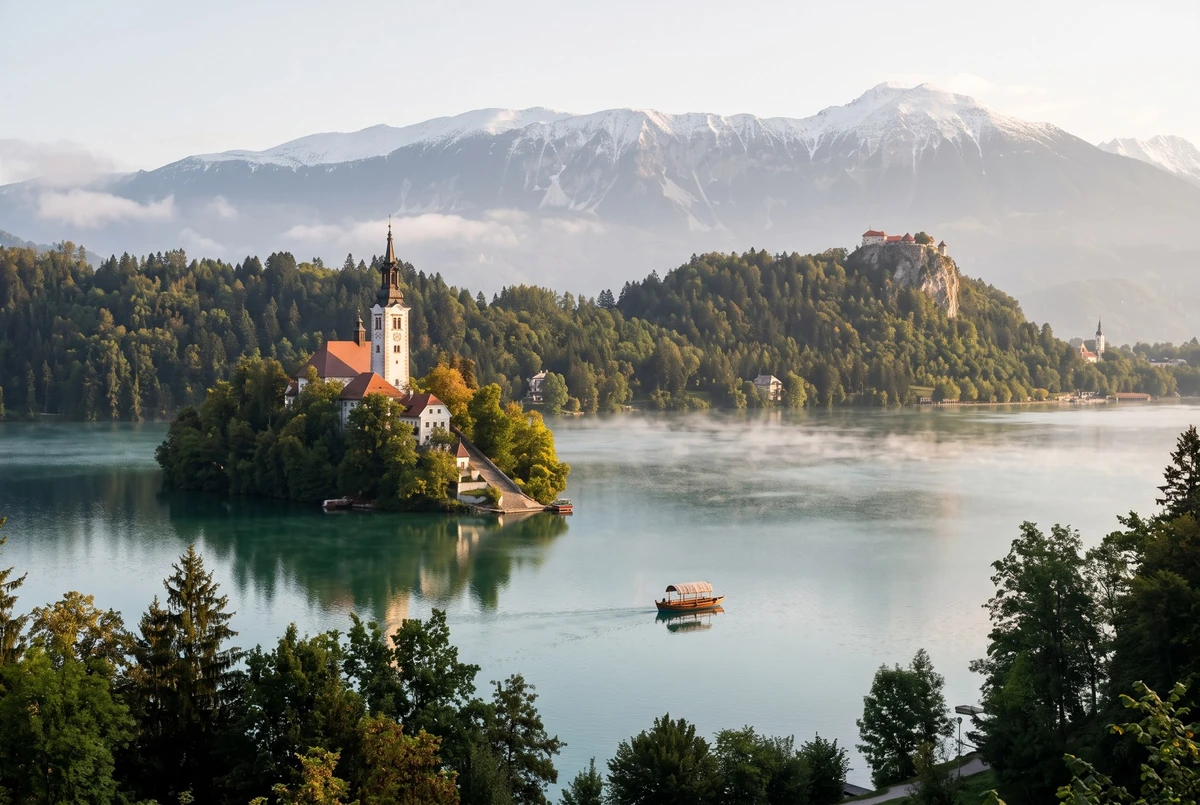
Dawn on Lake Bled: mist lifts off water the colour of bottle glass, a bell rings from the little church on the island at its centre, and the castle on its cliff catches the first light while the Julian Alps sharpen behind it. Before lunch you can be walking through the Karst, where the earth opens into the thundering underground canyon of Škocjan, and by evening you are eating grilled sea bream on the harbour at Piran, a Venetian-built town with its toes in the Adriatic.
Destinations
Choose a city to see everything we arrange there.
Services by city in Slovenia
Attraction Tickets
Airport Transfers
Flight Tickets
Train Tickets
The essence of Slovenia
Slovenia is small enough to cross in an afternoon, yet it holds Alpine peaks, a Mediterranean coast, rolling Pannonian plains and some of Europe’s most spectacular caves, all within easy reach of its gracious capital, Ljubljana. More than half the country is forest, its rivers run an improbable emerald green, and daily life moves at a calm, courteous pace. For travellers who want Europe’s great landscapes without the crowds of its famous capitals, Slovenia is the quiet, polished answer, and our team arranges it from the first transfer to the last day tour.
Why visit Slovenia?
Crossroads of Empires
Romans laid out Emona where Ljubljana now stands, and their walls still trace the old town’s edge. Centuries of Habsburg rule left baroque churches and pastel mansions, while the coast wears the lion of Venice above its harbour gates. Ptuj, the oldest town in the country, keeps a castle above the Drava, and Predjama Castle is wedged into the mouth of a cave. In the capital, architect Jože Plečnik reshaped bridges, markets and riverbanks into a civic masterpiece.
Alps, Karst and a Sliver of Sea
Few countries pack so much geography into so little space. The Julian Alps and Triglav National Park rise in the northwest, cut by the turquoise Soča River and the boardwalked Vintgar Gorge. Southwest lies the Karst, a limestone plateau riddled with caves, including Postojna and the UNESCO-listed Škocjan. Then comes a short, lovely stretch of Adriatic coast, while the east softens into hills, thermal springs and the glacial Logar Valley.
Kitchens of Four Regions
Slovenian food borrows from Alpine, Italian, Austrian and Hungarian neighbours and makes the result its own. Try štruklji dumplings filled with cottage cheese, buckwheat žganci, fresh Soča trout, and potica, the rolled walnut cake served at every family feast. At Bled, the vanilla cream kremšnita is a ritual. Beekeeping is a national pride, with painted hive panels and remarkable honey, and the salt pans of Sečovlje still harvest sea salt by hand.
Experiences Found Only Here
Glide across Lake Bled in a wooden pletna boat and ring the wishing bell on the island church. Ride the little electric train deep into Postojna Cave, then stand above the roaring Reka River in Škocjan’s underground canyon. Walk among the shingle-roofed herdsmen’s huts of Velika Planina, raft the milky-blue Soča, and watch the sun set over Piran’s Tartini Square, all in a single week.
Who is Slovenia for?
Ideal for
- Nature lovers and keen walkers
- Couples seeking a calm, romantic escape
- Families wanting safe, easy road trips
- First-time visitors to Central Europe
- Photographers chasing lakes and mountain light
- Travellers adding a quiet extension to Italy, Austria or Croatia
Pace & travel style
- Slow and scenic, with short drives between highlights
- One central base with easy day tours
- Active mornings outdoors, relaxed café afternoons
- Ideal for a five- to seven-day stay
When to visit Slovenia
Peak season · June–August
Long, warm days bring Slovenia fully to life: Lake Bled is warm enough for swimming, alpine trails and mountain huts are open, and Piran’s waterfront hums until late. This is also when Bled, Postojna and the Soča Valley are busiest and hotels fill early, so we recommend securing rooms, day tours and cave tickets well ahead and starting excursions early.
Shoulder season · April–May and September–October
Smart travellers love these months. Spring brings rushing waterfalls, wildflowers and fresh green valleys, while autumn turns the forests copper and gold around Bled and Bohinj. Temperatures are comfortable for walking, the coast is still mild, and the big sights feel far more relaxed. Hotels are easier to secure and the light is beautiful for photography.
Low season · November–March
Winter is cold, and some mountain roads and huts close, but Slovenia becomes intimate and atmospheric. Ljubljana glows with festive lights and markets in December, Bled’s castle stands above a misty or snow-dusted lake, and the caves keep a steady temperature all year. Ski slopes such as Kranjska Gora and Vogel open, and thermal spas offer warm, peaceful retreats.
The regions of Slovenia and how to combine its cities
Slovenia divides into a handful of distinct regions that sit remarkably close together. In the northwest, Upper Carniola and the Julian Alps hold Bled, Bohinj, Kranjska Gora and Triglav National Park, a world of glacial lakes, gorges and timber villages. Running west along the Italian border, the Soča Valley around Bovec and Kobarid is the country’s adventure playground, with rafting, canyoning and moving First World War history.
To the southwest, the Karst and the coastal strip feel Mediterranean: stone villages, cypress trees, the caves of Postojna and Škocjan, and the Venetian harbours of Piran, Izola and Koper. The east is gentler and more rural. Styria and Prekmurje bring rolling farmland, spa towns and the historic river towns of Maribor and Ptuj, while Dolenjska in the southeast is a land of monasteries, castles and quiet rivers.
At the heart of everything sits Ljubljana, and that is where we base our Slovenia programmes. From the capital, our guided day tours reach Lake Bled, the Postojna caves, Predjama Castle and the coast at Piran, so you unpack once and see the whole country. Arrive with our private airport transfer, explore the city on foot, then pair Ljubljana with flight or train tickets we issue onward to Vienna, Venice or Zagreb for a seamless multi-country journey.
Before you go: practical tips for Slovenia
Entry & visas
Slovenia is a member of the European Union and the Schengen area, so a single Schengen visa, where your nationality needs one, also covers neighbouring Italy, Austria and Croatia. Many passport holders can enter visa-free for short stays, and Europe’s new electronic entry systems are being introduced. Requirements depend on your passport, so always check the official government portal or the relevant embassy before booking.
Money, cards & tipping
Slovenia uses the euro, and cards are accepted almost everywhere in Ljubljana, Bled and the coast, including contactless payment. Carry a little cash for village bakeries, mountain huts, market stalls and small parking machines. Tipping is appreciated rather than expected: rounding up or leaving around ten percent for good restaurant service is generous. Prices are fixed in shops, so bargaining is not part of local culture.
Etiquette & dress code
Slovenians are reserved, polite and proud of their tidy, green country. Greet shopkeepers with a simple “dober dan”, keep voices moderate on public transport, and never leave litter on trails. In churches, dress modestly with shoulders covered and stay quiet during services. Ask before photographing people closely, and respect signs in caves, where photography is often restricted to protect the formations.
Getting around
Distances are short, so domestic flights are not needed. Trains link Ljubljana with Bled’s nearby stations, Maribor and Koper, and buses fill most gaps, though rural timetables can be thin. Driving is easy, but parking at Bled and Postojna is tight in summer. Our private chauffeured transfers and car-with-driver days are the most comfortable option, especially for families and for combining several sights in one day.
Must-do things in Slovenia
- Row out to Bled Island in a traditional pletna boat and ring the wishing bell
- Ride the underground train through the vast chambers of Postojna Cave
- Stand on the bridge above the Reka River inside the Škocjan Caves
- Explore Predjama Castle, built dramatically into the mouth of a cliff-face cave
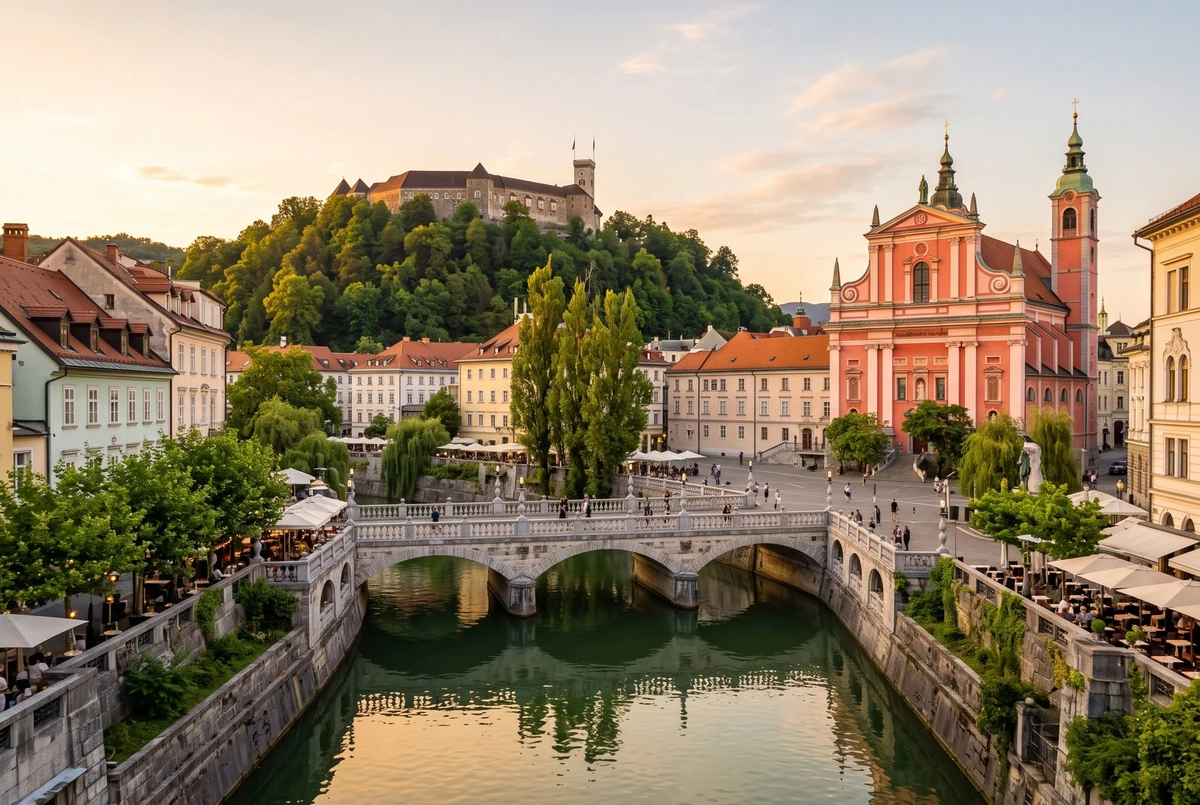
- Wander Ljubljana’s Triple Bridge, riverside cafés and the open-air Central Market
- Walk the wooden boardwalks of Vintgar Gorge above rushing turquoise water
- Watch sunset over the Adriatic from Tartini Square in Venetian-built Piran
- See the emerald Soča River and the alpine villages of Bovec and Kobarid
- Taste a slice of cream kremšnita on a terrace overlooking Lake Bled
- Hike to the herdsmen’s huts of Velika Planina on a clear summer day
Do’s and don’ts in Slovenia
Do
- Book Bled and Postojna for early morning to enjoy them before the crowds
- Pack layers and a light rain jacket, even in summer, for the Alps and caves
- Greet people with “dober dan” and a smile; small courtesies are noticed
- Use Ljubljana as your base and explore the country through day tours
- Try local honey, buckwheat dishes and fresh river trout
Don’t
- Don’t leave litter or stray from marked paths in national parks
- Don’t expect to fly between Slovenian cities; road and rail are the way
- Don’t photograph inside caves where signs prohibit it
- Don’t underestimate mountain weather; storms can build quickly in the afternoon
- Don’t try to see Bled, Postojna and Piran in a single rushed day
Slovenia at a glance
Plan Slovenia with Haqqi Tours
Every option is confirmed by our team on WhatsApp before you pay, and delivered by our own people or by trusted local partners we work with in every city. Because we send travellers from all over the world, our partners give us special rates and priority, so you always receive the best. Prices are per person unless marked per vehicle.
About Haqqi Tours: About us Contact us Legal NoticePrivacy PolicyCookies & Marketing PreferencesTerms & ConditionsBooking, Payment & Refunds
Good to know
Frequently Asked Questions
Straight answers to what travellers ask most about Slovenia.
Is it safe to visit Slovenia?
Yes. Slovenia is widely regarded as one of Europe’s safest and most peaceful countries, with low crime, clean public spaces and helpful locals. Use ordinary city precautions in busy spots, follow mountain safety advice, and check your own government’s official travel advice before departure. Keep our WhatsApp line handy during your trip for any support you need.
How many days do I need for a first trip to Slovenia?
Five to seven days is ideal for a first trip to Slovenia. Spend two or three days in Ljubljana, then use it as a base for day tours to Lake Bled, the Postojna caves and Predjama Castle, and the coast at Piran. With ten days you can add the Soča Valley and a slower alpine stay.
What is the best way to travel between Slovenia’s major cities?
Slovenia is compact, so travel is by road or rail rather than by air. Trains connect Ljubljana with Maribor and the coast, and buses reach most towns. For comfort and flexibility, our team arranges private chauffeured transfers and car-with-driver days, letting you combine Bled, Postojna and Piran without worrying about timetables or parking.
Can a trip to Slovenia be tailored for luxury or private travel?
Absolutely. We can tailor a private Slovenia itinerary with boutique lakeside hotels, private airport transfers, a dedicated driver and guided day tours timed around your family’s pace. Our team can also add early-access cave visits, quiet scenic stops and onward flight or train tickets, all confirmed with you on WhatsApp before anything is paid.
Is Slovenia tourist friendly?
Very. Slovenia is clean, well organised and easy to navigate, with clear signage, reliable transport and excellent tourist information. English is widely spoken, especially by younger people and in hotels, restaurants and attractions. Locals are courteous and helpful, and the compact size means even first-time visitors to Europe find Slovenia relaxed and straightforward.
Is it safe to travel to Slovenia now?
Slovenia remains a calm and stable destination that welcomes travellers throughout the year. Conditions anywhere can change, so we always recommend checking your own government’s official travel advice shortly before departure and reviewing mountain or weather alerts if hiking. Our team stays reachable on WhatsApp throughout your stay for updates and assistance.
What is the best time to visit Slovenia?
The best time to visit Slovenia is from May to September, when lakes are warm, alpine trails are open and days are long. For fewer crowds and beautiful colours, choose late spring or September and October. December brings festive markets in Ljubljana, while winter suits skiing, thermal spas and quiet, misty lake scenes.
What is Slovenia famous for?
Slovenia is famous for Lake Bled with its island church and clifftop castle, the vast Postojna and Škocjan caves, the emerald Soča River and the Julian Alps. It is also known for charming Ljubljana, the Venetian coastal town of Piran, Predjama Castle, beekeeping traditions and its reputation as one of Europe’s greenest countries.
Which cities in Slovenia does Haqqi Tours cover?
Ljubljana, Bled and Bovec. Each city has its own page with everything available there, and a trip across several cities is planned in one WhatsApp conversation.
What can I book in Slovenia?
Day tours, attraction tickets, private airport transfers, flight tickets and train tickets - all run or confirmed by Haqqi Tours, each with a fixed price agreed on WhatsApp before you pay.
How do I book a tour or transfer in Slovenia?
Fill in the form on the page you are interested in, or message us on WhatsApp with the date, the number of travellers and your hotel. A member of our team confirms the price and the details in writing within minutes.
Are the prices fixed?
Yes. Every price is agreed in writing on WhatsApp before you travel and does not change on the day - not for traffic, not for a late flight, not for the hour.
Do you arrange transfers between cities in Slovenia?
Yes. Intercity transfers by private car or van are booked the same way as airport transfers; tell the desk the two hotels and the date and it quotes a fixed price for the whole vehicle.
Can you plan a full itinerary across Slovenia?
Yes - tell the desk your dates, the cities you want and who is travelling, and it proposes a day-by-day plan with the tours, transfers and tickets priced in writing. You adjust it in the same chat before confirming.
Are your tours private or in a group?
Both exist, and the page of each tour says which. Private tours have a car and guide for your party alone; small-group tours share a guide with a few other travellers. The desk can convert most group tours into a private day on request.
Do the drivers and guides speak Arabic?
It depends on the country, the city and the day, so we do not promise a particular language for the driver or guide. Tell us your preference and we do our best; the WhatsApp desk itself always works in Arabic and English.