

Armenia
Haqqi Tours arranges day tours, private airport transfers, attraction tickets and multi-day packages across Armenia, confirmed on WhatsApp before you pay.
At dawn in Yerevan, the pink volcanic tuff of the city turns the colour of apricot flesh, and across the plain the twin peaks of Mount Ararat float above the haze like a painted backdrop. A baker pulls a sheet of lavash from a clay oven and tears it warm for you; the aroma of grilled herbs and strong coffee drifts from a courtyard. Somewhere in the distance, a duduk plays a slow, aching melody.
Destinations
Choose a city to see everything we arrange there.
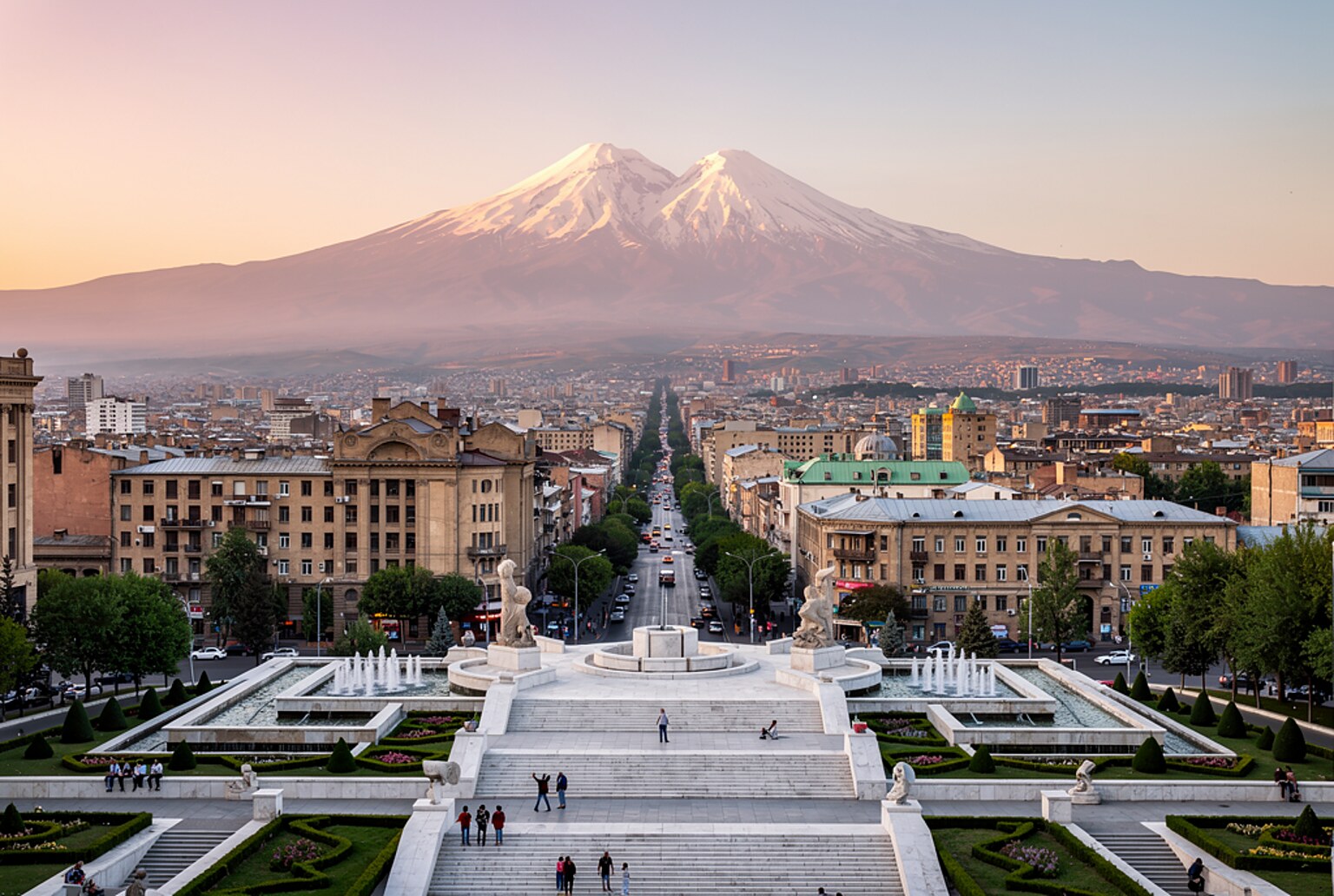
The essence of Armenia
Armenia is a compact, mountainous country with one of the oldest Christian traditions on earth. Medieval monasteries stand on cliff edges and quiet plateaus, a high-altitude lake glitters like a blue plate between the ranges, and the table is always laid for one more guest. Haqqi Tours and our trusted local partners shape it into easy journeys, with private transfers, guided day tours and a team on WhatsApp who know the roads. Even a short stay feels full, because every road ends at something worth stopping for.
Why visit Armenia?
Monasteries and Stone Crosses
Armenia adopted Christianity as a state religion in the early fourth century, and its landscape is full of the evidence: Geghard carved into a cliff, Khor Virap facing Ararat, Noravank glowing red in its gorge and the cathedral complex of Echmiadzin. Intricate khachkars, the carved cross-stones, mark villages and hillsides. The Hellenistic temple of Garni, older still, reminds you that layers of civilisation rest here.
Highlands, Lakes and Gorges
Armenia is landlocked and volcanic, with high plateaus and big skies. Lake Sevan shimmers among the mountains, Dilijan’s forests are cool and green, and the Debed canyon carries ancient monasteries on its slopes. In the south, the Syunik mountains lead to Tatev Monastery, reached by the Wings of Tatev, one of the longest reversible aerial tramways in the world, over a dramatic gorge.
Lavash, Khorovats and Mountain Hospitality
Armenian cooking is generous and aromatic: lavash flatbread, recognised by UNESCO, khorovats grilled over open flame, tolma wrapped in vine leaves, fresh cheeses, herbs, pomegranates and sun-sweet apricots, a fruit with an Armenian reputation. Meals are shared, toasts are warm and a guest is never left hungry. Strong coffee, honeyed gata pastry and the soft sound of the duduk complete the day.
Experiences Found Nowhere Else
Watch dawn light the double cone of Ararat from the walls of Khor Virap, hear voices rise in the echoing stone of a medieval chapel, and ride the cable car above the Vorotan gorge to Tatev. Browse the Saturday and Sunday crafts at Yerevan’s Vernissage, walk through the Cascade’s gardens and spend a lakeside afternoon at Sevanavank, a monastery on a former island.
Who is Armenia for?
Ideal for
- History and archaeology lovers drawn to ancient churches and temples
- Culture travellers who value living traditions and music
- Photographers chasing mountains, monasteries and dramatic gorges
- Food lovers exploring Caucasus cooking and fresh produce
- Couples and friends wanting an authentic, less-trodden destination
- Families and groups who enjoy easy day trips from a single base
Pace & travel style
- Relaxed city days in Yerevan with culture and good food
- Full-day excursions to monasteries and mountain scenery
- Private chauffeured circuits with flexible stops
- Slow lakeside stays at Sevan or Dilijan
- Combined itineraries across the Caucasus region
When to visit Armenia
Peak season · June–August
Long, sunny days make this a natural time for lakes, high roads and mountain villages. Yerevan can be very hot, so we plan sightseeing early and keep afternoons for shade and cool cafés. Higher altitude destinations such as Sevan and Dilijan offer a pleasant escape, while popular sites are busier and rates for hotels and transport are firmer.
Shoulder season · April–May and September–October
Many travellers consider these the best months. Spring brings apricot blossom and green hillsides, and autumn adds golden forests, harvest markets and clear mountain light. Temperatures are comfortable for walking around monasteries, and the roads are less crowded. Weather can be changeable in the highlands, so pack layers and keep plans flexible.
Low season · November–March
Winters are cold and snowy in the highlands, but Yerevan stays lively, with warm restaurants, museums and theatres. Snow-capped Ararat and frosted monasteries look dramatic, and ski areas such as Tsaghkadzor open. Some mountain roads and lake-side attractions may be limited, so we adjust routes and use private vehicles equipped for the season.
The regions of Armenia and how to combine its cities
Armenia’s geography is dense and varied. Yerevan sits on the Ararat Valley, the country’s warm agricultural heartland, with Echmiadzin, Zvartnots, Khor Virap and the rock-cut Geghard monastery all within a short drive. Just east, the Garni gorge and its Hellenistic temple make an easy half-day from the capital, and the lake and forests of Sevan and Dilijan lie in the cool north-east.
The north holds Lori and Tavush, with the Debed canyon and its UNESCO-listed monasteries of Haghpat and Sanahin, while Gyumri, the second city, keeps its black-tuff streets and a storied artistic temperament. The south opens to Vayots Dzor, home to Noravank and wide canyon scenery, and then to Syunik, a land of mountain passes, caves and the monastery of Tatev, set above a deep gorge.
Our city directory below begins with Yerevan, the capital we cover and the natural base for exploring. From Yerevan, our guided day tours reach the monasteries and mountains in comfortable stages, while our private airport transfers, flight tickets and train tickets keep your arrival and onward travel simple, with a team and trusted local partners helping at every step.
Before you go: practical tips for Armenia
Entry & visas
Many nationalities can enter Armenia without a visa for short stays, and others can apply for an electronic visa online before travel. Rules depend on your passport and can change, so check the official Armenian government portal or your nearest embassy before booking. Bring a passport valid for your entire stay, and keep digital copies of your travel documents on your phone.
Money, cards & tipping
The Armenian dram is the local currency. Cards are widely accepted in Yerevan’s hotels, restaurants and shops, but carry cash for villages, markets and small cafés; ATMs are easy to find in cities. Tipping of around ten percent is appreciated in restaurants, and a small amount for drivers and guides. Gentle bargaining is normal at the Vernissage market, but not in shops.
Etiquette & dress code
Armenians are warm hosts, and accepting hospitality is a compliment. Dress modestly in churches and monasteries, covering shoulders and knees, and some women choose to carry a light scarf. Speak quietly inside, and ask before photographing services or people. Never refuse a toast or a plate outright; a small taste is polite. Respect khachkars and memorial sites with quiet attention.
Getting around
Distances are short but roads are mountainous, so journeys take longer than the map suggests. Yerevan has a metro and minibuses, but a private car with driver arranged by our team is the easiest way to reach monasteries and lakes. We provide private transfers from Zvartnots Airport, guided day tours with local partners, and we issue train tickets and flight tickets when needed.
Must-do things in Armenia
- See sunrise over Mount Ararat from the monastery of Khor Virap.
- Explore Geghard’s rock-cut chapels and listen to the echoes inside.
- Visit the Hellenistic temple of Garni above its basalt gorge.
- Wander Yerevan’s Republic Square, the Cascade and the lively Vernissage market.
- Browse ancient manuscripts at the Matenadaran museum in Yerevan.
- Spend an afternoon on the shore of Lake Sevan at Sevanavank.
- Ride the Wings of Tatev cable car to Tatev Monastery.
- Visit Noravank’s red-cliff monastery in the Vayots Dzor canyon.
- Taste fresh lavash, khorovats and tolma at a family restaurant.
- Explore Echmiadzin Cathedral, the spiritual heart of the Armenian Church.
Do’s and don’ts in Armenia
Do
- Dress modestly for churches and monasteries, with shoulders and knees covered.
- Accept hospitality warmly and try each dish you are offered.
- Carry cash for villages, markets and small cafés outside Yerevan.
- Start long excursions early to enjoy quieter sites and cooler weather.
- Keep a light jacket for mountain monasteries, even in summer.
Don’t
- Don’t photograph religious services or people without asking first.
- Don’t climb on khachkars, ruins or monastery walls.
- Don’t plan long mountain drives without allowing time for winding roads.
- Don’t discuss sensitive regional politics casually with new acquaintances.
- Don’t drink tap water in rural areas without checking locally first.
Armenia at a glance
Plan Armenia with Haqqi Tours
Every option is confirmed by our team on WhatsApp before you pay, and delivered by our own people or by trusted local partners we work with in every city. Because we send travellers from all over the world, our partners give us special rates and priority, so you always receive the best. Prices are per person unless marked per vehicle.
Where we operate in Armenia
Good to know
Frequently Asked Questions
Straight answers to what travellers ask most about Armenia.
Is it safe to visit Armenia?
Armenia is welcoming, and visitors generally move easily through Yerevan and the main sights. As anywhere, take ordinary precautions and respect local advice, especially near border areas, which our team plans around. Check your government’s official travel advice before departure, and keep our WhatsApp line handy during your trip.
How many days do I need for a first trip to Armenia?
Five to seven days is a satisfying first visit: two days in Yerevan, a day for Garni and Geghard, a day for Khor Virap and Noravank, and a day for Lake Sevan and Dilijan. Add two days for Tatev and Syunik, or for the north and its monasteries.
What is the best way to travel between Armenia’s major cities and sights?
A private car with driver is the most comfortable choice, since distances are short but mountain roads are winding. Minibuses and a limited train network exist, but they do not reach many monasteries. Our team arranges private transfers, guided day tours and train tickets where services run.
Can a trip to Armenia be tailored for luxury or private travel?
Yes. We can design private itineraries with a car and driver, handpicked stays in Yerevan and the mountains, and guided access to monasteries with a knowledgeable local guide. Working with trusted local partners, we pace each day around your interests, comfort and the rhythm of the seasons.
Is Armenia tourist friendly?
Yes. Visitors find Armenians welcoming and curious, English is increasingly common in Yerevan’s hotels, restaurants and attractions, and signage in the capital is easy to follow. In villages, a few Armenian words and a smile go far, and our team can arrange guides and transfers to simplify any journey.
Is it safe to travel to Armenia now?
Conditions can change, so we never assume the present picture. Please check the official travel advice of your own government before you fly, particularly regarding border regions. Our team on WhatsApp can adapt your plans quickly if anything shifts, and we recommend flexible bookings and sound travel insurance.
What is the best time to visit Armenia?
April, May, September and October are widely loved for mild weather, blossom or autumn colour and comfortable sightseeing. June to August is sunny and good for Sevan, though Yerevan can be hot. Winter is cold and snowy in the highlands but suits culture and ski-minded travellers.
What is Armenia famous for?
Armenia is famous for being one of the oldest Christian nations, for medieval monasteries such as Geghard, Noravank and Tatev, for views of Mount Ararat, and for lavash bread, apricots and khorovats. It is also known for its ancient manuscripts, carved khachkars, the haunting sound of the duduk and the generous hospitality of its people.
Which cities in Armenia does Haqqi Tours cover?
Yerevan. Each city has its own page with everything available there, and a trip across several cities is planned in one WhatsApp conversation.
What can I book in Armenia?
Day tours, private airport transfers, flight tickets and train tickets - all run or confirmed by Haqqi Tours, each with a fixed price agreed on WhatsApp before you pay.
How do I book a tour or transfer in Armenia?
Fill in the form on the page you are interested in, or message us on WhatsApp with the date, the number of travellers and your hotel. A member of our team confirms the price and the details in writing within minutes.
Are the prices fixed?
Yes. Every price is agreed in writing on WhatsApp before you travel and does not change on the day - not for traffic, not for a late flight, not for the hour.
Do you arrange transfers between cities in Armenia?
Yes. Intercity transfers by private car or van are booked the same way as airport transfers; tell the desk the two hotels and the date and it quotes a fixed price for the whole vehicle.
Can you plan a full itinerary across Armenia?
Yes - tell the desk your dates, the cities you want and who is travelling, and it proposes a day-by-day plan with the tours, transfers and tickets priced in writing. You adjust it in the same chat before confirming.
Are your tours private or in a group?
Both exist, and the page of each tour says which. Private tours have a car and guide for your party alone; small-group tours share a guide with a few other travellers. The desk can convert most group tours into a private day on request.
Do the drivers and guides speak Arabic?
It depends on the country, the city and the day, so we do not promise a particular language for the driver or guide. Tell us your preference and we do our best; the WhatsApp desk itself always works in Arabic and English.