
Kyrgyzstan
Haqqi Tours arranges day tours, private airport transfers, attraction tickets and multi-day packages across Kyrgyzstan, confirmed on WhatsApp before you pay.
In Ala Archa the morning begins with the sound of the river. Cold water tumbles over granite boulders beneath slopes of juniper, the trees that give the gorge its name, and above the forest the snow peaks of the Kyrgyz Ala-Too range catch the first light barely an hour's drive from the capital. Shepherds lead horses along the valley floor, marmots whistle from the meadows, and the air smells of resin and wild thyme, a first taste of a country where mountains cover almost the entire map.
Destinations
Choose a city to see everything we arrange there.
Services by city in Kyrgyzstan
Tours
The essence of Kyrgyzstan
Down in the Chuy valley, the brick minaret of Burana rises from the fields where the Silk Road city of Balasagun once stood, ringed by carved stone grave figures left by Turkic nomads. Further east the road threads through red sandstone canyons to Issyk-Kul, the great blue lake that never freezes, held between ranges of the Tian Shan. Kyrgyzstan is unique because the nomadic world of yurts, horses and open hospitality is still part of everyday life beneath some of the highest mountains in Asia. We arrange the journey with city walks, mountain and lake day trips and private airport transfers, delivered with calm, attentive service.
Why visit Kyrgyzstan?
Nomads, the Silk Road and a Young Republic
For many centuries the valleys of today's Kyrgyzstan lay on branches of the Silk Road, where caravans carried silk, spices and ideas between China, Central Asia and Persia, and cities such as Balasagun flourished under the Karakhanid rulers, who embraced Islam in the tenth century. Kyrgyz herders lived by the seasons, moving with yurts and flocks to summer pastures, and kept their history alive through the long oral epic of Manas. After the Russian and Soviet eras, Kyrgyzstan became independent in 1991.
Mountains, Lakes and High Pastures
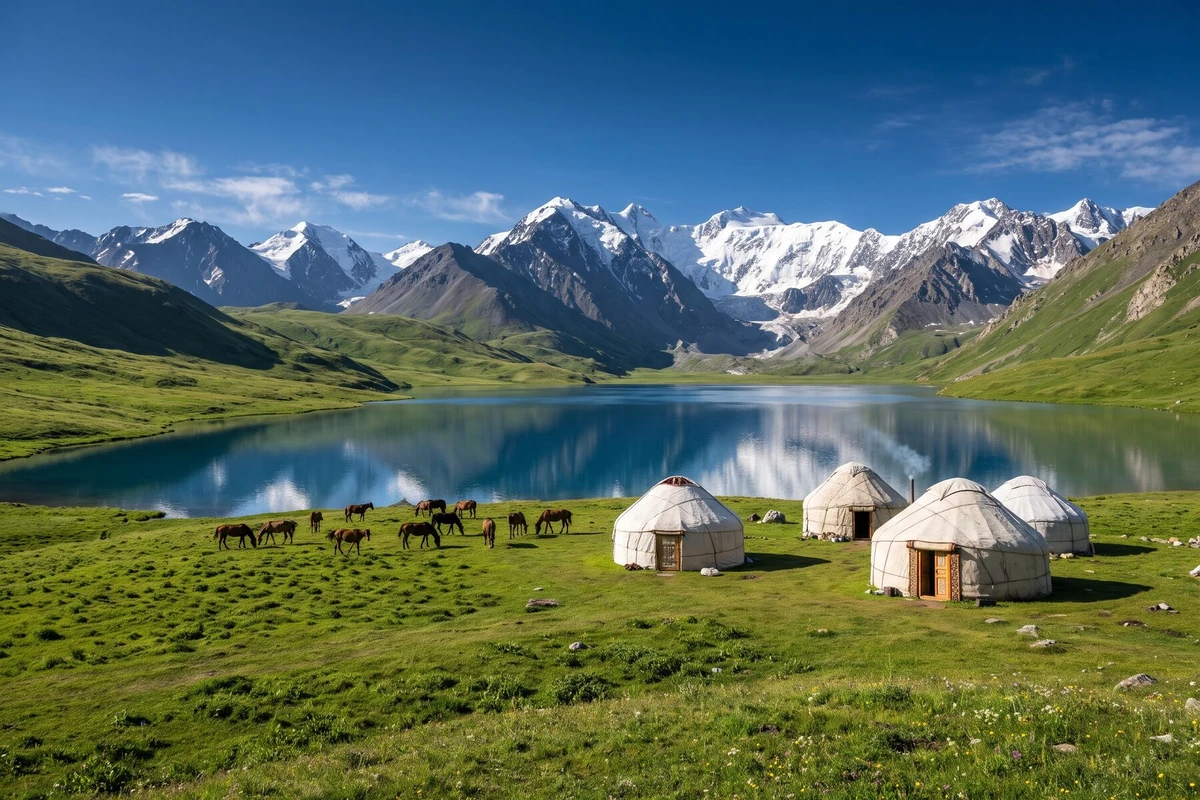
The Tian Shan and Pamir-Alay ranges cover most of the country, with peaks rising above seven thousand metres along the Chinese border and glaciers feeding fast, clear rivers. Issyk-Kul, lying at about 1,600 metres, is one of the largest mountain lakes in the world, and its slightly salty water never freezes. Higher still, alpine lakes such as Song-Kol sit among summer pastures, known as jailoo, where families graze horses and sheep, while walnut forests at Arslanbob and red rock canyons add to the variety.
Beshbarmak, Plov and Bread from the Tandoor
Kyrgyz cooking is hearty and generous, shaped by long winters and nomadic life. Beshbarmak, the national dish, combines boiled lamb or beef with flat noodles and an onion broth, while plov from the south is rice slow-cooked with carrots and meat. Hand-pulled lagman noodles, steamed manty dumplings and samsa pastries baked in a clay tandoor are found everywhere, alongside round flat bread, fried boorsok, local honey and bowls of green or black tea. As a Muslim-majority country, halal food is the norm and easy to find.
Experiences You Can Only Have Here
Walk the juniper valley of Ala Archa beneath glaciers and snow peaks, then climb the narrow stair inside the Burana Tower for a view over the Chuy valley and its stone grave figures. Explore the red cliffs and narrow passages of the Konorchek canyons, stand on the shore of Issyk-Kul as the light changes on the mountains, sleep in a yurt on a high summer pasture, and drink tea in Osh Bazaar among sacks of dried apricots, walnuts and spices.
Who is Kyrgyzstan for?
Ideal for
- Hikers and mountain lovers
- Travellers curious about nomadic culture
- History lovers following the Silk Road
- Photographers chasing big landscapes
- Active families with older children
- Food lovers exploring Central Asian cooking
Pace & travel style
- Base yourself in Bishkek and take day trips
- Start mountain walks early, before afternoon clouds
- Two or three nights in Bishkek, two by Issyk-Kul
- Allow full days for the long mountain roads
When to visit Kyrgyzstan
Peak season · June–September
Summer is the great season for Kyrgyzstan, with warm days in Bishkek, open mountain passes and green high pastures where families set up yurts and herd horses. The beaches of Issyk-Kul are busiest in July and August, when the water is at its warmest, and the trails of Ala Archa are clear of snow. Festivals of nomadic games and crafts take place in some summers, so reserve guides, drivers and yurt stays well ahead for the busiest weeks.
Shoulder season · May, October
May brings blossom in the Chuy valley, rushing rivers and green foothills, though snow still lingers on the higher trails and passes. October paints the poplars and birches gold, with crisp, clear days ideal for the Burana Tower, the canyons and walks in the lower valley of Ala Archa. Both months are quieter, with comfortable temperatures in the city and cold nights in the mountains, so pack warm layers and keep plans flexible around the weather.
Low season · November–April
Winter is cold and often snowy, with Bishkek wrapped in frost and the mountains turned white. Ala Archa becomes a quiet winter landscape for short walks, while ski slopes operate near Karakol and in the hills close to the capital. Some high passes and yurt camps close, and the air in the city can be hazy on still days. Nowruz on 21 March brings spring celebrations, special dishes and family gatherings across the country.
The regions of Kyrgyzstan and how to combine its cities
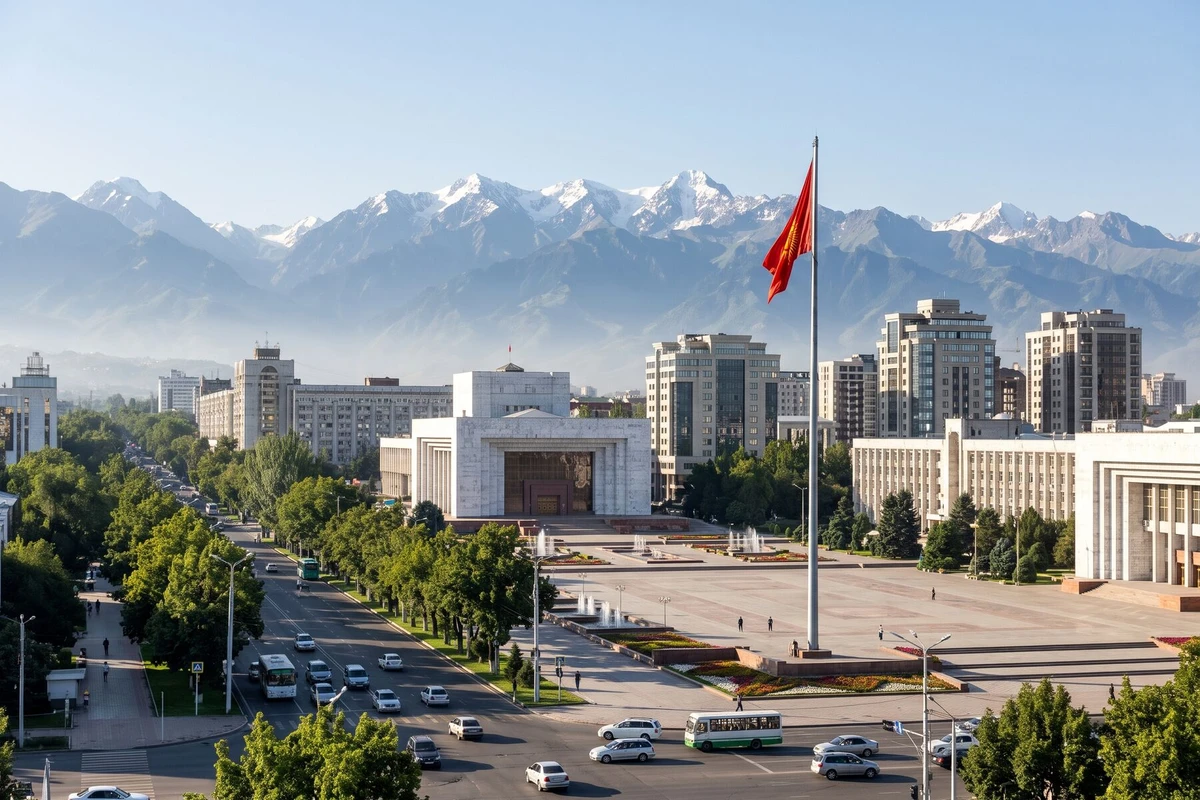
Kyrgyzstan is a landlocked mountain country in Central Asia, bordered by Kazakhstan to the north, China to the east and south-east, Tajikistan to the south and Uzbekistan to the west. In the north, the capital Bishkek spreads across the fertile Chuy valley at the foot of the Kyrgyz Ala-Too range, with Ala Archa National Park just to the south and the Burana Tower near the town of Tokmok to the east.
East of the capital, Issyk-Kul fills a long basin between the Kungey and Terskey ranges, with beaches and petroglyphs at Cholpon-Ata on the north shore, and the town of Karakol, the Jeti-Oguz red rocks and alpine valleys at its eastern end. The central highlands around Naryn hold Song-Kol and the stone caravanserai of Tash Rabat, while the south, centred on Osh and the edge of the Fergana valley, combines ancient bazaars, the sacred mountain of Sulaiman-Too and the walnut forests of Arslanbob.
Our city directory below is anchored in Bishkek, the natural base for a first visit and the gateway to the mountains. From the capital we arrange guided city walks, half-day trips to Ala Archa and full-day journeys to Burana, the canyons and Issyk-Kul, while our private drivers handle transfers from Bishkek airport (FRU). Kyrgyzstan also pairs naturally with Almaty in Kazakhstan, about four hours away by road, or with the Silk Road cities of Uzbekistan.
Before you go: practical tips for Kyrgyzstan
Entry & visas
Citizens of many countries, including the United Kingdom, European Union nations and the United States, can visit Kyrgyzstan without a visa for short stays, often up to sixty days, while many other nationalities can apply for an electronic visa online before travel. Rules change from time to time, and some areas close to the borders require a separate permit. A passport valid for at least six months is expected, so check the current rules with official Kyrgyz sources before you travel.
Money, cards & tipping
The Kyrgyz som is the local currency, and cash remains important, especially in bazaars, small cafés, shared taxis and rural areas. Cards are accepted in larger hotels, supermarkets and many restaurants in Bishkek, and cash machines are common in the capital and main towns but scarce in the mountains. Exchange offices are easy to find in Bishkek, so carry small notes for day trips. Tipping is not obligatory, but rounding up or leaving a little extra for guides and drivers is appreciated.
Etiquette & dress code
Kyrgyz people are warm and hospitable, and guests are often offered tea, bread and sweets. Greet elders first, accept tea with your right hand, and remove your shoes when entering a yurt, a mosque or a family's house. Bread is treated with great respect, so never place it upside down or throw it away. Dress modestly in villages and at religious sites, with women covering their hair inside mosques, and always ask before photographing people, especially in rural areas.
Getting around
Distances look short on the map, but roads wind slowly through the mountains, so the drive from Bishkek to the shores of Issyk-Kul takes three to four hours. Shared minibuses known as marshrutkas link towns and city districts but are often crowded, and taxis booked by app are common in Bishkek. Domestic flights connect the capital with Osh, and passenger trains are limited. For airport arrivals, mountain day trips and longer journeys, our private transfers with experienced drivers are the most comfortable choice.
Must-do things in Kyrgyzstan
- Watch the changing of the guard on Ala-Too Square
- Wander Osh Bazaar among dried fruit, spices and felt
- Walk the juniper valley of Ala Archa National Park
- Climb the narrow stair inside the Burana Tower
- See the carved stone grave figures beside Burana
- Explore the red cliffs of the Konorchek canyons
- Stroll the shores of Issyk-Kul beneath snow peaks
- Spend a night in a yurt on a summer pasture
- Taste beshbarmak, plov, manty and fresh tandoor bread
- See the ancient petroglyphs at Cholpon-Ata
Do’s and don’ts in Kyrgyzstan
Do
- Carry Kyrgyz som in small notes outside Bishkek
- Pack warm layers even for summer mountain trips
- Accept tea and bread when they are offered
- Wear sturdy shoes for rocky mountain trails
- Drink bottled or boiled water
Don’t
- Don't place bread upside down or waste it
- Don't enter a yurt or a house with your shoes on
- Don't photograph people without asking first
- Don't underestimate driving times on mountain roads
- Don't enter border zones without the required permit
Kyrgyzstan at a glance
Plan Kyrgyzstan with Haqqi Tours
Every option is confirmed by our team on WhatsApp before you pay, and delivered by our own people or by trusted local partners we work with in every city. Because we send travellers from all over the world, our partners give us special rates and priority, so you always receive the best. Prices are per person unless marked per vehicle.
About Haqqi Tours: About us Contact us Legal NoticePrivacy PolicyCookies & Marketing PreferencesTerms & ConditionsBooking, Payment & Refunds
Where we operate in Kyrgyzstan
Good to know
Frequently Asked Questions
Straight answers to what travellers ask most about Kyrgyzstan.
Is it safe to visit Kyrgyzstan?
Kyrgyzstan welcomes more travellers every year, and Bishkek, Ala Archa and the shores of Issyk-Kul are relaxed, popular places to visit. As anywhere, take sensible precautions: watch your belongings in crowded bazaars and on minibuses, use app taxis and licensed guides, and take care on mountain roads and trails. Check your own government's official travel advice before departure, and keep our WhatsApp line handy for help with tours and transfers.
How many days do I need in Kyrgyzstan?
Five to seven days work well for a first visit: two or three nights in Bishkek for the city, Ala Archa and the Burana Tower, then two or three nights by Issyk-Kul or in Karakol for the lake, the canyons and the mountain valleys. With ten days or more you can add the high lake of Song-Kol, the caravanserai of Tash Rabat or a flight south to Osh.
What is the Burana Tower?
The Burana Tower is a brick minaret from the eleventh century, standing near Tokmok about an hour and a half east of Bishkek on the site of Balasagun, a Silk Road city of the Karakhanid era. Earthquakes reduced its original height, but you can still climb a steep, narrow stair inside to the top. Around it lie carved stone grave figures called balbals, a small museum and the outlines of the old city walls.
Can a trip to Kyrgyzstan be tailored for luxury or private travel?
Absolutely. Bishkek has comfortable international and boutique hotels, Issyk-Kul offers lakeside resorts and quiet guesthouses, and yurt camps in the mountains range from simple to well equipped. We can tailor private guides, chauffeured airport transfers, comfortable vehicles for mountain roads and a relaxed family pace, then confirm every detail with you on WhatsApp before anything is paid.
What is the best time to visit Kyrgyzstan?
June to September is the best time to visit Kyrgyzstan, with warm days, open mountain roads, green pastures with yurt camps and the warmest water on Issyk-Kul in July and August. May and October are pleasant and quieter, with blossom or golden autumn colours, while November to April is cold and snowy, suited to short winter walks and skiing.
What is Kyrgyzstan famous for?
Kyrgyzstan is famous for the Tian Shan mountains and the great lake of Issyk-Kul, for nomadic traditions of yurts, horses and felt carpets, and for the oral epic of Manas, one of the longest epic poems in the world. It is also known for Silk Road sites such as the Burana Tower and Tash Rabat, the sacred mountain of Sulaiman-Too in Osh, eagle hunting, horseback games and the generous hospitality of its people.
Is halal food available in Kyrgyzstan?
Yes. Kyrgyzstan is a Muslim-majority country, and halal food is the norm in Bishkek and across the country, from family cafés serving lagman and plov to bakeries selling samsa straight from the tandoor. Mosques are easy to find, including the large Central Mosque in Bishkek. Some international restaurants and supermarkets also sell pork products, so ask if you are unsure; our team can advise.
How do I get to Bishkek from the airport?
Bishkek airport (FRU) lies about 25 kilometres north-west of the city centre, around 30 to 40 minutes by road depending on traffic. Taxis wait outside the terminal, but many international flights arrive late at night or very early in the morning, so a pre-arranged car is easiest. We arrange a private transfer with a driver waiting at arrivals to take you directly to your hotel.
Which cities in Kyrgyzstan does Haqqi Tours cover?
Bishkek. Each city has its own page with everything available there, and a trip across several cities is planned in one WhatsApp conversation.
What can I book in Kyrgyzstan?
Day tours - all run or confirmed by Haqqi Tours, each with a fixed price agreed on WhatsApp before you pay.
How do I book a tour or transfer in Kyrgyzstan?
Fill in the form on the page you are interested in, or message us on WhatsApp with the date, the number of travellers and your hotel. A member of our team confirms the price and the details in writing within minutes.
Are the prices fixed?
Yes. Every price is agreed in writing on WhatsApp before you travel and does not change on the day - not for traffic, not for a late flight, not for the hour.
Do you arrange transfers between cities in Kyrgyzstan?
Yes. Intercity transfers by private car or van are booked the same way as airport transfers; tell the desk the two hotels and the date and it quotes a fixed price for the whole vehicle.
Can you plan a full itinerary across Kyrgyzstan?
Yes - tell the desk your dates, the cities you want and who is travelling, and it proposes a day-by-day plan with the tours, transfers and tickets priced in writing. You adjust it in the same chat before confirming.
Are your tours private or in a group?
Both exist, and the page of each tour says which. Private tours have a car and guide for your party alone; small-group tours share a guide with a few other travellers. The desk can convert most group tours into a private day on request.
Do the drivers and guides speak Arabic?
It depends on the country, the city and the day, so we do not promise a particular language for the driver or guide. Tell us your preference and we do our best; the WhatsApp desk itself always works in Arabic and English.