
Kuwait
Haqqi Tours arranges day tours, private airport transfers, attraction tickets and multi-day packages across Kuwait, confirmed on WhatsApp before you pay.
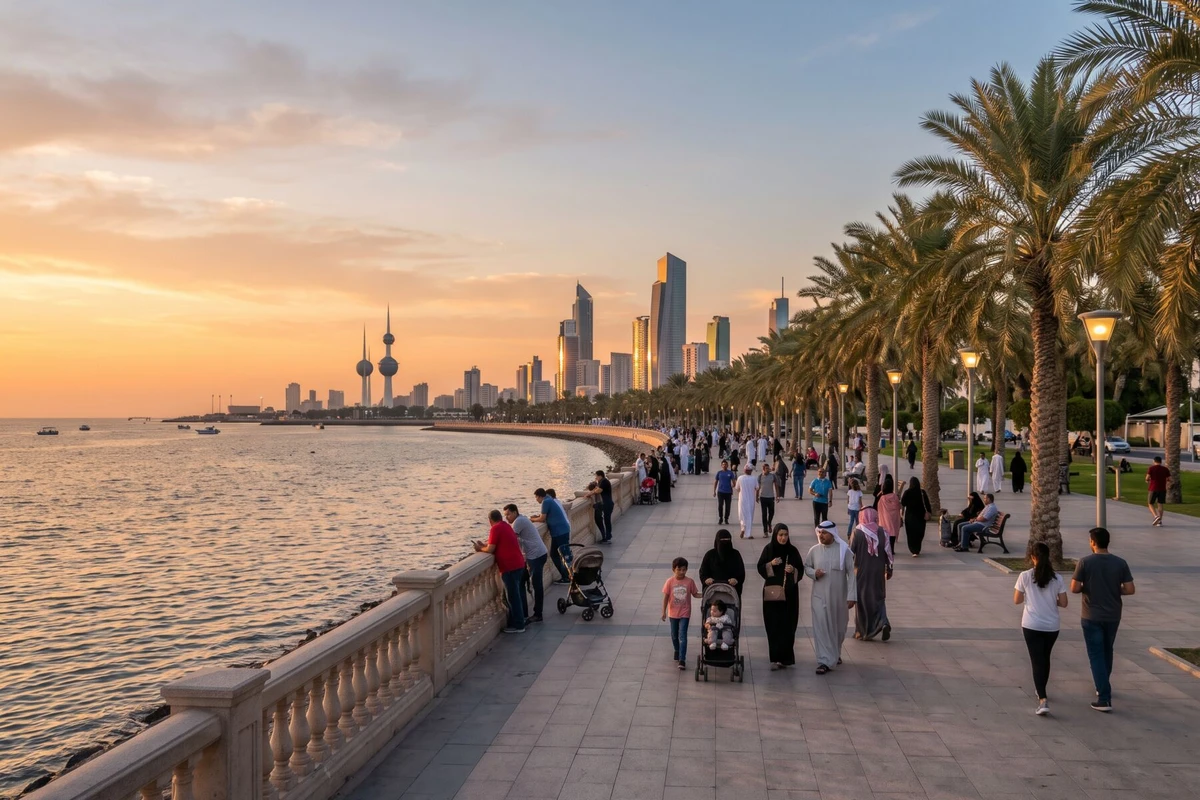
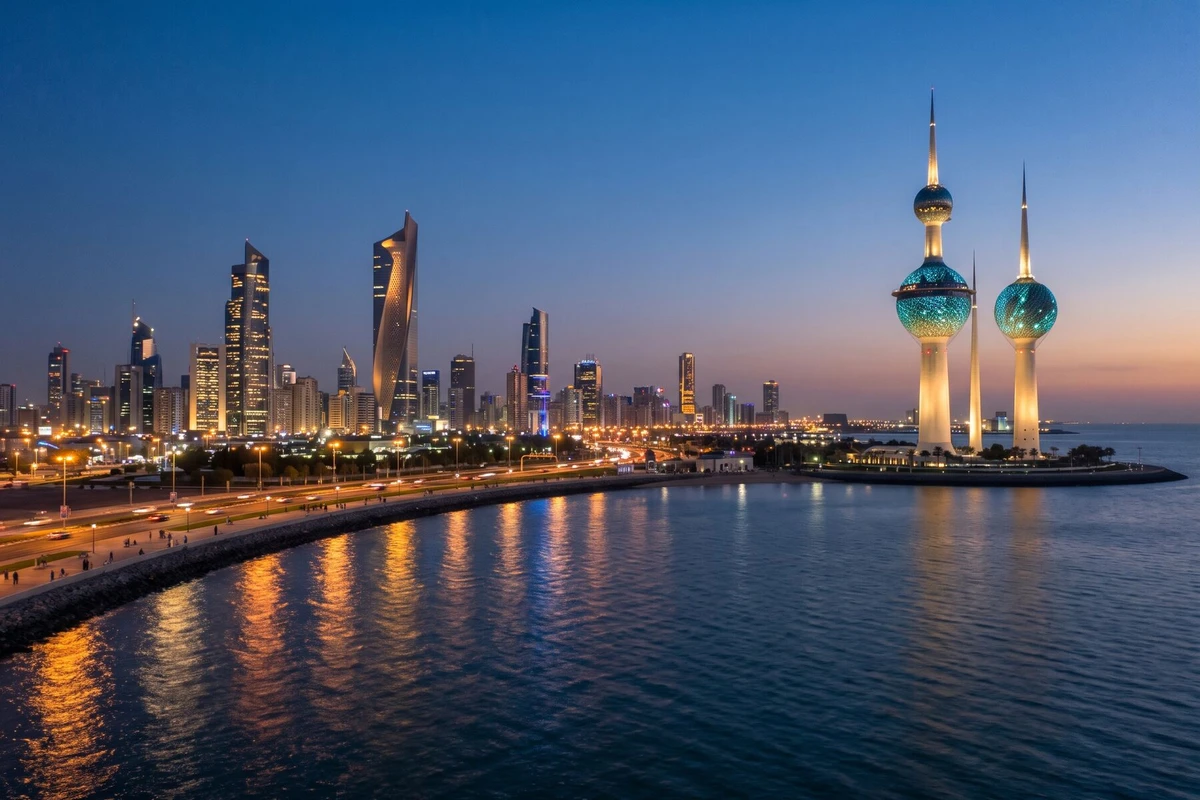
In Kuwait City the day often begins by the sea. Early walkers follow the long seafront corniche as the sun rises over the water, fishing boats head out from the harbour near Souq Sharq, and the blue and green spheres of the Kuwait Towers catch the first light above the shore. A little inland, the lanes of Souq Al Mubarakiya open their shutters to the scent of cardamom, saffron and fresh dates, and the call to prayer drifts over a skyline where glass towers rise beside old mosques and coral-stone walls.
Destinations
Choose a city to see everything we arrange there.
Services by city in Kuwait
Tours
The essence of Kuwait
Beyond the city the land opens into desert. A short drive west, the road climbs the low escarpment of Mutla Ridge, sandy plains stretch to the horizon and, in the cooler months, camps appear across the open land for quiet nights under the stars. Kuwait is unique because a seafaring past, a modern capital and the silence of the desert lie within an hour of each other in one compact country. We arrange the journey with private city and desert tours led by licensed guides and private airport transfers, delivered with calm, attentive service.
Why visit Kuwait?
Pearl Divers, Dhow Traders and a Modern State
Kuwait grew in the eighteenth century as a small walled port where settlers from the interior of Arabia made their living from the sea. Pearl divers worked the offshore banks each summer, and wooden dhows carried dates, spices, timber and cloth between Basra, India and East Africa. The discovery of oil in 1938 transformed the town into a modern capital, and Kuwait became fully independent in 1961. The invasion of 1990 and the liberation of 1991 are remembered with quiet dignity in the country's museums and memorials.
Desert, Bay and Islands
Most of Kuwait is flat or gently rolling desert, broken by the escarpment of Mutla Ridge north of Jahra and by low dunes and gravel plains to the west. The shallow waters of Kuwait Bay curve along the northern side of the capital, with mudflats and marshes that draw migrating birds in spring and autumn, and offshore lie islands such as Failaka, with Bronze Age remains and a Hellenistic fort. The Sabah Al Ahmad Nature Reserve protects desert plants, gazelles and seasonal wildflowers.
Machboos, Fresh Fish and Cardamom Tea
Kuwaiti cooking is generous and fragrant. Machboos, spiced rice with chicken, lamb or fish, is the heart of family meals, often served with a tangy tomato sauce called daqqus, while mutabbaq samak pairs fried pomfret with saffron rice. Harees and jireesh are slow-cooked wheat dishes loved during Ramadan, and sweets include luqaimat dumplings with date syrup and saffron-scented cakes. Halal food is the norm across the country, and strong tea with cardamom or milk accompanies almost every conversation.
Experiences You Can Only Have Here
Ride up to the viewing sphere of the Kuwait Towers for a sweeping view over the sea and the city, step into the vast prayer hall of the Grand Mosque with its carved teak, marble and golden calligraphy, and wander the lanes of Souq Al Mubarakiya for dates, spices and traditional sweets. Then leave the towers behind for the open desert, where the light turns gold before sunset, camels graze near the road and the silence of the sand feels a world away from the capital.
Who is Kuwait for?
Ideal for
- Culture lovers on a first visit to Arabia
- Travellers on a short stopover
- Families seeking an easy, orderly city break
- Photographers drawn to modern architecture
- Desert lovers looking for open, quiet spaces
- Food lovers keen on traditional cooking
Pace & travel style
- Two or three days cover the capital and the desert
- Sightsee in the morning and late afternoon
- Rest indoors during the midday heat
- Plan around Friday prayers and Ramadan hours
When to visit Kuwait
Peak season · November–March
The cooler months bring Kuwait its most pleasant weather, with warm, sunny days, cool evenings and clear skies that are ideal for walking the seafront, browsing the souqs and heading out into the desert. This is the traditional camping season, when tents and camps appear across the open land, and rain falls only now and then. National Day and Liberation Day on 25 and 26 February fill the city with flags and celebrations, so reserve tours and transfers well ahead.
Shoulder season · October, April
October and April are transition months, with hot afternoons but more comfortable mornings and evenings. They suit travellers who want quieter sights, easy availability and long sunny days, as long as outdoor time is planned for the early morning or late afternoon. Dust storms can blow in from the desert, especially in spring, so keep plans flexible and carry sunglasses and a light scarf for the face.
Low season · May–September
Summer in Kuwait is extremely hot, with afternoon temperatures among the highest on earth and strong sunshine from early morning. Outdoor sightseeing is best kept to the hours after sunrise and after sunset, while museums, cultural centres and air-conditioned malls fill the middle of the day. Desert outings are shorter and carefully timed, and hotels are quieter. When Ramadan falls in these months, daytime life slows and the city wakes after sunset.
The regions of Kuwait and how to combine its cities
Kuwait lies on the north-eastern edge of the Arabian Peninsula, bordered by Iraq to the north and west and by Saudi Arabia to the south, with a coastline facing the sea to the east. Almost all of its people live in and around Kuwait City, which wraps around the southern shore of Kuwait Bay and spreads south along the coast through districts such as Salmiya, Messila, Fintas and Mahboula.
West and north of the capital, the land opens into desert. Jahra, with its historic Red Fort, sits at the western end of the bay below Mutla Ridge, while the Sabah Al Ahmad Nature Reserve stretches along the quiet northern shore. To the south, the coast runs to the resort area of Al Khiran near the Saudi border, and offshore Failaka Island is reached by ferry from Ras Salmiya for its archaeological sites and calm beaches.
Our city directory below is anchored in Kuwait City, the natural base for any visit. From the capital we arrange private half-day tours with licensed guides that combine the Kuwait Towers, the Grand Mosque, the souqs and a drive into the desert, while our private drivers handle transfers from Kuwait International Airport (KWI). Kuwait is compact, so a short stay covers the highlights, and it pairs easily with a wider journey through the Middle East.
Before you go: practical tips for Kuwait
Entry & visas
Visa rules for Kuwait depend on your nationality. Citizens of a number of countries, including the United Kingdom, the United States and many European nations, can usually obtain an electronic visa online or a visa on arrival, while other nationalities must arrange a visa in advance through official channels. A passport valid for at least six months is expected, and the rules change from time to time, so check the current requirements with official Kuwaiti sources before you travel.
Money, cards & tipping
The currency is the Kuwaiti dinar, divided into fils. Cards are accepted almost everywhere in hotels, malls, restaurants and most shops, and cash machines are easy to find, though a little cash is useful for small purchases in the souqs and at tea stalls. Tipping is not obligatory, but rounding up for taxi drivers and leaving a small tip for guides, drivers and good restaurant service is appreciated.
Etiquette & dress code
Kuwaitis are hospitable, courteous and proud of their traditions, and a greeting of as-salamu alaykum is always welcome. Dress modestly in public, with shoulders and knees covered, and women visiting the Grand Mosque are given an abaya and headscarf at the entrance. Ask before photographing people, especially women, and avoid photographing official buildings. During Ramadan, do not eat, drink or smoke in public in daylight. The weekend falls on Friday and Saturday.
Getting around
Kuwait has no metro or passenger railway, so most people travel by car. Taxis and ride-hailing apps are widely available and buses connect the main districts, though routes can be slow for visitors. Distances are short: the airport lies about twenty to thirty minutes south of the centre, and the desert edge is under an hour away. For airport arrivals, city sightseeing and desert drives, our private transfers with a driver are the most comfortable choice.
Must-do things in Kuwait
- Ride up to the viewing sphere of the Kuwait Towers
- Join a guided visit to the Grand Mosque
- Wander the lanes of Souq Al Mubarakiya
- Discover Bedouin weaving at Sadu House
- Walk the seafront corniche at sunset
- Explore the Kuwait National Museum
- Stroll through the gardens of Al Shaheed Park
- Drive into the desert to Mutla Ridge at golden hour
- Take the ferry to Failaka Island
- Taste machboos, mutabbaq samak and luqaimat
Do’s and don’ts in Kuwait
Do
- Dress modestly in public and at mosques
- Plan outdoor visits for mornings and evenings
- Carry water and sun protection at all times
- Check mosque visiting hours before you go
- Respect Ramadan daytime customs in public
Don’t
- Don't photograph people without asking first
- Don't photograph official or military sites
- Don't head into the desert without a guide
- Don't plan long walks in the summer midday heat
- Don't show affection openly in public places
Kuwait at a glance
Plan Kuwait with Haqqi Tours
Every option is confirmed by our team on WhatsApp before you pay, and delivered by our own people or by trusted local partners we work with in every city. Because we send travellers from all over the world, our partners give us special rates and priority, so you always receive the best. Prices are per person unless marked per vehicle.
About Haqqi Tours: About us Contact us Legal NoticePrivacy PolicyCookies & Marketing PreferencesTerms & ConditionsBooking, Payment & Refunds
Where we operate in Kuwait
Good to know
Frequently Asked Questions
Straight answers to what travellers ask most about Kuwait.
Is it safe to visit Kuwait?
Kuwait is generally considered a safe and orderly country for visitors, with low street crime and a calm atmosphere in the capital. As anywhere, take sensible care with belongings, respect local laws and customs, and travel into the desert only with experienced guides and drivers. Check your own government's official travel advice before departure, and keep our WhatsApp line handy for help with tours and transfers.
How many days do I need in Kuwait?
Two to three days work well for a first visit: one day for the Kuwait Towers, the Grand Mosque, the souqs and the seafront, and a second for the museums, Al Shaheed Park and a drive into the desert. With a third or fourth day you can add the ferry to Failaka Island or a slow day by the coast. Kuwait also works well as a stopover of one full day.
What is Souq Al Mubarakiya?
Souq Al Mubarakiya is the oldest market in Kuwait City, a network of covered and open lanes in the old centre where traders have sold goods for well over a century. Today it is a lively place to browse dates, honey, spices, perfumes, incense, textiles and traditional dress, and to eat simple grilled dishes in small courtyard restaurants. It is at its most atmospheric in the evening.
Can a trip to Kuwait be tailored for luxury or private travel?
Absolutely. Kuwait City offers elegant seafront hotels, refined dining and spacious resorts on the southern coast. We can tailor private tours with licensed guides, comfortable chauffeured cars for the city and the desert, a relaxed family pace and private airport transfers, then confirm every detail with you on WhatsApp before anything is paid.
What is the best time to visit Kuwait?
The best time to visit Kuwait is from November to March, when days are warm and sunny and evenings are cool, ideal for sightseeing and desert trips. October and April are hot in the afternoons but still pleasant early and late, while May to September brings intense heat that limits outdoor time to the early morning and the evening.
What is Kuwait famous for?
Kuwait is famous for the Kuwait Towers, the national symbol on the seafront, and for its maritime heritage of pearl diving and dhow trading. It is also known for the Grand Mosque, Souq Al Mubarakiya, Sadu weaving, warm hospitality and traditional dishes such as machboos, as well as the quiet open desert that begins just beyond the capital.
Is halal food available in Kuwait?
Yes. Halal food is the norm in Kuwait, and restaurants, hotels, food courts and supermarkets across the country serve halal meat as standard. Alongside Kuwaiti dishes you will find cooking from across the Middle East, South Asia and beyond, as well as plenty of fresh fish, vegetarian dishes and dates, so dining is easy for every traveller.
How do I get to Kuwait City from the airport?
Kuwait International Airport (KWI) lies about fifteen kilometres south of the city centre, roughly twenty to thirty minutes by road depending on traffic, and the hotels of Salmiya are a similar distance away. Taxis wait outside arrivals, but we arrange a private transfer with a driver waiting at arrivals to take you directly to your hotel.
Which cities in Kuwait does Haqqi Tours cover?
Kuwait City. Each city has its own page with everything available there, and a trip across several cities is planned in one WhatsApp conversation.
What can I book in Kuwait?
Day tours - all run or confirmed by Haqqi Tours, each with a fixed price agreed on WhatsApp before you pay.
How do I book a tour or transfer in Kuwait?
Fill in the form on the page you are interested in, or message us on WhatsApp with the date, the number of travellers and your hotel. A member of our team confirms the price and the details in writing within minutes.
Are the prices fixed?
Yes. Every price is agreed in writing on WhatsApp before you travel and does not change on the day - not for traffic, not for a late flight, not for the hour.
Do you arrange transfers between cities in Kuwait?
Yes. Intercity transfers by private car or van are booked the same way as airport transfers; tell the desk the two hotels and the date and it quotes a fixed price for the whole vehicle.
Can you plan a full itinerary across Kuwait?
Yes - tell the desk your dates, the cities you want and who is travelling, and it proposes a day-by-day plan with the tours, transfers and tickets priced in writing. You adjust it in the same chat before confirming.
Are your tours private or in a group?
Both exist, and the page of each tour says which. Private tours have a car and guide for your party alone; small-group tours share a guide with a few other travellers. The desk can convert most group tours into a private day on request.
Do the drivers and guides speak Arabic?
It depends on the country, the city and the day, so we do not promise a particular language for the driver or guide. Tell us your preference and we do our best; the WhatsApp desk itself always works in Arabic and English.