
Kuwait City
Plan Kuwait City with Haqqi Tours: day tours, private airport transfers, attraction tickets and packages, run by our own team and confirmed on WhatsApp in Arabic or English.
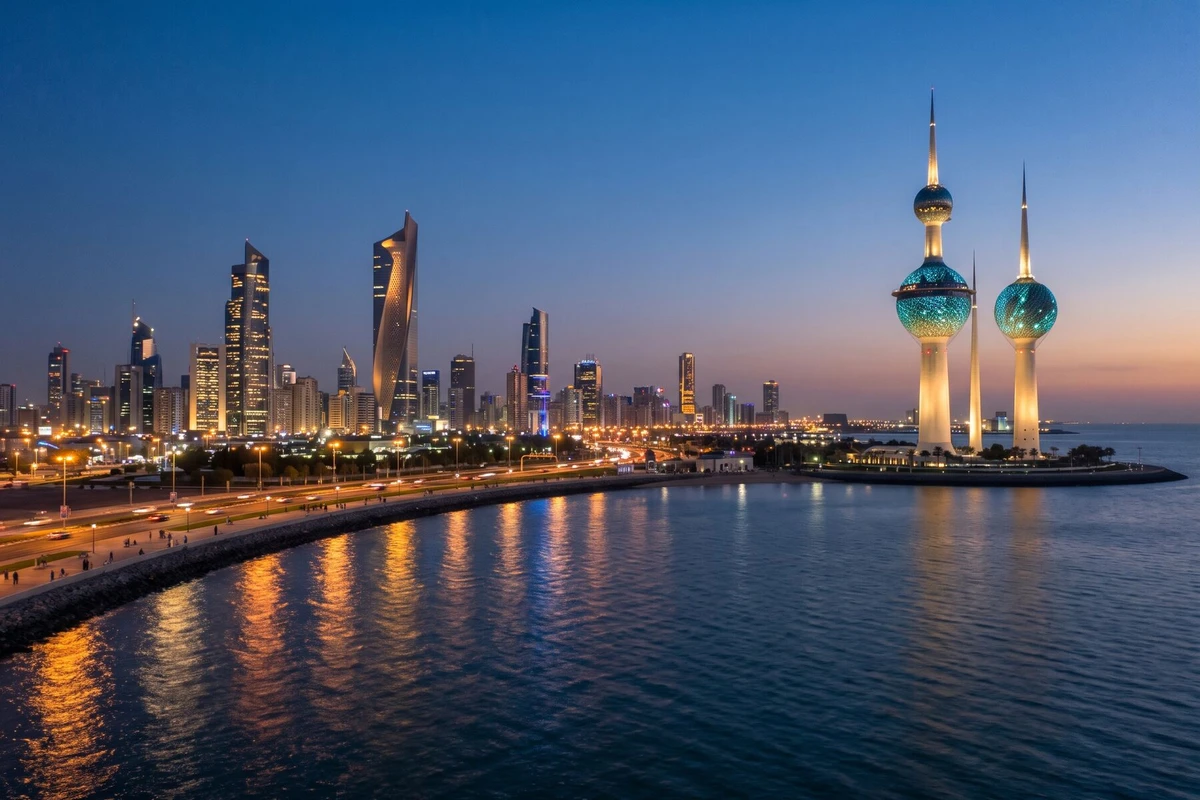
At first light on the seafront of Kuwait City the water is pale and calm, joggers pass along the corniche and the slender spires of the Kuwait Towers rise above the shore, their spheres scaled with blue and green discs that shimmer as the sun climbs. Fishing boats return to the harbour near Souq Sharq, and in the old centre the first coffee is poured in the lanes of Souq Al Mubarakiya as shopkeepers lift their shutters on sacks of dates and spices.
Nothing matches those filters yet. Widen your search or message us on WhatsApp.
Kuwait City Day Tours
View all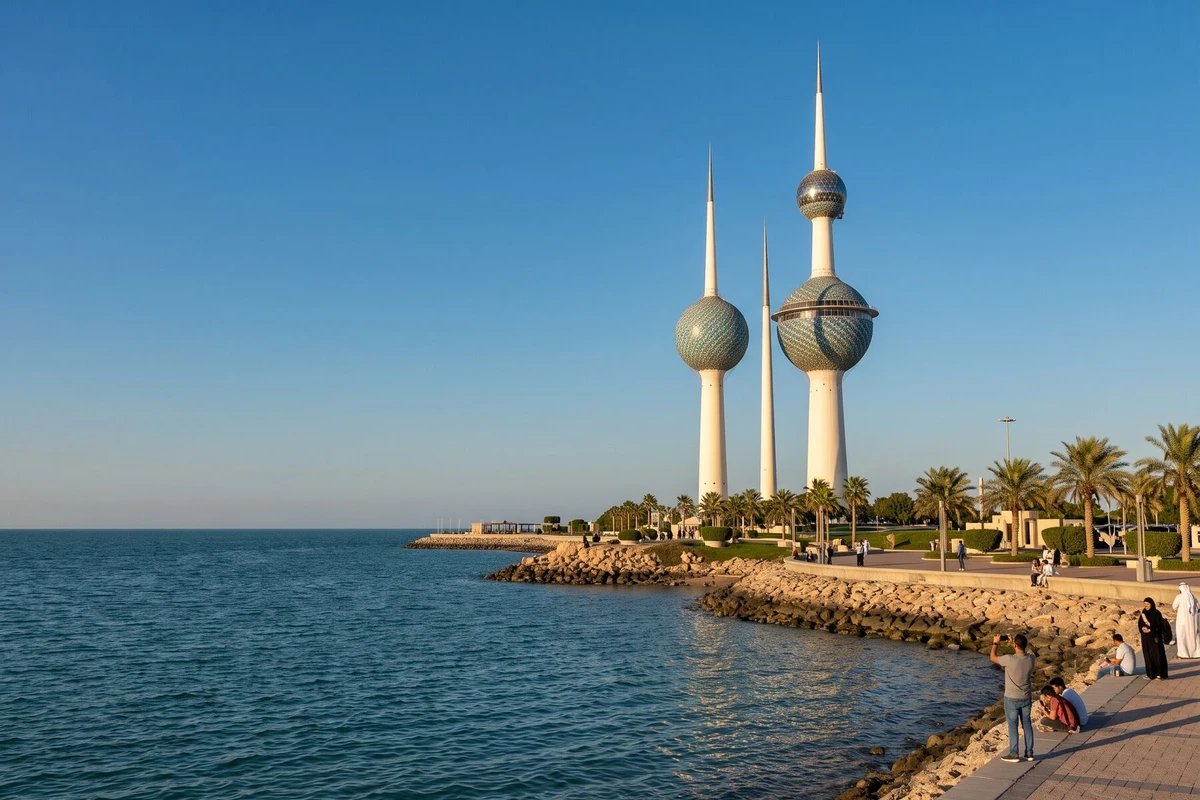
Kuwait City at first sight
Kuwait City grew from a small walled port of pearl divers and dhow builders into a modern capital after the discovery of oil, and traces of both worlds sit side by side. Restored merchant houses stand near glass towers, the Grand Mosque faces the Seif Palace across the old centre, and an hour's drive west the city gives way to open desert. It is a compact, orderly city, easiest to enjoy with a guide who brings its stories to life.
Why include Kuwait City in your itinerary?
- A seafront shaped by past and future. The Kuwait Towers, the old dhow harbour and the long corniche tell the story of a trading port turned modern capital, all within a short drive of each other.
- Living traditions at every turn. The Grand Mosque, the souqs, Sadu weaving and warm hospitality give even a short visit a strong sense of Kuwaiti culture.
- The desert on the doorstep. Within an hour of the centre, open sand, the escarpment of Mutla Ridge and quiet desert roads offer space, silence and golden sunsets.
Signature experiences in Kuwait City
The Kuwait Towers and the Seafront
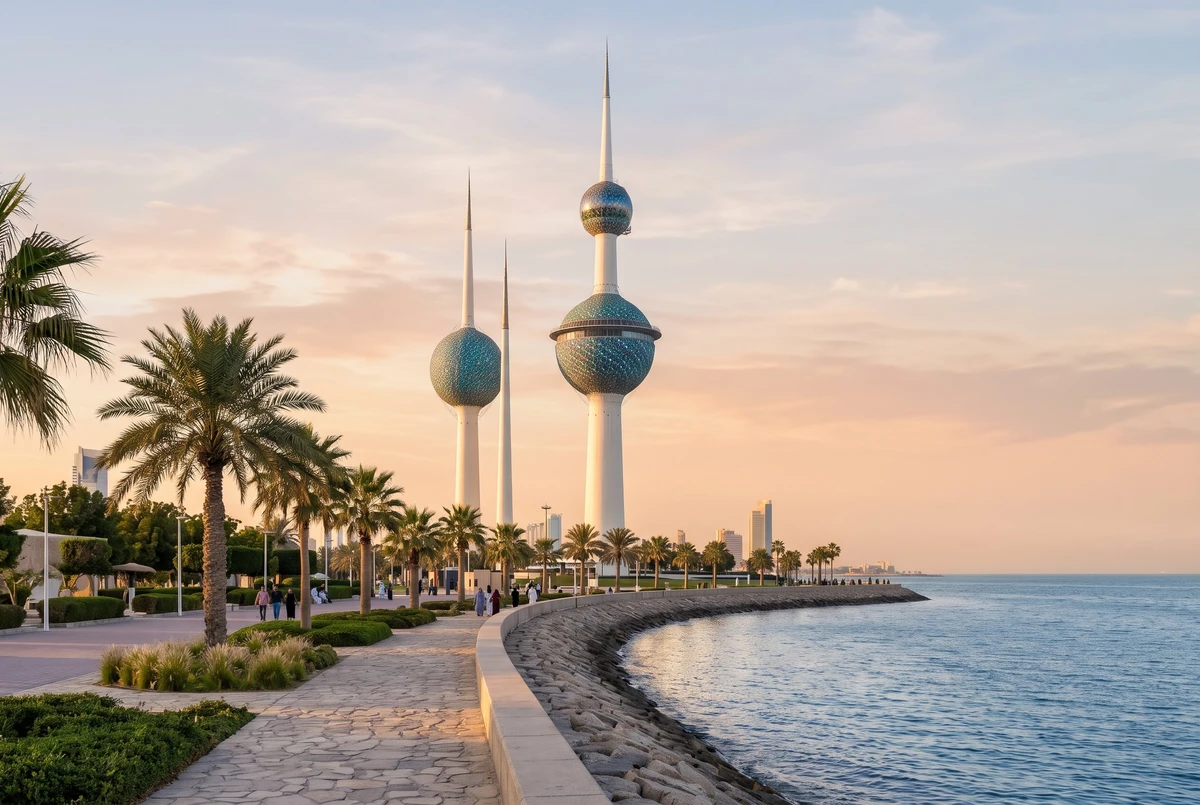
Opened in 1979, the Kuwait Towers are the city's best-known landmark, three slender towers on a headland facing the sea, two of them crowned with spheres covered in blue, green and white discs. A lift climbs to the viewing sphere of the tallest tower, where a slowly turning floor reveals the coastline, the skyline and the open water. Below, the corniche invites a gentle walk past small beaches, parks and fishing piers.
The Grand Mosque
The Grand Mosque is the largest mosque in Kuwait, opened in 1986 in the heart of the old city. Its main prayer hall rises to a broad dome decorated with the names of God in golden calligraphy, while teak doors, marble floors and soft light create a calm, dignified space. Guided visits take place outside prayer times, with modest dress required and abayas provided for women at the entrance, and guides explain the art and the daily life of the mosque.
Souq Al Mubarakiya and the Old Centre
Souq Al Mubarakiya is the oldest market in the city, a maze of lanes where traders sell dates, honey, spices, incense, perfumes, textiles and traditional dress. Small courtyard restaurants grill fish and meat, and tea is poured into small glasses. Nearby, the Seif Palace with its blue-tiled clock tower overlooks the sea, and Sadu House shows the Bedouin art of weaving on ground looms in bold reds, blacks and whites.
From the City into the Desert
A private half-day tour with a licensed guide can combine the city's highlights with a drive into the desert west of the capital. Beyond Jahra the road climbs towards Mutla Ridge, sandy plains stretch to the horizon and camels graze near the road. In the cooler months desert camps dot the land, and the low sun turns the sand gold in the late afternoon. Our team on WhatsApp helps you choose the best timing for the season.
Museums, Parks and Modern Kuwait
The Kuwait National Museum and the nearby Abdullah Al Salem Cultural Centre bring history, science and natural history to life in striking modern galleries, while the Scientific Center in Salmiya has a large aquarium of local marine life beside the sea. Al Shaheed Park offers lawns, walking paths and small museums in the heart of the city, and the sculpted curve of the Al Hamra Tower dominates the skyline above the old centre.
Neighbourhoods and quarters to know in Kuwait City
Sharq and the City Centre
The central districts of Sharq, Qibla and Mirqab hold the souqs, the Grand Mosque, the Seif Palace, the National Museum and many business hotels, all close to the seafront. Staying here puts the main sights within a short drive or walk, with the waterfront promenade of Souq Sharq just along the shore. It is the most practical base for a first visit and for short stopovers.
Dasman and the Towers Headland
Around Dasman, where the city centre meets the sea, the Kuwait Towers stand on their headland beside green parks and small beaches. Several seafront hotels look out over the water, and the corniche runs in both directions for early morning walks. It is a calm, scenic choice that keeps you close to the centre while waking up to sea views.
Salmiya
Salmiya, about fifteen minutes south-east of the centre, is the city's liveliest seaside district, with beachfront hotels, shopping streets, cafés and a long coastal promenade. The Scientific Center and Marina Crescent sit on its shore, and evenings bring families out for walks by the sea. It suits travellers who want a relaxed coastal base with plenty of dining choices.
The Southern Coast
Further south, the coastal areas of Messila, Fintas and Mahboula offer resort hotels and serviced apartments with beaches, pools and space to unwind, about twenty to thirty minutes from the centre. They suit families and longer stays, with easy access to the airport and the coastal motorway, and we arrange private transfers into the city for tours.
How long to stay in Kuwait City and how to pair it
Recommended stay
We recommend two to three nights in Kuwait City. One day for the Kuwait Towers, the Grand Mosque, the souqs and the seafront, a second for the museums, Al Shaheed Park and a private half-day tour that reaches the desert, and a third for Failaka Island or a slow day by the sea. On a stopover, one full day covers the main highlights.
How to pair it
Kuwait City pairs naturally with Failaka Island, reached by ferry from Ras Salmiya in about an hour, for its Bronze Age and Hellenistic remains and quiet shore. Jahra and its Red Fort lie around forty minutes west, with Mutla Ridge and the desert beyond, while the Sabah Al Ahmad Nature Reserve and the southern coast at Al Khiran offer open space and calm water. Our team arranges private transfers between them.
Best time to visit Kuwait City and the rhythm of the day
Best months
The best time to visit Kuwait City is November to March, when days are warm and sunny, evenings are cool and the desert is at its most inviting. February brings National Day and Liberation Day celebrations. October and April are warmer but still pleasant early and late, while May to September is extremely hot, best for indoor sights with outings timed for sunrise and the evening.
The daily rhythm
Kuwait City moves with the sun. Mornings are best for the towers, the mosque and the seafront before the heat builds, and the middle of the day suits museums, cultural centres and long, unhurried lunches. As the light softens, families walk the corniche and the souqs fill with shoppers, and evenings stay busy until late, especially at weekends and during Ramadan, when the city wakes after sunset.
On-the-ground logistics in Kuwait City
Arrival
Kuwait International Airport (KWI) is the gateway to the city, about fifteen kilometres south of the centre, or around twenty to thirty minutes by road depending on traffic. Salmiya and the seafront hotels are a similar distance away, and the southern coast is closer still. We arrange private transfers that meet you at arrivals and drive you directly to your hotel.
Getting around
Kuwait City is spread out and built around the car, so most visitors travel by taxi, ride-hailing app or private car. Buses link the main districts, but there is no metro. The seafront corniche, Souq Al Mubarakiya and Al Shaheed Park are pleasant on foot in the cooler months. For sightseeing across the city and drives into the desert, a private car with driver arranged by our team is the most comfortable choice.
Local etiquette tip
Kuwaitis are warm, courteous and value respect for local customs. Dress modestly in public, covering shoulders and knees, and women should bring a headscarf for mosque visits, though abayas are provided at the Grand Mosque. Ask before photographing people and avoid photographing official buildings. During Ramadan, avoid eating or drinking in public in daylight. Tipping is not required, but a small tip for good service is appreciated.
Must-do things in Kuwait City
- Ride up to the viewing sphere of the Kuwait Towers
- Join a guided visit to the Grand Mosque
- Browse dates and spices in Souq Al Mubarakiya
- See the Seif Palace clock tower from the seafront
- Discover Bedouin weaving at Sadu House
- Walk the corniche at sunset
- Explore the Kuwait National Museum
- Relax in the gardens of Al Shaheed Park
- Drive into the desert for a golden-hour view
- Taste machboos and luqaimat in the old souq
Do’s and don’ts in Kuwait City
Do
- Do plan sightseeing for mornings and evenings
- Do dress modestly in public places
- Do carry water and sunglasses
- Do check mosque visiting times in advance
- Do keep some cash for the souq stalls
Don’t
- Don't photograph people without permission
- Don't walk long distances in the summer heat
- Don't eat or drink in public by day in Ramadan
- Don't drive into the desert without a guide
- Don't photograph official buildings
Kuwait City at a glance
Plan Kuwait City with Haqqi Tours
Every option is confirmed by our team on WhatsApp before you pay, and delivered by our own people or by trusted local partners we work with in every city. Because we send travellers from all over the world, our partners give us special rates and priority, so you always receive the best. Prices are per person unless marked per vehicle.
About Haqqi Tours: About us Contact us Legal NoticePrivacy PolicyCookies & Marketing PreferencesTerms & ConditionsBooking, Payment & Refunds
More services in Kuwait City
Good to know
Frequently Asked Questions
Straight answers to what travellers ask most about Kuwait City.
Where should I stay in Kuwait City?
First-time visitors usually stay in the city centre around Sharq, close to the souqs, the Grand Mosque and the seafront, or in Dasman near the Kuwait Towers. Salmiya offers a lively coastal base with many restaurants, while the southern coast suits families who want resort space. Our team suggests the best area for your plans and arranges your private transfer from the airport.
Is Kuwait City worth visiting?
Yes. Kuwait City is compact and easy to explore, yet it holds landmarks found nowhere else, from the Kuwait Towers and the Grand Mosque to the old souqs and Sadu weaving, with the desert less than an hour away. Two or three days reveal its maritime past and modern life at a relaxed pace, and a private guided tour brings the stories behind each place to life.
What is the dress code and etiquette in Kuwait City?
Dress modestly in public, with shoulders and knees covered for both men and women, and light, loose clothing for the heat. Women need a headscarf for mosques, and abayas are provided at the Grand Mosque. Greet people politely, ask before taking photos of people, avoid public displays of affection and respect Ramadan customs during daylight hours.
Is Kuwait City suitable for families and Muslim travellers?
Yes. Kuwait City is calm, orderly and welcoming to families, with seafront parks, beaches, the aquarium at the Scientific Center and spacious malls for the hottest hours. Halal food is the norm everywhere, mosques are found in every district and the call to prayer shapes the day. Our team can suggest a gentle pace for children and the best times for each visit.
Is it safe to travel to Kuwait City now?
Kuwait City is generally considered safe for travellers, with low street crime and a calm atmosphere. Take normal care with belongings, follow local laws and customs, and visit the desert only with experienced guides. Check your own government's official travel advice before departure, and keep our WhatsApp line handy throughout your stay.
What are the must-do things in Kuwait City?
The must-do things in Kuwait City include the Kuwait Towers and their viewing sphere, a guided visit to the Grand Mosque, Souq Al Mubarakiya, the Seif Palace, Sadu House, the National Museum, Al Shaheed Park and a sunset walk on the corniche, plus a drive into the desert. Our private tours with licensed guides combine these in the best order and timing.
How many days do you need in Kuwait City?
Two to three days is ideal for Kuwait City: one for the towers, the mosque, the souqs and the seafront, one for the museums and a half-day tour into the desert, and one for Failaka Island or a slow day by the sea. A single full day covers the highlights on a stopover.
What can I book in Kuwait City with Haqqi Tours?
Day tours, including Kuwait City Premium Full-Day Sightseeing Tour and Private Kuwait Half-Day City and Desert Tour with Licensed Guide. Each has its own page, and the WhatsApp desk combines any of them into one plan with one written price.
How do I get from the airport to my hotel in Kuwait City?
With a private transfer: a driver at arrivals, flight tracking and a fixed price for the whole vehicle, door to door. Tell the desk the flight number and the hotel.
Is there public transport from the airport to Kuwait City?
Public options vary by airport and end at a station rather than your hotel; the private transfer starts at the arrivals door and ends at your door.
Which tours are available in Kuwait City?
Among them: Kuwait City Premium Full-Day Sightseeing Tour and Private Kuwait Half-Day City and Desert Tour with Licensed Guide. Each page says whether the day is private or small-group, what it includes and how long it lasts.
Are the tours private or in a group?
Both exist, and each tour page says which. A private tour has a vehicle and guide for your party alone; the desk can make most group tours private on request.
How do I book?
Fill in the form on any page or message us on WhatsApp with the date, the number of travellers and the hotel. A member of our team confirms the price and the details in writing within minutes.
Are the prices fixed?
Yes - every price is agreed in writing on WhatsApp before you travel and does not change on the day.
Do the drivers and guides speak Arabic or English?
It depends on the city and the day, so we do not promise a particular language; tell us your preference and we do our best. The WhatsApp desk always works in Arabic and English.
Can I change or cancel a booking in Kuwait City?
Yes, in the same WhatsApp conversation. The terms depend on the product and on how close to the date the change comes; the desk states them before you pay.