
Moldova
Haqqi Tours arranges day tours, private airport transfers, attraction tickets and multi-day packages across Moldova, confirmed on WhatsApp before you pay.
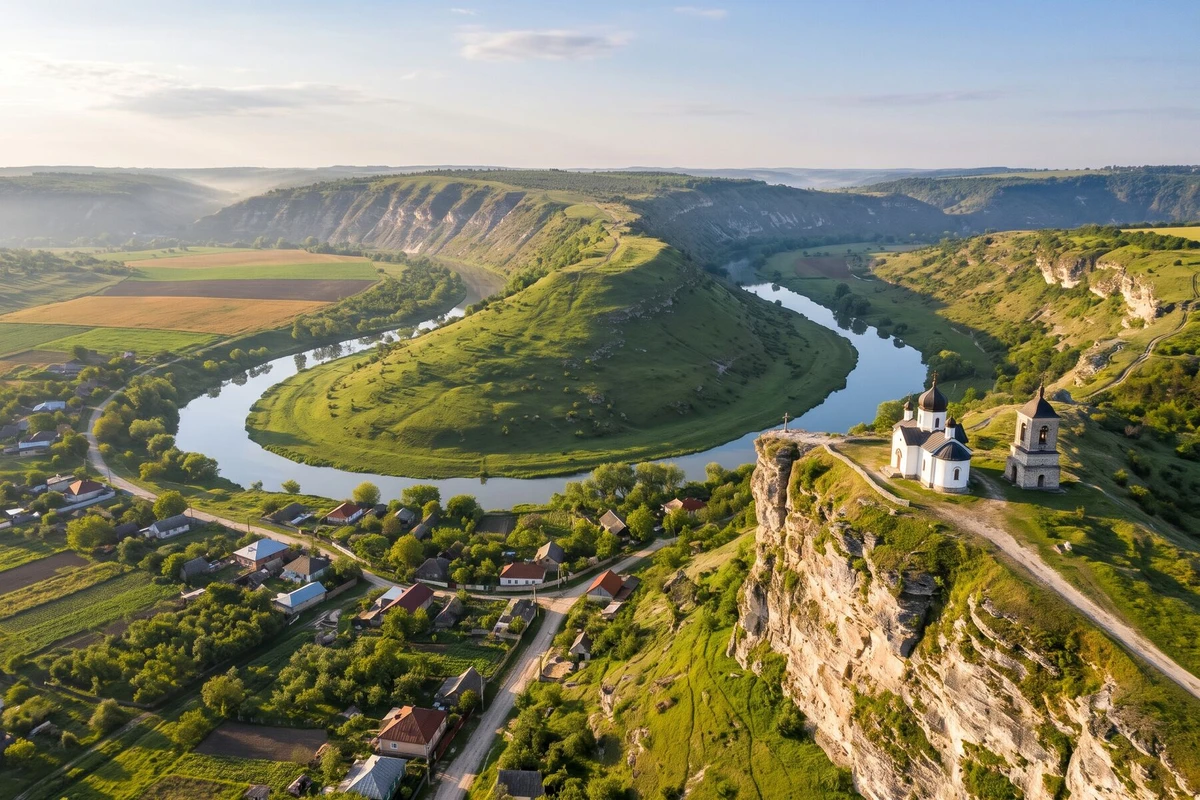
At Old Orhei the Răut River bends in a slow, perfect loop through a limestone gorge, and high on the cliff a small white bell tower and a stone cross stand against the sky. Inside the rock, monks still keep a cave chapel carved centuries ago, lit by candles and a single window that looks straight down onto the river. In the village of Butuceni below, painted wooden gates, wells and blue-shuttered cottages line a quiet lane, and storks nest on the poles in spring.
Destinations
Choose a city to see everything we arrange there.
Services by city in Moldova
Tours
The essence of Moldova
Moldova is one of Europe's least-visited countries, and that is much of its charm. Chisinau, the green capital, mixes nineteenth-century churches and leafy parks with broad Soviet-era boulevards, while the countryside rolls away in hills of orchards, sunflowers and walnut trees dotted with monasteries. Moldova is special because its villages, cave hermitages and painted churches still feel unhurried and lived in. We arrange day trips from Chisinau to Old Orhei and Curchi Monastery and private airport transfers, with calm, attentive service.
Why visit Moldova?
A Crossroads Between Rivers and Empires
The land between the Prut and the Dniester has always been a meeting point. Geto-Dacian tribes built hill forts above the Răut, the Golden Horde founded a town at Old Orhei in the fourteenth century, and the medieval Principality of Moldavia raised fortresses and monasteries across the region. Later, as Bessarabia, it passed to the Russian Empire, joined Romania between the wars and became a Soviet republic, before declaring independence on 27 August 1991.
Rolling Hills, Forests and Limestone Gorges
Moldova is a small, landlocked country of gentle hills and fertile black earth, squeezed between Romania and Ukraine. The Codri forests of oak, beech and hornbeam cover the centre, protected in nature reserves, while the Dniester and its tributaries have cut dramatic limestone canyons in the north and east. Old Orhei, Saharna and Țipova shelter cave monasteries and waterfalls in these gorges, and in the north the round stone fortress of Soroca guards the Dniester.
Plăcinte, Mămăligă and Village Kitchens
Moldovan food is hearty and seasonal. Plăcinte, thin pastries filled with salty cheese, potato, cabbage or pumpkin, are eaten at any hour, and mămăligă, a golden cornmeal polenta, comes with sheep's cheese, sour cream and fried eggs. Zeamă, a sour chicken soup with handmade noodles, cabbage rolls and fresh vegetable salads fill village tables, with fruit compote to drink. Pork is common and halal food is limited; vegetarian dishes are easy to find, and our team can advise.
Experiences You Can Only Have Here
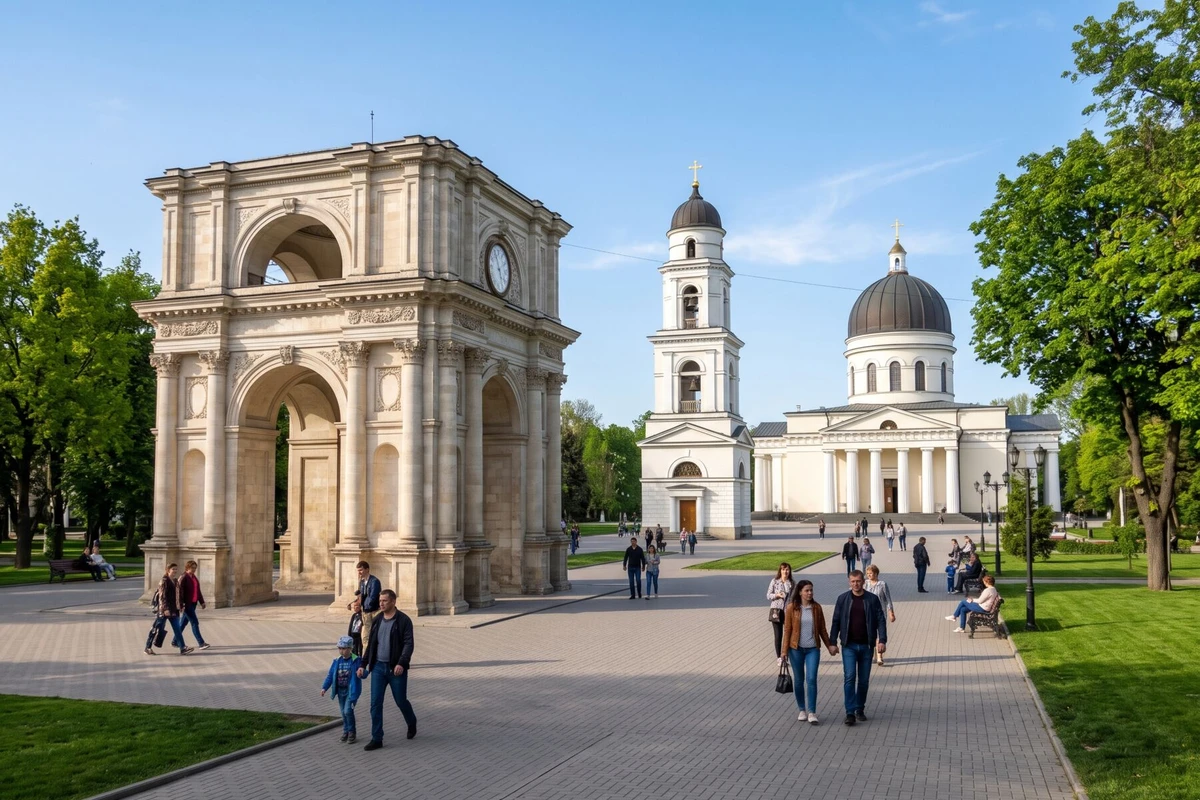
Step into the cave monastery of Old Orhei, where monks pray in a chapel hollowed into the cliff, then walk the ridge above the river loop to the bell tower for one of the finest views in the country. Wander through Butuceni's traditional cottages, light a candle in the restored white cathedral of Curchi Monastery, stroll beneath the chestnut trees of Chisinau's central park and explore the city's busy central market, where farmers sell cheese, honey and seasonal fruit.
Who is Moldova for?
Ideal for
- Travellers seeking places off the usual route
- History lovers and monastery visitors
- Photographers drawn to village life
- Couples on a short European escape
- Families who enjoy calm countryside days
- Walkers and nature lovers
Pace & travel style
- Base yourself in Chisinau and take day trips
- Leave early for Old Orhei to beat the midday sun
- Two or three nights cover the capital and the gorge
- Keep Sunday mornings for church services and markets
When to visit Moldova
Peak season · May–September
Late spring and summer bring Moldova its longest days, green hills and warm weather that is ideal for Old Orhei, monastery visits and countryside walks. Chisinau's parks fill with families in the evenings, and outdoor concerts and folk festivals take place in many towns. July and August can be hot, often above thirty degrees, so plan gorge walks for the morning and keep afternoons for museums or a slower pace. Independence Day on 27 August brings celebrations to the capital.
Shoulder season · April, October
April brings blossom to the orchards, fresh green forests and mild days that are perfect for walking, while October paints the Codri hills and the Răut gorge in shades of gold and copper. Both months are quieter, with comfortable temperatures for sightseeing and fewer visitors at the monasteries. Chisinau celebrates its City Day in mid-October. Evenings turn cool quickly, so pack a warm layer, and expect the occasional rainy day.
Low season · November–March
Winter is cold and often grey, with frost, snow on the hills and short days, but the monasteries look beautiful under snow and the capital is calm and easy to explore. Orthodox Christmas is celebrated on both 25 December and 7 January in many families, with carol singers in the villages, and on 1 March people exchange red-and-white mărțișor tokens to welcome spring. Roads to the countryside can be slippery, so private transfers with experienced drivers are wise.
The regions of Moldova and how to combine its cities
Moldova lies in south-eastern Europe, bordered by Romania along the Prut River to the west and by Ukraine to the north, east and south. Chisinau sits near the centre of the country on the small Bâc River and is the natural gateway, with the international airport on its south-eastern edge and most of the country's sights within two to three hours by road. Bălți, the second city, lies in the north among wide farmland.
Central Moldova holds the Codri forests and the gorge of the Răut, where Old Orhei, Butuceni and Curchi Monastery lie about an hour north of the capital, with Căpriana and Hâncu monasteries in the wooded hills nearby. The north follows the Dniester past Saharna, Țipova and the fortress of Soroca, while the south opens into steppe and the autonomous region of Gagauzia. The breakaway region east of the Dniester has its own controls and is best left out of a first visit.
Our city directory below is anchored in Chisinau, the only practical base for a first visit. From the capital we arrange guided day trips to the cave monastery of Old Orhei and to Curchi Monastery, and our private drivers handle transfers from Chisinau airport (KIV). Moldova pairs well with a few days in neighbouring Romania, and many travellers combine Chisinau with Iași or Bucharest on a wider journey.
Before you go: practical tips for Moldova
Entry & visas
Citizens of the European Union, the United Kingdom, the United States, Canada, Türkiye and a number of other countries can usually visit Moldova without a visa for short stays of up to ninety days within a six-month period. Many other nationalities need a visa, which can often be requested online in advance. A passport valid for at least three months beyond your departure is expected, so check the current rules with official Moldovan sources before you travel.
Money, cards & tipping
The currency is the Moldovan leu. Cards are widely accepted in Chisinau's hotels, supermarkets, larger restaurants and shopping centres, and cash machines are easy to find in the capital. In villages, at markets, monastery shops and small cafés, cash is still preferred, so carry some small notes for day trips. Exchange offices are common and reliable in the city. Tipping around ten percent for good service in restaurants is appreciated, and guides and drivers welcome a tip.
Etiquette & dress code
Moldovans are warm, hospitable and often shy at first, and a simple bună ziua is always appreciated; Russian is also widely spoken. In Orthodox churches and monasteries dress modestly with shoulders and knees covered, women usually cover their hair with a scarf and men remove hats. Speak softly during services, ask before photographing monks, icons or people, and follow signs where photography is not allowed. If invited to a family table, expect generous food and accept at least a taste.
Getting around
Chisinau is compact, with trolleybuses, buses and shared minibuses linking the centre with every district, and taxis booked by phone or app are inexpensive and convenient. Intercity minibuses connect the capital with most towns, but they can be crowded, and trains are few and slow. Country roads vary in quality and signs are mostly in Romanian, so for Old Orhei, Curchi and the monasteries, and for airport arrivals, our private transfers and guided day trips are the most comfortable choice.
Must-do things in Moldova
- Visit the cave monastery carved into the cliff at Old Orhei
- Walk the ridge above the Răut River loop
- Wander the traditional village of Butuceni
- See the restored white cathedral of Curchi Monastery
- Stroll Stefan cel Mare Boulevard in Chisinau
- Visit the Nativity Cathedral and the Triumphal Arch
- Explore the National Museum of Ethnography and Natural History
- Browse cheese, honey and fruit at the Central Market
- Taste plăcinte, mămăligă and zeamă
- See the Dniester fortress of Soroca on a longer trip
Do’s and don’ts in Moldova
Do
- Carry a scarf for visits to monasteries
- Wear sturdy shoes for the Old Orhei paths
- Learn a few words of Romanian greeting
- Carry some cash in small notes for villages
- Bring sun protection for the open ridge
Don’t
- Don't wear shorts or sleeveless tops inside churches
- Don't photograph monks or services without asking
- Don't travel east of the Dniester without checking the rules
- Don't expect village shops to accept cards
- Don't rush Old Orhei in a quick stop
Moldova at a glance
Plan Moldova with Haqqi Tours
Every option is confirmed by our team on WhatsApp before you pay, and delivered by our own people or by trusted local partners we work with in every city. Because we send travellers from all over the world, our partners give us special rates and priority, so you always receive the best. Prices are per person unless marked per vehicle.
About Haqqi Tours: About us Contact us Legal NoticePrivacy PolicyCookies & Marketing PreferencesTerms & ConditionsBooking, Payment & Refunds
Where we operate in Moldova
Good to know
Frequently Asked Questions
Straight answers to what travellers ask most about Moldova.
Is it safe to visit Moldova?
Moldova is generally calm and welcoming, and Chisinau and the countryside around Old Orhei are relaxed places to explore. As anywhere, take normal care with belongings in crowded places and use registered taxis. The breakaway region east of the Dniester and areas near the Ukrainian border have special considerations, so check your own government's official travel advice before departure, and keep our WhatsApp line handy throughout your stay.
How many days do I need in Moldova?
Three days work well for a first visit: one day for Chisinau's cathedral, parks, museums and market, one day for Old Orhei and Curchi Monastery, and a third for Căpriana Monastery and the Codri forests or a slower day in the capital. With five days or more you can add the northern gorges of Saharna and Țipova and the fortress of Soroca on the Dniester.
What is Old Orhei?
Old Orhei, Orheiul Vechi in Romanian, is a protected landscape about an hour north of Chisinau, where the Răut River loops through a limestone gorge. It holds a cave monastery still used by monks, a bell tower and church on the cliff, the remains of Geto-Dacian forts and a fourteenth-century Golden Horde town, and the traditional village of Butuceni. Paths are uneven and some are steep, so good shoes are essential.
Can a trip to Moldova be tailored for luxury or private travel?
Yes. Chisinau has comfortable international hotels and stylish boutique stays, and the countryside offers charming guesthouses in restored village houses. We can tailor private guided day trips, a dedicated driver for the whole stay, a relaxed family pace and chauffeured airport transfers, then confirm every detail with you on WhatsApp before anything is paid.
What is the best time to visit Moldova?
May to September is the best time to visit Moldova, with long sunny days, green hills and easy conditions for Old Orhei, monastery visits and countryside walks, though July and August can be hot. April and October are quieter and very pleasant, with blossom in spring and golden forests in autumn, while winter is cold and snowy but calm and atmospheric.
What is Moldova famous for?
Moldova is famous for the cave monastery and river gorge of Old Orhei, for its painted Orthodox monasteries such as Curchi, Căpriana and Saharna, and for the stone fortress of Soroca on the Dniester. It is also known for its fertile black earth, orchards and sunflower fields, its warm village hospitality, folk embroidery and music, and for being one of the least-visited countries in Europe.
Is halal food available in Moldova?
Halal food is limited in Moldova. Chisinau has a small number of eateries serving Middle Eastern and Turkish dishes, but there is very little outside the capital, and pork is common in local cooking. Vegetarian plăcinte with cheese, potato or cabbage, mămăligă, salads, fish and fresh fruit are easy to find, and Orthodox fasting menus are often meat-free. Our team can advise.
How do I get to Chisinau from the airport?
Chisinau airport (KIV) lies about thirteen kilometres south-east of the city centre, around twenty to thirty minutes by road depending on traffic. Buses and minibuses run into the city, and taxis wait outside arrivals, but the most relaxed option is a private transfer. We arrange a driver who meets you at arrivals and takes you directly to your hotel in Chisinau.
Which cities in Moldova does Haqqi Tours cover?
Chisinau. Each city has its own page with everything available there, and a trip across several cities is planned in one WhatsApp conversation.
What can I book in Moldova?
Day tours - all run or confirmed by Haqqi Tours, each with a fixed price agreed on WhatsApp before you pay.
How do I book a tour or transfer in Moldova?
Fill in the form on the page you are interested in, or message us on WhatsApp with the date, the number of travellers and your hotel. A member of our team confirms the price and the details in writing within minutes.
Are the prices fixed?
Yes. Every price is agreed in writing on WhatsApp before you travel and does not change on the day - not for traffic, not for a late flight, not for the hour.
Do you arrange transfers between cities in Moldova?
Yes. Intercity transfers by private car or van are booked the same way as airport transfers; tell the desk the two hotels and the date and it quotes a fixed price for the whole vehicle.
Can you plan a full itinerary across Moldova?
Yes - tell the desk your dates, the cities you want and who is travelling, and it proposes a day-by-day plan with the tours, transfers and tickets priced in writing. You adjust it in the same chat before confirming.
Are your tours private or in a group?
Both exist, and the page of each tour says which. Private tours have a car and guide for your party alone; small-group tours share a guide with a few other travellers. The desk can convert most group tours into a private day on request.
Do the drivers and guides speak Arabic?
It depends on the country, the city and the day, so we do not promise a particular language for the driver or guide. Tell us your preference and we do our best; the WhatsApp desk itself always works in Arabic and English.