
Belgium
Medieval squares, chocolate workshops and a short hop to the coast fill out a Belgium trip our desk arranges for Arab families.
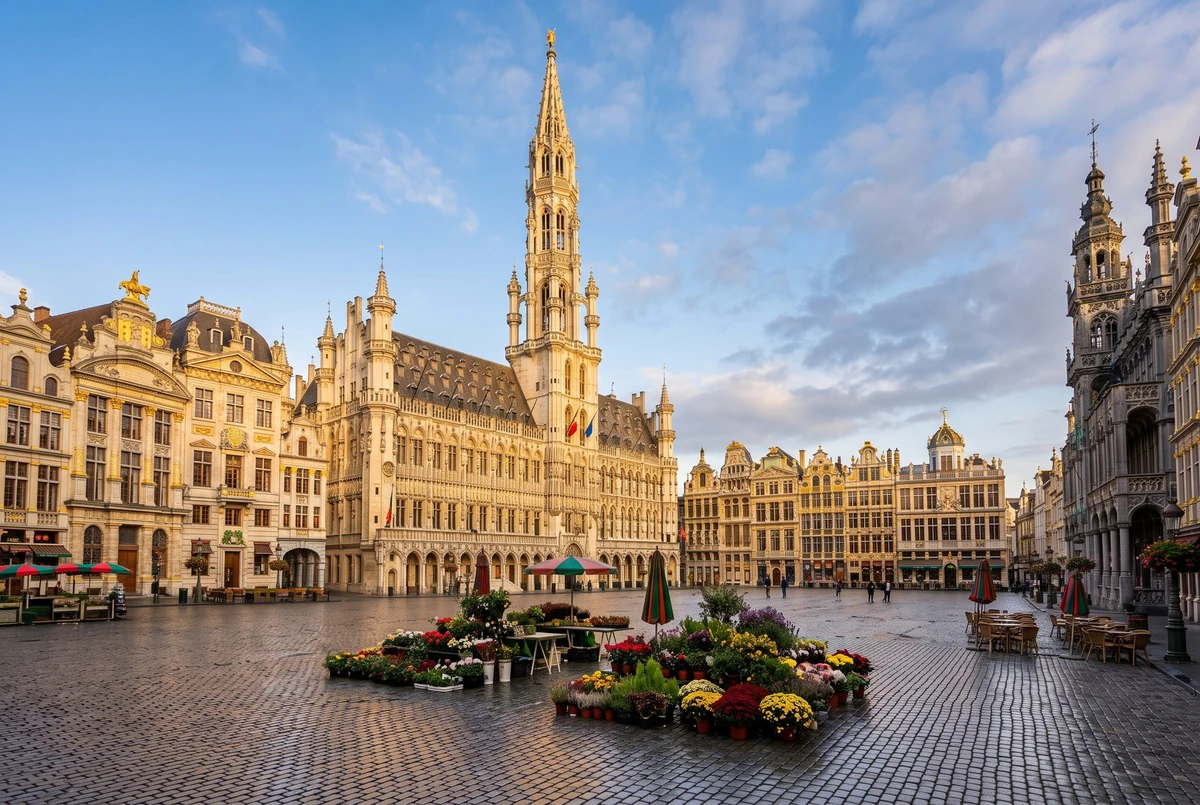
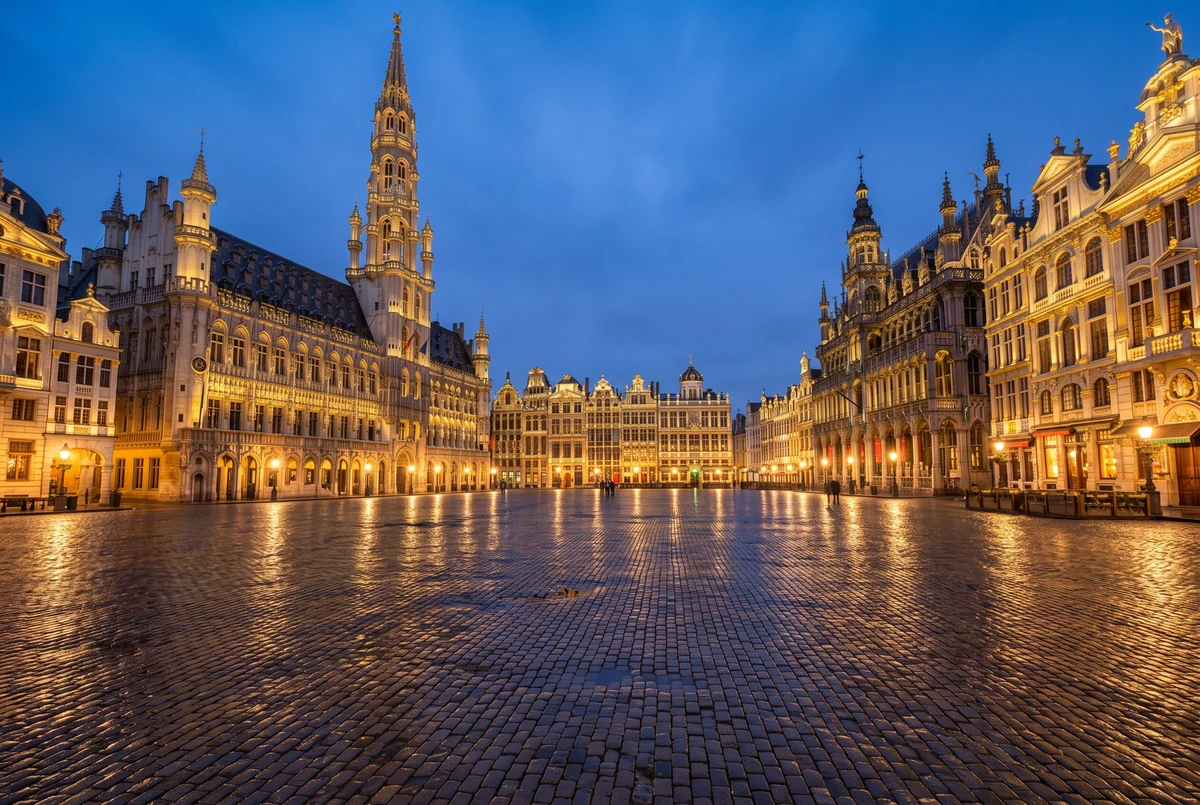
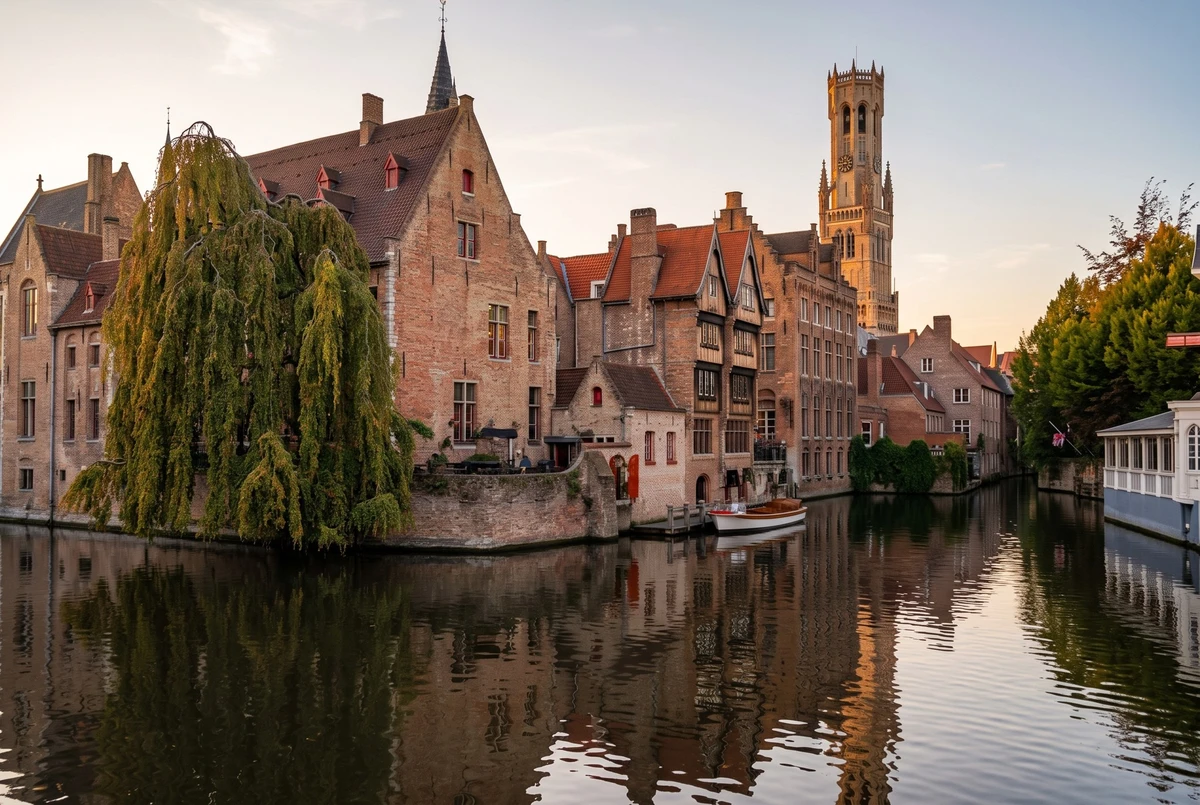
In Bruges the morning begins with the Belfry carillon tumbling over stepped gables and still canals, as swans glide past whitewashed almshouses and a lacemaker sets out her bobbins on a cushion by the window. An hour away, Brussels wakes in a blaze of gilded guildhalls around the Grand-Place, while the scent of Liège waffles caramelising on hot iron plates curls out of the side streets and chocolatiers polish their glass counters.
Destinations
Choose a city to see everything we arrange there.
Services by city in Belgium
The essence of Belgium
Belgium is small enough to cross in an afternoon, yet it holds more medieval cities, master paintings and culinary craft per square kilometre than almost anywhere in Europe. The Flemish Primitives painted here, Art Nouveau flowered here, and chocolatiers still temper ganache by hand. It is also the diplomatic heart of Europe, where ministers and market traders share the same cobbled squares. Our team arranges guided day tours, attraction tickets, train journeys and private drivers so Belgium's riches fit gracefully into even a short stay.
Why visit Belgium?
Guildhalls, Belfries and Flemish Masters
In the Middle Ages Flanders was one of the richest corners of Europe, and its cloth and trading wealth built the belfries, cathedrals and guildhalls still standing in Bruges, Ghent and Brussels. The Van Eyck brothers' Ghent Altarpiece, Memling's luminous panels in Bruges and Rubens's house in Antwerp reveal a painting tradition of astonishing detail, while the fields around Ypres hold sombre memorials of the First World War.
Dunes, Canals and the Ardennes Forest
Belgium shifts from flat to wild within a couple of hours. The North Sea coast offers broad sandy beaches and dunes linked by a coastal tram, the Flemish polders are crossed by poplar-lined canals and cycling paths, and in the south the Ardennes rise into deep forests, river gorges and limestone caves such as Han-sur-Lesse, with castle-crowned towns like Dinant and Bouillon above the Meuse and Semois rivers.
Chocolate, Waffles and Carnival
Belgian food is a gentle obsession. The praline was invented in Brussels, chocolatiers sell hand-filled ganaches by weight, and waffles come in two styles: airy Brussels rectangles and dense, caramelised Liège rounds. Golden frites arrive in paper cones with a choice of sauces, while steaming pots of mussels, creamy waterzooi stew and spiced speculoos biscuits fill family tables. The carnival of Binche, ancient processions and puppet theatres keep folk culture alive.
Only-in-Belgium Moments
Gliding by boat along the canals of Bruges as the Belfry chimes overhead. Standing in the Grand-Place when the floodlit guildhalls glow gold. Riding to the top sphere of the Atomium for views across Brussels. Watching the Ghent Altarpiece reveal its jewel-like detail. Hearing the Last Post sounded each evening beneath the Menin Gate in Ypres. Our guided day tours and the attraction tickets we issue make each moment simple to reach.
Who is Belgium for?
Ideal for
- Art lovers and museum enthusiasts
- Couples on a romantic canal-side break
- Chocolate and pastry devotees
- History travellers tracing the World Wars
- Families on short European city trips
- Business travellers extending a Brussels stay
Pace & travel style
- Short, rich city breaks connected by rail
- Slow canal-side wandering in Bruges
- Easy day trips to Ghent, Antwerp and the coast
- Longer loops with Paris or Amsterdam by train
When to visit Belgium
Peak season · June–August
Summer brings the longest days, café terraces spilling into cobbled squares and festivals across the country, including the famous Flower Carpet on the Grand-Place in mid-August of even-numbered years. Bruges is at its busiest, with canal boats queuing and hotels filling fast. The weather is warm but changeable, so pack a light jacket, book attraction tickets ahead and explore early or late in the day.
Shoulder season · April–May and September–October
Spring opens the Royal Greenhouses of Laeken and carpets the Hallerbos forest with bluebells, while autumn brings crisp air and golden light on the canals. Crowds thin noticeably, hotels are easier to secure and temperatures suit long walks between museums. These are the smartest months for combining Brussels, Bruges and Ghent at a calm, unhurried pace, with day tours running comfortably.
Low season · November–March
Belgian winters are cool, damp and short on daylight, yet December brings sparkling Christmas markets to Brussels, Bruges and Ghent, with ice rinks, carousels and stalls of hot waffles. January to March is the quietest period, ideal for museum lovers and travellers who prefer peaceful canals and gentler rates. Pack waterproof layers and plan indoor highlights such as chocolate workshops and galleries.
The regions of Belgium and how to combine its cities
Belgium is divided more by language than by geography. Flanders, the Dutch-speaking north, is flat and densely woven with historic cities: Bruges and Ghent with their canals and guildhalls, Antwerp with its fashion, diamond trade and Rubens heritage, and a North Sea coast of dunes and seaside towns.
Wallonia, the French-speaking south, is greener and more rugged, rising into the Ardennes with its forests, caves, rivers and fortified towns such as Namur and Dinant, while Liège keeps an industrious, warm-hearted character. A small German-speaking community lives in the far east. Between the two sits Brussels, officially bilingual, seat of the European institutions and showcase of exuberant Art Nouveau architecture.
Our city directory below covers Brussels and Bruges, the two cities most travellers build their Belgian trip around. Base yourself in Brussels for the Grand-Place, the Atomium and the Magritte Museum, then take a train ticket we issue to Bruges for canals, belfries and lace. Our guided day tours extend easily to Ghent, Antwerp and the Flanders Fields. Three nights in Brussels and two in Bruges make a perfect short week, or continue by train to Paris or Amsterdam for a ten-day loop.
Before you go: practical tips for Belgium
Entry & visas
Belgium belongs to the Schengen area, so a valid Schengen visa grants entry, and numerous nationalities can visit visa-free for short stays. Requirements depend entirely on your passport, so check the official Belgian government portal or the nearest Belgian embassy or consulate before booking. Our team can provide the hotel and transfer confirmations that some applications require, and advise on timing for a smooth arrival.
Money, cards & tipping
Belgium uses the euro, and cards and contactless payments are accepted almost everywhere, including bakeries and market stalls. Still, carry a little cash for small purchases, public toilets and flea markets. Service is included in restaurant bills, so tipping is optional; rounding up or leaving a little extra for excellent service is appreciated. Prices are fixed in shops, and bargaining is common only at antique and flea markets.
Etiquette & dress code
Belgians value politeness and discretion. Greet shopkeepers with “bonjour” in Brussels and Wallonia or “goedendag” in Flanders, and never treat the two languages as interchangeable, as the linguistic divide is sensitive. Dress respectfully in cathedrals and in the Basilica of the Holy Blood in Bruges, where photography may be restricted. Punctuality matters, and table manners are formal: keep both hands visible above the table.
Getting around
Belgium has one of Europe's densest rail networks, with frequent trains linking Brussels, Bruges, Ghent, Antwerp and Liège in about an hour or less, plus high-speed services to Paris, Amsterdam, Cologne and London. Domestic flights are unnecessary. Our team issues train and flight tickets and arranges private chauffeured transfers from Brussels Airport, as well as private day trips to the Ardennes and Flanders Fields.
Must-do things in Belgium
- Stand in Brussels' Grand-Place at dusk as the gilded guildhalls light up.
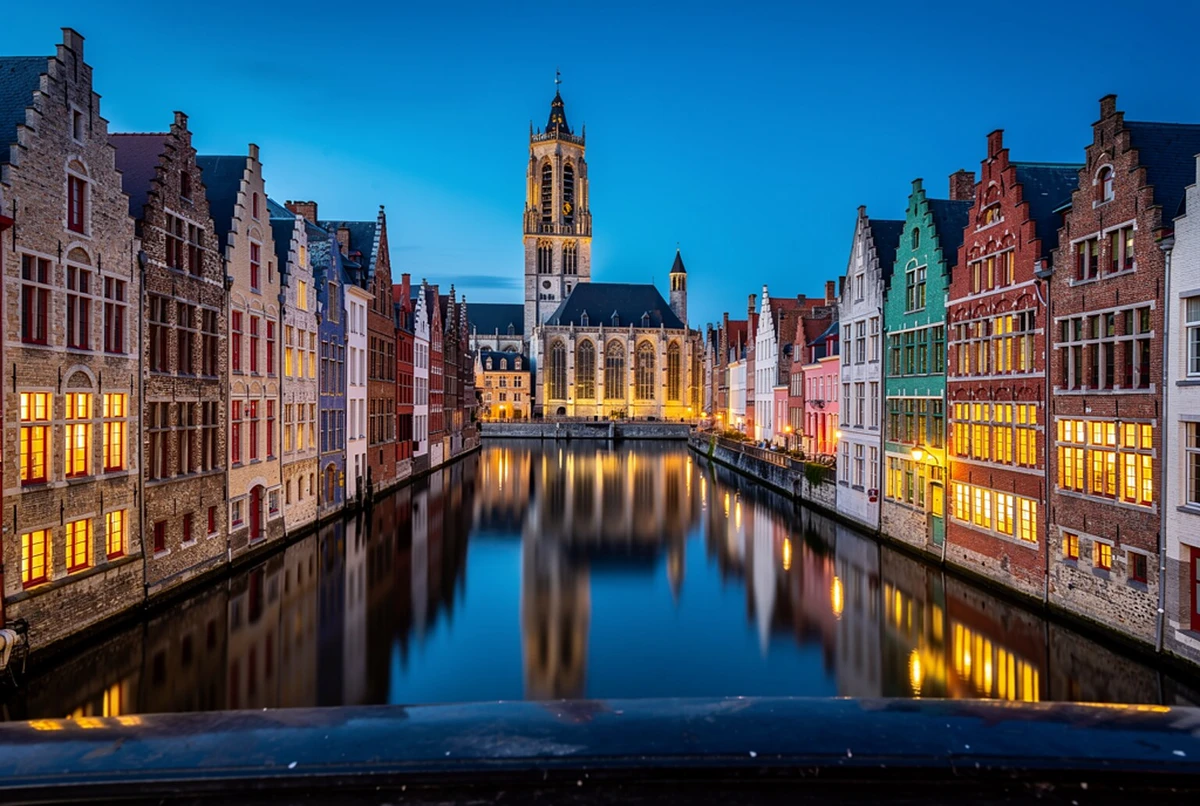
- Take a canal boat through Bruges past almshouses, swans and medieval bridges.
- Climb the Belfry of Bruges for views across stepped gables and church spires.
- Ride up the Atomium and stroll the surrounding Heysel and Laeken parks.
- Admire the Ghent Altarpiece in St Bavo's Cathedral on a day trip.
- Join a praline-making workshop with a skilled Belgian chocolatier.
- Hear the Last Post under the Menin Gate in Ypres at eight each evening.
- Discover Art Nouveau facades and the Magritte Museum in Brussels.
- Taste a warm Liège waffle and crisp frites from a traditional stand.
- Explore Antwerp's Rubens House, Gothic cathedral and grand railway station.
Do’s and don’ts in Belgium
Do
- Book train tickets ahead for smooth day trips between cities.
- Greet in Dutch in Flanders and in French in Brussels and Wallonia.
- Visit Bruges early morning or evening, when day-trippers have left.
- Carry a light umbrella; Belgian weather changes quickly.
- Try chocolate from small artisan shops, not only famous chains.
Don’t
- Don't walk in the red cycle lanes, especially in Bruges and Ghent.
- Don't call Belgian frites “French fries” in front of proud locals.
- Don't rush Bruges as a two-hour stop; stay at least one night.
- Don't open with French in Flanders; English is the safer choice.
- Don't forget museum closing days, which often fall on Mondays.
Belgium at a glance
Plan Belgium with Haqqi Tours
Every option is confirmed by our team on WhatsApp before you pay, and delivered by our own people or by trusted local partners we work with in every city. Because we send travellers from all over the world, our partners give us special rates and priority, so you always receive the best. Prices are per person unless marked per vehicle.
About Haqqi Tours: About us Contact us Legal NoticePrivacy PolicyCookies & Marketing PreferencesTerms & ConditionsBooking, Payment & Refunds
Good to know
Frequently Asked Questions
Straight answers to what travellers ask most about Belgium.
Is it safe to visit Belgium?
Yes. Belgium is a safe, well-policed country, and Bruges in particular feels calm and village-like by day and night. In Brussels, take normal city precautions around busy stations such as Brussels-Midi and on crowded trams, where pickpockets operate. Check your own government's official travel advice before departure, and keep our WhatsApp line handy.
How many days do I need for a first trip to Belgium?
Four to six days suits a first trip: two or three nights in Brussels, one or two in Bruges, and a day trip to Ghent or Antwerp. With a full week you can add the Flanders Fields or the Ardennes. Belgium also combines beautifully with Paris or Amsterdam, and our team can arrange the train tickets.
What is the best way to travel between Belgium's major cities?
The train is unbeatable: frequent, punctual services connect Brussels, Bruges, Ghent, Antwerp and Liège, with most journeys under an hour. For countryside castles, battlefields or the Ardennes, a private car with driver is far more flexible. Our team issues train tickets and arranges chauffeured transfers and private day trips door to door.
Can a trip to Belgium be tailored for luxury or private travel?
Yes. We can tailor a private Belgium itinerary with chauffeured transfers from Brussels Airport, a private guide along the canals of Bruges, attraction tickets arranged in advance, chocolate-tasting experiences and refined boutique hotels in historic mansions. Tell our team your interests and pace, and we will confirm every detail with you on WhatsApp before anything is paid.
Is Belgium tourist friendly?
Very. Belgians are courteous and multilingual, and English is widely spoken in hotels, restaurants and museums, especially in Brussels and Flanders. Distances are short, trains are frequent and signage is clear. Bruges is compact, flat and easy for families and older travellers, while Brussels offers excellent museums, shopping and dining.
Is it safe to travel to Belgium now?
Belgium is a stable European country with excellent infrastructure and emergency services. Conditions anywhere can change, so check your own government's official travel advice before departure and follow local guidance during your stay, particularly around large events. Our team stays reachable on WhatsApp throughout your journey and can adjust transfers or tours if needed.
What is the best time to visit Belgium?
April to June and September to October bring mild weather, spring blossom or autumn colour, and calmer canals in Bruges. July and August are lively, with festivals and long evenings, but busier. December is enchanting for Christmas markets, while January to March is quiet and grey yet ideal for museums and chocolate workshops.
What is Belgium famous for?
Belgium is famous for its chocolate, waffles and golden frites, for the medieval canal city of Bruges and the Grand-Place in Brussels, and for Flemish masters like Van Eyck and Rubens. It is also known for handmade lace, comic-strip art, Art Nouveau architecture and as the seat of the European Union's main institutions.
What makes Bruges different from a big city day trip
Bruges is small and compact, with canals and cobbled lanes that keep most sights within walking distance, which suits families with children or older relatives better than a spread-out capital.
Where does the Bruges Day Trip usually depart from
It is arranged as a day trip from a neighboring city, with pickup details confirmed once the WhatsApp desk agrees the date and a fixed written price with the family.
Is Bruges walkable for a family with young children
The old center is compact enough that most canals, squares, and gabled houses can be reached on foot without long stretches, which makes pacing the day easier with young children.
Which cities in Belgium does Haqqi Tours cover?
Brussels, Bruges and Ghent. Each city has its own page with everything available there, and a trip across several cities is planned in one WhatsApp conversation.
What can I book in Belgium?
Day tours, attraction tickets, private airport transfers, flight tickets and train tickets - all run or confirmed by Haqqi Tours, each with a fixed price agreed on WhatsApp before you pay.
How do I book a tour or transfer in Belgium?
Fill in the form on the page you are interested in, or message us on WhatsApp with the date, the number of travellers and your hotel. A member of our team confirms the price and the details in writing within minutes.
Are the prices fixed?
Yes. Every price is agreed in writing on WhatsApp before you travel and does not change on the day - not for traffic, not for a late flight, not for the hour.
Do you arrange transfers between cities in Belgium?
Yes. Intercity transfers by private car or van are booked the same way as airport transfers; tell the desk the two hotels and the date and it quotes a fixed price for the whole vehicle.