
Montenegro
Haqqi Tours arranges day tours, private airport transfers, attraction tickets and multi-day packages across Montenegro, confirmed on WhatsApp before you pay.
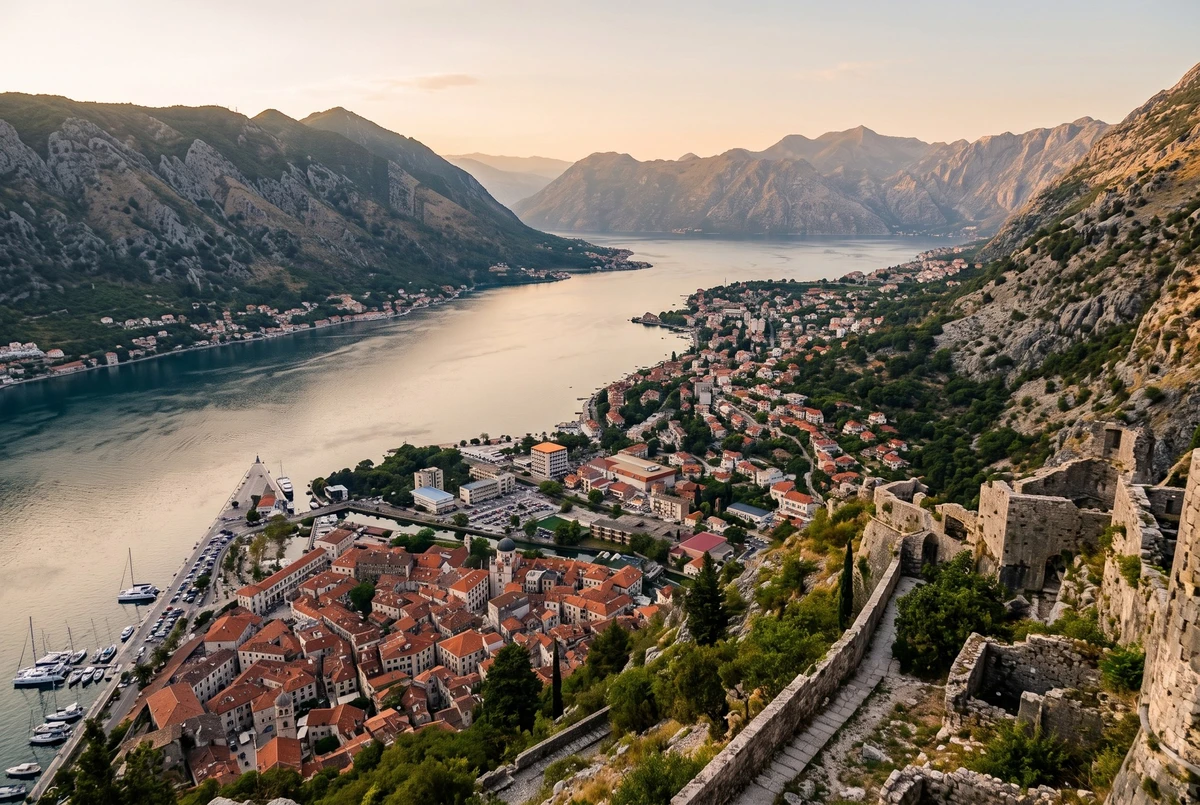
Morning in Montenegro arrives slowly over the Bay of Kotor. The water lies still as glass, mirroring limestone mountains that plunge straight into the sea, while church bells ring across Perast and fishing boats leave silver wakes toward the islet of Our Lady of the Rocks. Up on the old fortress walls of Kotor, the air smells of pine, sea salt and fresh bread from the bakeries below. By afternoon you could be in a canyon deeper than any other in Europe, or on a sandy beach facing Albania.
Destinations
Choose a city to see everything we arrange there.

Services by city in Montenegro
Flight Tickets
Ferry Tickets
The essence of Montenegro
Montenegro is irreplaceable because it compresses so much drama into such a small country: Venetian stone towns, Orthodox monasteries carved into cliffs, primeval forests, glacial lakes and an Adriatic coast that rivals any in the Mediterranean. Is Montenegro worth visiting? Few places in Europe deliver so much beauty within a couple of hours' drive. Haqqi Tours arranges your flights, ferry tickets, private transfers and guided day tours from Kotor so every bend of the road becomes part of the journey.
Why visit Montenegro?
Venetians, Prince-Bishops and Mountain Fortresses
Montenegro's history is written in stone. Illyrians and Romans settled the coast, Venice ruled the Bay of Kotor for nearly four centuries and left its winged lions on city gates, while the mountain heartland stayed defiantly independent under its prince-bishops in Cetinje. Kotor's walled old town is a UNESCO World Heritage Site, the cliff-hung Ostrog Monastery draws pilgrims of many faiths, and Ulcinj's Ottoman old town recalls centuries of coexistence along the southern shore.
Fjord-Like Bays and Wild Canyons
Within a country smaller than many regions, Montenegro rises from sea level to peaks over two thousand metres within a few hours of driving. The Bay of Kotor winds inland like a Nordic fjord beneath sheer limestone walls. Inland, Durmitor National Park shelters glacial lakes and the Tara River Canyon, the deepest in Europe, while Lake Skadar's water lilies and pelicans and the ancient Biogradska Gora forest complete a remarkably diverse landscape.
Stone Villages, Slow Coffee and Mountain Kitchens
Montenegrin life moves at the pace of a long coffee on the square. On the coast, kitchens are Mediterranean: grilled fish, black squid-ink risotto, olive oil from Ulcinj's ancient groves and fresh figs. In the mountains, food grows hearty, with kačamak of cornmeal and cheese, slow-cooked lamb under the iron bell called sač, and priganice fritters with honey. Traditional gusle epic songs and village festivals keep the old stories alive.
Moments Unique to Montenegro
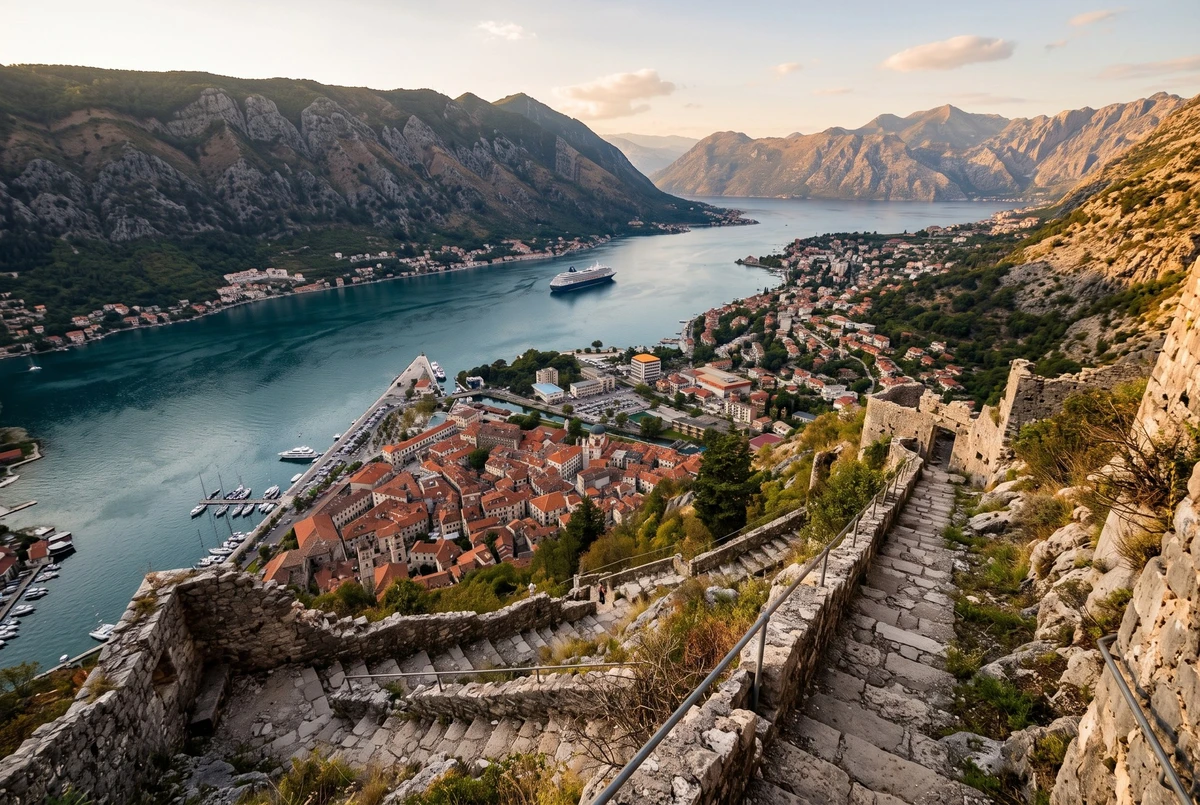
Take a boat to Our Lady of the Rocks, an islet built by hand from stones dropped by sailors over centuries. Climb Kotor's ancient fortifications at dawn for a view across the entire bay. Visit Ostrog Monastery, built into a sheer cliff face. Raft the turquoise Tara through its towering canyon, and drive the serpentine road above Kotor, twenty-five hairpin bends that reveal the bay like an unfolding map.
Who is Montenegro for?
Ideal for
- Couples seeking romantic coastal towns and sunsets
- Families wanting beaches and easy day trips
- Hikers and outdoor adventurers
- History lovers drawn to Venetian and Orthodox heritage
- Road-trip lovers who enjoy dramatic scenery
- Travellers combining several Balkan countries
Pace & travel style
- One coastal base with mountain day trips
- Mornings for old towns, afternoons for the sea
- Slow scenic drives with frequent viewpoints
- Private drivers for hairpin mountain roads
When to visit Montenegro
Peak season · July–August
High summer brings hot sunny days, warm sea and the busiest weeks on the coast. Kotor's old town and Budva fill with visitors, especially when large cruise ships dock, and hotel and ferry availability tightens. Evenings are lively and beaches crowded. Book transfers and day tours early, and explore Kotor's walls at dawn to enjoy them in cooler, quieter air.
Shoulder season · May–June and September–October
These are Montenegro's finest months. The sea is pleasantly swimmable from late May into October, mountain roads to Durmitor are open, wildflowers or autumn colours cover the hills, and the bay feels calm and spacious. Hotels are easier to secure and our guided day tours can explore Perast, Cetinje and Lake Skadar without the summer rush.
Low season · November–April
Winter brings rain to the coast and snow to the mountains, and some beach hotels close. Yet Kotor in the low season is enchanting, its old town quiet and local, its bay often bathed in clear winter light. It suits travellers seeking culture, photography and relaxed city walks, plus skiing in Kolašin or Žabljak and appealing hotel rates.
The regions of Montenegro and how to combine its cities
Montenegro divides into three clear zones. The coast stretches from the Bay of Kotor through the Budva Riviera and its island-village of Sveti Stefan to the long sandy beaches of Ulcinj near the Albanian border, a Mediterranean world of stone towns, olive groves and summer bustle.
Behind it lies the central heartland, with the capital Podgorica, the old royal capital Cetinje, Lake Skadar's wetlands and Ostrog Monastery. Further north, the mountains take over: Durmitor National Park around Žabljak, the Tara Canyon and the forests of Biogradska Gora, a landscape of shepherds' huts, glacial lakes and cool summer air. Distances are short, but roads twist through mountains, so most visitors base themselves on the coast and explore inland by day.
Our city directory below centres on Kotor, the jewel of the bay and the natural base for a first trip to Montenegro. From Kotor we run guided day tours to Perast, Budva, Cetinje, Lovćen and Lake Skadar, book ferry tickets across the bay and onward, arrange private airport transfers from Tivat, Podgorica or nearby Dubrovnik, and issue flight tickets. Pair Kotor with a private drive into Durmitor, or onward to Albania, for a rewarding Balkan loop.
Before you go: practical tips for Montenegro
Entry & visas
Montenegro is not an EU or Schengen member and sets its own entry rules. Many nationalities, including EU, UK and US citizens, enter visa-free for short stays, and holders of certain valid Schengen, UK or US visas are often admitted without a separate visa. Others need a visa from a Montenegrin embassy. Rules depend on your passport, so check official government sources before booking.
Money, cards & tipping
Montenegro uses the euro, even though it is not in the EU. Cards are widely accepted in hotels, restaurants and larger shops on the coast, but carry cash for small cafés, village markets, boat operators and mountain areas, where card machines are rarer. Tipping around ten percent is appreciated in restaurants. Bargaining is not customary, except occasionally for private boat trips.
Etiquette & dress code
Montenegrins are proud, direct and hospitable. Dress modestly in monasteries and churches, covering shoulders and knees, and women may be offered a wrap skirt at Ostrog. Never walk through old towns in swimwear or shirtless; Kotor and Budva fine visitors for it. Ask before photographing monks or worshippers, and greet people with a simple dobar dan, meaning good day.
Getting around
Montenegro has two airports, Podgorica and Tivat, and Dubrovnik in Croatia is close to the bay. There is a scenic railway inland, but roads are the main link, and coastal traffic can be heavy in summer. Our private chauffeured transfers make airport arrivals and mountain day trips easy, and we book ferries across the bay and from the southern coast to Italy.
Must-do things in Montenegro
- Climb Kotor's fortress walls at sunrise for a sweeping view over the bay.
- Take a boat from Perast to the man-made islet of Our Lady of the Rocks.
- Wander the marble lanes and Venetian palaces of Kotor's UNESCO-listed old town.
- Visit Ostrog Monastery, built dramatically into a vertical cliff face.
- Drive the Kotor serpentine road, with twenty-five hairpin bends above the bay.
- Explore Cetinje, the old royal capital with its monastery and museums.
- Raft or gaze into the Tara River Canyon, the deepest canyon in Europe.
- Photograph the island village of Sveti Stefan from the coastal viewpoint.
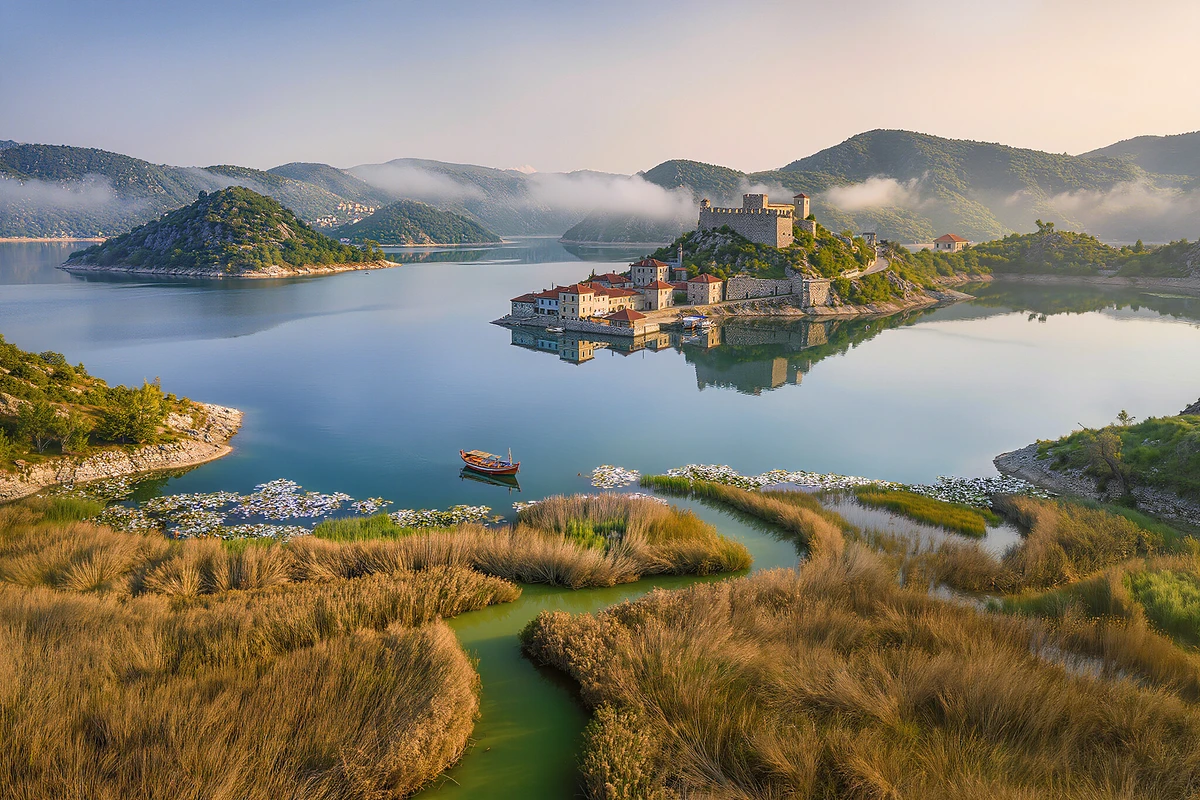
- Cruise Lake Skadar among water lilies, pelicans and island monasteries.
- Hike around Black Lake in Durmitor National Park beneath limestone peaks.
Do’s and don’ts in Montenegro
Do
- Do visit Kotor's old town early or late to avoid cruise-ship crowds.
- Do carry cash for small cafés, boats and mountain villages.
- Do dress modestly for monasteries, covering shoulders and knees.
- Do allow extra time on winding mountain roads.
- Do pack layers; mountain evenings are cool even in summer.
Don’t
- Don't walk through old towns in swimwear or shirtless; fines apply.
- Don't attempt the serpentine road at night if you are unfamiliar with it.
- Don't skip Durmitor or Lake Skadar if your time allows.
- Don't litter on beaches or trails; protected areas are strictly managed.
- Don't assume everywhere takes cards, especially outside the coastal towns.
Montenegro at a glance
Plan Montenegro with Haqqi Tours
Every option is confirmed by our team on WhatsApp before you pay, and delivered by our own people or by trusted local partners we work with in every city. Because we send travellers from all over the world, our partners give us special rates and priority, so you always receive the best. Prices are per person unless marked per vehicle.
About Haqqi Tours: About us Contact us Legal NoticePrivacy PolicyCookies & Marketing PreferencesTerms & ConditionsBooking, Payment & Refunds
Good to know
Frequently Asked Questions
Straight answers to what travellers ask most about Montenegro.
Is it safe to visit Montenegro?
Montenegro is generally considered a safe and relaxed destination, with low levels of crime against visitors. The main risks are practical ones, such as winding mountain roads, summer traffic and strong sun. Take normal precautions, check your own government's official travel advice before departure, and keep our WhatsApp line handy throughout your trip.
How many days do I need for a first trip to Montenegro?
Five to seven days is ideal for a first trip to Montenegro. Allow three or four days around Kotor for the bay, Perast and Budva, one day for Cetinje and Lovćen, and one or two for Lake Skadar or Durmitor. With ten days, combine Montenegro with Albania or Dubrovnik.
What is the best way to travel between Montenegro's major cities?
Roads are the main way to travel between Montenegro's towns, since rail is limited and there are no domestic flights. Buses run along the coast but can be crowded in summer. The most comfortable option is a private car with driver arranged by our team, perfect for mountain roads and flexible stops at viewpoints.
Can a trip to Montenegro be tailored for luxury or private travel?
Absolutely. We can tailor a private journey with boutique hotels in Kotor's old town or along the bay, luxury resorts near Sveti Stefan, private guided day tours, private boat trips and chauffeured transfers throughout. Families and couples receive a personalised plan, with every detail confirmed by our team on WhatsApp before anything is paid.
Is Montenegro tourist friendly?
Yes. Montenegro has a long tradition of welcoming visitors to its coast, with good hotels, restaurants and services in Kotor, Budva and Tivat. Many people working in tourism speak English, and locals are hospitable. Mountain villages are simpler and quieter, and our guides and drivers ensure every day runs smoothly.
Is it safe to travel to Montenegro now?
Travel to Montenegro generally continues normally, with steady numbers of international visitors, especially along the coast. Petty theft is uncommon but possible in crowded old towns during summer. Before departure, check your own government's latest official travel advice and keep our WhatsApp line handy so our team can help at any time.
What is the best time to visit Montenegro?
The best time to visit Montenegro is from May to June and September to early October, when the weather is warm, the sea pleasant and crowds lighter. July and August are ideal for beaches but hot and busy. Winter suits quiet old-town walks in Kotor and skiing in the northern mountains.
What is Montenegro famous for?
Montenegro is famous for the fjord-like Bay of Kotor, the walled UNESCO town of Kotor, the island village of Sveti Stefan, Ostrog Monastery set into a cliff, Durmitor National Park and the Tara Canyon, the deepest in Europe. It is also known for its dramatic coastal roads and warm hospitality.
Which cities in Montenegro does Haqqi Tours cover?
Kotor, Virpazar, Budva and Žabljak. Each city has its own page with everything available there, and a trip across several cities is planned in one WhatsApp conversation.
What can I book in Montenegro?
Day tours, private airport transfers, flight tickets and ferry tickets - all run or confirmed by Haqqi Tours, each with a fixed price agreed on WhatsApp before you pay.
How do I book a tour or transfer in Montenegro?
Fill in the form on the page you are interested in, or message us on WhatsApp with the date, the number of travellers and your hotel. A member of our team confirms the price and the details in writing within minutes.
Are the prices fixed?
Yes. Every price is agreed in writing on WhatsApp before you travel and does not change on the day - not for traffic, not for a late flight, not for the hour.
Do you arrange transfers between cities in Montenegro?
Yes. Intercity transfers by private car or van are booked the same way as airport transfers; tell the desk the two hotels and the date and it quotes a fixed price for the whole vehicle.
Can you plan a full itinerary across Montenegro?
Yes - tell the desk your dates, the cities you want and who is travelling, and it proposes a day-by-day plan with the tours, transfers and tickets priced in writing. You adjust it in the same chat before confirming.
Are your tours private or in a group?
Both exist, and the page of each tour says which. Private tours have a car and guide for your party alone; small-group tours share a guide with a few other travellers. The desk can convert most group tours into a private day on request.
Do the drivers and guides speak Arabic?
It depends on the country, the city and the day, so we do not promise a particular language for the driver or guide. Tell us your preference and we do our best; the WhatsApp desk itself always works in Arabic and English.