
Cook Islands
Haqqi Tours arranges day tours, private airport transfers, attraction tickets and multi-day packages across Cook Islands, confirmed on WhatsApp before you pay.
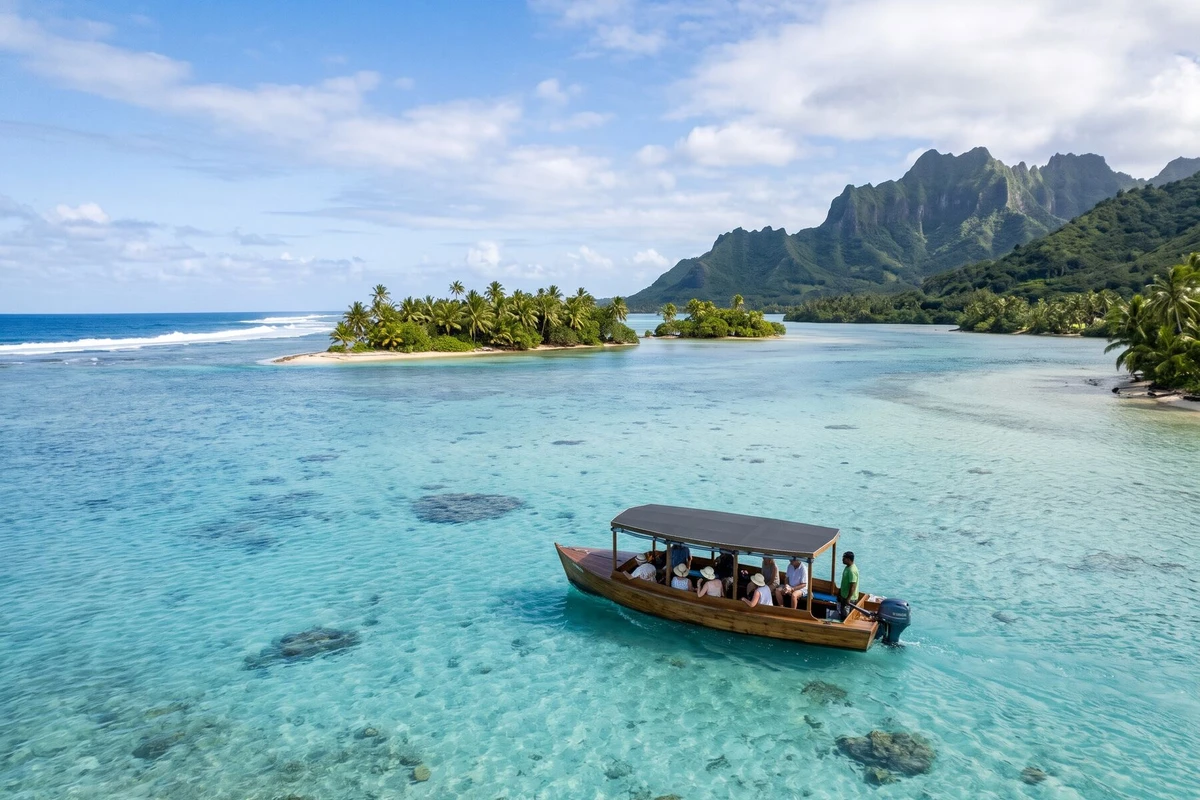
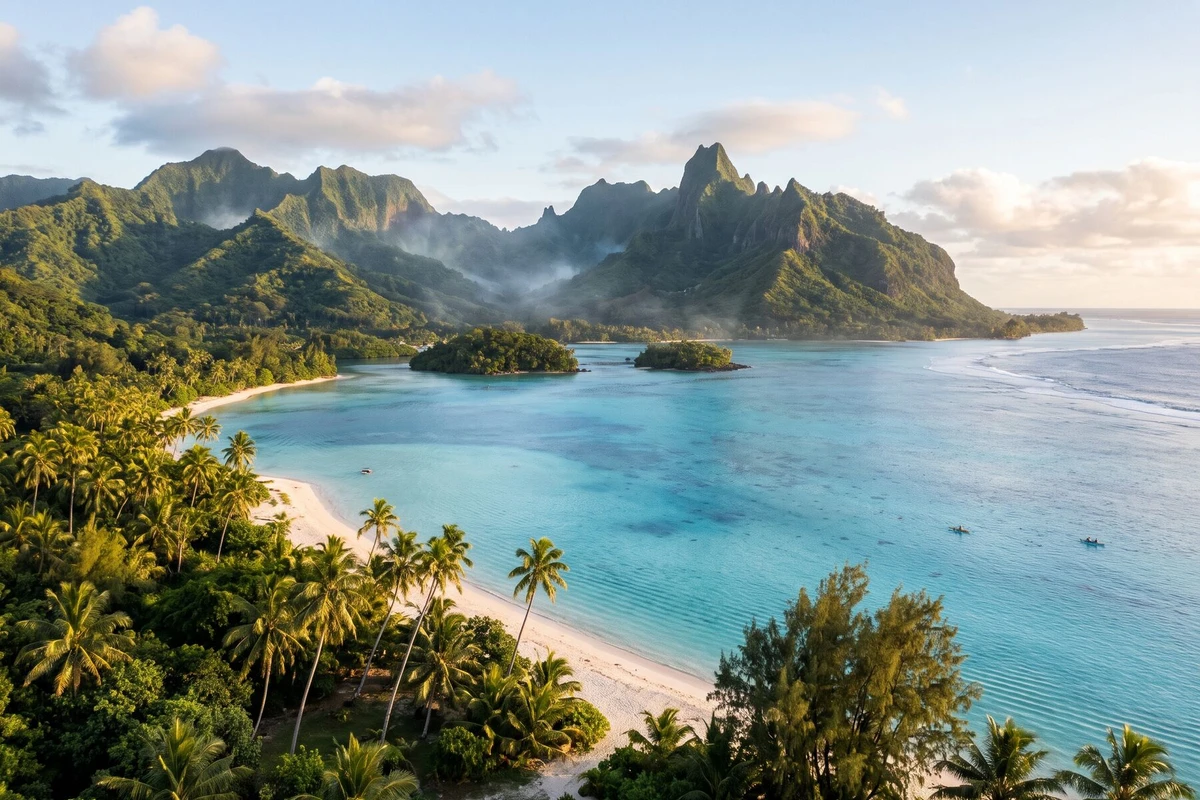
On Rarotonga the day begins with the sound of the reef. Waves break softly on the outer edge of the lagoon, roosters call from the villages and the jagged green peaks of the island's interior catch the first sun above the coconut palms. In Muri Lagoon the water is so clear and shallow that you can watch fish dart between coral heads from the beach, while small islets called motu float offshore like scenes from a postcard.
Destinations
Choose a city to see everything we arrange there.
Services by city in Cook Islands
Tours
The essence of Cook Islands
The Cook Islands are a scattering of islands in the South Pacific, self-governing in free association with New Zealand, with the New Zealand dollar as currency and a proud Polynesian culture of dance, song and voyaging. Rarotonga is small enough to circle by road in under an hour, yet it holds lagoons, mountain trails, ancient sacred sites and turtles in the open water beyond the reef. We arrange the journey with lagoon cruises, turtle swims and private airport transfers, delivered with calm, attentive service.
Why visit Cook Islands?
Voyagers, Chiefs and a Pacific Nation
Polynesian voyagers settled the Cook Islands about a thousand years ago, and tradition holds that great canoes later left from Avana Harbour on Rarotonga to settle Aotearoa, New Zealand. Island life was led by high chiefs, and sacred marae such as Arai-te-Tonga still stand inland. Christian missionaries arrived in the 1820s, the islands became a British protectorate in 1888 and were annexed by New Zealand in 1901, and since 1965 they have governed themselves in free association with New Zealand.
Lagoons, Reefs and Volcanic Peaks
Rarotonga is a volcanic island of steep, forested peaks, ringed by a shallow lagoon and a coral reef that breaks the Pacific swell. Muri Lagoon in the south-east holds four small motu and calm, clear water, while marine reserves called ra'ui protect coral and fish along the coast. Green and hawksbill turtles feed beyond the reef, humpback whales pass between July and October, and to the north, Aitutaki's vast turquoise lagoon is one of the most beautiful in the Pacific.
Ika Mata, Rukau and the Umu Earth Oven
Cook Islands food is fresh and simple. Ika mata, raw fish marinated in lime and coconut cream with vegetables, is the national favourite, rukau is taro leaves slowly cooked in coconut cream, and taro, breadfruit and sweet potato are baked in the umu earth oven for feasts. Tuna, wahoo and mahi-mahi come straight from the boats, and tropical fruit fills the Saturday market. Halal food is limited, so seafood and vegetarian choices are easiest; our team can advise.
Experiences You Can Only Have Here
Glide across Muri Lagoon in a glass-bottomed boat, snorkel over coral gardens and share a fresh fish barbecue on a palm-fringed motu, then head beyond the reef to swim with wild green turtles in the deep blue Pacific. Hike the Cross-Island Track to the rock spire of Te Rua Manga, browse the Saturday market in Avarua, hear Sunday hymns in a coral-lime church and watch a traditional dance show full of energy and colour.
Who is Cook Islands for?
Ideal for
- Couples on a relaxed island escape
- Snorkellers and ocean lovers
- Families with children of all ages
- Hikers seeking jungle trails
- Travellers interested in Polynesian culture
- Visitors adding a break to a New Zealand trip
Pace & travel style
- Stay five to seven nights on Rarotonga
- Plan boat trips and turtle swims for calm days
- Add two or three nights on Aitutaki if you can
- Respect the slower Sunday rhythm
When to visit Cook Islands
Peak season · June–September
The cool, dry season brings sunny days, low humidity and pleasant temperatures, ideal for lagoon cruises, turtle swims and hiking the Cross-Island Track. Humpback whales pass offshore from July to October, and the Te Maeva Nui festival in late July and early August celebrates self-government with dance, song and canoe races. School holidays in New Zealand and Australia make this the busiest period, so reserve tours and transfers well ahead.
Shoulder season · April–May, October–November
These months offer warm days, fewer visitors and mostly settled weather, with the sea still inviting for snorkelling and boat trips. April and May bring the end of the wet season and green landscapes, while October can still offer whale sightings. Late November sees humidity and rain increase as the cyclone season begins, so keep some flexibility, but many days remain bright and calm.
Low season · December–March
The hot, humid wet season brings heavy showers, warmer water and the lushest scenery, with fewer travellers outside the Christmas holidays. This is also cyclone season, peaking between January and March, and lagoon cruises and turtle swims depend on the wind and swell. Travel insurance, flexible dates and close attention to forecasts are wise, but sunny spells between the rain can be glorious.
The regions of Cook Islands and how to combine its cities
The Cook Islands lie in the South Pacific between Tahiti and Samoa, spread across a huge area of ocean. The Southern Group holds most of the population and the main visitor islands: Rarotonga, the largest and the seat of government, with its town of Avarua, and Aitutaki to the north, famous for its lagoon. Atiu, Mangaia and Mauke are quieter raised coral islands with caves, birdlife and traditional villages.
Rarotonga is ringed by a coastal road with villages along the shore. Avarua on the north coast holds the market, the harbour and the main shops, Muri in the south-east has the lagoon and its motu, Titikaveka on the south coast offers calm snorkelling, and Arorangi in the west looks out over sunsets and the Aroa marine reserve. The remote Northern Group, including Manihiki and Penrhyn, is known for black pearls and wide atolls.
Our city directory below is anchored in Rarotonga, the natural base for most visitors. Here we arrange lagoon cruises with snorkelling and a fresh fish barbecue, guided swims with turtles beyond the reef and island sightseeing, and our private drivers handle transfers from Rarotonga International Airport (RAR). The Cook Islands pair naturally with New Zealand, and short flights connect Rarotonga with Aitutaki.
Before you go: practical tips for Cook Islands
Entry & visas
Visitors of most nationalities can usually enter the Cook Islands without a visa for a stay of up to thirty-one days, with a passport valid for at least six months, a return or onward ticket and confirmed accommodation. Longer stays require an extension. Most travellers connect through New Zealand or Australia, where their own entry and transit rules apply, so check the current rules for every country on your route before you travel.
Money, cards & tipping
The currency is the New Zealand dollar, and the Cook Islands also issue their own notes and coins, which are used locally but cannot be exchanged abroad. Cards are accepted in most hotels, restaurants and larger shops, while the market, roadside stalls and small cafés prefer cash. Cash machines are found in Avarua and Muri. Tipping is not a local custom, though it is appreciated for exceptional service.
Etiquette & dress code
Cook Islanders are warm and relaxed, and the greeting kia orana, meaning may you live long, is used everywhere. Dress modestly away from the beach, especially in villages and churches, where visitors are welcome at Sunday services if they cover shoulders and knees. Sunday is a quiet day of rest when many businesses close. Respect ra'ui marine reserves, never touch coral or turtles, and ask before entering marae or photographing people.
Getting around
Rarotonga has one coastal road around the island, and the island bus runs both clockwise and anticlockwise, stopping wherever you wave it down. Scooters, bicycles and rental cars are popular, with traffic on the left, low speed limits and helmets required on scooters. Short domestic flights link Rarotonga with Aitutaki, Atiu and the other islands. For arrivals at Rarotonga International Airport (RAR), lagoon cruises and turtle swims, our private transfers are the most comfortable choice.
Must-do things in Cook Islands
- Cruise Muri Lagoon in a glass-bottomed boat
- Share a fresh fish barbecue on a palm-fringed motu
- Swim with wild turtles beyond the reef
- Snorkel the coral gardens of a marine reserve
- Hike the Cross-Island Track to Te Rua Manga
- Browse Punanga Nui Market in Avarua on a Saturday
- Hear Sunday hymns at a coral-lime church
- Watch a traditional Cook Islands dance show
- Circle the island on the coastal road
- Fly to Aitutaki for its turquoise lagoon
Do’s and don’ts in Cook Islands
Do
- Do greet people with kia orana
- Do use reef-safe sunscreen in the lagoon
- Do plan boat trips for calm, sunny days
- Do cover up in villages and churches
- Do carry cash for markets and stalls
Don’t
- Don't touch, chase or ride turtles
- Don't swim near the reef passages where currents run
- Don't take coral or shells from the lagoon
- Don't walk onto marae without permission
- Don't expect shops to open on Sunday
Cook Islands at a glance
Plan Cook Islands with Haqqi Tours
Every option is confirmed by our team on WhatsApp before you pay, and delivered by our own people or by trusted local partners we work with in every city. Because we send travellers from all over the world, our partners give us special rates and priority, so you always receive the best. Prices are per person unless marked per vehicle.
About Haqqi Tours: About us Contact us Legal NoticePrivacy PolicyCookies & Marketing PreferencesTerms & ConditionsBooking, Payment & Refunds
Where we operate in Cook Islands
Good to know
Frequently Asked Questions
Straight answers to what travellers ask most about Cook Islands.
Is it safe to visit the Cook Islands?
The Cook Islands are generally considered very safe, with friendly communities and a calm pace. The main risks come from the sea: strong currents in reef passages, sunburn and coral cuts. Swim inside the lagoon unless you are with a guide, wear a helmet on scooters and follow local advice. Check your own government's official travel advice before departure, and keep our WhatsApp line handy.
How many days do I need in the Cook Islands?
Five to seven days on Rarotonga work well for a first visit: time for a lagoon cruise, a turtle swim, the Cross-Island Track, the Saturday market and slow beach days. With ten days or more, add two or three nights on Aitutaki for its lagoon, or a few days on Atiu for caves and birdlife.
Can you really swim with turtles in Rarotonga?
Yes. Green and hawksbill turtles feed in the waters around Rarotonga, and guided boat trips take small groups beyond the reef on calm days to snorkel alongside them in clear, deep water. Guides brief you on keeping a respectful distance and never touching the turtles. Sightings are common but, as with all wildlife, not guaranteed.
Can a trip to the Cook Islands be tailored for luxury or private travel?
Absolutely. Rarotonga and Aitutaki offer boutique resorts, beachfront villas and over-water bungalows on Aitutaki. We can tailor private lagoon trips, guided turtle swims, island tours with a private driver, chauffeured airport transfers and a relaxed family pace, then confirm every detail with you on WhatsApp before anything is paid.
What is the best time to visit the Cook Islands?
June to September is the best time to visit, with cool, dry, sunny weather and calm conditions for lagoon cruises and turtle swims, plus humpback whales from July. April, May, October and November are warm and quieter, while December to March is hot, wet and the cyclone season.
What are the Cook Islands famous for?
The Cook Islands are famous for Aitutaki's turquoise lagoon and the motu of Muri Lagoon on Rarotonga, for warm Polynesian hospitality and energetic traditional dance, and for Sunday hymn singing. They are also known for black pearls from the northern atolls, ika mata, the Cross-Island Track and turtles in the waters around Rarotonga.
Is halal food available in the Cook Islands?
Halal options are very limited, and there are no dedicated halal restaurants on Rarotonga. Fresh fish, ika mata, seafood, vegetarian dishes, taro and tropical fruit are easy to find, and supermarkets and markets help with self-catering. Pork is common at feasts, so ask when ordering; our team can advise on suitable places.
How do I get to Muri from the airport?
Rarotonga International Airport (RAR) lies on the north coast just west of Avarua, about five minutes from town and around twenty to twenty-five minutes by road from Muri along the coastal road. Many flights arrive at night or early morning. We arrange a private transfer with a driver waiting at arrivals to take you directly to your hotel.
Which cities in Cook Islands does Haqqi Tours cover?
Rarotonga. Each city has its own page with everything available there, and a trip across several cities is planned in one WhatsApp conversation.
What can I book in Cook Islands?
Day tours - all run or confirmed by Haqqi Tours, each with a fixed price agreed on WhatsApp before you pay.
How do I book a tour or transfer in Cook Islands?
Fill in the form on the page you are interested in, or message us on WhatsApp with the date, the number of travellers and your hotel. A member of our team confirms the price and the details in writing within minutes.
Are the prices fixed?
Yes. Every price is agreed in writing on WhatsApp before you travel and does not change on the day - not for traffic, not for a late flight, not for the hour.
Do you arrange transfers between cities in Cook Islands?
Yes. Intercity transfers by private car or van are booked the same way as airport transfers; tell the desk the two hotels and the date and it quotes a fixed price for the whole vehicle.
Can you plan a full itinerary across Cook Islands?
Yes - tell the desk your dates, the cities you want and who is travelling, and it proposes a day-by-day plan with the tours, transfers and tickets priced in writing. You adjust it in the same chat before confirming.
Are your tours private or in a group?
Both exist, and the page of each tour says which. Private tours have a car and guide for your party alone; small-group tours share a guide with a few other travellers. The desk can convert most group tours into a private day on request.
Do the drivers and guides speak Arabic?
It depends on the country, the city and the day, so we do not promise a particular language for the driver or guide. Tell us your preference and we do our best; the WhatsApp desk itself always works in Arabic and English.