
Paraguay
Haqqi Tours arranges day tours, private airport transfers, attraction tickets and multi-day packages across Paraguay, confirmed on WhatsApp before you pay.
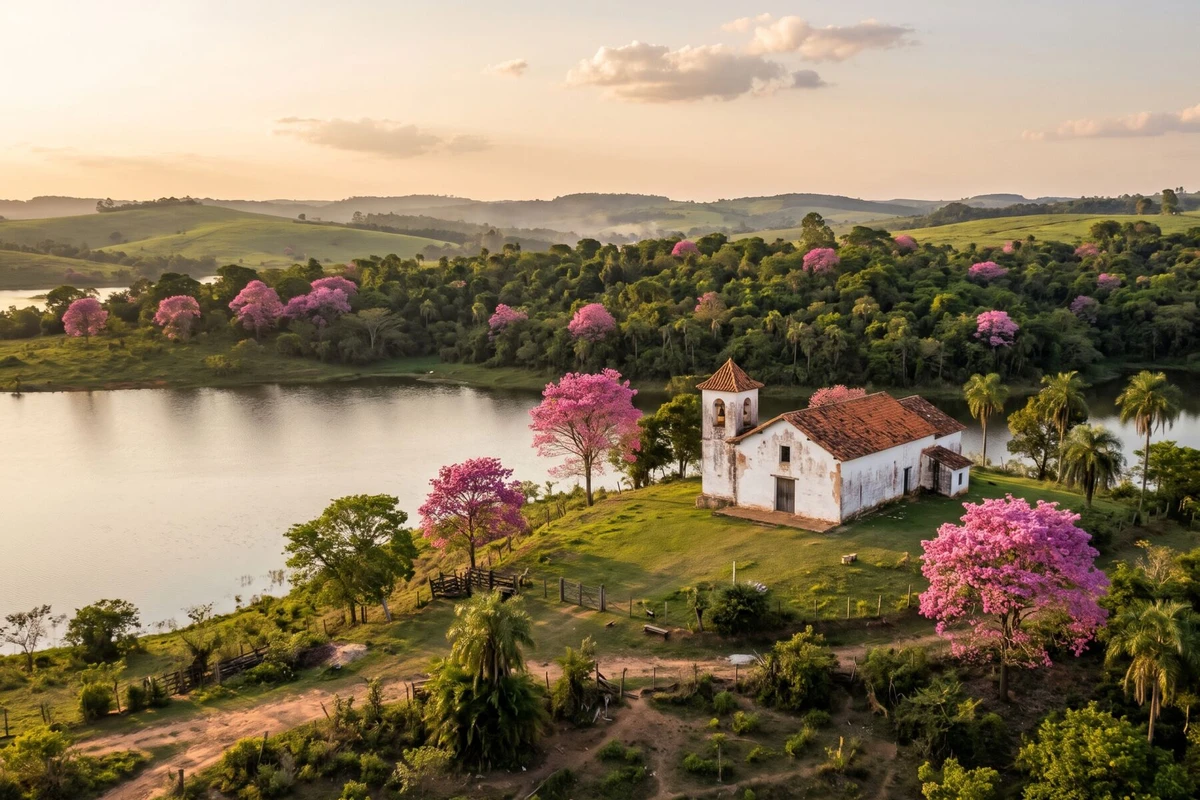
Half an hour east of Asuncion, the town of Areguá climbs a green hill above Lake Ypacaraí. Cobbled lanes lead past colonial houses with shady verandas, potters set out rows of clay figures and painted pots on the pavements, and in the cooler months stalls overflow with bright red strawberries grown on the surrounding farms. From the hilltop church the lake stretches silver to the far shore, and nearby the strange hexagonal sandstone columns of Cerro Koi rise from the forest like a giant's honeycomb.
Destinations
Choose a city to see everything we arrange there.
Services by city in Paraguay
Tours
The essence of Paraguay
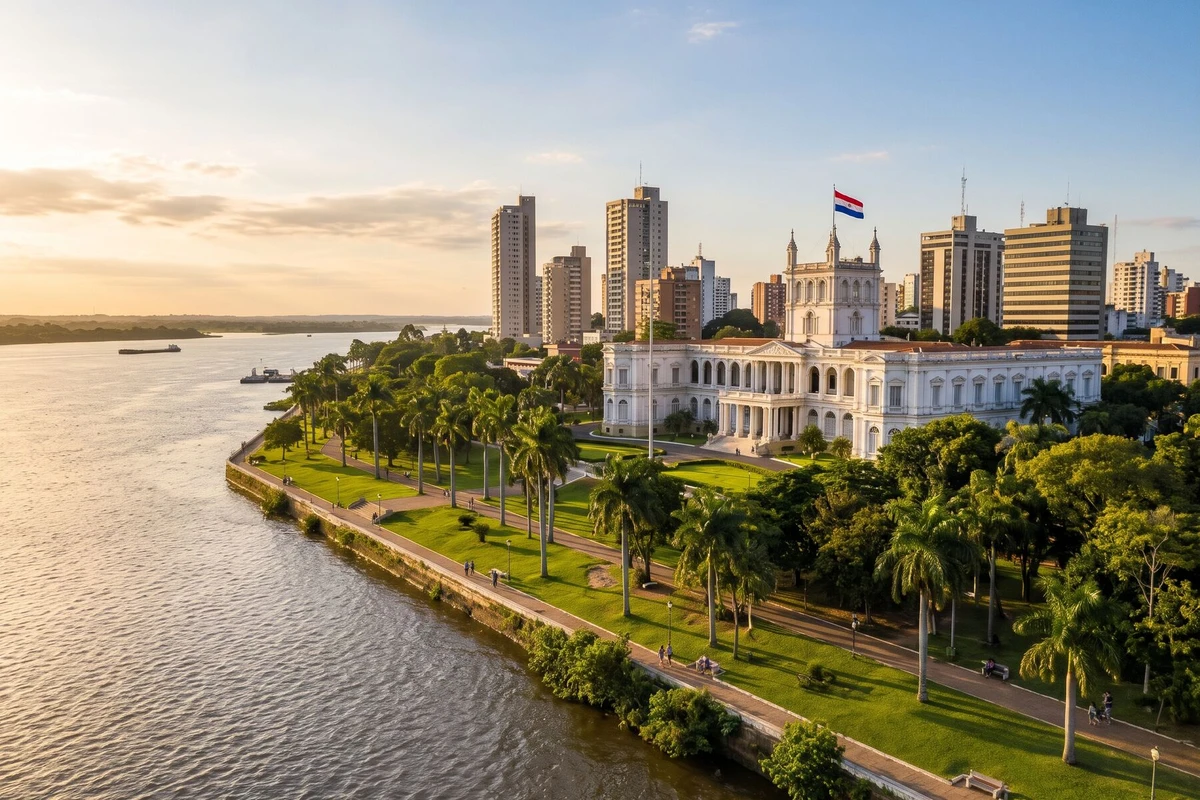
Paraguay is one of South America's least visited countries, and that is its charm. In Asuncion, among the oldest cities on the continent, the government palace glows above the Paraguay River, friends pass around cups of ice-cold tereré in the plazas, and the Guarani language is spoken as naturally as Spanish. Paraguay is unique because a living indigenous language, Jesuit heritage and quiet country towns survive here at an unhurried pace. We arrange the journey with culture tours, lakeside day trips and private airport transfers, delivered with calm, attentive service.
Why visit Paraguay?
Guarani Roots and Jesuit Missions
Long before Europeans arrived, Guarani peoples farmed the forests and rivers of this region, and their language remains an official language spoken by most Paraguayans today. Asuncion was founded in 1537 and became the base from which Spanish settlers spread across the south of the continent. In the seventeenth and eighteenth centuries Jesuit missions gathered Guarani communities into towns whose ruins at Trinidad and Jesús are listed by UNESCO, and Paraguay declared independence in 1811.
Rivers, Lakes and the Chaco
The Paraguay River divides the country in two. To the east lies a green land of rolling hills, lakes, farmland and Atlantic forest, with Lake Ypacaraí near the capital and the Paraná River in the south feeding the great waterfalls of Iguazú just across the border. To the west stretches the Chaco, a vast dry plain of thorn forest, palm savannah and wetlands where jaguars, giant anteaters and rheas live and towns are few and far apart.
Chipa, Sopa Paraguaya and Tereré
Paraguayan food is built on corn, cassava and cheese. Chipa, a chewy cheese bread baked in ring shapes, is sold on every street corner, sopa paraguaya is, surprisingly, a solid cornbread, and mbejú is a crisp cassava pancake. Vori vori soup with corn dumplings, grilled beef and river fish such as surubí complete the table, and tereré, cold herbal mate shared from one cup, is a national ritual recognised by UNESCO. Halal food is limited; our team can advise.
Experiences You Can Only Have Here
Wander the potters' lanes of Areguá and look out over Lake Ypacaraí from the hilltop church, then touch the hexagonal stone columns of Cerro Koi. In Asuncion, stand before the lit government palace at dusk, step into the Casa de la Independencia where the nation was born, and browse the crowded maze of Mercado 4. Watch women weave delicate ñandutí spider-web lace in Itauguá, and walk among the red sandstone ruins of the Jesuit missions in the south.
Who is Paraguay for?
Ideal for
- Curious travellers seeking places off the beaten track
- Culture lovers drawn to living traditions
- History lovers interested in the Jesuit missions
- Craft lovers and collectors of handmade work
- Travellers combining Iguazú and South America
- Nature lovers and birdwatchers
Pace & travel style
- Base yourself in Asuncion and travel out by day
- Plan outdoor visits for the morning in hot months
- Three nights for the capital and the lake towns
- Add two or three nights for the missions or Iguazú
When to visit Paraguay
Peak season · May–September
The southern winter brings Paraguay its most comfortable weather, with mild sunny days, cool evenings and little rain, ideal for walking Asuncion's historic centre and visiting Areguá and the towns around Lake Ypacaraí. Strawberry season fills the stalls of Areguá in the cooler months, and the San Juan festival in June lights up neighbourhoods with traditional fire games and food. Occasional cold snaps bring chilly nights, so pack a warm layer and reserve tours and transfers ahead.
Shoulder season · April, October
April and October are warm and pleasant, with blossoming lapacho trees painting Asuncion pink and yellow in early spring and green countryside after the first rains. These months suit longer journeys to the Jesuit missions, Iguazú and the Chaco, before or after the strongest heat. Short thunderstorms are possible, and temperatures can climb quickly in October, so keep plans flexible around the weather.
Low season · November–March
Summer is hot and humid, with very high temperatures in December, January and February and heavy afternoon thunderstorms. Many residents of Asuncion head to the lakes and rivers, and the city is quieter. The pilgrimage to the basilica of Caacupé on 8 December draws great crowds, and carnival parades fill Encarnación in early year. Plan sightseeing for mornings, rest in the heat of the day, and consider travel insurance and flexible dates.
The regions of Paraguay and how to combine its cities
Paraguay is a landlocked country in the heart of South America, bordered by Argentina to the south and west, Brazil to the east and Bolivia to the north-west. Asuncion sits on the eastern bank of the Paraguay River and is the country's capital and gateway, with its historic centre close to the water and greener residential districts such as Villa Morra and Recoleta inland.
East of the capital, the Golden Circuit links the lake towns of Areguá and San Bernardino, the craft town of Itauguá, the basilica of Caacupé and the colonial church of Yaguarón. In the south, Encarnación faces Argentina across the Paraná and lies close to the Jesuit missions, while Ciudad del Este in the east borders Brazil near the great Itaipú dam and Iguazú Falls. The western Chaco is wild and remote, with Mennonite farming towns around Filadelfia.
Our city directory below is anchored in Asuncion, the natural base for a first visit. From the capital we arrange culture tours to Areguá and Lake Ypacaraí and private day trips around the Golden Circuit, while our private drivers handle transfers from Asuncion airport (ASU). Paraguay also pairs naturally with Iguazú Falls on the Argentine and Brazilian sides, or with Buenos Aires across the border.
Before you go: practical tips for Paraguay
Entry & visas
Citizens of many countries, including European Union nations, the United Kingdom, the United States and most South American states, can visit Paraguay without a visa for short stays, usually up to ninety days. Other nationalities must apply for a visa in advance, and rules change from time to time. Travellers continuing to Iguazú may also need to meet Argentine or Brazilian entry rules. A passport valid for at least six months is expected, so check the current rules before you travel.
Money, cards & tipping
The currency is the Paraguayan guaraní. Cards are widely accepted in Asuncion's hotels, malls, supermarkets and restaurants, but cash is needed in markets, small towns, craft stalls and for local transport. Cash machines are common in the capital and larger towns, and exchange offices are easy to find in the centre and in border cities. Tipping around ten percent in restaurants and rounding up for drivers and guides is customary for good service.
Etiquette & dress code
Paraguayans are warm, relaxed and courteous, and a friendly buen día or the Guarani greeting mba'éichapa is always appreciated. Greetings are often accompanied by a handshake or a light kiss on the cheek among friends. If someone offers you tereré, it is a gesture of welcome; you may simply say thank you when you have had enough. Dress neatly in churches, ask before photographing people, and expect a slow, patient pace in the heat of the day.
Getting around
Asuncion has city buses and plenty of taxis and ride-hailing services, and the historic centre is walkable. Long-distance buses link the capital with Encarnación, Ciudad del Este and the Chaco, and journeys can be long and slow. Traffic drives on the right, and rural roads vary in quality. For airport arrivals, day trips to Areguá and the lake towns and journeys to the missions, our private transfers with experienced drivers are the most comfortable choice.
Must-do things in Paraguay
- Explore the potters' lanes and hilltop church of Areguá
- Look out over Lake Ypacaraí at sunset
- See the hexagonal stone columns of Cerro Koi
- Admire the government palace lit up at dusk
- Visit the Casa de la Independencia in Asuncion
- Browse the crowded maze of Mercado 4
- Watch ñandutí lace being woven in Itauguá
- Taste fresh chipa, mbejú and sopa paraguaya
- Share a cup of ice-cold tereré in a plaza
- Walk the ruins of the Jesuit missions of Trinidad and Jesús
Do’s and don’ts in Paraguay
Do
- Carry guaraníes in small notes for markets
- Plan outdoor visits early in the hot months
- Bring sun protection, a hat and insect repellent
- Learn a few words of Spanish or Guarani
- Taste chipa fresh from street vendors
Don’t
- Don't walk alone through quiet streets late at night
- Don't leave valuables visible in vehicles
- Don't underestimate the summer heat
- Don't rush; Paraguay moves at an unhurried pace
- Don't drink tap water outside major hotels
Paraguay at a glance
Plan Paraguay with Haqqi Tours
Every option is confirmed by our team on WhatsApp before you pay, and delivered by our own people or by trusted local partners we work with in every city. Because we send travellers from all over the world, our partners give us special rates and priority, so you always receive the best. Prices are per person unless marked per vehicle.
About Haqqi Tours: About us Contact us Legal NoticePrivacy PolicyCookies & Marketing PreferencesTerms & ConditionsBooking, Payment & Refunds
Where we operate in Paraguay
Good to know
Frequently Asked Questions
Straight answers to what travellers ask most about Paraguay.
Is it safe to visit Paraguay?
Paraguay welcomes a growing number of visitors, and Asuncion's central districts and the lake towns are generally relaxed. As anywhere, take sensible precautions: keep valuables out of sight, avoid quiet streets late at night and use licensed taxis, guides and drivers. Check your own government's official travel advice before departure, and keep our WhatsApp line handy for help with tours and transfers.
How many days do I need in Paraguay?
Three to four days work well for a first visit focused on Asuncion: one day for the historic centre and markets, one for Areguá and Lake Ypacaraí, and one for the craft towns and churches of the Golden Circuit. With a week or more you can add the Jesuit missions near Encarnación and Iguazú Falls in the east.
What is Areguá known for?
Areguá is a historic lakeside town about thirty kilometres east of Asuncion, known for its colonial houses, its hilltop church overlooking Lake Ypacaraí and its community of potters and artisans, whose clay figures line the streets. It is also famous for strawberries grown on nearby farms in the cooler months, and for Cerro Koi, a protected hill of unusual hexagonal sandstone columns.
Can a trip to Paraguay be tailored for luxury or private travel?
Yes. Asuncion offers elegant hotels in Villa Morra and Recoleta, and lakeside and country lodges are available outside the city. We can tailor private culture tours with a guide, day trips to Areguá and the Golden Circuit, chauffeured airport transfers and a relaxed family pace, then confirm every detail with you on WhatsApp before anything is paid.
What is the best time to visit Paraguay?
May to September is the best time for most travellers, with mild, dry and sunny weather that suits sightseeing in Asuncion and trips to the lake towns. April and October are warm and pleasant, while November to March is very hot and humid, with strong afternoon storms.
What is Paraguay famous for?
Paraguay is famous for the Guarani language and culture, for the Jesuit missions of Trinidad and Jesús, for tereré, the cold herbal drink shared among friends, and for ñandutí lace. It is also known for the great Itaipú dam, for its proximity to Iguazú Falls, for the wild Chaco, for chipa and sopa paraguaya, and for its warm, unhurried hospitality.
Is halal food available in Paraguay?
Halal options are limited in Asuncion, with only a few places offering halal meat; there is more choice in Ciudad del Este, which has a long-established Muslim community and mosques. Fish, vegetarian dishes, chipa, salads, fruit and corn and cassava dishes are easy to find. Pork appears in some local dishes, so ask when ordering; our team can advise.
How do I get to Asuncion from the airport?
Asuncion airport (ASU) lies in the town of Luque, about fifteen kilometres from the city centre, or around twenty-five to forty minutes by road depending on traffic. Taxis and ride-hailing services are available, but after a long flight a pre-arranged car is easiest. We arrange a private transfer with a driver waiting at arrivals to take you directly to your hotel.
Which cities in Paraguay does Haqqi Tours cover?
Asuncion. Each city has its own page with everything available there, and a trip across several cities is planned in one WhatsApp conversation.
What can I book in Paraguay?
Day tours - all run or confirmed by Haqqi Tours, each with a fixed price agreed on WhatsApp before you pay.
How do I book a tour or transfer in Paraguay?
Fill in the form on the page you are interested in, or message us on WhatsApp with the date, the number of travellers and your hotel. A member of our team confirms the price and the details in writing within minutes.
Are the prices fixed?
Yes. Every price is agreed in writing on WhatsApp before you travel and does not change on the day - not for traffic, not for a late flight, not for the hour.
Do you arrange transfers between cities in Paraguay?
Yes. Intercity transfers by private car or van are booked the same way as airport transfers; tell the desk the two hotels and the date and it quotes a fixed price for the whole vehicle.
Can you plan a full itinerary across Paraguay?
Yes - tell the desk your dates, the cities you want and who is travelling, and it proposes a day-by-day plan with the tours, transfers and tickets priced in writing. You adjust it in the same chat before confirming.
Are your tours private or in a group?
Both exist, and the page of each tour says which. Private tours have a car and guide for your party alone; small-group tours share a guide with a few other travellers. The desk can convert most group tours into a private day on request.
Do the drivers and guides speak Arabic?
It depends on the country, the city and the day, so we do not promise a particular language for the driver or guide. Tell us your preference and we do our best; the WhatsApp desk itself always works in Arabic and English.