
Paje
Plan Paje with Haqqi Tours: day tours, private airport transfers, attraction tickets and packages, run by our own team and confirmed on WhatsApp in Arabic or English.
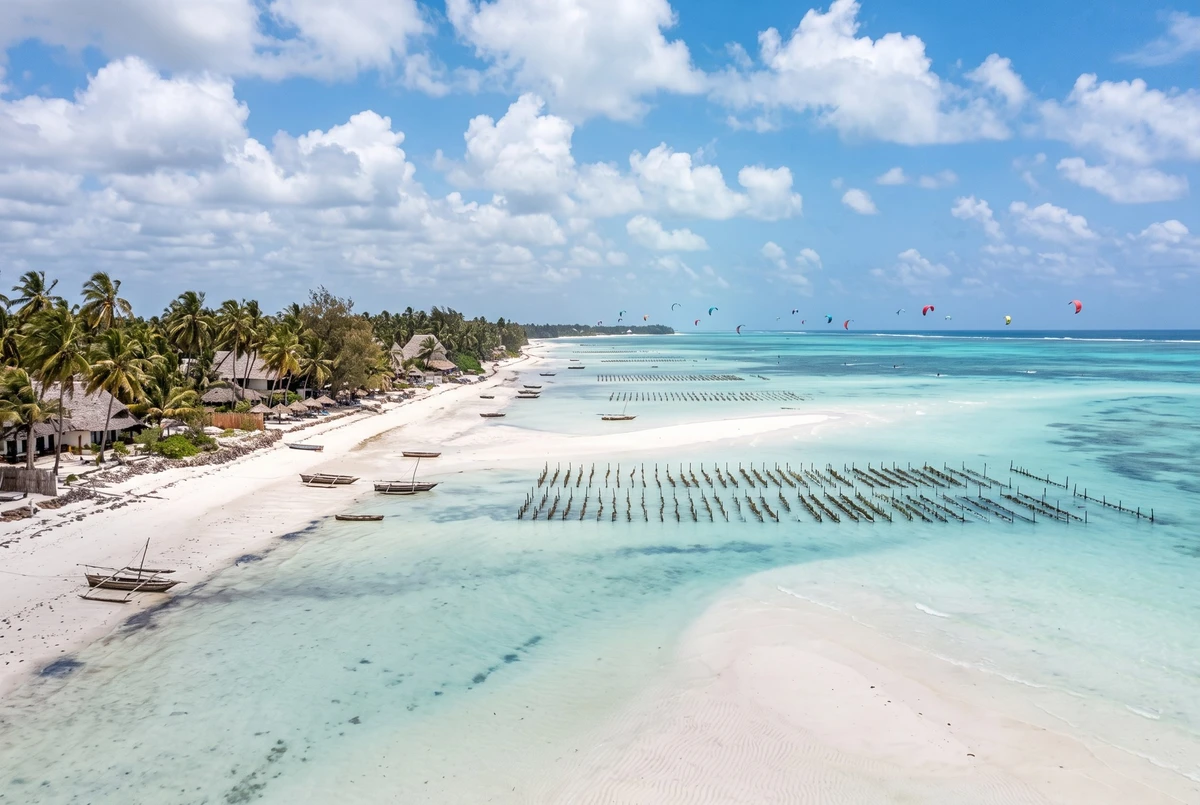
At Paje the tide decides the day. In the morning the lagoon is a sheet of pale turquoise stretching to the white line of the reef, and kites in every colour skim across it in the steady breeze. By early afternoon the sea has drawn back almost to the horizon, and the wet sand becomes a vast mirror where women in bright kangas tend rows of seaweed and children hunt for starfish in the pools. Then the water returns, warm and knee-deep, as the first stars come out over the Indian Ocean.
Nothing matches those filters yet. Widen your search or message us on WhatsApp.
Paje Day Tours
View all Paje Airport Transfers
View all

Paje at first sight
Paje sits at the centre of Zanzibar's south-east coast, a village of sandy lanes and casuarina trees between Bwejuu to the north and Jambiani to the south. The beach is wide and white, the reef keeps the lagoon calm, and the wind that empties it twice a day has made Paje one of the best-known kitesurfing spots in Africa. It is a relaxed, low-rise coast for travellers who want sea, sky and village life rather than big resorts.
Why include Paje in your itinerary?
- A beach with a rhythm of its own. The south-east lagoon changes completely with the tide, from glassy swimming water to a walkable sandflat alive with seaweed farmers and seabirds, and watching that cycle from a hammock is half the pleasure of Paje.
- Wind, kites and the Blue Lagoon. From December to March and June to September the trade winds blow steadily across shallow, flat water, perfect for learning to kitesurf, while the Blue Lagoon off Michamvi and the reefs of Jambiani give calm snorkelling on the days you prefer a mask to a kite.
- Village life and the island on the doorstep. Paje, Jambiani and Bwejuu are real Swahili villages where you buy bread from a bicycle and eat grilled fish under a palm roof, and Jozani forest, the Kizimkazi dolphins, Kuza cave and Stone Town are all within an hour's drive.
Signature experiences in Paje
Kitesurfing on the Lagoon
Paje's lagoon is shallow, flat and warm, with a steady onshore breeze in season, which makes it one of the easiest places anywhere to learn to kitesurf and one of the most rewarding for experienced riders. Schools line the beach with instructors who teach in several languages, and beginners stand in waist-deep water for their first runs. We can arrange lessons and equipment as part of your stay, timed to the best wind months.
The Rock, Michamvi and the Blue Lagoon
North of Paje the coast runs past the quiet beach of Bwejuu to the Michamvi peninsula, where a restaurant known simply as The Rock stands on a coral outcrop off Pingwe beach, reached on foot at low tide and by boat when the sea returns. On the sheltered Chwaka Bay side of the peninsula, the Blue Lagoon is a calm snorkelling spot of coral heads and reef fish, and the beach at Michamvi Kae faces west, giving this coast its only sunset over the sea.
Jambiani Village and Kuza Cave
Jambiani, a few minutes south, is a long traditional village where seaweed farming, fishing and boat building shape the day. Inland, Kuza cave is a limestone cavern with a pool of clear, cool fresh water deep enough to swim in, surrounded by a small cultural centre where villagers share Swahili drumming, cooking and stories. We include the village, the seaweed farms and the cave in our south-coast day tours.
Jozani Forest and the Kizimkazi Dolphins
About twenty minutes inland, Jozani Chwaka Bay National Park shelters the Zanzibar red colobus monkey, found nowhere else, along with a mangrove boardwalk and a cool, green forest trail. Further south, boats from Kizimkazi go out at dawn to look for bottlenose and humpback dolphins; sightings are common but never guaranteed, and our crews keep a respectful distance. The two combine easily into one morning from Paje.
Stone Town and the Spice Farms for the Day
The old town is about an hour from Paje, which makes a day trip comfortable: a spice farm on the way, then the carved doors, the Old Fort, the Darajani market and sunset at Forodhani Gardens, or a boat to Prison Island and the Nakupenda sandbank from the seafront. Our guided day tours pick you up from your hotel in Paje and return you to the coast in the evening.
Neighbourhoods and quarters to know in Paje
Paje Village and Beach
The centre of the coast, with kite schools, beach restaurants, guesthouses and a few larger hotels along a wide stretch of sand. It is the liveliest and most convenient base, with the most choice of places to eat and the main road to Stone Town running behind the village. Ideal for first-time visitors, kitesurfers and anyone who wants everything within a short walk.
Jambiani
South of Paje, Jambiani is longer, quieter and more traditional, with small lodges and guesthouses spread along a beach where village life continues around them. Evenings are calm and the sense of place is strong. It suits travellers who want a slower pace, cultural visits and a village feel while staying a few minutes from Paje's kite beach.
Bwejuu
To the north, Bwejuu is a sleepy village with a beautiful empty beach shaded by palms and a handful of small hotels. There is little to do in the village itself, which is precisely the appeal: hammocks, the tide and long walks on the sand. A good choice for couples and for travellers who want the south-east coast at its quietest.
Michamvi and Pingwe
At the tip of the peninsula, Michamvi has resort-style hotels on both coasts: Pingwe facing the open ocean and the reef, and Michamvi Kae facing the calm bay and the sunset. It is the most secluded part of the coast, about twenty minutes from Paje by road, with the Blue Lagoon for snorkelling and some of the best beaches on the island.
How long to stay in Paje and how to pair it
Recommended stay
We recommend four or five nights on the Paje coast. One morning for Jozani forest and the Kizimkazi dolphins, one for Jambiani village and Kuza cave, one day for Stone Town and a spice farm, and the rest for the beach, the tide and the kites. Kitesurfers learning from scratch should allow at least three days of lessons. A week in Zanzibar often pairs Paje with Stone Town or the northern beaches.
How to pair it
Paje pairs naturally with Stone Town, about an hour by road, for two or three nights of old-town lanes, spice farms and islands, and with Nungwi and Kendwa in the north, about an hour and a half away, where the beach is swimmable at every tide and the sun sets over the sea. From the island, a fast ferry of about two hours or a twenty-minute flight reaches Dar es Salaam, and a flight of about an hour and a quarter reaches Kilimanjaro for safaris from Arusha and the Kilimanjaro foothills at Moshi. Two weeks combine a northern safari with the Zanzibar coasts, and Kenya's Nairobi and Mombasa link by air for a longer East African journey.
Best time to visit Paje and the rhythm of the day
Best months
The best time to visit Paje is from June to October, when the south-east monsoon brings dry weather, cooler air and steady wind for kitesurfing, and from mid-December to March, when the north-east monsoon returns the wind with hotter days and calmer snorkelling conditions. April and May are the wettest months, when many hotels close, and November brings short rains with little wind. Tides matter more than season on this coast: check the tide tables when planning swims and kite sessions.
The daily rhythm
The day at Paje follows the tide and the wind. Mornings are for swimming or snorkelling at high water, or for a trip to Jozani and Kizimkazi before the heat. When the lagoon empties, the beach becomes a place to walk, watch the seaweed farmers and shelter under the casuarinas. The wind builds through the afternoon and the kites fill the sky until sunset. Evenings are long dinners of grilled fish and coconut rice under palm roofs, with the sound of the reef in the dark.
On-the-ground logistics in Paje
Arrival
Abeid Amani Karume International Airport (ZNZ) is about an hour from Paje by road, across the island through Jozani forest, and the ferry port in Stone Town is a similar distance. Jambiani is a few minutes further south and Michamvi about twenty minutes north. We arrange private airport and port transfers to any hotel on the south-east coast, as well as ferry tickets from Dar es Salaam and flights from Kilimanjaro or Dar, with our driver waiting at arrivals.
Getting around
Paje village and its beach are easily walked, and at low tide you can walk along the sand to Jambiani or Bwejuu. Bicycles are available from many hotels for the flat coast road. Taxis and dala-dala minibuses connect the villages and run to Stone Town, but for Jozani, Kizimkazi, Michamvi and the old town a private car with driver arranged by our team is the most comfortable option.
Local etiquette tip
Paje, Jambiani and Bwejuu are conservative Muslim villages, so swimwear stays on the beach and hotel grounds; cover shoulders and knees on the village lanes, in shops and at Kuza cave. Ask before photographing the seaweed farmers and children, and during Ramadan be discreet about eating and drinking in public by day. Drinks of all kinds are for hotel and restaurant terraces, not the village. Give way to kites on the beach, never touch coral, and buy no shells or coral from vendors.
Must-do things in Paje
- Learn to kitesurf on the shallow Paje lagoon
- Walk out across the sandflats at low tide
- Watch the seaweed farmers at work off Jambiani
- Swim in the cool freshwater pool of Kuza cave
- Snorkel the Blue Lagoon off Michamvi
- See the restaurant on the rock at Pingwe beach
- Watch the sunset over the bay from Michamvi Kae
- Meet the red colobus monkeys of Jozani forest
- Look for dolphins at dawn off Kizimkazi
- Take a day trip to Stone Town and a spice farm
Do’s and don’ts in Paje
Do
- Do check the tide tables before planning swims
- Do wear reef shoes on the lagoon floor at low tide
- Do cover up when walking through the villages
- Do use reef-safe sunscreen and a rash vest in the wind
- Do book kite lessons for the windy months
Don’t
- Don't expect to swim at the beach at low tide
- Don't touch coral or sea urchins in the lagoon
- Don't wear swimwear in the village or the shops
- Don't photograph the seaweed farmers without asking
- Don't buy shells, coral or turtle products
Paje at a glance
Plan Paje with Haqqi Tours
Every option is confirmed by our team on WhatsApp before you pay, and delivered by our own people or by trusted local partners we work with in every city. Because we send travellers from all over the world, our partners give us special rates and priority, so you always receive the best. Prices are per person unless marked per vehicle.
About Haqqi Tours: About us Contact us Legal NoticePrivacy PolicyCookies & Marketing PreferencesTerms & ConditionsBooking, Payment & Refunds
More services in Paje
Where we operate in Tanzania
Good to know
Frequently Asked Questions
Straight answers to what travellers ask most about Paje.
Where should first-time visitors stay in Paje?
First-time visitors usually stay in Paje village itself, close to the kite schools, restaurants and the widest beach, or in Jambiani for a quieter, more traditional village feel a few minutes south. Couples seeking seclusion often choose Michamvi. Our team can suggest a hotel to suit you and arrange your private transfer from the airport or the ferry.
Can you swim at Paje?
Yes, at mid and high tide the lagoon is warm, calm and lovely for swimming, and most hotels have pools for the hours when the sea is out. At low tide the water retreats a long way, which is the time for walks on the sandflats and visits inland. The tide cycle shifts each day, so we send you the tables and plan your boat trips around them.
What is the dress code in Paje?
On the beach and at your hotel, swimwear is fine. In the villages, the shops and at cultural sites such as Kuza cave, cover shoulders and knees out of respect for a conservative community. During Ramadan, avoid eating and drinking in public during daylight. Light cotton, a hat and a windproof layer for the kite beach are all you need.
Is Paje family friendly?
Yes. The lagoon is shallow and gentle at high tide, the sandflats and rock pools at low tide fascinate children, and Jozani's monkeys, Kuza cave and the dolphins make easy outings. Older children can learn to kitesurf in waist-deep water. Halal food is easy to find, and we can plan an itinerary with quiet afternoons.
Is Paje safe?
Paje is generally considered safe and friendly. Take the usual care with valuables on the beach and at night, use the transfers and boat crews we arrange, respect the wind and the kite zones in the water, and follow your instructor's advice. Check your own government's travel advice before departure, and keep our WhatsApp line handy during your stay.
What are the must-do things in Paje?
The must-do things are a kitesurfing lesson on the lagoon, the low-tide walk among the seaweed farms, Kuza cave and Jambiani village, the Blue Lagoon and The Rock at Michamvi, the sunset from Michamvi Kae, Jozani forest, the Kizimkazi dolphins and a day in Stone Town with a spice farm. Our guided day tours combine these in the best order.
How many days do you need in Paje?
Four or five nights are ideal, allowing the beach, a kite lesson or two, the south-coast villages and a day in Stone Town. Three nights cover the highlights at a quicker pace. With a week on the island, split your time between Paje and Stone Town, or add the northern beaches at Nungwi.
What can I book in Paje with Haqqi Tours?
Day tours and private airport transfers, including Salaam Cave Turtles and Mtende Beach Half-Day Tour, Blue Lagoon Snorkelling, Starfish and Maalum Cave, Paje and Private Salaam Cave, Mtende and Paje Beach Day Tour. Each has its own page, and the WhatsApp desk combines any of them into one plan with one written price.
How do I get from the airport to my hotel in Paje?
Zanzibar Airport, Abeid Amani Karume International (ZNZ), is on the west coast of Unguja island about 7 km south of Stone Town, 15 to 20 minutes by car; Nungwi and Kendwa at the northern tip are about 60 km and 1 hour 15 minutes, Kiwengwa and Matemwe on the north-east coast about 45 to 55 km, and Paje, Jambiani and Michamvi on the south-east coast about 50 to 60 km, roughly 1 hour to 1 hour 20 minutes. Our private transfer meets you at arrivals with a name board, tracks your flight and takes you door to door at a fixed price for the whole vehicle; the transfer pages list every route.
Is there public transport from the airport to Paje?
Paje has no airport or ferry; dala-dala minibuses cross to Stone Town in about an hour and a half, and taxis gather on the main road. Boats for snorkelling trips leave from the beach at high tide. A private car from the airport takes about an hour on the sealed road past Jozani and is the easiest way to arrive with kite gear or luggage. With luggage, a family or a late flight, the private car is the simpler choice.
Which tours are available in Paje?
Among them: Salaam Cave Turtles and Mtende Beach Half-Day Tour, Blue Lagoon Snorkelling, Starfish and Maalum Cave, Paje, Private Salaam Cave, Mtende and Paje Beach Day Tour, Private Dolphins, Jozani Forest, Kuza Cave and Paje Beach Tour and Private Beach Horse Riding and Swim with the Horse, Zanzibar. Each page says whether the day is private or small-group, what it includes and how long it lasts.
Are the tours private or in a group?
Both exist, and each tour page says which. A private tour has a vehicle and guide for your party alone; the desk can make most group tours private on request.
How do I book?
Fill in the form on any page or message us on WhatsApp with the date, the number of travellers and the hotel. A member of our team confirms the price and the details in writing within minutes.
Are the prices fixed?
Yes - every price is agreed in writing on WhatsApp before you travel and does not change on the day.
Do the drivers and guides speak Arabic or English?
It depends on the city and the day, so we do not promise a particular language; tell us your preference and we do our best. The WhatsApp desk always works in Arabic and English.
Can I change or cancel a booking in Paje?
Yes, in the same WhatsApp conversation. The terms depend on the product and on how close to the date the change comes; the desk states them before you pay.