
Abidjan
Plan Abidjan with Haqqi Tours: day tours, private airport transfers, attraction tickets and packages, run by our own team and confirmed on WhatsApp in Arabic or English.
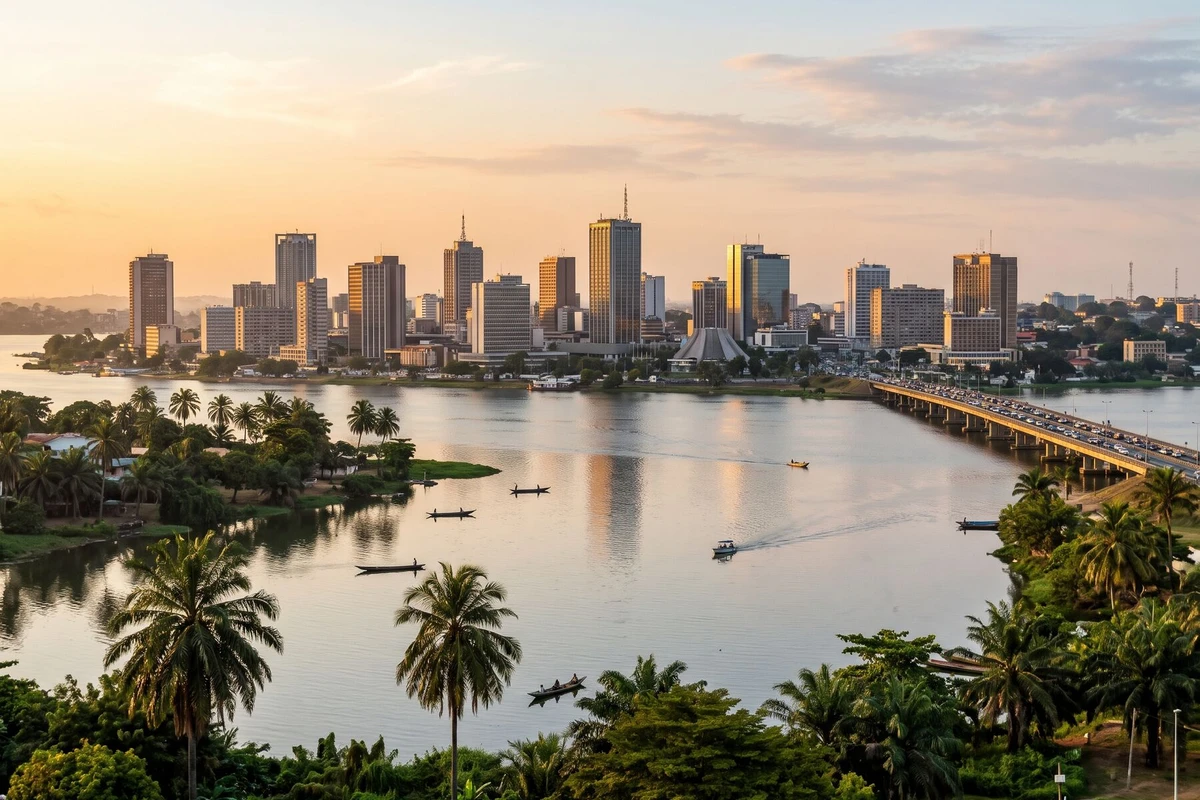
At first light in Abidjan, mist lifts from the Ebrié Lagoon and the towers of the Plateau appear across the water like a skyline drawn in glass. Wooden pirogues glide between the districts, the first water buses fill with commuters, and on the shore women set up grills for fish and plantain while the city's orange taxis begin their endless circuits. By mid-morning the roads hum, markets overflow and the city moves at full speed.
Nothing matches those filters yet. Widen your search or message us on WhatsApp.
Abidjan Day Tours
View all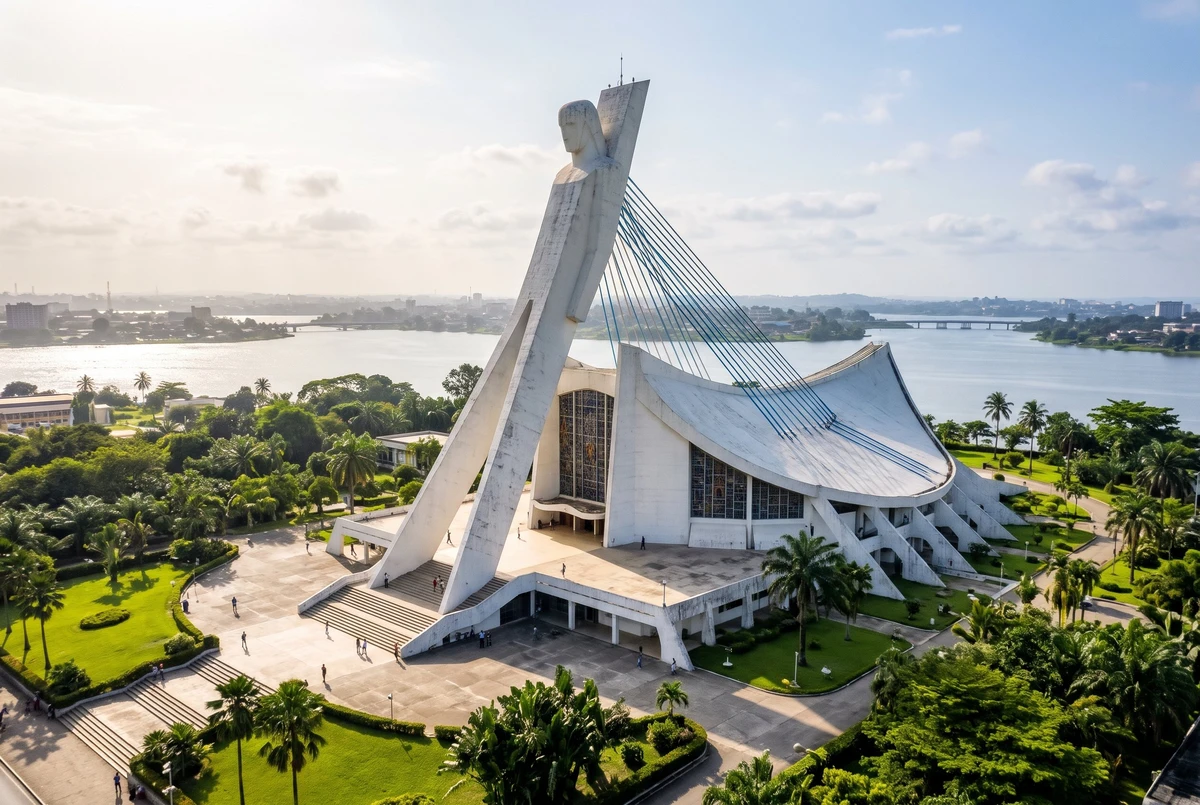
Abidjan at first sight
Abidjan is the largest city of Ivory Coast and its economic capital, spread across peninsulas and islands around the lagoon, separated from the Atlantic by a long strip of sand. It grew rapidly in the twentieth century after the opening of a canal to the sea made its port one of the busiest in West Africa. Today it is a city of contrasts, with business towers, leafy residential districts, vast markets, a rainforest inside the city limits and the historic town of Grand-Bassam less than an hour away.
Why include Abidjan in your itinerary?
- A lagoon city with a striking skyline. The Plateau's towers, the modern Cathedral of Saint Paul and the bridges over the Ebrié Lagoon make Abidjan one of the most dramatic cityscapes in West Africa.
- Markets, food and everyday energy. Treichville and Adjamé markets, grilled fish with attiéké by the water and lively neighbourhood streets show the city's warmth and rhythm.
- Easy day trips along the coast. The UNESCO colonial town of Grand-Bassam lies about forty minutes to an hour east, and the beaches of Assinie and the lagoons beyond make perfect escapes from the city.
Signature experiences in Abidjan
The Plateau and the Cathedral of Saint Paul
The Plateau is Abidjan's business district, a peninsula of towers, ministries and wide avenues overlooking the lagoon. Its most striking landmark is the Cathedral of Saint Paul, completed in 1985, whose tall sloping tower and cable-like supports rise above the water, with a bright interior of stained glass inspired by African scenes. A private city tour also passes the Plateau mosque, the Museum of Civilisations of Ivory Coast with its masks and sculptures, and viewpoints across to Cocody.
Cocody, Treichville and the Lagoon
Across the water, Cocody is the city's leafy residential district, with embassies, the university, the waterfront at Cocody and the busy Riviera neighbourhoods. To the south, Treichville is the city's historic popular quarter, with a large covered market selling cloth, spices and crafts and to the Palais de la Culture beside the lagoon. Crossing between the districts by water bus or by one of the bridges gives the best views of the skyline.
Banco National Park in the City
Banco National Park protects a patch of primary rainforest right inside Abidjan, with tall mahogany and other tropical trees, a small lake and shaded trails where you hear birds and sometimes see monkeys. At the edge of the forest, along the Banco river, the city's traditional washermen, the fanicos, scrub laundry on stones and lay it out to dry across the grass, a colourful scene that has continued for generations.
Grand-Bassam, the First Capital
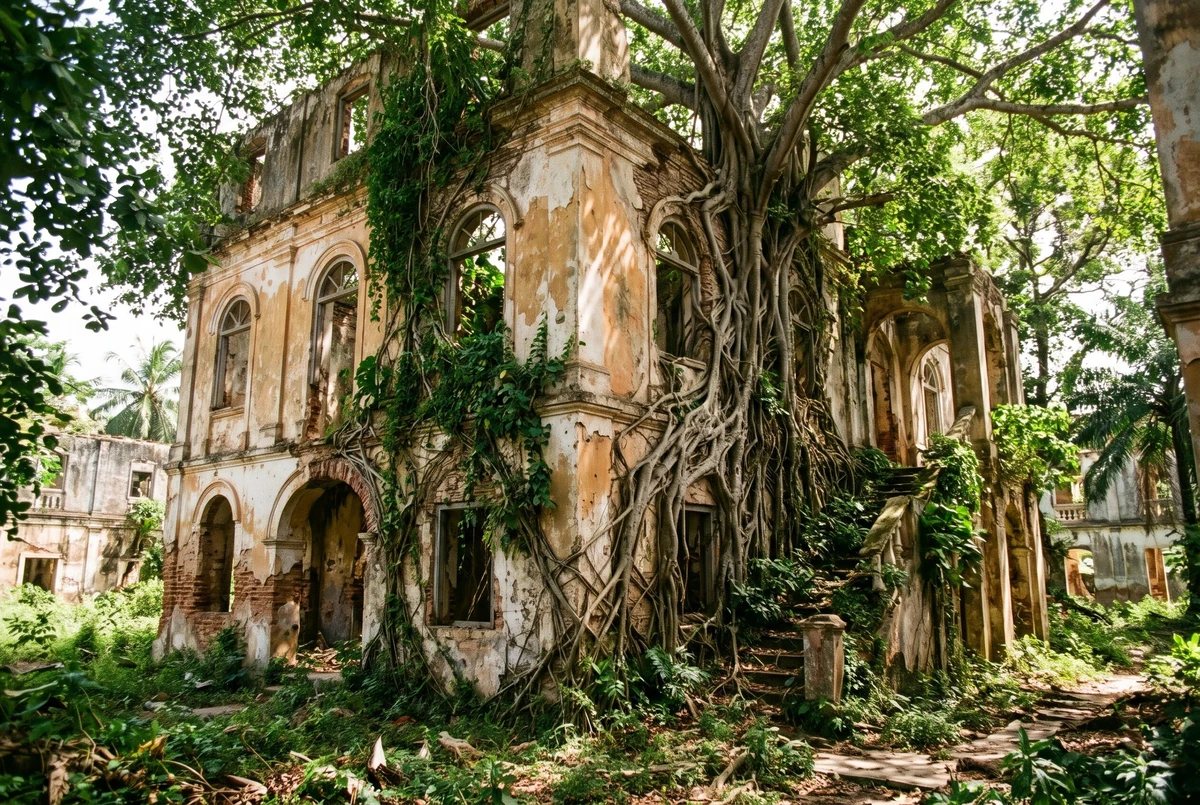
About forty minutes to an hour east of Abidjan, Grand-Bassam was the first capital of colonial Ivory Coast from 1893, and its historic quarter between the lagoon and the sea is listed by UNESCO. Walk among arcaded merchant houses, old administrative buildings and the former governor's palace, now the National Costume Museum, which displays traditional dress, masks and jewellery from across the country. Along the road, craft stalls sell carvings and cloth, and the long Atlantic beach is lined with palms.
Markets, Street Food and Local Life
Food is one of the best ways to understand Abidjan. Try attiéké with grilled fish and a sharp chilli and onion sauce, alloco fried plantain from a street stall, garba with fried tuna and kedjenou chicken stew in a simple neighbourhood kitchen. In Adjamé, the city's great market and transport hub, traders sell everything from fabrics to fresh produce. Our guides help you taste and shop with confidence, and our team on WhatsApp can suggest halal options.
Neighbourhoods and quarters to know in Abidjan
The Plateau
The business district on its peninsula holds office towers, ministries, banks and several international hotels, with the cathedral, the Plateau mosque and the museum close by. It is busy on weekdays and quieter in the evening, a convenient base for business travellers and for first-time visitors who want to be central.
Cocody and the Riviera
Cocody is green, residential and relaxed, with embassies, the university, lagoon-side hotels, cafés and restaurants, and stretches east into the Riviera and Deux Plateaux neighbourhoods. It is the favourite area for longer stays and families, with calmer streets and good access to the Plateau across the water.
Marcory and Zone 4
South of the lagoon, Marcory and the neighbourhood known as Zone 4 are full of restaurants, shops, shopping centres and guesthouses, and lie close to the airport and the road to Grand-Bassam. It is a practical, lively base with a wide choice of places to eat and easy transfers.
Treichville and Port-Bouët
Treichville is the historic popular quarter near the port, with its big market and the Palais de la Culture, best visited on a guided tour by day. Further south, Port-Bouët holds the airport and a strip of Atlantic beach, convenient for early flights and stopovers but with strong surf that is not safe for swimming.
How long to stay in Abidjan and how to pair it
Recommended stay
We recommend three to four nights in Abidjan. One day for a private city tour of the Plateau, Cocody, Treichville and the lagoon, a second for Banco National Park and the markets, and a third for a day trip to Grand-Bassam. With more time, add a beach day at Assinie or an overnight trip to Yamoussoukro.
How to pair it
Abidjan pairs naturally with Grand-Bassam, about forty minutes to an hour east, for its colonial quarter and beach, and with the resort area of Assinie further along the coast. Yamoussoukro and its vast basilica lie about three hours north by motorway, while the mountains and waterfalls around Man and the rainforest of Taï National Park make a longer journey west, with private transfers arranged by our team.
Best time to visit Abidjan and the rhythm of the day
Best months
The best time to visit Abidjan is December to March, during the main dry season, with sunny days and warm evenings by the lagoon. August and September often bring a short, cooler dry spell. April to July is the long rainy season, with June usually the wettest month, heavy downpours and slower traffic, while October and November bring a second, shorter rainy season.
The daily rhythm
Abidjan starts early. Mornings are best for city tours and Banco forest before the heat and the traffic build up, and markets are at their liveliest before midday. The middle of the day suits museums, lunch by the lagoon or the drive to Grand-Bassam. Late afternoon brings a soft light on the Plateau skyline, and evenings are for dinner in Cocody or Zone 4.
On-the-ground logistics in Abidjan
Arrival
Abidjan airport (ABJ) lies in Port-Bouët in the south of the city, about twenty to thirty minutes from the Plateau, Cocody and Zone 4 without traffic, and about thirty to forty minutes from Grand-Bassam. Flights connect with cities in Africa, Europe and the Middle East. Rush hours can make journeys much longer, so we arrange private transfers that meet you at arrivals and drive you directly to your hotel.
Getting around
Abidjan is large and spread out around the lagoon, so walking is only practical within districts. Orange metered taxis are easy to find, shared taxis serve set routes, and water buses cross the lagoon between the Plateau, Treichville and other districts. Traffic can be heavy, especially on the bridges at rush hour. For city tours and the day trip to Grand-Bassam, a private car with driver arranged by our team is the most comfortable choice.
Local etiquette tip
Greet people with bonjour and a handshake before any question, and take time for polite conversation. Dress smart casual in the city and modestly in mosques, churches and villages. Use your right hand to give and receive, ask before photographing people, and never photograph soldiers, police, the presidential palace or other official buildings. Bargaining in markets is normal and best done with good humour.
Must-do things in Abidjan
- Take a private city tour of the Plateau
- Step inside the Cathedral of Saint Paul
- See masks at the Museum of Civilisations
- Cross the Ebrié Lagoon by water bus
- Walk the rainforest trails of Banco National Park
- Explore Treichville market and its crafts
- Wander the colonial quarter of Grand-Bassam
- Visit the National Costume Museum in Grand-Bassam
- Taste attiéké with grilled fish by the lagoon
- Spend a day on the beaches of Assinie
Do’s and don’ts in Abidjan
Do
- Do start city tours early to avoid traffic
- Do greet people with bonjour first
- Do carry CFA francs in small notes
- Do bring your yellow fever certificate
- Do use insect repellent in the evening
Don’t
- Don't photograph soldiers or official buildings
- Don't swim in the strong surf at Port-Bouët
- Don't walk alone in quiet areas at night
- Don't flash phones or jewellery in markets
- Don't drink tap water unless it is filtered
Abidjan at a glance
Plan Abidjan with Haqqi Tours
Every option is confirmed by our team on WhatsApp before you pay, and delivered by our own people or by trusted local partners we work with in every city. Because we send travellers from all over the world, our partners give us special rates and priority, so you always receive the best. Prices are per person unless marked per vehicle.
About Haqqi Tours: About us Contact us Legal NoticePrivacy PolicyCookies & Marketing PreferencesTerms & ConditionsBooking, Payment & Refunds
More services in Abidjan
Good to know
Frequently Asked Questions
Straight answers to what travellers ask most about Abidjan.
Where should I stay in Abidjan?
The Plateau is central and convenient for business, Cocody and the Riviera offer leafy, calmer streets with lagoon-side hotels, and Marcory and Zone 4 are lively, full of restaurants and close to the airport and the road to Grand-Bassam. Our team suggests the best area for your plans and arranges your private transfer from Abidjan airport.
Is Grand-Bassam worth visiting from Abidjan?
Yes. Grand-Bassam is only about forty minutes to an hour east of Abidjan and makes a rewarding day trip. Its UNESCO-listed colonial quarter, the National Costume Museum, the craft stalls and the long palm-lined beach offer a very different mood from the busy city. We arrange private day trips that combine Abidjan and Grand-Bassam in one comfortable day.
What is the dress code and etiquette in Abidjan?
Dress is light because of the heat but neat and smart casual in the city, with shoulders and knees covered in mosques, churches and villages. Swimwear is for the beach and the hotel pool. Greet people politely before any request, use your right hand, ask before photographing people and avoid photographing official or military sites.
Is Abidjan suitable for families and Muslim travellers?
Yes. Abidjan has family-friendly hotels, the rainforest trails of Banco, lagoon crossings and easy beach days in Grand-Bassam and Assinie. Ivory Coast has a large Muslim community, with mosques in every district and halal meat easy to find in areas such as Adjamé and Treichville, though not every restaurant is halal; grilled fish, attiéké and vegetarian dishes are always available, and our team can advise.
Is it safe to travel to Abidjan now?
Abidjan welcomes many business and leisure travellers and has been stable in recent years. Take normal big-city care with valuables, use trusted drivers rather than walking at night, and respect rules on photography. Check your own government's official travel advice before departure, and keep our WhatsApp line handy throughout your stay.
What are the must-do things in Abidjan?
The must-do things in Abidjan include a city tour of the Plateau, the Cathedral of Saint Paul, the Museum of Civilisations, a water bus across the lagoon, Banco National Park and its washermen, Treichville market, attiéké with grilled fish, and a day trip to Grand-Bassam and its costume museum. Our private tours combine these in the best order and timing.
How many days do you need in Abidjan?
Three to four days is ideal for Abidjan: one for the city tour of the Plateau, Cocody and Treichville, one for Banco forest and the markets, and one for a day trip to Grand-Bassam. A single long day covers the city highlights and Grand-Bassam at a quicker pace, while five days allow a beach escape to Assinie.
What can I book in Abidjan with Haqqi Tours?
Day tours, including Private Abidjan City and Grand Bassam Tour and Private Abidjan City Tour. Each has its own page, and the WhatsApp desk combines any of them into one plan with one written price.
How do I get from the airport to my hotel in Abidjan?
With a private transfer: a driver at arrivals, flight tracking and a fixed price for the whole vehicle, door to door. Tell the desk the flight number and the hotel.
Is there public transport from the airport to Abidjan?
Public options vary by airport and end at a station rather than your hotel; the private transfer starts at the arrivals door and ends at your door.
Which tours are available in Abidjan?
Among them: Private Abidjan City and Grand Bassam Tour and Private Abidjan City Tour. Each page says whether the day is private or small-group, what it includes and how long it lasts.
Are the tours private or in a group?
Both exist, and each tour page says which. A private tour has a vehicle and guide for your party alone; the desk can make most group tours private on request.
How do I book?
Fill in the form on any page or message us on WhatsApp with the date, the number of travellers and the hotel. A member of our team confirms the price and the details in writing within minutes.
Are the prices fixed?
Yes - every price is agreed in writing on WhatsApp before you travel and does not change on the day.
Do the drivers and guides speak Arabic or English?
It depends on the city and the day, so we do not promise a particular language; tell us your preference and we do our best. The WhatsApp desk always works in Arabic and English.
Can I change or cancel a booking in Abidjan?
Yes, in the same WhatsApp conversation. The terms depend on the product and on how close to the date the change comes; the desk states them before you pay.