
Banjul
Plan Banjul with Haqqi Tours: day tours, private airport transfers, attraction tickets and packages, run by our own team and confirmed on WhatsApp in Arabic or English.
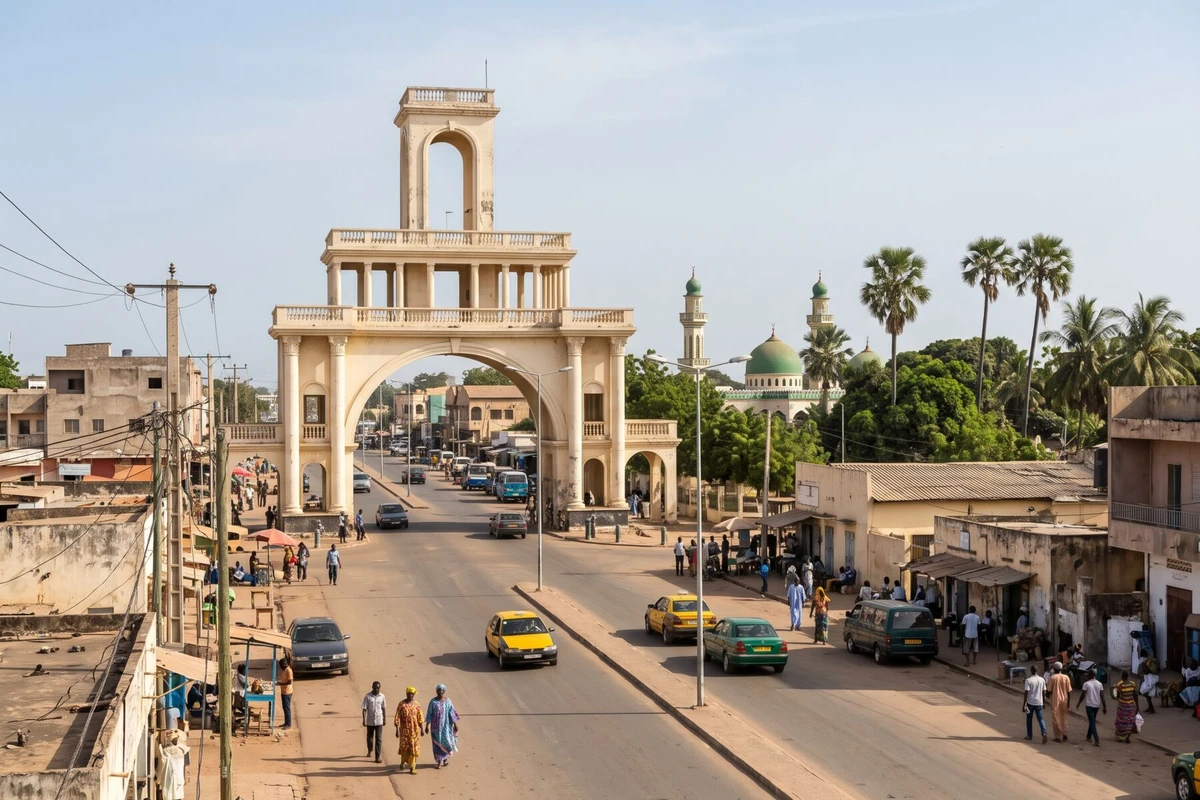
Early morning in Banjul, the streets near Albert Market fill with the smell of fresh bread and smoked fish, and traders unroll bolts of bright cloth beside baskets of mangoes, peppers and groundnuts. Yellow taxis hoot past colonial houses with wooden balconies, the minarets of the great mosque catch the sun, and at the end of Independence Drive the white pillars of Arch 22 rise above the rooftops. Beyond the town, the wide brown mouth of the River Gambia meets the Atlantic.
Nothing matches those filters yet. Widen your search or message us on WhatsApp.
Banjul Day Tours
View all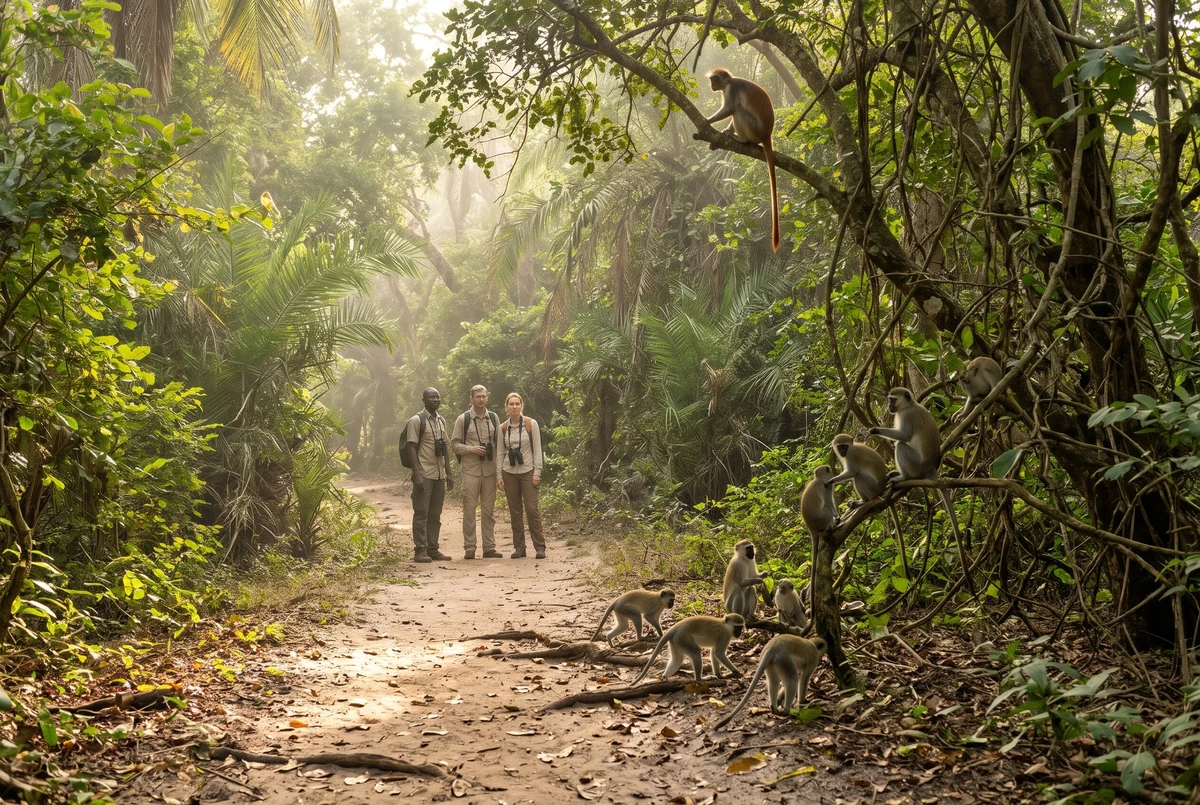
Banjul at first sight
Banjul is one of the smallest capitals in Africa, built on an island at the mouth of the river and ringed by mangrove creeks and wetlands. Founded by the British in the early nineteenth century as Bathurst, it took the name Banjul in 1973. The town itself is compact and easily seen in a day, while most visitors stay on the beaches of Bakau, Kotu and Kololi, a short drive west, and use Banjul as the starting point for river trips and wildlife outings.
Why include Banjul in your itinerary?
- A small, friendly capital full of character. Arch 22, the National Museum, the great mosque and the lively Albert Market can all be visited in one relaxed day with a local guide.
- Wildlife close to the city. Sacred crocodiles in Bakau, monkeys in Bijilo Forest Park and herons, kingfishers and ospreys in the mangroves are all within half an hour of town.
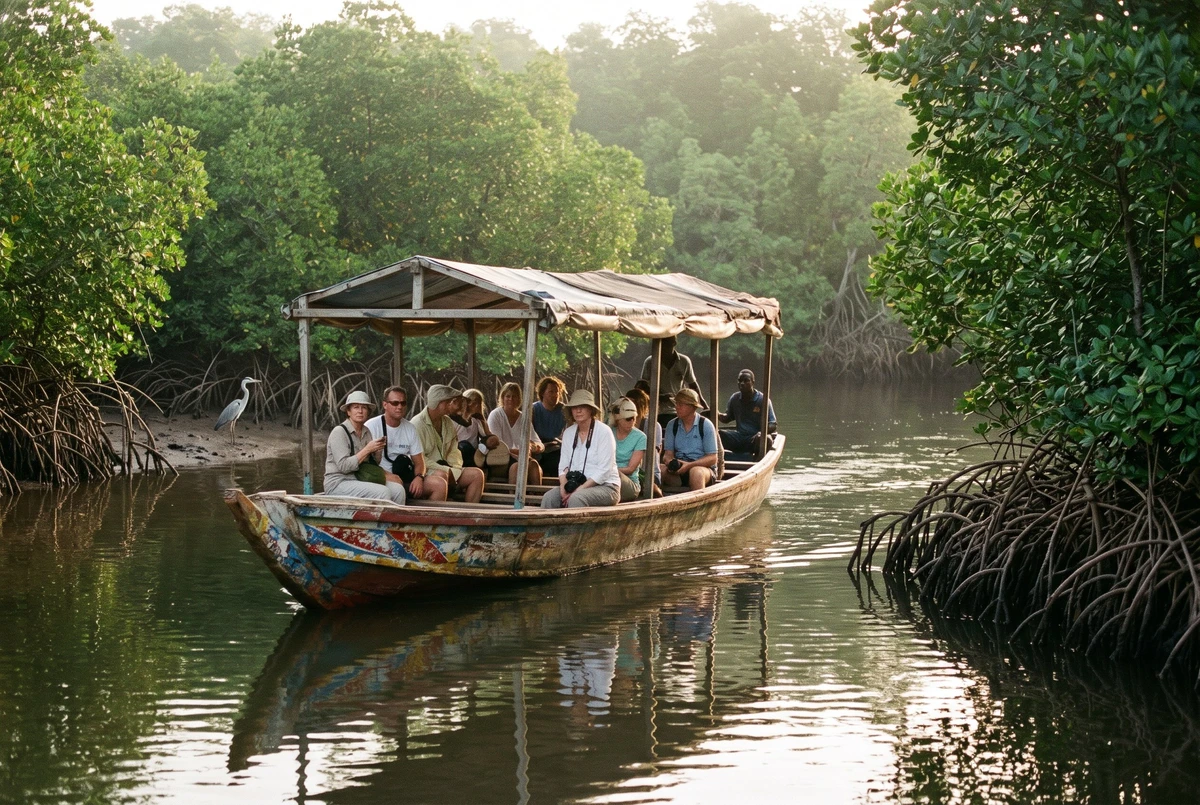
- A gateway to the River Gambia. Boat trips through Oyster Creek and the mangroves start just outside Banjul, and longer journeys lead upriver to Kunta Kinteh Island and quiet riverside villages.
Signature experiences in Banjul
Arch 22 and Independence Drive
Arch 22 is a tall gateway monument built in the 1990s at the entrance to Banjul, with a gallery high under its roof that gives a sweeping view over the town, the mangroves and the river mouth. A small museum inside displays textiles and traditional objects. From here Independence Drive leads past government buildings and the green space of the old town, and our guides explain how the little colonial port grew into the capital of an independent nation.
The National Museum and Albert Market
The National Museum of the Gambia gathers musical instruments such as the kora, masks, tools, photographs and displays on the river's kingdoms, the slave trade and independence, a perfect introduction to the country. A few minutes away, Albert Market has been Banjul's commercial heart since the nineteenth century, a maze of stalls selling cloth, spices, baskets, wood carvings and fresh produce, where bargaining is done with a smile and plenty of greetings.
Kachikally Crocodile Pool and Bijilo Monkeys
In the town of Bakau, the sacred pool of Kachikally has long been visited by local families who believe its waters bring blessings, and dozens of Nile crocodiles rest calmly on its banks among the trees. A small museum explains the traditions of the site. Further along the coast, Bijilo Forest Park protects a patch of coastal forest where green vervet monkeys and red colobus monkeys come close to the trails, along with colourful birds and lizards.
A Slow Day on the River Gambia
Boat trips leave from near Denton Bridge, just outside Banjul, and follow the winding channels of Oyster Creek and the Tanbi Wetlands into the mangroves. The pace is relaxed: you watch for pelicans, kingfishers, ospreys and herons, try a little traditional fishing with the crew, stop on a quiet sandbank or river beach for a swim when conditions allow, and share a simple lunch on board as the tide turns. It is a peaceful way to see the river that gives the country its name.
Tanji, Abuko and the Coast
South of the resorts, the fishing village of Tanji comes alive in the late afternoon as painted pirogues land their catch on the beach and women smoke fish over wood fires. Inland, Abuko Nature Reserve offers shady forest trails, pools with crocodiles and some of the best birdwatching near the city. Along the coast, Cape Point in Bakau and the wide sands of Kotu and Kololi are perfect for sunset walks after a day of exploring.
Neighbourhoods and quarters to know in Banjul
Banjul Town
The capital itself sits on its island at the river mouth, with Albert Market, the National Museum, Arch 22, the great mosque and old colonial streets close together. It is busy by day and quiet after dark, with only a few places to stay, so most visitors explore it on a guided tour from the coast.
Bakau and Fajara
Just west of Banjul, Bakau and Fajara form the oldest seaside neighbourhoods, with the crocodile pool, a botanical garden, the fish market and the headland of Cape Point. Hotels and guesthouses here are a little quieter and closer to Banjul, with sea views and easy walks to the beach.
Kotu and Kololi
Kotu and Kololi are the main resort areas, about twenty-five to thirty minutes from Banjul, with long sandy beaches, many hotels, cafés and restaurants and the coastal forest of Bijilo next door. They are the most convenient base for first-time visitors and families who want everything close at hand.
Brufut and the South Coast
Further south, Brufut, Tanji, Sanyang and Gunjur offer calmer beaches, eco-lodges and fishing villages, with the bird reserve of Tanji and quiet stretches of sand. They suit travellers seeking peace and nature, a little further from Banjul and the airport, with our private drivers handling every journey.
How long to stay in Banjul and how to pair it
Recommended stay
We recommend four to six nights based on the coast near Banjul. One day for the city tour with Arch 22, the museum and the market, a second for the crocodile pool, Bijilo and Tanji, a third for a relaxed river day in the mangroves, and the rest for beaches and birdwatching. With more time, add a trip upriver to Kunta Kinteh Island.
How to pair it
Banjul pairs naturally with the coastal towns of Bakau, Kotu and Kololi, just west, and with the quiet southern beaches of Sanyang and Kartong. Upriver, Kunta Kinteh Island and Juffureh can be reached by boat or road for the day, while Janjanbureh, the stone circles of Wassu and the chimpanzee islands of the River Gambia National Park make a longer journey inland, with private transfers arranged by our team.
Best time to visit Banjul and the rhythm of the day
Best months
The best time to visit Banjul is November to February, with dry sunny days, cooler evenings and excellent birdwatching as migrants arrive from Europe. March to May is drier and hotter, with quieter beaches. The rainy season from June to September brings heavy downpours, high humidity and green landscapes, while October is a gentle transition month.
The daily rhythm
Banjul is busiest in the morning, when the market, ferry terminal and government offices fill with people, so city tours are best started early. Middle of the day is hot and suits a river trip with shade or a long lunch. In the late afternoon the fishing boats return to Tanji and Bakau, and evenings on the coast are spent strolling the beach at sunset.
On-the-ground logistics in Banjul
Arrival
Banjul International Airport (BJL) lies near Yundum, about forty-five minutes by road from Banjul town and thirty to forty minutes from the beach resorts of Kololi, Kotu and Bakau. Flights connect with cities in Europe and West Africa, and the Banjul to Barra ferry links the capital with the north bank. We arrange private transfers that meet you at arrivals and drive you directly to your hotel.
Getting around
Banjul town is small and easy to walk, with Arch 22, the museum and the market close together. Along the coast, licensed tourist taxis and yellow taxis are easy to find, and shared minibuses link Serrekunda, Bakau and Banjul. The roads to Abuko, Tanji and Denton Bridge are short drives, and for city tours and river trips a private car with driver arranged by our team is the most comfortable choice.
Local etiquette tip
Greetings matter in the Gambia, so start every conversation with salaam aleikum or good morning. Most people are Muslim, so dress modestly in Banjul, markets and villages, and cover shoulders and knees when visiting mosques. Use your right hand to give and receive, ask before taking photographs of people and markets, and reply to persistent sellers with a smile and a polite no thank you.
Must-do things in Banjul
- Climb Arch 22 for views over Banjul
- Explore the National Museum of the Gambia
- Wander through the stalls of Albert Market
- See the sacred crocodiles of Kachikally
- Walk among monkeys in Bijilo Forest Park
- Spend a slow day on the river in the mangroves
- Watch for kingfishers and ospreys in Oyster Creek
- See the fishing boats land their catch at Tanji
- Walk the shady trails of Abuko Nature Reserve
- Watch the sunset over the Atlantic at Cape Point
Do’s and don’ts in Banjul
Do
- Do greet people before asking questions
- Do dress modestly in town and in villages
- Do carry dalasi in small notes
- Do wear a hat and sunscreen on the river
- Do use insect repellent in the evening
Don’t
- Don't photograph people without asking
- Don't feed or touch the monkeys
- Don't swim off the beach where flags warn of currents
- Don't walk alone on empty beaches at night
- Don't drink tap water unless it is filtered
Banjul at a glance
Plan Banjul with Haqqi Tours
Every option is confirmed by our team on WhatsApp before you pay, and delivered by our own people or by trusted local partners we work with in every city. Because we send travellers from all over the world, our partners give us special rates and priority, so you always receive the best. Prices are per person unless marked per vehicle.
About Haqqi Tours: About us Contact us Legal NoticePrivacy PolicyCookies & Marketing PreferencesTerms & ConditionsBooking, Payment & Refunds
More services in Banjul
Good to know
Frequently Asked Questions
Straight answers to what travellers ask most about Banjul.
Where should I stay near Banjul?
Most visitors stay in the resort areas of Kotu and Kololi, about twenty-five to thirty minutes from Banjul, with long beaches, many hotels and restaurants. Bakau and Fajara are closer to the capital and a little quieter, while Brufut and the southern coast offer eco-lodges and calm beaches. Our team suggests the best area for your plans and arranges your private transfer from the airport.
Is Banjul worth visiting?
Yes, as part of a stay on the coast. Banjul is small, but Arch 22, the National Museum, the great mosque and Albert Market give a vivid picture of Gambian life and history in a single day. Combined with the crocodile pool, the monkey forest and a day on the river, it makes a rewarding introduction to the country.
What is the dress code and etiquette in Banjul?
Dress is light and practical because of the heat, but modest in town: shoulders and knees covered in markets, government areas and mosques, with swimwear kept for the beach and the hotel pool. Greet people politely, use your right hand, and ask before taking photographs, especially in markets and villages.
Is Banjul suitable for families and Muslim travellers?
Yes. Banjul and the coast are relaxed and welcoming, with gentle wildlife encounters such as the crocodile pool and the monkey forest, calm boat trips and wide beaches for children. The Gambia is a Muslim-majority country, so halal food is the norm, mosques are found everywhere and the call to prayer is part of daily life; our team can advise on places to eat.
Is it safe to travel to Banjul now?
Banjul and the coastal resorts are generally relaxed for visitors. Take normal care with valuables in markets and crowded places, use licensed taxis and guides and avoid empty beaches after dark. Check your own government's official travel advice before departure, and keep our WhatsApp line handy throughout your stay.
What are the must-do things in Banjul?
The must-do things in Banjul include Arch 22 and its view, the National Museum, Albert Market, the sacred crocodile pool of Kachikally in Bakau, the monkeys of Bijilo Forest Park, a relaxed boat day in the mangroves, the fishing village of Tanji and the forest trails of Abuko. Our private tours combine these in the best order and timing.
How many days do you need in Banjul?
One day is enough for Banjul town itself, but four to six days on the nearby coast allow time for the city tour, the crocodile pool and the monkey forest, a full day on the river and some beach time. With a week or more, add a trip upriver to Kunta Kinteh Island and Juffureh.
What can I book in Banjul with Haqqi Tours?
Day tours, including River Gambia & Lazy Day Cruise and City tour, Banjul, Arch 22, Museums, Crocodiles and Monkeys. Each has its own page, and the WhatsApp desk combines any of them into one plan with one written price.
How do I get from the airport to my hotel in Banjul?
With a private transfer: a driver at arrivals, flight tracking and a fixed price for the whole vehicle, door to door. Tell the desk the flight number and the hotel.
Is there public transport from the airport to Banjul?
Public options vary by airport and end at a station rather than your hotel; the private transfer starts at the arrivals door and ends at your door.
Which tours are available in Banjul?
Among them: River Gambia & Lazy Day Cruise and City tour, Banjul, Arch 22, Museums, Crocodiles and Monkeys. Each page says whether the day is private or small-group, what it includes and how long it lasts.
Are the tours private or in a group?
Both exist, and each tour page says which. A private tour has a vehicle and guide for your party alone; the desk can make most group tours private on request.
How do I book?
Fill in the form on any page or message us on WhatsApp with the date, the number of travellers and the hotel. A member of our team confirms the price and the details in writing within minutes.
Are the prices fixed?
Yes - every price is agreed in writing on WhatsApp before you travel and does not change on the day.
Do the drivers and guides speak Arabic or English?
It depends on the city and the day, so we do not promise a particular language; tell us your preference and we do our best. The WhatsApp desk always works in Arabic and English.
Can I change or cancel a booking in Banjul?
Yes, in the same WhatsApp conversation. The terms depend on the product and on how close to the date the change comes; the desk states them before you pay.