
Sarajevo
Ottoman lanes, a mountain cable car and Balkan history meet in Sarajevo, an itinerary our desk builds around your family before you fly.
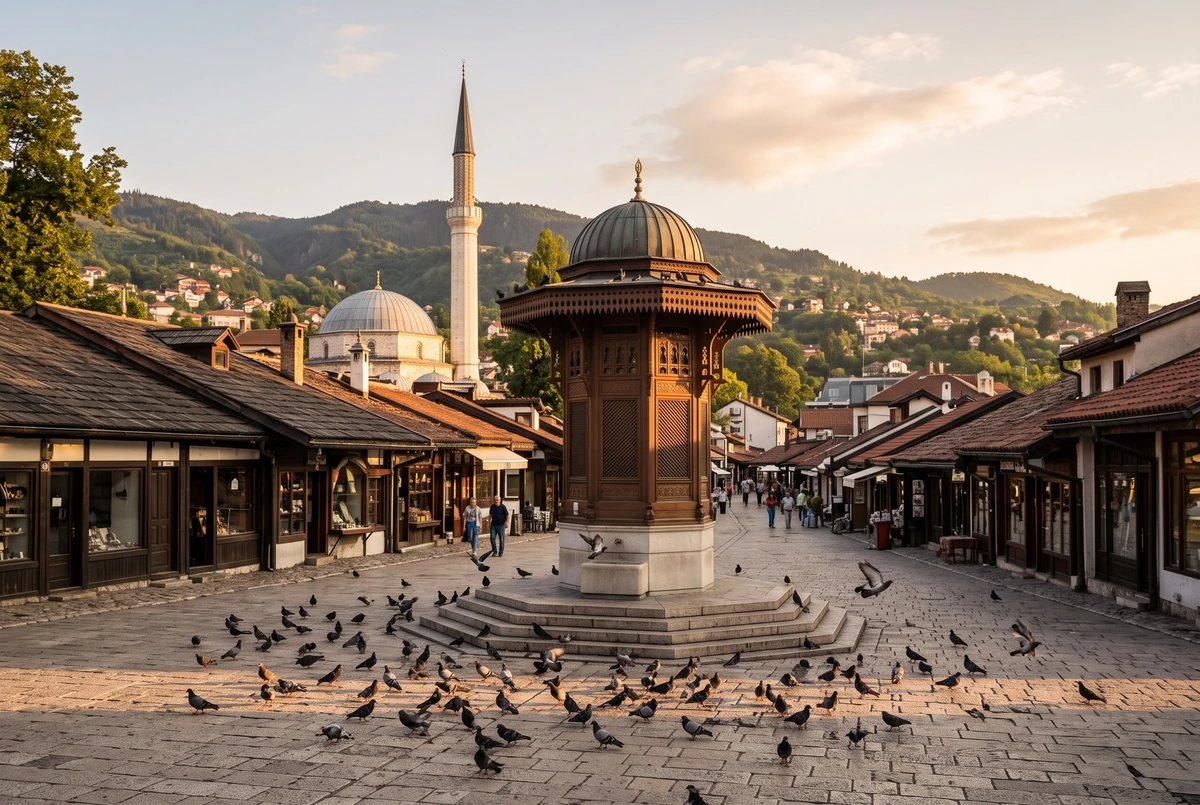
Step out of your hotel in Sarajevo just after dawn and the city announces itself in layers: the call to prayer rolling down from the hillside mosques, church bells answering from the valley floor, the smell of fresh somun bread and roasting coffee drifting through Baščaršija’s wooden shutters as the coppersmiths of Kazandžiluk begin to tap. Pigeons scatter around the Sebilj fountain, and above the red rooftops the green slopes of Trebević rise straight from the edge of town.
Nothing matches those filters yet. Widen your search or message us on WhatsApp.
Sarajevo Day Tours
View all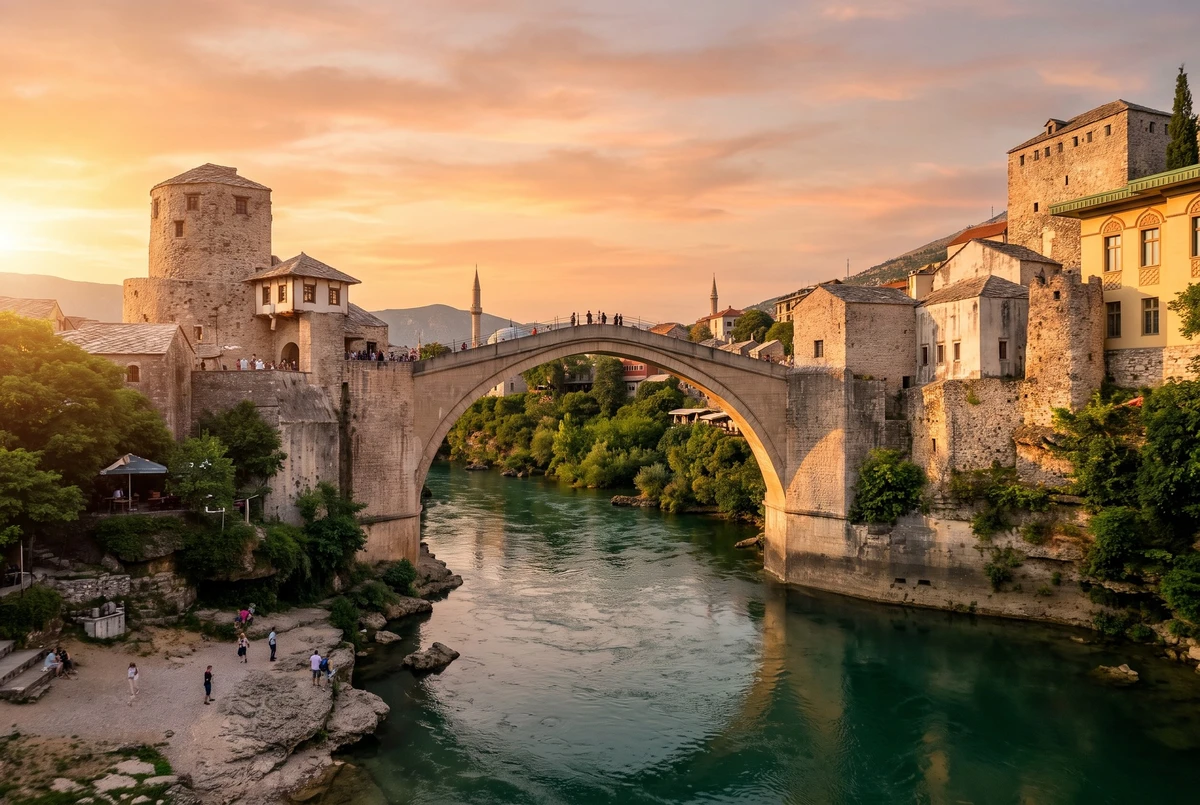
Sarajevo Airport Transfers
View all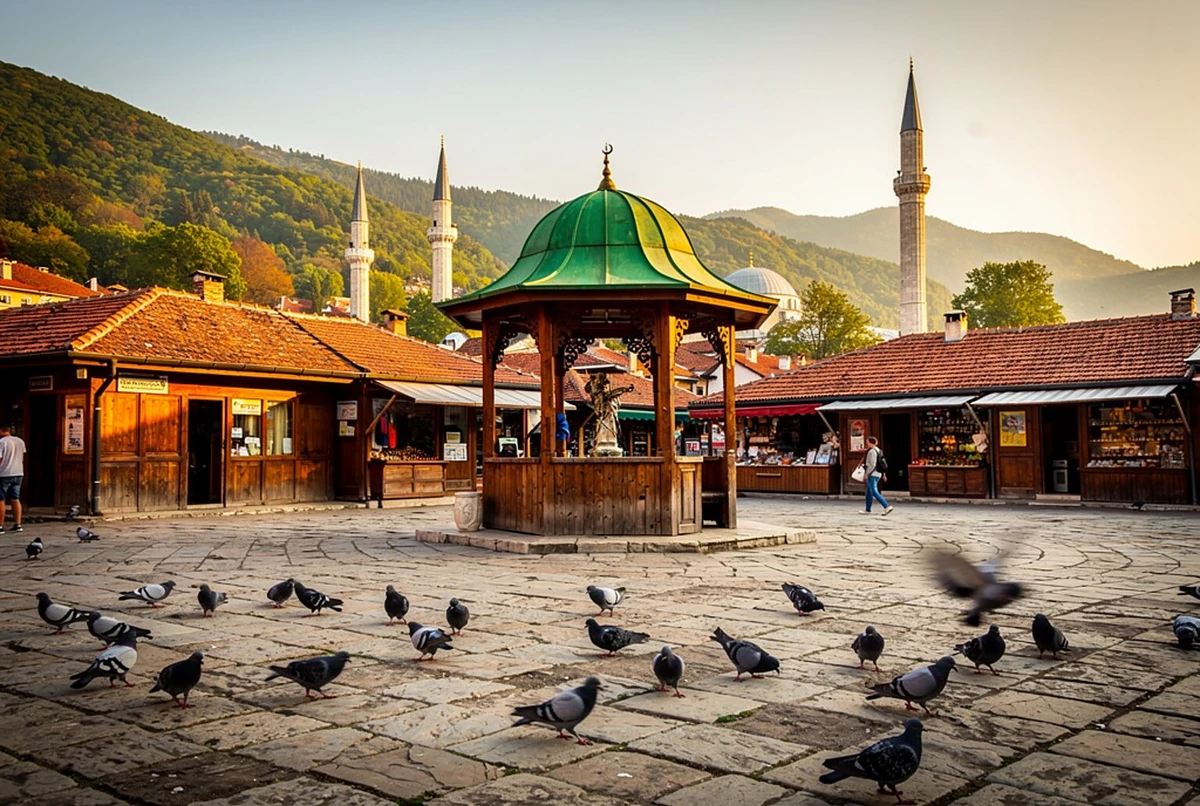
Sarajevo Multi-Day Tours
View allSarajevo Flight Tickets
View all
Sarajevo Train Tickets
View all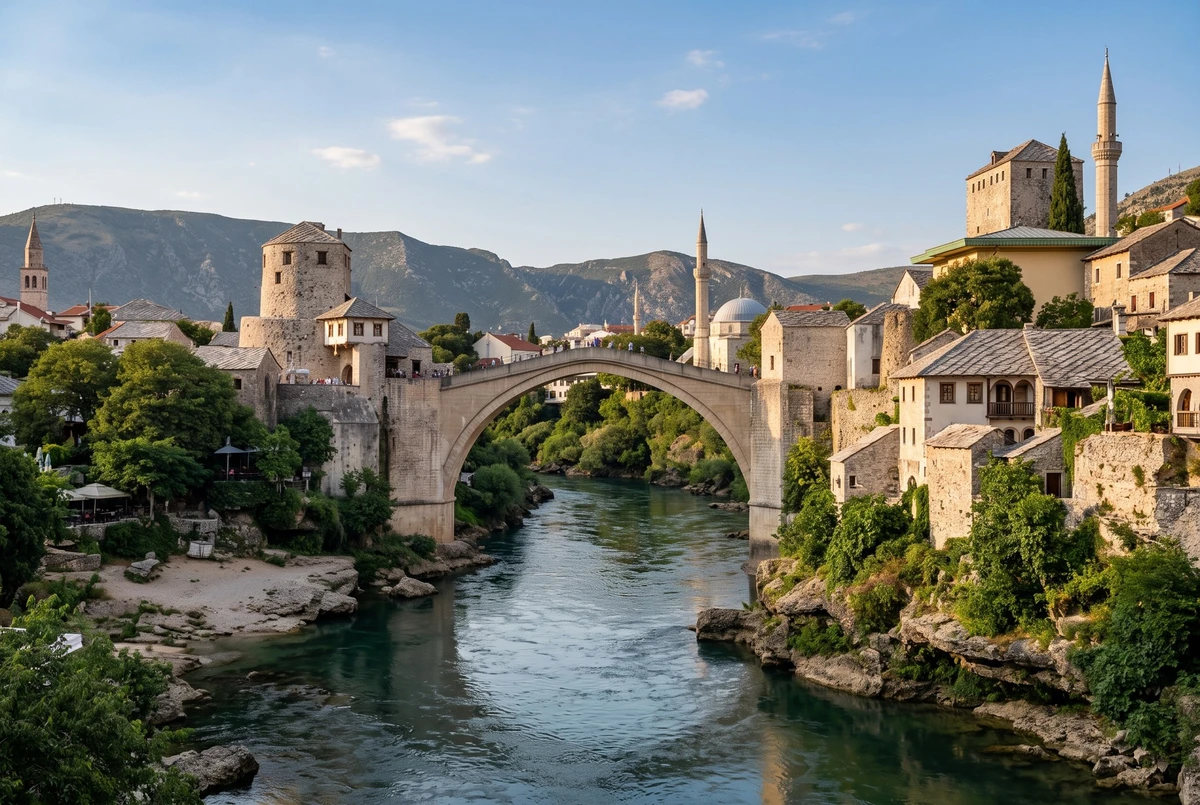
Sarajevo at first sight
Sarajevo is the beating heart of Bosnia and Herzegovina, the place where Ottoman bazaar and Austro-Hungarian boulevard meet on a single street, where mosque, cathedral, Orthodox church and synagogue stand minutes apart, and where twentieth-century history turned more than once. It is warm, unhurried and deeply hospitable.
Why include Sarajevo in your itinerary?
- Sarajevo is one of the few cities where you can step across a line in the pavement from Ottoman Istanbul to Habsburg Vienna. The “Meeting of Cultures” marker on Ferhadija Street captures centuries of coexistence in a single stride.
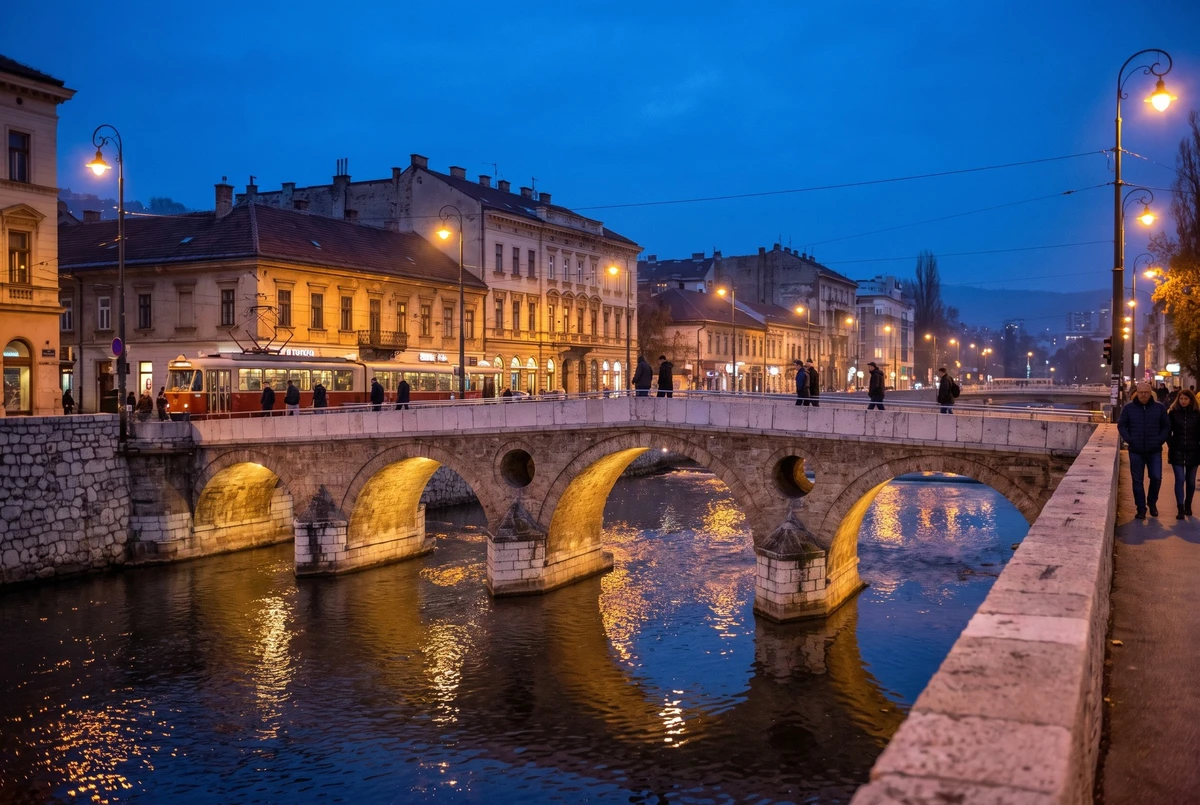
- History here is close and human. The Latin Bridge where the First World War was triggered, the Tunnel of Hope from the siege of the 1990s and the restored City Hall tell Europe’s modern story with rare honesty.
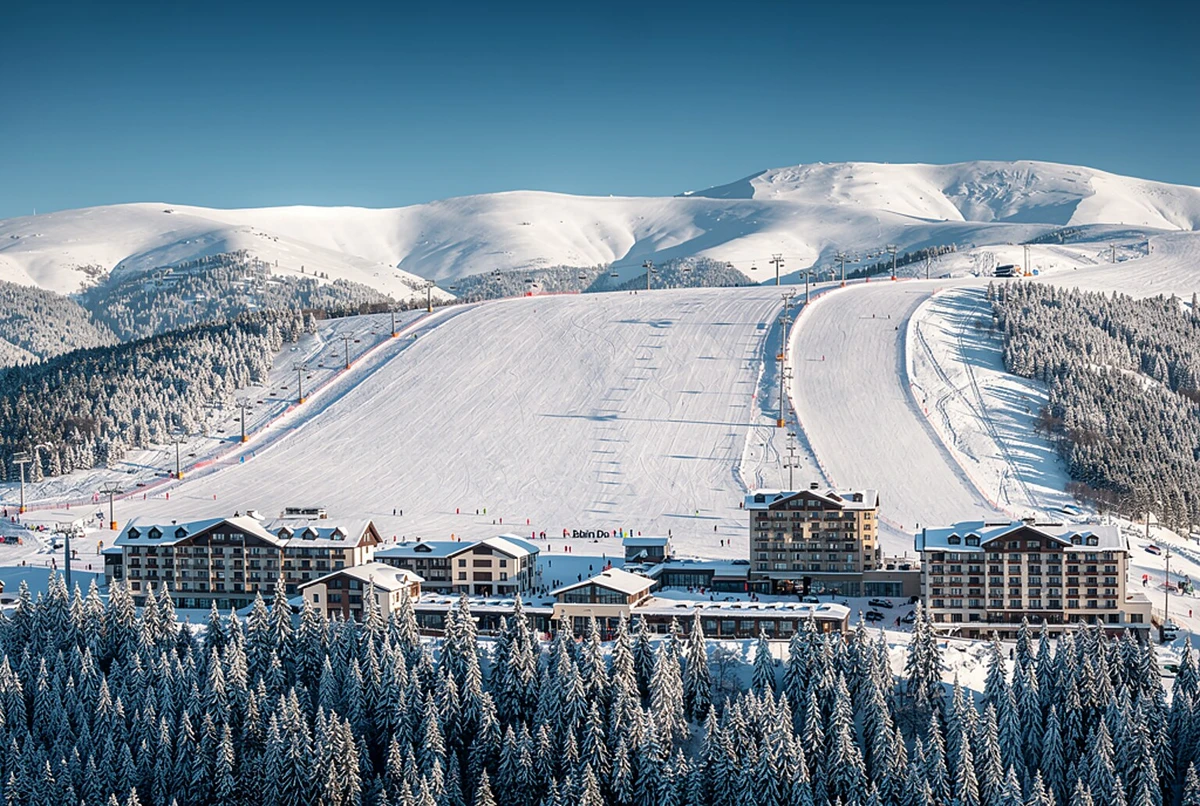
- Sarajevo is a valley city ringed by Olympic mountains. Within minutes you can ride the cable car up Trebević, and within an hour reach the slopes of Jahorina and Bjelašnica, making it a city break and a mountain escape at once.
Signature experiences in Sarajevo
Baščaršija and the Gazi Husrev-beg Mosque
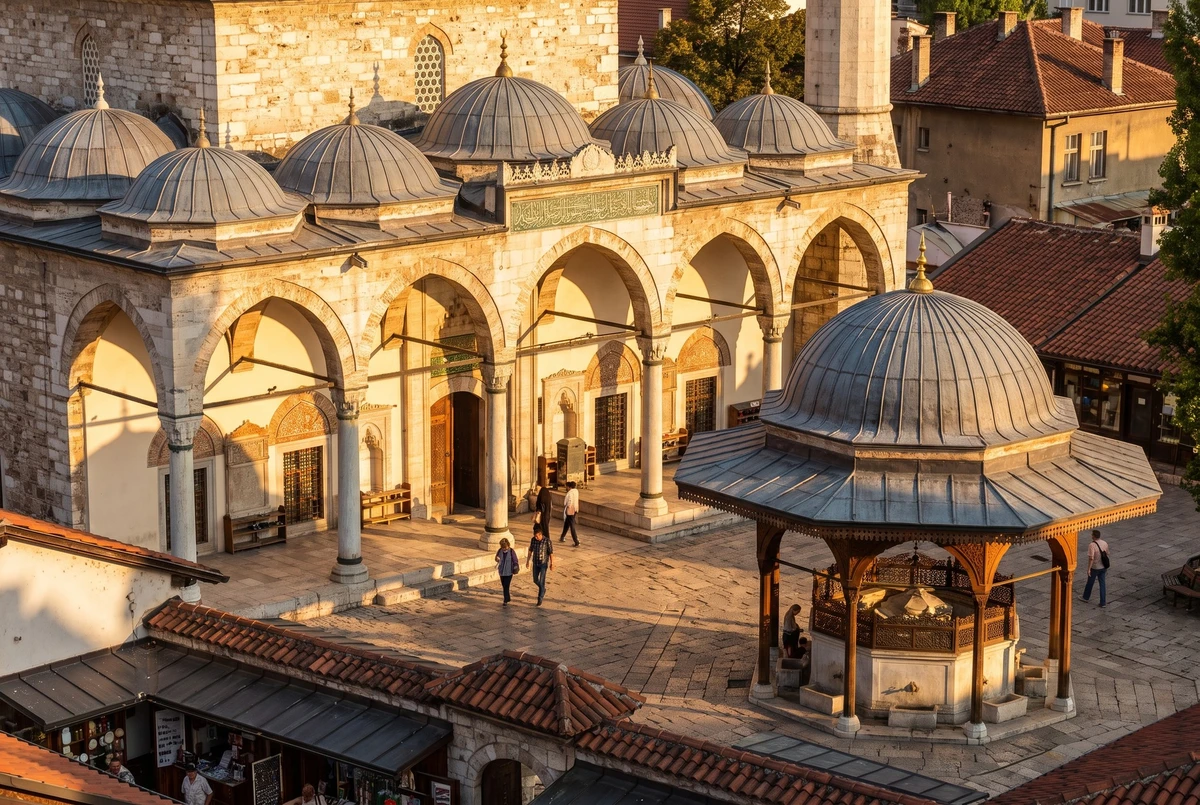
Baščaršija, the fifteenth-century Ottoman bazaar, is Sarajevo’s living centre: lanes of copper workshops, the wooden Sebilj fountain and the elegant Gazi Husrev-beg Mosque, built in the sixteenth century around a courtyard of shaded ablution fountains and still the heart of the city’s faith. Our guided day tour of Sarajevo explains the bazaar’s guilds, caravanserais and the covered Bezistan market, so you see far more than souvenir stalls, and the mosque visit is timed respectfully around prayer.
Ćevapi, Burek and the Bosnian Coffee Ritual
Food in Sarajevo is a ritual. Tear into ćevapi, small grilled meat fingers tucked into soft somun bread with raw onion and creamy kajmak, try spiralled burek from a wood-fired pita bakery, and finish with tufahija, a poached apple filled with walnuts. Then sit for Bosnian coffee served in a copper džezva with a sugar cube and rahat lokum. Our guided day tour, with a local host from our trusted partner network, points you to the family-run places Sarajevans themselves trust.
Ferhadija and Austro-Hungarian Sarajevo
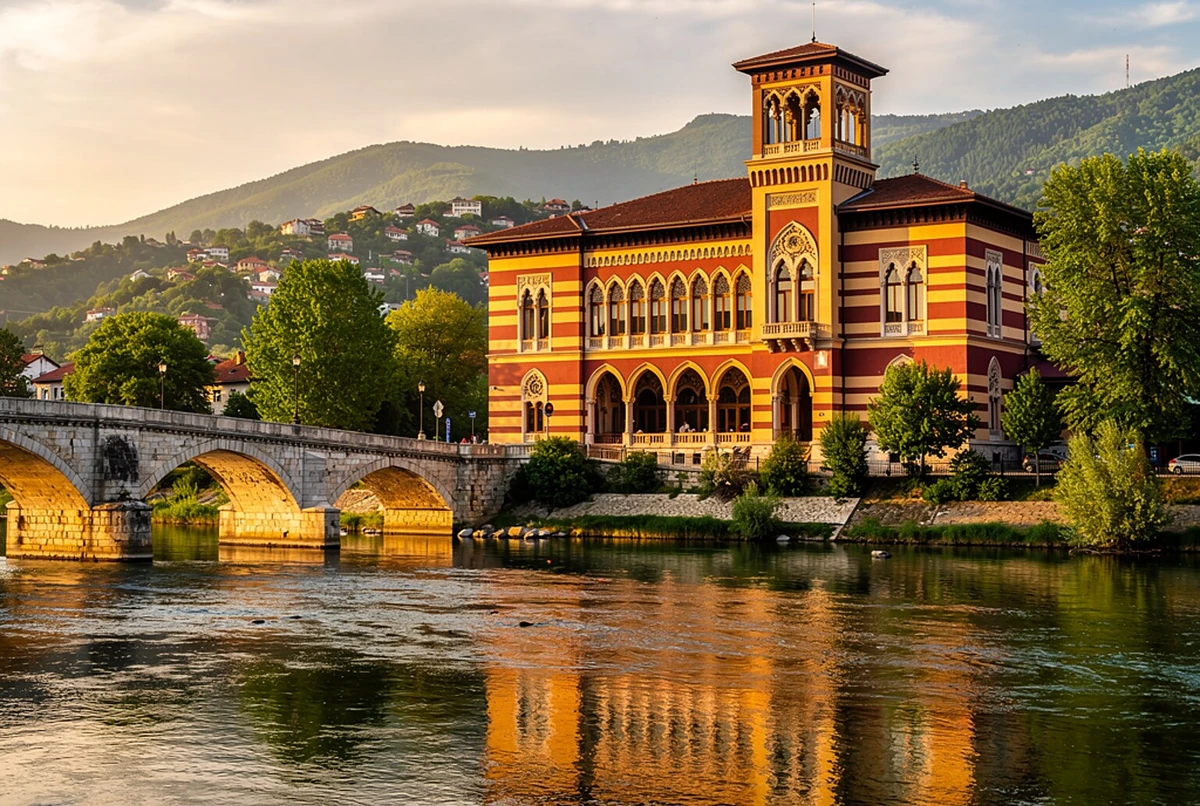
Walk west along Ferhadija and the Ottoman lanes give way to Habsburg facades, the Catholic Cathedral of the Sacred Heart and the Eternal Flame. Detour to the Latin Bridge, where the assassination of Archduke Franz Ferdinand in 1914 set off the First World War, and to the striped neo-Moorish City Hall, the Vijećnica, rebuilt after the siege. Our guided day tour weaves these quarters into one clear story of empires meeting on the banks of the Miljacka.
Day Trip to Mostar, Blagaj and Počitelj
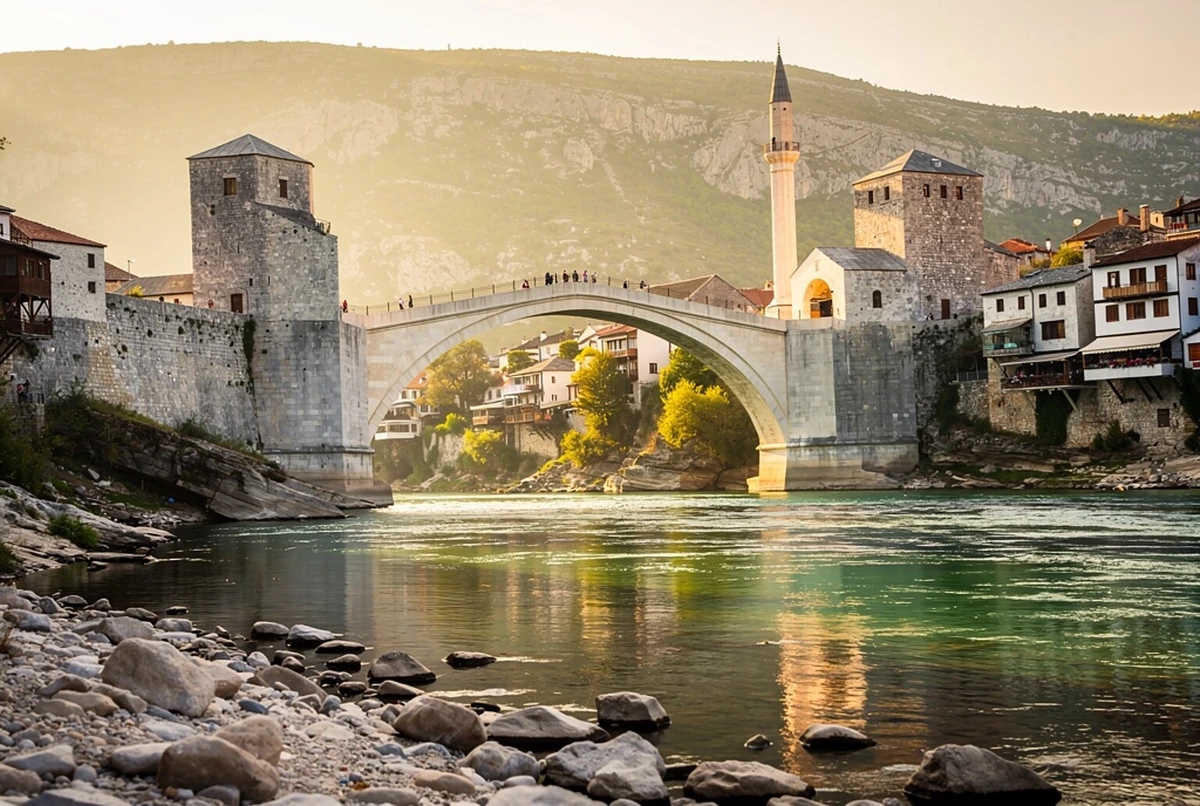
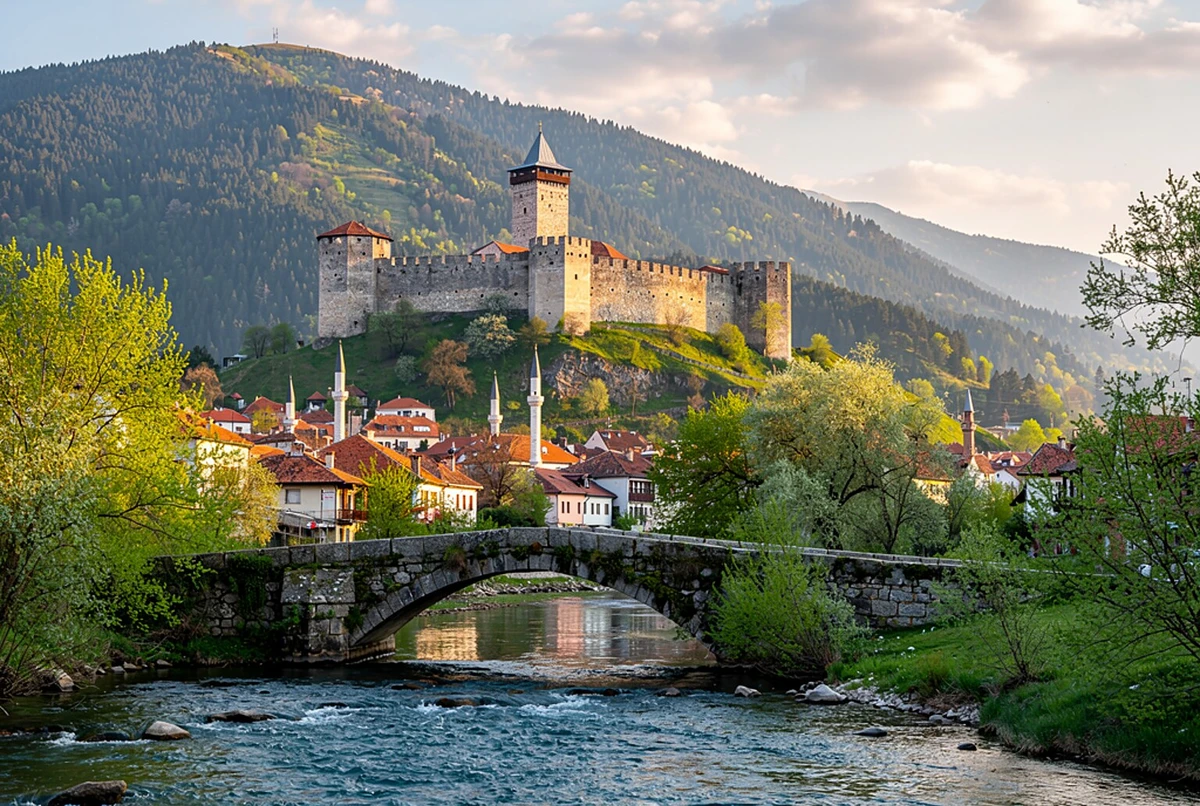
South through the dramatic Neretva canyon lies Mostar, where the rebuilt Old Bridge arches over emerald water and local divers leap from its crown in summer. On the way, pause at the Blagaj Tekke, a dervish house tucked beneath a cliff at the source of the Buna river, and the walled Ottoman village of Počitelj. Our guided day tour covers all three in one comfortable day, or we issue train tickets for the scenic rail line to Mostar.
Trebević Cable Car and the Tunnel of Hope
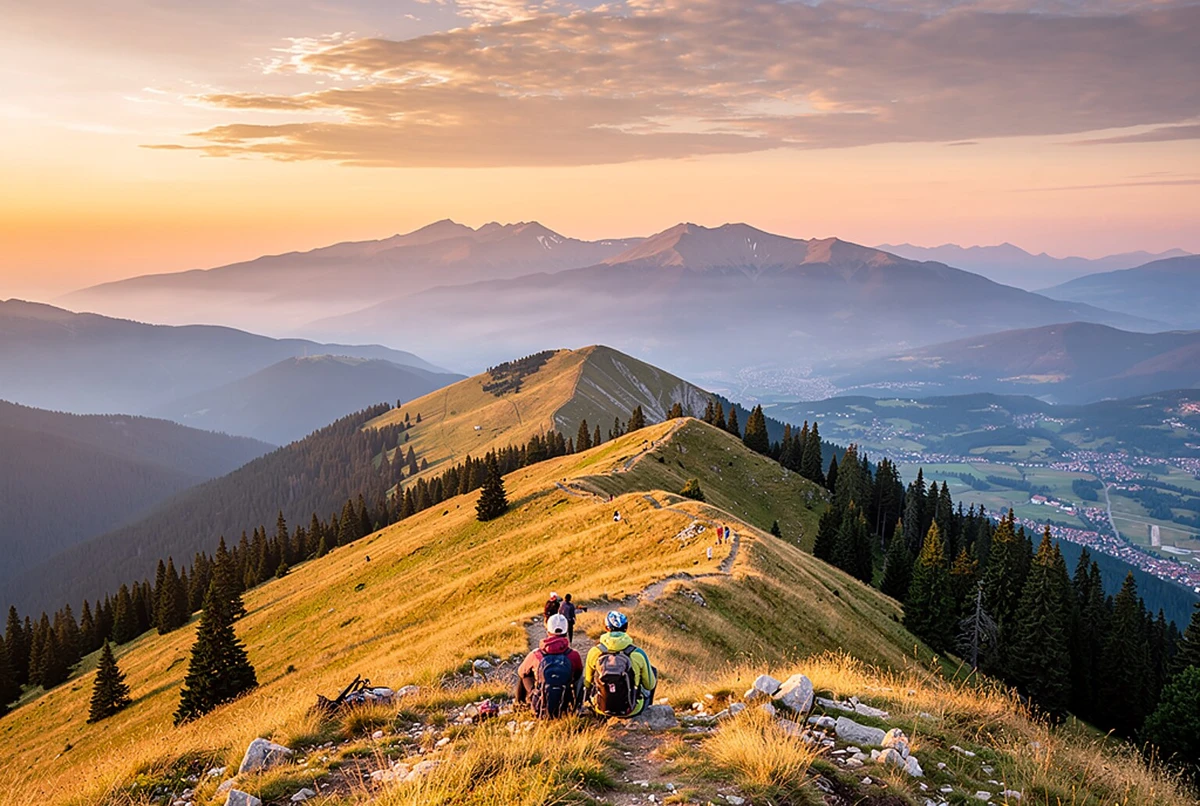
Ride the restored cable car up Mount Trebević for a sweeping view of the valley and walk the graffiti-covered remains of the 1984 Olympic bobsleigh track among the pines. Then visit the Tunnel of Hope near the airport, the hand-dug lifeline that kept the city supplied during the siege. A private car with driver arranged by our team links both sites, with a guide who tells the story calmly and respectfully.
Neighbourhoods and quarters to know in Sarajevo
Baščaršija
The Ottoman old town is the most atmospheric place to stay in Sarajevo, with small boutique hotels in restored houses, mosques and cafés on every corner and almost everything within walking distance. It is safe and busy until late in summer. Expect the dawn call to prayer, cobbled lanes and a few slopes, and ask for a room away from the main square if you sleep lightly.
Ferhadija and the Centre
The Austro-Hungarian centre along Ferhadija and Maršala Tita streets offers larger hotels, shops, the Eternal Flame and easy tram links. It is safe and lively in the evenings, with café terraces and families strolling, and it is a balanced choice for first-timers who want the old town five minutes away while sleeping on flatter, quieter streets.
Bistrik and Vratnik
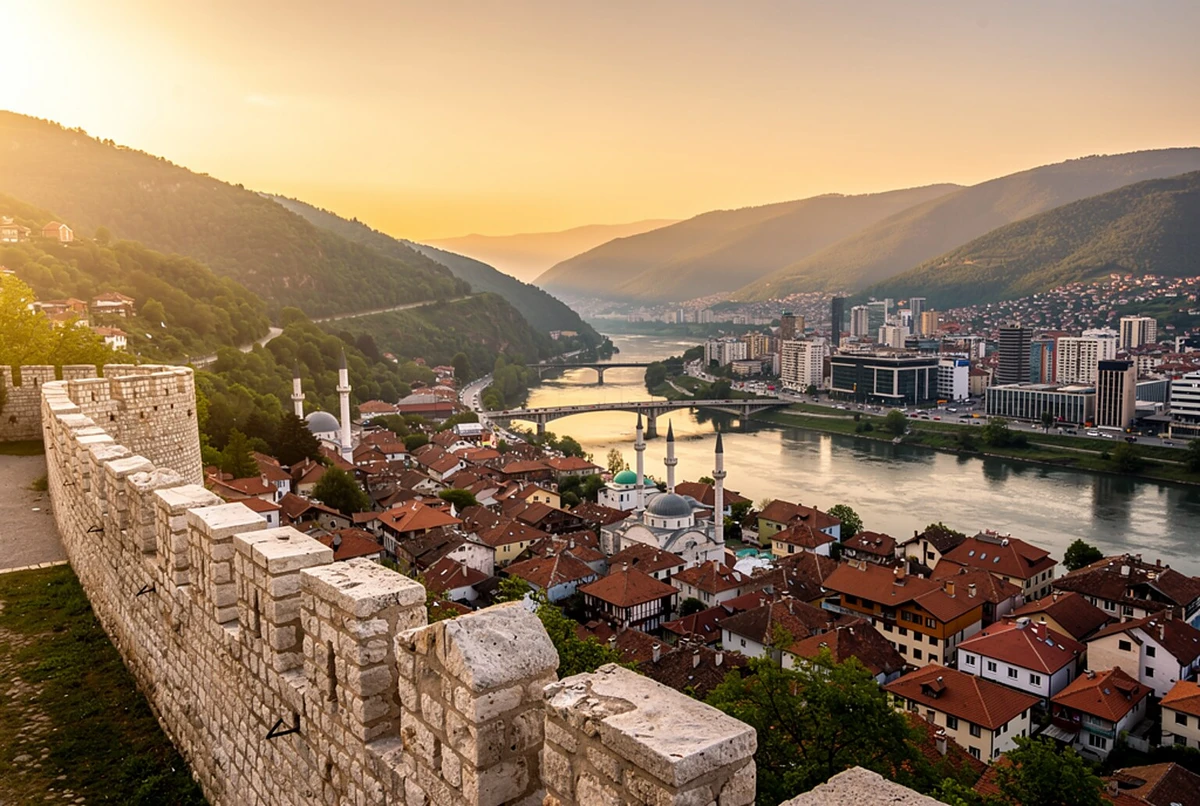
On the hillsides above the bazaar, Bistrik and Vratnik are traditional residential quarters of steep lanes, old family houses and guesthouses with balconies over the whole valley. They are quiet and safe, perfect for sunset at the Yellow Fortress, though the walk back up is steep, so a short taxi ride in the evening is a wise choice.
Ilidža
A tram ride west, Ilidža is Sarajevo’s green spa suburb, where a long avenue of plane trees leads to Vrelo Bosne, the park in which the Bosna river springs from the mountain in a web of streams and wooden bridges. It is calm, family-friendly and close to the airport, with resort hotels and wide gardens, ideal for longer stays.
How long to stay in Sarajevo and how to pair it
Recommended stay
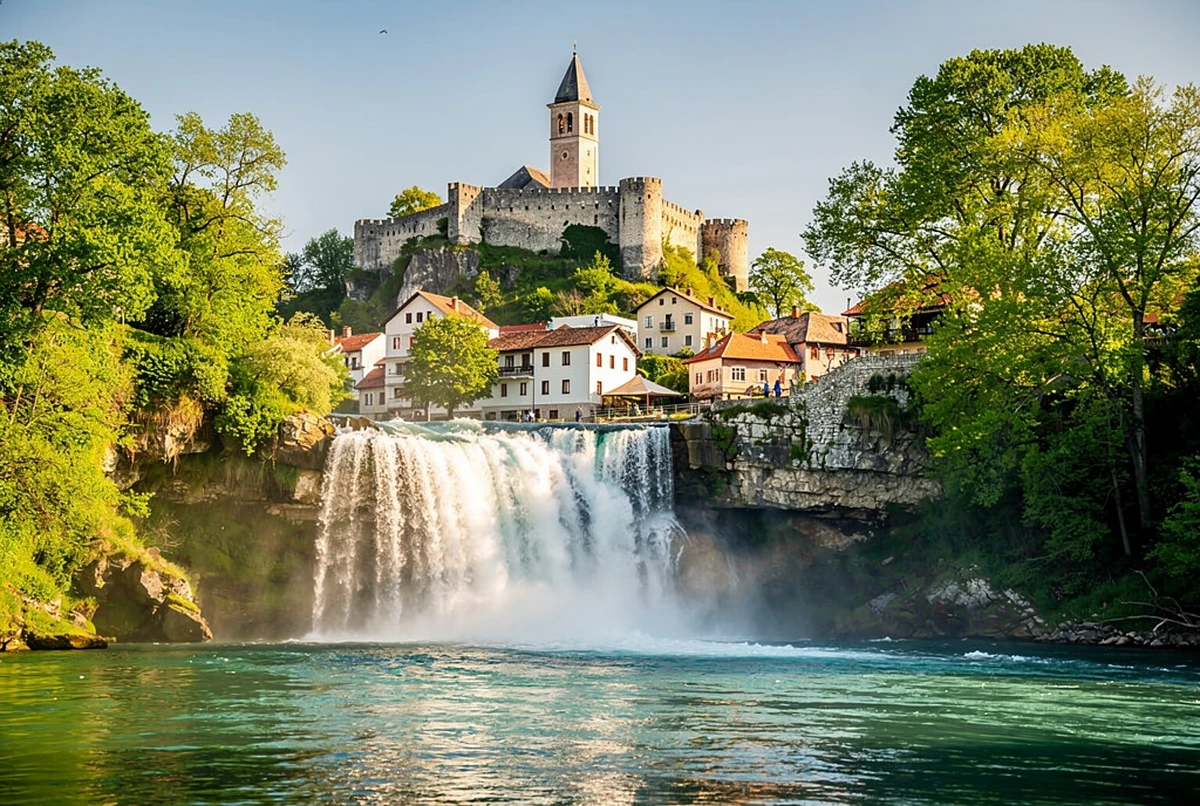
Plan three nights in Sarajevo: one full day for Baščaršija, Ferhadija and the Latin Bridge, one for Trebević, the Tunnel of Hope and Ilidža, and one for our day tour to Mostar. With four or five nights you can add Jajce and Travnik, or a mountain day at Bjelašnica, without rushing.
How to pair it
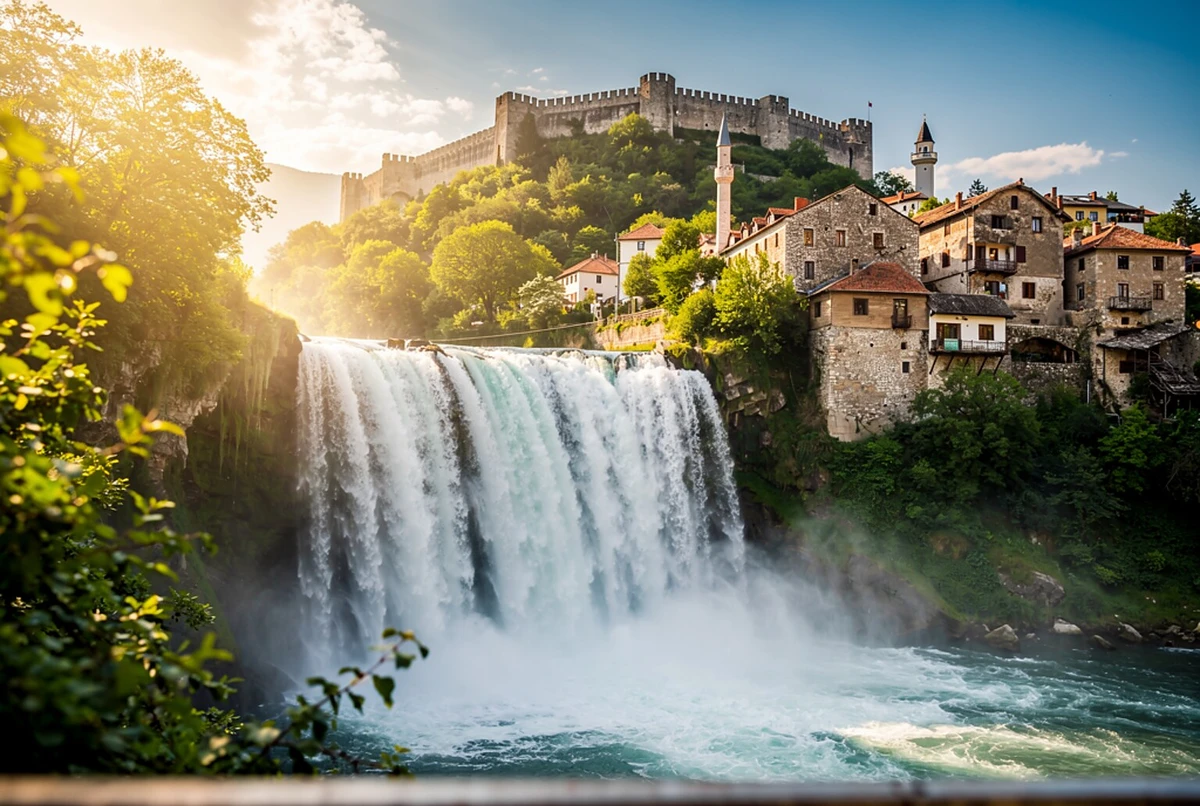
Sarajevo anchors any Bosnia itinerary, and our multi-day packages grow naturally from it. A seven-day loop pairs Sarajevo with Mostar, Blagaj and Počitelj, then Jajce’s waterfall and the Ottoman houses of Travnik. Over ten days, follow the Neretva down to the Adriatic toward Dubrovnik and on to Kotor in Montenegro. Fourteen days allow a wider Balkan journey, with flight tickets we issue to link the region’s capitals and private transfers across the borders.
Best time to visit Sarajevo and the rhythm of the day
Best months
May, June and September are the best months for Sarajevo: warm days, cool evenings, green hills and comfortable walking. July and August are hot and busy, with summer festivals filling the streets. October paints Trebević in gold. December to March is cold and often snowy, perfect for skiing at Jahorina and Bjelašnica and for long hours in cosy coffee houses.
The daily rhythm
Sarajevo moves at the pace of coffee. Mornings start with burek and the first cup, the bazaar fills by ten, and lunch is long, often ćevapi or a slow-cooked Bosnian pot stew. Afternoons bring a second coffee and a stroll along Ferhadija. As the sun sets, families walk the old town, the call to prayer echoes across the valley and dinner runs late.
On-the-ground logistics in Sarajevo
Arrival
Sarajevo International Airport lies about twelve kilometres south-west of Baščaršija, and the drive into the centre takes twenty to thirty minutes depending on traffic. The main railway and bus stations sit near Marijin Dvor. Our private airport transfer meets you at arrivals, handles the luggage and brings you to your hotel door, even in the narrow lanes of the old town.
Getting around
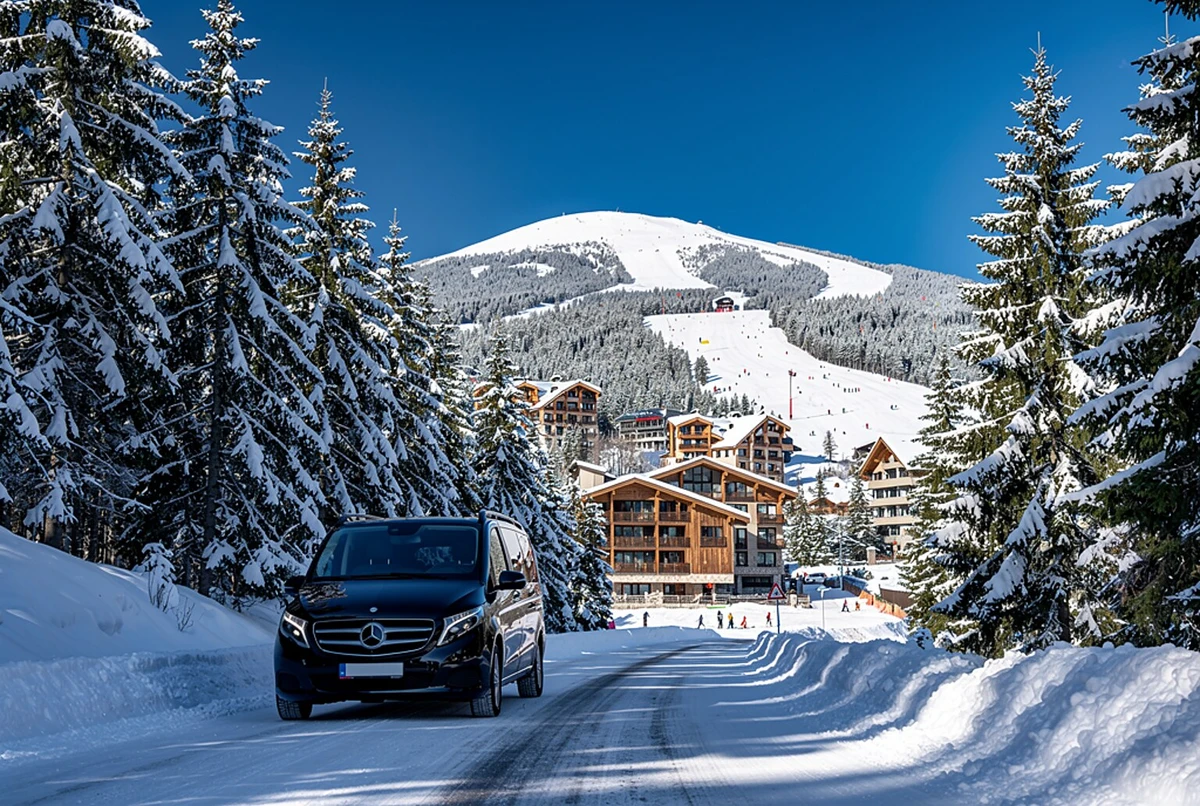
Central Sarajevo is compact and walkable along a single valley axis, from Baščaršija through Ferhadija to Marijin Dvor. Trams run the length of the city and buses reach the suburbs. Licensed metered taxis are plentiful and reliable, while ride-hailing apps have limited coverage. For the hillside quarters, the Tunnel of Hope and day trips, a private driver arranged by our team is easiest.
Local etiquette tip
Bosnian coffee is a ritual, not a quick drink. When it arrives in its copper džezva, take your time: dip the sugar cube, sip slowly, talk. Rushing it, or calling it Turkish coffee, can come across as impolite. In mosques, remove your shoes, cover shoulders and knees, and women should carry a scarf; avoid entering during prayer times.
Must-do things in Sarajevo
- Watch the coppersmiths at work in Kazandžiluk, the oldest craft lane of Baščaršija.
- Visit the Gazi Husrev-beg Mosque and its peaceful fountain courtyard.
- Eat ćevapi in fresh somun bread at a family-run ćevabdžinica.
- Sip Bosnian coffee from a copper džezva with a piece of rahat lokum.
- Step across the “Meeting of Cultures” line on Ferhadija Street.
- Stand on the Latin Bridge where the First World War was set in motion.
- Ride the Trebević cable car and walk the old Olympic bobsleigh track.
- Visit the Tunnel of Hope to understand the siege years of the 1990s.
- Watch sunset over the whole valley from the Yellow Fortress above the old town.
- Join our guided day tour to Mostar, the Blagaj Tekke and Počitelj.
Do’s and don’ts in Sarajevo
Do
- Carry a scarf and modest layers for mosque and church visits.
- Learn a few words: “Hvala” for thank you and “Dobar dan” for good day.
- Keep some local cash in convertible marks for bakeries and small cafés.
- Take your time over coffee and accept hospitality warmly when it is offered.
- Book our private airport transfer if your hotel sits inside the pedestrian old town.
Don’t
- Don’t stray from marked paths in the mountains or countryside; old minefields remain in places.
- Don’t treat war memorials such as the Sarajevo Roses as photo props; pause respectfully.
- Don’t call Bosnian coffee “Turkish coffee” in front of your host.
- Don’t enter mosques during prayer times or with shoulders and knees uncovered.
- Don’t raise the war or politics casually; let locals choose whether to share their stories.
Sarajevo at a glance
Plan Sarajevo with Haqqi Tours
Every option is confirmed by our team on WhatsApp before you pay, and delivered by our own people or by trusted local partners we work with in every city. Because we send travellers from all over the world, our partners give us special rates and priority, so you always receive the best. Prices are per person unless marked per vehicle.
About Haqqi Tours: About us Contact us Legal NoticePrivacy PolicyCookies & Marketing PreferencesTerms & ConditionsBooking, Payment & Refunds
More services in Sarajevo
Where we operate in Bosnia
Good to know
Frequently Asked Questions
Straight answers to what travellers ask most about Sarajevo.
Where should first-time visitors stay in Sarajevo?
First-time visitors should stay in or next to Baščaršija, the Ottoman old town, or along Ferhadija in the Austro-Hungarian centre. Both put the main sights, restaurants and trams within a short walk. Bistrik suits travellers who want views and quiet, and Ilidža suits families. Our team can recommend hotels and arrange your private transfer.
Can Sarajevo be done as a day trip, or does it need an overnight stay?
Sarajevo needs at least two nights. A single day only scratches the surface of Baščaršija and misses the evening atmosphere, the views from Trebević and the Tunnel of Hope. Three nights is ideal, giving you one more day for our guided day tour to Mostar, Blagaj and Počitelj.
What is the dress code and etiquette in Sarajevo?
Sarajevo is relaxed and modern, but modest dress is appreciated in the old town and essential in mosques: shoulders and knees covered, shoes off and a scarf for women. Churches expect similar respect. Greet people warmly, accept coffee when it is offered and avoid raising the war or politics unless your host does first.
Is Sarajevo tourist friendly?
Very much so. Sarajevo is known across the Balkans for its hospitality. English is widely spoken by younger people and in hotels, signs in the centre are clear, and the old town is easy to explore on foot. Our team adds private transfers, guided day tours and multi-day packages, so everything runs smoothly from arrival to departure.
Is it safe to travel to Sarajevo now?
Sarajevo is generally considered a safe city with a calm, friendly atmosphere, and visitors walk the old town comfortably into the evening. Take normal care with belongings in crowded spots and stay on marked trails in the mountains. Before departure, check your own government’s official travel advice and keep our WhatsApp line handy.
What are the must-do things in Sarajevo?
The must-do things in Sarajevo are wandering Baščaršija and the Gazi Husrev-beg Mosque, eating ćevapi and lingering over Bosnian coffee, crossing the Meeting of Cultures line, standing on the Latin Bridge, riding the Trebević cable car, visiting the Tunnel of Hope and joining our guided day tour to Mostar.
How many days do you need in Sarajevo?
Three days is ideal for Sarajevo: one for the old town and the Austro-Hungarian centre, one for Trebević, the Tunnel of Hope and Ilidža, and one for a day trip to Mostar. Add a fourth or fifth day for Jajce and Travnik, or for skiing at Jahorina and Bjelašnica in winter.
How long does the Mostar day trip from Sarajevo take?
The distance is covered comfortably within a single day, leaving Sarajevo in the morning and returning by evening, with a guide and driver arranged together so the family does not need to plan the route itself.
Which multi-day package suits a longer stay based in Sarajevo?
The Bosnia 7 Days Tour Package and the longer 10 and 11 day versions combine Sarajevo with towns such as Mostar and Travnik, letting a family move between cities without arranging separate transfers each time.
Is a car with driver available for getting around Sarajevo itself?
Yes, alongside the day tours and packages, a car with driver in Sarajevo is listed for moving between the old bazaar, viewpoints and a hotel without relying on public transport.
What can I book in Sarajevo with Haqqi Tours?
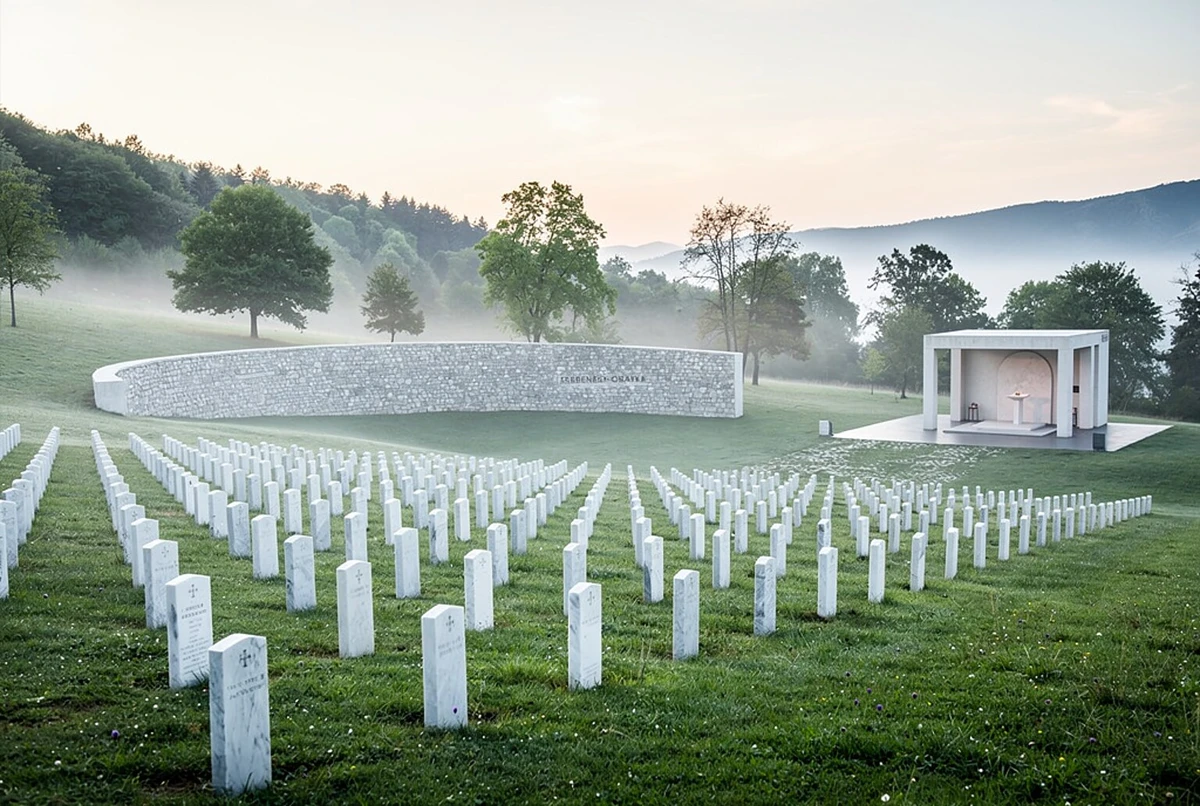
Day tours, private airport transfers, multi-day packages, flight tickets and train tickets, including Srebrenica & Potočari Memorial Day Trip from Sarajevo with War Veteran Guide, Jajce Waterfalls & Travnik Tour and Olympic Mountains Tour from Sarajevo. Each has its own page, and the WhatsApp desk combines any of them into one plan with one written price.
How do I get from the airport to my hotel in Sarajevo?
Sarajevo International Airport (SJJ) is about 12 km south-west of Baščaršija at Butmir, a small terminal beside the Tunnel of Hope museum. Our private transfer meets you at arrivals with a name board, tracks your flight and takes you door to door at a fixed price for the whole vehicle; the transfer pages list every route.
Is there public transport from the airport to Sarajevo?
A trolleybus and bus run from near the airport to the centre with a walk at both ends; there is no rail link, and the Ilidža-to-old-town road is simple by car in a quarter of an hour outside rush hour. With luggage, a family or a late flight, the private car is the simpler choice.
Which tours are available in Sarajevo?
Among them: Srebrenica & Potočari Memorial Day Trip from Sarajevo with War Veteran Guide, Jajce Waterfalls & Travnik Tour, Olympic Mountains Tour from Sarajevo, Car with Driver in Sarajevo and Vrelo Bosne Park Tour. Each page says whether the day is private or small-group, what it includes and how long it lasts.
Are the tours private or in a group?
Both exist, and each tour page says which. A private tour has a vehicle and guide for your party alone; the desk can make most group tours private on request.
How do I book?
Fill in the form on any page or message us on WhatsApp with the date, the number of travellers and the hotel. A member of our team confirms the price and the details in writing within minutes.