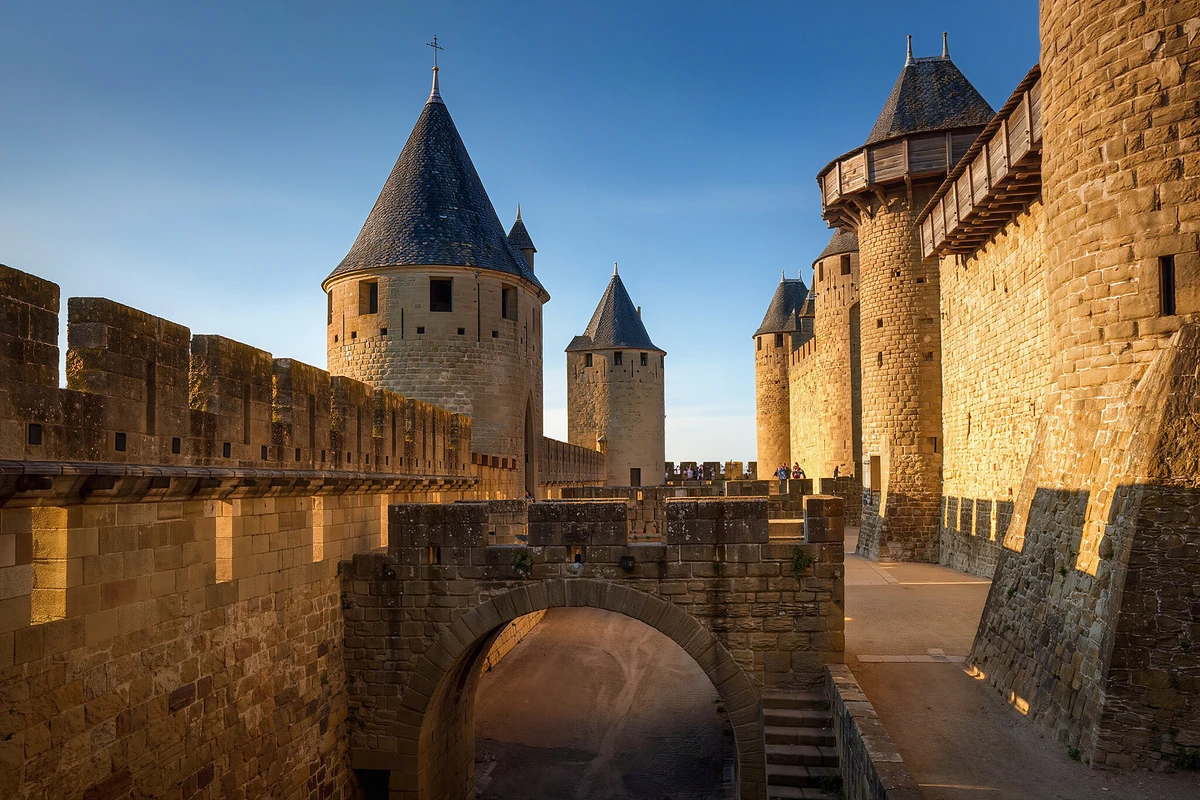
Louvre Museum Guided Tour with Mona Lisa & Iconic Masterpieces Paris
- Duration2 hours
- Daily except Tuesday
- Group

Some images are AI-generated for illustration. While we confirm your booking, just ask and we will send you the original photos.
- Fair, honest prices
- Real people, not bots
- Confirm, then pay
- Secure payment

Overview
This Louvre Mona Lisa guided tour is a shared two-hour visit with a licensed English-speaking guide and headsets, in a standard group of up to twenty people, with a pre-reserved ticket so you enter through the glass pyramid without queuing for tickets. The route follows the museum's highlights in a logical order: the Venus de Milo and the Winged Victory of Samothrace, the Mona Lisa and the Italian Renaissance, paintings from the 13th to the 19th century, ancient Greek relics and the medieval foundations of the castle beneath the palace. It suits first-time visitors and families who want the essentials explained in two hours. The group meets at the Kiosque des Noctambules; there is no hotel pickup. An option adds a Seine cruise ticket.
Highlights
- Two-hour guided tour of the Louvre with a licensed English-speaking guide and headsets
- Pre-reserved entrance ticket and group reservation, entering through the glass pyramid
- The Mona Lisa in the Salle des États, with the story of its theft in 1911
- Venus de Milo and the Winged Victory of Samothrace
- Italian Renaissance and French paintings from the 13th to the 19th century
- Medieval foundations of the castle under the Louvre Palace
- Lesser-known works pointed out along the highlights route
- Four start times, daily except Tuesday; option with a one-hour Seine cruise ticket
Full Description
The Kiosque des Noctambules and the Palais-Royal
The tour begins at the Kiosque des Noctambules, the metro entrance on the Place Colette made of coloured glass beads on aluminium frames, installed in 2000 for the centenary of the Paris metro and facing the columns of the Comédie-Française, the national theatre founded in 1680. It is one of the easiest meeting points in Paris to recognise and sits directly above the Palais Royal – Musée du Louvre station on lines 1 and 7. A few steps away are the arcades and garden of the Palais-Royal, the 17th-century palace whose courtyard is filled with striped black-and-white columns.
From the kiosk the guide walks the group for about five minutes across the Place du Palais-Royal and through the Cour Napoléon to the glass pyramid, explaining how the Louvre grew from a fortress into the largest palace in Europe. Please do not go to the museum on your own, because the pre-reserved tickets are issued to the group as a whole.
The Louvre Palace and the pyramid entrance
The Louvre is the former residence of the kings of France, begun as a fortress around 1190, rebuilt as a Renaissance palace from 1546 and extended by almost every ruler until the 19th century, which is why the building is nearly a kilometre long. The collection was opened to the public in 1793, during the Revolution, and now runs from the ancient civilisations of Egypt and Mesopotamia to European painting of the mid-19th century, with around 35,000 works on display across the Denon, Sully and Richelieu wings. The glass pyramid in the central courtyard, inaugurated in 1989, is the main entrance and the symbol of the modern museum.
With your pre-reserved ticket you pass through the pyramid security line and descend to the hall beneath it, where the three wings begin. A Louvre guided tour of two hours cannot show everything, so your guide follows the highlights route and keeps the group moving at a comfortable pace, using headsets so that nobody misses an explanation.
The Winged Victory of Samothrace and the Daru staircase
The first great encounter of the route is the Winged Victory of Samothrace, the marble figure of Nike, the Greek goddess of victory, carved around 190 BC to stand on the prow of a ship in a sanctuary on the island of Samothrace. Discovered in pieces in 1863 and reassembled, she has stood at the top of the Daru staircase since 1884, where the light from above and the sweep of the stairs make her the most dramatic sight in the museum. Her wings and wind-pressed drapery are among the finest achievements of Hellenistic sculpture.
The guide pauses here for about ten minutes to explain how the statue was found, why she has no head or arms and how the museum restored her between 2013 and 2014. The staircase is also the crossroads of the Denon wing, leading on to the Italian paintings on one side and the Galerie d'Apollon on the other.
The Mona Lisa and the Italian Renaissance
The Grande Galerie, the long corridor along the Seine that was once the route between the Louvre and the Tuileries Palace, holds the Italian paintings from the 13th to the 17th century, and it leads to the Salle des États, where the Mona Lisa hangs alone on a wall facing the enormous Wedding Feast at Cana. The portrait was painted in Florence between about 1503 and 1506 and came to France with the royal collection; its theft from the Louvre in 1911 and recovery two years later turned it into the most famous painting in the world.
Your guide explains why the picture is so small, how its soft shading and the smile were achieved, and the best way to approach the viewing area without wasting time in the crowd. Around it are the other Renaissance masterpieces of the room and the great French canvases of the 19th century in the neighbouring galleries, which the route visits next. Expect about forty minutes in this part of the museum.
The Venus de Milo and the Greek galleries
The Venus de Milo is the most famous statue of the Louvre and the centrepiece of the Greek antiquities in the Sully wing. Found by a farmer on the island of Milos in 1820 and carved around 150 to 125 BC, she represents Aphrodite, the goddess of love, and her missing arms have been the subject of guesses for two centuries. The galleries around her hold Greek vases, bronzes and marbles from the archaic period to the Roman copies that preserved lost Greek originals, and the Salle des Caryatides, the Renaissance ballroom supported by four sculpted women.
The guide spends about twenty-five minutes in this part of the museum, telling the stories of the works and pointing out lesser-known pieces that most visitors pass without a glance. From here the route descends to the lower level of the Sully wing, where the oldest part of the Louvre waits.
The medieval Louvre beneath the palace
Under the Sully wing, excavations in the 1980s uncovered the base of the fortress that stood here from around 1190: the moat, the massive round keep and the walls of the castle that defended Paris from attack along the Seine. You walk along the bottom of the moat between stone walls several metres thick, see the pier of the old drawbridge and the foundations of the keep, and understand how the city has risen around the building over eight centuries. A model shows the fortress as it looked in the Middle Ages.
This is where the two-hour guided tour usually ends, close to the exit beneath the pyramid. Note that once you have left the wings and are under the pyramid you cannot re-enter the galleries, so decide with your guide whether you want to stay longer inside; the Louvre closes at 18:00, or at 21:00 on Wednesdays and Fridays.
Itinerary
- Meeting at the Kiosque des NoctambulesMeet your guide at the glass-bead metro entrance on the Place Colette, facing the Comédie-Française, at your booked time; look for the guide holding a flag.
- Walk to the Louvre pyramidAbout five minutes on foot through the Cour Napoléon with an introduction to the history of the palace.
- Entry through the pyramidPass security and enter with the pre-reserved group ticket, collect your headset and descend to the hall beneath the pyramid.
- Winged Victory of SamothraceThe Daru staircase and the Hellenistic masterpiece, about ten minutes.
- Mona Lisa and the Italian RenaissanceThe Grande Galerie, the Salle des États and the great French paintings, about forty minutes.
- Venus de Milo and the Greek galleriesThe Sully wing with its marbles and the Salle des Caryatides, about twenty-five minutes.
- The medieval LouvreThe moat and keep of the original castle beneath the palace, about fifteen minutes, then the end of the tour near the pyramid exit after two hours.
- Seine River cruise (with the cruise option)Use your one-hour Seine cruise ticket at any time after the tour.
What's included
- 2-hour guided tour of the Louvre in English
- Licensed guide
- Pre-reserved entrance ticket and group reservation fee
- Headsets to hear the guide clearly
- Standard group of up to 20 participants
- Mona Lisa, Venus de Milo, the Winged Victory of Samothrace and the medieval foundations
Not included
- Transportation
- Food and drinks
- Small-group or private format
Is this right for you?
Great for
- Families with children — a child price for ages 3–11
- History and culture lovers
- Anyone who wants to see it from the water
- A short visit — about 2 hours
Think twice if
- You want a private tour — this one is shared with other travellers
- You get seasick easily
Not suitable for
- Wheelchair users and people with reduced mobility, because the route includes many steps
- Travellers with luggage, large bags or double strollers, which cannot enter the museum
Meeting point
Do not go to the Louvre directly. Meet your guide at the Kiosque des Noctambules, the colourful structure of glass beads that marks the metro entrance on the Place Colette, facing the Comédie-Française, a five-minute walk from the Louvre entrance; the guide holds a flag and gathers the group there. Start times are 09:30, 10:15, 11:30 and 14:30; arrive about ten minutes early, as the group enters together with pre-reserved tickets. The nearest metro station is Palais Royal – Musée du Louvre on lines 1 and 7, exit Place Colette. There is no hotel pickup.
Important information
- The Louvre is closed on Tuesdays; it closes at 18:00, or 21:00 on Wednesdays and Fridays
- Every participant must be booked in the correct category, including children and others eligible for free admission
- Wear comfortable shoes: there are many steps and wheelchairs are not permitted on this tour
- Luggage, large bags and double strollers cannot enter the museum; selfie sticks are not allowed
- In peak season the museum is busier and there may be a wait at the security check
- Once you leave the wings and are under the pyramid you cannot re-enter the galleries
- Bring a photo ID; the group ticket is checked at the entrance
- Food and drinks are not included; cafés are available under the pyramid after the tour
Good to know
Frequently Asked Questions
Straight answers to what travellers ask us most, before they book.
Is this a shared or a private experience?
It is a shared guided tour in a standard group of up to twenty people, with headsets so everyone hears the guide. Small-group and private formats are not part of this booking.
How long does the Louvre Mona Lisa guided tour take?
Two hours inside the museum, plus a five-minute walk from the meeting point. With the cruise option, add a one-hour Seine cruise at any time afterwards.
Is hotel pickup included?
No. The group meets at the Kiosque des Noctambules on the Place Colette, directly above the Palais Royal – Musée du Louvre metro station.
What is included?
The two-hour guided tour in English with a licensed guide, the pre-reserved entrance ticket and group reservation, and headsets. Transport, food and drinks are not included; a second option adds a one-hour Seine River cruise ticket.
Is the price per person or per group?
The tour is booked per person. The booking panel on this page shows the current price of each option.
Do I skip the line at the Louvre?
You skip the ticket line because your entrance is pre-reserved for the group. The security check at the pyramid still applies to everyone and can take a few minutes on busy days.
Will I definitely see the Mona Lisa?
Yes. The Mona Lisa, the Venus de Milo and the Winged Victory of Samothrace are fixed stops, together with the Italian and French painting galleries and the medieval foundations.
Is the tour suitable for children?
Yes. Children must be booked in their own category even if they qualify for free admission. The sculptures and the medieval moat usually hold their attention, and the headsets help them follow the guide.
Is it suitable for people with reduced mobility?
No. The route includes many steps and wheelchairs are not permitted on this tour. Contact us if you need advice on an accessible visit to the Louvre.
What is the best time of day to visit the Louvre?
The 09:30 departure reaches the Mona Lisa before the midday peak; the 14:30 departure on a Wednesday or Friday lets you stay on afterwards until the late closing at 21:00. Winter weekdays are the quietest of the year.
Can I stay in the museum after the tour?
Yes, as long as you stay inside the wings; once you are under the pyramid you cannot go back into the galleries. Tell your guide at the end if you want to continue on your own.
How do I book and confirm?
Choose your date, time and option in the booking panel and complete the booking. Our team confirms on WhatsApp within minutes and sends the meeting point with a map.
More in Paris


Popular across France
-
-

-
-

-

-