Third Reich & WWII History 3-Hour Walking Tour Berlin
- Duration3 hours
- Daily
- Group
- Pickup available
Some images are AI-generated for illustration. While we confirm your booking, just ask and we will send you the original photos.
- Fair, honest prices
- Real people, not bots
- Confirm, then pay
- Secure payment

Overview
This Third Reich walking tour Berlin is a shared 3-hour walk on foot led by an English-speaking local historian, following the rise and fall of Nazi Germany through the places where it happened. From Friedrichstraße station you walk to the Reichstag, scene of the 1933 fire and of one of the last battles of 1945, through the Brandenburg Gate to the Soviet War Memorial, then to the Memorial to the Murdered Jews of Europe, the site of the former Führerbunker, the surviving Reich Aviation Ministry and the sites of the SS and Gestapo headquarters, ending at the Topography of Terror. The pace is relaxed and the route wheelchair accessible; there is no hotel pickup on the shared walk, while a private walk with hotel pickup is also on this page.
Highlights
- 3-hour Berlin WW2 tour on foot with an English-speaking expert historian
- The Reichstag, scene of the 1933 fire and the final battle for Berlin in 1945
- Brandenburg Gate, once a propaganda backdrop and later a Cold War frontier
- Soviet War Memorial in the Tiergarten, built in 1945 from the ruins of the Reich Chancellery
- The Memorial to the Murdered Jews of Europe
- The site of the former Führerbunker and the former New Reich Chancellery
- The former Reich Aviation Ministry and the sites of the Propaganda Ministry and the SS and Gestapo headquarters
- Finish at the Topography of Terror, with time to visit the free exhibition on your own
Full Description
The Reichstag, from the 1933 fire to the battle of 1945
The walk begins at Friedrichstraße station beside the Tränenpalast, the former border hall of the divided city, and reaches the Reichstag within a few minutes. Completed in 1894 as the parliament of the German Empire, the building burned on the night of 27 February 1933, an event the new Nazi government used to suspend civil liberties and crush its opponents within weeks of taking power. In April 1945 Soviet troops fought their way floor by floor through the ruined building, and the photograph of the red flag raised on its roof became the image of the end of the war in Europe.
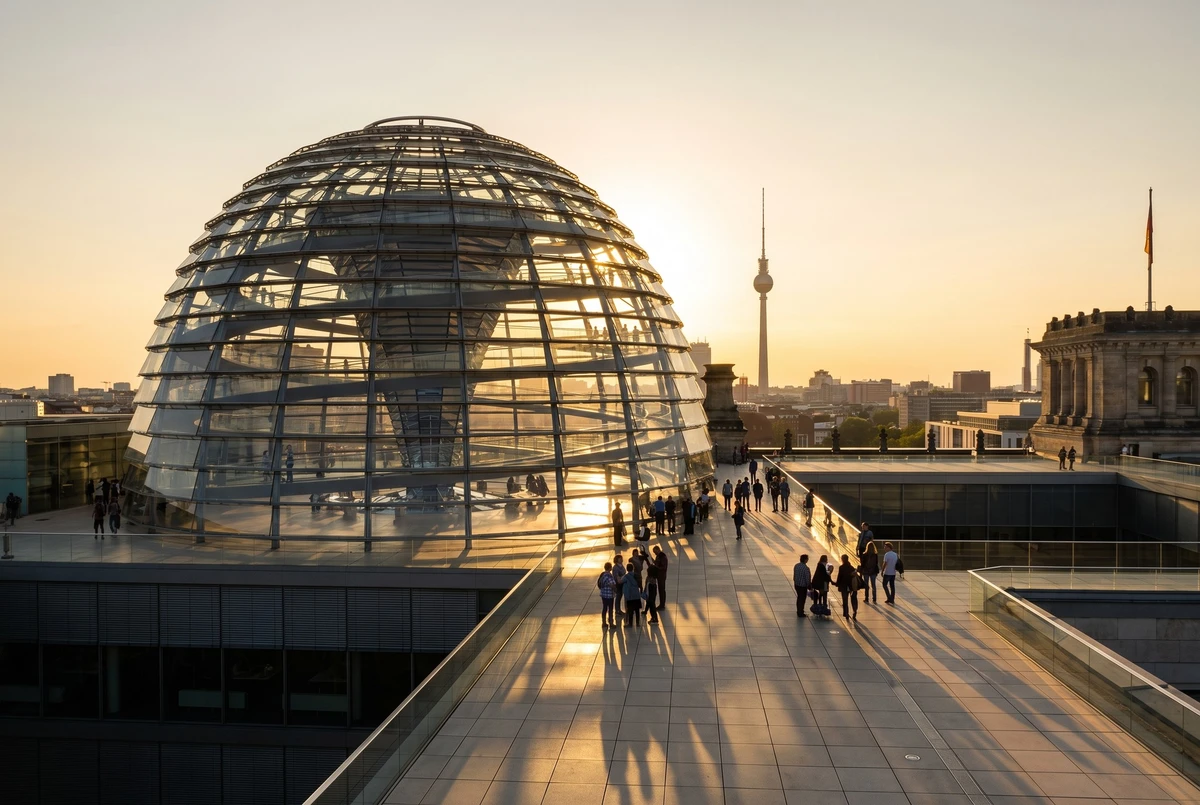
Your historian explains both events on the lawn in front of the building and points out the glass dome added in 1999, from which visitors today look down into the parliament chamber; inside, Soviet soldiers' graffiti has been preserved on the walls. The stop lasts about fifteen minutes, and the guide can tell you how to book the free dome visit for another day.
Brandenburg Gate and the Soviet War Memorial
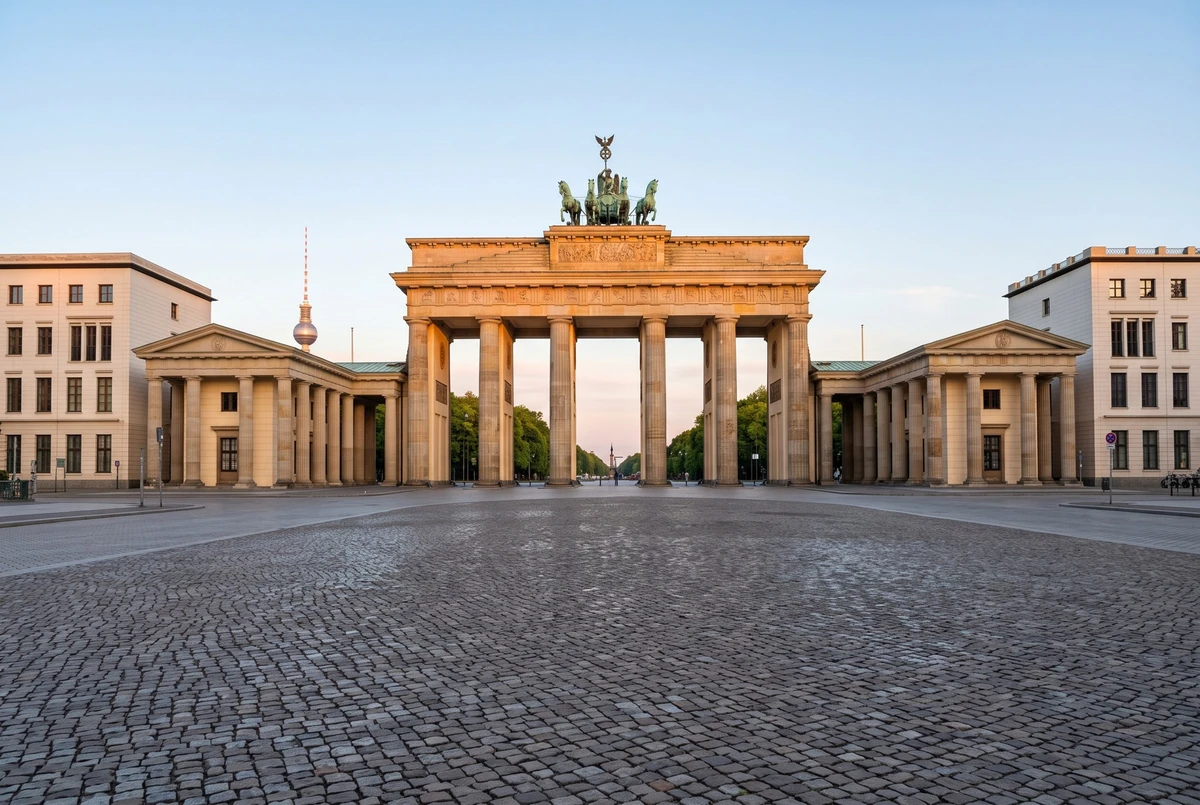
Walking through the Brandenburg Gate, built in 1791, you follow the route of the torchlight parade with which the Nazi party celebrated taking power in January 1933; the gate later stood inside the border strip from 1961 to 1989. Just beyond it, on the avenue through the Tiergarten, stands the Soviet War Memorial, built within months of the war's end in 1945 using stone from the demolished New Reich Chancellery and flanked by two tanks and two guns that took part in the battle for Berlin.
The memorial is one of the most unexpected sights on a Berlin WWII walking tour: it stood in the British sector for the whole Cold War, guarded by Soviet soldiers who came through the Wall each day to change shifts. The historian uses the two sites together to explain how propaganda, war and division are layered on a single stretch of road. Allow about twenty minutes for both.
Memorial to the Murdered Jews of Europe
South of the gate the Memorial to the Murdered Jews of Europe fills a city block with 2,711 concrete slabs on uneven ground; it opened in 2005 after years of public debate about how Germany should remember the Holocaust in the centre of its capital. The slabs rise as you walk in until they stand above head height, and the sound of the city fades. Beneath the field an information centre documents the victims by name and family; it is free to visit if you return after the walk.
The guide walks the group into the memorial for around fifteen minutes and explains the thinking behind its design, the choice of the site beside the former ministry quarter and the stories of individual families recorded in the centre below. It is the quietest stop of the morning, placed deliberately before the walk reaches the sites of the regime's offices a few streets away.
The Führerbunker site and the former New Reich Chancellery
Behind the memorial, among apartment blocks built in the 1980s, a car park marks the site of the former Führerbunker, where the dictator spent the last weeks of the war and killed himself on 30 April 1945. The bunker lay beneath the garden of the New Reich Chancellery, a vast building completed in 1939 on Voßstraße as the showpiece of the regime; it was damaged in the battle, demolished by the Soviets and its stone reused for their memorials. Only an information board, placed in 2006, identifies the spot.
The Führerbunker site tour Berlin visitors search for is exactly this stop: there is nothing to see, which is the point, and the historian explains why Germany chose to leave the site unmarked for so long. You hear about the plans for the imperial capital that was never built and the final days of the siege. Around fifteen minutes here, mostly listening.
Wilhelmstraße: the Aviation Ministry and the former ministries
Wilhelmstraße was the government street of Prussia, the Empire and the Third Reich, and the walk follows it past the sites of the Propaganda Ministry and the Reich Chancellery to the one major Nazi building that survived: the former Reich Aviation Ministry, completed in 1936 as the largest office building in Europe at the time. It was spared by bombing, served as the East German House of Ministries, where the uprising of 17 June 1953 began, and now houses the Federal Finance Ministry; a mural from 1952 and a memorial to the uprising face each other at its corner.
The historian uses the long stone facade to explain how the regime's ministries worked and how the same building passed through dictatorship, division and democracy. A short walk from here leads along the surviving stretch of the Berlin Wall on Niederkirchnerstraße to the final stop. Allow about fifteen minutes on this street.
Topography of Terror, where the walk ends
The Topography of Terror stands on the site of the headquarters of the Gestapo, the SS and the Reich Security Main Office on the former Prinz-Albrecht-Straße, from where persecution across occupied Europe was directed between 1933 and 1945. The buildings were destroyed after the war and the ground lay empty beside the Wall until the cellars were excavated in the 1980s; the present documentation centre opened in 2010, with an outdoor exhibition in the excavated trench and a permanent exhibition indoors. Entry is free and the centre is open daily from 10:00 to 20:00.
The walk ends here after about three hours, and most travellers on a Topography of Terror tour stay on for an hour to see the exhibition on their own; the historian gives an introduction so you know where to start. The longest surviving stretch of the Berlin Wall in the city centre runs along the edge of the site, and Checkpoint Charlie is a five-minute walk away.
Itinerary
- Meeting point at Friedrichstraße stationMeet the historian on the square between the station and the Tränenpalast at 10:00; the guides hold yellow umbrellas.
- The ReichstagThe 1933 fire, the 1945 battle and the glass dome of today; about 15 minutes.
- Brandenburg GateWalk through the gate and hear how it was used as a propaganda symbol and then sealed by the Wall; about 10 minutes.
- Soviet War Memorial in the TiergartenThe memorial built in 1945 from the stone of the Reich Chancellery; about 10 minutes.
- Memorial to the Murdered Jews of EuropeWalk into the field of slabs with the historian's explanation; about 15 minutes.
- Site of the former FührerbunkerThe car park above the bunker and the story of the last days of the regime; about 15 minutes.
- Former Reich Aviation Ministry on WilhelmstraßeThe surviving ministry building and the sites of the Propaganda Ministry and the Chancellery; about 15 minutes.
- Topography of TerrorThe former Gestapo and SS headquarters, where the walk ends after about 3 hours; stay on for the free exhibition.
What's included
- 3-hour guided walking tour
- English-speaking expert local historian
- Reichstag, Brandenburg Gate, Soviet War Memorial and Memorial to the Murdered Jews of Europe
- The former Führerbunker site, the former Reich Aviation Ministry and the Topography of Terror
- Relaxed strolling pace with time for photos and reflection
- Wheelchair-accessible route
Not included
- Tips
- Food and drinks
Is this right for you?
Great for
- Families with children — a child price for ages 7–17
- Travellers without a car — hotel pickup is included
- Groups who want privacy — a private option is available
- First-time visitors who want the highlights
Think twice if
- Walking is difficult for you — expect active parts
Meeting point
The shared walk meets at 10:00 outside Friedrichstraße station, on the square between the station and the Tränenpalast (Reichstagufer 17, 10117 Berlin). Look for the guides holding yellow umbrellas and wearing a blue lanyard with a yellow name tag. Friedrichstraße is served by S-Bahn, U-Bahn, regional trains, trams and buses. The walk ends at the Topography of Terror on Niederkirchnerstraße, near Potsdamer Platz and Checkpoint Charlie. The private option includes pickup from your hotel in Berlin at the time you choose.
Important information
- Wear comfortable shoes and weather-appropriate clothing; the route is about 4 kilometres at a strolling pace
- The walk takes place rain or shine
- The route is wheelchair accessible and suitable for strollers
- No entrance tickets are needed; the Topography of Terror exhibition at the end is free
- Food and drinks are not included; bring water, especially in summer
- The subject matter is serious; children aged 7 to 17 pay the youth rate and should be old enough to follow the history
- The guide is an English-speaking historian; the private option is available in English or German
- The private walk is priced per group of up to 10 and includes hotel pickup
Good to know
Frequently Asked Questions
Straight answers to what travellers ask us most, before they book.
Is this a shared or a private experience?
The default option is a shared walk with an English-speaking expert historian. A private 3-hour walk for your group only, with pickup from your Berlin hotel and a guide in English or German, is also offered on this page.
How long does the Third Reich walking tour take?
About 3 hours at a relaxed strolling pace, starting at 10:00 and ending at the Topography of Terror around 13:00.
Is hotel pickup included?
Not on the shared walk, which meets at Friedrichstraße station. The private option includes pickup from your hotel in Berlin.
What is included?
A 3-hour guided walk with an English-speaking historian covering the Reichstag, Brandenburg Gate, the Soviet War Memorial, the Memorial to the Murdered Jews of Europe, the Führerbunker site, the former Reich Aviation Ministry and the Topography of Terror. Food, drinks and tips are not included.
Is the price per person or per group?
The shared walk is priced per person with a youth rate for ages 7 to 17; the private walk is priced per group of up to 10 people. The booking panel on this page shows the current price of each option.
Is the walk suitable for children and for people with reduced mobility?
The route is wheelchair accessible and flat. Because the subject is the Nazi dictatorship and the Holocaust, it suits older children and teenagers who can follow the history rather than young children.
What should I bring?
Comfortable shoes, a rain jacket or umbrella, water and a camera. In summer a hat and sunscreen; in winter warm layers, as several stops are in open squares.
Can I visit the Topography of Terror after the walk?
Yes. The walk ends there, the exhibition is free and it is open daily from 10:00 to 20:00. Most travellers spend about an hour inside.
Is there anything left of the Führerbunker?
No. The bunker was blown up and filled in after the war, and the site is a car park with an information board. The historian explains what stood there and why nothing was rebuilt.
What happens in bad weather?
The walk takes place rain or shine; bring suitable clothing. The route has few sheltered spots, so an umbrella is useful.
Does the walk include Checkpoint Charlie or the Berlin Wall?
You pass the longest surviving stretch of the Wall in the centre on Niederkirchnerstraße on the way to the Topography of Terror, and Checkpoint Charlie is a five-minute walk from the end point, but the focus of this walk is the Nazi period rather than the Cold War.
How do I book and confirm?
Choose your date and option in the booking panel and complete the booking; our team confirms on WhatsApp within minutes and sends the meeting-point or pickup details.
More in Berlin
Getting to & around Berlin
Popular across Germany
-
-
-
-
-
-