Jewish Quarter and WWII History Small-Group Walking Tour Amsterdam
- Duration1 hour
- Daily
- Group
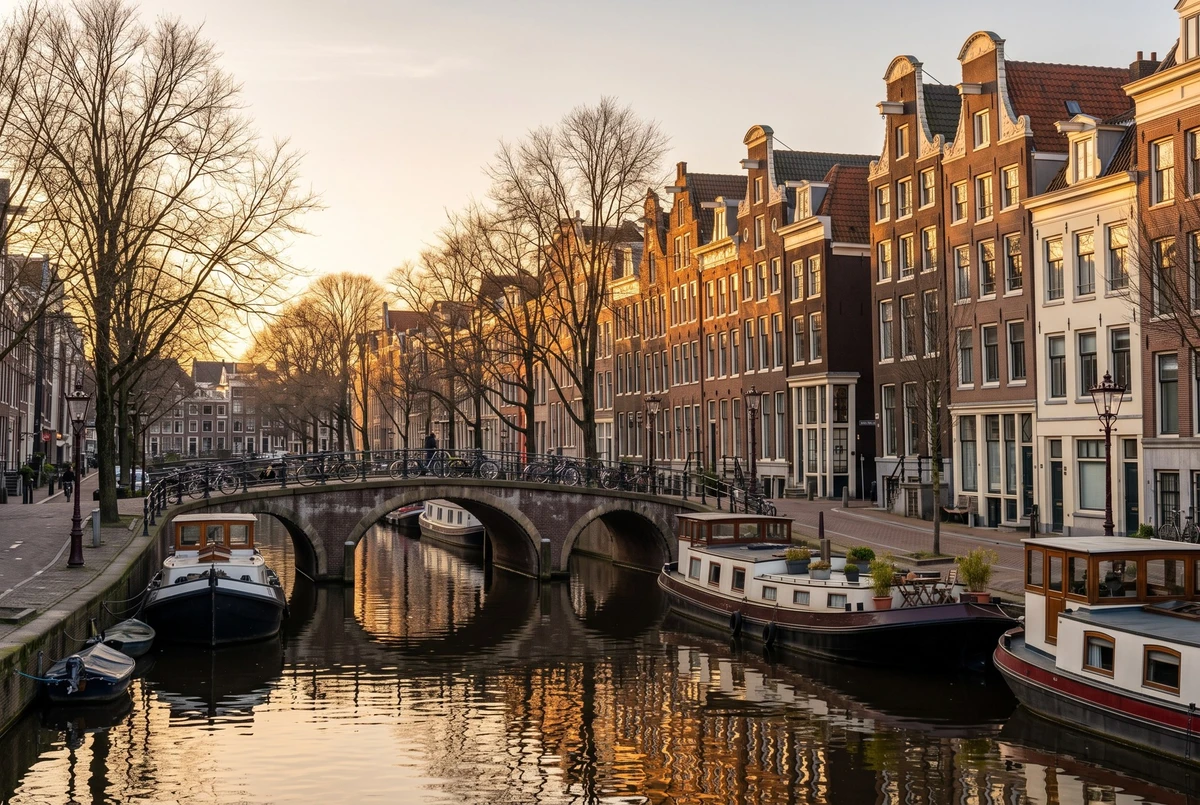
Some images are AI-generated for illustration. While we confirm your booking, just ask and we will send you the original photos.
- Fair, honest prices
- Real people, not bots
- Confirm, then pay
- Secure payment

Overview
This two-hour small-group walking tour follows the history of Jewish Amsterdam and the Second World War on the streets where it happened. A specialist English-speaking guide starts in front of the Jewish Museum in the Jewish Cultural Quarter and leads you past the Portuguese Synagogue, the Dockworker statue and the National Holocaust Names Monument, through the old streets around the Zuiderkerk to Dam Square, and on to the canal belt to see the outside of the WWII hiding-place house on Prinsengracht. Along the way you hear the story of a Jewish family in hiding, the Dutch Resistance and daily life under occupation. It suits history lovers, students and families with teenagers. Shorter and private options are also available.
Highlights
- Specialist guide for WWII and Jewish history in a small group
- Jewish Cultural Quarter and the Jewish Museum around Waterlooplein
- Portuguese Synagogue, a 17th-century landmark that survived the war
- The Dockworker statue honouring the February Strike of 1941
- National Holocaust Names Monument, unveiled in 2021
- National Monument and Royal Palace on Dam Square
- Outside view of the WWII hiding-place house on Prinsengracht
- How the Dutch Resistance hid people and forged papers
Full Description
The Jewish Cultural Quarter and Waterlooplein
The walk begins in front of the Jewish Museum, in the heart of the old Jewish quarter around Waterlooplein. Sephardic Jews fleeing Spain and Portugal settled here from the late 16th century, followed by Ashkenazi Jews from Central and Eastern Europe, and by the 1930s Jewish life filled these streets with markets, workshops and synagogues. The Jewish Museum now occupies four former Ashkenazi synagogues, the oldest dating from 1671.
Your guide sets the scene: the arrival of the occupation in May 1940, the first anti-Jewish measures and how the neighbourhood was sealed off and emptied. This Amsterdam Jewish Quarter walking tour starts here because so much of the story began on these streets. Note that this meeting point is not close to the hiding-place house museum; the shorter one-hour option starts near Westermarkt instead.
The Portuguese Synagogue
The Portuguese Synagogue, inaugurated in 1675, was once the largest synagogue in the world and remains one of the most impressive buildings in Amsterdam. Built by the Sephardic community, it still has no electric light: services and concerts take place by the glow of hundreds of candles in brass chandeliers, and fine sand covers the wooden floor as it has for centuries. The complex also holds one of the oldest Jewish libraries still in use.
Remarkably, the building came through the war almost untouched, although most of its congregation did not. You stop outside while your guide explains its history and the fate of the Sephardic families of the city. Entry to the synagogue is not part of the walk; if you want to see the candlelit interior, Portuguese Synagogue tickets can be bought separately at the entrance after the tour.
The Dockworker statue and the National Holocaust Names Monument
A few steps away stands the Dockworker, a bronze statue of a sturdy working man unveiled in 1952. It honours the February Strike of 25 and 26 February 1941, when thousands of Amsterdammers walked out of factories, shipyards and trams in protest at the first round-ups of Jewish men, the first mass protest against the persecution of Jews in occupied Europe. The strike is still commemorated here every year.
Nearby, the National Holocaust Names Monument, opened in 2021, lists on brick walls the name, date of birth and age of each Dutch Jewish, Roma and Sinti victim of the Holocaust; seen from above, the walls spell Hebrew letters meaning 'in memory of'. This is the most moving stop of the walk, and your guide gives you time for quiet reflection, about 15 minutes, before continuing.
The Zuiderkerk and Dam Square
The route continues through the narrow streets of the old centre to the Zuiderkerk, completed in 1611 as the first church built for Protestant worship in Amsterdam. During the Hunger Winter of 1944 to 1945, when food and fuel ran out in the occupied city, it served as a temporary morgue, a story your guide uses to describe daily life at the end of the war.
At Dam Square you see the white stone National Monument, unveiled in 1956 and the centre of the national remembrance ceremony every 4 May, facing the Royal Palace, built in the 17th century as the city hall of a prosperous trading republic. Your guide explains how the occupation authorities used the square and how Amsterdammers celebrated liberation here in May 1945. This WWII walking tour in Amsterdam links the large events to the everyday experience of ordinary people.
Prinsengracht and the WWII hiding-place house
The walk ends on the canal belt at Prinsengracht, beside the tall tower of the Westerkerk. Here you see the outside of the canal house where a Jewish family and four others hid for more than two years in a secret annex behind a movable bookcase, until they were betrayed and arrested in August 1944. The younger daughter's diary, saved by a helper and later published, became one of the most widely read books in the world.
Your guide tells the story of the family, the helpers who brought food and news, and the wider network of the Dutch Resistance that hid people and forged identity papers. Entry to the museum inside is not included. If you want to visit it, book tickets online well in advance, as they often sell out weeks or even months ahead; most visitors find that hearing the story on this walk first makes the visit far more meaningful.
Itinerary
- Meet at the Jewish MuseumMeet your guide in front of the Jewish Museum near Waterlooplein for an introduction to the Jewish quarter, about 5 minutes.
- The Dockworker statueHear the story of the February Strike of 1941, about 10 minutes.
- National Holocaust Names MonumentTime for the history of the deportations and quiet reflection, about 15 minutes.
- Portuguese SynagogueThe Sephardic community and its 17th-century synagogue, seen from outside, about 10 minutes.
- Old streets and the ZuiderkerkWalk through the old centre to the church used as a morgue in the Hunger Winter, about 20 minutes with walking.
- Dam SquareThe National Monument and the Royal Palace, and the story of occupation and liberation, about 10 minutes.
- PrinsengrachtThe walk ends outside the WWII hiding-place house beside the Westerkerk, about 10 minutes.
What's included
- One-hour guided walk in a small group
- Specialist English-speaking guide for WWII and Jewish history
- Stories of the family in hiding and the Dutch Resistance
- Outside view of the WWII hiding-place house on Prinsengracht
Not included
- Entrance to the WWII hiding-place house museum on Prinsengracht
- Transfers to the meeting point
Is this right for you?
Great for
- Families with children — a child price for ages 13–17
- Groups who want privacy — a private option is available
- First-time visitors who want the highlights
- A short visit — about 1 hour
Think twice if
- Walking is difficult for you — expect active parts
Not suitable for
- Travellers with luggage or large bags
Meeting point
The two-hour tour starts in front of the Jewish Museum near Waterlooplein, in the Jewish Cultural Quarter. This is not close to the hiding-place house museum on Prinsengracht, so please plan your route; the Waterlooplein metro stop and several tram lines are a short walk away. Arrive about 10 minutes early. The walk ends on Prinsengracht near the Westerkerk. There is no hotel pickup.
Important information
- Entry to the hiding-place house museum on Prinsengracht is not included
- Book museum tickets separately and well ahead if you want to go inside
- The two-hour tour starts at Waterlooplein, not near Prinsengracht
- Wear comfortable shoes; the walk covers about 2.5 km on cobbled streets
- Bring water and a charged phone, and dress for the weather
- Luggage and large bags are not allowed on the tour
- The tour runs in rain, so bring a raincoat or umbrella when needed
Good to know
Frequently Asked Questions
Straight answers to what travellers ask us most, before they book.
Is this a shared or a private experience?
The default option is a shared small-group walking tour. A private two-hour tour for your group only is also available in the booking panel.
How long does it take?
The default tour takes about two hours. A shorter one-hour option starting near Westermarkt is also available.
Is hotel pickup included?
No. You meet the guide in front of the Jewish Museum near Waterlooplein, easy to reach by metro or tram.
What is included?
A two-hour guided walk in a small group with a specialist English-speaking guide, covering the Jewish Cultural Quarter, the Dockworker statue, the Names Monument, the Portuguese Synagogue, the Zuiderkerk, Dam Square and the outside of the hiding-place house on Prinsengracht.
Is the price per person or per group?
The small-group tours are priced per person and the private tour per group. The booking panel on this page shows the current price of each option.
Is it suitable for children or travellers with reduced mobility?
It suits teenagers interested in history; child rates apply from 13 to 17 years. The route is on foot over cobbles and kerbs, so travellers with reduced mobility may find it tiring.
What should I bring?
Comfortable shoes, water, a charged phone and clothes for the weather; leave luggage and large bags at your hotel.
Does the tour include entry to the hiding-place house museum?
No. You see the house from outside. Tickets for the museum are sold separately and often sell out weeks ahead, so book early if you want to go in.
Do we go inside the Portuguese Synagogue?
No, the walk stops outside. You can visit the synagogue on your own afterwards with a separate ticket.
What is the best time of day for this walk?
Morning tours are quieter in the Jewish quarter and on Dam Square. In summer, the late-morning and early-afternoon tours are pleasant, while winter walks are short on daylight but atmospheric.
What happens in bad weather?
The tour runs in rain and wind, so bring a raincoat or umbrella. In extreme weather we offer another time, date or a full refund.
How do I book and confirm?
Choose your date, option and start time in the booking panel and complete the booking; our team confirms on WhatsApp within minutes.
More in Amsterdam

Getting to & around Amsterdam
Popular across Netherlands
-
-
-

-
-
-