
Louvre Museum Skip-the-Line Highlights Tour with Art Historian Paris
- Duration3 hours
- Daily except Tuesday (museum closing day)
- Group
- Skip the line
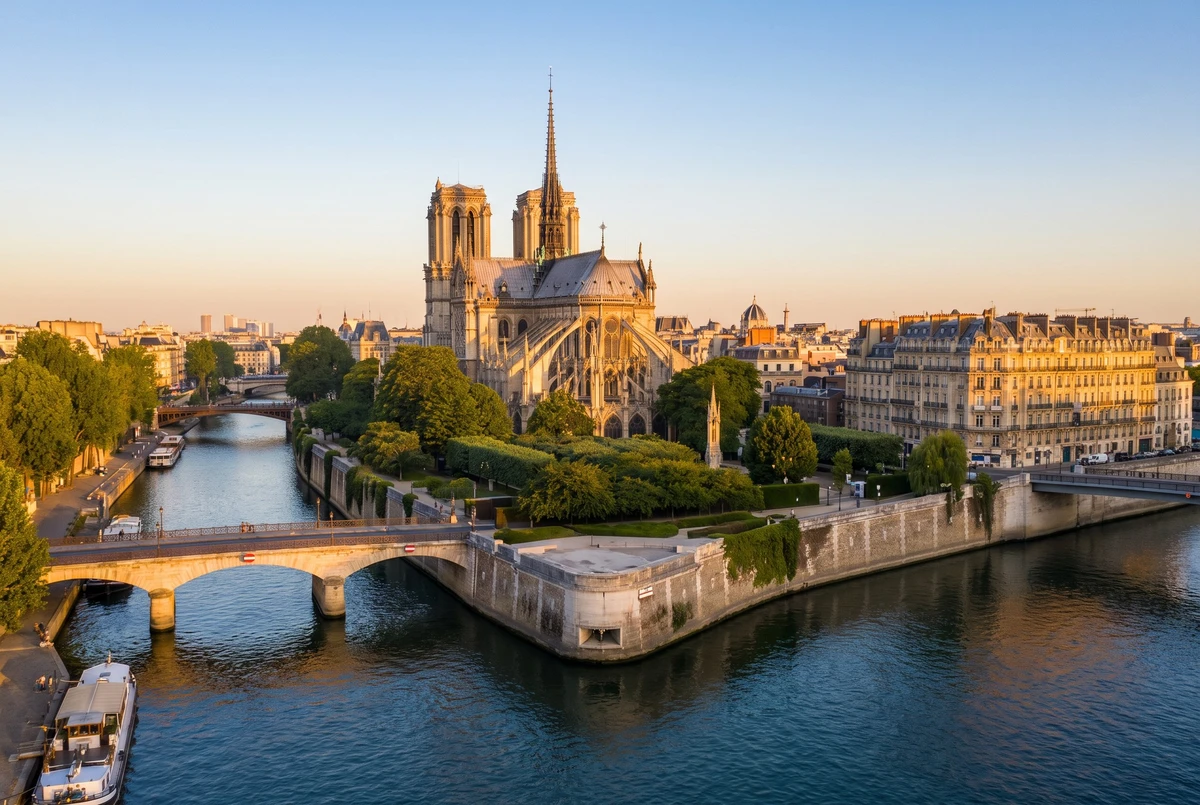
Some images are AI-generated for illustration. While we confirm your booking, just ask and we will send you the original photos.
- Fair, honest prices
- Real people, not bots
- Confirm, then pay
- Secure payment

Overview
This Louvre guided tour is a shared two-hour highlights visit with a local English-speaking art historian and a skip-the-line entry ticket, so you go straight to the masterpieces. You meet at the Arc de Triomphe du Carrousel opposite the glass pyramid, enter the former royal palace and follow the guide to the Winged Victory of Samothrace, the Venus de Milo, the Italian sculpture galleries, the French painting galleries and, of course, the Mona Lisa, with a personal headset so you hear every story. It suits first-time visitors, families and anyone who wants the best of the largest museum in the world in one organised visit. There is no hotel pickup; a closing-time tour, a Best of Paris combination and a private version are other options.
Highlights
- Skip-the-line entry ticket to the Louvre Museum included
- Two hours with a local English-speaking art historian and a personal headset
- The Mona Lisa in the Salle des États, with time to see it properly
- The Winged Victory of Samothrace at the top of the Daru staircase
- The Venus de Milo and the classical Greek sculpture rooms
- The Italian sculpture galleries and the unfinished marble captives of the Florentine master
- The French painting galleries with the giant canvases of the Revolution and the Empire
- The history of the palace itself, from medieval fortress to museum
Full Description
The Louvre: fortress, palace and museum
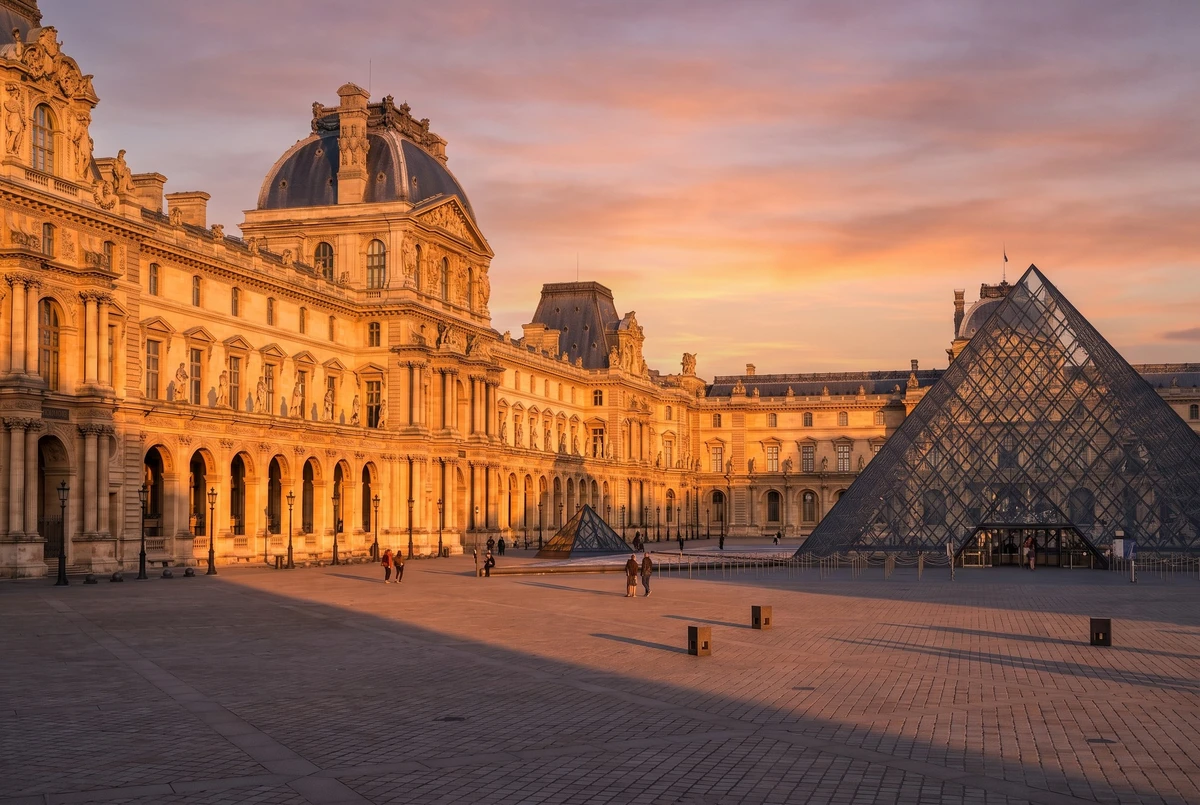
The Louvre began around 1190 as a fortress guarding the western edge of Paris; its round keep was pulled down in the sixteenth century, but the base of the medieval walls can still be seen in the basement. The kings of France rebuilt it as a Renaissance palace, extended it for two centuries along the Seine and then left it for Versailles. It opened as a public museum in 1793, during the Revolution, and today it is the largest museum in the world, with about 35,000 works on display across 73,000 square metres and three wings, Denon, Sully and Richelieu, around the glass pyramid added in 1989.
A Louvre skip-the-line tour matters because the pyramid queue can take well over an hour, and because the building is so large that visitors without a plan spend their time lost. Louvre opening hours are 9:00 to 18:00, with late openings on Wednesday and Friday evenings; the museum is closed on Tuesdays, so this tour runs the other six days at 11:15.
The Winged Victory of Samothrace and the Daru staircase
The first great stop is at the top of the Daru staircase, where the Winged Victory stands alone on a marble prow: a Greek statue of the goddess of victory carved around 190 BC, found in pieces on the island of Samothrace in 1863 and reassembled here. Her head and arms are lost, but the wind pressing her tunic against her body and the wings spread behind her make her one of the most admired sculptures in the world, described as the greatest masterpiece of Hellenistic art. The staircase was designed so that visitors would discover her from below.
The guide explains how the statue was found, how it was cleaned and restored in 2014 and why the position on the stairs was chosen. Expect to spend about ten minutes here; it is also the best place in the Louvre tour to understand the layout of the Denon wing, which holds most of the highlights you will see.
The Venus de Milo and the Greek rooms
In the Sully wing, the galleries of classical Greek sculpture lead to the Venus de Milo, the marble goddess of love carved around 130 to 100 BC and found by a farmer on the island of Milos in 1820. Her arms were already missing when she arrived in Paris the following year, and the mystery of how they were posed has been argued over ever since. The guide points out the spiral twist of the body, the join between the two blocks of marble and the way the drapery seems about to slip, details that explain why this statue became the symbol of ancient beauty.
The rooms around her hold the Louvre's collection of Greek vases, bronzes and the frieze fragments of the Parthenon, and the guide chooses a few to show how Greek sculpture moved from stiff archaic figures to the living bodies of the classical age. This part of the Louvre highlights tour takes about twenty minutes.
The Italian galleries and the Mona Lisa
The Italian sculpture gallery on the ground floor of the Denon wing holds the two unfinished marble captives carved by the Florentine master around 1513 for a papal tomb, figures that seem to struggle out of the stone, and the neoclassical marble of a winged youth reviving a girl with a kiss. Upstairs, the Grande Galerie runs for more than 400 metres along the Seine, hung with Italian Renaissance painting, and opens into the Salle des États, the largest room in the museum, where the Mona Lisa hangs behind glass on its own wall, facing the largest painting in the Louvre, a wedding feast covering seventy square metres.
The Mona Lisa is small, 77 by 53 centimetres, painted on a poplar panel between about 1503 and 1519 and left unfinished in the artist's hands when he died in France. The guide explains the smile, the landscape, the theft of 1911 and the crowd-management system, and helps you get to the front. Allow about twenty minutes for the room.
The French painting galleries
The red rooms next to the Salle des États hold the giant canvases of French painting from the Revolution to the Romantic age: the coronation of the emperor in Notre-Dame in 1804, painted on a canvas ten metres wide; the raft of survivors from a shipwreck of 1816 that scandalised the Salon with its realism; and the woman holding the flag over the barricades of 1830, the most famous image of the French Revolution of that year. Opposite them hang the great portraits of the age.
The guide reads these paintings as the newspapers of their day, explaining the politics behind each commission. It is the last gallery stop of the two-hour Louvre tour with an art historian and takes about fifteen minutes; from here the route passes back under the pyramid, where the guide leaves you with directions to the Egyptian rooms, the medieval moats or the apartments of the Second Empire if you wish to continue on your own.
The palace rooms and the Tuileries outside
Between the galleries the guide shows the building itself: the Cour Carrée with its Renaissance facades, the painted ceilings and gilded stucco of the former royal apartments, the Apollo Gallery with the crown jewels of France, and the way each king added a wing. The Louvre was the stage for royal weddings, plots and massacres, and the stories of the palace are part of this tour.
You meet at the Arc de Triomphe du Carrousel, the small triumphal arch of 1808 that once formed the gateway to the Tuileries Palace, burned in 1871 and never rebuilt; behind it the Tuileries Garden runs to the Place de la Concorde. How to get to the Louvre: metro lines 1 and 7 to Palais Royal–Musée du Louvre, then two minutes on foot to the arch, or line 1 to Tuileries. Best time to visit the Louvre: a weekday late morning, which is when this tour begins, or the late openings on Wednesday and Friday evenings when the galleries are at their quietest.
Itinerary
- Meeting at the Arc de Triomphe du CarrouselAt 11:15, meet your art historian guide at the small triumphal arch in the Tuileries, opposite the glass pyramid; bring your passport or ID card. Headsets are handed out.
- Skip-the-line entry and the palace introduction (about 15 minutes)Enter with the pre-booked tickets, pass security and hear the story of the fortress of 1190 that became the largest museum in the world.
- The Winged Victory of Samothrace (about 10 minutes)Climb the Daru staircase to the Greek goddess of victory on her marble prow.
- The Venus de Milo and the Greek rooms (about 20 minutes)The goddess from Milos and the vases, bronzes and Parthenon fragments around her.
- Italian sculpture and the Grande Galerie (about 25 minutes)The unfinished marble captives, the neoclassical kiss and the 400-metre gallery of Italian Renaissance painting.
- The Mona Lisa (about 20 minutes)The Salle des États, the wedding feast opposite and the most famous painting in the world, with help from the guide to reach the front.
- The French painting galleries (about 15 minutes)The coronation, the raft of the shipwreck and the woman with the flag on the barricades, then the end of the tour under the pyramid with your ticket still valid.
What's included
- Skip-the-line entry ticket to the Louvre Museum
- Local English-speaking art historian guide
- Personal headset
- 3 hours inside the museum including the Mona Lisa at closing time
- The Venus de Milo and the Winged Victory of Samothrace
- Italian sculptures, classical Greek art rooms and French painting galleries
Not included
- Hotel pickup and drop-off
- Food and drinks
- Gratuities
Is this right for you?
Great for
- Families with children — a child price for ages 2–14
- Groups who want privacy — a private option is available
- History and culture lovers
- Anyone who wants to see it from the water
Think twice if
- Walking is difficult for you — expect active parts
- You get seasick easily
Not suitable for
- Wheelchair users
- People with mobility impairments
- Strollers (not allowed on the group route)
Meeting point
There is no hotel pickup. Meet at 11:15 at the Arc de Triomphe du Carrousel in the Tuileries Garden, just across from the Louvre pyramid, 75001 Paris; the guide holds a sign. Nearest stations are Palais Royal–Musée du Louvre (lines 1 and 7) and Tuileries (line 1). Bring your passport or ID card, wear comfortable shoes and come with a small bag only; large bags and strollers are not allowed inside. The tour ends inside the museum, under the pyramid.
Important information
- Bring your passport or ID card; it may be checked with your ticket at the entrance.
- The museum is closed on Tuesdays; the tour runs the other six days at 11:15.
- Large bags, suitcases and strollers are not allowed on the tour; all bags pass a security check.
- This is a walking tour on your feet for two hours with stairs; wear comfortable shoes.
- Every participant, including infants, must be included in the booking so the headcount matches the group tickets.
- Galleries may close on the day for maintenance or events; the guide adapts the route if needed.
- Photography without flash is allowed in the permanent collection, including the Mona Lisa room.
- Your ticket remains valid after the tour, so you can continue to the Egyptian rooms or the medieval foundations on your own.
Good to know
Frequently Asked Questions
Straight answers to what travellers ask us most, before they book.
Is this a shared or a private tour?
The standard option is a shared group tour. A private version for up to 6 people with your own art historian, priced per group, is available in the booking panel, with several start times a day.
How long does the Louvre tour take?
Two hours with the guide, after which your ticket stays valid and you can continue on your own. The closing-time option lasts three hours and the Best of Paris option four.
Is hotel pickup included?
No. The meeting point at the Arc de Triomphe du Carrousel is two minutes from the Palais Royal–Musée du Louvre metro on lines 1 and 7.
What is included?
The skip-the-line entry ticket, two hours with a local English-speaking art historian, a personal headset, and the highlights route: Winged Victory, Venus de Milo, Italian sculpture, the Mona Lisa, the French painting galleries and the history of the palace.
Is the price per person or per group?
Per person for the group tours, with a child rate for ages 2 to 14; the private option is priced per group. The booking panel on this page shows the current price of each option.
Do we skip the line at the Louvre?
Yes. Your entry is pre-booked, so you avoid the ticket queue at the pyramid; the security check at the entrance still applies to everyone.
Will we see the Mona Lisa up close?
Yes. The painting hangs behind glass with a managed queue, and the guide helps you reach the front. The closing-time option visits it last, when the room is emptiest.
Is the tour suitable for children and for reduced mobility?
Children from about six enjoy the statues and the stories, and the headsets keep them engaged. The route uses stairs and covers long distances, so it is not suitable for wheelchairs, strollers or people with mobility impairments.
What should I bring?
Passport or ID card, comfortable shoes and a small bag. Leave suitcases, large backpacks and strollers at your hotel.
When is the best time to visit the Louvre?
Weekday mornings are calmer than weekends, and the late openings on Wednesday and Friday evenings are the quietest of all. Avoid the first Sunday of the month, when crowds are heaviest.
Which option should I choose?
The 11:15 two-hour tour is the classic highlights visit. Choose the closing-time tour to see the Mona Lisa with the smallest crowds, the Best of Paris option to combine a walk from the Trocadéro and a Seine cruise with the Louvre, or the private tour for your own group.
How do I book and confirm?
Select your date and option in the booking panel on this page. Our team confirms on WhatsApp within minutes and sends the meeting details for the Arc de Triomphe du Carrousel.
More in Paris


Popular across France
-

-
-

-

-
-