Georgian Cooking Class with Khinkali and Khachapuri Tbilisi
- Duration2.5 hours
- Daily
- Group
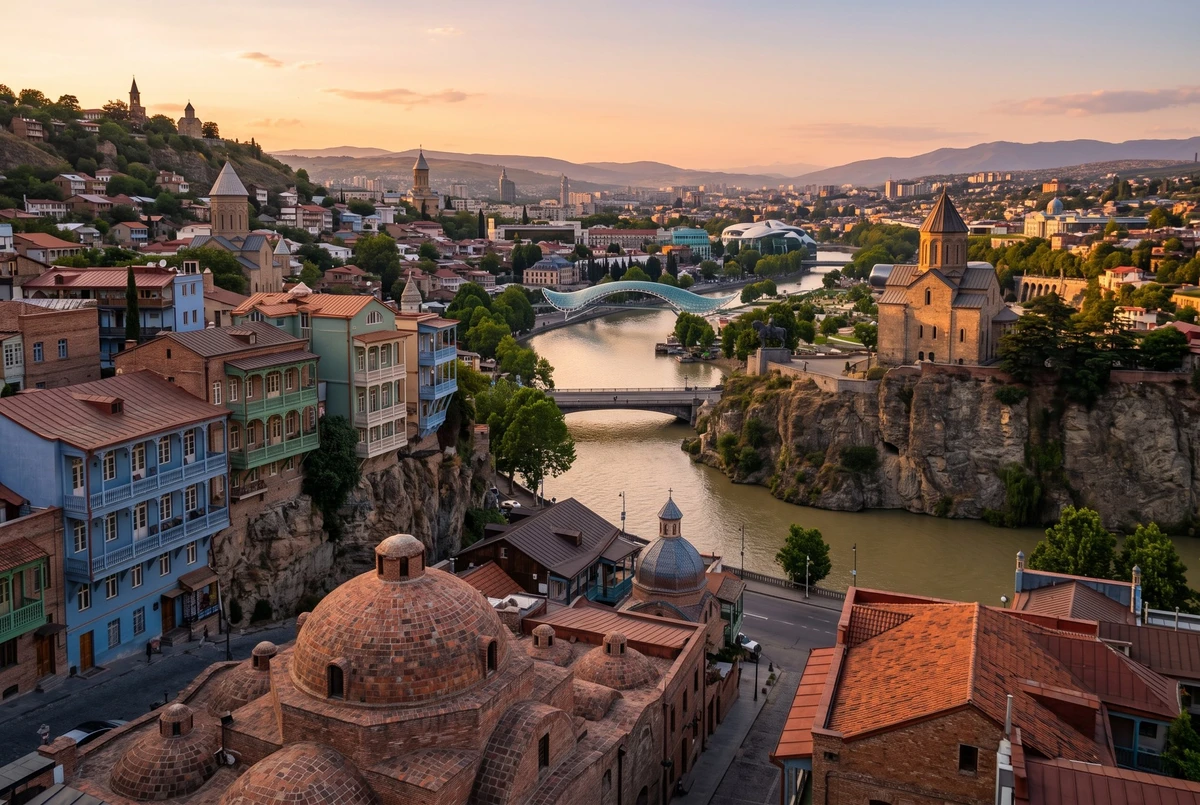
Some images are AI-generated for illustration. While we confirm your booking, just ask and we will send you the original photos.
- Fair, honest prices
- Real people, not bots
- Confirm, then pay
- Secure payment

Overview
This Georgian cooking class in Tbilisi is a shared, hands-on session of about two and a half hours led by a chef in a restaurant dining room on the third floor of a shopping centre on Rustaveli Avenue. You start with a plate of local cheeses and a tomato and cucumber salad with aromatic Kakheti oil, then learn the two dishes every visitor to Georgia falls for: khinkali, the pleated dumplings of the mountains, and khachapuri, the cheese bread each region bakes differently. At the end everyone sits down to eat what they made. It suits couples, families, solo travellers and small groups who want to take a real skill back from Tbilisi. There is no hotel pickup; the venue is central and wheelchair accessible.
Highlights
- Hands-on preparation of five khinkali per person, from filling to the traditional fold
- Khachapuri in your choice of Imeretian, Megrelian or Adjarian style, one per two guests
- Step-by-step guidance from a chef with stories about Georgian food traditions
- Welcome plate of local Georgian cheeses and a tomato and cucumber salad with Kakheti oil
- A juice or lemonade for every guest
- Sit down together and eat the dishes you prepared
- Central venue on Rustaveli Avenue, a short walk from the metro
- Wheelchair-accessible dining room; class in English or Russian
Full Description
The cooking venue on Rustaveli Avenue
The class takes place in the dining room of a restaurant on the third floor of a shopping centre on Rustaveli Avenue, the broad tree-lined boulevard that runs from Freedom Square past the Opera House, the Parliament building and the National Museum. You can enter from Rustaveli Avenue itself or from the parallel Alexander Griboyedov Street, and the Rustaveli metro station is a few minutes away on foot. The session is deliberately held at the tables rather than in the professional kitchen, so that cooking, talking and tasting happen in the same relaxed space, which is what makes this Tbilisi cooking class feel like an evening with Georgian friends rather than a lesson.
Groups are small enough for the chef to check every fold, and the dining room is wheelchair accessible. Because the venue sits on the main avenue, it is easy to combine the class with a morning or afternoon in the old town, a fifteen-minute walk south, or with a stroll along Rustaveli Avenue before you arrive.
Khinkali, the pleated dumplings of the Georgian mountains
Khinkali came down to Tbilisi from the highland regions of Pshavi, Khevsureti and Mtiuleti, where shepherds filled dough with spiced meat and boiled the parcels in large pots. The classic filling is minced beef and pork with onion, coriander, chilli and cold water, which turns into broth inside the dumpling as it cooks; cheese, mushroom and potato versions exist for those who prefer them. The art is in the fold: the dough is cut into rounds, filled, and gathered into a knot with as many pleats as your fingers can manage, the more the better. In this khinkali cooking class in Tbilisi the dough is prepared in advance so it can rest, and you concentrate on the filling, the shaping and the fold, making five dumplings of your own.
The chef then shows you how a Georgian eats a khinkali: hold it by the knot, bite a small hole, drink the broth, finish the dumpling and leave the knot on the plate.
Khachapuri in three regional styles
Khachapuri is the cheese bread that unites the country while each region insists its own version is the real one. Imeretian khachapuri, from the west-central region of Imereti, is a round flat bread with salted cheese sealed inside. Megrelian khachapuri, from Samegrelo near the Black Sea, is the same bread with a second layer of cheese melted on top. Adjarian khachapuri, from the coastal region around Batumi, is shaped like an open boat and finished with a raw egg yolk and a knob of butter stirred into the molten cheese at the table. Most cooking classes teach only one; here each pair of guests chooses a style, and in larger groups different pairs bake different versions so everyone tastes all three.
You work the dough, prepare the cheese mix, shape and fill the bread and watch it go into the oven. Baked khachapuri comes to the table hot, and this is usually the moment the whole room goes quiet.
Georgian cheeses, the salad and the table
The session opens with a plate of local cheeses, typically the stretchy sulguni of Samegrelo, the mild white Imeruli used in khachapuri and a smoked or aged variety, served with a salad of ripe Georgian tomatoes and cucumbers dressed with aromatic oil from Kakheti, the eastern region whose sunflower oil has a deep nutty flavour. A juice or lemonade is served to every guest, and the tarragon or pear lemonades of Georgia are an experience in themselves. While you eat, the chef explains the supra, the Georgian feast with its toasts and its rule that no guest leaves hungry.
The last part of the two and a half hours is the meal: the khinkali you folded, boiled and steaming, and the khachapuri you shaped, shared across the table. Additional dishes from the restaurant menu can be ordered separately if you are still hungry. Many guests say this Georgian cooking class was the best meal of their trip to Tbilisi, because they made it.
Itinerary
- Arrival at the venue on Rustaveli AvenueMeet the chef on the third floor of the shopping centre, settle at the shared table and receive the plate of cheeses, the tomato and cucumber salad and a juice or lemonade.
- KhinkaliPrepare the spiced filling, shape five dumplings each and learn the traditional pleated fold while the chef tells the story of the dish; about 45 minutes.
- KhachapuriChoose Imeretian, Megrelian or Adjarian style, one bread per two guests, work the dough and cheese, shape the bread and bake it; about 45 minutes.
- The mealSit down together and eat the khinkali and khachapuri you made, with the chef's stories about Georgian hospitality; the whole class lasts about 2.5 hours.
What's included
- Hands-on preparation of traditional khinkali (five per person) and khachapuri (one per two guests, Imeretian, Megrelian or Adjarian style)
- Step-by-step guidance from a chef with stories about Georgian food traditions
- Plate of local Georgian cheeses
- Salad of Georgian tomatoes and cucumbers with Kakheti aromatic oil (one portion per two guests)
- A drink per person (juice or lemonade available)
- Enjoy the dishes you prepared at the shared table
- Wheelchair-accessible venue
Not included
- Any additional food or drinks ordered from the restaurant menu
- Hotel pickup
Is this right for you?
Great for
- Families with children — a child price for ages 3–11
- Food lovers
- A half-day plan — about 2.5 hours
- Travellers who want a proven choice — rated 4.7/5 by past travellers
Think twice if
- You want a private tour — this one is shared with other travellers
Meeting point
The class is held in a restaurant on the third floor of a shopping centre on Rustaveli Avenue in the centre of Tbilisi. You can enter from Rustaveli Avenue or from the parallel Alexander Griboyedov Street and take the stairs or lift to the third floor; the Rustaveli metro station is a short walk away. Please arrive about ten minutes before your start time so the group can begin together. There is no hotel pickup for this class, and we send you the exact entrance details on WhatsApp when we confirm your booking.
Important information
- The class is led in English and Russian; please tell us your preferred language when booking
- Khinkali dough is prepared in advance because it needs time to rest; you make the filling, shape and fold the dumplings yourself
- The session takes place at the tables in the dining room, not inside the professional kitchen
- Tell us about allergies or a vegetarian preference when you book so the chef can adapt the fillings
- Any extra food or drinks ordered from the restaurant menu are paid separately
- Wear comfortable clothes you do not mind getting a little flour on; aprons are provided
- The venue is wheelchair accessible and children are welcome with an adult
- Please arrive ten minutes early; the class starts on time
Good to know
Frequently Asked Questions
Straight answers to what travellers ask us most, before they book.
Is this a shared or a private experience?
It is a shared class with a small group of other travellers around one table and one chef. If you would like the room for your own party, contact us and we will check what is possible.
How long does the cooking class take?
About two and a half hours, including the welcome plate, the khinkali and khachapuri preparation and the meal at the end.
Is hotel pickup included?
No. The venue is on Rustaveli Avenue in central Tbilisi, a short walk from the Rustaveli metro station and easy to reach by taxi from any hotel.
What is included?
Hands-on preparation of five khinkali per person and one khachapuri per two guests, the chef's guidance, a plate of Georgian cheeses, a tomato and cucumber salad with Kakheti oil, a juice or lemonade per person and the meal of everything you prepared.
Is the price per person or per group?
The price is per person. The booking panel on this page shows the current price of each option.
Which type of khachapuri will I make?
You choose between Imeretian, Megrelian and Adjarian style. Each khachapuri is made by two guests, and in larger groups different pairs often make different styles so the table can taste all three.
Do I actually make the khinkali myself?
Yes. The dough is rested in advance, and you prepare the filling, shape five dumplings and learn the traditional fold with the chef correcting your technique.
Is the class suitable for children and for wheelchair users?
Yes. Children enjoy the folding and shaping, and the dining room is wheelchair accessible. Children aged three to eleven pay the child rate.
Can vegetarians take part?
Yes. Khachapuri is vegetarian, and the chef can prepare cheese, mushroom or potato khinkali fillings if you tell us when booking.
What should I bring?
Nothing except an appetite and a camera; aprons and all ingredients are provided. Wear clothes that can take a little flour.
What is the best time of day for the class?
An early-evening session works well, because the meal you make becomes your dinner, while a midday class leaves the afternoon free for the old town. Check the booking panel for available start times.
How do I book and confirm?
Choose your date and number of guests on this page and send the booking; our team confirms it on WhatsApp within minutes together with the entrance details.
More in Tbilisi