Tbilisi City Highlights Guided Walking Tour with Cable Car Ride
- Duration4 hours
- Daily
- Group
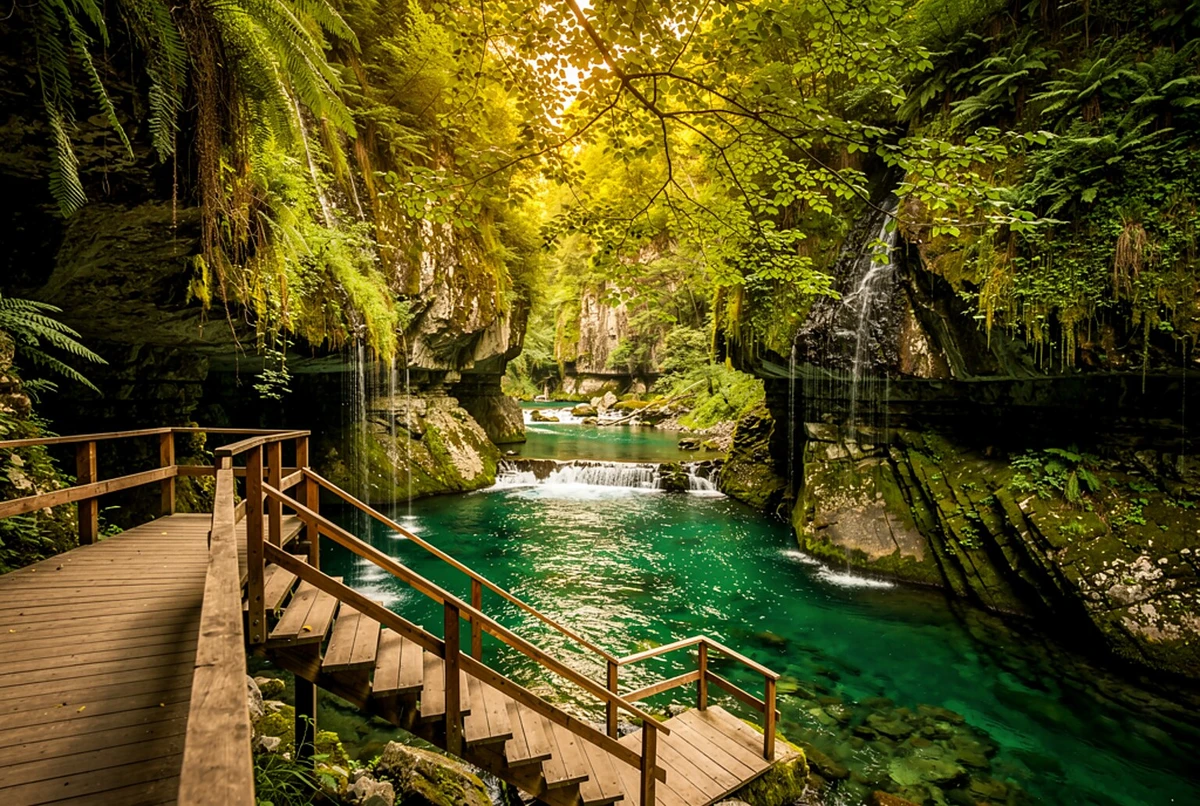
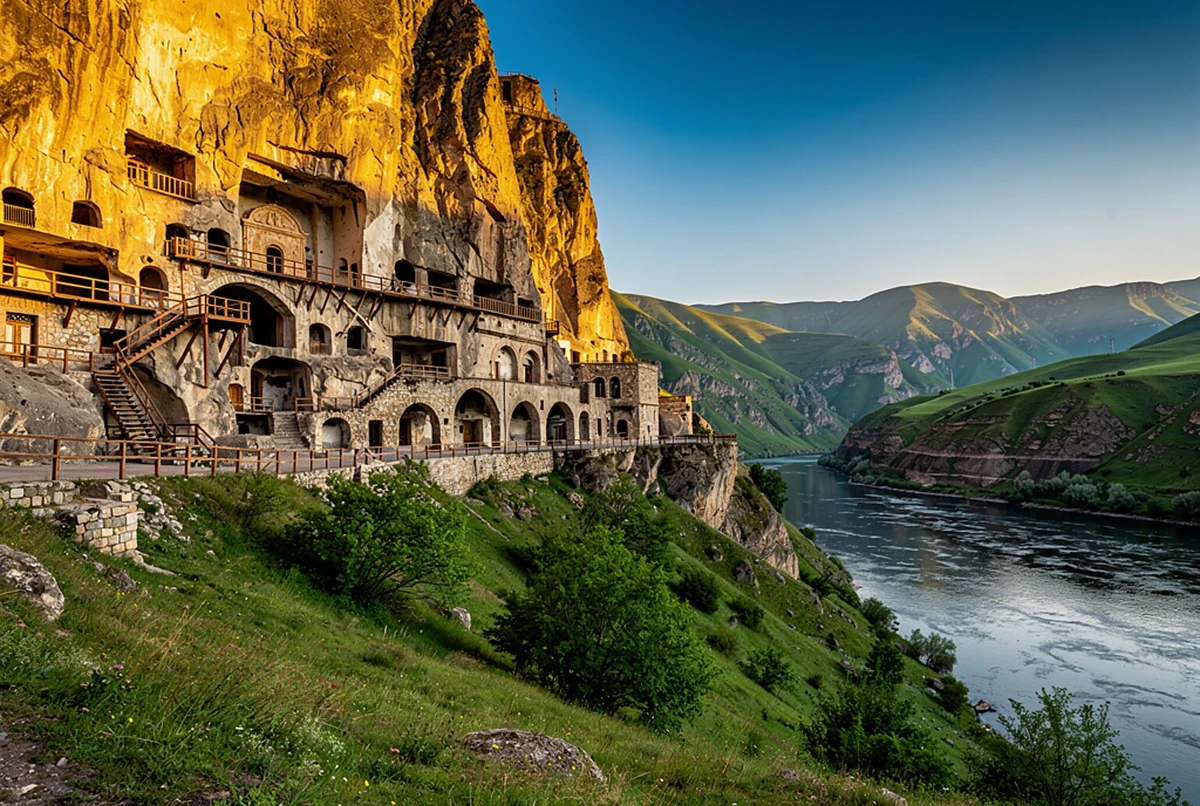
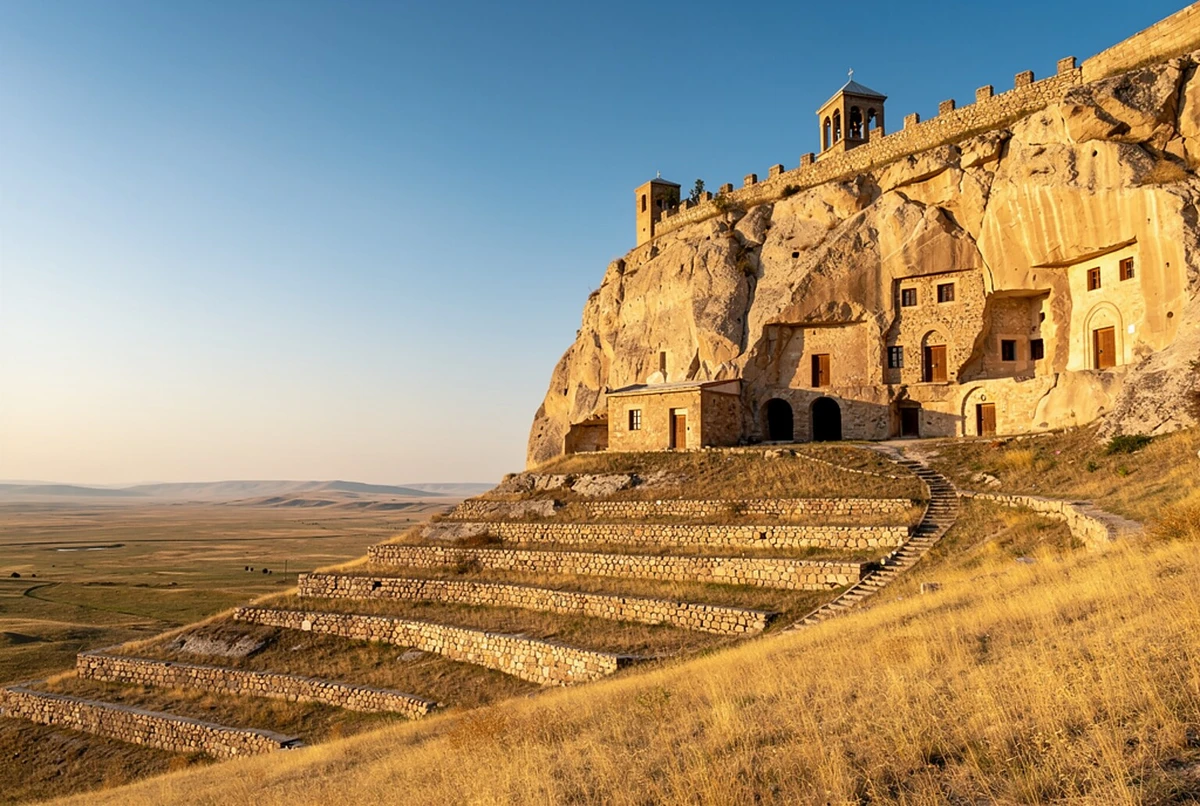
Some images are AI-generated for illustration. While we confirm your booking, just ask and we will send you the original photos.
- Fair, honest prices
- Real people, not bots
- Confirm, then pay
- Secure payment

Overview
This Tbilisi walking tour is a shared, four-hour guided walk through the old town of the Georgian capital with a certified English-speaking guide, a cable car ride and all entrance fees on the route included. It starts at Avlabari metro station, climbs to Metekhi Church on its cliff above the river, crosses Rike Park and the Bridge of Peace, rides the cable car up to the Mother of Georgia and Narikala Fortress for the panoramic view, then descends into the old town for Anchiskhati Basilica, the leaning Clock Tower, Sioni Cathedral, the sulphur baths of Abanotubani and the Leghvtakhevi Waterfall, with a bakery break for a Georgian pie and lemonade. It suits visitors short on time who want the whole city in one morning. There is no hotel pickup.
Highlights
- Four-hour guided walk covering the main sights of old Tbilisi with a certified guide
- Metekhi Church on its cliff and the statue of the founder of the city
- Cable car ride from Rike Park to the Mother of Georgia and Narikala Fortress
- Panoramic views over the roofs, the river and the hills around Tbilisi
- The Bridge of Peace, Anchiskhati Basilica, the Clock Tower and Sioni Cathedral
- Break at a local bakery with a traditional Georgian pie and Georgian lemonade
- Abanotubani sulphur baths, the Bridge of Love and the Leghvtakhevi Waterfall
- All entrance fees on the route included; finish at Meidan Bazaar
Full Description
Metekhi Church and the statue of the founder of Tbilisi
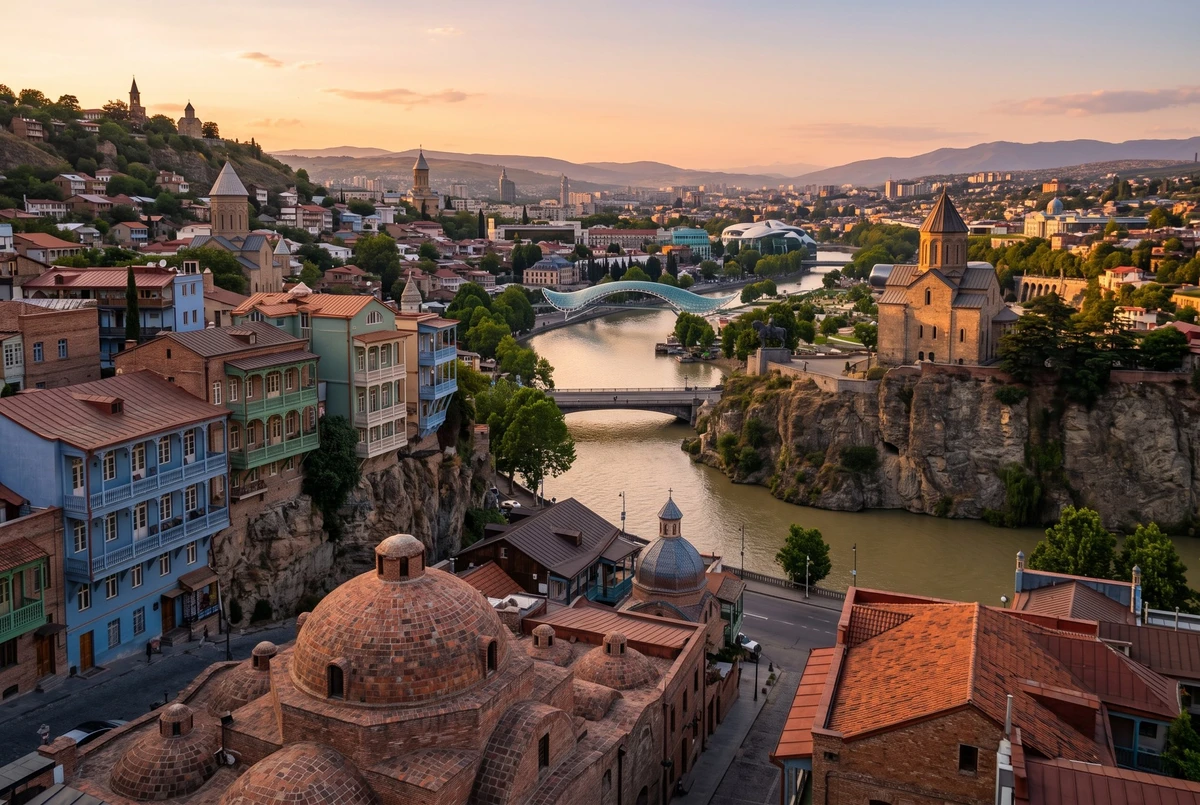
The walk begins a short distance from Avlabari metro station at Metekhi, a rocky cliff above the Mtkvari river that was the first royal residence of Tbilisi. The church that stands on it, Metekhi Church of the Virgin, was built in the late thirteenth century on the site of earlier churches and has served as a royal chapel, a barracks, a prison and a theatre before returning to worship in the 1980s. Beside it the bronze equestrian statue of King Vakhtang Gorgasali, the fifth-century ruler who founded Tbilisi, looks out over the city he chose, with the sulphur baths and Narikala Fortress straight ahead across the water.
Your guide spends about twenty minutes here telling the founding legend of the hot springs and pointing out the full layout of old Tbilisi from above, which makes the rest of the Tbilisi city tour easier to follow. This is the first and one of the best photo stops of the morning.
Rike Park, Europe Square and the Bridge of Peace
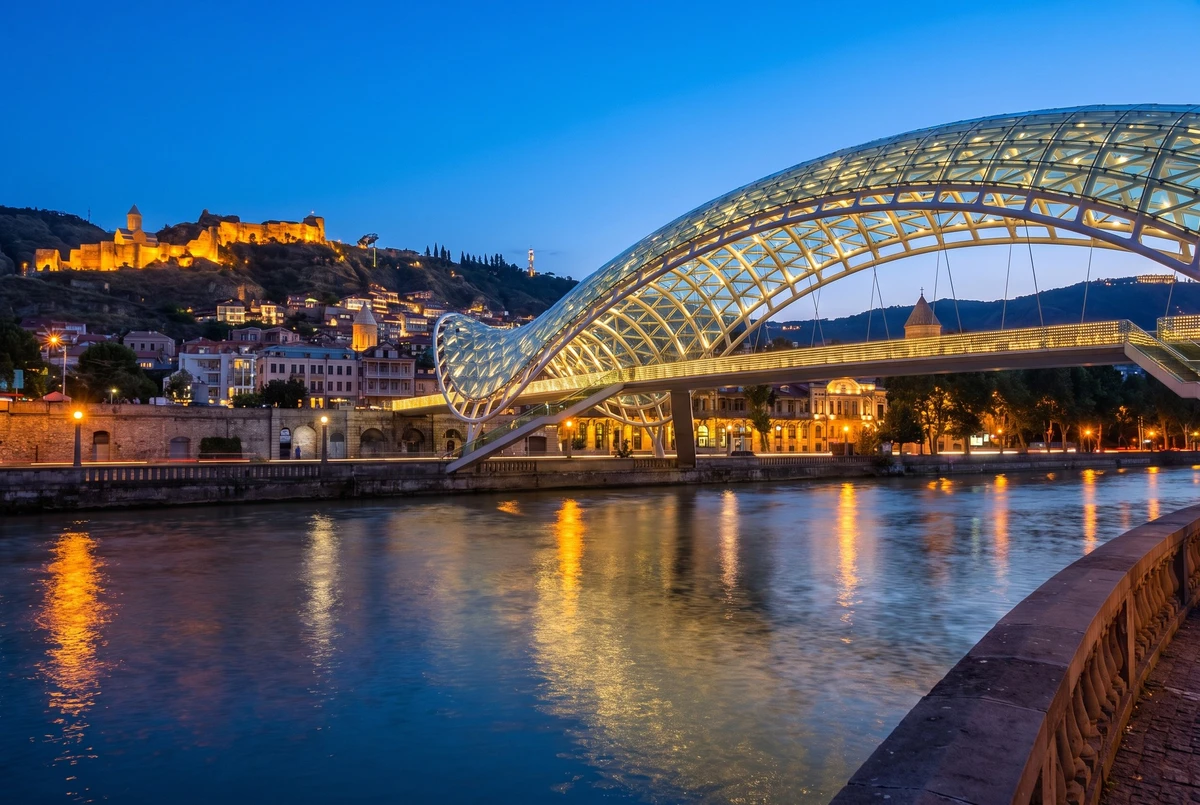
Down the hill from Metekhi, Rike Park spreads along the left bank of the river as a landscaped promenade with fountains, a giant chess board and the twin tubular halls of a concert complex that mark the modern side of the city. Europe Square at its edge connects to the Avlabari district, and from the park the Bridge of Peace crosses the Mtkvari to the old town: a curved pedestrian bridge of glass and steel opened in 2010, about 150 metres long, whose canopy is lit every evening by thousands of lights. The contrast between this bridge and the brick domes and wooden balconies on the far bank is the image of Tbilisi that most visitors remember.
The tour pauses here for photos and for the story of the river-front rebuilding, then goes to the lower station of the cable car, which stands inside Rike Park itself. Allow about fifteen minutes for the park, the square and the bridge together.
Cable car to the Mother of Georgia and Narikala Fortress
The Tbilisi cable car leaves Rike Park and glides over the river and the old town in about two minutes, landing on the ridge of Sololaki hill next to the Mother of Georgia. This aluminium figure of a woman in national dress, twenty metres tall and raised in 1958 for the city's 1,500th anniversary, holds a bowl in one hand for friends and a sword in the other for enemies, which is how Georgians like to explain their hospitality. A few minutes along the ridge rise the walls of Narikala Fortress, a citadel begun in the fourth century, enlarged under Arab rule and ruined by an earthquake in the nineteenth century; the small church of St Nicholas inside was rebuilt in the 1990s.
The ride and the ridge are included, and the view from Narikala over the roofs, the river and the Caucasus foothills is the reason people come. The cable car does not run in strong wind; on those days the guide adapts the route on foot.
Anchiskhati Basilica, the Clock Tower and Sioni Cathedral
Back at river level, the lanes of the old town hold three of the most important buildings in Georgian church history within a few hundred metres. Anchiskhati Basilica, built in the sixth century, is the oldest surviving church in Tbilisi, a plain three-nave basilica of brick and stone where polyphonic singing still fills Sunday services. Next to it leans the Clock Tower, a deliberately crooked tower built in 2010 beside a puppet theatre, where a small angel strikes the bell on the hour and a short mechanical show plays at midday and in the evening. A short walk on is Sioni Cathedral, founded in the sixth and seventh centuries and rebuilt many times, the seat of the Georgian Orthodox Church until 2004, which keeps the grapevine cross of St Nino, the saint who brought Christianity to Georgia.
The guide allows about ten minutes at each, plus a glance at the Patriarchate of Georgia beside the cathedral. Head coverings for women are available at the doors.
Bakery break, Tamada sculpture and Shardeni Street
Halfway through the walk the group stops for twenty minutes at a local bakery for a traditional Georgian pie, usually a khachapuri filled with salted cheese or a lobiani filled with spiced beans, baked in a round oven and served hot, with a glass of Georgian lemonade in flavours such as pear or tarragon. It is a real break rather than a tasting and keeps energy up for the second half of the route. From the bakery the walk continues to the bronze Tamada, a small seated figure raising a drinking horn that copies a statuette found in western Georgia and dating from the seventh century BC; locals rub its horn for luck, and it is one of the most photographed objects in the old town.
Shardeni Street, the pedestrian lane beside it, is lined with cafes, galleries and carpet shops and is the heart of the restored old town. The guide walks you through it in about five minutes, pointing out where to return in the evening.
Abanotubani sulphur baths, the Bridge of Love and Leghvtakhevi Waterfall
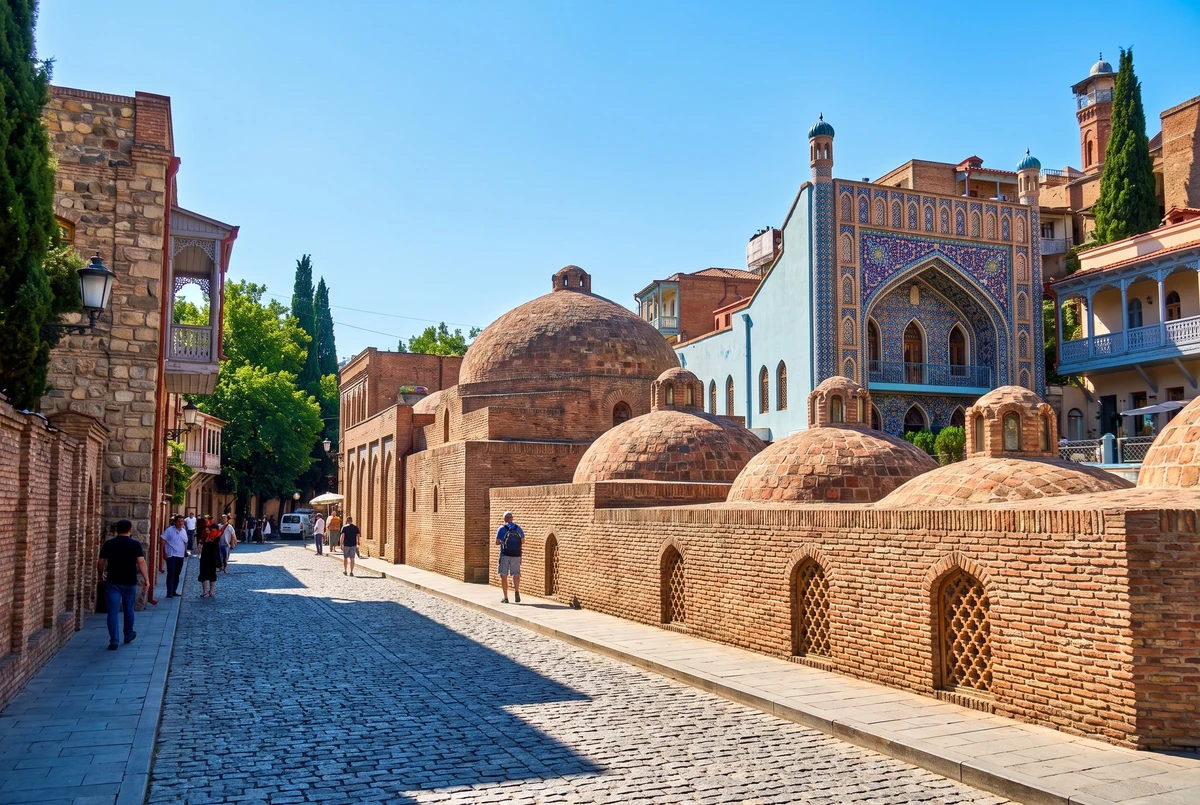
Abanotubani is the bath district at the foot of Narikala where Tbilisi began: the city's name comes from the Georgian word for warm, after the hot sulphur springs that rise here. The bathhouses are sunk into the ground and show only their brick domes and skylights at street level, except for the Orbeliani bath with its blue-tiled facade and minaret-like towers. Behind the baths the Leghvtakhevi gorge, the Fig Ravine, cuts into the hill, crossed by the small Bridge of Love hung with padlocks and ending at the Leghvtakhevi Waterfall, a cascade that drops from the cliffs just a few minutes from the busiest streets of the old town.
The guide explains how the baths work and which are open to visitors if you want to return for a soak, then leads the group along the gorge walkway to the waterfall for the last photo stop. The walk ends nearby at Meidan Bazaar, an underground souvenir market on Meidan square, after about four hours.
Itinerary
- Meeting at Avlabari metro stationMeet our representative with the orange flag in front of the station entrance at 09:45; a few minutes' walk to the first stop.
- Metekhi Church and the statue of King Vakhtang GorgasaliVisit the thirteenth-century church on the cliff and the equestrian statue, with the founding legend of Tbilisi and the first panoramic view; about 20 minutes.
- Europe Square, Rike Park and the cable carWalk down through the square and the park to the Bridge of Peace, then board the cable car at the lower station; about 15 minutes plus the ride.
- Mother of Georgia and Narikala FortressWalk the ridge from the monument to the fortress walls and enjoy the view over the whole city; about 20 minutes.
- Bridge of Peace, Patriarchate, Anchiskhati Basilica, Clock Tower and Sioni CathedralDescend into the old town lanes and visit the three historic churches and the leaning tower; about 40 minutes.
- Bakery breakTraditional Georgian pie and lemonade at a local bakery; about 20 minutes.
- Tamada sculpture and Shardeni StreetShort walk along the liveliest pedestrian street of the old town with its cafes and galleries; about 10 minutes.
- Abanotubani, Bridge of Love and Leghvtakhevi WaterfallSee the brick domes of the sulphur baths, cross the bridge over the gorge and reach the waterfall; about 20 minutes.
- Finish at Meidan BazaarThe tour ends at the underground souvenir market on Meidan square, in the centre of the old town, after about 4 hours.
What's included
- 4-hour guided walking tour with a certified English-speaking guide
- Cable car ride to the Mother of Georgia monument and Narikala Fortress
- Entrance fees on the route
- Traditional Georgian pie and Georgian lemonade at a local bakery
- Stops at Metekhi Church, the Bridge of Peace, Anchiskhati Basilica, the Clock Tower, Sioni Cathedral, the sulphur baths district and Leghvtakhevi Waterfall
- Online support before the tour
Not included
- Tips and gratuities
- Hotel pickup and drop-off
- The cable car does not operate in windy weather
Is this right for you?
Great for
- Families with children — a child price for ages 3–11
- Travellers who want the view from the air
- First-time visitors who want the highlights
- A half-day plan — about 4 hours
Think twice if
- You want a private tour — this one is shared with other travellers
- Walking is difficult for you — expect active parts
- You are afraid of heights
Not suitable for
- Children under 5 years
- Pregnant women
- Wheelchair users
Meeting point
The tour starts at Avlabari metro station on the left bank of the river in Tbilisi. Our representative waits in front of the station entrance at 09:45 holding an orange flag; please be there a few minutes early so the group can leave on time. Avlabari is on the metro's first line, two stops from Rustaveli, and is easy to reach by taxi from any hotel. There is no hotel pickup, and the walk ends at Meidan Bazaar in the old town, about fifteen minutes on foot from the start.
Important information
- Wear comfortable walking shoes and clothing for the weather; the route includes slopes, steps and cobbled lanes
- The minimum age for this tour is 5 years
- Women are asked to cover their heads and shoulders inside the churches; scarves are usually available at the doors
- The cable car does not operate in strong wind; on those days the guide adapts the route on foot
- The tour operates in all weather conditions, so bring an umbrella or sun protection as needed
- Bring a bottle of water; the bakery break includes a pie and a lemonade
- The route is not suitable for wheelchairs or pushchairs because of the steps and the fortress paths
- Our team is available online before the tour for any question about the meeting point
Good to know
Frequently Asked Questions
Straight answers to what travellers ask us most, before they book.
Is this a shared or a private experience?
It is a shared guided walking tour with a small group and a certified English-speaking guide. Contact us if you would like to ask about a private version for your own party.
How long does the Tbilisi walking tour take?
About four hours, from 09:45 at Avlabari metro station to the finish at Meidan Bazaar, including the cable car ride and the bakery break.
Is hotel pickup included?
No. You meet the guide at Avlabari metro station, which is a short taxi or metro ride from any part of Tbilisi.
What is included?
The certified guide, the cable car ride to the Mother of Georgia and Narikala Fortress, all entrance fees on the route, a traditional Georgian pie and a Georgian lemonade at a local bakery, and online support before the tour. Tips are not included.
Is the price per person or per group?
The price is per person. The booking panel on this page shows the current price of each option.
Is the Tbilisi cable car included and what if it is not running?
Yes, the ride from Rike Park up to Narikala is included. The cable car stops in strong wind; in that case the guide takes the group up on foot or adapts the route.
Is the tour suitable for children and for reduced mobility?
Children from five years are welcome and usually love the cable car and the waterfall. The route has steps, slopes and uneven paths, so it is not suitable for wheelchair users or pregnant women.
What should I wear and bring?
Comfortable shoes, weather-appropriate clothes, water, sun protection in summer and a scarf for the churches. A camera is essential for the fortress view.
What is the best time to visit Tbilisi for this walk?
April to June and September to October bring mild weather and clear views from Narikala. The morning start avoids the midday heat of July and August.
What happens in bad weather?
The tour runs in all weather. Light rain does not stop the walk; only the cable car may be suspended in high wind, and the guide adapts the route.
Is Narikala Fortress worth visiting?
Yes. It is the best viewpoint over old Tbilisi, with the river, the bath domes and the hills in one frame, and the cable car makes the climb effortless.
How do I book and confirm?
Choose your date on this page and send the booking; our team confirms it on WhatsApp within minutes with the meeting instructions.
More in Tbilisi