Bologna City Centre Guided Walking Tour
- Duration2 hours
- Daily
- Group
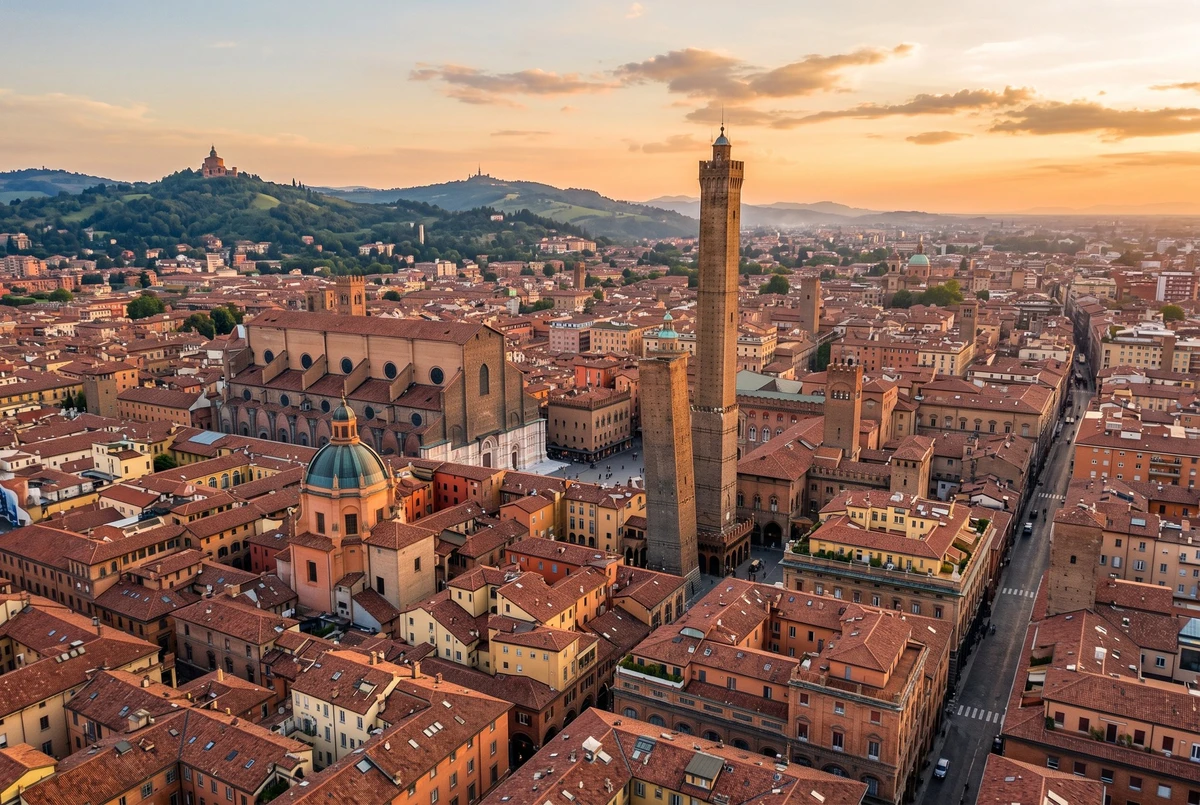
Some images are AI-generated for illustration. While we confirm your booking, just ask and we will send you the original photos.
- Fair, honest prices
- Real people, not bots
- Confirm, then pay
- Secure payment

Overview
This Bologna city centre walk is a shared guided tour through the historic centre with a certified English-speaking guide, in its most complete version. The two-hour morning walk starts at 10:30 and covers Piazza Maggiore, Palazzo d'Accursio and the Neptune Fountain, the Basilica of San Petronio, the Quadrilatero market streets, Piazza della Mercanzia, Piazza Santo Stefano and the Two Towers. In the afternoon a separate one-hour guided visit takes you inside the Archiginnasio, the historic seat of Europe's oldest university, with its anatomical theatre and library halls. It suits first-time visitors, culture lovers and families with older children. Other options on this page offer the morning walk alone or with three food vouchers; there is no hotel pickup.
Highlights
- Piazza Maggiore, Palazzo d'Accursio and the bronze Neptune Fountain
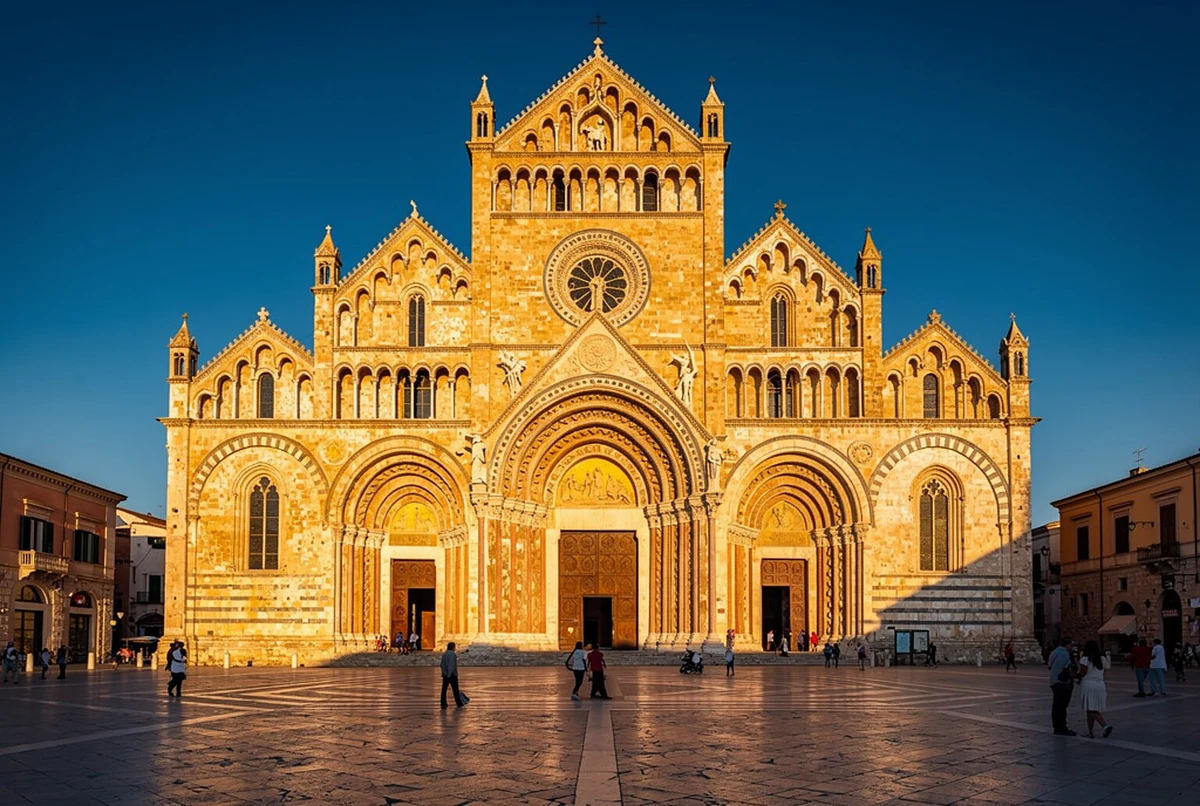
- The vast, unfinished facade of the Basilica of San Petronio
- Fresh pasta, cheese and fruit stalls in the medieval Quadrilatero
- The Gothic loggia of Piazza della Mercanzia
- Piazza Santo Stefano and its cluster of ancient churches
- The leaning Two Towers, Asinelli and Garisenda
- Afternoon guided visit to the Archiginnasio and its wooden anatomical theatre
- Certified English-speaking guide and welcome staff
Full Description
Piazza Maggiore, Palazzo d'Accursio and the Neptune Fountain
Every Bologna city tour begins in Piazza Maggiore, the great square laid out in the 13th century and still the stage of the city's life. On its west side, Palazzo d'Accursio has been the town hall since 1336, its brick facade crowned by a clock tower, while the Palazzo del Podestà and the long portico of the Palazzo dei Banchi close the square. Next door, the Sala Borsa library has a glass floor over the ruins of Roman Bononia.
At the corner of the square stands the Neptune Fountain, created in the 1560s, a powerful bronze sea god surrounded by cherubs, dolphins and sirens, nicknamed the Giant by the people of Bologna. Your guide explains the legends linked to the statue, the fountain's recent restoration and why Bologna, an inland city, chose the god of the sea as its symbol.
Basilica of San Petronio
Filling the south side of Piazza Maggiore, the Basilica of San Petronio is dedicated to the 5th-century bishop who became the city's patron saint. Work began in 1390 with the ambition of building one of the largest churches in Christendom, and it remains among the biggest churches in Europe. Its facade was never finished: the lower part is clad in pink and white marble, the upper part is still bare brick.
Inside, the immense Gothic nave is crossed by a meridian line set in the floor in 1655, one of the longest in the world, which uses a small hole in the vault to measure the sun's path through the year. The guide shares its story outside the church; entry is open during the day for anyone dressed modestly, with shoulders and knees covered.
The Quadrilatero and Piazza della Mercanzia
Behind Piazza Maggiore lies the Quadrilatero, the medieval market district whose lanes still bear the names of the old guilds: the fishmongers, the drapers, the locksmiths and the goldsmiths. Today they are lined with delicatessens, fresh pasta workshops, fruit and vegetable stalls and fish counters, a perfect introduction to why Bologna is called la Grassa, the well-fed city.
A few steps away, Piazza della Mercanzia is dominated by the Gothic loggia built between 1384 and 1391 for the merchants' court, which settled trade disputes. Rebuilt after damage in the Second World War, it is now the seat of the Chamber of Commerce. Your guide explains how trade, silk and canals made medieval Bologna rich enough to build the palaces around you.
Piazza Santo Stefano
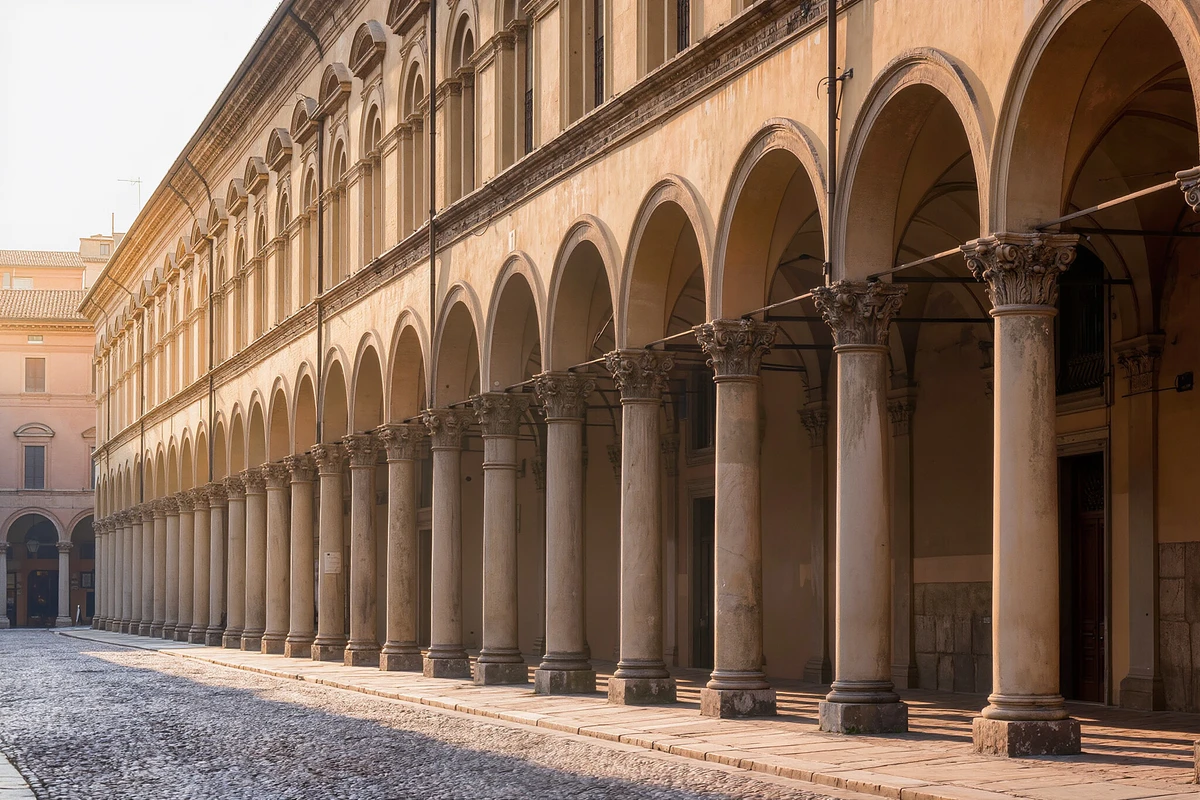
Piazza Santo Stefano is one of the most beautiful corners of Bologna: a triangular, cobbled square framed by Renaissance palaces and porticoes, opening onto a complex of interconnected churches known as the Seven Churches. Its origins go back to the 5th century, and over time chapels, cloisters and courtyards were added, some designed to recall the holy sites of Jerusalem.
It is also an ideal place to talk about the porticoes of Bologna, the covered arcades that run for dozens of kilometres through the city and were listed as a UNESCO World Heritage Site in 2021. Your guide shows how these arcades shelter walkers from sun and rain and why they became the signature of the city.
The Two Towers: Asinelli and Garisenda
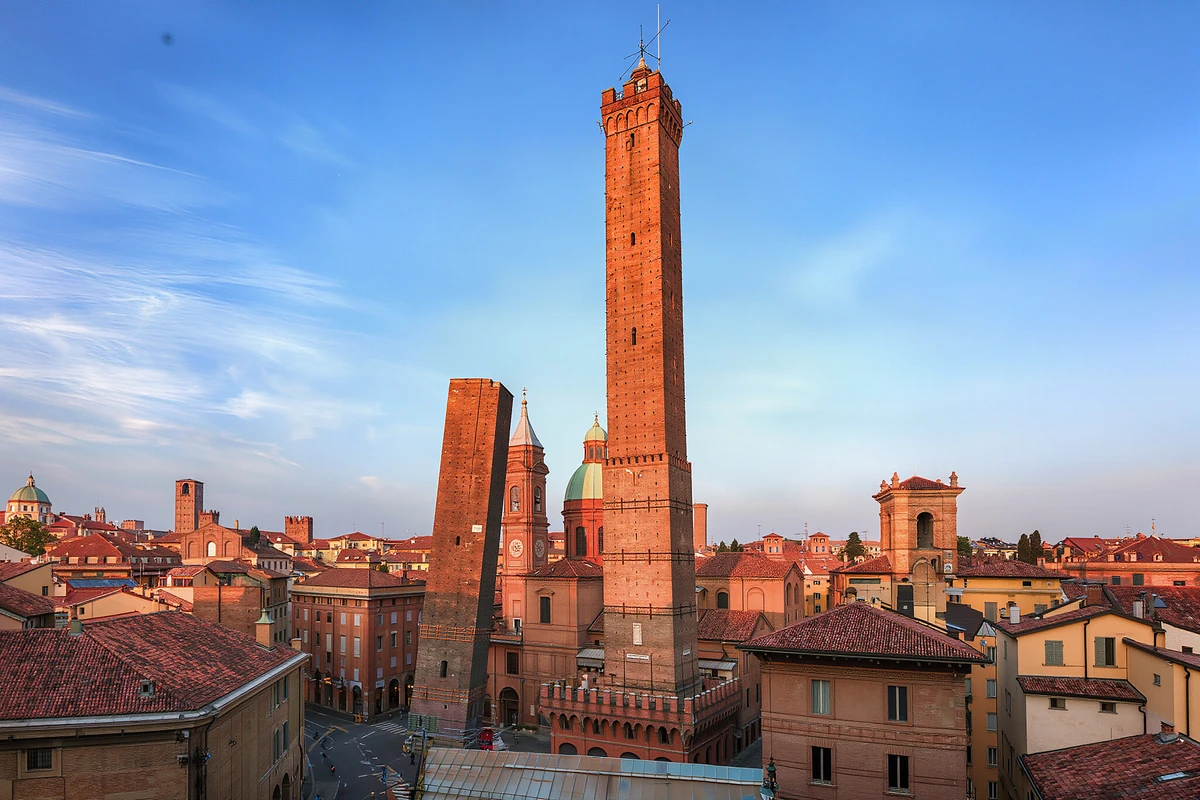
In the Middle Ages Bologna bristled with tower houses built by rich families as symbols of power and as refuges in times of feud. The Two Towers are the most famous survivors. The Asinelli Tower rises about 97 metres and was long climbed by visitors up its wooden staircase, while the shorter Garisenda leans so steeply that it was lowered in the 14th century for safety.
In recent years both towers have been under special safety monitoring and restoration, with a protective barrier around the Garisenda and climbing suspended, so they are admired from the street on this walk. The morning tour ends here, at the meeting point of five ancient roads, with time to ask your guide about the best time to visit Bologna's sights and where to eat nearby.
The Archiginnasio and its Anatomical Theatre
In the afternoon the default option continues with a one-hour guided visit to the Archiginnasio, built in 1562 and 1563 to bring together the schools of the University of Bologna, founded in 1088 and considered the oldest university in the Western world. Until 1803 it was the university's seat, and its arcaded courtyard, staircases and halls are covered with thousands of painted coats of arms and memorials of students and professors.
The highlight is the Anatomical Theatre, built in 1637 entirely of spruce wood, with tiered seats around a marble dissection table and carved statues of skinless figures supporting the lecturer's canopy. Destroyed by bombing in 1944, it was rebuilt using the original pieces. The visit also includes the historic halls of the library that now fills the building.
Itinerary
- Meet in central BolognaMeet the welcome staff and your guide at 10:30 at the meeting point shown on your voucher.
- Piazza Maggiore and the Neptune FountainAbout 25 minutes around the main square, Palazzo d'Accursio and the fountain.
- Basilica of San PetronioAbout 15 minutes on the basilica, its unfinished facade and the meridian line.
- The Quadrilatero and Piazza della MercanziaAbout 30 minutes through the old market lanes and past the merchants' loggia.
- Piazza Santo StefanoAbout 20 minutes in the triangular square by the complex of ancient churches.
- The Two TowersThe morning walk ends at the Asinelli and Garisenda towers after about two hours.
- Free timeTime for lunch on your own in the centre before the afternoon visit.
- Archiginnasio guided visitA one-hour afternoon tour of the historic university building, the anatomical theatre and the library halls.
What's included
- 2-hour guided walk through Bologna's historic centre
- Certified English-speaking guide and welcome staff
- Piazza Maggiore, Palazzo d'Accursio and the Neptune Fountain
- Basilica of San Petronio
- The Quadrilatero market streets and Piazza della Mercanzia
- Piazza Santo Stefano and the Two Towers
Not included
- Food and drinks
- Entrance fees
- Hotel pickup
- Gratuities
Is this right for you?
Great for
- Families with children — a child price for ages 5–11
- Food lovers
- First-time visitors who want the highlights
- A short visit — about 2 hours
Think twice if
- You want a private tour — this one is shared with other travellers
- Walking is difficult for you — expect active parts
Not suitable for
- People with mobility impairments
Meeting point
Meet in central Bologna at 10:30: the exact meeting points for the morning walk and for the afternoon Archiginnasio visit are shown on your voucher, and welcome staff will be there to greet you. Please arrive 10 minutes early. There is no hotel pickup; the historic centre is compact and both meeting points are within walking distance of most central hotels and about 15 minutes on foot from Bologna Centrale station.
Important information
- Wear comfortable shoes and bring a long-sleeved shirt or scarf
- Places of worship require modest dress: no vests, tank tops, shorts or miniskirts
- The tour is not recommended for people with limited mobility
- Food, drinks and other entrance fees are not included
- Lunch between the morning walk and the afternoon visit is at your own expense
- Check your voucher for both meeting points and the afternoon start time
- Children aged 5 to 11 have a child fare
- The porticoes give shade and shelter, but bring water in summer
Good to know
Frequently Asked Questions
Straight answers to what travellers ask us most, before they book.
Is this a shared or a private experience?
It is a shared walking tour in a group with a certified English-speaking guide.
How long does the walk take?
This option lasts about three hours in total: a two-hour morning walk from 10:30 and a one-hour afternoon visit to the Archiginnasio.
Is hotel pickup included?
No. You meet the guide in central Bologna at the meeting point shown on your voucher.
What is included?
The two-hour guided city walk, the one-hour guided Archiginnasio visit with the anatomical theatre, and welcome staff. Food, drinks and other entrance fees are not included.
Are there other options?
Yes. You can also book the two-hour morning walk alone, or the walk with three vouchers for Bolognese specialities to use after the tour.
Is the price per person or per group?
The price is per person, with a child fare for ages 5 to 11. The booking panel on this page shows the current price of each option.
Is it suitable for children and people with reduced mobility?
Children from 5 are welcome, but the tour is not recommended for people with limited mobility.
Can we climb the Asinelli Tower?
Climbing has been suspended during safety works on the Two Towers, so they are seen from the street on this walk.
What should I bring?
Comfortable shoes, a long-sleeved shirt or scarf for churches, water and a camera.
What is the best time to visit Bologna?
Spring and autumn are ideal. In summer the porticoes help, but the morning walk is the most comfortable part of the day.
What happens in bad weather?
The tour runs in rain, and the porticoes keep much of the route covered. If severe weather forced a cancellation, we would offer another date or a full refund.
How do I book and confirm?
Choose your date and option in the booking panel; our team confirms your booking on WhatsApp within minutes and sends both meeting points.
More in Bologna
Getting to & around Bologna
Popular across Italy
-
-
-
-
-
-