Dresden Historical Walking Tour in German with Frauenkirche Visit
- Duration2 hours
- Daily
- Group
Some images are AI-generated for illustration. While we confirm your booking, just ask and we will send you the original photos.
- Fair, honest prices
- Real people, not bots
- Confirm, then pay
- Secure payment

Overview
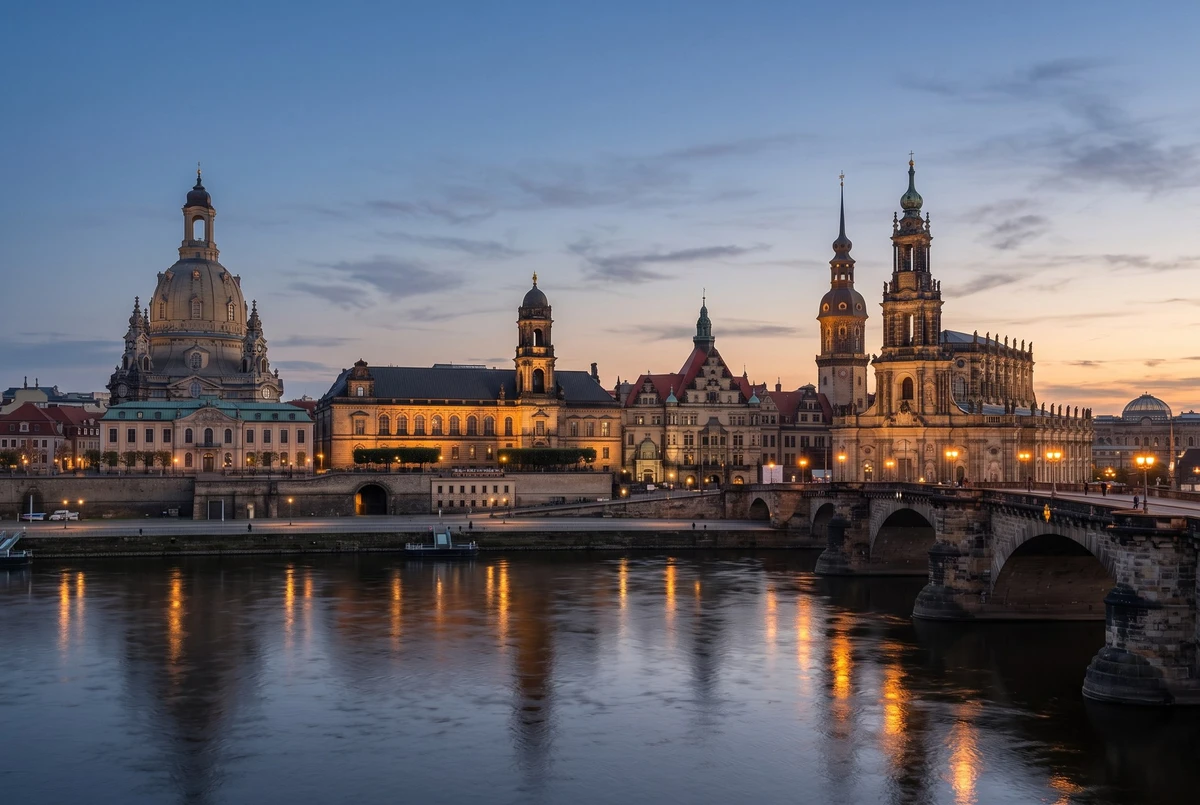
This Dresden historical walking tour is a shared two-hour walk in German through the baroque heart of the Florence on the Elbe, following the Saxon elector-kings who built it. You meet in front of Dresden Castle at the corner of Schlossstrasse and Taschenberg at 10:15 or 12:15, take a short guided look at the royal residence, then walk to the Frauenkirche and step inside its restored interior, subject to the church's opening hours. The route continues along the Fürstenzug, through the Stallhof, past the Taschenbergpalais and into the Zwinger for a guided tour of the courtyard, ending on Theaterplatz by the Hofkirche and the Semperoper. The route is wheelchair accessible; museum and opera tickets are not included and there is no hotel pickup.
Highlights
- Two-hour guided walk through historic Dresden in the footsteps of the Saxon court
- Short guided tour at Dresden Castle, the royal residence of the Wettin rulers
- Visit inside the Frauenkirche to see the restored baroque interior and altar
- Fürstenzug, the 102-metre porcelain mural of Saxony's rulers
- Stallhof tournament yard and the Taschenbergpalais
- Guided tour of the Zwinger, the masterpiece of Dresden baroque
- Finish on Theaterplatz by the Hofkirche and the Semperoper
- Flat, wheelchair-accessible route; teenagers at the reduced rate
Full Description
Dresden Castle, the Residenzschloss
The walk begins at Dresden Castle, the residence of the electors and kings of Saxony from the late fifteenth century until the monarchy ended in 1918. Rebuilt in Renaissance style in the 1540s and given a neo-Renaissance face for the 800th anniversary of the Wettin dynasty in 1889, it burned out in February 1945 and stood roofless for decades; reconstruction began in the 1980s and continues to this day. Its Hausmannsturm tower is about 100 metres high, and the inner courtyard is decorated with sgraffito scenes in black and white.
Your guide gives a short tour at the castle, explaining the layout and the treasures inside: the Historic Green Vault with its baroque treasury rooms, the New Green Vault, the Turkish Chamber, the Armoury and the Coin Cabinet. Dresden Castle tickets are not included, but the guide tells you which collection to book and how long to allow, usually two hours for the Green Vaults alone.
Frauenkirche, the Church of Our Lady
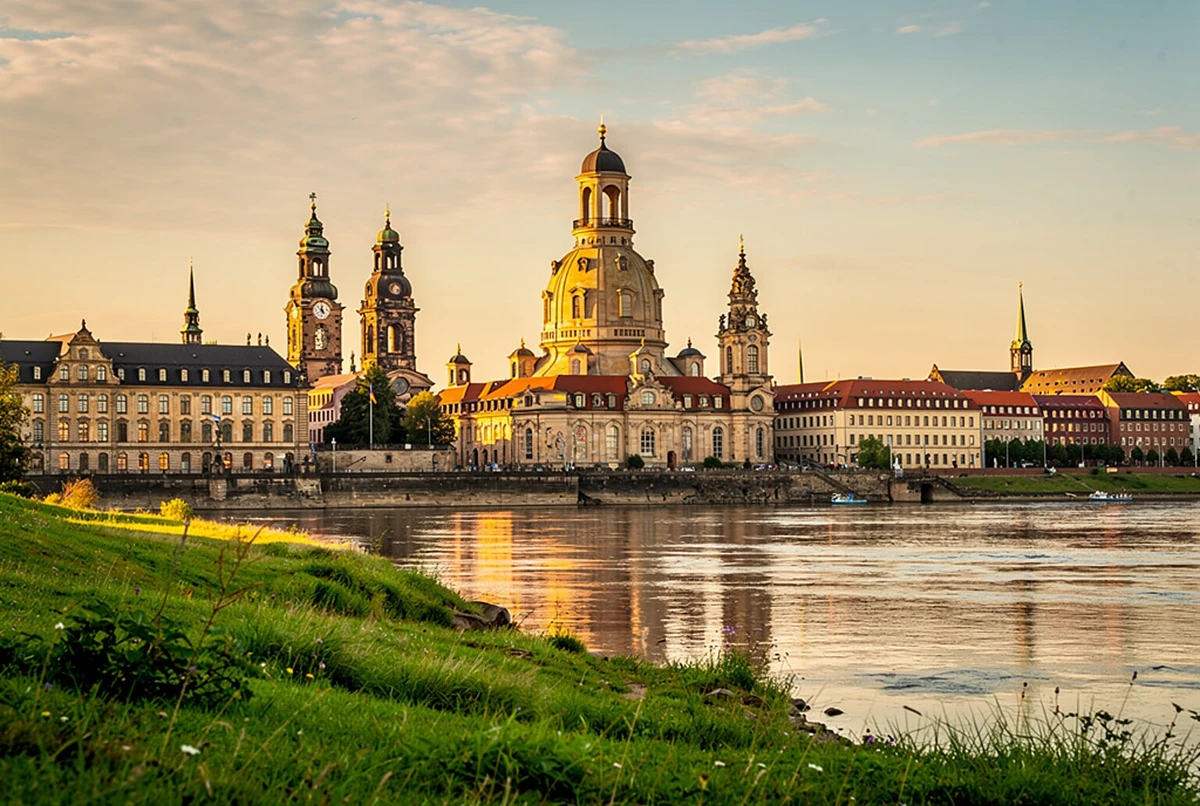
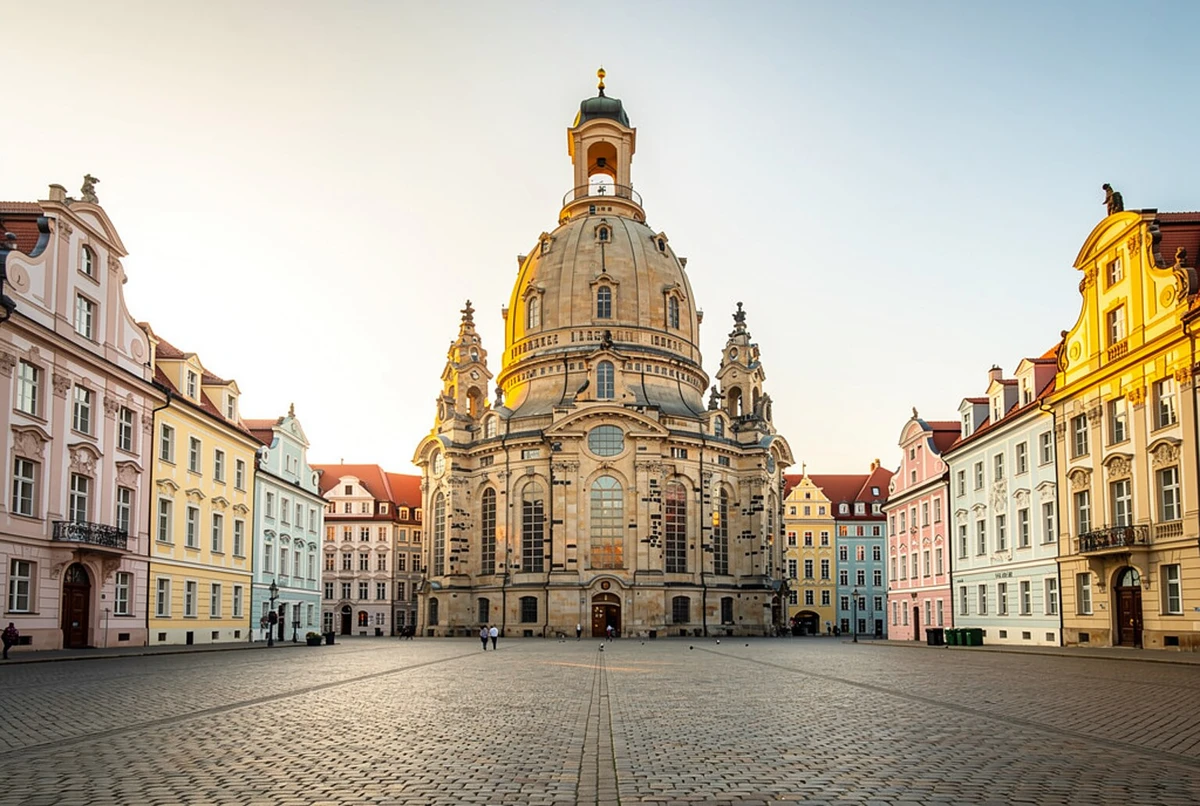
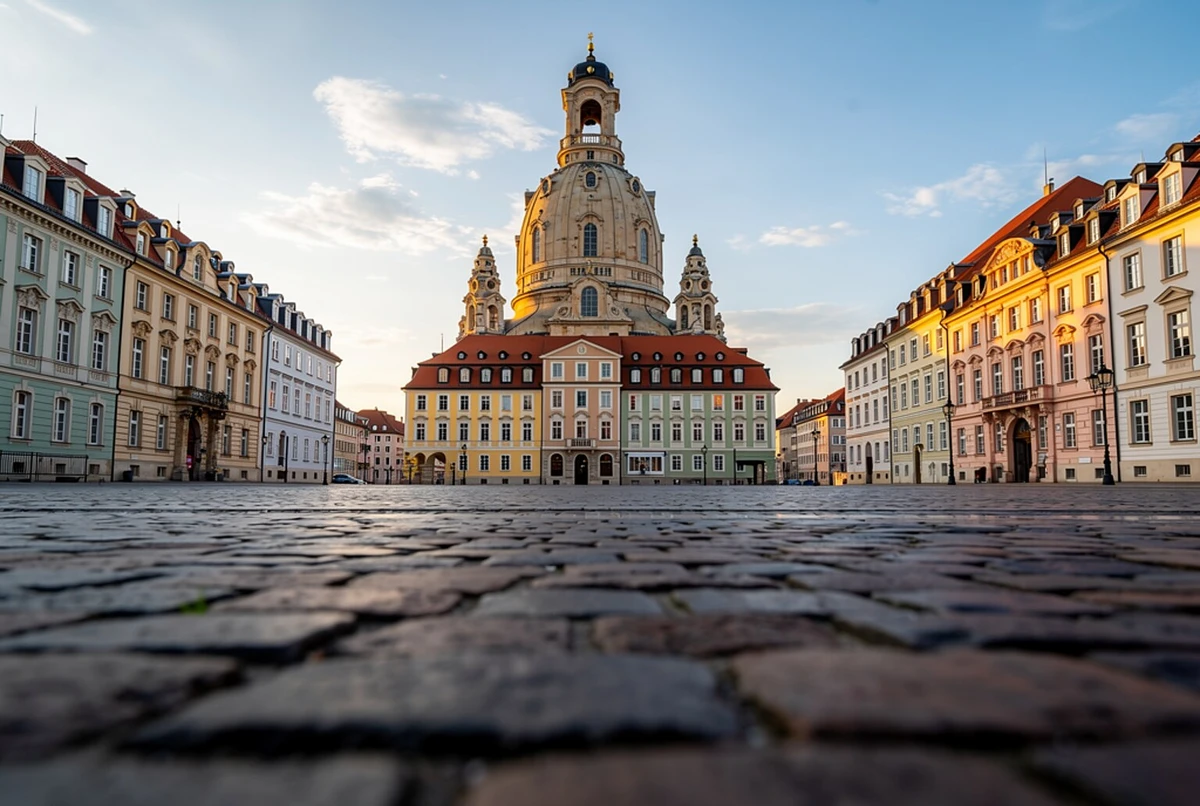
From the castle it is a five-minute walk to the Frauenkirche, the baroque church completed in 1743 whose 96-metre stone dome shaped the skyline for two centuries. It collapsed two days after the bombing of February 1945, and the ruin was kept as a memorial until, after reunification, a worldwide donation campaign funded the rebuilding between 1994 and 2005. About 3,800 original stones were set back into the walls, and the gilded cross on the dome was made in Britain as a gesture of reconciliation.
This is the only Dresden walking tour on this page that takes you inside. The interior is a surprise after the stone exterior: pale pink, green and gold galleries rising in tiers, a painted dome and the baroque altar reassembled from about 2,000 fragments. The visit depends on the church's opening hours, which usually allow visitors between services on weekdays, so the guide times the stop accordingly; allow about twenty minutes.
Fürstenzug and Stallhof
Back towards the castle along Augustusstrasse, the group walks the length of the Fürstenzug, the Procession of Princes: thirty-five margraves, dukes, electors and kings of the House of Wettin on horseback, followed by scientists, artists and farmers, on a wall 102 metres long. The mural was painted in the 1870s and transferred to about 23,000 Meissen porcelain tiles in 1907, which is why it survived the war almost intact. The guide picks out the rulers who matter most for the story of the city.
Through a gate you enter the Stallhof, the stable yard built between 1586 and 1591 for tournaments, with its Long Corridor of arcades, the two bronze jousting columns and the stone water troughs for the horses. It is free to enter and one of the oldest surviving tournament grounds in Europe. About fifteen minutes cover both the mural and the yard.
Taschenbergpalais
Facing the castle across the narrow Taschenberg lane stands the Taschenbergpalais, a baroque palace built between 1705 and 1708 for a favourite of the elector-king and later the residence of the Saxon crown princes. It was linked to the castle by a covered bridge so the court could pass between the two without going outside, and a second bridge connects the castle to the Hofkirche for the same reason. Burned out in 1945, the palace was rebuilt in the 1990s and now operates as a luxury hotel, but the facade and the courtyard can be admired from the lane.
The guide uses the Taschenbergpalais to tell the story of the court of Augustus the Strong, the elector who gave his name to the Augustus Bridge and Augustusstrasse, became King of Poland and turned Dresden into a baroque capital, and the lane shows how castle, palace and church form one royal complex. This stop takes around ten minutes on the way to the Zwinger.
The Zwinger, guided tour of the courtyard
The Zwinger is the building people search for first when planning a Dresden baroque tour: an open courtyard framed by pavilions, galleries and fountains, built between 1710 and 1728 by the court architect Pöppelmann with sculpture by Permoser for festivals, tournaments and an orangery. The Crown Gate carries a gilded Polish crown, the Wall Pavilion is covered with sculpted figures, the Glockenspiel Pavilion rings bells of Meissen porcelain and the Nymphenbad fountain court hides behind the ramparts. The fourth side was closed in the 1850s by the gallery that now houses the Old Masters Picture Gallery.
Your guide gives a proper guided tour of the Zwinger courtyard, about thirty minutes, explaining the symbolism of the sculptures and the court festivities held here. The courtyard is free; the museums inside, including the Porcelain Collection and the Mathematical-Physical Salon, need separate tickets and are closed on Mondays.
Theaterplatz: Hofkirche and Semperoper
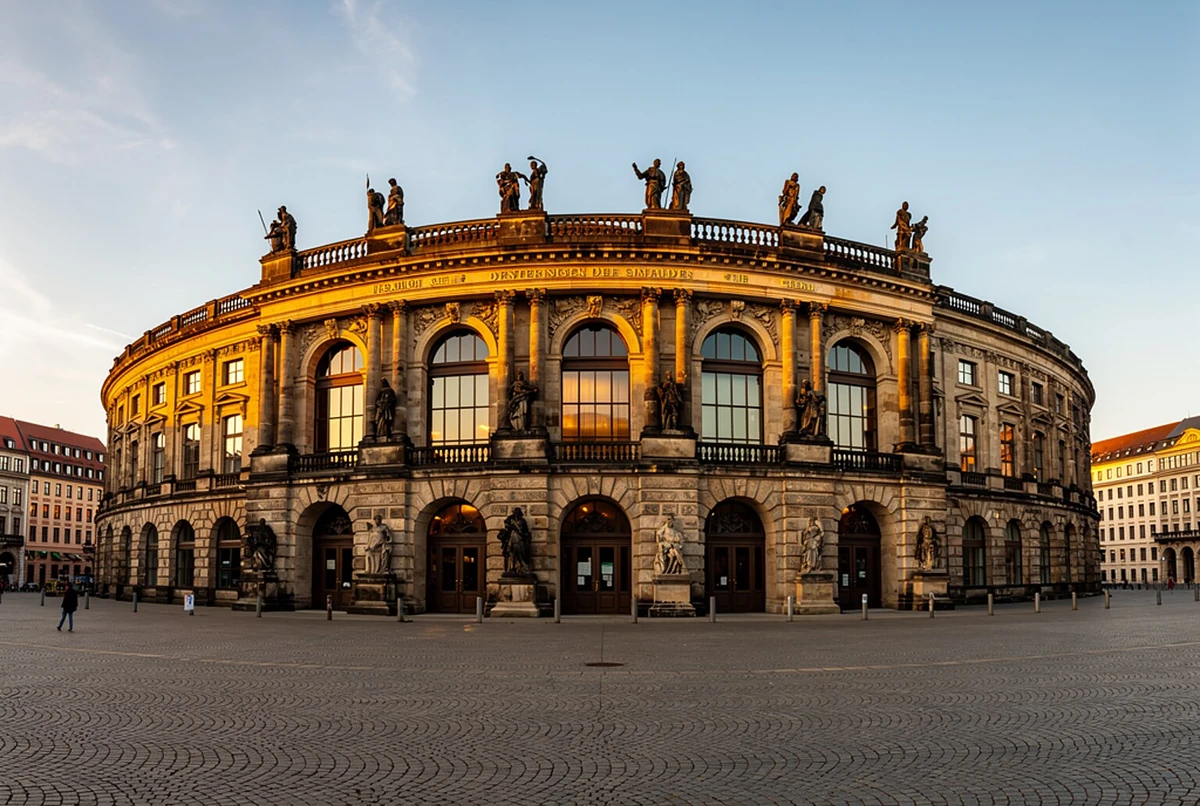
The walk ends on Theaterplatz, the stately square between the Zwinger, the castle and the Elbe. On one side stands the Hofkirche, the Catholic Court Church and Cathedral of Saxony, built between 1739 and 1755 by an Italian architect for the elector-kings, with seventy-eight stone statues along its balustrade and the crypt of the Wettin rulers beneath it. On the other side rises the Semperoper, the opera house opened in 1878 after its predecessor burned, destroyed in 1945 and reopened in 1985 with its Renaissance-style facade and the bronze panther chariot on the roof.
After about two hours the guide says goodbye here; the Hofkirche is usually open to visitors free of charge, Semperoper tours are sold separately and the Augustus Bridge beside the square leads over the Elbe to the Neustadt. Restaurants and tram stops are a few minutes away.
Itinerary
- Meeting in front of Dresden CastleMeet your German-speaking guide at the corner of Schlossstrasse and Taschenberg, under the sign, at 10:15 or 12:15 depending on your booking.
- Dresden CastleA short guided tour at the royal residence and an overview of its treasury museums, about fifteen minutes.
- Frauenkirche inside and outWalk to Neumarkt and step inside the Church of Our Lady to see the restored interior, subject to opening hours, about twenty-five minutes.
- Fürstenzug and StallhofThe porcelain procession of the Saxon rulers and the Renaissance tournament yard, about fifteen minutes.
- TaschenbergpalaisThe baroque palace beside the castle and the story of the court of Augustus the Strong, about ten minutes.
- Zwinger guided tourA guided tour of the baroque courtyard, its pavilions, gate and fountains, about thirty minutes.
- Finish on TheaterplatzThe Hofkirche and the Semperoper from outside; the walk ends here after about two hours.
What's included
- 2-hour guided walking tour of historic Dresden
- German-speaking guide
- Short guided tour at Dresden Castle
- Visit of the Frauenkirche interior (depending on opening hours)
- Guided tour at the Zwinger
- Fürstenzug, Stallhof, Taschenbergpalais, Hofkirche and Semperoper from outside
- Wheelchair-accessible route
Not included
- Museum visits
- Semperoper visit
- Food and drinks
- Pets are not allowed (dogs cannot enter the churches)
Is this right for you?
Great for
- Families with children — a child price for ages 14–17
- First-time visitors who want the highlights
- A short visit — about 2 hours
- Travellers who want a proven choice — rated 4.8/5 by past travellers
Think twice if
- You want a private tour — this one is shared with other travellers
- Walking is difficult for you — expect active parts
Not suitable for
- People who do not understand German, as the tour is held in German only
- Pets, since dogs are not allowed inside the churches
Meeting point
Meet your guide in front of Dresden Castle at the corner of Schlossstrasse and Taschenberg, directly under the sign, a few minutes before the 10:15 or 12:15 start. The castle is in the centre of the Old Town, about five minutes on foot from the Postplatz and Altmarkt tram stops. There is no hotel pickup, and the walk ends on Theaterplatz by the Semperoper, a short walk from the meeting point.
Important information
- The tour is held in German only
- The visit inside the Frauenkirche depends on the church's opening hours and services; if the church is closed, it is seen from outside
- Dogs and other pets cannot join, as they are not allowed inside the churches
- Museum visits, Dresden Castle collections and the Semperoper are not included
- Wear comfortable shoes: the route is about two kilometres on cobbles and flat paving
- The route is wheelchair accessible
- Please dress respectfully for the church visit and keep voices low inside
- The walk runs in all weather, so bring a rain jacket or umbrella
- Bring your booking confirmation on your phone
Good to know
Frequently Asked Questions
Straight answers to what travellers ask us most, before they book.
Is this a shared or a private experience?
It is a shared group walking tour with a German-speaking guide and other travellers.
How long does the Dresden historical walking tour take?
About two hours, starting at 10:15 or 12:15 in front of Dresden Castle and ending on Theaterplatz.
Is hotel pickup included?
No. The meeting point in front of Dresden Castle is in the centre of the Old Town and easy to reach on foot or by tram.
What is included?
A two-hour guided walk in German with a short guided tour at Dresden Castle, a visit inside the Frauenkirche subject to opening hours, the Fürstenzug, the Stallhof, the Taschenbergpalais, a guided tour of the Zwinger courtyard and the Hofkirche and Semperoper from outside. Museum tickets, Semperoper visits, food and drinks are not included.
Is the price per person or per group?
The price is per person, with a reduced rate for teenagers aged 14 to 17. The booking panel on this page shows the current price of each ticket.
Is the tour in English?
No, this walk is conducted in German. The route and the Frauenkirche visit are the same for everyone, but the explanations are in German.
Do we really go inside the Frauenkirche?
Yes, whenever the church is open to visitors; the Frauenkirche closes for services, concerts and events, and on those occasions the guide shows it from outside and explains the interior.
Do we enter the Green Vault or the Zwinger museums?
No. You get a guided look at the castle and a guided tour of the Zwinger courtyard, but the museums inside need separate tickets; the guide advises you which to book afterwards.
Is it suitable for children and for people with reduced mobility?
Yes. The route is flat and wheelchair accessible, and teenagers pay the reduced rate; younger children are welcome too, though two hours of history suits older children better.
What should I bring?
Comfortable shoes, a rain jacket or umbrella, your booking confirmation on your phone and respectful clothing for the church visit.
What is the best time to visit Dresden?
May to September for long days and the Elbe terraces; December for the Striezelmarkt and the Christmas market in the Stallhof. The 10:15 start is quieter inside the Frauenkirche than midday.
How do I book and confirm?
Choose your date and start time in the booking panel and complete the booking; our team confirms on WhatsApp within minutes.
More in Dresden

Getting to & around Dresden
Popular across Germany
-
-
-
-
-
-