
Bandung
Plan Bandung with Haqqi Tours: day tours, private airport transfers, attraction tickets and packages, run by our own team and confirmed on WhatsApp in Arabic or English.
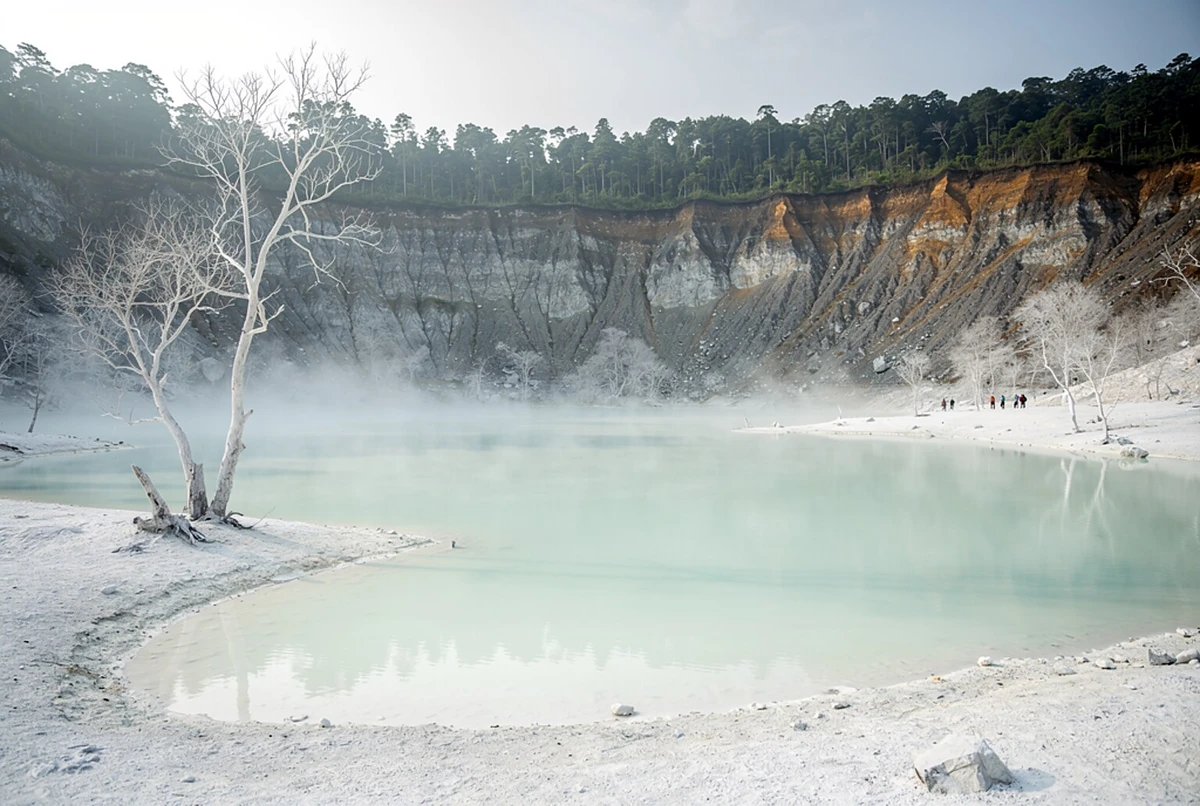
Drive south from Bandung at first light and the road climbs through endless rows of bright green tea bushes, the air turning cool and fresh with every bend. At the top, a short walk through misty forest brings you to the rim of Kawah Putih, a crater lake of milky pale turquoise water steaming softly against bleached white slopes. Back in the city, the call to prayer drifts over Art Deco facades, and street stalls serve warm snacks to students and families.
Nothing matches those filters yet. Widen your search or message us on WhatsApp.
Bandung Day Tours
View all Bandung at first sight
Bandung, the capital of West Java and the heart of Sundanese culture, sits in a wide basin surrounded by volcanoes, about seven hundred metres above sea level. Its cool climate and elegant colonial architecture once earned it the nickname Paris of Java, and in 1955 it hosted the historic Asian-African Conference. Today it is a creative, youthful city of universities, cafés, design shops and markets, with highlands, hot springs and craters all around.
Why include Bandung in your itinerary?
- Volcanic landscapes on the doorstep. Crater lakes, steaming vents and hot springs lie within two hours of the city, from the pale waters of Kawah Putih to the vast crater of Tangkuban Perahu in the north.
- Cool highlands and tea country. Rolling tea plantations, pine forests, quiet lakes and strawberry farms give a refreshing break from the tropical heat, especially around Ciwidey and Lembang.
- A welcoming Muslim-majority city with flavour. Halal food is everywhere, from Sundanese rice platters to street snacks, and mosques, markets and colonial streets make the city easy and rewarding to explore.
Signature experiences in Bandung
Kawah Putih White Crater
High on the slopes of Mount Patuha, about two hours south of the city, Kawah Putih is a crater lake whose colour shifts from milky white to pale turquoise depending on the light and weather. Bleached rocks and dead trees frame the water, and a faint smell of sulphur hangs in the cool air. Visit in the early morning for the clearest views and fewer visitors, and limit your time at the rim if the gas is strong.
Tea Plantations and Hot Springs of Ciwidey
The highlands of Ciwidey and Rancabali are blanketed with tea gardens that roll over the hills like green waves. Walk the paths between the bushes, see the leaves being picked by hand and enjoy fresh tea in a hillside café. Nearby, natural hot spring pools offer a warm soak in the cool mountain air, and the calm lake of Situ Patenggang is lovely for a short boat ride.
Tangkuban Perahu Volcano
North of the city, the volcano of Tangkuban Perahu takes its name from a Sundanese legend of an upturned boat, which its long profile resembles. A road climbs almost to the rim of its main crater, a huge grey bowl where steam rises from yellow-stained vents. Combine it with the cool farms and forest parks of Lembang, and check activity levels beforehand, as access is sometimes limited.
Colonial Bandung and the Asian-African Story
In the city centre, Braga Street and Asia-Afrika Street hold elegant Art Deco buildings from the 1920s and 1930s. The museum in the former Merdeka Building tells the story of the 1955 Asian-African Conference, a landmark meeting of newly independent nations. Nearby, the Grand Mosque with its twin minarets faces the city square, while the government building known as Gedung Sate is famous for its unusual spire.
Angklung Music and Sundanese Food
West Java is the cradle of the angklung, a bamboo instrument recognised by UNESCO, and performances in Bandung invite audiences to join in and play a melody together. Food is a highlight too: try nasi timbel rice wrapped in banana leaf, crispy batagor fish dumplings with peanut sauce, surabi pancakes and warming ginger drinks on a cool evening. Our team can suggest friendly places to taste local dishes.
Neighbourhoods and quarters to know in Bandung
City Centre, Braga and Asia-Afrika
The historic centre around Braga Street, Asia-Afrika Street and the city square gathers colonial architecture, the Grand Mosque, museums, shopping streets and many hotels. It is busy and lively, with cafés and food stalls on every corner. It is the most practical base for a first visit, close to the railway station and the main sights within walking distance.
Dago
North of the centre, the long Dago road climbs through leafy neighbourhoods of universities, cafés, boutique hotels and forest parks. The air is cooler, the evenings calmer and the views over the city lovely after dark. It suits travellers who want comfort and quieter surroundings while staying within easy reach of the centre and the road to Lembang.
Lembang
In the highlands north of Bandung, Lembang is a cool mountain town of farms, pine forests, family attractions and resorts with valley views. It sits close to Tangkuban Perahu and the hot springs of Ciater, making it a relaxing base for nature lovers. Weekend traffic from Jakarta can be heavy, so we plan your drives at quieter times.
Ciwidey and Rancabali
South of the city, Ciwidey and Rancabali offer tea plantation views, lakeside lodges, camping grounds and hot spring resorts, close to Kawah Putih. Nights are chilly and quiet, and mornings are crisp and misty over the tea gardens. A night here means you can reach the crater at opening time before the day visitors arrive.
How long to stay in Bandung and how to pair it
Recommended stay
We recommend two or three nights in Bandung. Two nights let you explore the colonial centre, enjoy Sundanese food and spend a full day in the southern highlands at Kawah Putih, the tea plantations and the hot springs. With three nights you can add Tangkuban Perahu and Lembang in the north, or a night in Ciwidey to see the crater at its quietest in the early morning.
How to pair it
Bandung pairs easily with Jakarta, under one hour by high-speed train or around three hours by road, and with the hill resorts of Bogor and Puncak. Garut, about two to two and a half hours southeast, adds more craters and hot springs, while the beach town of Pangandaran lies further south. Yogyakarta is a long train ride or a short flight away, and our team arranges private transfers between every stop.
Best time to visit Bandung and the rhythm of the day
Best months
The best time to visit Bandung is the drier season from May to September, when mornings are clear for crater views and tea plantation walks. Thanks to its altitude, the city stays pleasantly mild all year, with cool nights in the highlands. The wet season from November to March brings afternoon downpours and misty slopes, but mornings are often fine. Weekends and Indonesian holidays bring heavy traffic from Jakarta.
The daily rhythm
Bandung's day starts early with the dawn call to prayer and markets opening before the heat. Mornings are best for the highlands, as clouds often build after midday. Afternoons suit museums, shopping streets and cafés in the city. On Fridays, life pauses around the midday prayer. Evenings are lively with families strolling the squares and food stalls serving warm snacks in the cool air.
On-the-ground logistics in Bandung
Arrival
Most flights to the Bandung area now arrive at West Java International Airport at Kertajati (KJT), about one hour and thirty minutes from the city by toll road. Jakarta International Airport (CGK) is around two and a half to three and a half hours by road depending on traffic, or you can take the high-speed train from Jakarta in under an hour. Our private airport transfers meet you at arrivals and drive you to your hotel.
Getting around
Bandung's centre can be explored on foot or by short taxi and ride-hailing trips, but traffic is often slow, especially at weekends. Angkot minibuses cover the city but are confusing for visitors. The volcanoes, tea plantations and hot springs lie in the hills outside the city and are not well served by public transport, so a private car with driver arranged by our team is by far the easiest choice.
Local etiquette tip
Bandung is a Muslim-majority city with a gentle, polite Sundanese culture. Dress modestly, especially in mosques and villages, remove your shoes before entering mosques and homes and use your right hand for giving and eating. A smile and a soft voice go a long way, and locals appreciate hatur nuhun, thank you in Sundanese. During Ramadan, avoid eating or drinking openly in public during the day.
Must-do things in Bandung
- See the milky turquoise lake of Kawah Putih
- Walk among the tea plantations of Rancabali
- Soak in a natural hot spring pool in the highlands
- Look into the crater of Tangkuban Perahu
- Stroll the Art Deco buildings of Braga Street
- Learn the story of the 1955 Asian-African Conference
- Join an angklung performance and play bamboo music
- Taste batagor, surabi and nasi timbel
- Visit the twin-minaret Grand Mosque on the city square
- Enjoy the cool air and farms of Lembang
Do’s and don’ts in Bandung
Do
- Do bring a warm layer for the highlands
- Do start early to beat traffic and clouds
- Do dress modestly in mosques and villages
- Do carry a mask for strong volcanic gas
- Do try local food at busy, popular stalls
Don’t
- Don't linger at crater rims if gas is strong
- Don't plan highland trips on busy weekends
- Don't wear shoes inside mosques or homes
- Don't eat in public during Ramadan days
- Don't leave the marked paths at volcanoes
Bandung at a glance
Plan Bandung with Haqqi Tours
Every option is confirmed by our team on WhatsApp before you pay, and delivered by our own people or by trusted local partners we work with in every city. Because we send travellers from all over the world, our partners give us special rates and priority, so you always receive the best. Prices are per person unless marked per vehicle.
About Haqqi Tours: About us Contact us Legal NoticePrivacy PolicyCookies & Marketing PreferencesTerms & ConditionsBooking, Payment & Refunds
More services in Bandung
Where we operate in Indonesia
Good to know
Frequently Asked Questions
Straight answers to what travellers ask most about Bandung.
Where should I stay in Bandung?
Most visitors stay in the city centre around Braga and Asia-Afrika for easy access to sights, shopping and food, or in Dago for a cooler, quieter base with cafés and views. Lembang in the north suits nature lovers and families, while Ciwidey in the south is ideal for an early start at Kawah Putih. Our team suggests the right base and arranges your private transfer.
Can Bandung be visited as a day trip from Jakarta?
It is possible, especially with the high-speed train, which takes under one hour, but a day only covers the city centre. The highlights of Bandung lie in the surrounding hills, such as Kawah Putih and Tangkuban Perahu, which need a full day each with road travel. For a rewarding visit we recommend at least two nights in Bandung.
What is the dress code and etiquette in Bandung?
Bandung is a Muslim-majority city, so modest clothing covering shoulders and knees is respectful, and women should bring a scarf for mosque visits. Remove your shoes before entering mosques and homes, use your right hand and keep a calm, polite tone. In the highlands bring a warm jacket and good walking shoes, as mornings can be chilly and paths uneven.
Is Bandung suitable for families and Muslim travellers?
Yes. Bandung is very welcoming for Muslim travellers, with halal food as the norm, mosques everywhere and prayer rooms in malls and attractions. Families enjoy the farms and parks of Lembang, the tea plantations, hot springs and bamboo music shows. Volcanic sites need care with young children and anyone with breathing problems. Our team can advise on the best options.
Is it safe to travel to Bandung now?
Bandung is generally considered safe for travellers. The main care points are heavy traffic, volcanic gas at crater sites, slippery paths in the rainy season and occasional changes in volcano access. Follow local guidance at craters, keep valuables secure in crowded places and check your own government's official travel advice before departure. Our WhatsApp team is available throughout your trip.
What are the must-do things in Bandung?
The must-do things in Bandung include the white crater of Kawah Putih, the tea plantations and hot springs of Ciwidey, the crater of Tangkuban Perahu, the colonial streets of Braga and Asia-Afrika and an angklung bamboo music performance. Sundanese food and the cool farms of Lembang complete the visit. Our private drivers and guides combine these in the best order.
How much time do you need in Bandung?
Plan at least two nights to see the city centre and enjoy a full day in the southern highlands at Kawah Putih and the tea plantations. Three nights are ideal, adding Tangkuban Perahu and Lembang in the north. Bandung also fits well into a longer Java trip with Jakarta, Garut and Yogyakarta, linked by private car or train.
What can I book in Bandung with Haqqi Tours?
Day tours, including White Crater, Tea Fields & Suspension Bridge Tour Bandung and Kawah Putih White Crater, Hot Springs and Tea Plantations Tour Bandung. Each has its own page, and the WhatsApp desk combines any of them into one plan with one written price.
How do I get from the airport to my hotel in Bandung?
With a private transfer: a driver at arrivals, flight tracking and a fixed price for the whole vehicle, door to door. Tell the desk the flight number and the hotel.
Is there public transport from the airport to Bandung?
Public options vary by airport and end at a station rather than your hotel; the private transfer starts at the arrivals door and ends at your door.
Which tours are available in Bandung?
Among them: White Crater, Tea Fields & Suspension Bridge Tour Bandung and Kawah Putih White Crater, Hot Springs and Tea Plantations Tour Bandung. Each page says whether the day is private or small-group, what it includes and how long it lasts.
Are the tours private or in a group?
Both exist, and each tour page says which. A private tour has a vehicle and guide for your party alone; the desk can make most group tours private on request.
How do I book?
Fill in the form on any page or message us on WhatsApp with the date, the number of travellers and the hotel. A member of our team confirms the price and the details in writing within minutes.
Are the prices fixed?
Yes - every price is agreed in writing on WhatsApp before you travel and does not change on the day.
Do the drivers and guides speak Arabic or English?
It depends on the city and the day, so we do not promise a particular language; tell us your preference and we do our best. The WhatsApp desk always works in Arabic and English.
Can I change or cancel a booking in Bandung?
Yes, in the same WhatsApp conversation. The terms depend on the product and on how close to the date the change comes; the desk states them before you pay.