
Amsterdam Hop-On Hop-Off Boat
Overview
The Amsterdam Hop-On Hop-Off Boat is a day pass on a sightseeing canal boat that stops beside the places you will want to visit anyway: the Rijksmuseum and the museum quarter, the Anne Frank House area on the western canals, Central Station, Leidseplein and the Jewish Quarter. You board at whichever stop is nearest your hotel, listen to the recorded commentary as the boat moves through the canal ring, step off when a stop interests you and rejoin a later boat when you are ready. It is a shared boat rather than a private charter, which keeps the cost sensible for a family, and the pass can be combined with the hop-on hop-off bus for a fuller circuit. Haqqi Tours issues the ticket and explains the route on WhatsApp before you travel.
Highlights
- Day pass on a shared canal boat looping through the historic canal ring
- Stops beside the Rijksmuseum, Van Gogh Museum and the museum quarter
- Western canals stop close to the Anne Frank House and the Jordaan
- Board or leave at Central Station, Leidseplein or the Jewish Quarter
- Recorded commentary explaining the merchant houses and bridges as you pass
- Optional combination with the hop-on hop-off bus for the outer districts
- Tickets sent to your phone with the stop map explained on WhatsApp
Full Description
How the boat pass actually works
Unlike a fixed canal cruise that goes round in a loop and returns you to where you started, the hop-on hop-off boat is transport as much as sightseeing. Boats run along a set route through the canals with marked stops on the quayside, and your day pass lets you board and leave as many times as you like while it is valid. You do not need to start at any particular point; the nearest stop to your hotel is fine. On board, the commentary plays through speakers or headphones and describes what you are passing. Between stops you sit under the glass roof and watch the city from the water, which in Amsterdam is genuinely the best angle, because the houses were built to be seen from the canals.
What Amsterdam looks like from the water
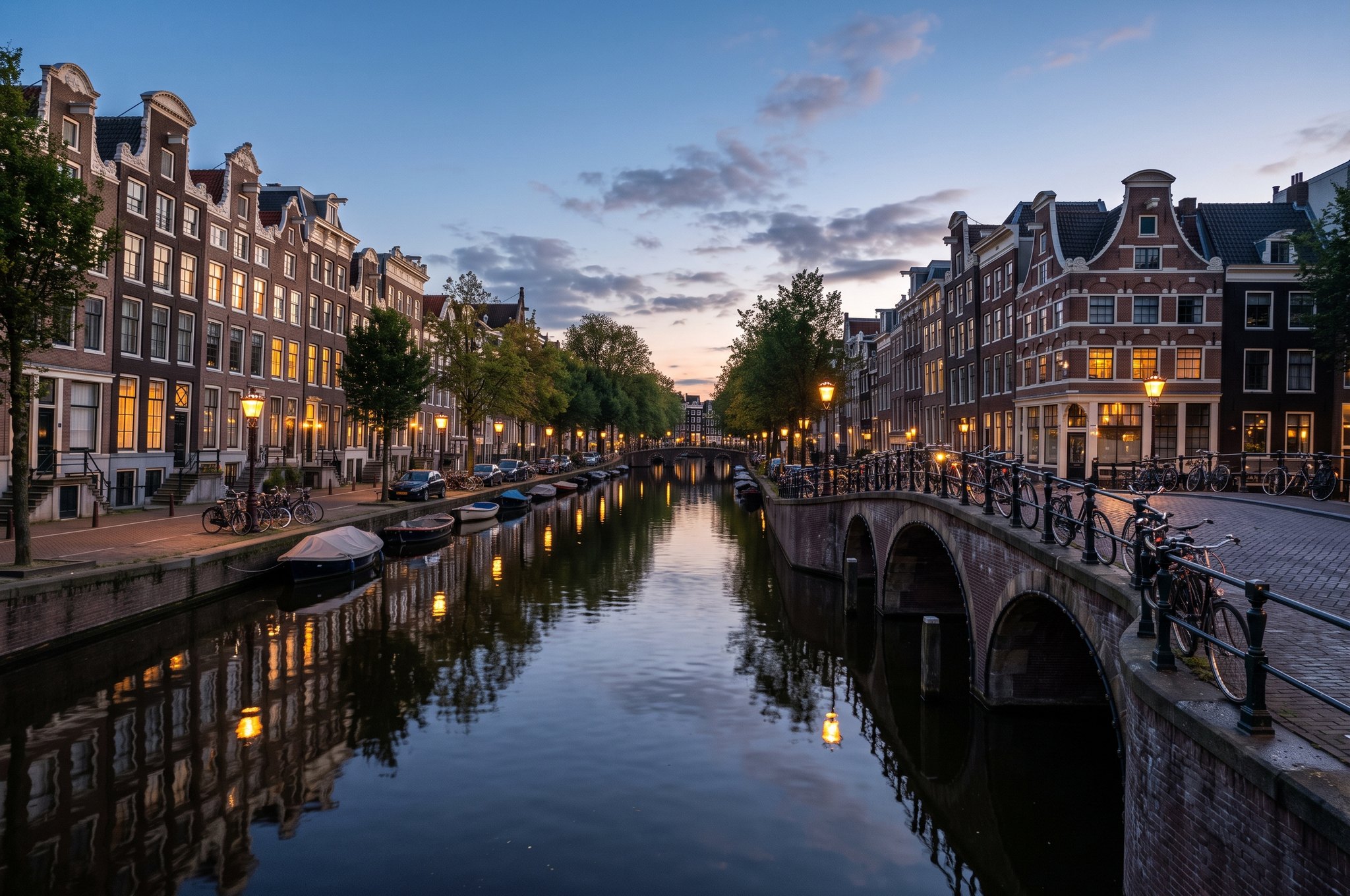
The canal ring was dug in the seventeenth century as a planned expansion of the city, and its three main canals, Herengracht, Keizersgracht and Prinsengracht, still curve around the centre in tidy concentric arcs. From the boat you look up at the narrow gabled houses, each with a hoist beam at the top that was once used to lift goods into the attic, and you pass under bridges low enough that everyone instinctively ducks. Houseboats line the quays, bicycles are chained to every railing, and the light changes constantly as clouds move across. The commentary picks out the wealthiest merchant houses, the leaning facades, the oldest bridges and the reason the buildings tilt forward, and the whole route is far calmer than the streets above.
The Rijksmuseum stop and Museumplein
The stop for the museum quarter lands you at the edge of Museumplein, the wide lawn shared by the Rijksmuseum, the Van Gogh Museum, the Stedelijk and the Concertgebouw. The Rijksmuseum itself is the national collection, home to Rembrandt's Night Watch and the Dutch Golden Age galleries, and its passage under the building is a landmark in its own right. Most families give this stop the largest share of the day, so it is sensible to come here with museum tickets already booked for a fixed entry time, because the boat pass covers the boat only. There are cafes and lawns for a break, and when you have finished you walk back to the quay and catch the next boat.
The western canals and the Anne Frank House area
On the western side of the ring the boat stops close to the Westerkerk, whose tower is the tallest church tower in the city, and to the Anne Frank House on Prinsengracht. Visits to the house are strictly by advance online ticket for a set time, and they sell out well ahead, so treat this stop as a way to arrive rather than a way to get in. Beyond the church lies the Jordaan, once a working-class district and now a maze of small streets with cafes, bakeries and Saturday markets. It is the nicest area of the whole route for a slow walk with children, with quiet canals, courtyards and a very different feel from the busy centre.
Central Station and the harbour side
The stop at Central Station is the one most visitors use first, because trains from Schiphol airport and from other Dutch cities arrive here and many hotels sit within walking distance. The station building faces the water, and the boat quay is just outside, making this the easiest place to collect yourselves, find the boat and settle in. Behind the station lies the IJ waterfront, with the public ferries across to the north bank and the modern library and film museum on the far side. From here the route heads into the old centre, passing Damrak and the edge of the red-light quarter, which families may prefer to see from the boat rather than on foot.
Leidseplein and the road to Vondelpark
Leidseplein is the entertainment square at the south-western corner of the canal ring, ringed with theatres, cafes and terraces, and the boat stop places you a short stroll from Vondelpark, the city's largest green space. The park is the obvious answer if the children need to run around: there are playgrounds, ponds, wide paths and an open-air theatre in summer. It is also close to the smart shopping street of P.C. Hooftstraat and to the museum quarter, so some families combine the two stops on foot and rejoin the boat only once. In the evening the square is lively and well lit, and the trams back to the station leave from here as well.
The Jewish Quarter and the eastern side
Towards the east the boat calls at the Jewish Quarter, the old district around Waterlooplein that was the heart of Jewish Amsterdam for centuries. Here you find the Portuguese Synagogue, the Jewish Museum, the Rembrandt House where the painter lived and worked, and the Waterlooplein flea market. It is also a short walk to the botanical garden, the zoo and the wide Amstel river, where the famous Skinny Bridge crosses. This stop tends to be quieter than the museum quarter and repays unhurried walking. For families the zoo is the obvious draw, and it makes a good final stop before the boat carries you back towards the station, with the river views on the way as a bonus.
Combining the boat with the hop-on hop-off bus
The boat covers the canal ring beautifully but cannot reach the places beyond the water, and that is where the hop-on hop-off bus comes in. The bus loops through the districts the boat does not touch, including the eastern docklands, the Heineken area and the outer neighbourhoods, and a combined ticket lets you switch between the two. A typical plan is to use the bus for the long hops and the boat for the centre. The combination suits visitors staying more than a day or two, or those with mobility limits who want to avoid tram steps and cobbles. Tell us when you book and we send both passes together with a single explanation of how they fit.
Who should book the pass, and who should not
The pass is ideal for independent visitors who want to see a lot without a guide standing over them, and for families who need the freedom to stop when a child is tired or hungry. It suits first-time visitors well because the route passes almost every major sight. It is less suited to travellers who want a single relaxed cruise with live explanation in Arabic, or to those with only a few hours who would do better with a straightforward canal tour. It is also not a substitute for museum tickets. If your priority is a private experience, ask us about a private canal boat instead; if it is value and flexibility, this is the right choice.
Timing, weather, what to bring and booking
Boats operate through the day and the pass is valid for the period stated on your ticket, so start early to get the most from it and plan your museum entries around the stops. Amsterdam weather is changeable in every season; the cabin is enclosed, but pack a light waterproof for the walks between quays. Bring the tickets on your phone, comfortable shoes for cobbles, and snacks for the children for the walks between stops. Booking runs through the Haqqi Tours WhatsApp desk: name your day, your party and whether the bus combination appeals, and the pass details and cost are confirmed in writing before payment.
Good to know
- Start at Central Station or the museum quarter early in the day; boats and quays are quietest in the first hours.
- Book the Anne Frank House and Rijksmuseum online for fixed times before you decide your boat order.
- Keep children seated when the boat passes under low bridges; the crew will remind everyone.
- Halal food is easy to find near Leidseplein and in the Jordaan; look for Turkish and Surinamese places.
- Vondelpark is the best stop for a picnic and a break from the museums.
- Carry a light waterproof; showers arrive without warning in every month of the year.
- If you add the bus, use it for long distances and the boat for the centre, not both for the same loop.