Chiado, Bairro Alto and Viewpoints Guided Walking Tour Lisbon
- Duration3 hours
- Daily
- Group

Some images are AI-generated for illustration. While we confirm your booking, just ask and we will send you the original photos.
- Fair, honest prices
- Real people, not bots
- Confirm, then pay
- Secure payment

Overview
This small-group walking tour crosses the heart of Lisbon in one afternoon, from the hilltop streets of Bairro Alto to the cathedral at the foot of Alfama. An English-speaking local guide explains how the city grew, fell in the earthquake of 1755 and rose again, as you take in the view from São Pedro de Alcântara, step inside the gilded São Roque Church, stand among the roofless arches of Carmo and look up at the iron Santa Justa Lift. After a coffee and cake break in Baixa, a historic tram carries you up to the Portas do Sol viewpoint for the descent through Alfama, the oldest quarter. It suits first-time visitors, couples and families who enjoy walking. There is no hotel pickup: we meet in central Lisbon.
Highlights
- Afternoon walk on foot through Bairro Alto, Chiado, Baixa and Alfama
- View over Baixa and the Tagus from the São Pedro de Alcântara garden
- Gilded chapels and tiles inside the São Roque Church
- Roofless Gothic arches of the Carmo Convent
- Santa Justa Lift and the elegant streets of Baixa
- Coffee and cake break included
- Ride on a historic tram up to the Portas do Sol viewpoint
- Finish at Lisbon Cathedral after the lanes of Alfama
Full Description
Bairro Alto and the São Pedro de Alcântara viewpoint
Bairro Alto, the Upper Quarter, was laid out in the early sixteenth century on a hill west of the centre, with straight streets that were modern for their time. Printers and newspapers settled here, and after the 1755 earthquake families from the ruined lower town moved in, starting its renewal. By day it is quiet and full of tiled facades and laundry lines; after dark it becomes the liveliest quarter of the city.
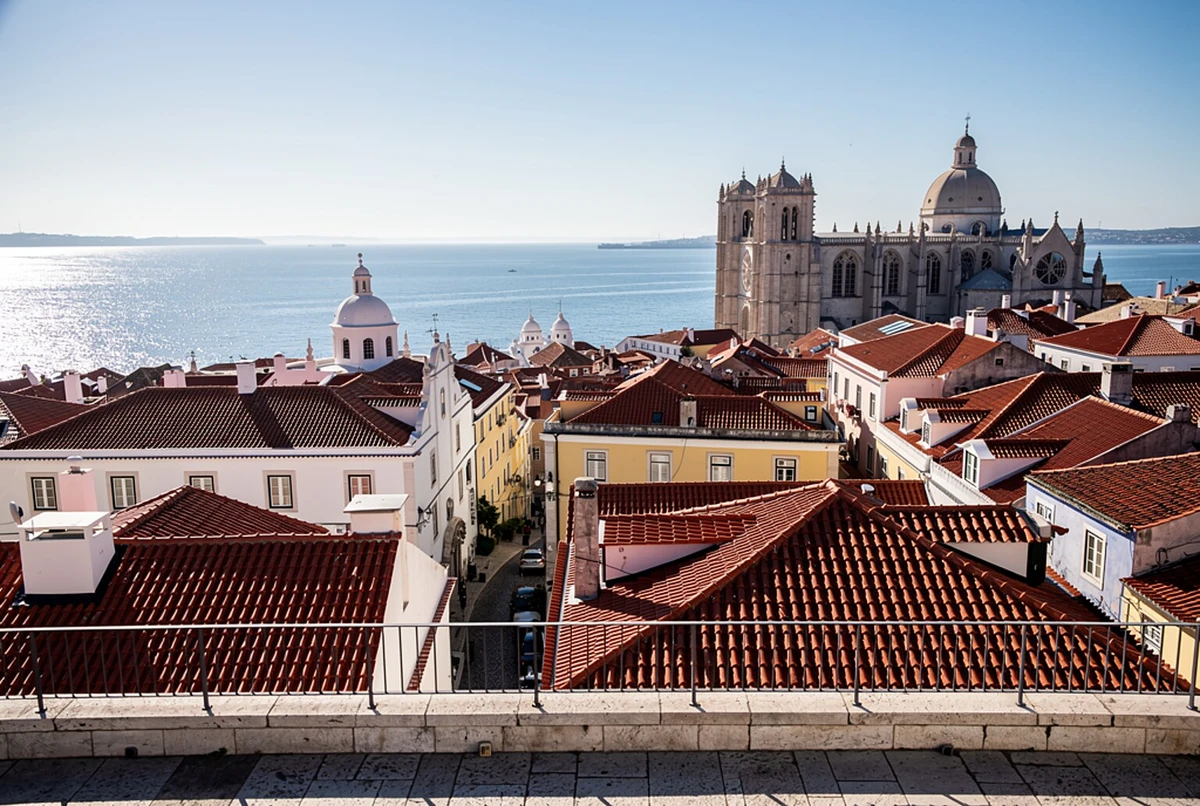
At its edge lies the São Pedro de Alcântara garden, a terrace with fountains, busts and a tiled map of the city. From here the view sweeps over Baixa to the castle walls, Graça and the river beyond. It is the first of the Lisbon viewpoints on this walk and a perfect place to understand the shape of the city before you walk through it.
São Roque Church
Built by the Jesuits in the sixteenth century, São Roque was one of the first Jesuit churches in the world. Its plain façade hides an interior covered in gilded woodwork, painted ceilings and blue and white tiles, a showcase of Mannerist and Baroque art that survived the 1755 earthquake almost intact.
The guide leads you to the most precious corner, the Chapel of St John the Baptist, assembled in Rome from marble, lapis lazuli, gilt bronze and mosaics and shipped to Lisbon in the eighteenth century. Entry to the church is free, and the visit takes a short while before you continue downhill. São Roque is easy to miss from the street, which is one more reason this walking tour of Lisbon history is worth joining.
Carmo Convent and Chiado
The Carmo Convent was founded in the fourteenth century and became the largest Gothic church in Lisbon. When the earthquake struck on the morning of 1 November 1755, its roof collapsed during Mass, and the tall arches have stood open to the sky ever since. Today the nave is a haunting ruin and the old apse houses a small archaeological museum.
The square outside, Largo do Carmo, played a central role on 25 April 1974, when the peaceful Carnation Revolution ended nearly fifty years of dictatorship. A few steps away begins Chiado, the elegant district of historic cafés, bookshops and theatres, rebuilt with care after a fire in 1988. The Chiado and Bairro Alto walking tour section ends here before the route descends to the lower town.
Santa Justa Lift and Baixa
The Santa Justa Lift, opened in 1902, is a tower of wrought iron in Gothic Revival style that links Baixa with Largo do Carmo. Its lattice of arches and spiral stairs makes it one of the most unusual landmarks of Lisbon, and the walkway at the top offers a fine view of the castle and the river.
Below lies Baixa, the lower town rebuilt after 1755 on a regular grid of streets with buildings designed to resist future earthquakes, among the first in Europe. The guide shows you its main squares and the pedestrian Rua Augusta. Here the group stops for a short break with coffee and cake, a welcome pause before the second half of the walk.
The tram ride to Portas do Sol
Rather than climbing the steepest hill on foot, you board one of Lisbon's historic yellow trams, which rattle up narrow streets past the cathedral towards the castle hill. The ride itself is a small adventure, with the tram squeezing between houses and around tight corners.
You step off at Portas do Sol, named after one of the gates of the old Moorish walls. The terrace looks over the jumbled roofs of Alfama to the Tagus, with the white façade of the São Vicente de Fora Monastery and the great dome of the National Pantheon on the skyline. The Pantheon took so long to finish, until 1966, that its name became a local saying for any never-ending job.
Alfama and Lisbon Cathedral
Alfama is the oldest neighbourhood of Lisbon, a maze of stairways, arches and tiny squares that keeps the layout of the Moorish town. Built on solid rock, it largely survived the 1755 earthquake. It is the cradle of fado, the soulful Portuguese song, and every June its streets fill with decorations and the scent of grilled sardines for the festival of St Anthony.
The guide leads you downhill through its lanes to the end of the tour at Lisbon Cathedral, the Sé. Begun in the mid-twelfth century, soon after the city was taken by Portuguese forces, it looks like a fortress with two crenellated towers. For many visitors the Alfama walking tour section is the best part of the afternoon, and you can stay on to explore afterwards.
Itinerary
- Meeting in Bairro AltoMeet the guide in central Lisbon at 15:00 and start the walk through the streets of Bairro Alto.
- São Pedro de Alcântara viewpointPanoramic view over Baixa, the castle and the Tagus, with an introduction to the history of the city.
- São Roque ChurchA short visit inside the Jesuit church with its gilded chapels and tiles.
- Carmo Convent and ChiadoSee the roofless Gothic convent and the square of the 1974 revolution, then walk through Chiado.
- Santa Justa Lift and BaixaThe iron lift and the streets of the lower town, with a coffee and cake break of about 15 minutes.
- Tram ride to Portas do SolRide a historic tram up the hill and enjoy the view over Alfama, São Vicente de Fora and the National Pantheon.
- AlfamaWalk downhill through the lanes and stairways of the oldest neighbourhood.
- Lisbon CathedralThe tour ends in front of the Sé, about three hours after the start.
What's included
- Live English-speaking local guide
- 3-hour walk through Bairro Alto, Chiado, Baixa and Alfama
- Tram ride up to Portas do Sol
- Coffee and cake during the break
- Viewpoints of São Pedro de Alcântara and Portas do Sol
Not included
- Hotel pickup and drop-off
- Personal expenses
Is this right for you?
Great for
- Families with children — a child price for ages 3–11
- Groups who want privacy — a private option is available
- First-time visitors who want the highlights
- A half-day plan — about 3 hours
Think twice if
- Walking is difficult for you — expect active parts
Not suitable for
- Wheelchair users
- People with significant mobility impairments
Meeting point
The walk starts at 15:00 in central Lisbon, in the Bairro Alto area; we send you the exact meeting spot with your booking confirmation. It is easy to reach on foot from Chiado or by metro to Baixa-Chiado station. The tour ends at Lisbon Cathedral in Alfama, close to Baixa and the river, and hotel pickup is not included.
Important information
- Wear comfortable walking shoes: Lisbon is hilly and many streets are cobbled
- Bring water, sunscreen and a hat in summer, and a light jacket in winter
- Dress modestly for church visits, with shoulders and knees covered
- Churches may close briefly for services, in which case the guide adapts the order
- Entry to the churches on the route is free
- Arrive a few minutes early, as the group starts on time
- The tram ride is included; trams can be crowded, so keep belongings close
Good to know
Frequently Asked Questions
Straight answers to what travellers ask us most, before they book.
Is this a shared or a private experience?
This option is a shared small-group walking tour with an English-speaking local guide. A private option with your own guide and a choice of start times is also available in the booking panel.
How long does it take?
About three hours, starting at 15:00 in Bairro Alto and ending at Lisbon Cathedral.
Is hotel pickup included?
No. We meet in central Lisbon in the Bairro Alto area, and you receive the exact spot with your confirmation.
What is included?
A live English-speaking local guide, the three-hour walk through Bairro Alto, Chiado, Baixa and Alfama, the tram ride up to Portas do Sol, coffee and cake during the break, and the São Pedro de Alcântara and Portas do Sol viewpoints.
Is the price per person or per group?
The small-group tour is priced per person, while the private tour is priced by group size. The booking panel on this page shows the current price of each option.
Is it suitable for children or people with reduced mobility?
Children who enjoy walking are welcome. The route has steep slopes, stairs and cobblestones, so it is not suitable for wheelchair users or people with significant mobility issues.
How much walking is involved?
A few kilometres at a gentle pace, mostly downhill, with stops along the way. The tram takes you up the steepest climb to Portas do Sol.
What should I bring?
Comfortable shoes, water, a hat and sunscreen in summer, a light layer for the evening breeze, and a camera for the viewpoints.
What is the best time of year for a Lisbon walking tour?
Spring and autumn are ideal, with mild weather and soft light at the viewpoints. In summer the afternoon start means warm streets, so bring water; in winter the tour still runs, with fewer crowds.
What happens if it rains?
The tour runs in light rain, so bring an umbrella or rain jacket. Cobblestones can be slippery, so good shoes matter more on wet days.
Is Alfama worth visiting?
Yes. It is the oldest and most atmospheric part of Lisbon, and walking it with a guide helps you understand its history and find corners you would miss alone.
How do I book and confirm?
Choose your date and option in the booking panel and send your request. Our team confirms your booking on WhatsApp within minutes, with the meeting point details.
More in Lisbon




Getting to & around Lisbon
Popular across Portugal
-
-
-
-
-
-